
Reviewed · ANCIENT ROME TOURS
Rome: Caracalla Baths & Circus Maximus — Private or Shared
Caracalla makes Rome feel calmer. This guided tour pairs the Caracalla Baths with a walk in the place where Circus Maximus used to roar, and it does both with live storytelling from an on-site archaeologist. I like the fact that the baths are among Rome’s best-preserved monumental ruins, and I like the small-group feel that makes the whole area feel less chaotic than the usual big-ticket stops. One possible drawback: Circus Maximus is much more about what you imagine than what you see, so plan to spend most of your attention on the baths.
I also like the practical setup. You get sterilized headsets to hear your guide clearly, and you skip the ticket line while keeping the whole experience to about 1.5 hours. At $77 per person, the value hinges on that guide-led time plus entrance fees included, not on a long, slow stroll.
Here’s the rhythm of what you’ll do: you start at the baths with a guided walk that follows a typical Roman day, then you move to Circus Maximus for a shorter, focused history walk. You’ll get specific details on underfloor heating and how rooms were kept at the right temperatures, and you’ll spot geometric motifs in mosaics as you go.
Key highlights that make this tour worth your time
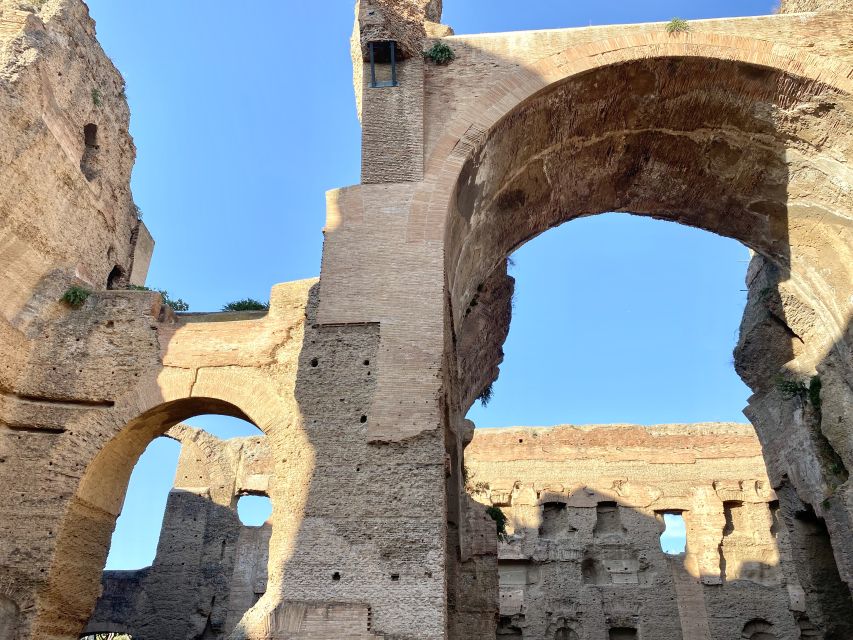
- Best-preserved Roman bath complex: Giant walls, monumental rooms, and a site that still feels whole.
- Headsets that actually help: Sterilized headsets so you can hear your guide clearly.
- An archaeologist-led experience: Live on-site guidance that explains how the systems worked, not just what to look at.
- Underfloor heating explained: You’ll learn about the labor-intensive warmth system under the floor.
- Circus Maximus at ground level: Stand where the Ludi celebrations took place, then hear the stories tied to chariot races and more.
- Small group cap of 10: More questions, less standing around, and a quieter feel in a green archaeological area.
Why Caracalla and Circus Maximus feels different from the Colosseum
Rome has a way of overloading your senses. The classic hits are loud, crowded, and full of photo lines. What I like about pairing Caracalla Baths with Circus Maximus is that it swaps the “marble and elbows” vibe for something more human scale.
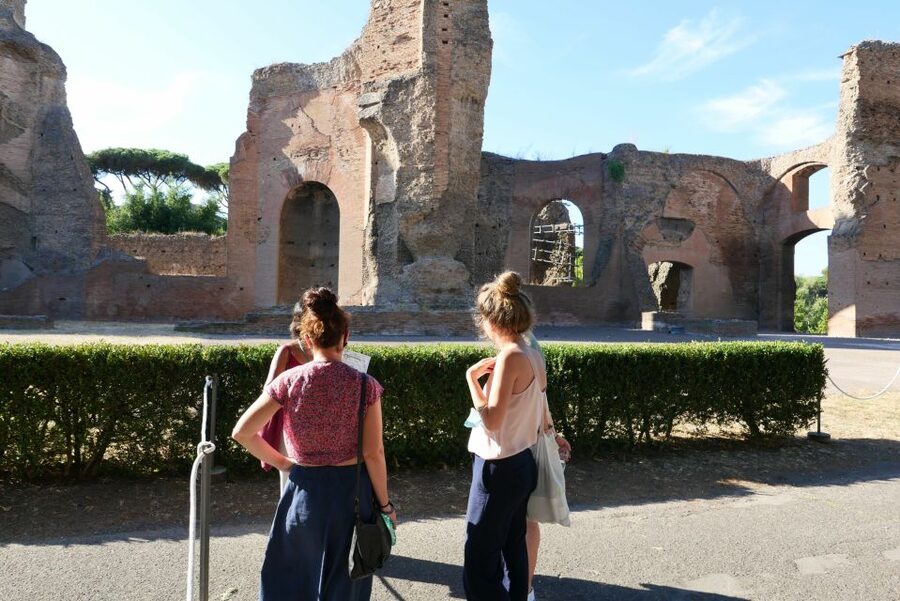
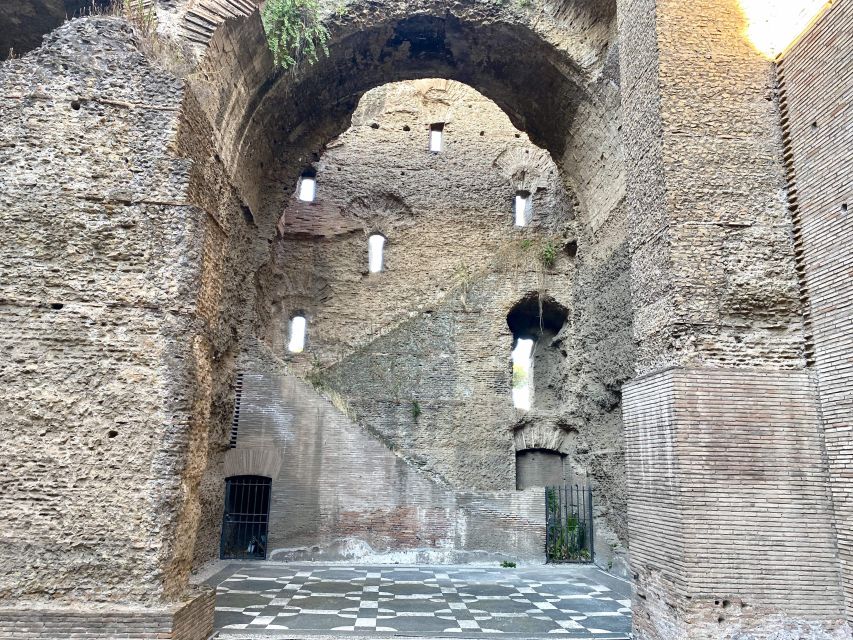
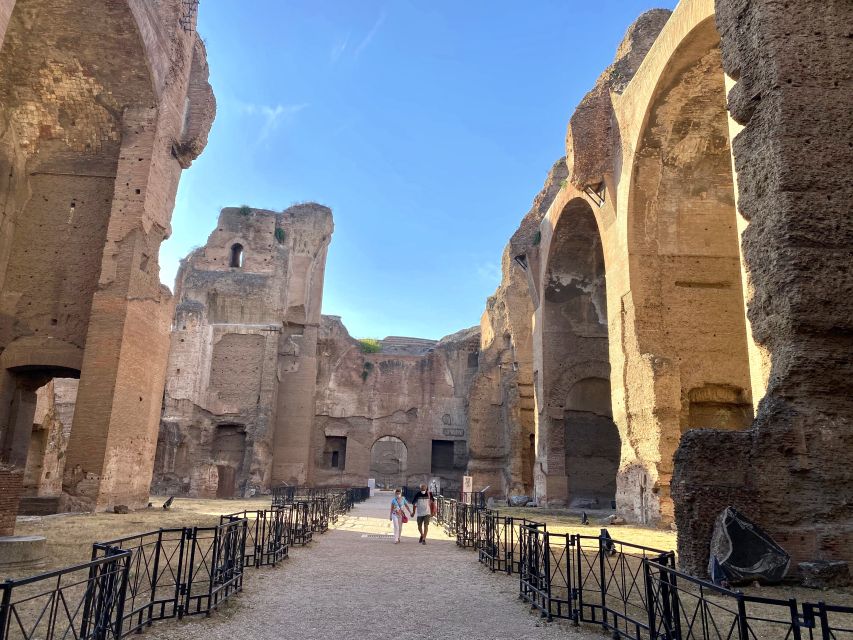
Caracalla is a massive public thermal complex from Imperial Rome, but it doesn’t feel like a tourist trap. It’s in a greener archaeological setting near the Colosseum, and the ruins still have enough height and structure to let your brain do the work. You don’t just read about “big rooms” in a textbook. You walk past walls that were meant to impress regular people who came to relax, socialize, and take care of their body.
Then you head to Circus Maximus, where the big idea is memory. The structure is legendary, and your guide talks about the Ludi, multi-venue celebrations that could last several days. Chariot racing, gladiator-style fights, and public noise are part of the story, but you’re also learning from what’s left behind, plus what the myths say came before the city itself.
You can also read our reviews of more private tours in Rome


Meeting up at Circo Massimo and getting your timing right
The meeting point is straightforward. Meet your guide at the exit of the Metro Station Circo Massimo, specifically in the direction of Laurentina, in front of the FAO building. Look for a yellow label with the local partner name.
This matters because the tour moves quickly through two sites in 1.5 hours. You’ll want your shoes ready, your group gathered, and your brain switched on. The tour also asks you to arrive about 5 minutes early so the sign-up process finishes without stress.
Also keep in mind what you cannot bring in. No pets, no weapons or sharp objects, no baby strollers, and no luggage or large bags. Trolleys and large backpacks are not allowed inside the monuments either. If you’re coming from the hotel with day gear, travel light or plan to leave bulky items elsewhere.
Caracalla Baths: your Roman day, step by step
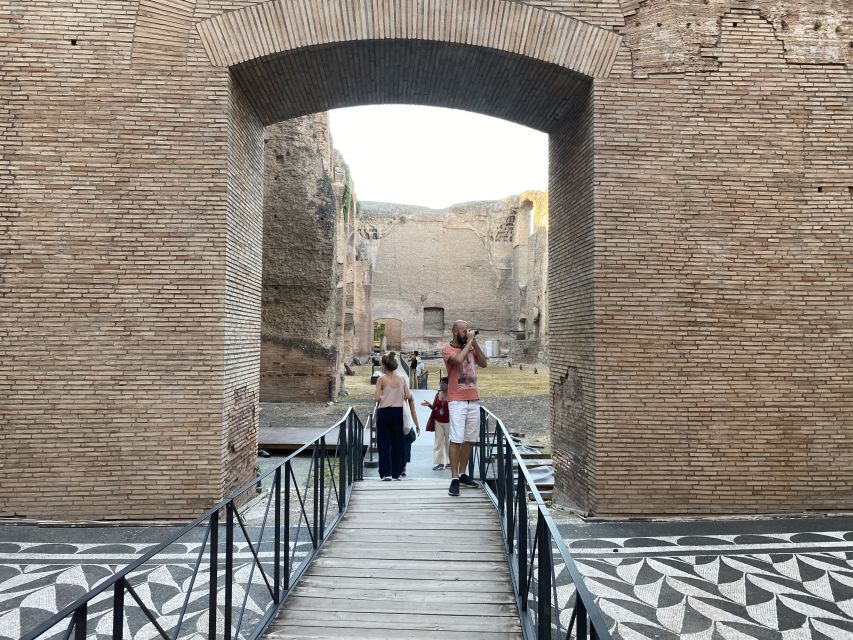
This is the main event. You spend about 1 hour inside the Caracalla Baths complex with your live archaeologist guide.
What makes the Caracalla stop special is that the tour isn’t built like a checklist of ruined rooms. It’s built like a day at the baths. Your guide walks you through the “how you’d live it” version of the site, from the idea of a public spa to the services offered for both body and mind. The point is to connect the architectural scale to real routines, not just dramatic walls.
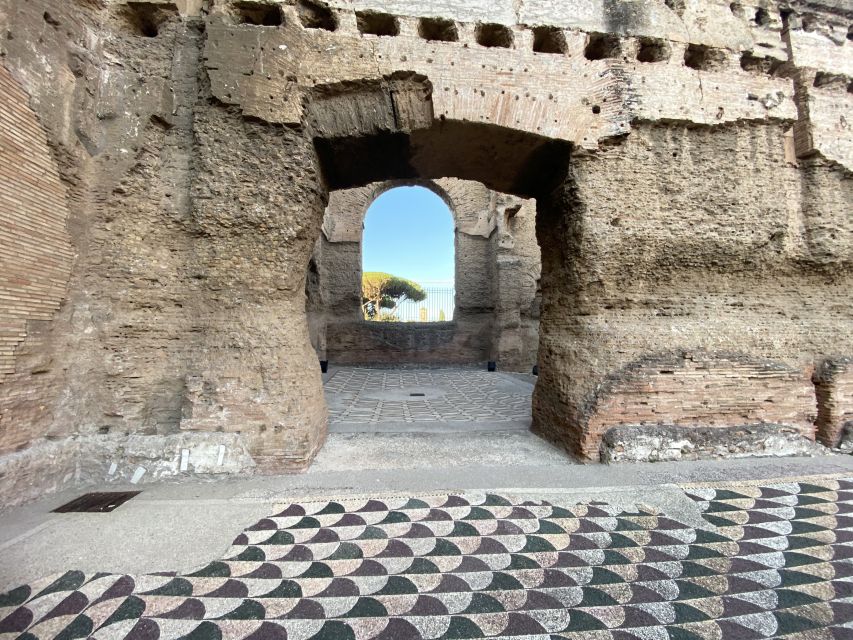
You also get guided interpretation of the best-preserved parts. The walls and monumental rooms are explained in a way that helps you understand what’s still standing and why it matters. Several reviews highlight that guides bring the place to life, with explanations that are clear and easy to follow even when you’re standing in open air ruins.
From the guide-team you might encounter, names like Chiara, Ciara, Cynthia, Francesca, Lars, Anestis, and Samuele come up often. The common thread in the way these guides are described is that they don’t only recite facts. They help you imagine what the site used to feel like as a functioning complex.
The short list of what you’ll cover at the baths
- Exploring the monumental ruins of the Caracalla complex
- Learning about the range of services offered in this ancient spa
- Understanding the labor-intensive underfloor heating system
- Seeing how techniques helped maintain desired temperatures in different rooms
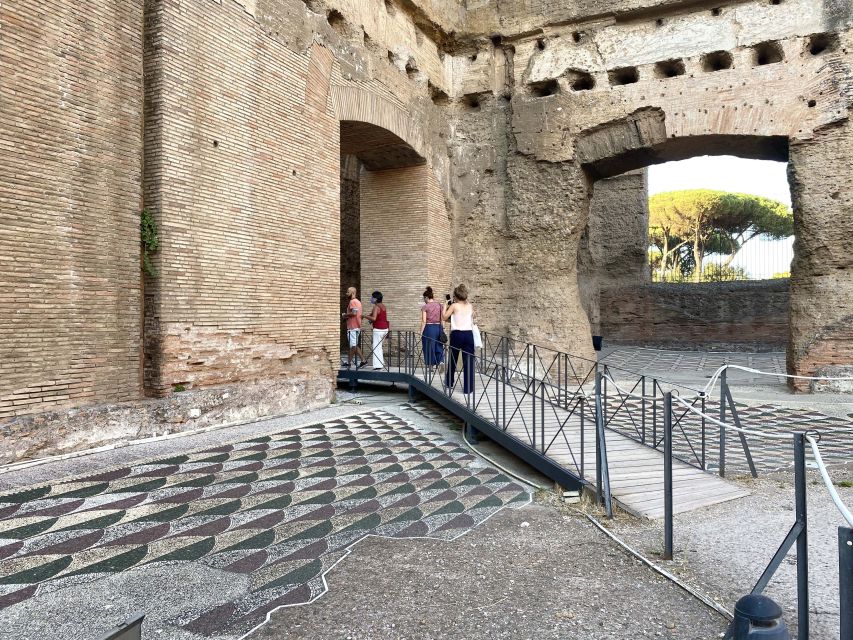
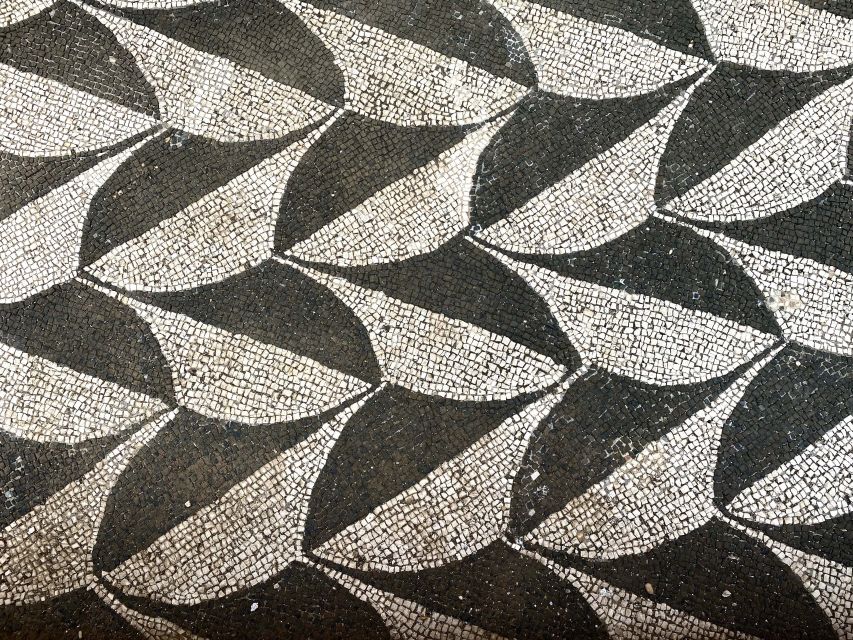
- Noticing mosaic geometric motifs across the site
What to look for at Caracalla, from mosaics to underfloor heat
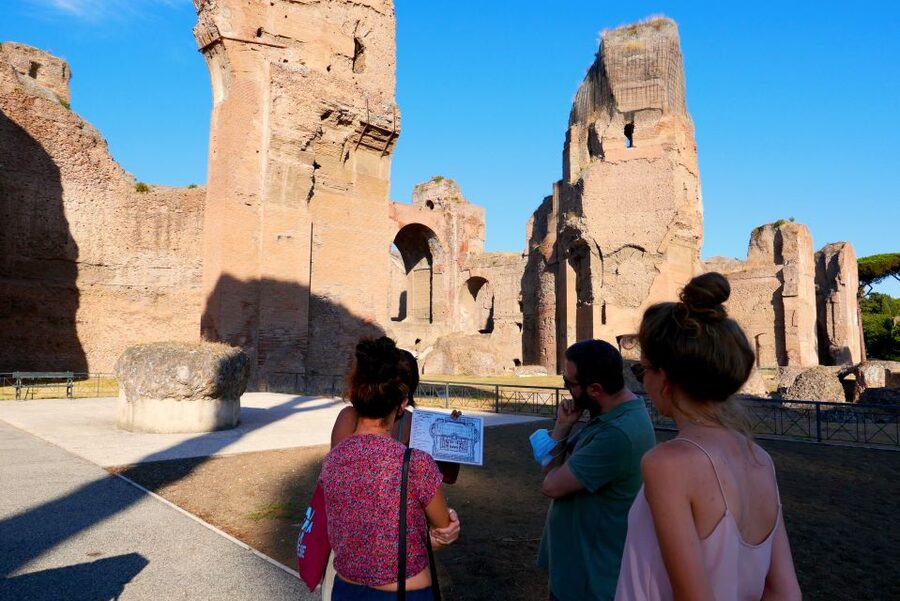
When you’re standing among ruins, your eyes can lock onto one thing and miss the rest. This tour helps you avoid that.
The underfloor heating piece is a big deal. You’ll learn about the labor-intensive system used to heat spaces. Your guide also explains the techniques used to maintain desired temperatures room to room. Even if you’re not a Roman-engineering person, that concept clicks because you can link it to what you see around you: the scale of construction, the way spaces were arranged, and why the baths weren’t just a “bathroom,” they were a temperature-managed environment.
Then there are mosaics. The tour calls out geometric motifs in the mosaics, and this is the kind of detail that makes the experience feel more alive than a general ruins walk. Reviews mention mosaics standing out, and one person specifically highlights mosaics and preserved color and detail. Whether your favorite detail is a pattern, a wall height, or a particular room layout, the guide gives you a reason to look beyond the obvious.




Why the baths feel worth your attention
Caracalla competes with the Colosseum and the Forum for your time. So you need a reason to choose it. The best reason is that Caracalla gives you something different: a huge Roman leisure space that still has a sense of structure. You get to study function, not just spectacle.
Also, Caracalla tends to be calmer. Multiple reviews mention it as less crowded and more peaceful than the busiest center of Rome. If you want Roman history without the constant crowd pressure, that’s a real win.
Circus Maximus: standing where the Ludi happened
After the baths, you head toward Circus Maximus for about 30 minutes.
Here’s the expectation-setting truth: Circus Maximus today is not an intact arena where you can explore every level. A lot is left to the imagination, and that’s exactly why the guide matters. Your guide helps you understand what the place likely meant to Romans and what it hosted.
You’ll hear about the Ludi, described as spectacular multi-venue celebrations held for up to several days. You also get stories tied to chariot races and gladiator fights, plus what the clamor of public entertainment would have sounded like. And there’s a myth-and-origin element too, where you learn about the circus’s foundations in early myths and gods, stretching back into the quasi-legendary era before Rome itself.
Reviews often note that you won’t find much to look at in a literal sense at Circus Maximus. But if you enjoy history that uses the ground under your feet like a map, this stop can still feel satisfying. The tour value here is interpretation: standing at the site and hearing how Romans experienced it.
Private or shared, and why small groups matter here
This tour comes in private or small-group options, with a maximum of 10 participants.
Small groups change the experience at Roman ruins. You move faster because you don’t wait for a large crowd, and you ask questions without shouting across a dozen strangers. Several reviews call out the ability to ask questions in a small group, and some even say the tour became private when there weren’t many people.
If you’re the type who likes to understand why things were built a certain way, you’ll appreciate the pacing. An archaeologist guide can tailor explanations on the spot, and headsets help keep those details clear.
Language options
Your guide can be one of these languages: French, Portuguese, Spanish, English, German, or Italian. If you’re choosing among languages, pick what makes you comfortable asking follow-up questions. That can matter more than you’d think in a 1.5-hour format.
Price and value: what $77 buys you in Rome
At $77 per person for 1.5 hours, the price can feel high at first glance. Here’s how I see the value, based on what’s included.
You’re not just paying for a walk. The price includes:
- Entrance fees to the Caracalla Baths
- Sterilized headsets so you can hear your guide clearly
- A live archaeologist guide
- Full on-site assistance
- Skip the ticket line
That bundle matters because entrance fees and guide time both add up fast in Rome. You also get express coverage of two major leisure sites in one go. If you were visiting on your own, you’d likely lose time either buying tickets, figuring out routes, or searching for explanations that match what you’re actually seeing.
One extra value factor: timing. You get an hour at Caracalla, then you get a focused 30 minutes at Circus Maximus. It keeps the experience from stretching into a long day when you might be tired and out of energy.
The main trade-off
The tour is short. If Circus Maximus is the reason you booked, you might feel the time there is brief. If Caracalla is the reason you booked, the time allocation makes more sense.
Who should book this Caracalla and Circus Maximus tour?
I think this tour is a strong fit if you want Roman leisure rather than only Roman power.
Book it if:
- You like guided explanations of how people lived, not just a monument parade
- You want Caracalla Baths specifically, and you want that interpretation without crowd stress
- You enjoy small-group history where you can ask questions
- You’re curious about Roman engineering basics, like the underfloor heating system and temperature control
You might skip or pair differently if:
- You’re expecting Circus Maximus to look like a fully preserved coliseum-style arena
- You only want a “best photos” stop, because Circus Maximus is more about what you can imagine than what you can photograph up close
Before you go: shoes, rules, and documents
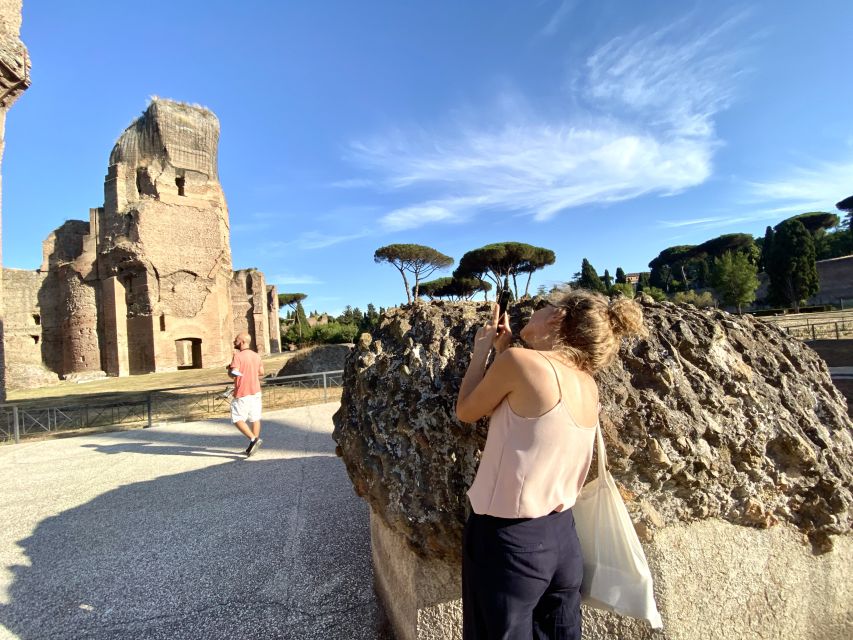
Wear comfortable walking shoes. The tour includes plenty of walking on uneven surfaces around monuments.
Bring no extra chaos. Pets are not allowed, and you also can’t bring luggage or large bags, plus you should leave behind anything sharp. Baby strollers are not allowed either.
One important admin detail: participants younger than 18, and European citizens under 25, are expected to carry an official document or a digital copy. That’s the kind of rule that can cause trouble at the last moment, so handle it early.
And yes, weather can affect the schedule. If conditions are unfavorable, the tour could be canceled, and you’ll be offered an alternative date or a full refund.
Should you book this tour?
If your goal is to see Caracalla Baths with real context, this is an easy yes. The combination of an archaeologist guide, headsets, skip-the-line access, and a focused 1.5-hour plan is a practical way to get the most from a site that people often miss in favor of the Colosseum.
I’d especially book it if you want Rome that feels calmer. Caracalla’s scale plus the smaller group cap (10 people) creates the kind of experience where you can actually take in details like mosaics and the logic behind heating.
The only real reason to hesitate is if you’re expecting Circus Maximus to be visually dramatic today. It’s more of a “stand here and hear the story” stop. If that matches your style of travel, you’ll leave with a stronger sense of how Romans spent their time, not just what they built.
FAQ
How long is the Caracalla Baths and Circus Maximus tour?
The tour lasts 1.5 hours total, with about 1 hour at the Baths of Caracalla and about 30 minutes at Circus Maximus.
Where do I meet the guide?
Meet at the exit of the Metro Station Circo Massimo (direction of Laurentina) in front of the FAO building. Look for a yellow label with the local partner’s name.
Is this tour private or shared?
It’s offered as private or shared in small groups, with a maximum of 10 participants.
What’s included in the price?
Entrance fees to the Caracalla Baths are included, along with sterilized headsets, a live archaeologist guide, and full on-site assistance. You also skip the ticket line.
What languages are available?
The live guide is available in French, Portuguese, Spanish, English, German, and Italian.
Is the tour wheelchair accessible?
Yes, it is wheelchair accessible.
What should I wear or bring?
Wear comfortable shoes. That’s the main item called out for what to bring.
Are there any restrictions on what I can bring?
Yes. Pets are not allowed. Weapons or sharp objects, baby strollers, luggage or large bags, drones, and trolleys or large backpacks are not allowed inside the monuments.
Do I need an ID?
If you are under 18, or if you are a European citizen under 25, you must carry an official document, or a digital copy.
More Private Tours in Rome


More Tour Reviews in Rome



Not for you? Here's more nearby things to do in Rome we have reviewed









Ancient Rome Tours, compared.
 ★ 4.7Colosseum: Underground and Ancient Rome TourFrom $16012,691 reviews
 ★ 4.4Colosseum, Ancient Rome Tour or Self AudioGuided TourFrom $392,866 reviews
 ★ 4.9Appian Way, Catacombs, & Roman Aqueducts E-bike TourFrom $851,421 reviews
 ★ 4.9Appian Way E-bike Tour with Catacombs, Aqueducts & FoodFrom $961,210 reviews
 ★ 5.0Appian Way Aqueducts Bike Tour (Catacombs & Lunch Option)From $78975 reviews
 ★ 4.7Appian Way, Aqueducts, and Catacombs TourFrom $64942 reviews
 ★ 4.7Colosseum Arena Access and Ancient Rome Guided TourFrom $94774 reviews
 ★ 5.0Appian Way, Catacombs and Aqueducts Park Tour with Top E-BikeFrom $102735 reviews
Browse the lists this tour appears in