
Reviewed · ANCIENT ROME TOURS
Ancient Rome Tour in a Golf Cart
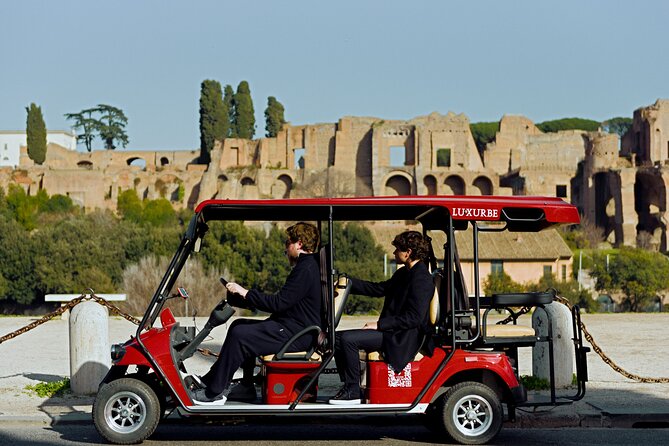
Rome in a golf cart is weirdly perfect. You cover major sights fast, learn as you go, and get stop-and-photo moments without turning your day into a long slog across broken sidewalks. I like that it mixes classic landmarks with quick context so you understand what you are looking at, not just what it looks like.
Two things I especially liked: the small-group feel (up to 15) and the fact that you get an actual licensed guide who also drives. One thing to consider: you see everything from the outside, so if you are chasing ticketed museum time, you will still need a separate plan for that.
Key Things You’ll Notice on This Rome Golf Cart Tour

- Outside-only viewing, with time to stop for explanations and pictures
- A licensed guide-driver who keeps the history flowing while you move
- Tight stop schedule across Via dei Condotti, the Forum area, and the big arenas
- Headsets if needed, plus interactive reading material to follow along
- Comfort over walking, but expect a slightly bumpy ride on older streets
Why This 3-Hour Golf Cart Format Works in Rome
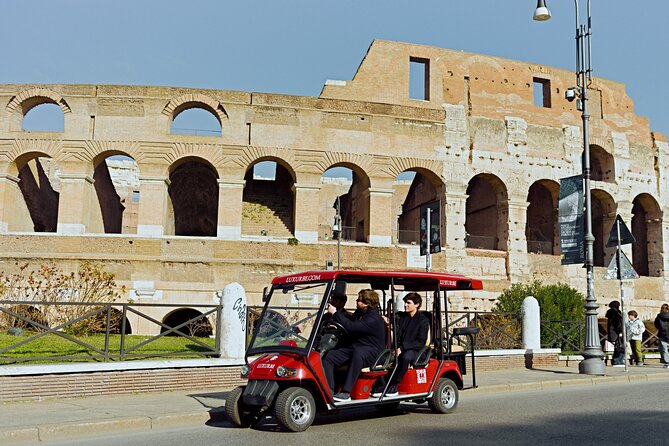
Rome can be overwhelming in the first 24 hours. This tour is a smart way to get your bearings without committing to a full day of heavy walking. In about three hours, you roll past and stop at a run of major Ancient Rome landmarks, with built-in time to take photos and absorb the story.
The golf cart format also helps you keep your energy for the rest of your trip. You are not fighting fatigue just to see the highlights. And because the guide drives and speaks, you are not losing time to transfers or waiting around for someone else to catch up.
Yes, it is not the kind of tour where you linger forever at one site. But for most first-timers, that is the point. You get the big outlines of Roman power, from the fashion street approach to Nero’s luxury to the spectacle venues.
You can also read our reviews of more tours and experiences in Rome.

Finding the Cart at Via dei Condotti 61 Without Losing Your Mind
Your meeting point is Via dei Condotti 61, in the middle of Rome’s luxury shopping street. You wait directly in front of the building entrance. There is no obvious Luxurbe sign or storefront to look for. Instead, you watch for the golf cart driver, who should be easy to recognize.
This matters more than you might think. Via dei Condotti is busy and filled with storefronts, so arriving with a calm plan helps. I recommend you arrive a little early, stand in one spot, and be ready to identify your guide or driver quickly.
Pickup can be offered, and if you booked a custom pickup, your driver contacts you shortly before arrival. Still, if you are not using pickup, treat Via dei Condotti 61 as your anchor. Once you know the meeting point, the rest of the day becomes simple.
Via dei Condotti: Fashion Street Gets a Roman-Emperor Context
The tour starts and ends near Via dei Condotti, the famous stretch from Piazza di Spagna toward Via del Corso. This is the part of Rome where the city suddenly looks like a movie set, mostly because it has been used in so many films.
On this tour, the point is not shopping. It is orientation. You ride by the high-end boutiques and elegant buildings, then you connect what you see here with what you will see later: streets and monuments that are layered with centuries of power and public life.
You only spend around 10 minutes in this first stop. That is enough to get the feel of the neighborhood and pick out landmarks in your mind so you can find them later when you are walking on your own.
If you like photography, this is also a nice early warm-up, because your camera will still be fresh and you are not yet sitting through the long lens of archaeological reality.
Largo di Torre Argentina: Temples, Ruins, and the Cat Sanctuary Stop
One of my favorite stops on an Ancient Rome day is when the ruins feel lived in. Largo di Torre Argentina does that. This historic square holds ancient Republican-era remains, including four temples and the Curia of Pompey.
You also get an added, very modern feature: it is famous for a cat sanctuary, where stray cats are cared for among the ruins. That mix of ancient stone and active animal care makes the place feel human, not museum-distant.
You get about 20 minutes here. That is a solid amount of time for a square this packed with details. You can look around, take a few photos, and listen while the guide connects the dots so you understand why this area matters in the Roman political story.
A practical note: squares can be windier and hotter than you expect. If you are traveling in warm months, bring sunglasses and something to protect your face from sun glare.
Piazza Venezia, the Theatre of Marcellus, and the Roman Forum Neighborhood
If you want one “mental map” moment, this is it. You move through the center of Rome’s layers and you get multiple stops in the general archaeological zone.
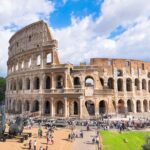



Piazza Venezia (about 20 minutes)
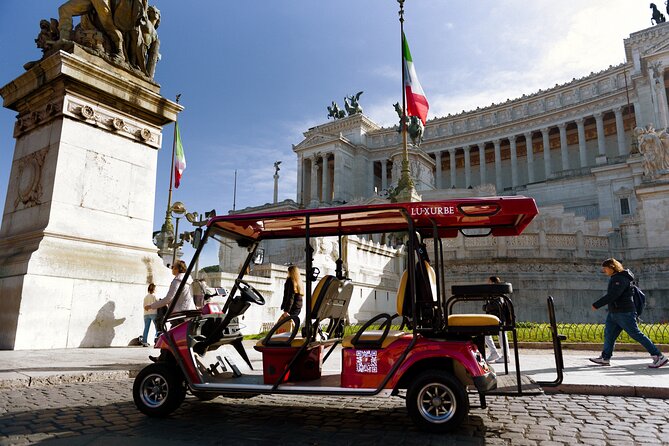
Piazza Venezia is dominated by the grand Altare della Patria, built to honor Victor Emmanuel II. The square is also a key junction that connects major roads and helps you orient toward sites like the Roman Forum and Capitoline Hill.
Even if the monument is newer than the ruins, it is useful. It gives you a landmark you can return to later when you are trying to line up where everything sits.
The Theatre of Marcellus (about 20 minutes)
Next up is the Theatre of Marcellus, an open-air theatre built in the late 1st century BC and commissioned by Julius Caesar, then completed by Augustus. It could once hold around 20,000 spectators.
This stop is a great reminder that Rome did not just build arenas. It built performance spaces, too. And in terms of architecture, it also connects as a precursor to the Colosseum. So when you later see the Colosseum, the “family resemblance” makes more sense.
Forum Piscarium (about 10 minutes)
Then you get a quick look at Forum Piscarium, an ancient fish market near the Forum and the Theatre of Marcellus. It was established in the early Roman Republic and functioned as a central marketplace for seafood.
It is short, but it helps you understand Roman daily life beyond politics and monuments. This is the stuff that makes the city feel real, trade, food, and commerce.
Temple of Venus and Rome and Nero’s Domus Aurea: When Rome Went Big
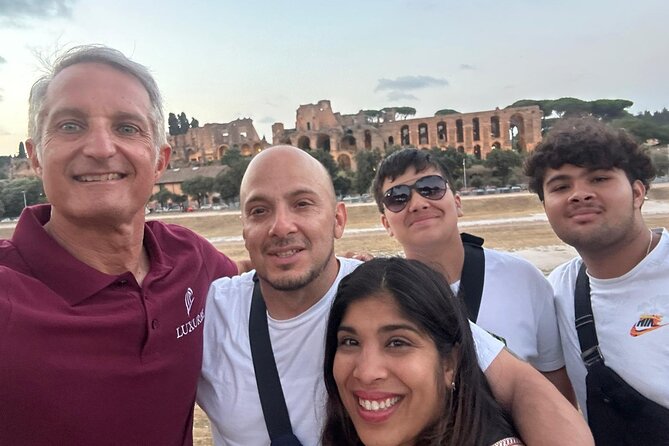
Some stops on this tour are about crowd energy. Others are about ego. Two of the biggest “ego stops” are the Temple of Venus and Rome and the Domus Aurea.
Temple of Venus and Rome (about 20 minutes)
This temple was dedicated to Venus Felix and Roma Aeterna. It was designed by Emperor Hadrian and completed in 135 AD. It is described as the largest temple in Ancient Rome.
When you hear that it was the largest, it changes how you view everything. You start to notice how Roman architecture often tried to overwhelm the viewer with scale, symmetry, and a sense of permanent authority.
Domus Aurea (about 20 minutes)
Then comes the Domus Aurea, Emperor Nero’s vast palace complex built after the Great Fire of 64 AD. It is known for lavish frescoes, gold-plated walls, and detailed mosaics.
Here is the catch and why it is still worth your time: the palace remains are underground, hidden for centuries. So the tour experience here is about context and visual imagination. You are not touring grand rooms in real time. You are learning what it once was and how it shaped Roman perception of power and wealth.
If you like narrative history, this pairing works well. Hadrian’s big temple and Nero’s luxurious palace show two different ways Roman emperors tried to control the story.
Colosseum and Imperial Forums: Outside Views With Enough Context to Revisit Later
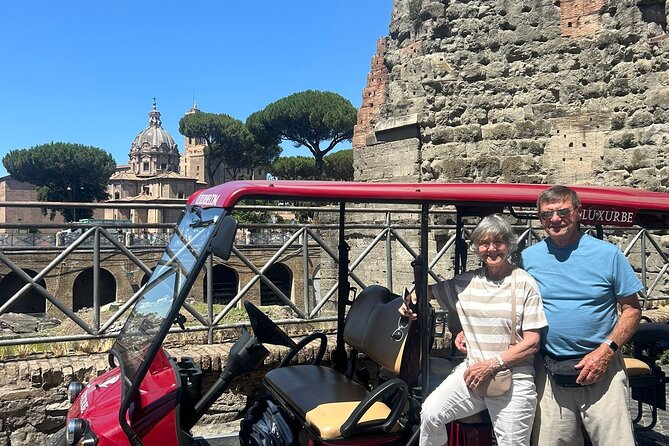
The tour hits two of Rome’s heaviest hitters: the Colosseum and the Imperial Forums. You might expect the day to feel rushed here, but the format keeps it organized. You pause at each site, the guide explains what you are seeing, and you get time for pictures.
Colosseum (about 20 minutes)
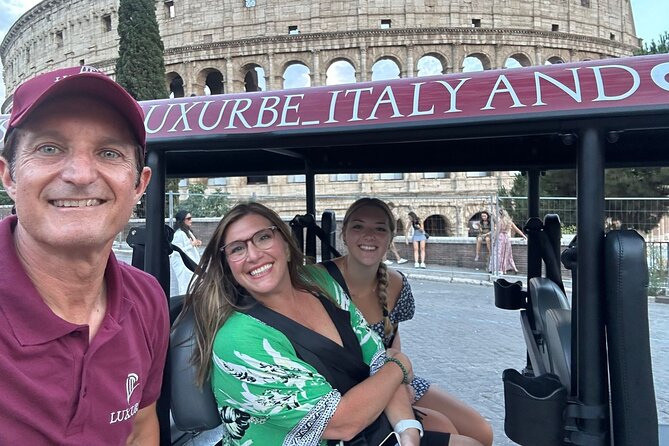
The Colosseum is the iconic amphitheater built in 80 AD under Emperor Vespasian. It hosted gladiatorial contests and public spectacles, and seating could reach around 50,000.
You see it from the outside, but that is still a meaningful moment. The guide helps you recognize the scale and the design logic so it does not just look like a giant ruin. You start to understand how engineering made mass entertainment possible.
My advice: take your photos from multiple angles during the stop. The building looks different from different viewpoints, and you will thank yourself later when you are comparing those pictures to what you see on your next visit.
Imperial Forums (about 20 minutes)
The Imperial Forums are a series of monumental public squares built between 46 BC and 113 AD, commissioned by different emperors like Julius Caesar and Trajan. These forums were centers for politics, commerce, and religion.
Outside viewing can be a challenge with ruins because your brain wants a full reconstruction. This is where the interactive reading material and headsets help, if you use them. Even if you are not inside, you can still follow how the spaces connected.
Circus Maximus: The Long, Low Reminder of Roman Spectacle
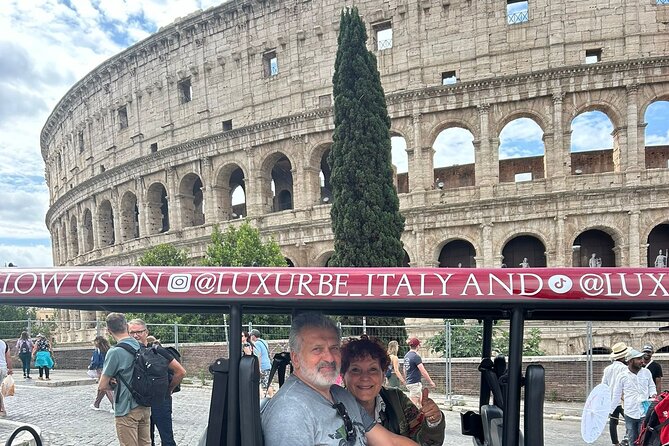
The tour finishes with Circus Maximus, Rome’s ancient chariot racing stadium and entertainment venue. It was built as far back as the 6th century BC and accommodated over 150,000 spectators. Today, the elongated shape still reads clearly enough to feel the scale.
This stop is a good closer because it expands your idea of Roman entertainment beyond the Colosseum. Rome liked crowds, noise, speed, and ritual. Circus Maximus is built for that feeling.
You get about 20 minutes here. That is long enough to notice the layout and take photos that capture the sweep of the site. When you leave, you will likely understand why the location is still referenced when people talk about Roman spectacle and mass gatherings.
How Comfortable Is the Ride, Really?
Here is the honest balance. Most people like the ease of not walking all day, and the golf cart helps you cover ground quickly and safely. Guides also keep the energy up, and some guides are known for being patient and informative even in heat.
That said, Rome’s streets are not built for smooth rolling. Some folks find the ride a little shaky, especially as the cart navigates uneven roads. Think of it like being in a motorized cart on older pavement. If you are sensitive to bumps or you have balance concerns, you should factor that in.
If you want the best experience, use simple tactics:
- Wear secure shoes, even if you are not doing long walks.
- Hold on when the cart turns or changes pace.
- Consider bringing a light layer for sun and wind, depending on season.
Price and Value: Is $84.46 Worth It?
At $84.46 per person for about three hours, you are paying for speed, convenience, and guided context. You are also paying for the format: golf cart transport plus a licensed guide who drives and explains, plus interactive reading material and headsets if needed.
The value gets better when you are trying to do Rome in a short window. On an arrival day, you can get your bearings fast. If you want to go back later for deeper looks, this tour gives you the map in your head and the names to anchor your follow-up plans.
It is less of a value play if your goal is an inside-access tour, because everything on this route is described as outside viewing only. You will still likely return to places like the Colosseum or Forum areas for interior or guided ticket experiences.
Also, bring bottled water because it is not included. This is one of those small details that can make the difference between a fun ride and a grumpy one.
Who Should Book This Rome Golf Cart Tour?
You should book if you want:
- A fast introduction to big Ancient Rome landmarks without long walking
- A guided overview with context so the sites make sense
- A small group setup with lots of photo and explanation stops
You might think twice if:
- You need inside access to museums or monuments on the schedule
- You are very sensitive to a slightly bumpy ride due to road conditions
- You want a slow, deep archaeology seminar at one site
It is a solid first-day plan. It also pairs well with a later day where you pick two or three sites to visit more carefully on foot.
Should You Book This Ancient Rome Golf Cart Tour?
If you want a practical, fun, and efficient overview of Ancient Rome, I’d say yes. This tour does what it promises: it gets you to the headline sites, it stops long enough for real photos and explanations, and it keeps you moving with less fatigue.
The biggest win is the combination of guide-driven navigation and outside viewing with built-in learning. You end with a clearer sense of where you are in Rome and what you want to return to.
If you are the kind of traveler who hates logistical friction and wants to spend your time learning instead of figuring out transit, you will likely enjoy this a lot.
FAQ
Is pickup available for this tour?
Pickup is offered. If you book a custom pickup, the driver will contact you shortly before arrival. The tour also has a set meeting point at Via dei Condotti 61.
Where is the meeting point?
The meeting point is Via dei Condotti, 61, 00187 Rome, Italy. You wait directly in front of the building entrance.
How long is the Ancient Rome golf cart tour?
The duration is about 3 hours.
What language is the tour offered in?
The tour is offered in English.
What is included in the price?
Included are golf cart transportation, a licensed guide (who is also the driver), interactive reading material, and headsets if required.
Are the monuments visited from inside?
No. The tour states that participants will see the monuments from outside. The guide stops at each monument for explanations and pictures.
Is bottled water included?
No, bottled water is not included.
What is the cancellation policy?
You can cancel for a full refund up to 24 hours in advance of the experience start time, with cut-off times based on local time.
More Tours in Rome
More Tour Reviews in Rome
Not for you? Here's more nearby things to do in Rome we have reviewed







Ancient Rome Tours, compared.
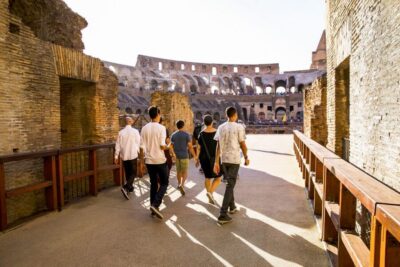 ★ 4.7Colosseum: Underground and Ancient Rome TourFrom $16012,691 reviews
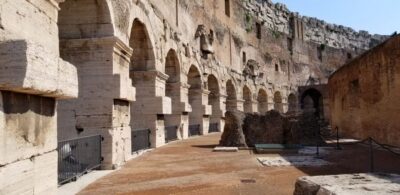 ★ 4.4Colosseum, Ancient Rome Tour or Self AudioGuided TourFrom $392,866 reviews
 ★ 4.9Appian Way, Catacombs, & Roman Aqueducts E-bike TourFrom $851,421 reviews
 ★ 4.9Appian Way E-bike Tour with Catacombs, Aqueducts & FoodFrom $961,210 reviews
 ★ 5.0Appian Way Aqueducts Bike Tour (Catacombs & Lunch Option)From $78975 reviews
 ★ 4.7Appian Way, Aqueducts, and Catacombs TourFrom $64942 reviews
 ★ 4.7Caracalla Baths & Circus Maximus — Private or SharedFrom $77835 reviews
 ★ 4.7Colosseum Arena Access and Ancient Rome Guided TourFrom $94774 reviews
Browse the lists this tour appears in