
Reviewed · CATACOMBS & UNDERGROUND TOURS
Navova square underground with audioguide
Rome gets weirder, and cooler, underground. You’re going below street level in Piazza Navona to see the remains of an ancient stadium, explained by an English audio guide with panels and 3D video. It is a smart detour if you like history that feels real, not just pictured on a postcard.
What I like most is the certainty of admission and the fact you can walk in with a PDF ticket and start when you’re ready. Second, you get a clear story about ancient Roman sports and games, with the focus narrowing in on the stadium and the square.
One thing to consider: the experience is short, around 45 minutes, so if you’re hoping for a big, slow, guided deep-dive, this may feel too compact. Also, the price can be higher than a basic same-day ticket because advance bookings often include extra fees and taxes.
Key Highlights You Will Notice Fast
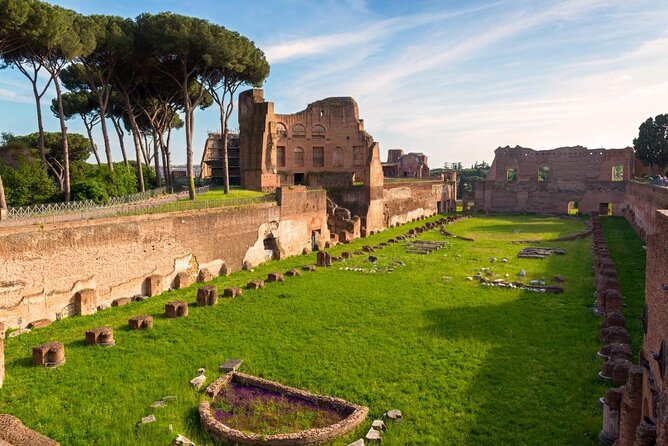
- Underground placement: You descend roughly 5 meters below street level to the excavations.
- Domitian Stadium ruins in UNESCO territory: This is the archaeological site tied to Piazza Navona’s UNESCO setting.
- Masonry stadium rarity: You’re looking at the first and only known masonry stadium example in Rome of this type.
- Audio guide designed for real pacing: You do it on your schedule, not on a group march.
- Sport from Greece to Imperial Rome: Panels and 3D video connect ancient games to what happened here under the Empire.
- Admission is included: You are paying for entry plus the audio experience, not just the commentary.
Piazza Navona Underground: What You’re Actually Standing On
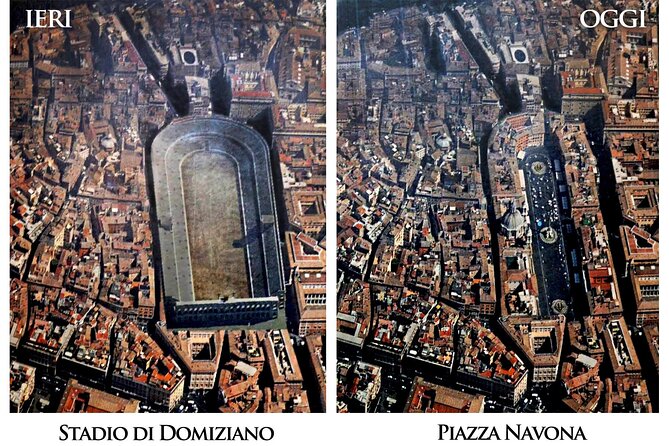
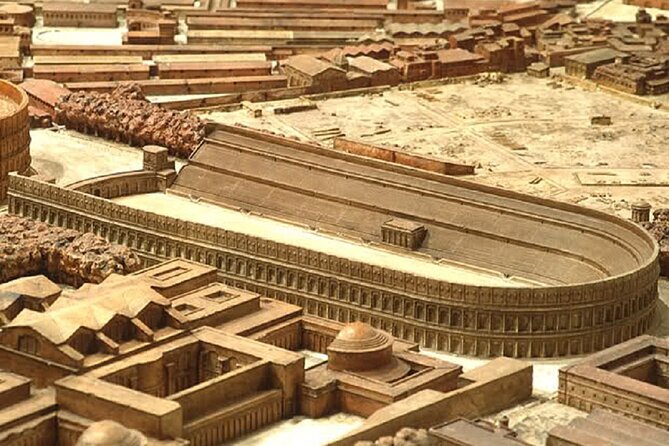
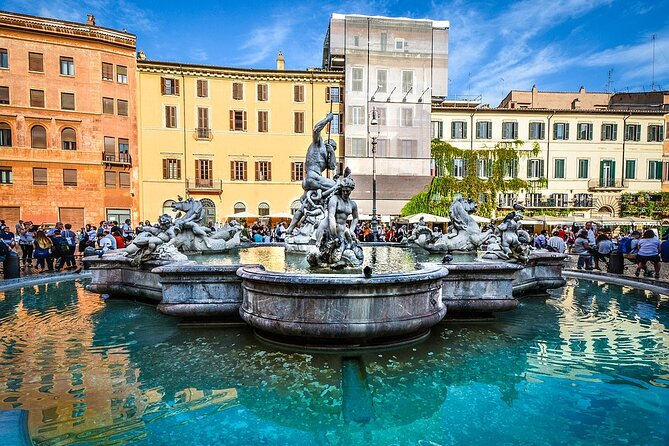
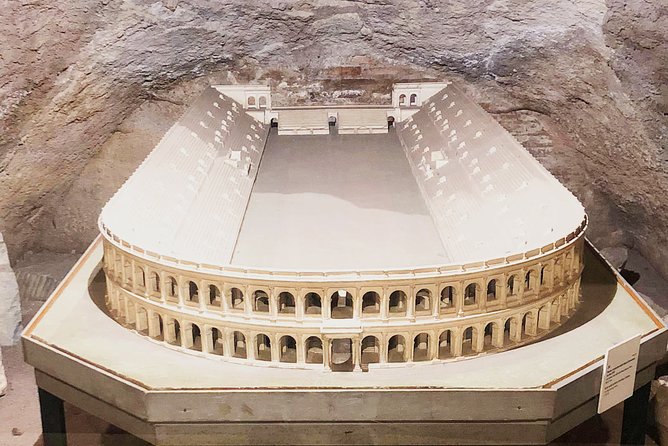
Piazza Navona looks dramatic from the street, all fountains and baroque curves. Then you go underground, and the tone changes fast. The ruins you’re visiting are tied to the Stadio di Domiziano, a stadium area associated with Domitian’s Rome, sitting about 4.50 meters below street level. That detail matters because it sets expectations: you are not looking at a model. You are looking at excavated remains, in the space where they once functioned.
This site is also newer than you might guess. It first opened to the public in 2014, which helps explain why the visit often feels organized and interpretive. Instead of wandering through an unmapped pile of stone, you get a guided structure via the audio guide plus on-site panels and visuals. You descend down into the excavations and you stay with the main story rather than getting lost in fragments.
The big archaeological hook is the stadium itself. What survives is described as the first and only example of a masonry stadium up to now known in Rome. That is the kind of detail history fans love because it is not just a famous name, it is a specific construction story. Rome has plenty of ruins, but this one is notable for what it was made of, and what it represents about sports and public life.
And since this is Piazza Navona, the setting is layered. You are seeing how a sporting venue from the Roman Empire relates to the later identity of the square above it. Even if you know Rome’s basics, this adds a different time period to the same walking route you likely already planned.
You can also read our reviews of more tours and experiences in Rome.



Stadio di Domiziano and Why Ancient Sports Feel Different Here
A lot of Rome tours talk about emperors, monuments, and architecture. Here, the focus shifts to sport and games. That is refreshing, and it is also a useful way to understand Roman culture. Sports were not only entertainment. They also reflected status, civic life, and how Romans organized public spectacles.
The audio experience is built to connect that bigger idea to what you can see on the ground. As you move through the underground space, the commentary and visuals zero in on the stadium and the square you’re standing in. You are not just told that sports existed. You are guided through how sport looked and worked across different eras.
The audio guide content covers a wide time span, from ancient Greece to Imperial Rome. That matters because it gives you a comparison point. Even if you only catch bits while walking, you start to see that Roman sports were not invented from nothing. They grew from earlier traditions and then were shaped by Roman political and architectural habits.
The visit also highlights what remains and what that means. The ruins are all that’s left of a specific type of stadium. So the story is partly about loss and survival. You see remnants, but the explanations help you picture the whole function: where people would have watched, how the space would have felt, and why this kind of venue was worth building in masonry in the first place.
If you like learning a city from the inside, this is a neat approach. Rome is often about what stands above. This is about what used to run below.
The Audio Guide Experience: Panels, 3D Video, and Your Pace
The format is one of the most practical things about the experience. Instead of being tied to a live guide schedule, you get an English audio guide designed to help you explore at your own pace. You can pause, re-listen, or move on. For many travelers, that is the difference between a rushed history stop and an actually enjoyable one.
The experience includes interpretive media beyond audio. You get panels and 3D video, and the information is set up so it works even for children. That’s a surprisingly big deal. Not every underground site figures out how to explain ancient life in a way that holds attention. Here, the materials are meant to carry the story visually and clearly, not just through spoken narration.
I also like the structure implied by the design. You are descending, then you are oriented, then the story follows the space. That usually leads to a better visit than random wandering, because your brain gets landmarks. You start connecting what you see with what you hear.
One tip: treat the audio like you’re taking notes for yourself. If you are the type who likes to understand, slow down in the sections where the commentary is clearly explaining the stadium concept. If you are more of a quick passer, just keep the track running and let the visuals do the heavy lifting.
The result is a visit that feels modern in presentation but ancient in subject matter. It is a good match for Rome, where the streets are old but the visitor experience keeps improving.
How the 45 Minutes Feel in Real Life
The visit runs about 45 minutes. That’s short enough to fit into a packed day, but long enough to actually absorb the key ideas if you don’t race. If your Rome plan includes big-ticket sites, this is a smart “in-between” stop. You can do it without feeling like you sacrificed half your day.
You also skip the stress of hunting tickets on site. Admission is included, and you secure your place in advance. On arrival, you show a PDF ticket at the entrance. That is simple, and it saves time if you are bouncing between other stops in central Rome.
The location also helps. It is near public transportation, so you can attach it to a neighborhood plan instead of treating it as a separate expedition.
One reality check: because it is underground and the time is fixed, plan your energy level. You do not want to schedule this as the last activity after a long night. It is easy to lose the thread when you are tired. If you go earlier in the day, you’re more likely to catch the story beats that make the underground space click.
Price and Value: Does $25.53 Make Sense?
The price is listed at $25.53 per person, and admission is included in that cost. That already puts it in a different category than a basic ticket where you only pay entry. Here, you are also paying for the audio experience with panels and 3D video.
Now, the tricky part with Rome ticket pricing is that the headline number can be misleading. One theme that pops up when people talk about small archaeological sites is the difference between a basic on-site rate and the total you pay through an advance platform. If you buy day of, you might find a basic ticket price around the 8€ range. But if you book online through a service that adds fees and taxes, the total can come out higher. In other words, your $25.53 can be less about the site itself and more about the transaction method.
So when does this still feel worth it?
- When you want guaranteed access without line anxiety.
- When you like having an experience designed around the visit time, not just a ticket and a map.
- When you would rather spend energy on other Rome stops than on ticket desk logistics.
When might it feel like a stretch?
- If you are flexible and okay with taking your chances on the day.
- If you are trying to hit the lowest possible price for a quick look.
My take: if you tend to prioritize time certainty in Rome, this kind of packaged ticket is often a good bargain. If you are strict on cost and you travel light with no stress tolerance for lines or sold-out scenarios, you may prefer purchasing directly on site.
Either way, the underground experience itself is the same. The value equation is mainly about your preferences, not the stones.






Who This Underground Visit Fits Best
This is a strong match for people who like a few things at once: a real archaeological site, a focused theme, and a visit that does not demand stamina. The highlight is clearly for history fans who want to get off the busiest routes.
It also fits well if you travel with kids or teens who can handle audio. The materials are described as available even for children, and the 3D video and panels make it easier to keep attention down there. If your family is tired of the “same old big sights,” this is the kind of stop that feels fresh because it changes the setting.
If you are the type who usually wants a live guide and lots of talk time, you might find this too self-paced. There is value in doing it your own way, but you are trading live narration for flexibility. Still, the audio content is doing the storytelling job.
If you are a “Rome architecture only” traveler, the sports angle might feel niche. Yet the stadium ruins are what make the story concrete. You’re not learning about sports in the abstract. You’re learning about how one particular venue worked and why it matters, right where it once stood.
Practical Tips Before You Go Below Street Level
A few small prep moves make a big difference for an underground site.
1) Wear comfortable shoes. You’re descending and moving around in an excavation space, so you want stable footing.
2) Give yourself time to slow down. Forty-five minutes sounds tight, but you can stretch it by listening carefully and watching the 3D visuals.
3) Have your PDF ticket ready. Save it on your phone or keep it easy to access. Showing it smoothly keeps the visit calm right from the start.
4) Plan it earlier in the day if you can. The story lands better when you’re not rushing your brain.
5) Expect a focused experience, not a giant museum. You’re here for a specific archaeological site and its theme. Treat it like a curated stop, even though you control your pace.
6) Know that weather can matter for your booking. The experience is noted as requiring good weather, and if it is canceled due to poor conditions, you should be offered a different date or a full refund.
If you go in with the right mindset, this feels like a smart way to see “another Rome” without paying an entire day’s worth of energy.
Should You Book the Navona Square Underground Audioguide?

If you love off-the-radar Rome, this is an easy yes. The underground setting is a real contrast to the surface square, and the story about ancient Roman sports gives you a theme that many visitors skip. I also like the structure: admission is included, you get an audio guide in English, and the panels and 3D video help you understand what you’re seeing without needing a separate live guide.
I would hesitate if price is your top priority and you are the kind of traveler who enjoys taking chances. In that case, a basic on-site ticket option might cost less, though you risk availability. I also think it is not the best choice if you want a long guided experience, because this one is built for about 45 minutes.
For most people, though, this hits a sweet spot: authentic ruins, modern interpretation, and enough time saved to enjoy the rest of Rome above.
FAQ
How long is the Navona Square Underground visit?
The visit is approximately 45 minutes.
Is the audio guide available in English?
Yes, the experience is offered in English.
What is included with the ticket price?
The admission ticket is included, along with the audio guide experience.
Do I need to print anything, or can I use a digital ticket?
You will receive your ticket as a PDF, and you should show it at the entrance.
Is the experience near public transportation?
Yes, it is near public transportation.
What happens if the weather is poor?
The experience requires good weather. If it is canceled due to poor weather, you will be offered a different date or a full refund.
Can I cancel for free?
Yes. You can cancel for a full refund if you cancel at least 24 hours before the experience’s start time.
More Tour Reviews in Rome
Not for you? Here's more nearby things to do in Rome we have reviewed












Catacombs & Underground Tours, compared.
 ★ 4.7Colosseum: Underground and Ancient Rome TourFrom $16012,691 reviews
 ★ 4.6Crypts and Catacombs Underground Tour with TransfersFrom $745,341 reviews
 ★ 4.7Colosseum Underground Small Group Guided TourFrom $1054,844 reviews
 ★ 4.8St. Peter’s Basilica, Dome Climb, and Underground TourFrom $383,404 reviews
 ★ 4.7Colosseum Underground, Arena & Forum TourFrom $1573,272 reviews
 ★ 4.3Trevi Fountain and Underground Guided TourFrom $411,664 reviews
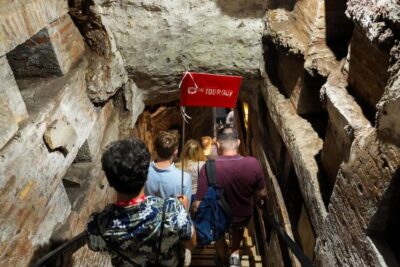 ★ 4.6Catacombs and Capuchin Crypt Guided Tour with TransferFrom $411,606 reviews
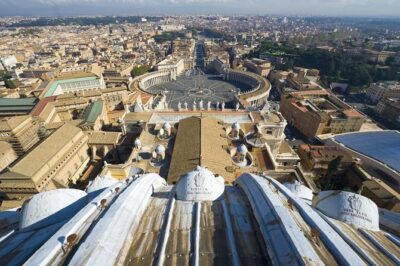 ★ 4.7St. Peter’s Basilica Priority Access Tour with Dome & CryptFrom $831,476 reviews
Browse the lists this tour appears in