
Reviewed · COLOSSEUM TOURS
Colosseum Arena floor , Forum, Navona and Pantheon private tour
Arena access changes how you see Rome. This private 3.5-hour walk pairs Colosseum arena access with Roman Forum storytelling, then finishes at Piazza Navona. I like that you get headsets to hear every detail clearly, and I also like how the guide ties the sites into one real, human story.
The one thing to keep in mind is timing. If your guide spends extra minutes on the deeper background, you may feel it by the time you reach the later stops like Trevi.
You start at the Arch of Constantine and end right in the heart of the old city. The flow is efficient for first-timers, with a mix of big-ticket monuments and quick, well-placed photo pauses.
Key things that make this tour worth your time
- Arena access in the Colosseum gives you a different angle than standard viewpoints
- Roman Forum stop focuses on how Rome ran, not just what it looked like
- Small, focused city moments at Piazza Venezia, Trevi Fountain, and Piazza Navona keep the day from dragging
- Headsets included help you keep up in busy crowds
- Private format means your guide can set the pace for your group
Colosseum arena floor: where the story gets physical
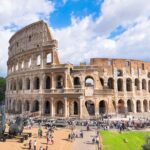
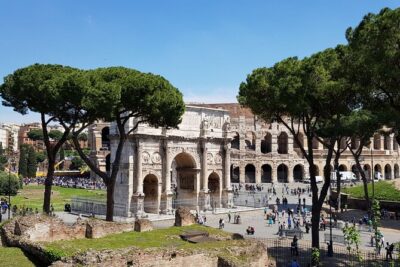
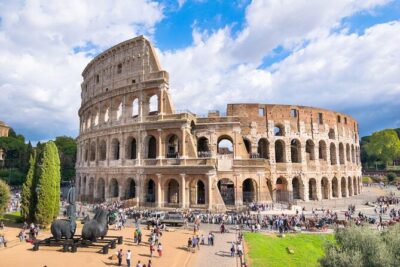
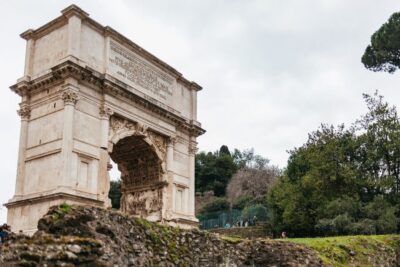
Your tour begins at the Arch of Constantine, at Piazza del Colosseo. Starting here is smart because you’re already at the main event, and the route naturally guides you toward the Colosseum’s entrances without feeling like you’re wandering.
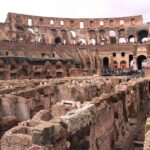
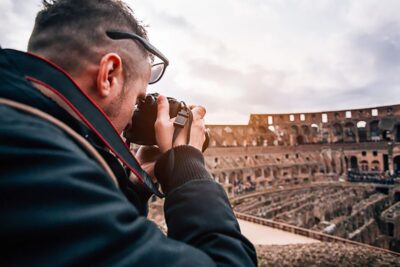
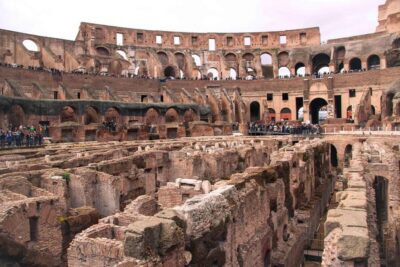
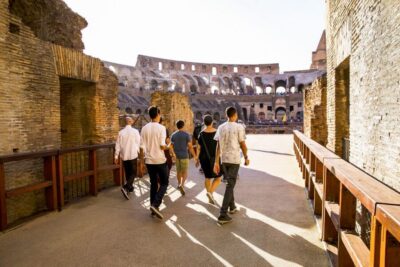
The big draw is the Colosseum arena floor access. Instead of only viewing the stadium from the outside or from a higher level, you get down where the Romans once moved. It changes the scale fast. You can really picture movement, sound, and how the space was designed to stage spectacle.
You’ll also have a reserved slot handled as part of your package, including the Colosseum reservation fee. That matters in Rome, where “timed” can still mean security and processing lines. Even with reserved entry, the sites can be slow to flow, so your guide’s pacing becomes part of the experience.
You can also read our reviews of more private tours in Rome

Security rules: pack light and keep it simple
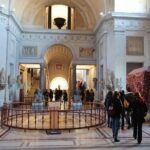
The Colosseum security rules are strict, and there is no bag check. That means you should plan like you’re traveling through airport-level controls.
Leave these at home:
- Glass bottles, aerosol sprays, and alcohol
- Weapons and blunt objects (including long umbrellas)
If you’re arriving with anything bulky, expect issues. This is one of those days where the easiest plan wins: carry what you need, nothing more.
What to look for while you’re on the floor
With arena access, don’t just aim your camera. Pay attention to sightlines and angles. The guide’s job is to show you where the action would have been staged, and where you are now in relation to the history you’re hearing.
This is also where guides like Francesco and Alfredo tend to shine. The best experience comes when your guide connects the monument’s function to everyday Roman life, not just dates and names. You’ll feel it in how the story lands as you walk.
You get about 45 minutes here, which is a tight window for a place this iconic. That’s another reason headsets help. You can listen without constantly turning your head to keep track of the group.
Roman Forum: the power center between Palatine and Capitoline
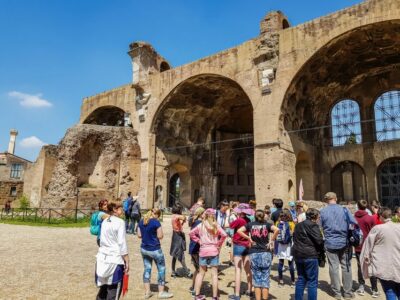
After the Colosseum, you move into the Roman Forum area. This is a different mood right away. The Forum sits between the Palatine Hill and Capitoline Hill, and it’s where political, religious, and commercial power converged.
You’ll spend about 1 hour here, and that time is well used when the guide focuses on how the Forum worked, not only what’s standing now. Even if you’ve seen photos, the Forum becomes clearer once someone points out the relationships between spaces and what leaders used them for.
One detail worth holding onto: the Forum includes the Julius Caesar connection, where his body was laid in an altar that you can still visit today. That’s the kind of moment your guide should make you notice, because it turns ruins into something more concrete.
Why the Forum stop feels like more than “another ruin”
A big reason the Forum works as a companion to the Colosseum is contrast. The Colosseum staged spectacle for mass audiences. The Forum was where laws, religion, and influence shaped the city you see in every street and building.
If you’re the kind of traveler who likes structure, this stop is for you. If you’re more of a wandering type, you’ll still appreciate it because the guide sets direction and keeps the pace from turning into a blur.


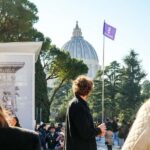
Piazza Venezia: Altare della Patria as a quick reset
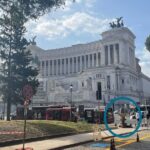
From the Forum, you head toward Piazza Venezia and the Altare della Patria. This stop is about 30 minutes, so it isn’t meant to become a full museum visit. Think of it as a reset point, a chance to look out over Rome and re-orient yourself.
The Altare della Patria is one of those monuments that helps you understand why Rome still feels dramatic in motion. Even without going deep into it, getting a look here helps your brain map the rest of the day.
This part of the tour also breaks up the ancient-world intensity. After the density of the Colosseum and Forum, Piazza Venezia offers breathing room.
Trevi Fountain: classic Rome, timed well
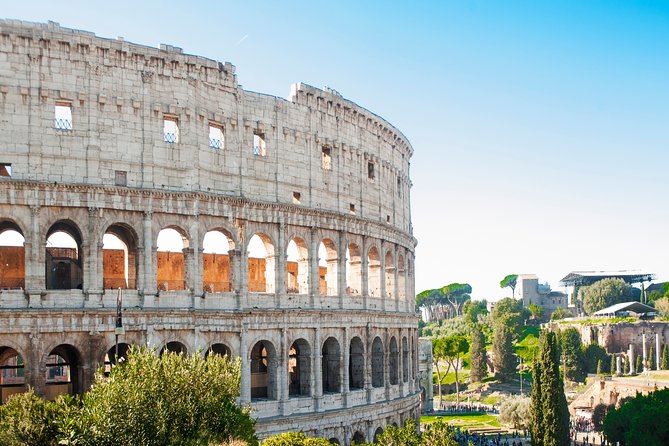
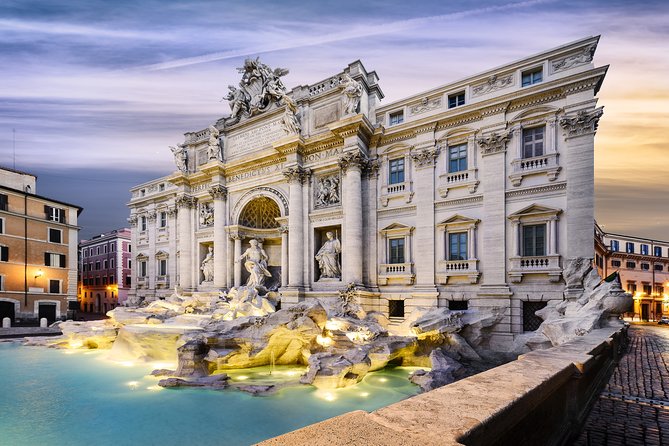
Next is the Fontana di Trevi. You get about 30 minutes, and that’s usually enough time to see it properly, snap a few photos, and take in the setting without feeling rushed.
A key practical note: Trevi is busy. Even on a guided schedule, crowds are real. The value of this stop isn’t solitude, it’s timing and context. Your guide should help you look at the fountain as more than a postcard.
There’s also mention in the package that the Trevi Fountain has recently been restored, and it looks brighter and more beautiful than before. When you see it in person, you’ll notice how restoration affects details you might miss if you’ve only seen older images.
How not to waste your Trevi time
Spend your first couple minutes getting your bearings. Then decide where you want your photos from. The crowd pattern changes fast, and if you constantly move, you burn precious seconds. Use your time like a pro: quick sweep for angles, then hold still long enough to capture the shot you actually want.
Pantheon area: Santa Maria della Rotonda and that dome look
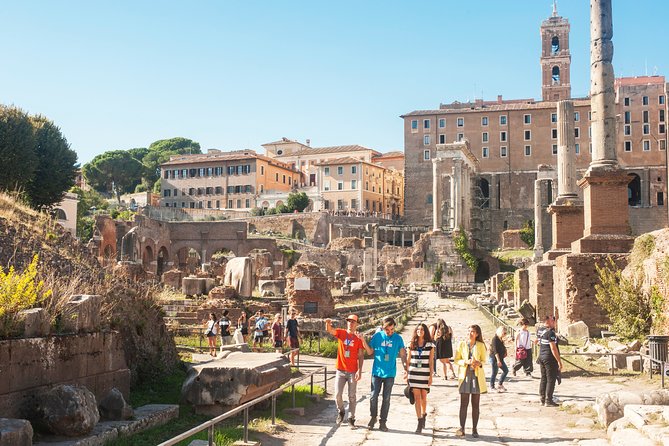
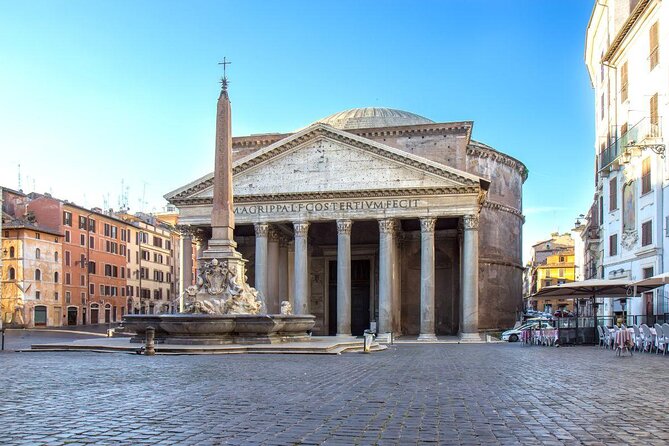
After Trevi, the walking continues through narrow Roman streets to the area around Santa Maria della Rotonda, home of the Pantheon. Your stop is about 15 minutes, which is short, but it’s enough for a focused look at the exterior.
You’re there for the famous perforated dome, and the tour description emphasizes the dome’s scale as one of the key reasons people come. You don’t need an hour to appreciate it, and the guide’s job here should be to point out what makes the dome work visually, not just that it exists.
Because your time is limited, don’t over-plan your expectations for this stop. It’s a quick hit on one of the most recognizable structures in Rome.
Still, this is a strong “wow” moment. Rome’s streets can feel chaotic, and then the Pantheon area gives you a hard-edged reference point: a place that looks engineered to last.
Piazza Navona: fountains, anecdotes, and a great ending
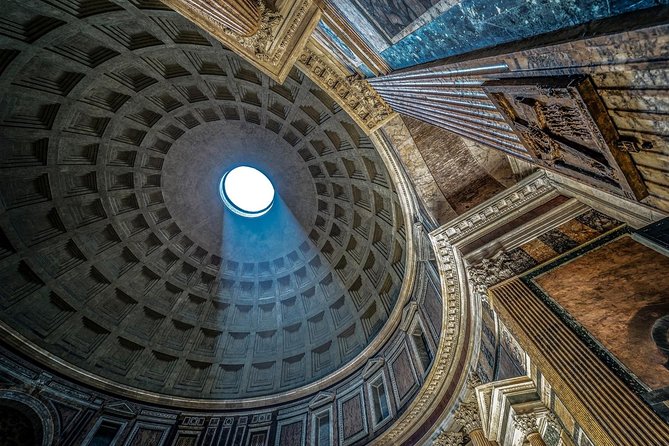
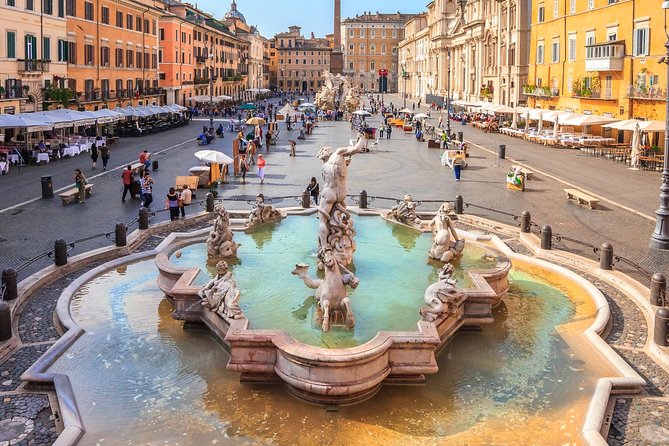
Your tour ends at Piazza Navona, with about 30 minutes in the square. Piazza Navona is famous for its fountains by Bernini, and your guide shares stories that make the space feel alive rather than just decorative.
This ending is a good choice. By the time you reach Navona, you’ve seen the Colosseum, the Forum’s political engine, and three major city anchors. Navona gives you a lively square moment to soak in before you head off on your own.
What makes Piazza Navona work at the end
This stop is less about “learning every detail” and more about closing the loop. It’s where you can slow down, stand in the open space, and watch the city do what it always does: move around monuments that people still enjoy today.
If your timing has gone slightly long earlier, Navona is where it shows most. The earlier scheduling issue described by one guest is real enough to consider. So it’s smart to treat this final stop as the place where you decide how long you want to linger within your group’s plan.
Price and logistics: is it value at $3,715.45 per person?
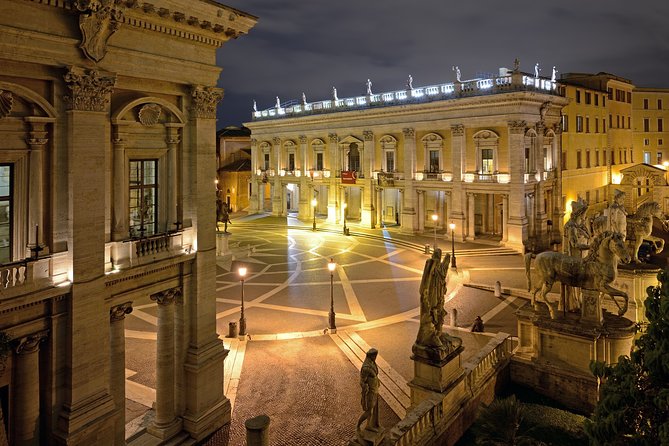
Let’s talk numbers honestly. The listed price is $3,715.45 per person, which is not “budget Rome.” That’s a premium tier.
Now, value is more than the ticket. Yes, the package includes a Colosseum entrance ticket with arena access (valued at €24 per person) and a Colosseum reservation fee (valued at €2 per person). But those are only part of the total cost. The rest covers the professional guide, the headsets, and the structure of a private experience that strings together multiple top sights without you managing logistics.
So when does that price make sense?
- When you strongly value arena access, not just views from outside
- When you want a guide to handle the flow through major sites that can be confusing
- When a private format fits your group better than joining a larger tour
Also consider the practical reality: the day is only 3 hours 30 minutes, and the stops after the Forum include Trevi, a quick Pantheon look, and Navona. That kind of tight packing is easier when someone is guiding you and keeping you on track.
Who this tour suits best
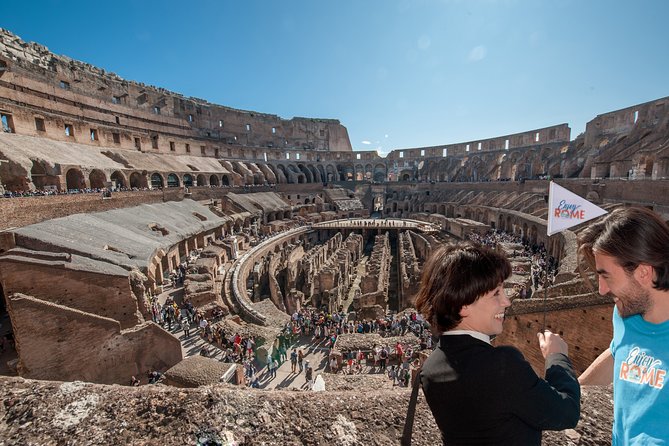
This experience fits well if you:
- Want a first-class way to see the Colosseum floor
- Like guides who explain meaning, not just history dates
- Prefer a private format where pacing and questions stay more personal
It also requires moderate physical fitness. You’re walking and moving through central Rome. If you’re sensitive to walking time or crowds, you’ll want to plan rest breaks outside the group plan, especially once you hit Trevi.
If you’re traveling as a couple or a small group that can justify premium pricing, this tour can feel like “buying time and clarity,” not just buying entry tickets.
Practical tips so your day runs smoothly
Here are the things that matter most for getting the best experience from this kind of Rome day.
Arrive prepared for security
Because there’s no bag check, keep your kit simple. Bring ID that matches the full names you provided when booking. If your name is wrong, it can cause entry problems at the Colosseum and Roman Forum.
Also plan your umbrella strategy carefully. Long umbrellas fall into the blunt-object category listed for security restrictions.
Wear shoes that handle uneven surfaces
Your stops include ancient stone and busy streets. Even when the tour is “only” 3.5 hours, the walking adds up fast, and the ground isn’t always smooth.
Use headsets like a gift
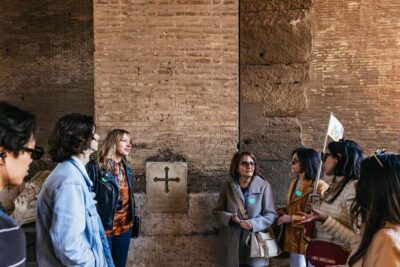
Headsets are included, which is a big deal at the Colosseum and Forum. Use them. Don’t remove them to chase photos right away. If you miss the guide’s key point, you’ll feel it later when the story becomes harder to follow.
Keep an eye on timing
One potential drawback is timing drifting if your guide spends extra minutes on explanations. That can push later stops. If you have a firm plan after 1pm, build in a buffer.
Should you book this private Colosseum, Forum, and Pantheon tour?
If arena access is on your must-do list, I think this tour is a strong option. It’s one of the best ways to see the Colosseum as a space, then connect it to the Forum as the brain and engine of Roman life. The guide quality can make or break the day, and names like Francesco and Alfredo point to the kind of energy that helps the monuments feel real.
Book it if you want guided flow, clear explanations through headsets, and a finish at Piazza Navona that feels like a satisfying landing.
Skip it or rethink the fit if price is a stretch and you mainly want a casual photo tour. This is built for people who value an organized, guided experience at the highest-demand sites, with the Colosseum floor access as the headline.
FAQ
How long is the tour?
The tour runs for about 3 hours 30 minutes.
Where does the tour start and end?
It starts at the Arch of Constantine, Piazza del Colosseo, and ends at Piazza Navona.
What time does the tour begin?
The start time is 10:00 am.
Is this a private tour?
Yes. It is private, and only your group participates.
What’s included in the price?
The tour includes a professional guide, headsets, a Colosseum entrance ticket with arena access, and a Colosseum reservation fee.
Are the Trevi Fountain and Pantheon tickets included?
Their stops are listed with admission ticket as free, and the tour includes those sightseeing moments as part of the walking route.
What should I bring for Colosseum entry?
You should bring valid identification documents (passport or ID) matching the full names provided at booking, and you should avoid prohibited items like glass bottles, aerosol sprays, alcohol, weapons, and long umbrellas.
How strict is Colosseum security?
It is strict, with metal detectors at entrances and no bag check. Some items are forbidden, and names must match exactly for entry.
Is the tour refundable if plans change?
No. The experience is non-refundable and cannot be changed for any reason.
More Private Tours in Rome
More Tours in Rome
More Tour Reviews in Rome
Not for you? Here's more nearby things to do in Rome we have reviewed





Colosseum Tours, compared.
 ★ 4.8Colosseum, Palatine Hill and Roman Forum Guided TourFrom $5232,814 reviews
 ★ 4.7Guided Tour of Colosseum, Roman Forum & Palatine HillFrom $5527,897 reviews
 ★ 4.2Colosseum & Forum with Audio Guide App -Optional ArenaFrom $4124,770 reviews
 ★ 4.5Colosseum, Roman Forum and Palatine Hill Guided TourFrom $5923,903 reviews
 ★ 4.4Colosseum, Forum & Palatine Hill Tour & Optional ArenaFrom $5813,839 reviews
 ★ 4.6Colosseum, Palatine Hill & Roman Forum Guided TourFrom $5112,703 reviews
 ★ 4.7Colosseum: Underground and Ancient Rome TourFrom $16012,691 reviews
 ★ 4.6Colosseum Arena, Palatine Hill & Forum Guided TourFrom $7310,584 reviews
Browse the lists this tour appears in