
Reviewed · CATACOMBS & UNDERGROUND TOURS
Underground Rome Tour: St. Clement and Celian Houses
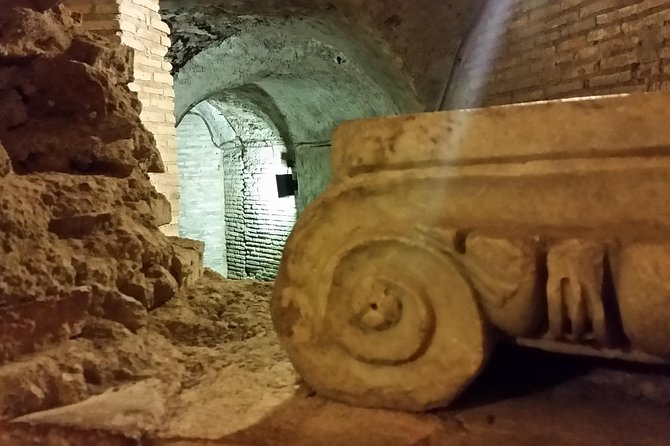
Rome gets better below street level. This underground walk links St Clement’s stacked churches to Roman-era streets and houses beneath them, so Rome’s timeline makes instant sense. I love the way the route moves fast between eras, from medieval layers down to ancient structures. I also love having a professional guide who can point at what you see and explain why it changed over centuries. One drawback to plan for: the tour involves going underground, so it may not work if you are strongly claustrophobic.
This is a private tour in English, run by Joy of Rome with a set meeting point at Basilica Santi Giovanni e Paolo and a different ending point at Basilica di San Clemente. It’s also built for ease of entry with a mobile ticket. Guides you might encounter in this setup include Francesca and Angelica, both described as pleasant, professional, and focused on making the layers understandable.
Key points at a glance
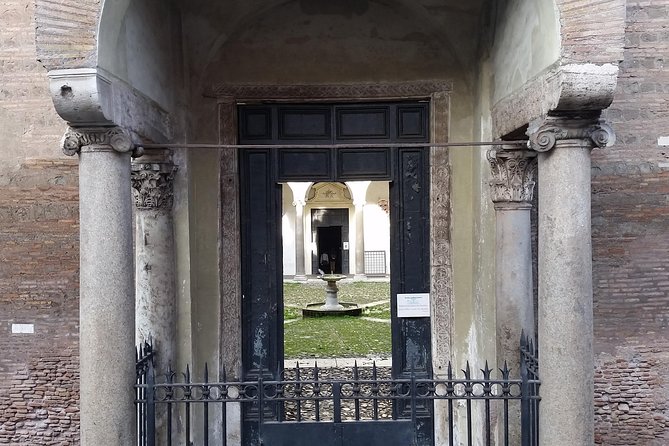
- Three sites, one story: medieval churches, Roman houses, and hilltop context all connect in one route.
- Go below street level at St Clement: you see multiple layers of the same sacred space.
- Santi Giovanni e Paolo takes you earlier: the ancient houses linked to Saints John and Paul sit under the church.
- Caelian Hill adds the neighborhood picture: aqueducts, temples, and homes of different classes shaped daily life above and around you.
- A guided format is the whole point: these places can be confusing unless someone explains the what and the why.
- Small and personal feel: it’s private, and you might find it runs with only a few people depending on availability.
Rome’s Underground Works Best With a Guide in Your Hand
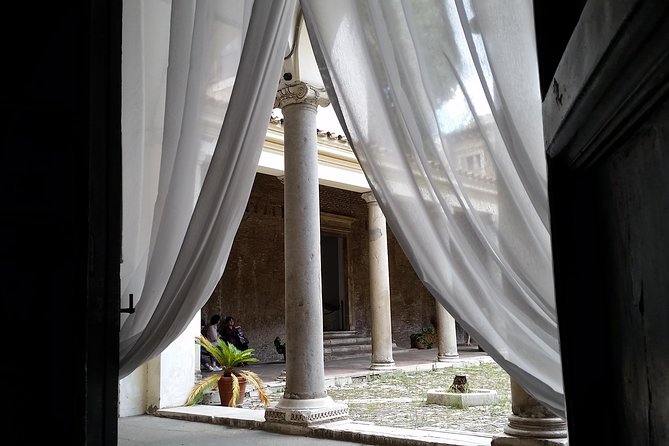
If you’ve only seen Rome from street level, you’re missing half the city. The big idea here is simple: Rome keeps building on top of itself, and when buildings fall out of use, they do not vanish. They get covered. Then someone builds again. The result is a layered city where one location can hold multiple chapters of history.
That is exactly what makes this tour so satisfying. You’re not just walking through one “old place.” You’re watching the city rewrite itself. At St Clement, the church is literally stacked with older versions beneath it. At Santi Giovanni e Paolo, the church shelters ancient Roman houses tied to Saints John and Paul. And at Caelian Hill, you get the wider context for why this neighborhood mattered.
The best part is the pacing. You move from stop to stop without feeling rushed, and the route is structured so each site answers a question the last one brings up. If you like to understand a place, not just photograph it, you’ll like this format.
You can also read our reviews of more tours and experiences in Rome.



Tour Logistics: Where You Start, Where You Finish, and What That Means
The tour starts at Basilica Santi Giovanni e Paolo, Piazza Dei SS. Giovanni e Paolo (00184 Roma). You end at Basilica di San Clemente, Via Labicana 95 (00184 Roma). That matters because you can plan the rest of your day with less backtracking.
Expect a total of 2 to 3 hours. That range matches the time blocks at each stop, plus the movement between them. You should also plan for real indoor walking and some stairs, since underground sections are part of the experience. Near public transportation is listed, which is helpful because you won’t feel locked into a taxi or long detour.
A practical bonus: the tour is private, meaning only your group participates. If you want your guide to slow down when you have questions, or you’re visiting with people who prefer a calmer pace, this is a strong fit. And since the tour is offered in English, you get clear explanations without needing to translate key points on the fly.
Stop 1, Basilica dei Santi Giovanni e Paolo: The Saints Above, the Ancient Houses Below
This first stop is about contrast. You begin at a church devoted to Saints John and Paul, then you go below to see what sits underneath it. The experience is framed as a jump from Middle Ages down into ancient Roman times, and the whole point is that you move quickly between eras without having to travel across Rome.
Here’s why that matters. Many “ancient Rome” visits feel like a collection of disconnected ruins. This one feels like a conversation across time. The underground Roman spaces linked to the saints help you understand how sacred memory, community, and architecture can overlap. In other words, you’re not only looking at old walls. You’re looking at a site that carried meaning long enough to be reused, rebuilt, and layered.
Time here is about 45 minutes, and admission tickets for this stop are not included. You’ll want to budget for entrance fees at the start of your planning. Also, plan to stand still for explanations, then move as the guide directs. This is the kind of location where you’ll get more from attentive listening than fast pacing.
Caelian Hill: Why This Neighborhood Shaped Homes for Different Classes
After the first underground section, Caelian Hill brings you back toward the broader picture. This is one of Rome’s seven hills, and the tour connects it to what you would expect around hilltop living: aqueducts and temples, plus residences for both higher and middle-class citizens.
This stop is shorter, around 20 minutes, and it functions like the “set-up” for what you’re about to see and understand. When you know the neighborhood context, the underground scenes feel less like random excavations and more like a window into daily life. You’ll understand that underground rooms and foundations were not isolated. They were part of a lived landscape, with water systems, civic spaces, and homes all shaping each other.
The tour also notes that you can find the house of John and Paul underground in this area. Even if you don’t memorize every detail, the goal is that Caelian Hill gives you a mental map. You start to imagine the city above you in the time when these structures were in use.
Stop 3, Basilica di San Clemente: The Church With Multiple Layers
The final stop, Basilica di San Clemente, is the headline act. This church is famous in this format because it holds layers of worship and construction over time. You’re not just entering one church. You’re moving through a site where the building footprint keeps changing as Rome changes.
The time block here is about 1 hour 45 minutes, and that longer duration makes sense. You’ll have time for explanations, movement between layers, and the kind of looking that rewards you when you slow down. If you like those “wait, this isn’t the first church here” moments, this is where you get them.
A concrete detail to plan for: one guide-led experience described being about 50 feet below street level and walking down into an ancient Roman house that’s around 2000 years old. The same experience also mentioned that excavations began in the 1700s, and that before excavations, no one knew of the original church beneath.
Even if you don’t retain every date, that timeline gives you the emotional punch of the whole tour. Rome can feel overwhelming until you realize the city is stacked like a book. San Clemente is one chapter you can actually walk through.






What the Guide Does Here (and Why You Should Care)
Underground Rome can be confusing without interpretation. Stone looks stone-like. Arches look similar. Old walls can blend together fast. This is why a guided format is not a nice-to-have here, it is the main event.
In the best sessions, guides do three things well:
- They connect what you see to the story of the site, so the layers feel purposeful rather than random.
- They point out how construction and reuse show up in the layout.
- They keep you moving at a pace that lets you absorb what you’re seeing without getting exhausted.
In particular, the guide names Francesca and Angelica come up with strong praise in the context of these stops. Francesca is described as pleasant, professional, and especially good at making the layers easy to follow. Angelica is described as very informative during the St Clement focus.
Even if your guide is different, the standard matters. You want someone who can explain how the basilicas connect to the saints and how Caelian Hill’s neighborhood context ties into the underground spaces.
And here’s a tip that comes directly from why these tours get such high ratings: these sites reward slow attention. Don’t treat this like a quick checklist. Treat it like a guided walk through Rome’s editing history.
Tickets and Price: What You’re Paying For, and How to Budget
Entrance fees are not included. Adults are listed at 30 euro per person total for entrances, and children are 18 euro per person total. The Basilica dei Santi Giovanni e Paolo has a specific listed ticket cost of 25 euro per person.
So what are you paying for with the tour price? The included cost is the professional guide and the structured route that ties three different spaces together into one coherent experience. In a tour like this, the guide is not just “extra.” The guide is the translation layer between ancient building fragments and a story you can actually understand.
Because admission fees are substantial, it’s smart to budget for both components. If you’re traveling with a group, you may also benefit from group discounts if offered at booking. A mobile ticket is included, which can make entry smoother.
Finally, remember the tour is around 2 to 3 hours. If you compare it to shorter sightseeing stops, this route gives you a lot of structure for your time. You’re not spending the day on transit between scattered ruins. You’re concentrating on one underground theme.
Who Should Book This, and Who Might Want Another Option
This tour is best for you if you enjoy:
- Understanding how one place changes across time
- Walking through museums with active explanations
- Seeing Rome as layered, not just a set of famous monuments
It’s also a good pick if you like a smaller-group feel. Since it’s private, it can be more personal than large group museum tours.
There is one clear caution. The tour may not be suitable for those who are strongly claustrophobic. Underground walking naturally involves confined spaces. The tour description also calls for moderate physical fitness, so if you have mobility limits, check carefully with the operator or your own comfort with stairs and uneven underground paths.
If churches are closed due to extraordinary celebrations, the operator reserves the right to cancel and refund. That can happen in Rome, so it’s worth checking your schedule once booked.
Practical Tips So You Enjoy Every Layer
A few practical habits will make this tour feel smoother:
- Wear comfortable shoes with grip. Underground walkways can be different from street surfaces.
- Dress for indoor comfort, since underground areas can feel cooler than the sun outside.
- Keep your phone charged. You’ll have a mobile ticket, and you may want to reference your notes when the guide names structures or layers.
- Plan to listen first, photograph second. The story comes from the guide’s timing, and the photos make more sense once you understand what you’re looking at.
Also, since you start at one basilica and end at another, plan a simple finish. Have a meal or a gelato stop near Basilica di San Clemente, so you’re not rushing across town right after the tour.
If you’re the kind of person who likes to map things in your head, this tour gives you a clear mental framework. You’ll come away thinking in layers, with Caelian Hill as your neighborhood anchor and San Clemente as the layered finale.
Is This Underground Rome Tour Worth Booking?
I think this tour is a smart booking if you’re the type of visitor who wants Rome to feel connected, not random. It’s built around a simple payoff: you go under two major church sites and get Caelian Hill context so the ancient and medieval layers click into one story.
Book it if you:
- Want something different from the typical big-ticket stops
- Like guided interpretation where the guide turns stone into meaning
- Are comfortable with underground spaces and have moderate physical fitness for stairs and walking
Skip it or choose an alternative if you are strongly claustrophobic, because the underground sections are not optional in this experience.
If you do book, aim to show up ready to slow down and pay attention. This is the kind of tour where a “quick glance” misses the best part. With the right mindset, you’ll leave feeling like you saw Rome twice, and both versions were the real deal.
FAQ
How long is the Underground Rome Tour: St. Clement and Celian Houses?
The tour lasts about 2 to 3 hours.
Where does the tour start and where does it end?
It starts at Basilica Santi Giovanni e Paolo, Piazza Dei SS. Giovanni e Paolo, 00184 Roma. It ends at Basilica di San Clemente, Via Labicana 95, 00184 Roma.
Is this tour private?
Yes. It is listed as a private tour or activity, with only your group participating.
Are entrance tickets included in the tour price?
No. Admission tickets are not included. Entrance fees are listed separately.
How much are the entrance fees?
Adults are listed as 30 euro per person total for entrances, and children as 18 euro per person total. One stop, Basilica dei Santi Giovanni e Paolo, is listed as 25 euro per person.
Is the tour suitable for everyone?
The tour is noted as not suitable for those who are strongly claustrophobic. It also says travelers should have moderate physical fitness.
Can I cancel and get a full refund?
Yes. Free cancellation is available up to 24 hours in advance for a full refund.
More Tours in Rome
More Tour Reviews in Rome
Not for you? Here's more nearby things to do in Rome we have reviewed












Catacombs & Underground Tours, compared.
 ★ 4.7Colosseum: Underground and Ancient Rome TourFrom $16012,691 reviews
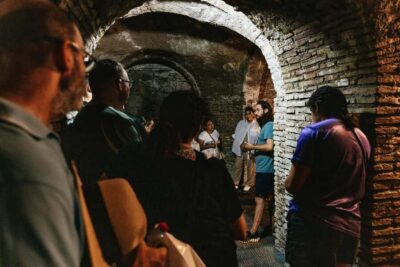 ★ 4.6Crypts and Catacombs Underground Tour with TransfersFrom $745,341 reviews
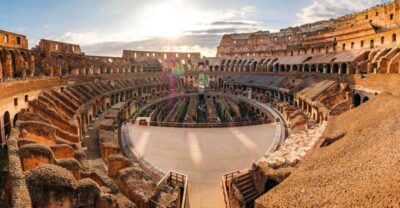 ★ 4.7Colosseum Underground Small Group Guided TourFrom $1054,844 reviews
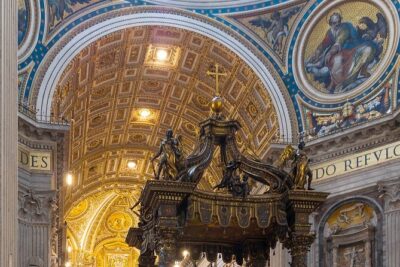 ★ 4.8St. Peter’s Basilica, Dome Climb, and Underground TourFrom $383,404 reviews
 ★ 4.7Colosseum Underground, Arena & Forum TourFrom $1573,272 reviews
 ★ 4.3Trevi Fountain and Underground Guided TourFrom $411,664 reviews
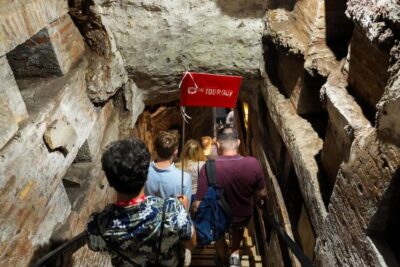 ★ 4.6Catacombs and Capuchin Crypt Guided Tour with TransferFrom $411,606 reviews
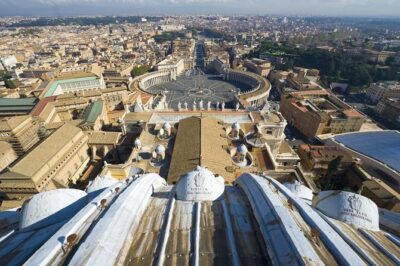 ★ 4.7St. Peter’s Basilica Priority Access Tour with Dome & CryptFrom $831,476 reviews
Browse the lists this tour appears in