
Reviewed · PANTHEON TOURS
Rome City, Pantheon, and Trevi Fountain Walking Tour
Two hours, and Rome clicks into place. This small-group walk strings together the big sights with a couple of quieter turns, so you start your trip with a brain map, not just photos. I like that you move at a human pace and hear how each location connects to the city around it, from ancient emperors to Baroque Rome.
I especially like the mix of famous stops and stop-you-in-your-tracks details. You get Trevi Fountain at the moment it looks its best, plus a quick hit of art nouveau color at Galleria Sciarra, and then the grandeur jump to churches and squares most people only sprint through. The small size also matters, because guides like Domenica, Anna, Sila, and Sharon were praised for answering questions and keeping the group engaged without rushing.
One thing to consider: this is a walking tour, and it is not recommended for travelers with foot injuries. If your feet get angry fast on cobblestones and stairs, you may want a lighter option.
Key highlights worth planning around
- Max 15 people so your guide can slow down for questions
- Piazza Venezia context that connects ancient, Renaissance, and Napoleonic eras
- Galleria Sciarra’s art nouveau frescoes and paintings in a 19th-century setting
- Trevi Fountain in lit-up glory depending on your departure time
- Chiesa di Sant’Ignazio’s artificial dome trick inside a major Baroque church
- Piazza Navona for dinner with three fountains and a strong food-and-drink finish
Starting at Piazza d’Aracoeli, getting your Rome bearings fast
The tour begins near Piazza d’Aracoeli (Via di S. Venanzio, 8) and ends in Piazza Navona. That start location is smart, because it helps you orient yourself immediately in Rome’s historic core instead of only checking off landmarks. If you’re arriving with jet lag or you feel overwhelmed fast, this kind of first-day grounding is exactly what you want.
You get about two hours, with short stops that keep the walk moving but not punishing. The group cap of 15 is the quiet advantage here. A bigger crowd usually turns a guide into a human microphone. In a smaller group, guides can explain, then look up to check if everyone is following. You’ll also have a mobile ticket, and you’ll receive confirmation at booking, which helps you avoid last-minute stress.
I also like the practical ending. The tour finishes in an area known for restaurants and bars, and the guide is ready with recommendations. That means less aimless wandering, and more time eating where the neighborhood feels alive.
You can also read our reviews of more walking tours in Rome



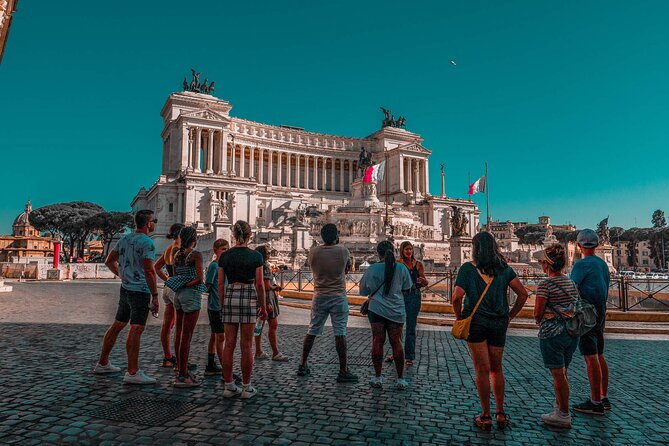
Piazza Venezia and the forum story across three eras
The first main stop is Piazza Venezia and the surrounding ancient city area. You’re not just looking at an impressive square, you’re getting a guided storyline that moves across time. The walk explains the connection between ancient Rome and later eras, including how the area is tied to Renaissance and even Napoleonic Rome.
This is one of those “I didn’t realize that was the same place” moments. Once you understand the layers, Rome becomes easier to read. You start noticing why certain monuments feel positioned the way they do, and why the city feels like it’s constantly negotiating between old and new. It’s also a useful warm-up: your brain learns a pattern, then the next stops make more sense.
Time here is about 20 minutes, and the good part is that it’s long enough for context, but short enough that you’re not standing in one place wishing you could check email.
Galleria Sciarra: the art nouveau pause most people miss
After Piazza Venezia, the tour shifts to Galleria Sciarra, described as one of Rome’s best kept secrets. This stop is only about 10 minutes, but it’s the kind of quick break that changes your whole impression of the day.
Inside this 19th-century building, you get art nouveau frescoes and paintings. That matters because it breaks the rhythm of “major church, big square, next big church.” It also gives you something to look at that’s not instantly famous, so you can slow down and actually see.
This is also a relief stop if the morning or afternoon heat is climbing. A brief indoor or semi-sheltered moment gives your legs a reset without turning the tour into a long detour.
Trevi Fountain in lit-up glory, not just a photo stop
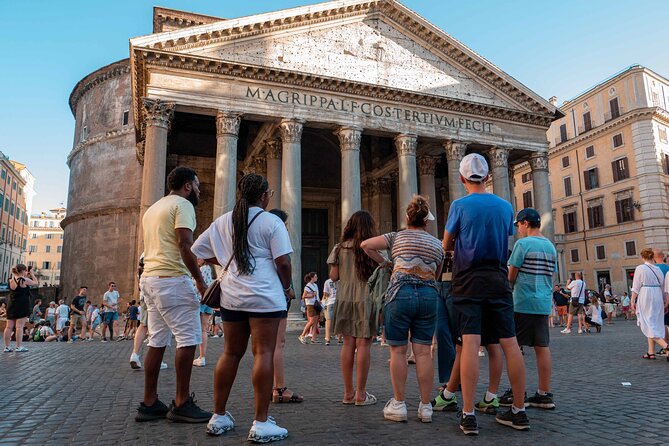
Trevi Fountain is next, with about 20 minutes at the site. The description focuses on the “magical sculpture” coming to life as it’s lit up, which is a big deal if you plan your timing right.
Here’s what I think makes this stop valuable: you’re not only standing in front of a famous place. A good guide turns the fountain into something you can interpret. You learn what you’re looking at and why it matters, so it stops being a background for your camera roll and becomes an experience.
If you book a departure that lines up with evening lighting, you’ll likely feel the difference right away. Even if you’re there earlier, the guide’s framing helps you notice details you’d normally overlook while focusing on crowds and angles.
Chiesa di Sant’Ignazio di Loyola and the artificial dome effect
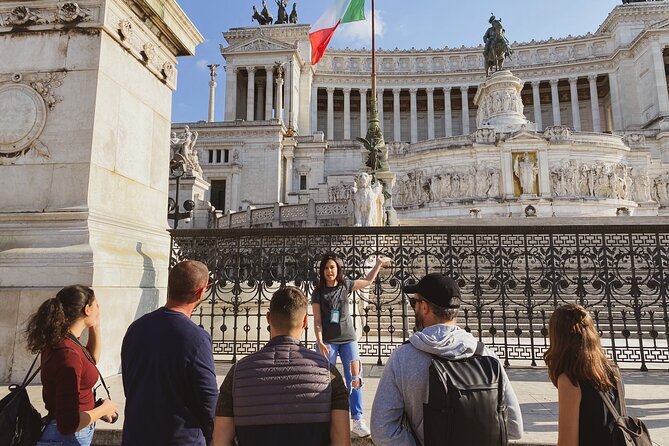
Then you head to Chiesa di Sant’Ignazio di Loyola, a major Baroque church with an artificial dome. This stop runs about 15 minutes, and it’s built for impact. Baroque churches can be visually intense, and a guide helps you not get lost in the decorations.
What you gain here is perspective. In a few minutes, you start seeing how Roman Baroque design works as a kind of theater, using architecture to create drama and depth. The artificial dome detail is a key hook, and it’s the sort of thing that makes you think, wait, that is not what I expected.
This stop is a great mid-walk reset, because it’s a concentrated burst of wow, then you move on without lingering too long.
You can also read our reviews of more city tours in Rome



Pantheon focus: ancient temple meets church conversion
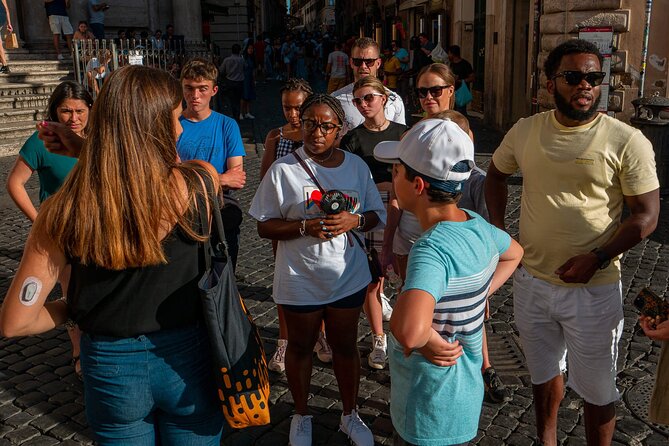
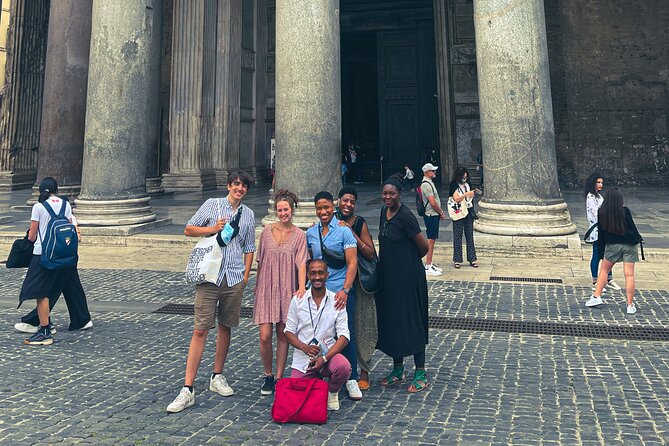
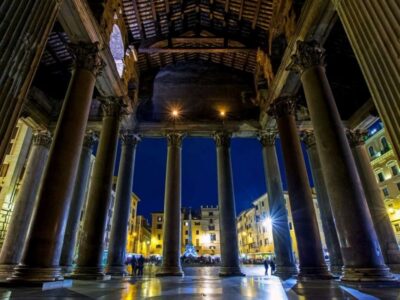
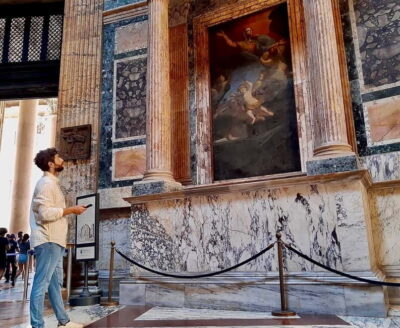
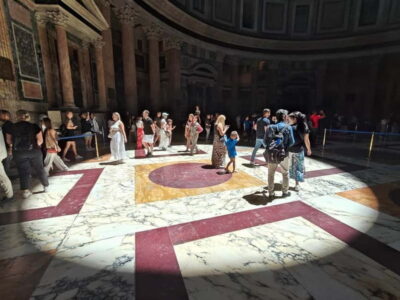
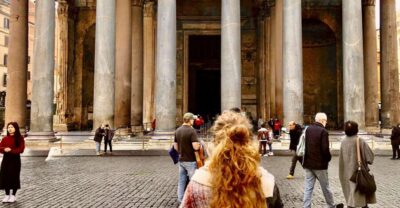
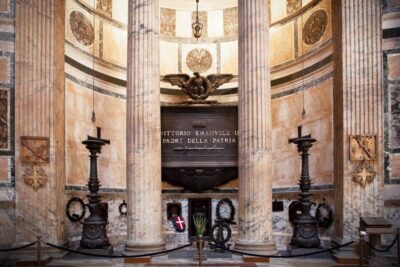
The Pantheon is the big anchor of the route. You spend about 20 minutes here, and the tour positions it as ancient Rome’s most well preserved temple, later converted into a church.
A couple practical notes matter for planning. First, Pantheon access is not included in the tour price. That doesn’t make the tour worse. It just means you should plan to handle the ticket separately. Second, don’t treat this as a quick look-see. The value is in learning the secrets of the architecture and understanding how the building survived and changed roles over time.
This is also one of the best places in Rome to slow down. The space invites quiet attention, and with a guide you’re more likely to connect the design decisions to the larger story of Roman engineering and later religious use.
Piazza Navona: three fountains, one great dinner zone
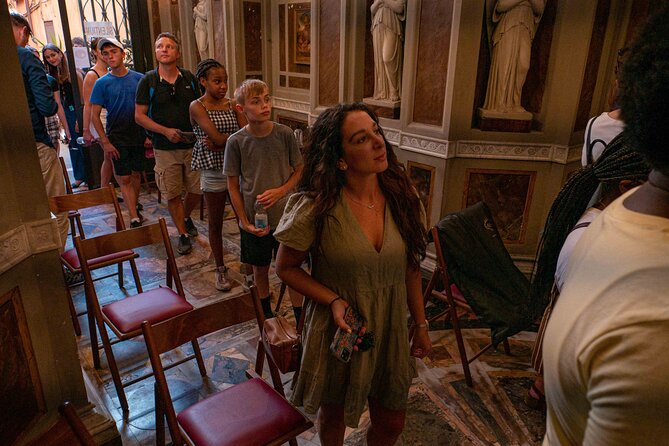
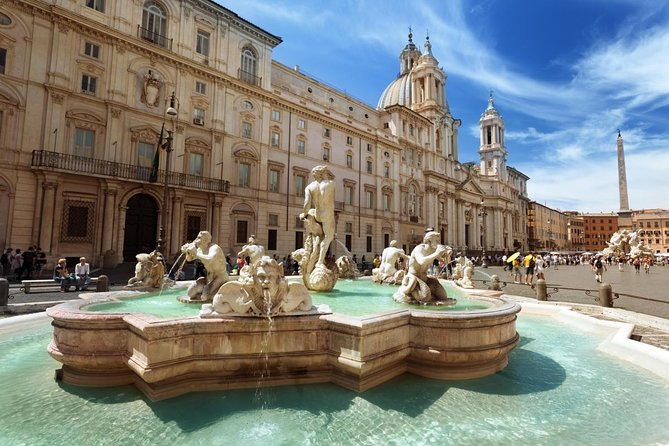
The final stop is Piazza Navona, about 15 minutes. This is a classic finishing square for a reason. It’s lively, it has three magnificent fountains, and it includes the beautiful Baroque church of Sant’Agnese in Agone.
The strongest value here is what happens after the tour. The ending location is described as renowned for restaurants and bars, and the guide will recommend places to eat and drink nearby, with tips that can include rooftop terraces. That means you can pivot from history mode to meal mode without wasting time searching.
If you’re trying to decide where to go for dinner, this is the easiest part of the day to act on. You finish in the center of activity, so you can choose what fits your mood, from casual trattoria vibes to something with a view.
Price and value of the $24.20 two-hour walk
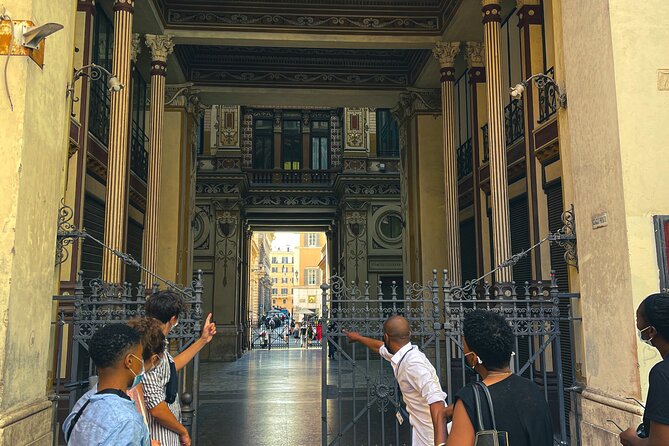
At $24.20 per person for about two hours, this is priced like a sensible “orientation + highlights” option. What you get is a guided walking tour with a local guide, plus city highlights and lesser-known spots along the way. Group discounts are part of the package, and the maximum of 15 travelers keeps the experience from feeling like a conveyor belt.
Is it perfect value? Usually, yes, for the right kind of traveler. If you’re new to Rome, this format helps you understand the city layout and the major areas without spending a whole day on transport and ticket logistics. If you already know the Colosseum and the Vatican, the route still matters because it focuses on other neighborhoods and explains why the places beyond the headline attractions feel important.
One cost consideration is the Pantheon: admission is not included. So your all-in budget is the tour price plus the Pantheon ticket you purchase separately. Still, for many people, paying for a guide is worth it because the guided explanations help you see more than you would by walking solo with only a guidebook.
If your schedule is flexible, free cancellation is available up to 24 hours before the start time. That gives you some breathing room if plans shift.
Who this walk suits best, and who should choose a different plan
This is best for first-time visitors and for anyone who wants to get oriented quickly. The route is designed to give you bearings in the city and help you connect the dots between eras. It’s also ideal if you want a mix of major monuments and smaller, interesting stops like Galleria Sciarra.
I also like that the tour offers morning and afternoon departure times, which lets you choose based on your energy level. If you want the Trevi lighting moment, you’ll likely prefer the timing that lines up with evening-style illumination, but the day schedule is still flexible.
Two groups might rethink it:
- If you have foot injuries or mobility limits, the tour explicitly is not recommended.
- If you hate walking and want one or two stops only, this may feel like too much motion for your style, since it’s built as a compact two-hour loop.
Should you book this Rome City, Pantheon, and Trevi Fountain walking tour?
Yes, I’d book it if you want an easy first step into Rome. The strongest reasons are the small group size, the practical pace, and the fact that the guide helps you understand what you’re seeing, not just where to stand. The itinerary also hits multiple “Rome layers” quickly, so the city stops feeling like disconnected postcards.
Book sooner than later. It’s commonly scheduled about two months in advance, so if your dates are set, lock it in and then build the rest of your days around it.
If you do book, set yourself up for success: wear comfortable shoes, keep an eye on the Pantheon ticket since it’s not included, and go in ready to ask questions. This is the kind of tour where a good guide can make your walk feel like a guided conversation instead of a lecture.
FAQ
How long is the Rome City, Pantheon, and Trevi Fountain walking tour?
It runs for about 2 hours.
What is the maximum group size?
The tour caps at a maximum of 15 travelers.
Can I choose a morning or afternoon departure time?
Yes. The tour offers morning and afternoon departure times.
Where does the tour start and where does it end?
It starts at Piazza d’Aracoeli, Via di S. Venanzio, 8, 00186 Rome, and it ends at Piazza Navona, 00186 Rome.
Is Pantheon admission included in the price?
No. Access to the Pantheon is not included.
Is the tour suitable if I have foot injuries?
No, it is not recommended for travelers with foot injuries.
Does the tour use a mobile ticket?
Yes. The tour offers a mobile ticket, and you receive confirmation at booking.
More Walking Tours in Rome



More Tours in Rome




More Tour Reviews in Rome
Not for you? Here's more nearby things to do in Rome we have reviewed







Pantheon Tours, compared.
 ★ 4.9Pantheon Timeless Marvel Guided Tour with Entry TicketFrom $214,002 reviews
 ★ 4.1Pantheon Priority Entry Ticket & Audio Guide AppFrom $63,234 reviews
 ★ 4.9Pantheon Small-Group Guided Tour with Entry TicketFrom $481,094 reviews
 ★ 4.7Pantheon Small Group Tour and Skip-the-Line TicketFrom $531,008 reviews
 ★ 4.2Pantheon Guided Tour with Skip-the-line TicketFrom $28816 reviews
 ★ 4.5Rome Walking Tour with Piazza Navona, Trevi Fountain and PantheonFrom $35676 reviews
 ★ 4.5Pantheon Roma Fast-Track Entry TicketsFrom $7540 reviews
 ★ 4.9Spanish Steps, Trevi, Navona and Pantheon Sunset TourFrom $46522 reviews
Browse the lists this tour appears in