
Reviewed · WALKING TOURS
Guided Group Walking Tour of Rome Top Sights
Rome’s top sights in one guided loop.
This 2.5-hour walk is a smart way to see major landmarks close together, with a certified local guide pointing out the details you usually miss. I like that it starts at Piazza di Spagna and ends at St. Peter’s Square, so you finish in the right place for continued exploring.
What I really like is the tight, efficient routing and the chance to get inside the Pantheon with a guide, not just stand outside for photos. I also appreciate that the stops are structured with short, focused time blocks, so you get Trevi Fountain, Piazza Navona, and St. Peter’s Square without the day turning into a slow shuffle.
One consideration: this is a walking tour. Even though each stop is brief, you still need comfortable shoes and you should be ready for crowds and stone streets, especially around the Spanish Steps and Trevi Fountain.
Key Highlights You’ll Actually Feel During the Walk
- Small group size (maximum 20 travelers) keeps the pace manageable and questions practical
- Certified local guide with history-focused, detail-oriented explanations
- Mobile ticket for a smoother start at Babington’s Tea Room
- Most major sights in one outing, from Piazza Navona to St. Peter’s Square
- Bernini-linked storytelling at Trevi Fountain, Piazza Navona, and in St. Peter’s Square
A Small-Group Walk Through Rome’s Most Photographed Corners
This tour is designed for people who want Rome’s best-known sights without the hassle of figuring out the route day after day. You get a guided loop that moves through the heart of the city, with time built in for looking closely, not just rushing from one selfie spot to the next.
The group stays capped at 20 travelers. That matters in Rome. A smaller group usually means less time waiting around and more chance to ask questions while you’re standing in front of something real. And because the duration is about 2 hours 30 minutes, you still have the rest of your day to do what you want, at your own pace.
You also get a mobile ticket, which simplifies check-in. And while the tour covers big landmarks, food and drink aren’t included, so plan on grabbing something nearby before or after. The tour is purely about sightseeing and guidance.
Finally, keep one practical note in mind: due to the Jubilee, some monuments might be under restoration. If the operator sends updates, pay attention. Rome can change quickly, and it’s better to adjust expectations than to show up surprised.
You can also read our reviews of more walking tours in Rome


Meeting at Babington’s and Getting Oriented Fast at Piazza di Spagna
Your day starts at Babington’s tea room, located at Piazza di Spagna 23. The meeting spot is right where you want to begin, because you immediately step into the visual drama of the Spanish Steps area.
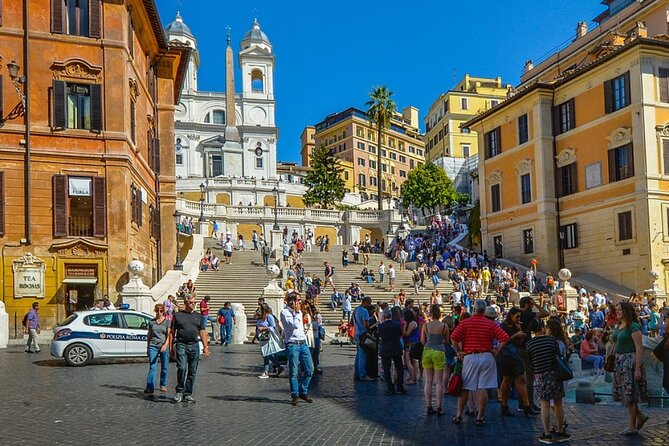
Stop 1 is Piazza di Spagna, and you get a first look at the Spanish Steps from below. This is a great way to start, because once you see the steps’ shape at the base, the rest of the morning makes more sense. You’re not just climbing stairs on command. You’re viewing the monument in context, with your guide setting the story and the viewpoints.
Time here is short, about 15 minutes. That works well. It gives you breathing room to orient yourself, without eating up the whole tour.
Spanish Steps: 138 Steps, Plus Views Over Via dei Condotti
Next comes the main event: the Spanish Steps. The tour description makes it clear that you’ll face the famous 138 steps, and you can choose how ambitious you want to be. You can climb all the way up or take it in smaller chunks.
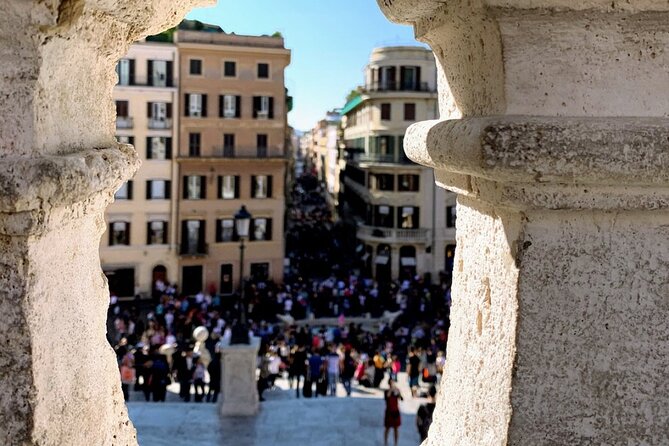
Either way, the point is the payoff: the top area gives you a view over Via dei Condotti, which is Rome’s exclusive shopping street. Even if you’re not a shopper, it’s useful to understand what neighborhoods and streets feed into these landmarks. Rome isn’t isolated art. It’s architecture connected to everyday life.
Your guide can help you see more than just the steps themselves. You’ll also get time to look around the square and understand why this spot has stayed important for centuries. Expect a mix of people. This is one of those places where you don’t beat the crowd entirely, so the best strategy is to use your guide time for meaning, not just photos.
Trevi Fountain Secrets and Bernini Details in the Streets Around It
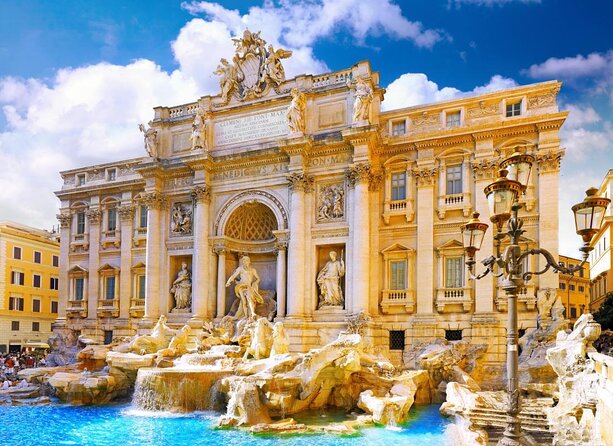
After the steps, you shift into the central-city maze around the Trevi area. Stop 3 brings you to Fontana di Trevi, Rome’s most famous fountain, and the tour focuses on what makes it more than a postcard scene.
Your guide leads you through the winding city center streets toward the fountain and shares details about Bernini and the sculptures here. The “secrets” angle is the value add. A fountain like this is widely photographed, but you’ll miss the story if you just look and move on. With a guide, you can connect the sculpture choices to the bigger ideas behind the design.
Time at Trevi is again about 15 minutes. That’s enough to arrive, orient yourself, and understand what you’re seeing without getting stuck too long in the heaviest congestion.
Practical thought: if you want fewer headaches with crowds and movement, keep your pace steady and follow the group cues. Trevi is popular for a reason, but it’s also a place where people stop suddenly. Your best time there is the time you spend looking, not navigating.
Hadrian’s Temple: A Quick Column View That’s Actually Worth It
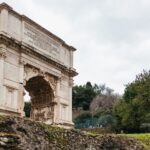
Stop 4 is Tempio di Adriano (Hadrian’s Temple). This isn’t a long stop, about 5 minutes, and that’s exactly why it works.
The tour keeps it focused: you’ll see the towering columns from outside. The site is also used as an event space, so it can feel more alive than you’d expect from a name like “temple.” But the main point is visual. Those columns give you a strong sense of scale and Roman design thinking, right in the middle of modern Rome’s movement.
If you have limited time, this kind of quick hit is a smart use of the schedule. You get a real Roman landmark marker without turning the day into a single-site detour.
You can also read our reviews of more guided tours in Rome





The Pantheon Interior: Why That Dome Still Feels Unreal
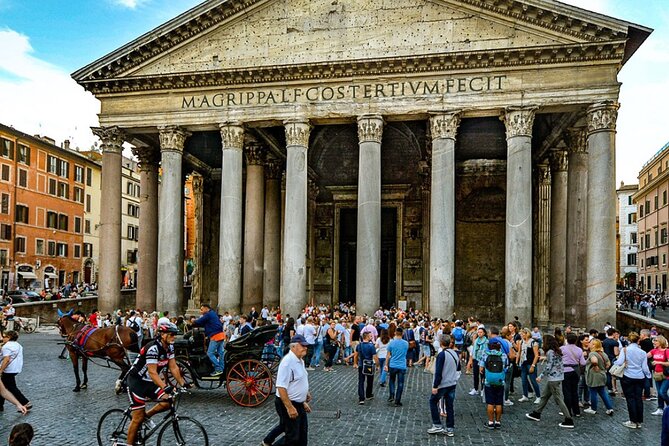
Stop 5 is the Pantheon, and this is one of the tour’s most valuable moments. Unlike many “see it from the outside” tours, you step inside with your guide and spend about 15 minutes there.
What you’re looking for is spelled out clearly: the Pantheon has lived many lives, from a pagan temple to a church, and it’s also the tomb of kings of Rome. That shift matters, because it explains why the building reads so differently depending on what era you focus on.
And then there’s the famous engineering claim you’ll get time to appreciate: it has the largest unreinforced concrete dome in the world, and it has stood for nearly 2000 years. The tour also reassures you that it won’t collapse. That may sound like a casual line, but it’s also a practical way to keep you from spiraling into worry while you’re inside.
A guided visit changes how you experience the space. Even in a brief stop, your guide can point out what to notice so the building registers as purposeful, not just impressive.
Piazza Navona and Bernini’s Four Rivers Fountain
Stop 6 brings you to Piazza Navona, described as the heart of Rome’s piazzas. That framing helps. This isn’t just a scenic square. It’s a place where locals and travelers move through everyday life, so the atmosphere is part of what you’re seeing.
Your time here is about 15 minutes. You’ll admire the hustle and bustle while also taking a moment to appreciate the Fountain of the Four Rivers, another Bernini masterpiece referenced in the tour.
This stop is valuable because it changes the rhythm from monument to public space. You go from iconic architecture to an urban stage where people gather, sit, and watch. That makes the stories you’ve heard earlier feel less abstract. Rome is not only preserved ruins and grand interiors. It’s also a city where the squares still work.
If you’re trying to travel with energy, this is a good place for a reset. Look at the fountain, then take a breath and scan the square like a local.
Castel Sant’Angelo Along the Tiber: Fortress to Museum
Right after Piazza Navona, the tour shifts to Castel Sant’Angelo. You don’t go inside on this walk, but you get an outside look, which is enough to register how dominant the structure is along the Tiber river.
The tour description gives you the core storyline in plain terms: it has served as a fortress, a prison, a hideaway, and now it’s a museum. That sequence is exactly the kind of timeline that helps you understand why the building looks the way it does today. You’re not just seeing a river landmark. You’re seeing layers of use across time.
Time here is not specified as a separate minute count in the same way as other stops, but it fits as a transit and viewpoint moment between Piazza Navona and St. Peter’s Square. That makes it an efficient use of the route.
St. Peter’s Square with Bernini’s Colonnade and the Blue Dome
Stop 7 ends the main loop at St. Peter’s Square. This is the finale, and it’s designed for walking in, not just standing at a boundary.
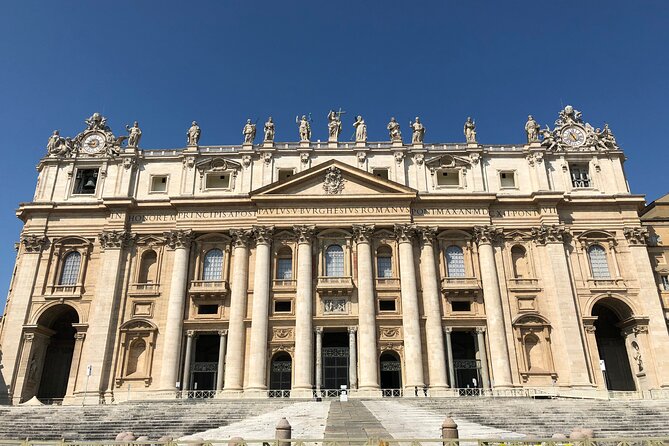
You’ll spend about 15 minutes here. The tour emphasizes Bernini as the architect of the square’s design, including how the space was specifically designed to be visited by foot. You’ll get the “embrace of the colonnade” feeling, which is one of those experiences that works best when you’re actually in the space, walking through it as the guide describes.
The tour also calls out two visuals you should pay attention to: the blue dome of St. Peter’s Basilica and the way Bernini lined the square with saints. The guide encourages you to pick your favorite saint among those lined up there. That’s a fun prompt, and it’s also a smart way to keep your attention from drifting while you’re in a huge public space.
This is where the tour finishes. After you reach St. Peter’s Square, you’re free to continue exploring on your own. Ending here is a smart payoff, because you don’t need to get yourself to the next “major thing.” You’re already at one of Rome’s strongest hubs.
Price and Value: What $46.25 Buys for Two and a Half Hours
At $46.25 per person, this tour is priced for people who want the “guided shortcut” through Rome’s top sights. You’re not buying a long, multi-day package. You’re paying for an expertly structured loop with time on the key sites and the benefit of a certified local guide.
A big part of the value is that the itinerary indicates admission ticket free at each stop. That means your money is mostly covering the guide, timing, and the practical flow between sights, rather than paying separate entry fees for each location listed. You’re also getting Pantheon interior time, which is often the differentiator between a photo walk and a true guided experience.
The maximum group size of 20 supports the value too. A smaller group often means the guide can keep explanations moving and answer questions without the pace collapsing.
Is it expensive for Rome? Not really, considering the number of major landmarks you cover in one outing. But it’s also not the kind of budget deal you should compare to a free walking tour. This is a paid, guided route with a clear itinerary and defined timing.
Best Way to Prepare: Shoes, Pace, and the Jubilee Reality
Because this is a walking tour with short stops, your comfort matters more than anything else. Bring comfortable shoes because the city streets and stairs are part of the experience. Also, expect that you’ll move several times during the tour, so pack light and keep your day bag simple.
Plan your expectations around the schedule. With time slots like 5, 15 minutes, and brief transitions, you shouldn’t expect lingering as long as you would on your own. This is built for seeing a lot and learning enough to make the sights click.
The other wildcard is the Jubilee-related restorations. Some monuments may be under restoration. If any changes are sent ahead of time, treat them as a heads-up, not a disappointment. Rome is active, and site conditions can affect how much you see at each stop.
Finally, you’ll want to manage water and snacks on your own since food and drink are not included. It’s not a dealbreaker. It just means you’re responsible for staying comfortable between stops.
Who This Tour Suits, and Who Might Want a Different Plan
This tour fits best if you want an efficient, guided “greatest hits” walk and you like learning as you go. It’s also a good match for first-time visitors because the route touches the Spanish Steps, Trevi Fountain, Pantheon, Piazza Navona, and St. Peter’s Square, plus Castel Sant’Angelo.
It also makes sense if you want help interpreting big landmarks. The tour includes guidance on what to look for, including stories linked to Bernini and the Pantheon’s engineering claim about the dome. That turns the day from sightseeing into understanding.
Who should consider another option? If you dislike stairs or long standing in crowds, the Spanish Steps stop could feel challenging. The good news is the tour allows you to climb all the way or just a few steps, so you can tailor effort to your level.
If you’re traveling with kids or multiple ages, this style of short stop may work, since the day breaks into manageable chunks. Guides on this kind of program are often praised for keeping explanations lively, including for young visitors around four years old, but your best approach is still to bring patience and plan for breaks of your own.
Should You Book This Guided Rome Top Sights Walk?
Book it if you want a structured route that takes you to Rome’s headline sights in one morning-style outing, with a certified local guide and time inside the Pantheon. The small group size and the short, efficient stop lengths make it an easy way to feel like you used your time well.
Skip it or switch strategies if you prefer a slower pace with lots of free roaming, or if you want to spend a long time at a single site rather than sampling several. This tour is about breadth and clarity, not deep study at one monument.
If you do book, I’d plan your day around walking comfort, bring your own water and snack plan, and keep an eye out for Jubilee restoration updates. Then show up ready to look up, listen, and enjoy the flow from Piazza di Spagna all the way to St. Peter’s Square.
FAQ
How long is the guided walking tour?
It lasts about 2 hours 30 minutes.
Where does the tour start and what time does it begin?
The tour starts at Babington’s tea room at Piazza di Spagna, 23, and it begins at 10:00 am. It concludes at St. Peter’s Square.
What sights are included in the tour?
You’ll visit Piazza di Spagna, the Spanish Steps, Fontana di Trevi, Tempio di Adriano, the Pantheon, Piazza Navona, Castel Sant’Angelo (from outside), and St. Peter’s Square.
Are tickets or admission included?
The itinerary lists admission as free for the stops, including the Pantheon interior.
Is food included?
No. Food and drink are not included.
Is the group size limited?
Yes. The tour has a maximum of 20 travelers.
What if monuments are under restoration due to the Jubilee?
Some monuments may be under restoration, and you may receive messages about potential changes.
Can I cancel for a full refund?
Yes, you can cancel up to 24 hours in advance for a full refund.
More Walking Tours in Rome



More Tours in Rome


More Tour Reviews in Rome
Not for you? Here's more nearby things to do in Rome we have reviewed












Walking Tours, compared.
 ★ 4.9Trastevere & Campo de Fiori Street Food Walking TourFrom $512,768 reviews
 ★ 4.9Paranormal Night Walking Tour & Secret BackstreetsFrom $341,921 reviews
 ★ 4.4Guided City Center Evening Sightseeing Walking TourFrom $46953 reviews
 ★ 4.5Best of Rome Walking Tour including Trevi FountainFrom $4923 reviews
 ★ 4.8Under the Moonlight Evening Walking TourFrom $28852 reviews
 ★ 4.9Forbidden History Walking Tour & Pub Crawl with DrinksFrom $61688 reviews
 ★ 5.0Guided Small Group Walking Tour of City HighlightsFrom $30682 reviews
 ★ 4.5Rome Walking Tour with Piazza Navona, Trevi Fountain and PantheonFrom $35676 reviews
Browse the lists this tour appears in