
Reviewed · VATICAN TOURS
Rome St. Peter’s Basilica Tour with exclusive Underground Access
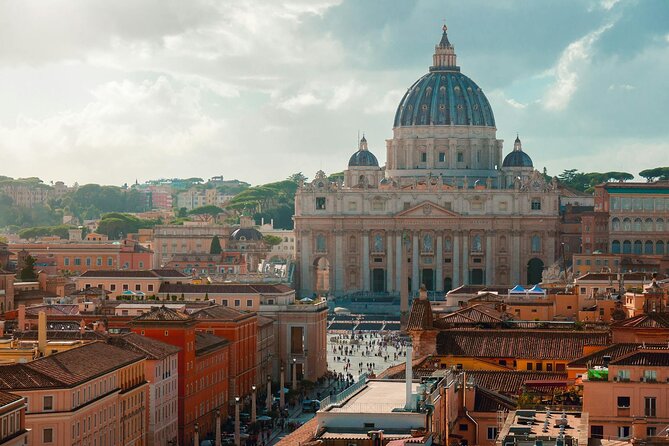
St. Peter’s Basilica, minus the guesswork. This tour is built for people who want more than a quick look, with stops that take you from St. Peter’s Square into the Basilica, then down to the Vatican Grottoes where you’ll see the tombs of popes, including St. John Paul II. I like that the guide work pushes you to see symbols and art details, not just walls and ceilings.
What I especially like is the chance to get close to major works at the right moments. You’ll spend time with Michelangelo’s Pieta and Bernini’s baldachino over the main altar, so the guide can connect what you’re seeing to what the Church wanted people to feel. One thing to keep in mind: this isn’t a private, empty-site experience, and the “exclusive underground access” is still done in a guided group format, in a very popular place.
Key Highlights You’ll Actually Use
- Radio headsets help you hear the guide clearly in a loud, echo-y basilica
- Vatican Grottoes access brings you to pope tombs, including St. John Paul II
- Michelangelo’s Pieta stop gives you time to focus on the sculpture instead of rushing past it
- Bernini’s baldachino stop helps you read the drama of the main altar area
- Small group cap of 25 keeps the pace civilized (though you still move as a group)
Price and Value: Paying for Guide Power and Grotto Time
At $26.43 per person for about 1 hour 30 minutes, this tour is priced like a “pay for structure” experience, not a luxury add-on. The big value signal here is that admission tickets are listed as free for St. Peter’s Square and the Basilica, while the Vatican Grottoes have admission included in the tour. Translation: you’re mostly paying for expert guidance, the time you’re allowed in the grotto area as part of the plan, and the listening help.
The other practical value is the radio headset equipment. St. Peter’s Basilica is famous for sound that bounces around, which can make normal conversation frustrating. With headsets, you spend less energy trying to read lips and more time actually looking at details your guide points out.
The one “value check” I’d suggest: if you’re the type who loves to wander and you don’t care about interpretation, the Basilica is free to enter. In that case, a self-guided visit can feel cheaper. If you want the meaning behind the art and the pathway through the site, the tour price starts to make sense fast.
You can also read our reviews of more tours and experiences in Rome.



Starting at Piazza Risorgimento, Then Rolling Toward the Basilica
The tour start is at Piazza del Risorgimento (Piazza Risorgimento), and it ends inside St. Peter’s Basilica near Piazza San Pietro. There’s also a ticket redemption point listed at Via di Porta Cavalleggeri, 61. That matters because Vatican-area visits can involve more walking than you expect, and there can be confusion if you arrive without checking exactly where you need to go first.
The good news is the tour is described as near public transportation, which is a relief in Rome. Also, the group size is capped at 25 travelers, which tends to keep movement smoother than big-bus crowds.
The subtle tip I’d give you: plan to arrive a little early at the start area and confirm where redemption/check-in happens on the day you go. If you show up right at the last minute, you’ll feel every extra minute of walking on your feet.
Stop 1 in St. Peter’s Square: A Fast First Lesson in Scale
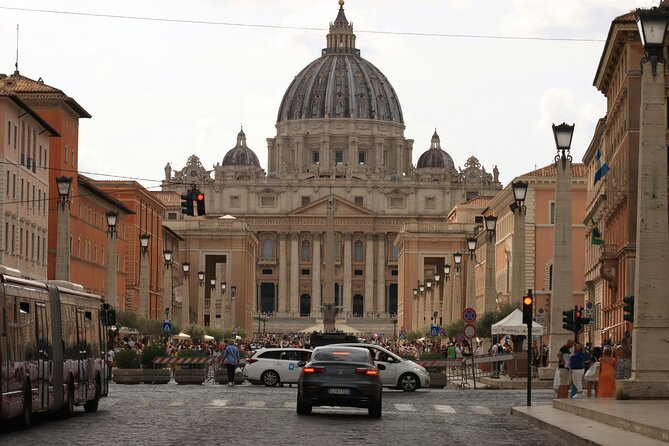
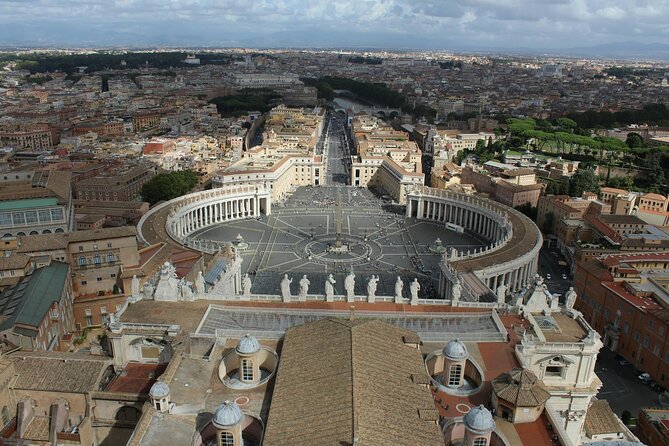
At St. Peter’s Square, you get about a 5 minute pause to admire the view of the Basilica and the square itself. This part is short on purpose. It helps you understand the “big picture” before you step into the Basilica where everything becomes more intense and detailed.
I like this mini-intro because the square’s design sets expectations. When you understand that this space is built for huge gatherings, you naturally start seeing the Basilica less like a museum and more like a living center for worship and ceremony.
If you’re hoping for long explanations outside, this stop may feel brief. But as a setup, it works: it gets you oriented so you’re not walking in blind.
Stop 2 Inside St. Peter’s Basilica: The Main Event, in Human Time
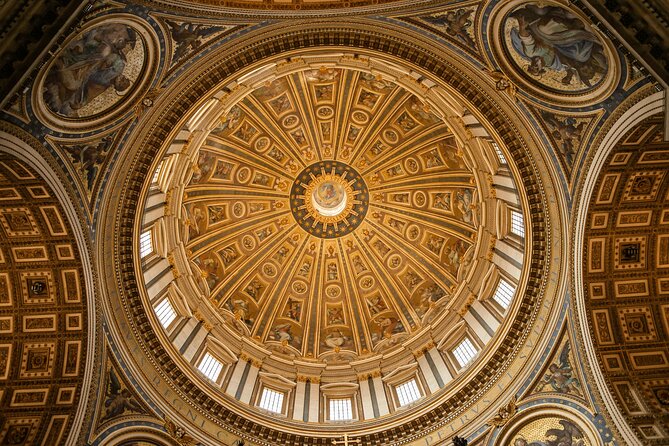
Next comes the 1 hour tour of St. Peter’s Basilica and the Dome. That’s the core of why you’re here. You’ll be walking through the Basilica with a guide who puts meaning to what you’re seeing, which is key at a site this big. Without guidance, it’s easy to feel like you’re staring at “more stuff” instead of understanding why the Church chose these artworks and layouts.
A practical point: the Basilica is free to enter, but the guided timing and the planned route help you avoid the most common “where do I go next?” moments. It also keeps you focused on what matters most in limited time.
One word of realism though: this place can be crowded. So even with a planned group flow, expect tight spaces, slow-moving bottlenecks near popular artworks, and lots of people taking photos. The radio headsets become more valuable in this kind of environment.
La Pieta Stop: Why This 5 Minutes Feels Longer
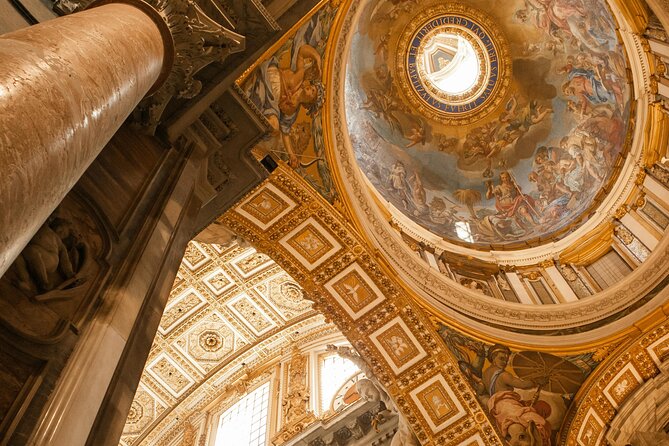
You’ll spend around 5 minutes at La Pieta, Michelangelo’s world-famous sculpture. Five minutes sounds short, but this is the type of artwork that benefits from a focused pause. With a guide, you can look with purpose, rather than only from a distance.
Here’s what makes this stop work for me as a visitor: Pieta is emotional, not just impressive. When someone explains the way it’s carved, the mood, and the symbolism around the subject, you start noticing the sculpture’s structure and expression. The guide’s commentary turns “wow, that’s famous” into “I get what it’s doing.”
Also, the quick timing helps. In a huge building, you don’t want Pieta to become another thing you only half-see while you scramble to keep up. A short, intentional stop is actually a smart use of time.





Bernini’s Baldacchino Stop: The Theater Above the Altar
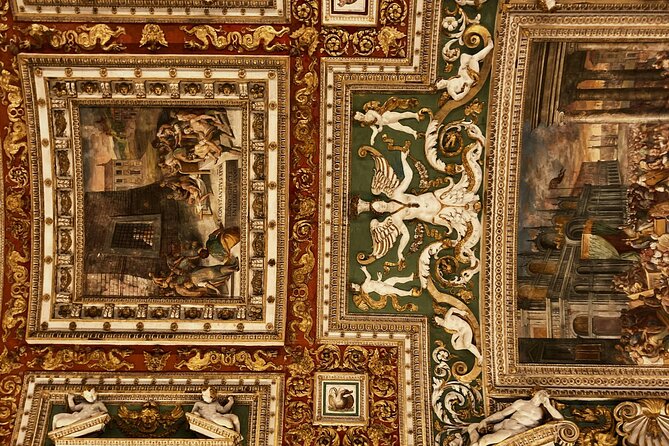
Then it’s about 5 minutes at the Baldacchino di San Pietro, crafted in 1633 by Bernini and commissioned by Pope Urban VIII. This stop is brief, but it’s designed to give you a “read” of the main altar area.
What you’ll likely notice is how commanding the baldachin feels in the space. Bernini’s work is about motion and drama in stone, and the guide can help you spot why it feels so powerful. You’re not just looking at an object, you’re learning how the Church wanted the altar to be visually central.
This is also one of those art stops where I think a guide earns their keep. Left alone, it’s easy to miss the details that explain why it became a turning point in Baroque design.
The Vatican Grottoes: Pope Tombs, Quiet Weight, Real Perspective
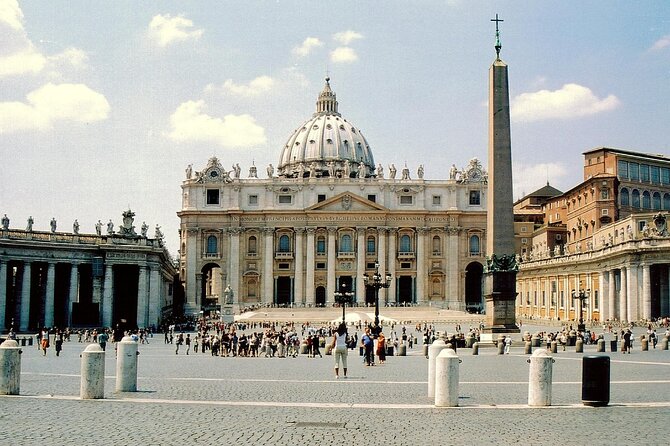
The final major stop is the Vatican Grottoes, for about 15 minutes. This is the underground portion that makes the tour feel different from a standard Basilica walk.
Here’s what’s special: the grottoes sit beneath the Basilica and function as a sacred resting place for popes, cardinals, and notable figures connected to the Catholic Church. In other words, you’re not just visiting an “attraction.” You’re entering a space with a different tone than the main floors above.
I like this stop for one big reason, it gives you perspective. The Basilica is monumental from the outside and grand on the surface, but the grottoes bring you back to the human timeline, the people whose lives and roles shaped the institution. Seeing the tombs of popes, including St. John Paul II, makes the whole site feel less like architecture and more like continuity.
You should also expect a more reverent pace. Even when groups are moving, the space itself pushes you to slow down a little.
The Dome Mention: What You Should Expect (and What You Probably Won’t)
The tour description includes the Dome, but the itinerary you’ll follow is built around walking and guided stops rather than stating a climb. So I’d treat the Dome mention as part of your guided viewing and orientation inside the Basilica, not as a guaranteed “up to the top” experience.
In practical terms, it means the guide will likely point out the Dome’s significance and how it frames the whole worship space. That alone can be valuable, because understanding why the Dome matters helps everything else click.
Radio Headsets and Group Size: Why This Tour Feels Less Stressful
Using radio headsets is a big deal at St. Peter’s. The Basilica is huge, and voices carry oddly. With headsets, you can keep your attention on the art instead of constantly trying to locate your guide’s voice.
Group size matters here too. With a maximum of 25 travelers, you typically get a pace that’s faster than private tours but calmer than mass groups. You won’t have freedom to roam off-script, but you also won’t feel completely swallowed by a crowd.
One small caution: the tour is described as English, but accents and volume can still be factors in Rome. In a good tour, the headset solves most of that. In a less smooth day, you’ll still want to pay attention early so you don’t fall behind.
Logistics Reality Check: Entrance Confusion and Lots of Walking
Not every part of this experience is magic and art. The practical reviews and the way this tour is structured suggest a few real-world friction points.
First, check-in and meeting areas can be confusing. You have a start point at Piazza del Risorgimento, but ticket redemption is listed at Via di Porta Cavalleggeri, 61. That means you should not assume one location covers everything.
Second, the experience is not described as a true skip-the-line deal. In a place like this, queues are partly about security and partly about capacity control. Even with guidance, you may still be in line with other visitors depending on how the flow is managed that day.
Third, the “exclusive underground access” may not mean empty grottoes. It means you get into the grotto portion as part of a planned route, with a guide and included admission. If you want solitude underground, you might be disappointed.
The best way to handle all that is simple: wear comfortable shoes, keep your phone charged, and give yourself a little buffer time so you’re not rushing between points.
Who This Tour Fits Best (and Who Might Skip It)
This tour makes the most sense for you if:
- You want guided stops at major works like Pieta and Bernini’s baldachino
- You care about what the artwork means, not just that it’s famous
- You prefer structured timing, especially for the Vatican Grottoes
- You appreciate the comfort of radio headsets in a crowded, echo-heavy space
You might consider doing it on your own if:
- You’re a pure wanderer who hates group pacing
- You mainly want photos and are fine reading signs quietly
- You’re hoping the tour guarantees faster entry into everything. The Basilica area still has crowd control and queues.
It also fits well if you’re traveling with limited time. In about 90 minutes, you get a route that hits the highlights and the underground portion without you having to map it out on your phone.
Should You Book This St. Peter’s Basilica Underground Access Tour?
I’d book it if your goal is understanding. For $26.43, the value comes from three things: included grotto access, radio headsets, and guided interpretation at the most important art stops. The tour ends inside the Basilica, which is handy if you want to keep exploring right after, like focusing on areas you might have missed the first time.
I’d skip it if you’re mainly looking for speed through lines or a totally uncrowded experience. The site is popular, and this is still a shared guided outing, not a private viewing.
If you want a practical rule of thumb, here it is: if you’ll be disappointed without explanations, book the tour. If you’re happy doing your own route and you enjoy learning from plaques and your own pacing, you can save money by going independently.
FAQ
FAQ
What is the duration of the Rome St. Peter’s Basilica tour with underground access?
It runs for about 1 hour 30 minutes.
How much does the tour cost per person?
The price is $26.43 per person.
Is the tour offered in English?
Yes, it is offered in English.
Does the tour include the Vatican Grottoes?
Yes. The Vatican Grottoes are included, with admission listed as included.
What key stops are included during the tour?
The tour includes St. Peter’s Square, St. Peter’s Basilica (with the Dome mentioned), La Pieta, the Baldacchino di San Pietro by Bernini, and the Vatican Grottoes.
Are admissions included in the price?
Admission tickets are listed as free for St. Peter’s Square and St. Peter’s Basilica, and admission for the Vatican Grottoes is listed as included.
Do I get help hearing the guide?
Yes. The tour includes radio headset equipment to better hear your guide.
How large are the groups?
The tour has a maximum of 25 travelers.
Where do I meet the tour and where does it end?
It starts at Piazza del Risorgimento (Piazza Risorgimento) and ends inside St. Peter’s Basilica at Piazza San Pietro.
Is free cancellation available?
Yes, you can cancel for a full refund if you cancel up to 24 hours in advance of the experience start time.
More Tours in Rome
More Tour Reviews in Rome
Not for you? Here's more nearby things to do in Rome we have reviewed












Vatican Tours, compared.
 ★ 4.5Vatican: Museums & Sistine Chapel Entrance TicketFrom $38144,003 reviews
 ★ 4.3Vatican Museums & Sistine Chapel Tour with Optional BasilicaFrom $7967,413 reviews
 ★ 4.5Vatican Museums, Sistine Chapel & St Peter’s Basilica Guided TourFrom $2239,149 reviews
 ★ 4.3Vatican Museums, Sistine Chapel & Basilica TourFrom $13013,872 reviews
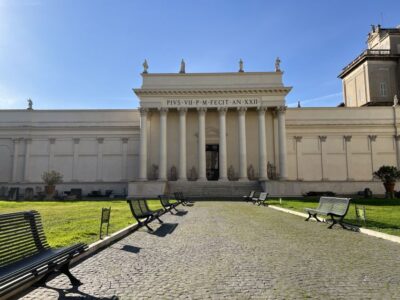 ★ 4.4Vatican Museums & Sistine Chapel Skip-the-Line Entry TicketFrom $4313,838 reviews
★ 4.7Vatican Museums, Sistine Chapel & Basilica TourFrom $7213,217 reviews
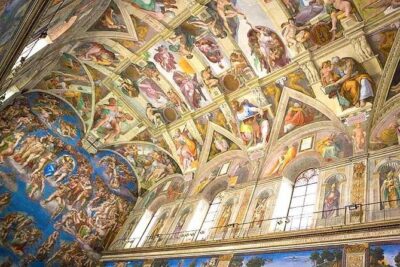 ★ 4.5Skip-the-Line Group Tour of the Vatican, Sistine Chapel & St. Peter’s BasilicaFrom $3012,779 reviews
Vatican Museums & Sistine Chapel Guided TourFrom $11812,117 reviews
Browse the lists this tour appears in