
Reviewed · ANCIENT ROME TOURS
Ostia Antica Small Group Tour
First, you get a calmer side of Rome. This small-group Ostia Antica tour is a smart half-day way to see a former port city up close, with real context from your guide (and time to wander a bit after). I especially like how it focuses on street-level places you can actually picture in use, not just random stones.
I also really like the tour structure: meeting you at Piazzale Ostiense, taking the local train with roundtrip tickets included, then entering the archaeological park via a separate entrance so you are not waiting. The one drawback is simple: you will walk a fair amount on uneven, outdoor ruins, so it is not a fit for wheelchairs or reduced mobility.
Key highlights worth clocking before you go
- Small group size up to 10 so questions do not get lost and pacing stays relaxed
- Skip-the-line entry through a separate entrance
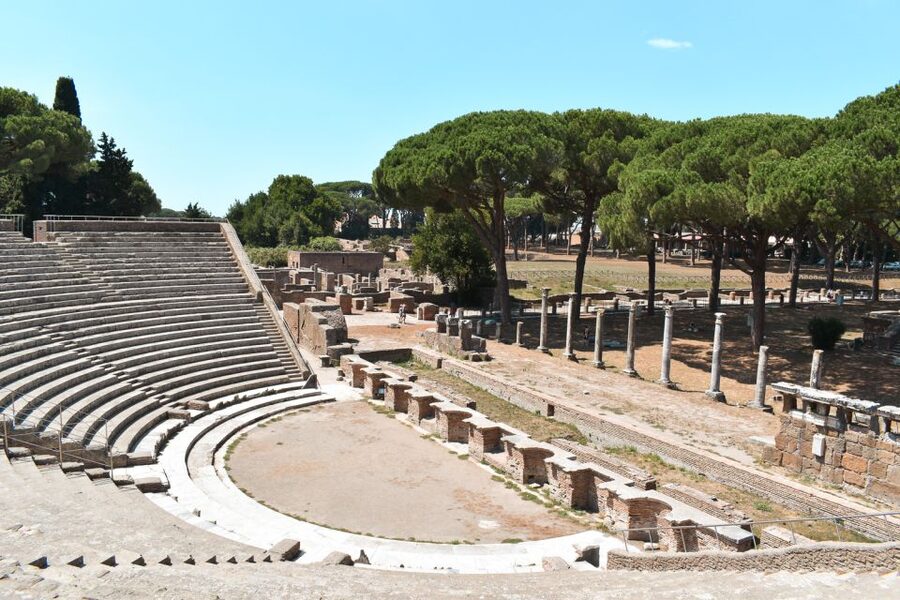
- Grand outdoor theater where plays and gladiator fights were staged
- Square of the Guilds that explains how merchants and ship owners made their money
- Baths of Neptune showing Roman-style cleaning, lounging, and exercise
- House of Diana for a home life stop that feels surprisingly sophisticated
A quieter Rome workout, in ancient streets
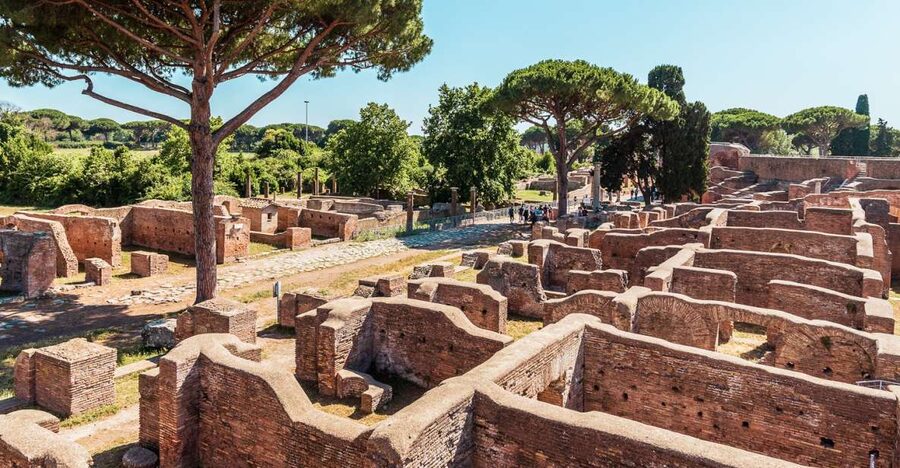
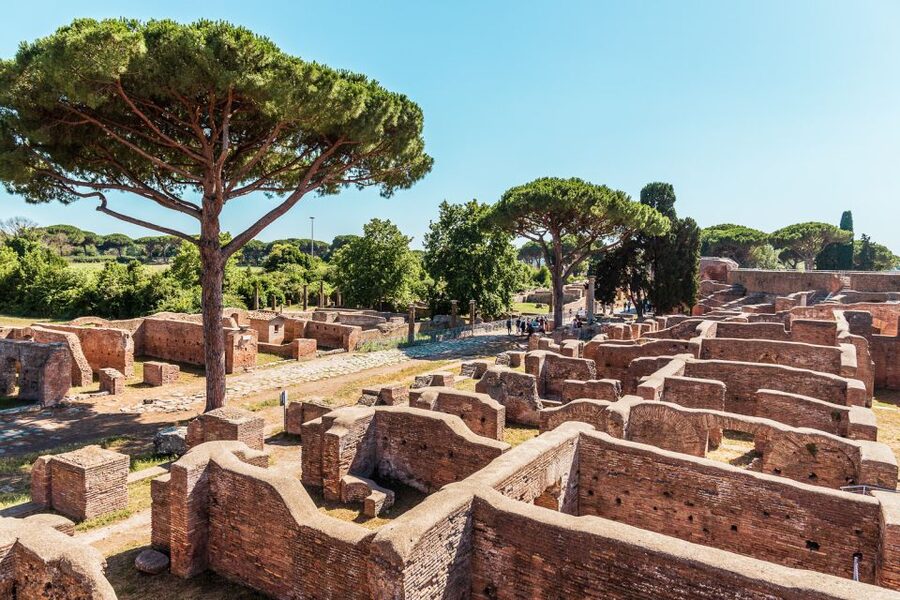
Ostia Antica gives you a different kind of Rome day. Instead of crowds and big ticket stops, you get a working port town, spread out and atmospheric, where the ruins feel connected by daily routines. The park is well preserved in the sense that many areas are still readable, and you can stand in the same sunlit spaces where people once shopped, worked, cleaned up, and went to public performances.
For me, the magic here is how the tour picks human-scale places. You are not just looking at monuments from far away. You move through a sequence of spaces that help you understand the city as a system: commerce by the port, leisure at the baths, and public spectacle at the theater, with homes that show what comfort could look like.
The other big win is timing. At 4 hours, you can fit Ostia Antica into a Rome visit without turning the day into a marathon.
You can also read our reviews of more tours and experiences in Rome.

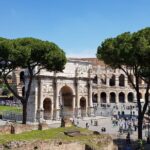
How you get there: the Rome Ostiense train to Ostia Antica
You meet in front of the Roma Ostia Lido Train Station, Piazzale Ostiense, 9, 00154 Rome. From there, you board the local train to the archaeological park, and roundtrip train tickets are included. This matters more than it sounds. Public transit in Rome can be fine, but doing it on your own when you are short on time adds stress you do not need.
Because the tour handles the rail plan, you spend your energy where you should: on the ruins. And you are not stuck guessing about how to return to the city after the tour ends. You also have the practical advantage of being in control of your day, since you can continue exploring after the guided portion if you want.
One more detail that affects your experience is what you bring. There are no large bags or luggage allowed, so travel light. A small daypack is usually the sensible approach in any outdoor archaeological site.
Skip-the-line entry and a pace that lets you look
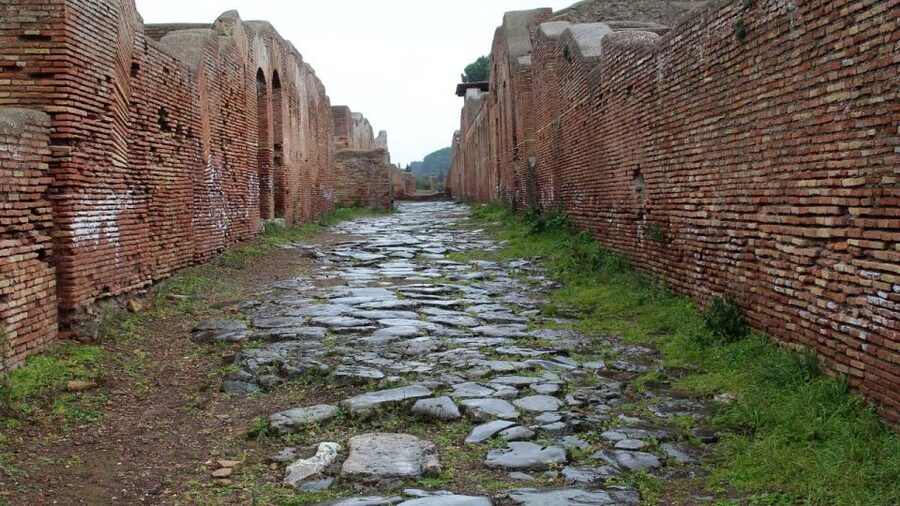
A separate entrance for skip-the-line tickets is a big deal at archaeological sites. Even when the wait is short, it chips away at the time you can spend seeing things at a comfortable speed. Here, you gain back that time and put it into the most interesting parts: the moments when the guide can connect the setting to how people actually lived.
Your tour stays intentionally paced. Reviews consistently flag that the guides do not rush and keep the group moving at an easy rhythm. In plain terms, that means you get time to stop, look, and ask questions, instead of sprinting from stop to stop.
Small group size also changes the feel. When you have up to 10 participants, you are more likely to hear explanations clearly and get personal answers instead of one-way talking. That also helps if you want guidance on where to look once you are standing in front of an unfamiliar ruin layout.
The grand outdoor theater: spectacle, shade, and stagecraft
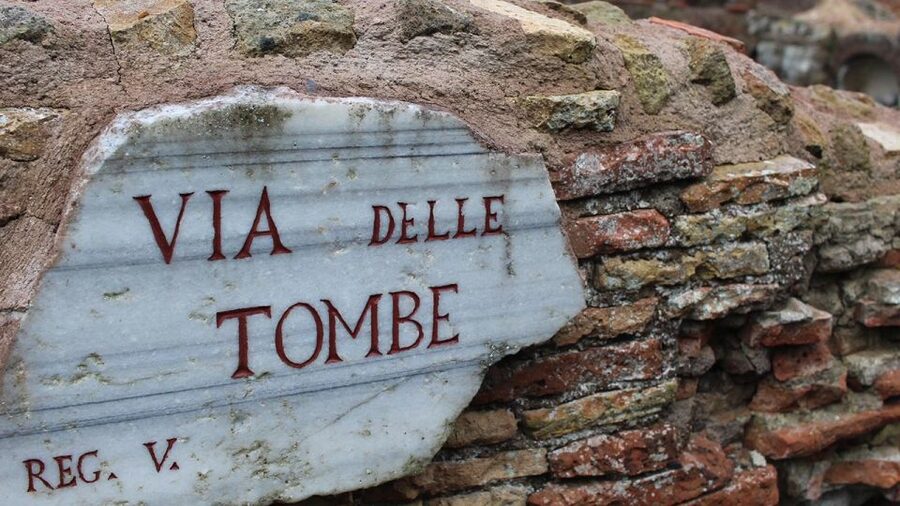
One of Ostia Antica’s strongest draws is the grand outdoor theater. This is the place where performances happened, and gladiator fights were staged too. Standing in the theater area is one of the fastest ways to understand that Ostia was not only a workplace. It was a city with entertainment and public life built into daily schedules.
Here is why the theater stop matters for your brain, not just your camera roll. A theater tells you about movement and gathering. People came together, waited, watched, and reacted. When your guide explains how it functioned as a public space, you start to read other ruins differently too. Suddenly you are noticing relationships, like how nearby areas could support crowds, vendors, or the flow of people.
Practical note: this is an outdoor stop, so sun and heat matter. If you are visiting in warmer months, plan for a dry, warm walk and think about shade whenever the group pauses.
Square of the Guilds: where commerce had a front door
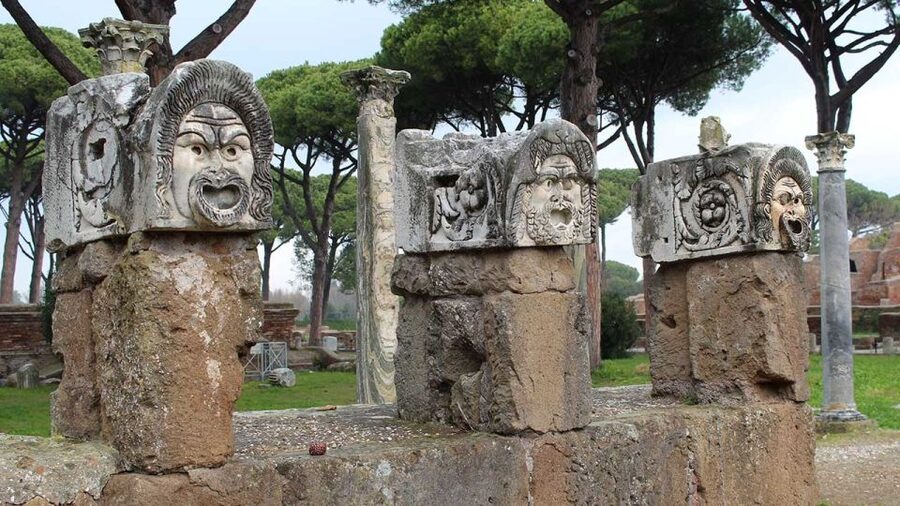
Next up is the Square of the Guilds, tied to the port economy that fueled Ostia. This is where ship owners and merchants tried to make their fortune. If you like history that connects to money and work, this is a standout stop.
The square also helps you understand why Ostia was so important to Rome. A port city runs on schedules, goods, and networks. You can almost imagine the rhythm of arriving shipments and negotiating deals. The guide’s job here is to keep it from becoming a generic description of ancient trade by turning the space into a believable place where people did specific things.
If you are the kind of traveler who likes practical context, you will probably enjoy how this stop frames the city. You are not just walking among walls. You are learning what kind of people belonged in the space and what their concerns would have been.




Baths of Neptune: Roman cleaning, lounging, and workouts
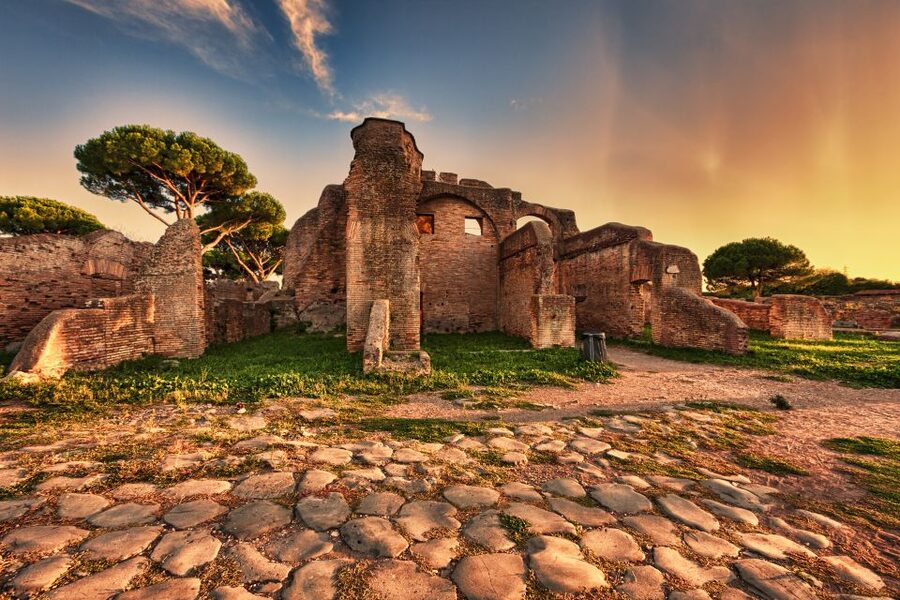
The Baths of Neptune are where Ostia shifts from commerce and crowds into everyday routines. In Roman life, public baths were not just for cleanliness. They were social hubs and fitness spaces too, with people lounging in pools, working out, and cleaning themselves, often using olive oil as part of the routine.
This stop is valuable because it gives you a tangible daily-life lens. When you understand the baths as a blend of relaxation and maintenance, the rest of the city starts to make more sense. People needed water access. They needed spaces to wash off. They also needed places to meet and talk.
One caution: you will be outdoors and walking between areas. Wear supportive shoes because paths can be uneven. If you are visiting during a hot time of year, use the baths stop as a reminder to pace yourself and keep water in mind.
The House of Diana: a home stop that feels more real
The tour takes you to the House of Diana, which is a surprisingly satisfying contrast to the public spaces. This is where people laid their heads at night. A domestic stop in a ruin park can sometimes feel like a bonus add-on, but here it works because it teaches you how private life fit into a busy port town.
A home also gives you a different way to observe the site. Instead of thinking about crowd movement, you start thinking about rooms, routines, and comfort. Your guide typically helps connect what you see with how homes would have been used day to day, so you are not just looking at walls and floors.
In terms of feel, this stop can be a reset. After theater and squares, walking into a more “human” scale space helps the whole day click into place.
What the guides add: stories, Q and A, and real Roman texture
The biggest reason this tour earns strong marks is the guide experience. Names that come up in recent bookings include Sonia, Sarah, Claudia, Kathleen, and Antonio. The common thread across them is the way they turn ruins into scenes, not lectures. People also mention that guides are friendly, enthusiastic, and answer questions without making you feel rushed.
You will likely appreciate how the guide weaves context across stops. For example, once you hear about how Ostia functioned as a working port, the Square of the Guilds stops feeling like a single location and starts feeling like the city’s business center. Once you hear how baths fit into routines, the Baths of Neptune read as a key part of daily rhythm, not just an architectural feature.
This is the difference between looking at a site on your own and understanding it as a living place. The park has signs and an audiobook option, but Ostia is spread out enough that self-guiding can leave you unsure what matters most. A guide gives you the highlights and the context so you leave with clearer mental pictures.
Value at $94: what you pay for, and what you do not
The price is $94 per person for a 4-hour tour. That number can look steep or fair depending on what you already planned for your Rome day. What makes the value better here is that several key pieces are included:
- Roundtrip train ticket from the meeting point area
- Skip-the-line tickets for the Ostia archaeological park via a separate entrance
- A licensed English tour guide
- Small group format (up to 10 participants)
What you should plan around is what is not included: food and drinks. That means you need to think about when to eat in relation to your tour window. In practice, plan a simple snack strategy so you are not hungry while you are walking.
For me, the best way to judge value is this: you are paying to replace uncertainty with guidance. Getting there by train and entering with a separate entrance saves time and stress. Then your guide supplies the connections that make the ruins easier to understand.
If you are the type who likes your tours organized but not rigid, this is a strong fit. If you hate walking and want minimal movement, it may not be worth it.
Who this tour suits best (and who should skip it)
This is a great option for you if you:
- Want a small-group Rome excursion with a relaxed pace
- Like Roman life as more than famous monuments, with daily routines and public spaces
- Prefer fewer crowds compared with central Rome days
- Want a half-day structure you can build into a busy itinerary
It is not the right choice if you need step-free access. The tour is not recommended for people with reduced mobility or wheelchair users, and it is outdoors with walking on uneven ancient surfaces.
Also, keep your packing simple. No luggage or large bags are allowed. Comfortable shoes are essential, and you should be ready for a fair amount of walking.
Practical tips that make Ostia Antica easier
Here is how to set yourself up for a smooth 4-hour visit:
- Bring your passport or ID card, since it is required
- Wear comfortable shoes with good traction
- Consider a hat and sunscreen, and carry water on warmer days, based on experience shared by past participants
- Travel light, because larger bags and luggage are not allowed
- Plan for heat, since much of the time is outside and the ruins do not provide constant shade
One small mindset shift helps too: treat this like a walking city, not like a museum. The most satisfying moments often come when you stop, look from different angles, and let the guide’s story anchor what you are seeing.
Should you book this Ostia Antica Small Group Tour?
I think you should book this tour if you want the most practical way to see Ostia Antica in a limited Rome schedule, with the added benefit of a guide who helps you understand what you are looking at. The combination of small group size, skip-the-line entry, and the focused stops like the outdoor theater, Square of the Guilds, Baths of Neptune, and House of Diana makes it feel efficient without feeling rushed.
Skip it if you have mobility limits that make outdoor walking difficult, or if you want zero planning and zero movement. Also, if you are traveling with lots of luggage, you will need to adjust what you bring because large bags are not allowed.
If your goal is to get a clearer picture of how Romans lived in and around a working port, this is one of the smarter half-day add-ons you can make.
FAQ
Where does the Ostia Antica tour meet?
You meet in front of the Roma Ostia Lido Train Station, Piazzale Ostiense, 9, 00154 Rome RM, Italia.
How long is the tour?
The tour lasts 4 hours.
Is the train ticket included?
Yes. The tour includes a roundtrip train ticket.
Are skip-the-line tickets included?
Yes. Skip-the-line tickets to the Ostia archaeological park are included, using a separate entrance.
How big is the group?
It is a small group limited to 10 participants.
What languages are the tours offered in?
The live tour guide is available in Spanish, English, and French.
What should I bring?
Bring your passport or ID card and wear comfortable shoes.
Is food or drinks included?
No. Food and drinks are not included.
Is the tour suitable for wheelchair users or reduced mobility?
No. The tour is not recommended for people with reduced mobility or wheelchair users.
What is the cancellation policy?
Free cancellation is available up to 24 hours in advance for a full refund.
More Tours in Rome
More Tour Reviews in Rome
Not for you? Here's more nearby things to do in Rome we have reviewed








Ancient Rome Tours, compared.
 ★ 4.7Colosseum: Underground and Ancient Rome TourFrom $16012,691 reviews
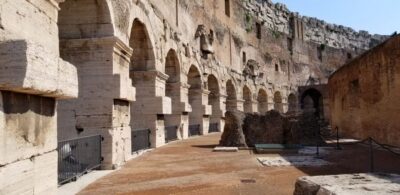 ★ 4.4Colosseum, Ancient Rome Tour or Self AudioGuided TourFrom $392,866 reviews
 ★ 4.9Appian Way, Catacombs, & Roman Aqueducts E-bike TourFrom $851,421 reviews
 ★ 4.9Appian Way E-bike Tour with Catacombs, Aqueducts & FoodFrom $961,210 reviews
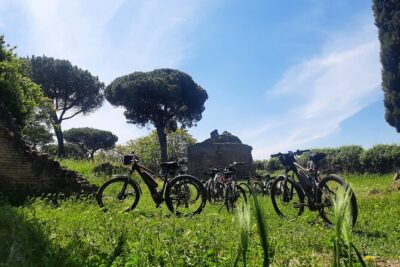 ★ 5.0Appian Way Aqueducts Bike Tour (Catacombs & Lunch Option)From $78975 reviews
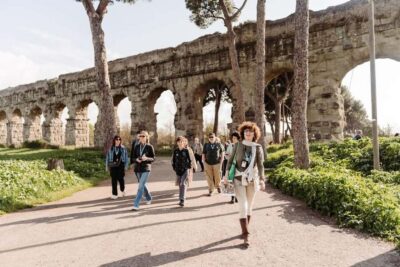 ★ 4.7Appian Way, Aqueducts, and Catacombs TourFrom $64942 reviews
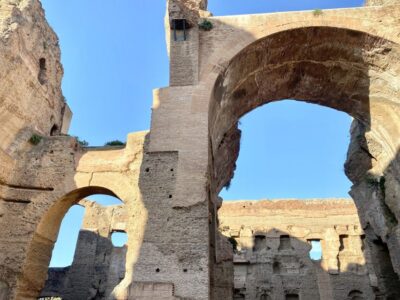 ★ 4.7Caracalla Baths & Circus Maximus — Private or SharedFrom $77835 reviews
 ★ 4.7Colosseum Arena Access and Ancient Rome Guided TourFrom $94774 reviews
Browse the lists this tour appears in