
Reviewed · ANCIENT ROME TOURS
Rome: Appian Way & Catacombs Golf Cart Tour – Shared|Small groups
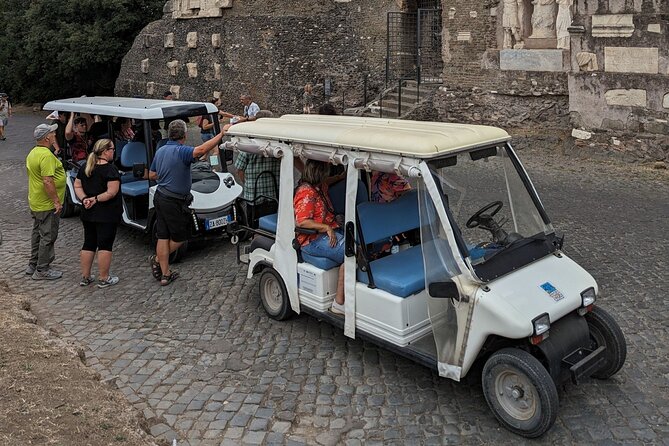
Rome’s Appian Way is the easy win for history fans. This small-group golf cart tour covers the Appian Way in a way that keeps you comfortable, with guides such as Flavia and Federico bringing the sites to life. I like that it stays fun and educational instead of turning into a lecture you rush through.
The best part for me is the catacombs stop, with an included entrance and guided visit to either St Callixtus or St Sebastiano depending on availability. It is one of the rare Roman experiences where you trade crowds and street noise for underground quiet and real atmosphere.
One drawback to plan around: the cart is a shared ride, and if you sit farther back, it can be harder to catch every detail of the guide’s commentary. If that matters to you, aim for the front seats when you can.
Key highlights that make this tour worth your time
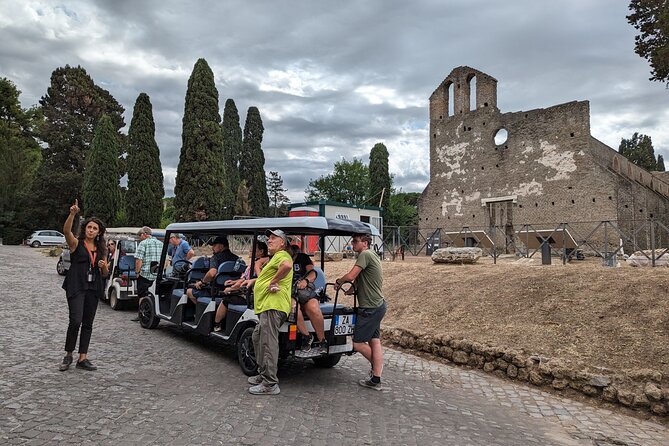
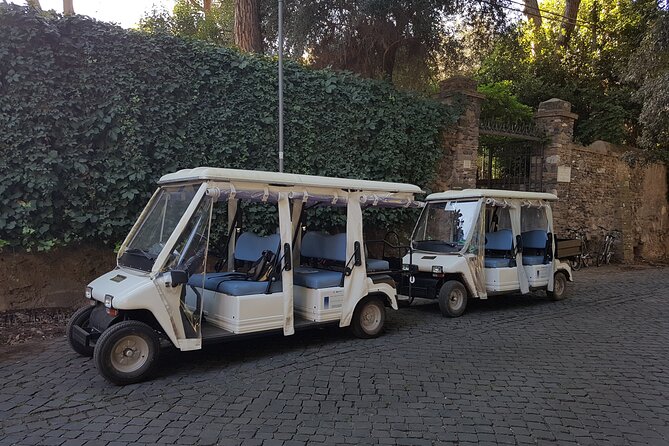
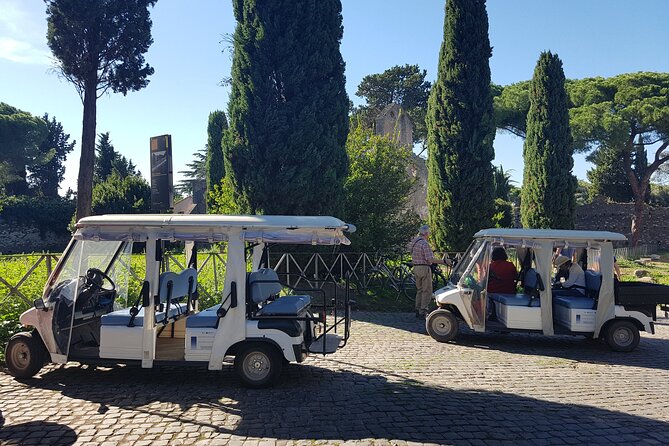
- Appian Way by golf cart so you get distance without leg fatigue, and you still stop for photos and explanations
- St Callixtus or St Sebastiano catacombs, with a guided entrance included
- Circus of Maxentius inside the Appian area, a big Roman arena that feels more understandable when you see it in context
- Hill views over Cecilia Metella and Caetani Castle, plus a chance to get close to S. Nicola Church
- Small group size (max 7), which usually means more Q and A time during stops
Why the Appian Way on a golf cart makes sense
The Appian Way is long. Even if you love walking, Rome can make you pay for it, with heat, cobblestones, and the constant pull to hurry to the next “must-see.” This tour solves the problem with a golf cart plan that keeps your day moving while still giving you time to understand what you are seeing.
What makes it work is the pacing. You are not stuck in traffic or racing between attractions. Instead, you cruise along the route that Romans used for travel and burial, then you park up for short, focused stops. I especially like that the guide tells you what to look for before you reach it, so the road becomes more than a postcard.
You also get a more relaxed way to handle the countryside vibe. The Appian area can feel far from central Rome, and this style of tour makes that distance part of the experience. One review summed it up well: using the cart versus bikes means you can focus on the sights without worrying about balance or speed. If you want the history angle without the endurance test, this is a strong match.
You can also read our reviews of more tours and experiences in Rome.



Start at Via Appia Antica, then settle into a max 7-person day
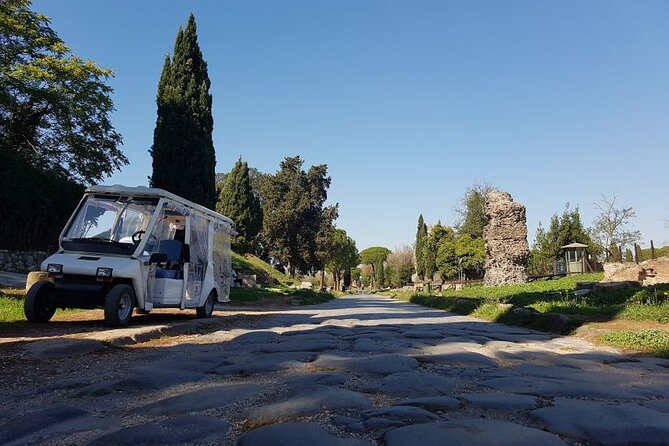
You meet at Via Appia Antica, 60 (near public transportation), and the tour ends back at the same spot. That matters because you do not have to solve complicated “get back to the city” logistics at the end.
The group size is capped at 7 travelers, which is a sweet spot for this kind of outing. It helps with questions, and it also makes the stops feel less crowded. You are riding with the same people through multiple viewpoints and sites, so the guide can keep the story flowing without repeating themselves.
You will also get practical basics that help the day feel easier: bottled water (half-liter mineral water per person) is included. The tour is offered in English, and you get a mobile ticket, so you are not juggling paper tickets at multiple entrances.
Time-wise, it is about 3 hours. That is long enough to get real context, but short enough to still leave you options for a second half of the day back in town.
Domine Quo Vadis: the quick church stop with a big tradition
The tour begins with a short stop at Chiesa del Domine Quo Vadis. It is a small, meaningful pause at a church tied to an apocryphal tradition in which Saint Peter encounters Christ during the period of persecution. The famous part is the preserved footprints associated with the story.
This stop is only about 10 minutes, so do not expect a long museum-style explanation. Instead, think of it as a scene-setting moment. It frames the rest of the day by putting you in the mindset of early Christian Rome, where faith, fear, and burial culture all overlapped.
Practically, it is a low-effort way to understand why the Appian area mattered. Even if you are not deep into religious history, the symbolism helps you read the landscape later when you see tombs and underground burial spaces.
Catacombs of San Callisto or San Sebastiano: what the guide helps you notice
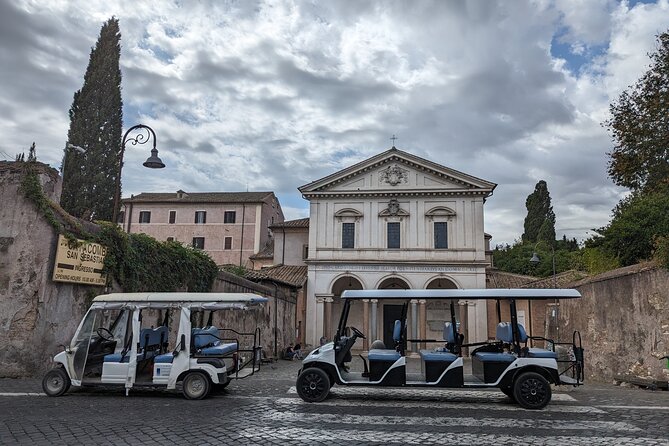
Next comes the heart of the underground experience: Catacombe di San Callisto (or Catacombe di San Sebastiano depending on availability). Entrance and a guided tour are included, and this portion runs about 1 hour.
Here is why this stop is so valuable. Catacombs are not just “old rooms.” They are part of a larger cemetery complex, with multiple levels and long gallery networks, built up over time. The tour context explains why this underground world became so important for early Christians.
If you care about atmosphere, the catacombs are a welcome change of pace from Rome’s street level chaos. And if you care about learning, the guide’s job is to point out the patterns, the burial logic, and the human scale of spaces carved for remembrance.
Two practical notes for your planning. First, the experience is guided, so you will get more out of it by staying attentive and following the group rather than drifting off for selfies. Second, because this is an included guided entrance, it is one of the spots where timing matters. If you are the type who likes to linger, just remember you have other major stops later.
And yes, the guide quality seems to be a major factor for this tour. Multiple guides are praised for making the catacombs understandable and not just a list of names. If that style of storytelling matters to you, you are on the right track.
Circus of Maxentius: Roman spectacle, but oddly haunting
After the Appian Way brings you back outdoors, the tour stops at the Circus of Maxentius and includes entry for about 20 minutes. This is often less crowded than the big Roman circus name everyone knows, and it helps you focus.
This circus is the best preserved in the surrounding area. It is also notable because it seems to have been used mostly for inaugural games, likely with funerary themes tied to Maxentius and his circle. The result is that you get a “what did people actually do here?” feel without the pressure of racing to a massive, central landmark.
I like this stop because it teaches you how to visualize Roman public life. The Appian Way is famous for burial, but Romans did not live on tombs alone. A circus within the same broad zone shows how ceremony, power, and remembrance overlapped.
If you are a film fan, you may recognize it from depictions like Ben Hur, since this kind of setting helps your brain map what you have seen on screen to a real structure.






Cecilia Metella and Caetani Castle: the hilltop view you will remember
Then you head for the hilltop area around Mausoleo di Cecilia Metella e Castrum Caetani (within the Appia Antica Archaeological Park). The stop is about 15 minutes, and the guide provides explanation, but entrance is not included. You do not need to buy a ticket for this stop.
The payoff here is the view. From up on the hill, the scenery helps you understand how elevated structures dominated the landscape. You can see why this area was both a statement and a marker, with Cecilia Metella’s monument representing status and memory.
Another bonus of this stop is the chance to get close to S. Nicola Church, described as Cistercian gothic style. Entrance is not included, so it is more of a look-and-learn moment, but those details help break up the day so it is not only tomb after tomb.
If you like photography, this is one of your best opportunities to capture the Appian area with context. The trick is to think about angles and lines. Look for how the road and burial monuments relate, not just for the tallest structure in the frame.
Capo di Bove and the Quintili villas: elite life near burial roads
Two additional stops round out the countryside story.
First is Complesso di Capo di Bove for about 15 minutes. This area is described as the private villa of a philosopher who served as a preceptor for Emperor Marcus Aurelius, presented as a multi-millionaire philosopher. Again, you are not buying an entrance ticket here, so the focus stays on explanation and atmosphere rather than checklists.
Next is Villa dei Quintili and Santa Maria Nova for about 10 minutes. This is another major residential area connected to powerful figures tied to Emperor Commodus. Entrance is not included here either, and you do not need to purchase a ticket.
These stops matter because they balance the day. If all you saw on the Appian Way were burials, you would miss the full picture. Romans built grand homes, controlled land, and lived in the same broad corridor where other Romans planned for death and remembrance.
A small practical tip: keep your eyes open for how the guide ties these villas to what comes next. The Appian Way works best when you connect themes, burial culture plus elite life plus religious sites.
Appian Way cruising: what to watch along Regina Viarum
The tour culminates with time on the actual Appian Way (Via Appia Antica). You get about 20 minutes here, where the guide helps you read what lines the road: catacombs, churches, sepulchers, and mausoleums. The working idea is that the Appian Way, called the Regina Viarum, became a natural place for remembrance because of its importance as a travel and processional route.
I like this segment because it brings the earlier stops together. When you are looking at monuments after hearing the explanations, you start to notice patterns you would otherwise miss. You see how the road itself functions like a spine, connecting communities and stories.
Finally, you drive back to the starting point along the ancient route for about 30 minutes. This gives you one last chance to absorb the scale of the area without adding more formal stops.
Expect a day that feels calmer than Rome’s center. You are away from the biggest crowds and street noise, and the cart makes the long distances feel manageable.
Price, value, and when this is the right choice
At $91.32 per person for about 3 hours, this tour is priced like a dedicated guided excursion, not a casual add-on. What helps the value is that key parts are covered: catacombs entrance and guided tour are included, plus you get access to the Circus of Maxentius stop, and bottled water is provided.
You also benefit from the small-group structure. Maximum 7 means less waiting and more interaction, which is hard to replicate on bigger bus tours. If you prefer a guided experience but do not want to spend your day either sprinting between sites or biking while multitasking, this is a smart compromise.
It is also a good choice if you have already seen central Rome’s big-ticket attractions and want something that feels like a real change of pace. The Appian Way is famous, but this kind of guided cart route helps you get more meaning from it than simply wandering.
Just keep your own preferences in mind. If you care most about hearing every word, choose your seat early so you are not stuck farther back. And if you want maximum time at one site to roam independently, you might find the stop timing a bit tight since much of the schedule is designed for coverage.
Should you book this Appian Way and catacombs golf cart tour?
Yes, I would book it if you want a guided Appian Way day that balances comfort and learning. The combination of cart pacing, short outdoor viewpoint stops, and the included catacombs visit is exactly what makes this route satisfying for people who want more than a checklist.
If you hate guided pacing, or you are very sensitive to audio and prefer sitting front-and-center, consider booking with the seat position in mind. Otherwise, this is a strong option for an efficient half-day that takes you beyond central Rome and into the stories written into the road itself.
FAQ
How long is the Rome Appian Way and Catacombs golf cart tour?
The tour is approximately 3 hours.
How much does the tour cost, and what is included in the price?
The price is $91.32 per person. Bottled water (1/2 liter mineral water per person) is included. Catacombs entrance and guided tour are included, and Circus of Maxentius and other stops listed as free do not require admission tickets.
Which catacombs will we visit?
You will visit Catacombe di San Callisto or Catacombe di San Sebastiano based on availability. The entrance ticket and guided tour are included in the tour price.
Do I need to buy tickets for Cecilia Metella’s tomb and the Quintili villa?
No. Entrance to Cecilia Metella’s tomb and Quintili’s villa is not included, and you do not need to buy those tickets for this tour.
Is the tour offered in English?
Yes, the tour is offered in English.
Where is the meeting point, and is it near public transportation?
The meeting point is Via Appia Antica, 60, 00179 Roma RM, Italy. It is near public transportation.
What is the cancellation policy?
Free cancellation is available. You can cancel up to 24 hours in advance for a full refund. If you cancel less than 24 hours before the start time, the amount paid is not refunded.
More Tours in Rome
More Tour Reviews in Rome
Not for you? Here's more nearby things to do in Rome we have reviewed












Ancient Rome Tours, compared.
 ★ 4.7Colosseum: Underground and Ancient Rome TourFrom $16012,691 reviews
 ★ 4.4Colosseum, Ancient Rome Tour or Self AudioGuided TourFrom $392,866 reviews
 ★ 4.9Appian Way, Catacombs, & Roman Aqueducts E-bike TourFrom $851,421 reviews
 ★ 4.9Appian Way E-bike Tour with Catacombs, Aqueducts & FoodFrom $961,210 reviews
 ★ 5.0Appian Way Aqueducts Bike Tour (Catacombs & Lunch Option)From $78975 reviews
 ★ 4.7Appian Way, Aqueducts, and Catacombs TourFrom $64942 reviews
 ★ 4.7Caracalla Baths & Circus Maximus — Private or SharedFrom $77835 reviews
 ★ 4.7Colosseum Arena Access and Ancient Rome Guided TourFrom $94774 reviews
Browse the lists this tour appears in