
Reviewed · WALKING TOURS
Rome: Fountains and Squares Small-Group Walking Tour
Rome’s fountains are best seen on foot. This small-group route strings together Baroque squares and church façades with the scale of ancient Rome, ending at the Pantheon-adjacent highlights before you finish at the Trevi Fountain. I like that it is designed as a “see it, then understand it” stroll, with a licensed guide pointing out details you would miss if you just wandered.
The main thing to know is that it is a very active all-walking experience, and it is not a match for strollers or wheelchair users. Also, since it moves from stop to stop through busy areas, you will want to be on time and ready for a steady pace.
Key moments you will actually remember
- Spanish Steps start point at the Keats-Shelley Museum, so you ease into Rome’s dramatic stairway energy right away
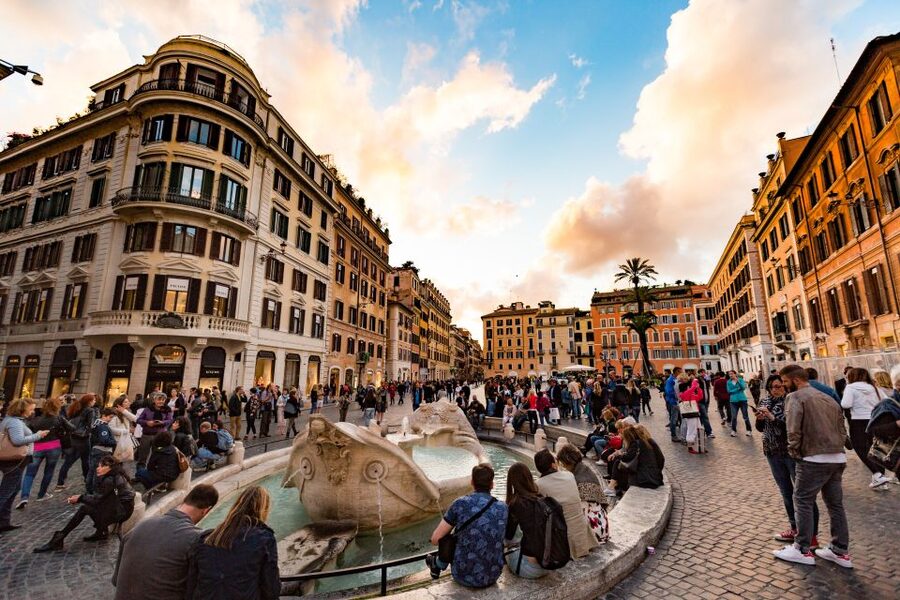
- Bernini’s half-sunken ship at Piazza di Spagna, a fun visual lesson in Baroque theatricality
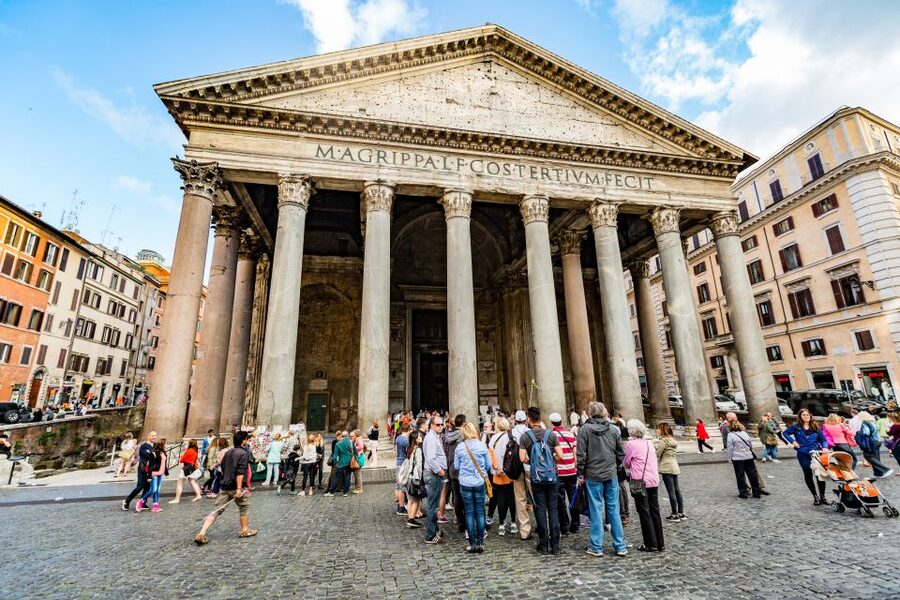
- Pantheon interior access to a remarkably intact Roman-era temple space
- Piazza Navona, Domitian’s Stadium site, where the architecture feels like it has layers of old games and new art
- Sant’Ignazio Church trompe l’oeil that plays tricks on your eyes inside the dome
- Trevi Fountain coin toss at the end, with a clear finish back at the meeting area
A 2.5-hour route that connects Rome, stop to stop
This is a tight, 2.5-hour walking tour built around Rome’s most photogenic “set pieces”: the Spanish Steps area, Piazza Navona, the Pantheon area, Sant’Ignazio, and finally the Trevi Fountain. You cover enough ground to feel like you got your bearings, but not so much that you arrive at the Trevi already exhausted.
For $45.55, the real value is the mix of big names and guided context. You are not paying just for entry to one landmark. You are paying for someone to help you read the city in sequence, from Roman-era structure to Renaissance and Baroque storytelling.
The group stays small, with a maximum of 20. That matters in Rome because crowds can turn “seeing” into “squeezing.” With a smaller group, you tend to get closer to the explanations and less time stuck watching the back of someone else’s camera.
You can also read our reviews of more walking tours in Rome

Starting at the Keats-Shelley Museum, then rising into Trinità dei Monti
You meet by the entrance of the Keats and Shelley Museum at the bottom of the Spanish Steps, near the scalinata della Trinità dei Monti in front of an Acqua di Parma store. The practical win here is timing: you begin right at the staircase, so you get the full visual impact without needing to hunt for the right corner or assembly point.
From there, you follow the flow of the Spanish Steps up to Trinità dei Monti, a late Renaissance church. This is one of those spots where the architecture feels like stage design. Even if you have seen photos before, walking up the steps makes you understand why Rome loves drama.
One note that helps you enjoy the beginning: you should wear comfortable shoes and be ready for a bit of uphill walking. It is not a fitness test, but Rome’s center is full of slopes and stairs.
Piazza di Spagna and Bernini’s half-sunken ship illusion
As you move through the Spanish Steps area, the tour spotlights Bernini’s fountain in Piazza di Spagna, the one with the half-sunken ship. It is a classic Baroque idea: not just water and stone, but a story frozen mid-event.
Why I think this stop is worth it: the fountain gives you a “translation key” for the rest of your day. Baroque Rome loves motion, emotion, and surprise. Once you notice that, you start seeing it everywhere else.
This area can be busy, especially around prime sight hours. The smaller group format helps you hear the guide’s explanation and makes it easier to reposition for photos without losing the group.
Piazza Navona: from Domitian’s stadium to Bernini’s Four Rivers
Piazza Navona is where Rome feels most like a live outdoor gallery. The tour frames it well by connecting it to the Stadium of Domitian, built in 85 A.D. to hold athletic games. That detail changes the square in your mind, from “pretty plaza” into something with real continuity.
Then you land on the Baroque core: Piazza Navona is known for grand architectural elements and sculptures by masters such as Gian Lorenzo Bernini and Francesco Borromini. The big named highlight is Bernini’s Fountain of the Four Rivers. It is one of those works that looks impressive in pictures but hits harder when you are standing near it and noticing all the sculpted drama around the basin.
If you are a first-time visitor, this is a great mid-tour anchor. You get one of Rome’s most famous squares, plus a quick explanation of why it looks the way it does. If you are a repeat visitor, you still might enjoy the “architecture layer” approach, because it encourages you to look up and around instead of treating the square like a photo stop.
The Pantheon inside: a Roman-era temple that still works
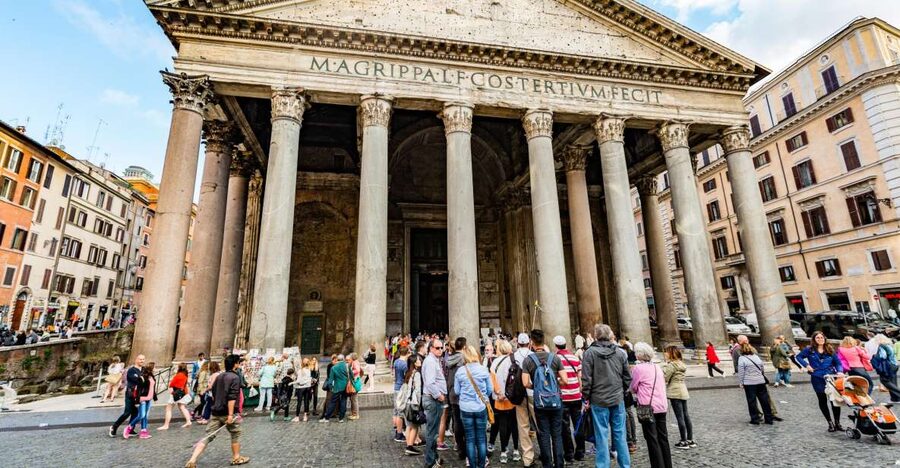
The Pantheon stop is the big wow, and the tour puts emphasis on entering the interior. You get to see the temple space in a way that is hard to grasp from the outside alone.
What makes the Pantheon special is how intact it feels. The tour’s focus is on a remarkably intact Greek-Roman temple, much as ancient Romans used to do. Stand inside long enough and you feel why people keep coming back: the building does not just look old, it still functions like a coherent space.
Practical tip: expect it to feel busy inside. Rome’s top landmarks draw everyone, which means you need a bit of patience. The guide’s job is to help you notice what matters while you wait for a small window to step forward, look up, and orient yourself.
This is also the stop where the tour pacing feels most important. If the group is moving quickly, you might feel rushed. But with a group size up to 20 and a licensed English-speaking guide, the tour is designed to keep you from wandering off into the crowd chaos.

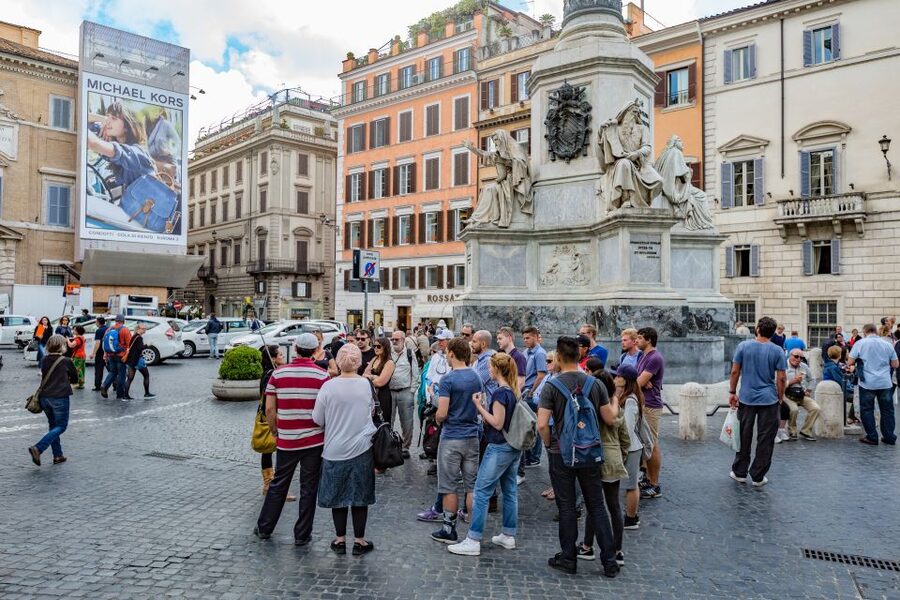
Marcus Aurelius’s Column and the movie reference that makes it stick
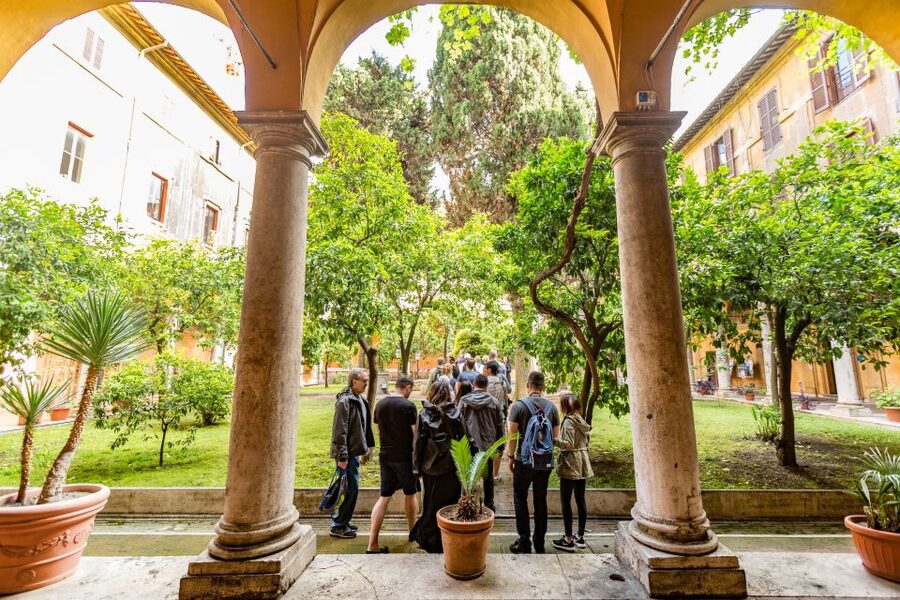
After the Pantheon, the tour heads to the carved Column of Marcus Aurelius. The emphasis here is on original scenes from the movie Gladiator. Even if you have seen the film, the column works best when you see it as art that outlived any movie reimagining.
This stop is a smart teaching move. It bridges pop culture to a real monument, which can make ancient Roman detail less intimidating. You start paying attention to narrative reliefs and repeated figures, instead of just treating it as carved stone.
If you are the type who likes your monuments explained in plain language, you will appreciate this moment. It is one of the ways the tour makes Rome feel less like a list of names and more like a story you can follow with your feet.
Sant’Ignazio Church and the trompe l’oeil dome trick
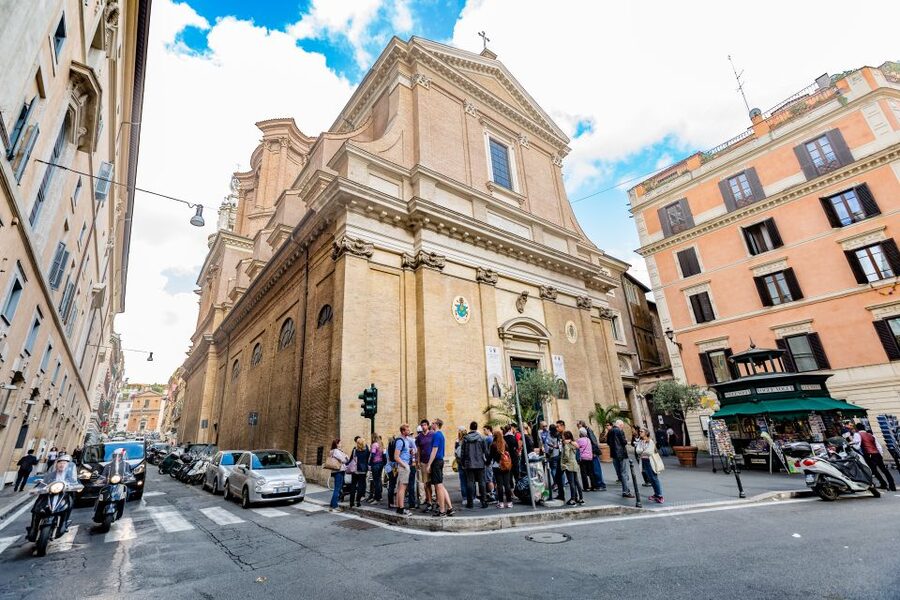
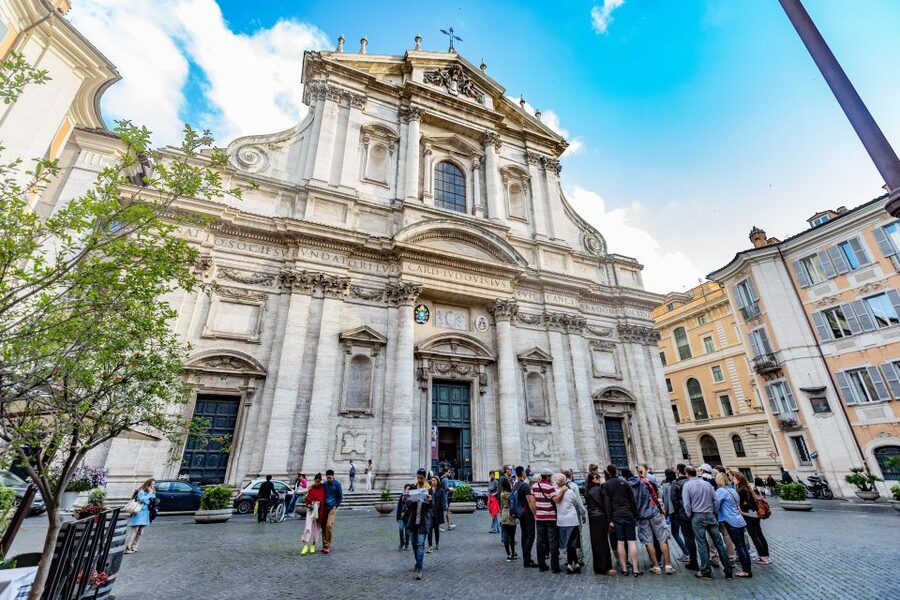
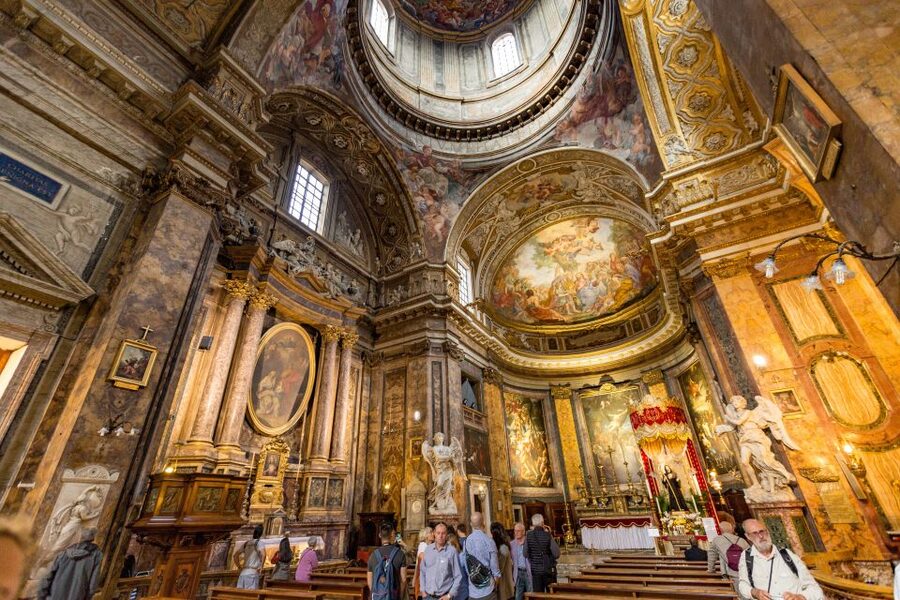
The tour then focuses on Sant’Ignazio Church, home to one of the finest examples of trompe l’oeil at its dome. Trompe l’oeil is basically visual misdirection, and this is where that idea becomes real rather than a museum concept.
Why this is such a good stop on a walking tour: you switch from “big outdoor square” Rome to “close-up inside-the-church” Rome. It is a break for your eyes, and it creates a contrast that makes everything else clearer afterward.
A practical expectation: this is a church visit, so dress matters. The tour asks you to have something to cover your shoulders and knees, and it is not allowed to wear shorts or sleeveless shirts. Plan your outfit for comfort in both walking and indoor rules.
Also, no eating or drinking on the tour. It keeps the focus on the monuments and reduces distractions, which is good because this stop requires you to look carefully.
Trevi Fountain at the finish, plus how to make it enjoyable
The tour ends at the Trevi Fountain. This is where you do the classic coin toss: throw a coin in and make a wish to one day return to Rome. It is touristy in the best way, because the wish ritual becomes part of the moment rather than a separate checklist item.
The tour is built so you end here for a reason. By the time you reach Trevi, you have seen the city’s visual language evolve, from Roman scale to Renaissance and Baroque showmanship. That makes Trevi more than just a landmark for a quick picture.
One reality check: Trevi is intense. You will likely feel the crowd energy. For the most pleasant experience, stay close to your guide, listen for the last bits of context, and prioritize a few good observations over trying to get the perfect angle instantly.
If the guide offers tips about gelato, take them seriously. Rome has dozens of options, and it is nice to get a recommendation that fits your walking route and timing.
Price, pace, and what kind of traveler this fits
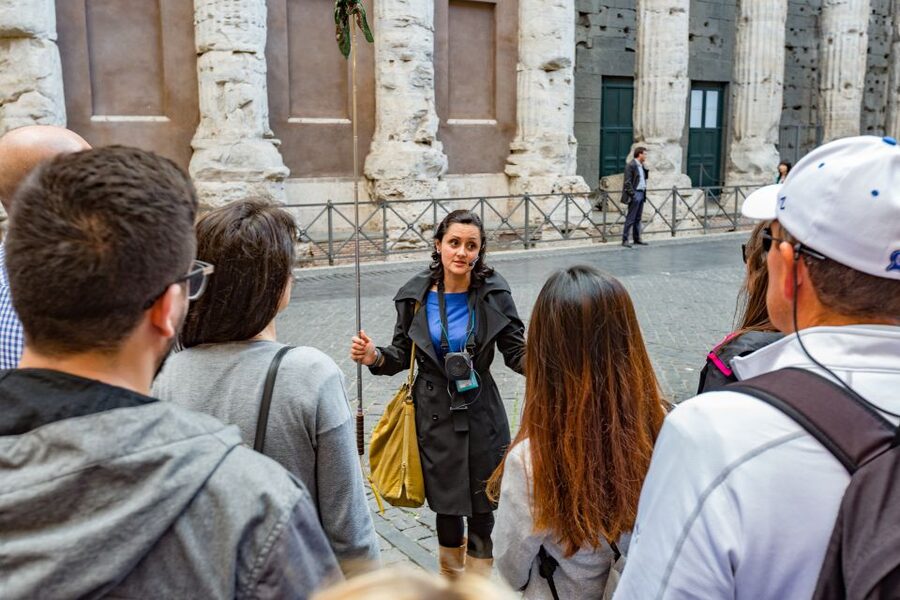
At $45.55 for about 2.5 hours, this is a fairly efficient way to see a “greatest hits” slice of central Rome with a licensed English-speaking guide. The value is in how many major stops you get to experience in one coordinated sequence, including the Pantheon interior.
The pace is steady. The itinerary is designed to move you through multiple monuments and churches without long gaps. That is a win for first-time orientation, and it can be a challenge if you prefer unstructured wandering or very slow photo breaks.
Group format matters too. With up to 20 people, you should be able to hear the guide, but you still need to accept that Rome is a high-traffic city. If you are someone who likes to linger in one spot for 30 minutes, you might feel nudged forward near the end.
This tour works especially well if:
- You want a first-night or early-stay walk to get your bearings.
- You like architecture and art when someone explains what you are seeing.
- You prefer guided structure over figuring out every connection on your own.
It will not fit if:
- You need stroller access or wheelchair access, since it is not possible to join with strollers or wheelchairs due to the itinerary.
- You want a fully kid-friendly tour, because it is not suitable for children under 10.
What guides bring to the experience (and why it matters)
The quality of your time here often comes down to the guide. Feedback on guides tied to this tour format highlights people who are personable and keep the pace controlled, even when the weather turns unpleasant. Names that come up again and again in that pattern include Bruno and Stefano, with other guides such as Matteo, Paolo, Andrea, and Steven also mentioned for humor and keeping groups together.
Why that matters for you: in a route like this, the guide is not just reciting dates. They are managing crowd movement, choosing which angles to look for, and deciding what details make the monuments meaningful. A lively guide can turn a rainy morning or a packed square into a smooth, memorable walkthrough instead of a stressful line-juggling exercise.
Should you book this fountains and squares walking tour?
Yes, if you want a smart, efficient introduction to central Rome that goes beyond surface photos. The pairing of Spanish Steps, Piazza Navona, Pantheon interior time, Sant’Ignazio trompe l’oeil, and the Trevi Fountain coin toss gives you a clear storyline through Roman, Renaissance, and Baroque Rome in one compact session.
I would skip it if you need mobility support for strollers or wheelchairs, or if you dislike guided pacing and prefer long stays in just one neighborhood. Otherwise, bring comfy shoes, cover up for churches, arrive on time at the Keats-Shelley Museum meeting point, and you should get a tour that feels both fun and useful.
FAQ
Where is the meeting point for the tour?
You meet your guide by the entrance of the Keats and Shelley Museum at the bottom of the Spanish Steps, in front of the Acqua di Parma store. Your guide will have a GetYourGuide badge or sign.
How long is the walking tour?
The tour duration is listed as 2.5 hours.
How much does the tour cost?
The price is $45.55 per person.
What are the major sights included on this route?
You go past or see the Spanish Steps area, Trinità dei Monti, Piazza Navona, the Pantheon (from the inside), Sant’Ignazio Church, and you end at the Trevi Fountain.
Do you get food included?
No. Food and drinks are not included, and eating and drinking are not allowed during the tour.
What language is the guide?
The tour includes a live English-speaking licensed guide.
What should I wear or bring?
Wear comfortable shoes and comfortable clothes. For churches and certain monuments, you need to cover shoulders and knees.
Is there a limit on group size?
Yes. It is a small-group tour with a maximum of 20 participants.
Is this tour suitable for wheelchairs or strollers?
No. Due to the itinerary, it is not possible to join with strollers or wheelchairs. It also is not suitable for children under 10.
More Walking Tours in Rome

More Tours in Rome
More Tour Reviews in Rome
Not for you? Here's more nearby things to do in Rome we have reviewed





Walking Tours, compared.
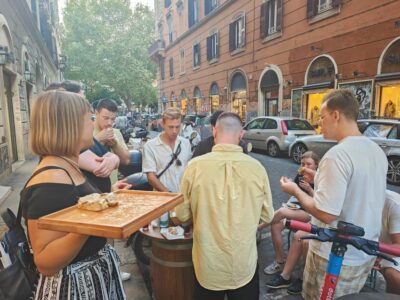 ★ 4.9Trastevere & Campo de Fiori Street Food Walking TourFrom $512,768 reviews
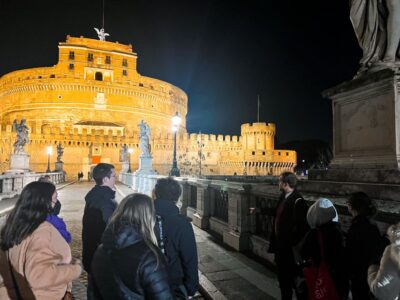 ★ 4.9Paranormal Night Walking Tour & Secret BackstreetsFrom $341,921 reviews
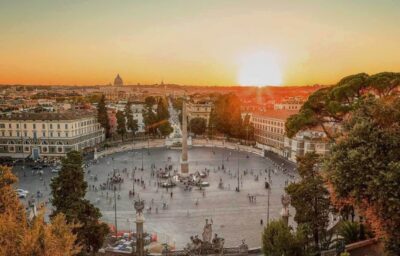 ★ 4.4Guided City Center Evening Sightseeing Walking TourFrom $46953 reviews
 ★ 4.5Best of Rome Walking Tour including Trevi FountainFrom $4923 reviews
 ★ 4.8Under the Moonlight Evening Walking TourFrom $28852 reviews
 ★ 4.9Forbidden History Walking Tour & Pub Crawl with DrinksFrom $61688 reviews
 ★ 5.0Guided Small Group Walking Tour of City HighlightsFrom $30682 reviews
 ★ 4.5Rome Walking Tour with Piazza Navona, Trevi Fountain and PantheonFrom $35676 reviews
Browse the lists this tour appears in