
Reviewed · CYCLING TOURS
Highlights of Rome Bike Tour (Including Jubilee Sights)
Rome makes more sense on a bike. I like the small-group size, because it keeps the pace human and helps everyone stay together, and I like the bike bag setup, so you can carry your essentials without juggling them through crowds.
If you want to go inside every landmark, read the fine print first. A few big-name stops are marked as admission not included, including the Pantheon, so you may need to budget extra if you want interiors.
Key things to know before you ride
- Small-group, max 14: It feels like a guided walk, just faster and with wheels.
- Helmets and bike bag included: You’ll have the safety basics and an easy way to stash your camera and phone.
- Mostly flat route: Rome’s cobbles are real, but the riding effort is usually light.
- A strong first-timer mix: You bounce between ancient, Renaissance, Baroque, and modern Rome in one go.
- Some entries cost extra: Great for views, less of a one-stop solution if you want every interior ticketed.
A 3-hour Rome highlight reel on wheels
This bike tour is built for the moment you land in Rome and think, Where do I even start? In about three hours, you get a fast, guided loop through the center, with frequent short stops to understand what you’re seeing. It is not a slow museum day. It is a movement day, where you get context while the city is unfolding around you.
The value here is efficiency. Rome can eat time fast, thanks to traffic, lines, and the sheer number of “must-sees.” A guided bike ride helps you cover ground without feeling like you are sprinting. And because the group stays small (up to 14), you usually spend less time waiting for the slowest person to arrive at the next corner.
You can also read our reviews of more cycling tours in Rome

Price and what $54.44 buys you
At $54.44 per person for roughly three hours, this is priced like a true sightseeing service rather than a rental-only option. You are paying for more than bike wheels. You’re paying for a guide, bike rental, and the basic safety and carrying gear that makes the ride practical.
Here is what is included:
- Local tour guide
- Bike rental
- Helmet and a front bike pouch plus a back rack
That package matters in Rome. Without a pouch or rack, you spend the day holding a bag, moving your stuff around at every stop, or constantly checking where your valuables are. With the bike storage, you can keep your hands free and focus on photos and walking bits when you want them.
What is not included is drinks. Also, certain sites are listed as admission not included, which can add a little cost if you decide to go inside.
Where you meet and how the ride fits your day
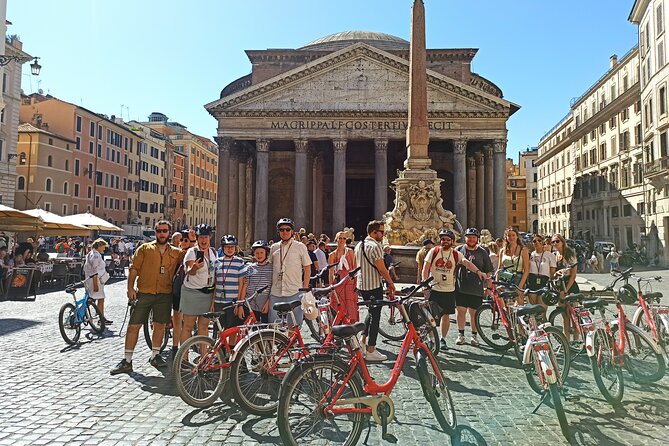
You start at Via dei Delfini, 35, 00186 Roma RM, Italy, and you ride to the end point and return back to the meeting point. You also want to arrive about 15 minutes early so you do not feel rushed when paperwork, helmet fitting, and bike setup are happening.
This is offered in English, and you’ll get a mobile ticket. Confirmation happens at booking time. Plan for a quick start, because the schedule is tight enough that being late can throw off the whole group.
Because the route takes you through central streets, expect real city riding conditions. Rome is flat, which helps, but you still deal with uneven surfaces, bikes sharing narrow lanes with cars, and people stepping off curbs. The tour includes helmets and uses a guided group format, which is the right baseline for this kind of sightseeing.
The guide experience: stories, jokes, and clear stop-and-go rhythm
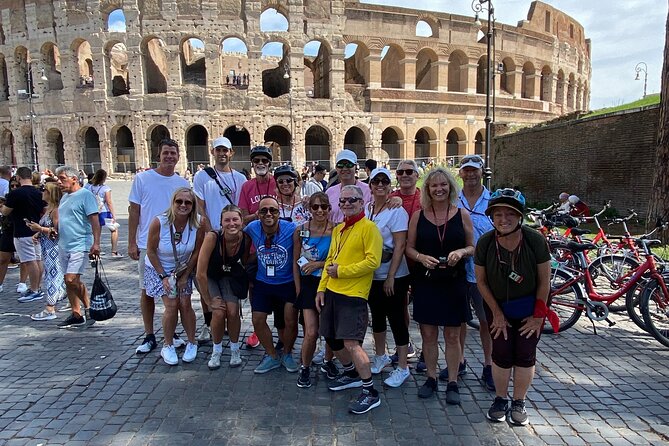
One of the most praised parts of this tour is the guide performance. Guides associated with this experience include Daniele, Nico, Stefano, Marika, Sahrah, Elena, and Matt. The common thread is style: history explained in a way that sticks, plus humor that keeps the ride from feeling like a lecture.
The format is also a big deal. You get short bursts of riding with short stops. At each stop, you get a quick explanation and time to look around and take photos. That rhythm is ideal if you learn best by moving, not by standing in one place for an hour.
A practical tip: listen closely while riding, because the headset experience can vary. When traffic noise gets loud or the group spacing stretches, it can be harder to catch every word. If you care about details, I would position yourself where you can hear your guide, and if you miss a sentence, use the stop time to reset.
Stop by stop: from the Jewish Ghetto to the Circus Maximus
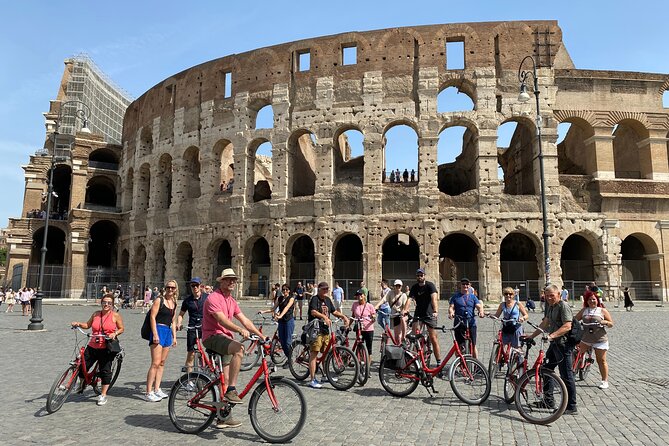
This route is smart because it shows Rome as layers, not as one timeline. You move from an important historical neighborhood to major civic squares, then into Roman monuments and imperial power, and you end in an ancient entertainment zone.


1) Antico Quartiere Ebraico, the Jewish Ghetto of Rome
Your first stop focuses on the Jewish Ghetto of Rome, one of the city’s older districts and a powerful reminder that history is not only stone and arches, it is people and policy. The ghetto began in 1555 by order of Pope Paul IV. People inside had an obligation to live there and to carry a distinctive sign showing Jewish community identity.
Why it works on a bike tour: you start with something meaningful and human, not just famous monuments. It also sets a tone for the rest of the loop. As you later see imperial forums and triumphal arches, you remember that power structures sat on top of lived communities.
2) Navona, Pantheon, and Campo de’ Fiori corridor
Next you pass through the heart of central Rome: Campo de’ Fiori, Piazza Navona, and views toward the Pantheon area. Campo de’ Fiori is known for being lively in two moods. In daylight, it is tied to market energy, with flower, fruit, and vegetable stalls. At night, the squares fill with terrace life.
Even if you do not plan to spend a long time here, the bike route helps you get the lay of the land quickly. You can later return on foot to linger where you feel drawn.
3) Piazza Navona, Baroque Rome on ancient footing
Piazza Navona is the kind of square that makes you stop without trying. It is Baroque in look, but its shape follows the ancient Stadium of Domitian, built for athletics competitions and horse racing in 86 AD.
A good thing about this stop on a bike tour: you get a quick explanation of why the layout looks the way it does. That small bit turns your photos from random angles into something that tells a story. Note that admission at this stop is not included, so expect to enjoy the square and surroundings from the outside.
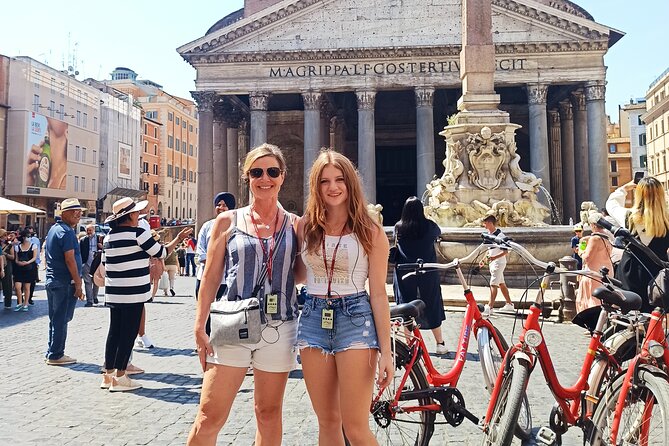
4) Pantheon exterior focus
The Pantheon is one of those places where geometry is the whole point. It was commissioned in 27 BC by Marcus Vipsanius Agrippa, a close friend and relative of Augustus, and it began as a temple dedicated to all the gods.
This stop is listed as admission not included, so you get the view and the framing, not guaranteed entry. If you want to go inside, I would treat this as a “see the shape first” moment and then decide later. Either way, it is worth slowing down and just looking at how the lines line up.
5) Chiesa di Sant’Ignazio di Loyola, exterior viewing and explanation
Sant’Ignazio di Loyola comes with a viewing and explanation from outside. The tour format here makes sense: it keeps you moving while still giving you a sense of why this church belongs in your mental map of Rome.
This is a good reminder that not every stop needs an interior ticket. Sometimes the value is understanding the setting, the façade, and how it fits with the street you are riding on.
6) Tempio di Adriano, a Hadrian-linked dedication story
Tempio di Adriano is described as likely commissioned by Emperor Hadrian, intended to honor his wife Vibia Sabina, who died and was later deified in 136. Work concluded around 145 A.C., with the dedication tied to Hadrian as well, completed by Antoninus Pius.
Why you should care: you are not just seeing ruins or a temple shell. You are seeing how Roman leaders built memorials into everyday sightlines. The tour keeps this explanation short, but it’s the kind of background that makes you look at a building differently.
Admission at this stop is listed as free.
7) Trevi Fountain, terminal point of a living aqueduct
Trevi Fountain is famous for a reason. It marks the terminal part of the Vergine aqueduct, and it is also noted as the only ancient aqueduct continuously in use today.
You also get the practical benefit of arriving by bike route. You are already in the center, so you are not spending the day commuting to this one site. If crowds are intense, take your photos, then step back and just watch the flow for a minute. Trevi is one of those places where the atmosphere is part of the experience.
Admission at this stop is listed as free.
8) Trajan’s Forum and the Imperial Forum area
You get views and an explanation of Trajan’s Forum and the Imperial Forum. This is where Roman power becomes physical. Even a short stop here helps you understand that these were not just structures, they were statements, built to impress and control the city’s story.
Admission at this stop is listed as free.
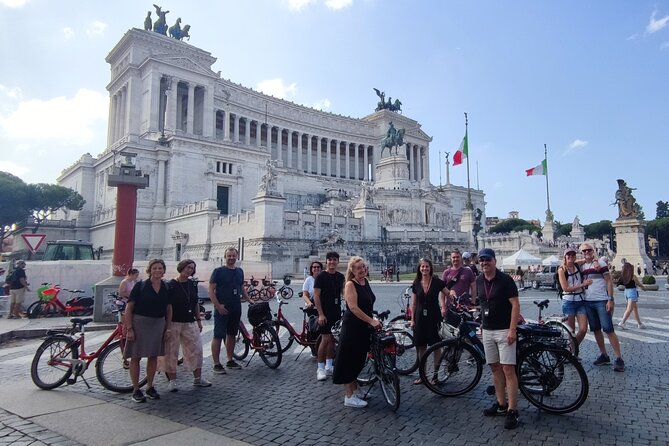
9) Piazza Venezia and the ancient city context
Piazza Venezia sits between Via del Corso and Via dei Fori Imperiali. Its current form comes from renovations between the nineteenth and twentieth centuries, tied to the building of Monumento a Vittorio Emanuele II.
On a bike tour, this matters because it shows how Rome kept changing. You do not only learn the ancient plan. You also learn how later Rome shaped what you see today.
Admission is listed as free.
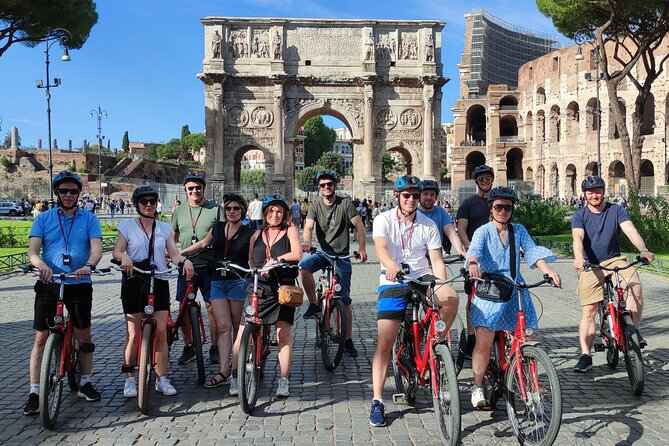
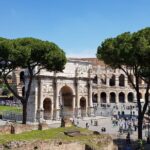
10) Arch of Constantine, triumph and propaganda in stone
The Arch of Constantine is located along the route taken by Roman triumphs, between Circus Maximus and the Arch of Titus. It is described as the largest honorary arch still standing and as a synthesis of Constantinian propaganda. It celebrates Constantine’s triumph over Maxentius on October 28, 312 A.D.
This is a quick stop, but the takeaway is big. Triumphal arches were not just decor. They were messaging boards in stone.
Admission is listed as free.
11) Circus Maximus, ancient entertainment at massive scale
The tour ends at Circus Maximus. It is described as the largest public entertainment building in antiquity, about 600 meters long by 140 meters wide. The route also connects to a legend tied to the origins of the city, the Rape of the Sabine Women.
This finish is satisfying because it feels expansive. After tight streets and busy squares, Circus Maximus gives you open sightlines and a sense of how massive Rome could be.
Admission is listed as free.
What I think is the best value in this route
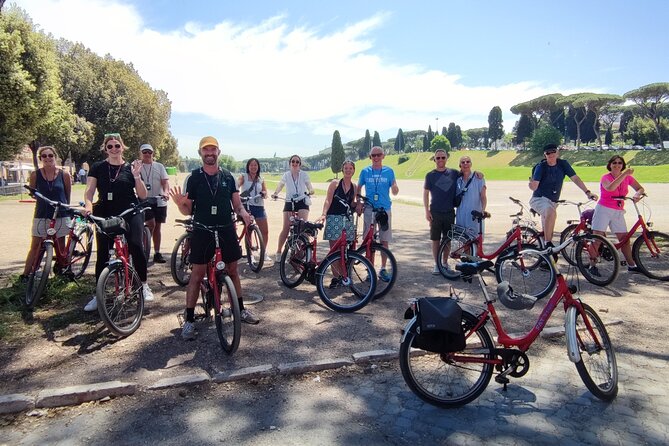
If you want a quick, guided overview that reduces the guesswork, this tour fits well. You get:
- Multiple landmark types in one outing
- Real context, not just dates
- Enough time at stops to photograph and walk a bit
The small-group format is a big part of the value. With fewer people, your guide can keep the pace tighter and respond to the group more directly. You also feel less like you are being herded.
And the included bike bag changes how the day feels. You can store items safely, then focus on the stops rather than thinking about where your bag is. It sounds small until you are doing this with a normal daypack that keeps knocking into you on cobbles.
Timing and comfort tips for real Roman streets
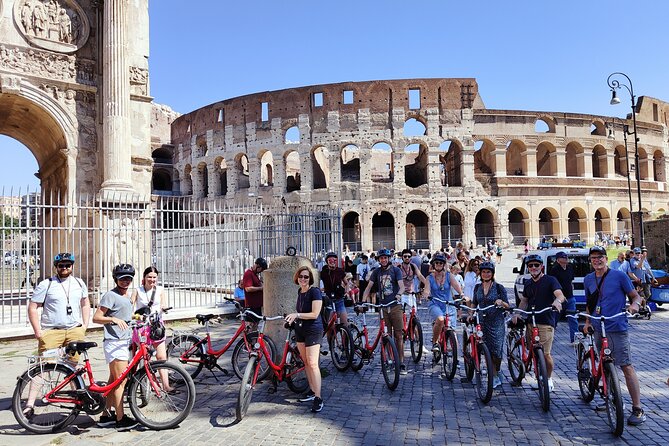
Rome is flat, and that helps most riders feel comfortable. Still, the streets can be uneven. Cobblestones mean you should ride with attention, especially when surfaces look slick or crowded.
A couple of practical ways to set yourself up:
- Wear comfortable shoes and expect uneven paving.
- Keep your valuables organized in the provided bag so you are not rummaging at stoplights.
- Bring sunscreen or a hat if the day is sunny, and warm layers if it is cooler.
- If rain is possible, use waterproof clothing, since the tour suggests bringing it.
If you are pregnant, this tour is strongly discouraged due to cobbled streets. If you are traveling with kids, it is allowed, but they need to be comfortable riding in a group and navigating various surfaces. You also need to include the child’s height to reserve the correct bike size. Children under 18 must be accompanied by an adult, and it is not recommended for child age 1 and under.
Who should book this Rome bike tour
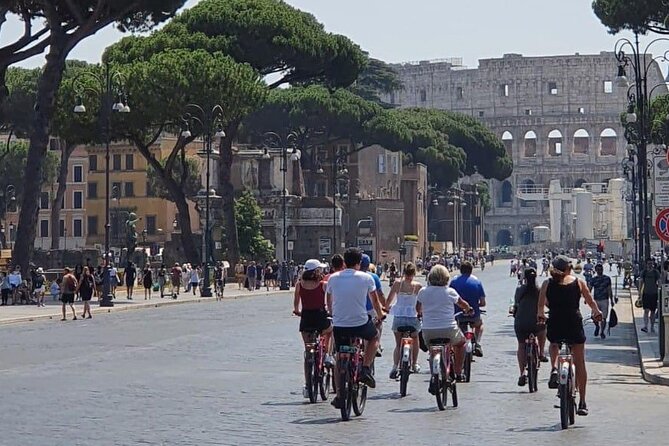
I would book this if you are:
- In Rome for the first time and want a fast map of the center
- Comfortable riding a bike in city conditions
- Interested in a guided mix of ancient sites and major squares
- Looking for a small-group experience that does not eat your whole day
I might think twice if you:
- Only care about interiors and ticketed museums
- Get easily stressed by crowds and busy street crossings
- Are specifically seeking a very deep dive into one site, since the stop format is short by design
Should you book? My decision guide
Book it if you want a smart first look at Rome, with a guide who brings the sites to life and a route that connects neighborhoods and monuments in a way a bus tour often cannot. The included helmet, bike rental, and storage gear make it feel like a complete activity, not a do-it-yourself rental.
Skip or adjust your expectations if you need inside access everywhere. Admission is not included at several key stops, so you may still want a separate plan for the Pantheon interior and other paid-entry options.
If you want my simple rule: book this early in your trip so you learn where you want to return, and then build the rest of your days around those discoveries.
FAQ
How long is the Rome bike tour?
It runs for about 3 hours.
How much does the tour cost?
The price is $54.44 per person.
Is the tour offered in English?
Yes, it is offered in English.
What is included in the price?
The tour includes a local tour guide, bike rental, and a helmet plus a front bike pouch and back rack.
What is not included?
Drinks are not included. Also, some stops have admission marked as not included.
Where do I meet, and does the tour end nearby?
You start at Via dei Delfini, 35, 00186 Roma RM, Italy, and the activity ends back at the meeting point.
Which stops have admission not included?
Admission is not included for Piazza Navona, the Pantheon, and Chiesa di Sant’Ignazio di Loyola.
Is the tour suitable for kids?
Kids are welcome if they have been riding for a while, are comfortable riding in a group, and can navigate riding on various surfaces. You must provide the child’s height to reserve the correct size. It is not recommended for child age 1 and under, and anyone under 18 must be accompanied by an adult.
Can I cancel for a full refund?
Yes. Free cancellation is available up to 24 hours in advance for a full refund. If you cancel less than 24 hours before the start time, the amount paid is not refunded.
More Cycling Tours in Rome
More Tours in Rome
More Tour Reviews in Rome
Not for you? Here's more nearby things to do in Rome we have reviewed





Cycling Tours, compared.
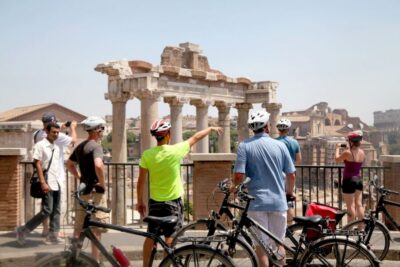 ★ 4.9Top Highlights & Hidden Gems Tour by Cannondale E-BikeFrom $851,760 reviews
 ★ 4.9Appian Way, Catacombs, & Roman Aqueducts E-bike TourFrom $851,421 reviews
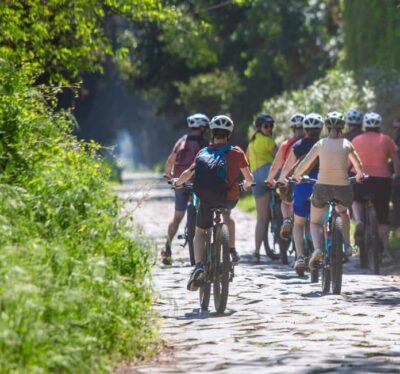 ★ 4.9Appian Way E-bike Tour with Catacombs, Aqueducts & FoodFrom $961,210 reviews
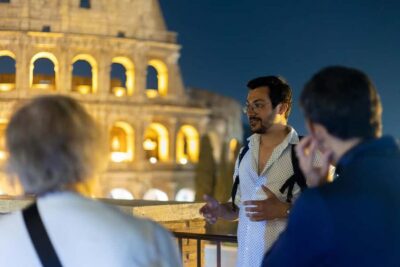 ★ 4.9E-Bike Night Tour with Food and Wine TastingFrom $891,131 reviews
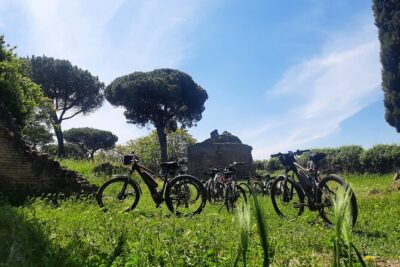 ★ 5.0Appian Way Aqueducts Bike Tour (Catacombs & Lunch Option)From $78975 reviews
 ★ 5.0Appian Way, Catacombs and Aqueducts Park Tour with Top E-BikeFrom $102735 reviews
 ★ 4.6Appian Way E-Bike Tour Catacombs, Aqueducts & PicnicFrom $89727 reviews
 ★ 4.9Appian Way Aqueducts Bike Tour (UPG Catacombs & Lunch)From $81692 reviews
Browse the lists this tour appears in