

Reviewed · TICKETS
Roman Domus of Palazzo Valentini Ticket
A Roman home appears under your feet. This 1-hour guided look at the Domus of Palazzo Valentini shows you imperial-age patrician life right beneath a 16th-century palace. I love the way the site stitches together ruined rooms, mosaics, and walls with crisp virtual reconstructions, so the whole layout makes sense fast. I also like the pacing, because it is a small-group visit that stays focused instead of turning into a big shuffle. One thing to consider, though, is that you spend a lot of time walking and standing, and part of the experience is on glass floors suspended over remains.
Here is the basic idea: you start at Via delle Terme di Traiano, head into the museum, and drop into the excavations. As light effects and projections animate the spaces, you move through a domus-like world of peristyles, kitchens, baths, and decorative floors. It is the kind of presentation that makes you go from seeing fragments to understanding daily life. The one possible drawback is logistics and orientation. The meeting point is not always obvious, and a few people said the door location can be confusing, so build in a few extra minutes to find your group.
Key Highlights to Expect
- Small group size (max 15), so you get a more personal flow through the rooms
- Roman mosaics and floor remains that you can actually connect to household spaces
- Virtual reconstructions with projections and light effects, making the layout easier to picture
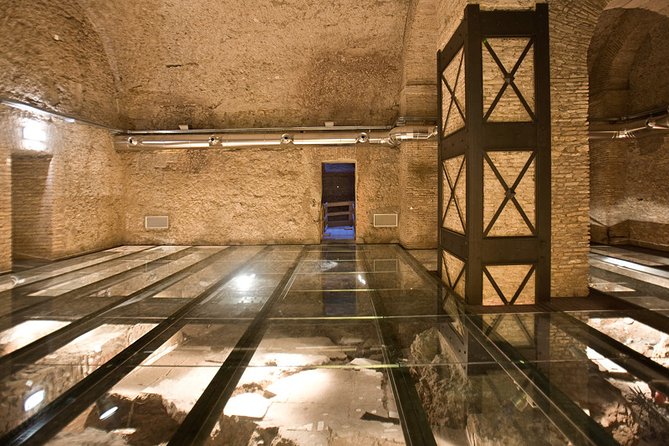
- Glass-floor walking, which some people find a little unsettling if you dislike heights
- A 16th-century palace built over imperial-age ruins, so you see Rome layered in time
What You’re Visiting Under Palazzo Valentini
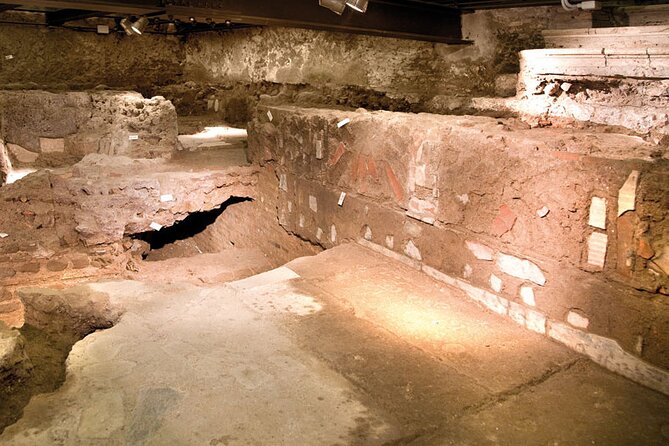
This is not a quick stop at a standalone ruin. It is a guided experience inside the excavations housed by the 16th-century Palazzo Valentini. That matters because you are seeing how Rome’s eras piled on top of each other. The Roman residential complex lived here first, then the palace went up over it, and much later the site became a permanent exhibition of what archaeologists uncovered.
You will walk a scenic route through the remains of an imperial-age patrician domus. That word can sound fancy, but the payoff is practical: you get a household map, not just random walls. The route is designed to show how wealthy families organized their space, with visible clues like decorative wall sections and the way rooms relate to one another.
The museum also leans hard on multimedia to help you interpret what you are seeing. You are not left alone with your imagination. Instead, you get projections, videos, and graphics that help re-create walls, rooms, peristyles (columned porches), and other household features. If you like archaeology but sometimes feel museums do not do enough for first-time visitors, this is built for you.
A few more Rome tours and experiences worth a look



The 1.5-Hour Route: How the Visit Flows
Even though the overall tour length is often described as about an hour, the experience is set up as an approximately 1 hour 30 minutes guided visit. Plan on 90 minutes with a few moments where you pause. That means comfy shoes are not a luxury. Several visitors noted the amount of standing, and it is true. You spend time looking down at mosaic patterns and up at the projected reconstructions.
The route starts with the exhibition area that explains the significance of the excavations and how they enrich Rome’s city map across ancient, medieval, and modern layers. Then you move through the domus itself, following the guiding narrative as different rooms and features come into focus.
A helpful way to think about the flow is this: the guide first points out the physical evidence (floors, walls, paving blocks, mosaic fragments). Then the multimedia elements help you connect that evidence to what the spaces likely looked like when the domus was alive. You are basically training your eye along the way.
Glass Floors and the Height Question
Let’s talk about the part that can change how much you enjoy this tour: walking on glass floors. One review described it as slightly nervous, and I get that. Even if it is safe, looking through to illuminated remains below can make your stomach do a small flip if you are height-sensitive.
The good news is that the museum does this in a controlled, purposeful way. The glass floor is not just for spectacle. It lets you see the archaeological layers underneath while also watching how the projected reconstructions align with the space. In other words, the glass is part of the interpretive system.
If you know you get uneasy around heights, consider bringing your patience and your coping strategies. Take your time at your pace. Keep your attention on the guide’s directions rather than on the drop. And if you are the type who spirals mentally, this may not be the best place to prove courage.
Mosaics and Polychrome Floors: Where the Wow Factor Comes From
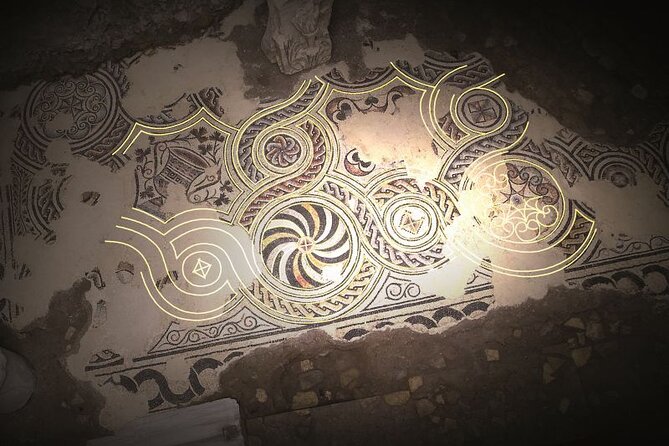
This tour really earns its wow factor through the physical details. You will see remains that include mosaics, wall decorations, polychrome floors, paving blocks, and other architectural traces. Those are not generic decorations. They are the kind of evidence that tells you how elite households invested in comfort, status, and daily routines.
Why this matters for you is simple. Rome is famous for big landmarks. But the domus is where you learn what it felt like to live day to day, even if your view is through archaeology and reconstructions. The guide helps you connect mosaic sections and floor patterns to spaces like rooms, peristyles, and circulation areas.
Also, you learn to read the remains in context. A mosaic patch is easier to understand when you see where it sat relative to a bath area or a central courtyard style space. The lighting and projections support that mental picture, so you are not just admiring art. You are learning layout.
Virtual Reconstructions: Light, Videos, and Projected Rooms
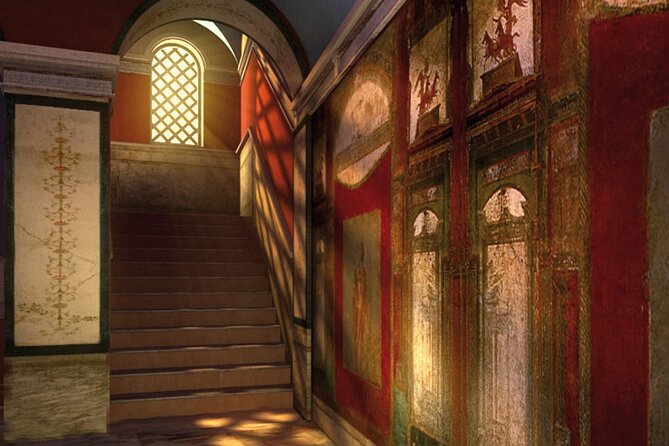
One of the most praised elements here is how the virtual reconstructions are presented. You do not just get a flat explanation on a panel. Instead, light effects and projections bring rooms and features back to life as you walk.
The museum uses graphics and videos to show walls, rooms, peristyles, kitchens, baths, furnishings, and decorations. At key moments, projections and light effects make the ruins feel less like scattered evidence and more like a functioning domestic environment. If you have ever left a ruin thinking, I can see what is left, but I cannot picture it, this is your fix.
Think of it as an interpretive bridge. Archaeology gives you fragments. Technology provides a visual hypothesis. Your guide helps you keep that distinction clear, so the experience stays grounded and not just theater.
One review even described it as Disney meets Rome, which captures the feeling of tech-enhanced storytelling. The difference is that here, the tech is tightly tied to what has been excavated and where it sits.





Two Opulent Villas, One Underground Story
Inside the excavations, you are not just seeing one household. You are walking through the remains of what amounts to multiple elite residential spaces. One visitor highlighted seeing remains of two opulent villas, including an extensive bath complex and a beautiful mosaic floor. That theme shows up in the way the tour moves from room to room, gradually building a fuller picture of how the domus functioned.
So if your favorite part of Rome is the idea of daily rituals and bodily comforts, the bath complex angle is a highlight. Baths mattered socially and practically. Kitchens connect to domestic life. Peristyles connect to space for movement, shade, and gathering.
And if you like clever archaeological storytelling, there is also a mention of a short film near the end related to Trajan’s column directly outside, described by one visitor as winding up like a comic strip. I cannot promise that every group will see the same bonus content, but it matches the museum’s overall multimedia approach.
Meeting Point Reality Check: Don’t Lose Time at the Door
This tour starts at Via delle Terme di Traiano, 85, 00184 Roma RM, Italy. It ends back at the meeting point. That sounds easy until you are standing in Rome looking for a door inside a building you might not recognize.
Some reviews said the address can feel confusing and the meeting point is not always obvious from the outside. My practical advice: arrive 10 to 15 minutes early and look for staff or the museum group sign. Do not arrive at the last second and hope your phone GPS will save you.
Also, the tour is near public transportation, so you can plan to get there by metro and a short walk. Just remember that you are finding an internal entrance, so your last few steps matter.
Tickets, Times, and Small-Group Logistics
This experience uses reserved time slots, and there are rules around how late you can pick up reserved tickets. Build your buffer in. If you are even slightly behind, you risk losing your place in your chosen slot.
Confirmation is expected within 48 hours subject to availability. And you are required to print and present your confirmation voucher to redeem tickets at the time of your visit. That is not optional in the provided info.
Group size is capped at 15 travelers, which is part of why the visit feels focused. You are not stuck listening through layers of strangers. You are also less likely to get lost when the route turns.
If you are the kind of traveler who hates surprises, take 30 seconds after booking to double-check your exact time slot. A few people said their voucher did not clearly show a specific time, which turned into needless stress. To avoid that, verify your slot details before the day arrives.
What It Costs and Whether It’s Worth Your Time
In the details provided here, the ticket price is listed as $0.00. If that is truly what you pay at checkout, it is a standout value for a guided, multimedia 1.5-hour underground visit with small-group access.
Even if you end up paying standard ticket rates, the core value comes from what you get for your time:
- a guided route through excavations
- interpretation that connects mosaics and room layouts
- technology that helps you visualize what you cannot physically see
This is not just a museum of objects. It is a guided interpretation of how people lived. That tends to be more satisfying than wandering alone, especially the first time you visit Rome’s archaeology.
And timing-wise, it is a good “second layer” activity. After you see the big hitters like Colosseum area monuments, this gives you a more intimate look at private life under the city.
Who Should Book This, and Who Might Want to Skip
Book this if you want Roman life explained with visuals and if you like domestic spaces, mosaics, and the way elite households worked. You will likely appreciate the blend of archaeology and reconstructions, especially if you have trouble picturing the past from ruins alone.
It is also family-friendly in the sense that the multimedia format can hold attention. One review said the tech was engaging enough to keep children interested, and that is a real plus if you have kids who get bored by pure stone.
Skip it or think carefully if:
- you hate heights and do not want to walk on glass floors
- you prefer tours with lots of sitting and lots of time for questions
- you need very clear meeting-point instructions and you tend to arrive late
If you are flexible, though, this kind of experience is exactly why you go to Rome instead of only reading about it. You get the feeling of discovery without needing to be an expert.
Should You Book Roman Domus of Palazzo Valentini?
Yes, if you want a high-impact, guided look at Roman domestic life that helps you visualize what the ruins once were. I especially recommend it to first-time visitors who want something different from the Colosseum and Forum grind, but still crave real Roman material like mosaics and architectural remains.
I would not treat it as a casual stroll. Go in with comfortable shoes, some patience for standing, and your meeting-point plan ready. If the glass-floor element sounds like a deal-breaker, you might choose another site.
If you get the timing and location right, this is one of those Rome experiences where the city’s layers feel close enough to touch. You step under a palace and come out with a clearer picture of how wealthy Romans lived.
FAQ
How long is the Roman Domus of Palazzo Valentini ticket tour?
The visit is approximately 1 hour 30 minutes.
Where do I meet for this tour?
You meet at Via delle Terme di Traiano, 85, 00184 Roma RM, Italy, and the activity ends back at the meeting point.
Do I need to print my confirmation voucher?
Yes. You must print and present your confirmation voucher in order to redeem your tickets at the time of your visit.
How large are the groups?
This activity has a maximum of 15 travelers.
Will I walk on glass floors?
The experience includes walking along glass floor sections over the remains.
Is this ticket refundable if I cancel?
No. This experience is non-refundable and cannot be changed for any reason.
More Tickets in Rome



More Tour Reviews in Rome



Not for you? Here's more nearby things to do in Rome we have reviewed












Tickets, compared.
 ★ 4.5Vatican: Museums & Sistine Chapel Entrance TicketFrom $38144,003 reviews
 ★ 4.0Hop-On Hop-Off Panoramic Open Bus Ticket 3 Circuits x 1From $2015,405 reviews
 ★ 4.4Vatican Museums & Sistine Chapel Skip-the-Line Entry TicketFrom $4313,838 reviews
 ★ 4.2Vatican Museums & Sistine Chapel Skip-The-Line TicketFrom $4111,708 reviews
 ★ 4.3Vatican Museums & Sistine Chapel Skip-the-Ticket-Line TourFrom $13010,486 reviews
 ★ 4.2St. Peter’s Basilica & Dome Entry Ticket & Audio TourFrom $177,537 reviews
 ★ 4.2Vatican: Vatican Museums Sistine Chapel Skip-the-Line TicketFrom $716,682 reviews
 ★ 4.1Vatican & Sistine Chapel Ticket with Optional Audio GuideFrom $465,405 reviews