
Reviewed · MUSEUMS
Rome Capitoline Museums Private Guided Tour and Panoramic Views
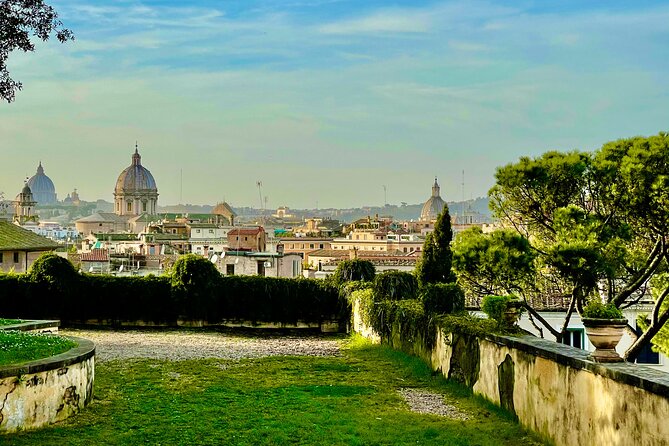
Capitoline Hill condenses Rome into one smart walk. This private tour pairs guaranteed skip-the-line tickets with a trained art historian guide, so you move fast through the Musei Capitolini and then step out for panoramic views from the Capitoline area.
I also like how the tour connects sculpture to painting, from bronze stars like Capitoline Brutus and the Capitoline Wolf to the Pinacoteca’s major names including Caravaggio. The one drawback to plan for is that this experience can feel long and painting-focused for casual museum-goers, so be ready for roughly 2.5 to 3 hours of serious looking and questions.
Key points worth knowing
- Skip-the-line, private scheduling: Guaranteed access and your own group pace, not a slow shuffle with strangers
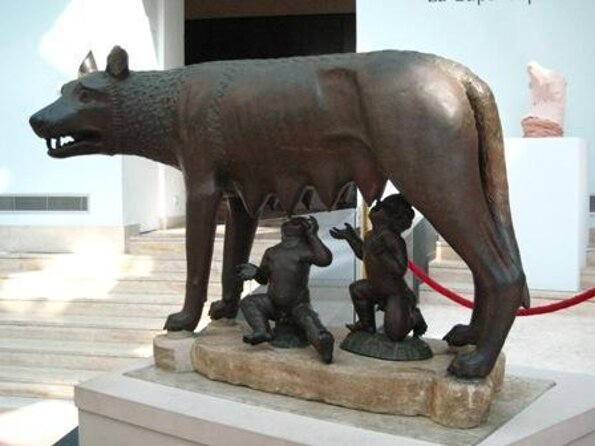
- Bronze and sculpture highlights: Bust of Capitoline Brutus, the Spinario, and the Capitoline Wolf
- Pinacoteca painting wall of fame: Caravaggio plus works by Guido Reni, Carracci, Guercino, Veronese, Titian, and more
- Marcus Aurelius panoramas: Equestrian statue views at the Capitoline Museums and a Forum sight from an underground passage
- Michelangelo’s Campidoglio in context: You see the square as a planned stage, not just a photo spot
- Two different Palazzo atmospheres: Art rooms and frescoed apartments across Palazzo Nuovo and Palazzo dei Conservatori
Entering Musei Capitolini fast, with panoramic momentum
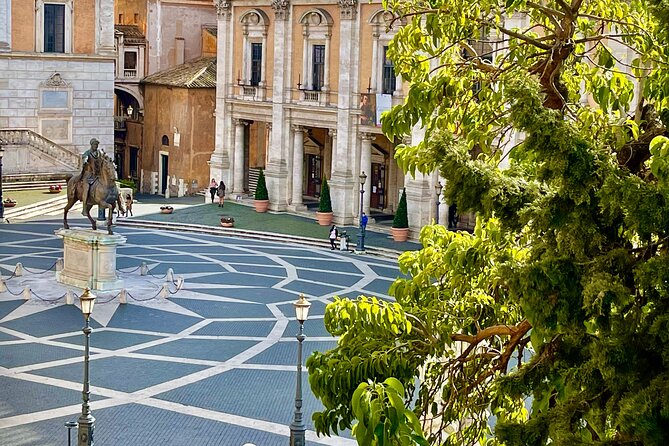
The Capitoline Museums are a Rome two-for-one. You get ancient sculpture and major painting in the same complex, then you step outside onto the Campidoglio, where Michelangelo shaped the view, not just the buildings.
The private format matters here. You are not stuck waiting in a long line while the best light and the best angles pass you by. With guaranteed skip-the-line tickets, your guide can start guiding right away, and you can keep the day feeling efficient rather than chaotic.
You also get that “Capitoline Hill effect,” the feeling that you are standing in a natural viewpoint of the city. Even if you have only a first-timer’s understanding of Rome, your guide’s storytelling helps you connect what you are seeing to where it sits in the urban puzzle.
You can also read our reviews of more guided tours in Rome



Bronze Rome: Capitoline Brutus, the Spinario, and the Capitoline Wolf
In the Musei Capitolini, the first shock is how physical the art feels. These are objects designed to be seen closely, and the guide helps you read them like snapshots of Roman values.
You will run into key bronze works, including the bust of Capitoline Brutus, which ties the idea of Rome’s civic identity to a very specific image of leadership and discipline. Nearby, you can’t really miss the famous Spinario, the small bronzed figure that has survived as a symbol of Roman-style craftsmanship and character.
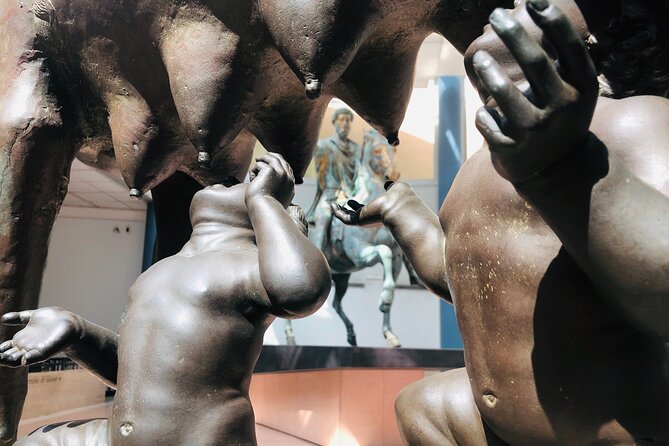
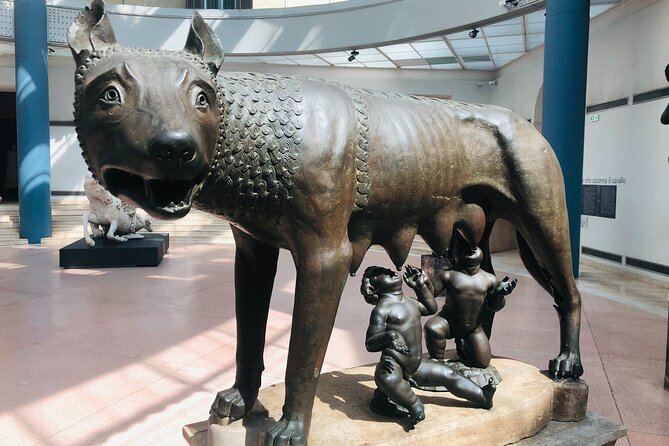
And then comes the heavy hitter: the Capitoline Wolf, the iconic sculpture associated with the legend of Romulus and Remus. It is more than a legend in bronze. Your guide explains how this image became a repeatable symbol for the Eternal City, so you understand why it keeps showing up in Rome’s self-image.
Greek and Etruscan vases, and why it makes your whole visit click
One reason this tour works even if you are not a hardcore art nerd is that the guide keeps bouncing between time periods in a smart way. You are not just looking at one era in isolation.
In the early part of the visit, you will see an excellent collection of Greek and Etruscan vases. That matters because it gives you a visual baseline for the Mediterranean world Rome absorbed and transformed. Instead of treating Roman art like a sealed museum room, you can see how Rome built its culture out of older sources.
If you like comparisons, pay attention when your guide connects these objects to later Roman choices in style and display. It is the kind of framing that turns scattered artifacts into a conversation.
The Pinacoteca: Caravaggio and the painters who defined Roman taste
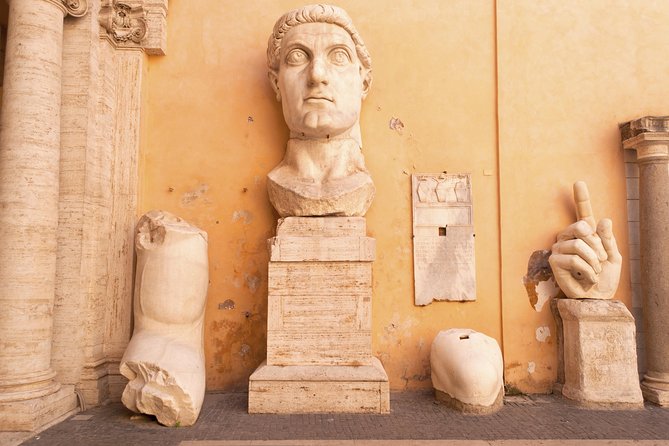
After sculpture, the mood shifts. The Pinacoteca is where this tour often wins people over, especially if you care about how painting helped shape power and religion in Rome.
This is also where you get the chance to see paintings by major names, including Caravaggio and a long list of other giants such as Guido Reni, the Carracci family, Guercino, Domenichino, Veronese, Titian, Tintoretto, and Rubens. It can feel like an art-history syllabus, and that is exactly what some guides are praised for.
A practical note: this portion can be slower because the guide spends time on how to look, not just what to look at. If you are the kind of traveler who wants a quick overview and then moves on, you might want to set expectations. If you want depth, this is where it happens.
Marcus Aurelius in the exedra, plus the Forum view underground
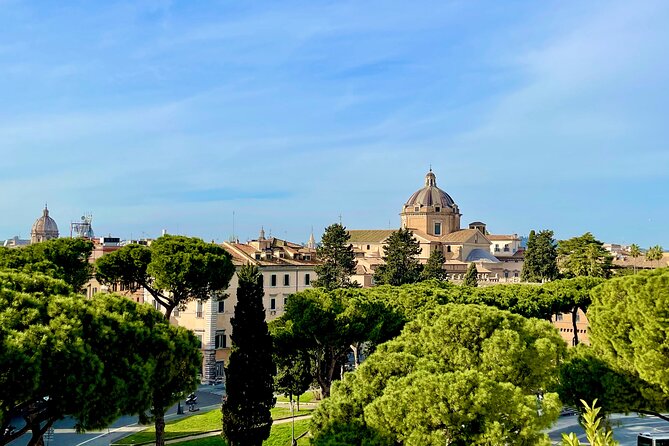
One of the most memorable moments is the sight of the equestrian statue of Emperor Marcus Aurelius in the museum exedra. It is presented alongside remnants of ancient temple structures, so you get a layered feeling: late-imperial Rome, later interpretation, and a modern museum setting all at once.
Then your guide takes you toward a lesser-known treat, an underground tunnel area that lets you enjoy a striking view connected to the Roman Forum. This is the kind of angle that makes the Capitoline Museums feel different from standard indoor gallery time. You are not only looking down at history, you are peeking across it.
You will also see major sculpture figures and symbolic works during this section, including the statue of Marforio, the Dying Gaul, and Cupid and Psyche. The guide’s job here is to keep these from feeling random. You understand why each work sits where it does and what it signaled to people at the time.
You can also read our reviews of more private tours in Rome

Piazza del Campidoglio: Michelangelo’s plan, steps, and perfect alignment
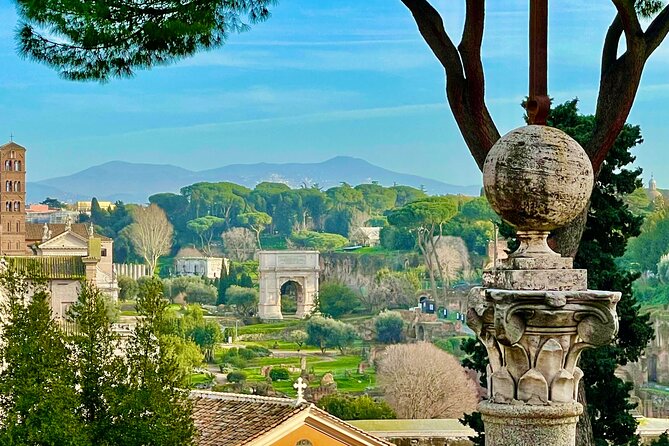
Once you move outside, the tour shifts from objects to urban design. Piazza del Campidoglio is where you see how Rome staged authority and ceremony.
This square did not just happen. It went through transformation when Pope Paul III commissioned Michelangelo to complete the layout for the area around the time of Charles V’s visit in 1536. Your guide helps you spot the logic in the design, so you see Michelangelo’s square as a project about order and symbolism.
Look at the podium built for the equestrian statue of Marcus Aurelius, and then the grand staircase with giant steps that leads up from the square. The balustrade and classic marble groupings also make more sense when your guide points out how the composition directs your viewpoint.
The replica Marcus Aurelius: why it exists and what to notice
Right on Piazza del Campidoglio, you will see the replica equestrian statue of Marcus Aurelius. Since 1997, this copy has been placed there as a stand-in for the original.
The detail that makes it interesting is the method: the replica is described as a faithful copy based on a photogrammetric survey, using a modeled approach before the metal reproduction was created. Your guide’s framing helps you understand why this replacement was needed, and how it keeps the square’s central idea intact even when the original is away for restoration work.
The original statue was removed from Piazza del Campidoglio in 1981 and taken for restoration and diagnostic tests to address the damage from exposure to pollution and weather.
Palazzo Senatorio: reading the city’s “seat of power” in stone
Next you will head to Palazzo Senatorio, built over the ruins of the ancient Tabularium. Your guide explains that from 1144 it served as the seat of the municipality of Rome and the role of the senator, who handled administration and justice for citizens.
This building is a great example of why Roman architecture is not just background. The facade opens toward Piazza del Campidoglio and uses loggias on three levels. You can spot brick arches punctuated by recovered ancient columns with Ionic capitals from the early 1200s.
If you like practical photo spots, this is one. The positioning and entrance are part of the story, and your guide can point out what to look for so the building stops being just a wall in your pictures.
Palazzo Nuovo and Palazzo dei Conservatori: sculpture rooms, frescoes, and Roman collecting
The tour moves into two palazzi that feel different in use and atmosphere, even though they share the same square-stage.
Palazzo Nuovo, a seventeenth-century building designed around Michelangelo’s mid-sixteenth-century plan for Pope Paul III, later became a museum. Construction began in 1603 and was completed in 1654. The collection grew through acquisitions, including the prestigious Albani collection of 418 sculptures added around the museum’s formal museum era under Clement XII Corsini.
Then you reach Palazzo dei Conservatori, which historically housed the Conservators, magistrates elected by the people. The rebuilding and reorganization tied to the Jubilee of 1500 brought Michelangelo into the story, and later work by artists including Guidetto Guidetti and Giacomo della Porta carried it forward.
In this palace you will find an art gallery, woven wall hangings, and bronze sculptures like the Capitoline Wolf. You will also see fresco cycles in the apartments, including work by Pietro da Cortona tied to ancient history of Rome.
Price, pacing, and who this private tour is best for
At $288.97 per person, this is not a bargain-style museum ticket. But the price lines up with what you are getting: a private art historian guide, guaranteed skip-the-line access, and admission included for major parts of the visit.
Here is the value logic I use: if you are paying for a private guide plus tickets, you are not only buying entry. You are buying time saved and context delivered, and that is especially helpful in a museum that mixes ancient sculpture and major painting in one flow.
The biggest factor is your art appetite. Guides like Emilio are noted for deep explanations and answering questions. Martin is praised for adjusting to your interest level and pushing into near-scholarly discussions, not just statue trivia. That is thrilling if you want more intellectual work, but it can feel like too much if you only want a quick Rome overview.
If you want a relaxed wandering pace or you are easily tired by long gallery time, consider whether you want this depth. If you enjoy asking questions and learning how the pieces connect, this tour is built for that.
Practical tips for a smoother experience
This tour is designed for smart casual clothing and does not include food or drinks. Plan on building in a snack stop outside the museums if you need one, because you will be moving through several areas.
You are also walking on uneven historic surfaces and moving between rooms, so wear shoes you trust. The route includes time inside palaces and museums plus time in outdoor spaces like Piazza del Campidoglio, which means you should dress for sun or breeze depending on the season.
Two other planning notes help a lot:
- It is offered in English and is private, so bring your questions.
- The area is near public transportation, so you do not need a car, and meeting at Piazza del Campidoglio is straightforward.
And if you are traveling in peak season: book early. This experience is often reserved about a month and a half ahead, which tells you people know exactly what they are buying.
Should you book this Capitoline Museums private tour?
Book it if you want Rome in one concentrated arc: ancient sculpture, big-name painting, Forum-adjacent views, and Michelangelo’s Campidoglio plan, all tied together by a guide who can match your interest level. This is the kind of visit that makes the Capitoline Museums feel like more than a checklist.
Skip it or rethink it if your goal is mostly photos and quick facts. The painting portion can take time, and some visitors find the tour long for the museum size when they are not especially invested in art history. If that sounds like you, consider a shorter or more general Rome museum option instead.
If you do book, do yourself a favor and go in ready to look closely. Tell your guide what you care about most, sculpture, painting, or the architecture and views, and you will get the best version of this experience.
FAQ
Where is the tour meeting point?
The tour starts at Capitoline Museums, Piazza del Campidoglio 1, 00186 Roma RM, Italy.
How long does the Capitoline Museums private tour take?
The duration is about 2 hours 30 minutes to 3 hours.
Is the tour private and offered in English?
Yes. It is a private tour/activity, and it is offered in English.
What admissions are included?
Admission tickets are included for the Musei Capitolini and for the palaces visited that have included admission. Piazza del Campidoglio and the replica statue area are free.
Does the tour price include skip-the-line access?
Yes. The tour includes guaranteed skip-the-line tickets.
Is food included, and what is the dress code?
Food and drinks are not included. The dress code is smart casual, and pets are not allowed.
More Guided Tours in Rome


More Tours in Rome


More Tour Reviews in Rome
Not for you? Here's more nearby things to do in Rome we have reviewed












Museums, compared.
 ★ 4.5Vatican: Museums & Sistine Chapel Entrance TicketFrom $38144,003 reviews
 ★ 4.3Vatican Museums & Sistine Chapel Tour with Optional BasilicaFrom $7967,413 reviews
 ★ 4.5Vatican Museums, Sistine Chapel & St Peter’s Basilica Guided TourFrom $2239,149 reviews
 ★ 4.3Vatican Museums, Sistine Chapel & Basilica TourFrom $13013,872 reviews
 ★ 4.4Vatican Museums & Sistine Chapel Skip-the-Line Entry TicketFrom $4313,838 reviews
★ 4.7Vatican Museums, Sistine Chapel & Basilica TourFrom $7213,217 reviews
Vatican Museums & Sistine Chapel Guided TourFrom $11812,117 reviews
 ★ 4.2Vatican Museums & Sistine Chapel Skip-The-Line TicketFrom $4111,708 reviews