Reviewed · ROME
Pastamania in Rome
Fresh pasta in Rome, made by your hands.
Pastamania is a 3-hour, small-group cooking experience in a historic palazzo near the Pantheon and Piazza Venezia. You will learn to form fresh pasta shapes from scratch, then sit down together to enjoy what you made, Italian-style.
I especially love the hands-on pace and the fact that you do not just watch. I also like the small group setup that keeps the class friendly and manageable, even for first-timers. One possible drawback: it is not set up for limited mobility, so if you use crutches or a wheelchair, you should check accessibility carefully before booking.
Key Things to Know Before You Go
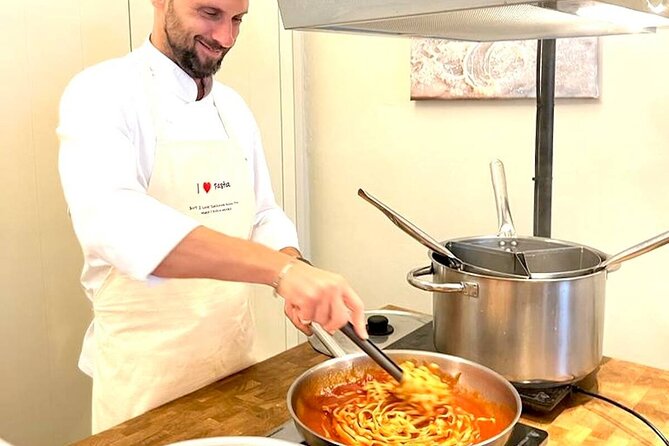
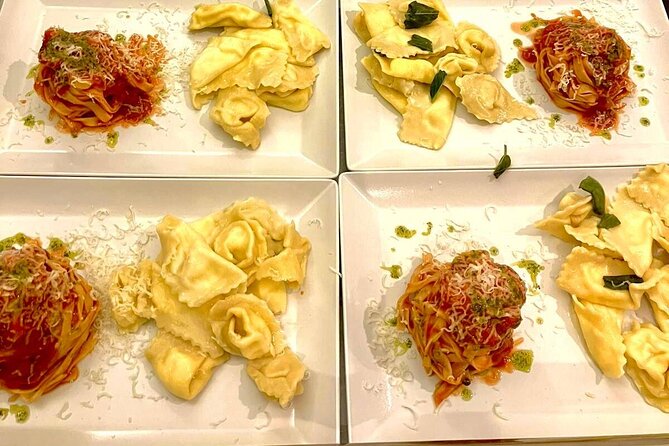
- You make three pasta types: ravioli, tortelli, and fettuccine, not just one shape
- The location is central: a historic palazzo a few minutes’ walk from the Pantheon and Piazza Venezia
- You eat at the end, family-style: communal table, shared plates, and lots of conversation
- The menu includes classic fillings and sauces like parmigiano and ricotta with butter and sage
- Dessert is chocolate salami, a playful Roman-style finish to the meal
- Guides run the class in English with lots of patience and humor in the room
Pastamania in Rome at a Historic Palazzo, Near the Pantheon
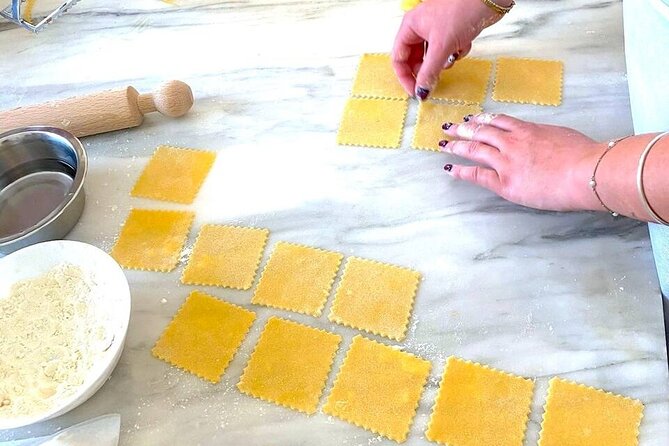
Rome has a thousand food experiences. This one is different because it turns you into the cook, then rewards you immediately.
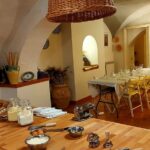
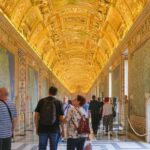
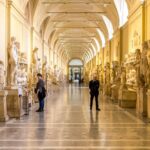
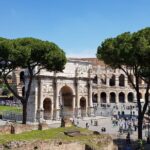
The class takes place inside a historic palazzo, not a modern restaurant kitchen. That matters. You get the feeling of stepping into an old-school Roman setting where people actually sit down together to eat, not just file through a demo. And the meeting point, Palazzo Grazioli on Via della Gatta, puts you in a great area for pre and post plans, since it is close to major sights like the Pantheon and Piazza Venezia.
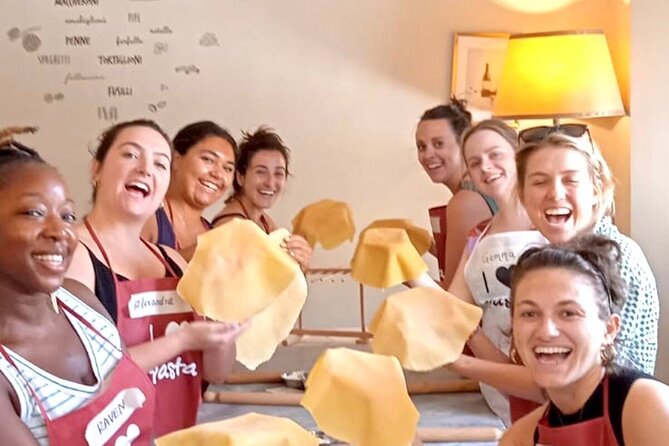
You are in a small group, capped at a maximum of 10 travelers. That size changes the whole mood. You can ask questions without waiting, and the instructor can correct your dough and technique when needed. In practice, that is the difference between a class that feels fun and one that feels like a chore.
You can also read our reviews of more tours and experiences in Rome.
How the 3 Hours Works, From Pasta Dough to a Communal Table
The flow is built to keep you active the whole time. You start with an introduction that sets expectations and covers what matters for fresh pasta, then you jump into hands-on work right away.
In a typical 3-hour rhythm, expect these phases:
1) Intro and quick guidance
You get the basics for working with dough and shaping. This is where the instructor explains what good pasta feels like, how to handle thickness, and how to avoid common mistakes.
2) Hands-on pasta making
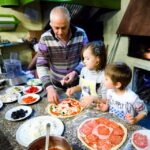
This is the star part. You knead, roll, and shape your own pasta. You will practice ravioli, tortelli, and fettuccine, so you leave with more than one technique. You are not just repeating steps mechanically. You are learning what changes when the dough is right, when it sticks, and when it needs a little adjustment.
3) Sauce and finishing
You learn how the sauces fit the pasta shapes. The class focuses on simple Italian combinations, especially butter and sage and tomato sauce, so the flavors do not get lost under complicated steps.
4) Sit down and eat together
The end of the lesson is not a quick snack. You gather around a large communal table and eat what you made, sharing the meal with the people in your group. It has that real family vibe. You are swapping stories while the pasta is still tasting fresh.
Practical tip: come hungry. Several instructors and menus are built around a full meal at the end, and you will want room for seconds.
The Menu You Make: Ravioli, Tortelli, Fettuccine, and Chocolate Salami
You get a very classic Roman and Italian approach here: recognizable flavors, but cooked with skill and care.
The sample menu is planned around the pasta shapes you make:
- Ravioli with parmigiano and ricotta filling, truffle oil, finished with butter and sage
- Tortelli with parmigiano and ricotta and nutmeg filling, also served with butter and sage sauce
- Fettuccine with tomato sauce
- Dessert: chocolate salami
That chocolate salami is a fun one to end on. It is sweet, playful, and unlike typical Italian desserts you might expect on day one in Rome. It also gives you a nice finish that does not require you to eat through a sugar overload.
Value note: many cooking classes sell “instruction” and make you buy extra food separately. Here, the class is built around a full tasting of what you produced. If you treat this as an evening meal, not just an activity, it starts looking like a smart way to spend money in Rome.
Your Instructor and the Small-Group Advantage (Christian, Giorgio, Fabrizio and More)
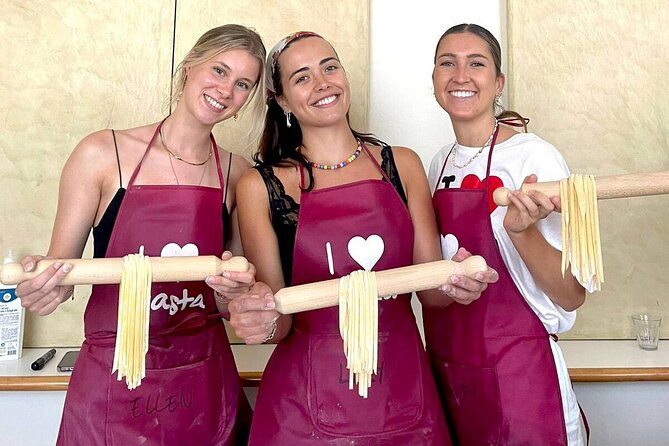
In this class, the instructor is part teacher, part host. That shows in the way people describe the energy: patient explanations, humor in the room, and a relaxed atmosphere that still teaches correct technique.
You might meet guides like Christian, Giorgio, Fabrizio, Ricardo, Luca, Sofia, Arianna, or Martina, depending on your session. Different names, same goal: get you making pasta confidently.
What I like about this style is that it works for mixed groups. Fresh pasta can feel intimidating if you have never handled dough. But the smaller group size and the instructor’s pacing mean you get help before frustration builds.
Here is what typically sticks from classes like this:
- You learn how to judge dough consistency by feel, not just by recipes
- You practice shaping until your hands get the rhythm
- You get correction that helps your next pasta type go faster
Also, since you end up eating together, the whole experience turns into social time. It is one of those activities where you are not just learning, you are also meeting people in a natural way.
What You Learn That Actually Helps at Home: Rolling, Filling, and Sauce Sense
The best souvenir from a food class is not a photo. It is what you can reproduce.
This lesson gives you repeatable skills tied to real Italian staples:
- How to handle dough and roll it to a usable thickness
- How to portion and seal filled pasta like ravioli and tortelli
- How sauces like butter and sage cling to pasta instead of washing out in a heavy way
- How simple tomato sauce pairs with fettuccine without needing fancy shortcuts
One practical takeaway that comes up in classes like this is storage and home timing. You do not just learn how to make pasta. You get advice on what to do next if you plan to cook later, or if you want to keep the pasta from getting dry.
If you are the kind of traveler who likes to bring home a skill, this class fits. You will not need Rome as an ingredient for your next homemade dinner.
Price and Value for a Rome Food Experience
At $49.58 per person for about 3 hours, Pastamania sits in the mid-range for Rome cooking experiences. The real question is what you receive for that price.
Here is what you get for your money, based on the experience details:
- A professional-led lesson in fresh pasta making
- Hands-on instruction with multiple pasta types
- A meal at the end with the pasta you made
- Dessert included in the sample menu (chocolate salami)
- An experience designed for small groups (max 10)
- English offered, with a mobile ticket
When you compare that to the cost of a nice sit-down meal plus a museum ticket plus a paid food tour, it often comes out as strong value. The biggest reason is that you are doing an activity that also functions as dinner.
If your goal is a busy itinerary with cheap meals, this may not feel like a bargain. But if you want an evening that is hands-on and genuinely different from dinner reservations, it is a solid use of time.
Who Should Book This Class, and Who Might Want to Skip It
This is a good fit for a lot of travelers:
- First-time cooks who want clear steps and close help
- Couples and friends looking for a shared experience that is not just sightseeing
- Families with kids who can handle a hands-on activity and want to eat right after
- People who enjoy food culture, but prefer practical learning over lectures
It is especially attractive if you want Rome through its daily life, because pasta is one of the most approachable windows into Italian cooking.
Who should consider a skip:
- If you have limited mobility, the note says it is not accessible (for example, crutches). This is the clearest constraint in the information provided.
- If you hate hands-on activities or feel uncomfortable with cooking tasks, you might want a more observational food tour instead.
Quick Tips to Make Your Class Smoother
A few small things can make the experience feel even better:
- Eat lightly beforehand. You will sit down to a real meal at the end.
- Bring curiosity. The instructors teach technique, but the class also expects you to try and adjust.
- Wear something you can get flour on, just in case.
- If you are traveling with kids, keep expectations realistic. Pasta making is fun, but it takes time, so it helps when everyone is ready to slow down.
Also, if you notice pasta-making tools available, such as a chitarra pasta maker that some people want after the class, know that wanting the tool is normal. The best moment to buy is when you can picture using it next at home.
Should You Book Pastamania in Rome?
If you want one memorable food thing in Rome that is active, social, and tied to classic Italian flavors, I think you should book it. The recipe is strong: small group size, multiple pasta shapes you actually make, and a meal at the end that feels like part of the lesson rather than an add-on.
I would not pick it if accessibility is a concern for you, or if you are hoping for a purely scenic, sit-and-watch activity. But for most travelers, especially food lovers, it is one of the few cooking classes that feels worth the price because it pays you back with both skill and dinner.
FAQ
How long is the Pastamania pasta-making experience?
It lasts about 3 hours.
Where does the class meet in Rome?
The meeting point is Palazzo Grazioli, Via della Gatta, 14, 00186 Roma RM, Italy.
Is the class in English?
Yes, the experience is offered in English.
What kinds of pasta do you make?
You learn to prepare ravioli, tortelli, and fettuccine.
What is served for dessert?
The sample menu includes chocolate salami for dessert.
How big is the group?
The class has a maximum of 10 travelers.
Do you get a mobile ticket?
Yes. The ticket is mobile.
Is this experience near public transportation?
Yes, it is near public transportation.
Is it accessible for people with limited mobility?
No, it is not accessible for people with limited mobility (for example, crutches), and it is listed as not recommended for travelers with disabilities.
What is the cancellation policy?
Free cancellation is available up to 24 hours in advance for a full refund. If you cancel less than 24 hours before the start time, you will not get a refund.