
Reviewed · PANTHEON TOURS
Pantheon and the Best of Rome City Private Tour
Rome rewards a good route.
This private 3-hour tour strings together Rome’s biggest hits, plus smart ancient-city stops, without pretending you can see everything in one afternoon. I like that it includes the Pantheon and a flexible pace, and it’s built for photos and real orientation.
Two things I’d call out right away are the panoramic viewpoints from Capitol Hill and the way the guide can adjust the tour to your interests. One consideration: it is a walking-heavy highlights circuit, so plan for comfort (and skip it if you’re dealing with mobility issues you can’t manage on foot).
Key highlights to look for before you go
- Pantheon included, so you don’t have to think about ticket timing or hassle
- Capitol Hill views that give you a Rome map in your head fast
- Guide-led flexibility, you can spend more time where you care most
- Trevi Fountain photo window, plus the classic coin moment
- A focused 3-hour flow, not an all-day marathon
The value of a private Rome highlights route
Rome is a city where the details matter. If you’ve only got a few days, the temptation is to run from landmark to landmark and call it a day. This kind of private, 3-hour tour aims to do the opposite: you get the classics, then you also get context for what you’re looking at.
At $204.26 per person, it’s not the cheapest way to see the city. But you are paying for three things that add real value: an experienced guide, a private format (only your group), and a sequence that tries to keep you moving efficiently through central sights. If you split the cost across a small group, it often feels more reasonable, especially compared with doing multiple self-guided tickets and then wasting time figuring out what to see next.
You also get a mobile ticket, which is handy in Rome because you avoid some paper chaos. And because it’s offered in English with flexible morning or afternoon timing, it can fit your day plan.
You can also read our reviews of more city tours in Rome


Starting at Piazza Navona and getting oriented fast
The tour meets at the Embassy of Brazil, Piazza Navona, 14. That’s a good starting point because Piazza Navona is already a lively landmark with a strong “you are in Rome” vibe. More importantly, it helps you orient to the central layout before you head into the ancient layers.
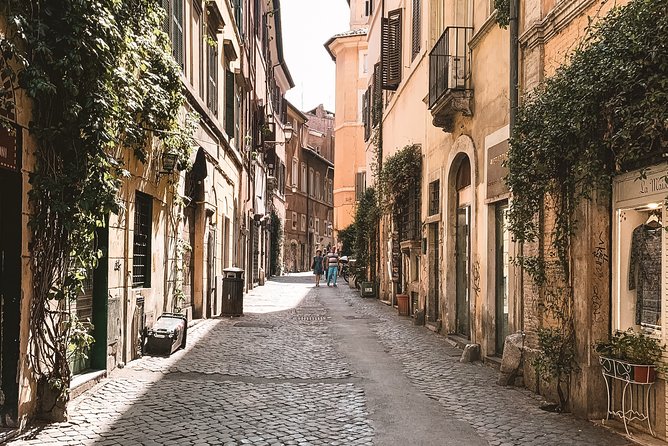
The route is designed around classic Rome neighborhoods that sit close enough together to work as a compact half-day. You’re not hopping across the city, which means less commute time and more time seeing.
And since this is a private tour, the guide can adjust the pacing. If your priority is architecture, you’ll get it. If you’re more interested in religion and art, you’ll likely get those connections too.
Piazza Venezia viewpoint, with ancient Rome in plain sight
Your first stop includes Piazza Venezia, a high point where Rome’s sprawl makes sense. From here you can look out and start placing monuments like pieces of a puzzle.
At this stage of the walk, you’ll get a quick guided tour of major ancient structures visible in the wider area, including:
- The Theatre of Marcellus, noted as older than the Colosseum
- the Mayor’s office
- the Roman Forum
- Mamertine prison, associated with St. Paul’s imprisonment
This is one of those moments where a guide earns their fee. From street level, it’s easy to see ruins and move on. From a viewpoint, the same ruins become a map. You’ll feel the city’s layers right away instead of guessing later.
Largo Argentina and the assassination-site context
Next you head to Area Sacra di Largo Argentina, where the atmosphere shifts from viewpoint to deep-time history. This is the area connected with the Curia of Pompey and the site of Caesar’s assassination.
You’ll also go down into the neighborhood context around this area, including the Forum of Julius Caesar, the Market, and the Column of Trajan. Even if you don’t know the timeline before you arrive, you’ll leave with a clearer sense of how these places connect.
Practical note: this part can feel crowded during peak travel times. The advantage of a private guide is you’re not stuck waiting blindly. You can pause where it matters and keep moving when it doesn’t.
Trevi Fountain, the classic scene plus a quick wish ritual
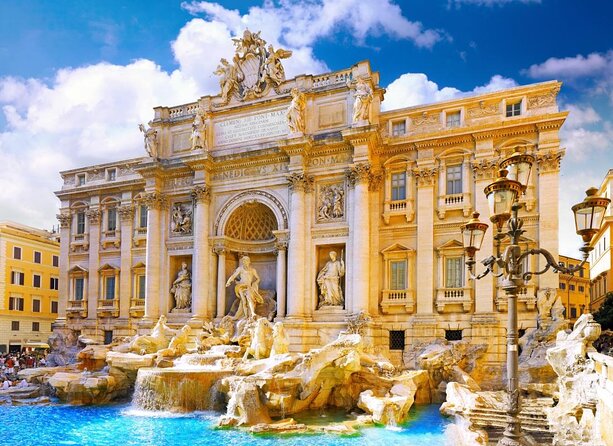
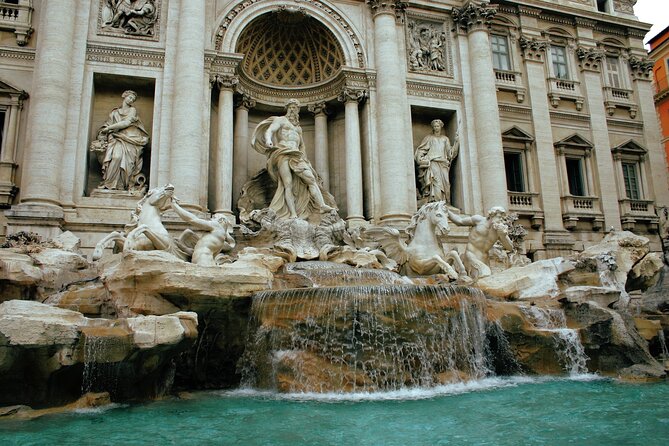
Then comes the moment most people picture when they think of Rome: Trevi Fountain. It’s a Baroque masterpiece, and yes, it’s popular for a reason. You get a focused visit here, long enough for photos and a proper look, without turning it into a half-hour standstill in a human traffic jam.
Plan on about 20 minutes at Trevi. You’ll have time to take the iconic shots and do the tradition of flicking a coin into the fountain. The guide’s storytelling usually makes this stop more fun than just watching tourists rush by.
If you’re short on time, Trevi is worth prioritizing. If you’re tired of crowds, treat it like a quick, concentrated hit. That’s exactly how this tour frames it.
You can also read our reviews of more private tours in Rome




Hadrian’s Temple and Sant’Agnese in Agone for the quieter in-between stops
Between the big-name landmarks, this route includes two stops that give Rome texture.
Hadrian’s Temple at Campus Martius
You’ll visit the Temple of Hadrian, a temple to the deified Hadrian on the Campus Martius, built by his adoptive son Antoninus Pius in 145. It’s now incorporated into a later building in the Piazza di Pietra.
What’s nice here is that this stop rewards attention. You’re not just looking at a standalone ruin. You’re seeing how later Rome wrapped older Rome into new layers. That’s a theme you’ll keep noticing long after the tour ends.
Chiesa di Sant’Agnese in Agone
Then you move to Chiesa di Sant’Agnese in Agone, known for the Basilica of St. Agnes Outside the Walls. You’ll learn why it matters, including its mosaics, the shrine of the virgin martyr St. Agnes, and its connection to the catacombs.
This stop is about faith history and art details rather than scale. It’s also a chance to cool down mentally and physically during the walk, because churches often give you a natural pause from street noise.
Pantheon: the stop you actually pay to enjoy
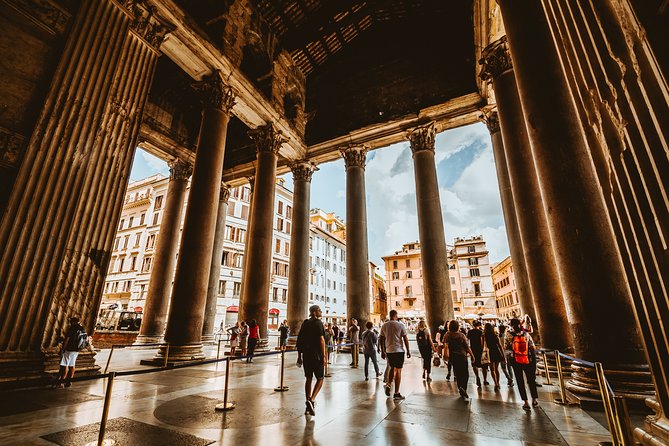
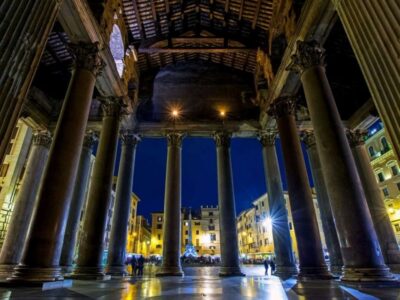
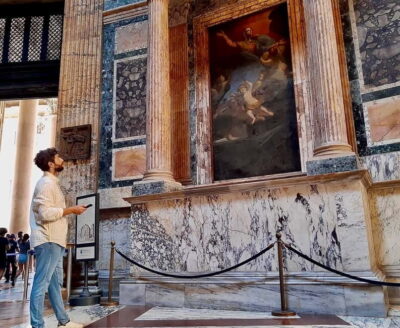
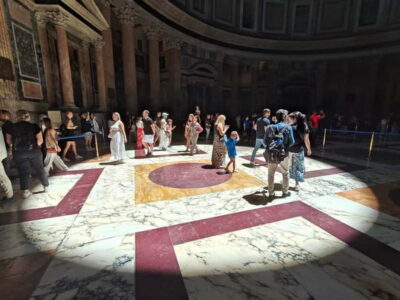
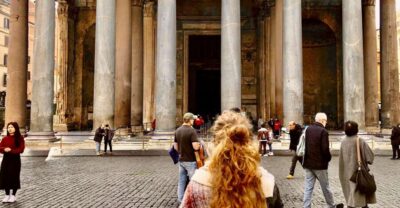
The highlight of the walking flow is the Pantheon, with the visit time around 30 minutes. The Pantheon is included, meaning you’re not paying extra for entry as part of the tour structure.
What you’ll notice quickly is that it’s engineered genius disguised as simple elegance. The dome is famous for being a free-standing concrete dome with no support system under it in the way you might expect. This is the kind of architecture people have studied for centuries because it solved a problem that shouldn’t look possible.
Practical tip: bring a quick plan for photos. If you try to take every angle and read every line, 30 minutes can disappear fast. Instead, pick a few:
- dome view angles
- façade details
- interior perspective shots
Also, keep an eye on your guide. A good guide will point you to the most meaningful spots quickly so you don’t lose time scanning.
Church of St. Louis of the French and Caravaggio connections
After the Pantheon, the walk continues to Church of St. Louis of the French, located between the Pantheon and Piazza Navona. This is a standout because it connects Rome landmarks with major art.
The church is known for three famous Caravaggio paintings:
- The Calling of Saint Matthew
- The Inspiration of Saint Matthew
- The Martyrdom of Saint Matthew
That trio alone makes the church a worthwhile detour. You’re not just getting more sightseeing. You’re getting a specific art story tied to a specific place.
And if you like symbolism, you’ll also learn about the church’s exterior sculptures and scenes related to French history and saints and martyrs. It’s a good example of how Rome layers its cultural identity into religious sites.
Piazza Navona’s baroque geometry and the Four Rivers fountain
At Piazza Navona, you’ll spend about 30 minutes. This piazza is famous for the fountain of the Four Rivers and for being a strong example of Roman Baroque architecture.
This is one of my favorite “reset points” in Rome because it feels like the city wants you to slow down. If you’ve been moving through ruins and churches, Piazza Navona gives you a more open, outward-facing space. It’s also a useful place to ask your guide what to do next, because you can see the streets leading away from the square.
Capitoline Hill for the Rome that started organized
The final viewpoints lean into meaning. Capitoline Hill is the smallest of Rome’s seven hills, but it carries major significance, including the Temple of Jupiter Optimus Maximus. In ancient Rome, this sanctuary was one of the most important religious sites.
You’ll get about 15 minutes here, which is enough to understand why it mattered without turning it into a long lecture. The payoff is the way it closes the circle, connecting viewpoints and temples with what you saw earlier across the ancient core.
Guides make the difference, and Eugene and Rahul are the model
This tour format depends heavily on the guide because Rome can overwhelm you fast. The best version of it is when your guide knows how to steer the walk.
For example, Eugene is noted for taking routes that help you avoid cruise-ship crowds at key stops and still reach the most important sites. That matters because it’s not just about fewer people, it’s about more time to actually look and listen.
Rahul is also mentioned as extremely engaging and willing to personalize the tour. That shows you what to expect from a good guide here: not a scripted march, but a responsive plan.
Timing and pacing: 3 hours that actually fit a real day
The tour runs about 3 hours. That’s short enough for a half-day plan, but long enough to connect multiple layers of Rome, not just skim the surface.
With multiple stops averaging around 15 to 30 minutes, the schedule is structured. Still, because it’s private, you’re not locked into a one-size-fits-all approach. If you linger at the Pantheon or want more time at Trevi, your guide can likely reshape the pace within reason.
What I’d do to make it work smoothly:
- Wear comfortable shoes, Rome floors have opinions.
- Plan for photo breaks so you don’t accidentally spend too long at just one spot.
- If you have a must-see, tell your guide early so time goes there.
What’s included and what you should plan for
Included:
- Experienced guide
- Pantheon admission included
- Mobile ticket
- Most other stops listed as free entry
Not included:
- Snacks
- Bottled water
That means you should bring your own water if you need it, especially in warmer months. Even if entry is free for many stops, you still want a small supply kit so the tour stays enjoyable rather than survival mode.
Also, the tour requires good weather. If weather doesn’t cooperate, you’ll be offered a different date or a full refund.
Who this tour is best for
This is a strong choice if:
- You want the big Rome classics in one walk
- You prefer a guide over guidebook guessing
- You like mixing viewpoints with major monuments
- You want a plan that can be adjusted to your interests
It can be a good family option too, especially for older kids who enjoy history and art. It may feel like a lot for very young children because it’s still a walking circuit.
If you’re visiting during a busy stretch (holidays or major events), the value of having a guide and a smart route increases.
Should you book this Pantheon and Best of Rome private tour?
I’d book it if you want a guided half-day that covers the essentials without feeling rushed. The big reasons are the Pantheon included, the Rome orientation from Capitoline Hill and Piazza Venezia, and the smart mix of history, art, and standout photo stops like Trevi and Piazza Navona.
Skip it only if you know you can’t comfortably do a walking-focused tour, or if you’re the type who wants to spend an entire day deep inside one museum. This route is built for momentum and clear connections, not slow, detailed study of one single site.
FAQ
How long is the Pantheon and the Best of Rome City Private Tour?
The tour lasts about 3 hours.
What does the tour cost?
It costs $204.26 per person.
Is this tour private or shared?
It’s a private tour/activity, which means only your group participates.
What language is the tour offered in?
The tour is offered in English.
Where do I meet for the tour?
The meeting point is the Embassy of Brazil, Piazza Navona, 14, 00186 Roma RM, Italy.
Where does the tour end?
The tour ends at Largo di Torre Argentina, 00186 Roma RM, Italy.
Is Pantheon admission included?
Yes. Pantheon entry is included in the tour.
Are tickets needed for the other stops?
The tour information lists admission as free for the other stops.
What should I bring since snacks and water are not included?
The tour does not include snacks or bottled water, so you’ll want to plan for your own food and drinks.
What if the weather is bad?
The experience requires good weather. If it’s canceled due to poor weather, you’ll be offered a different date or a full refund.
More City Tours in Rome


More Tours in Rome






More Tour Reviews in Rome

Not for you? Here's more nearby things to do in Rome we have reviewed












Pantheon Tours, compared.
 ★ 4.9Pantheon Timeless Marvel Guided Tour with Entry TicketFrom $214,002 reviews
 ★ 4.1Pantheon Priority Entry Ticket & Audio Guide AppFrom $63,234 reviews
 ★ 4.9Pantheon Small-Group Guided Tour with Entry TicketFrom $481,094 reviews
 ★ 4.7Pantheon Small Group Tour and Skip-the-Line TicketFrom $531,008 reviews
 ★ 4.2Pantheon Guided Tour with Skip-the-line TicketFrom $28816 reviews
 ★ 4.5Rome Walking Tour with Piazza Navona, Trevi Fountain and PantheonFrom $35676 reviews
 ★ 4.5Pantheon Roma Fast-Track Entry TicketsFrom $7540 reviews
 ★ 4.9Spanish Steps, Trevi, Navona and Pantheon Sunset TourFrom $46522 reviews
Browse the lists this tour appears in