
Reviewed · WALKING TOURS
Essential Walking Tour in Rome
Rome in 2.5 hours, no map required. I love how this walk hits the headline sites fast, with an art historian guide and a maximum of 10 people so questions actually get answered. The route is built for first-timers who want context, not just landmarks.
The one real thing to plan for is the dress code. For churches and selected museum spaces, knees and shoulders must be covered, and sleeveless tops or shorts can get you refused entry.
Key highlights at a glance
- Art historian-led context for major landmarks, not just stop-and-shoot sightseeing
- Max 10 in the group, which keeps the pace friendly and the walking manageable
- Pantheon entry included, so you do not waste time buying or lining up tickets
- Iconic route in 2.5 hours, with time at Piazza Navona, Trevi, Campo de’ Fiori, and more
- Morning or afternoon departures, making it easier to fit into your first day
A 2.5-hour best-of Rome walk from Campo de’ Fiori to Piazza di Spagna
This is a classic Rome starter tour: short enough to fit when you are jet-lagged or time-crunched, but structured enough that you end up with a clear sense of how the city hangs together. You walk a smart loop through central Rome, then finish around the Spanish Steps area.
The total time is about 2 hours 30 minutes, with a steady cadence rather than a slow museum crawl. Expect frequent photo windows, plus short history moments that help you recognize what you are looking at, even if you are not a Roman architecture nerd.
One more practical plus: the tour ends at a different spot than it starts. That is helpful if you plan your day around specific neighborhoods. It also means you should check your next stop before you book, since the walk does not circle back to Campo de’ Fiori.
You can also read our reviews of more walking tours in Rome


Starting at Campo de’ Fiori, a noisy launch pad for real Rome
You meet at Campo de’ Fiori (Campo de’ Fiori, 23). This square is a great place to begin because you get the feeling of everyday Rome right away, not a staged viewpoint. If you have ever wondered why some squares look like living rooms while others feel like stages, Campo de’ Fiori is the quick answer.
This is also where the tour gets into its rhythm. You get a quick intro, then you move into a string of famous stops. It works well if you want your first hours in Rome to feel like a guided walk through the city, not a checklist.
There is a small mystery element at the start too. In the middle of Campo de’ Fiori, there is a statue you can spot, and your guide will point out who it is. Even if you miss the details on your own, you will not feel lost here.
Piazza Navona and Bernini’s Four Rivers, made to be seen up close
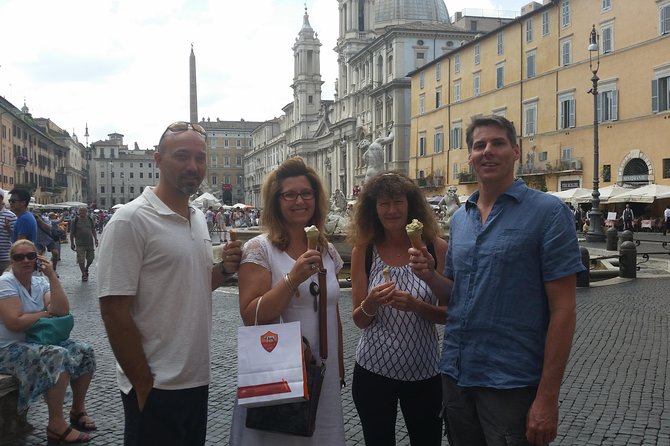
Piazza Navona is the kind of place where the photos look great but the scale still surprises you. You get time to take it in for about 30 minutes, including the star feature: Bernini’s Fountain of the Four Rivers.
The big win at Navona is the way your guide frames it. Instead of only naming the artist and fountain, you learn how Rome liked to use art and symbolism to make public spaces feel meaningful. That context makes it easier to connect what you see now to why this square matters in the wider story of the city.
Practical tip: since this is a major square, it can be crowded in a way that makes your photos messy. Use the time to get one clean shot, then shift a step or two for calmer angles. Your guide’s timing matters because they guide you to the best sightlines while you still have room to breathe.
Trevi Fountain with coin-toss energy, plus the story behind the fame
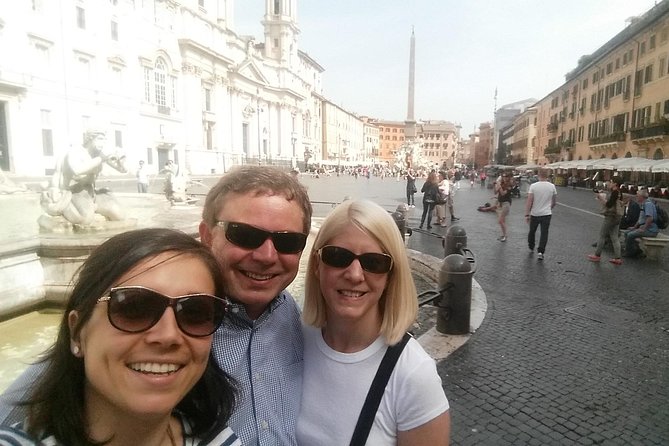
Trevi Fountain is the world’s most famous fountain for a reason. You stop for about 20 minutes, and yes, this is where you get the classic moment of tossing a coin.
The value here is what you learn while you are staring up at all that carved stonework. You do not just get told that it is famous. You get the why, and you hear how the fountain fits into the city’s broader development and image.
Trevi is also a reality check stop. It attracts crowds, and some of that will be unavoidable. What makes this tour feel worth it is that you spend time with a guide who helps you focus. That means fewer minutes trying to interpret things on your own and more minutes actually understanding what is going on.
Pantheon entry included, and why that dome still feels unreal
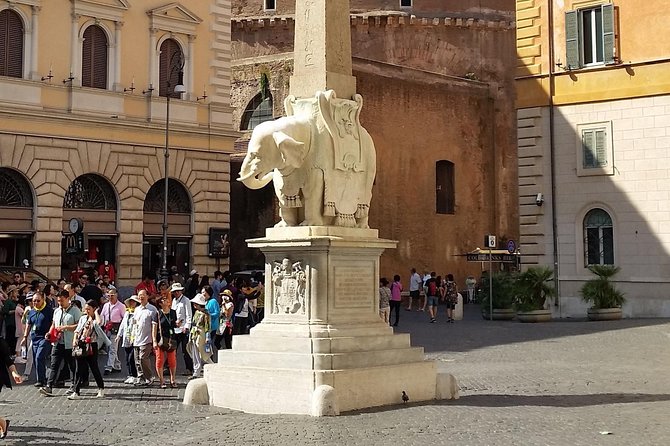
The Pantheon is one of the places where you immediately feel why ancient Rome still pulls people in. You get about 30 minutes here, and importantly, you enter during the tour.
The Pantheon is often described as Rome’s best-preserved temple, and its dome is famous for being the largest in the world. Standing inside, the scale does not need extra explanation, but your guide gives you the details that make the structure click in your head.
This is a stop where a guide helps with more than facts. It helps you look. You start paying attention to how the space is shaped, how light moves in, and what the architecture is doing beyond decoration. If you only have a short trip, this is the kind of stop that benefits most from a guide because it is hard to read on your own in a few quick passes.
If you are planning for photos, arrive with a realistic mindset. You can still get great pictures, but you will likely share space with many other cameras. Your time here is best used for one thoughtful look inside first, then photos second.






Spanish Steps, plus the answer to why it is so Spanish
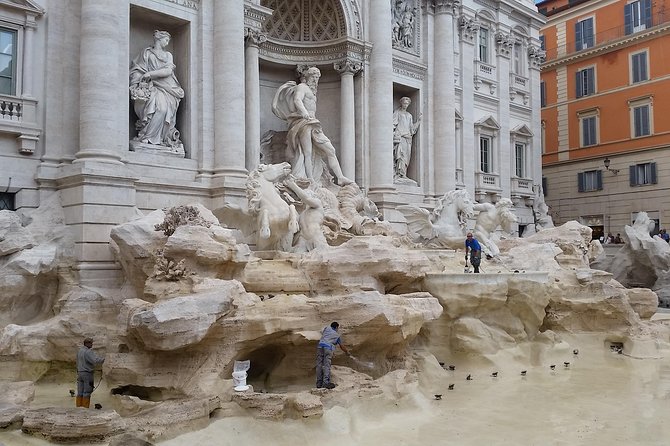
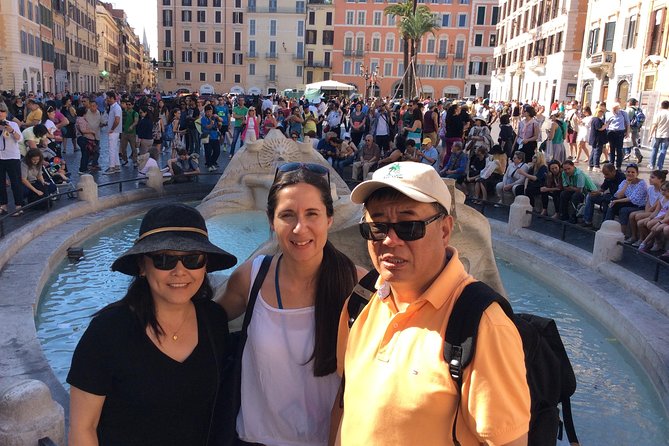
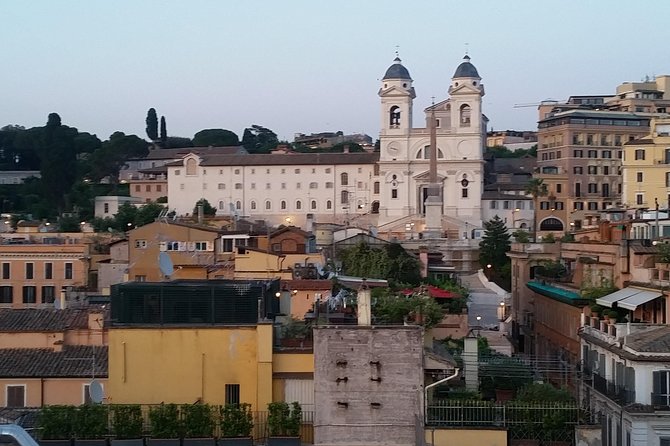
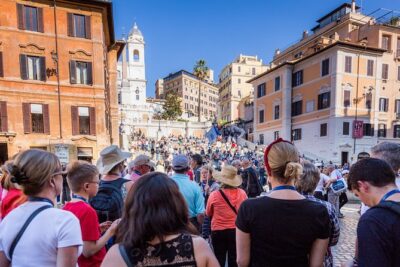
After Pantheon, you head toward the Spanish Steps area, with about 20 minutes at the Spanish Steps. The tour frames it with a simple question that you will want to hear: why Spain is connected to a stairway, and why the steps are so many.
That sounds like trivia until you see the steps in person. The moment you understand the connection, the whole site feels less random and more intentional. Rome loves these built-in references, and this stop is a good example of how a landmark can be a clue, not just a backdrop.
A quick reality note: the steps area can be busy. So even though you have time to sit, take photos, and regroup, you should not expect total quiet. Use the guide to spot the best sightline, then take a breather while you still have energy.
Piazza Farnese, the French flag on a facade with old-school power
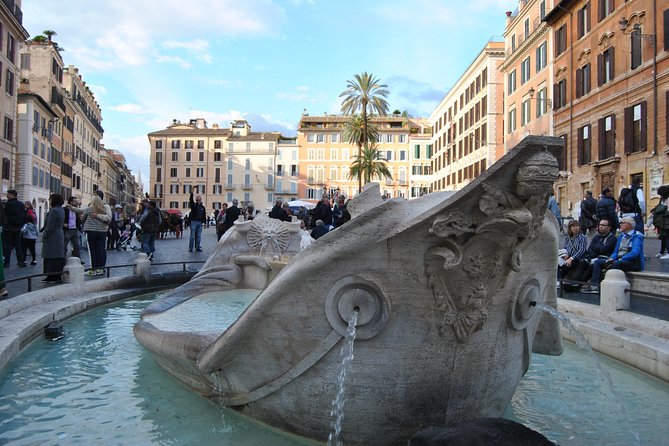
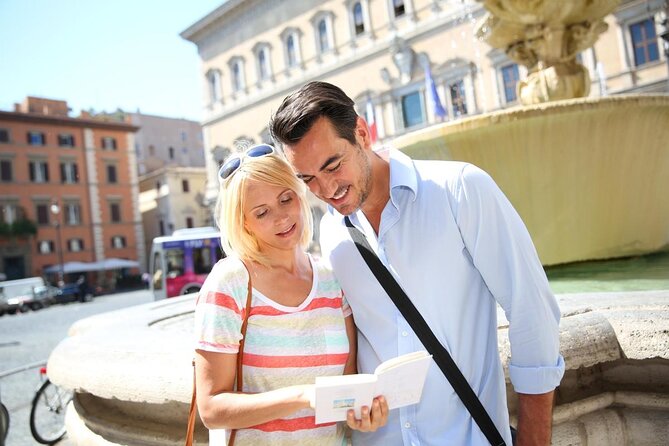
Piazza Farnese is a nice palate cleanser after the biggest, most crowded sights. You get about 20 minutes here, and the defining visual is the French flag hanging on a highly recognizable facade.
This spot is also a reminder that Rome is still diplomatic and official, not frozen in time. Your guide explains how this area functions now, including the fact that it is an embassy, and it also points to the site’s past as a major family residence.
The best way to enjoy Piazza Farnese is to treat it like architecture homework with answers. You look at the facade, you notice the grand scale, and then the guide ties it to how Rome signaled influence. It is the kind of stop that makes the city feel layered, even on a short timeline.
What makes the guide experience feel different
This tour is led by a local guide plus an art historian guide, and that combination shows in the way the stops get explained. The local guide keeps you moving through streets efficiently, while the art historian makes the monuments feel readable.
You can also learn a lot just from the way the guides respond. In past groups, guides like Alessandra, Emma, Francesca, Nicole, Simone, Damiano, and Angelica have been called out for being fun, interactive, and able to add extra points of interest if you ask. One group even described a guide taking them to a local bakery for sweets and espresso, which is the kind of added Rome texture that makes a tour feel less like a script.
Humor and anecdotes matter more than you might think on a short walk. When a guide shares small stories you cannot easily find in a guidebook, the city sticks in your memory. And because the group is capped at 10, you are more likely to feel like a participant, not a passenger.
Price and value: why $355.75 can be fair for a short, guided Rome plan
At $355.75 per person for a roughly 2.5-hour walk, this is not the cheapest way to see Rome. But value depends on what you are buying.
You are paying for three things that are hard to replace on your own:
- An art historian-led explanation that helps you interpret major sites quickly
- A small-group size that keeps the experience interactive
- Pantheon entry included during the tour, which reduces friction and helps you manage time
If you only have a day or two, guided time can be cheaper than losing half a day wandering without direction. The route covers several top priorities you would otherwise need separate tickets, planning, and guesswork for. That said, you should still be honest about your style. If you love roaming without structure, you may feel boxed in by a timed itinerary.
The tour also includes a mobile ticket feature and offers group discounts. If you are traveling with others, that can help bring the cost closer to what a DIY day would feel like, especially when you factor in your guide’s time and the included entry.
Pacing, shoes, and the dress code you must take seriously
This is a walking tour, so comfortable shoes are not optional. You will be on your feet for the full 2.5 hours, and Rome sidewalks are not always forgiving. I would plan for sturdy, worn-in shoes rather than brand-new sneakers.
The dress code is the big rule to respect. For churches and selected museums, knees and shoulders must be covered. No shorts or sleeveless tops. If you show up off-dress, you can risk being refused entry. This is not a small detail, because it directly affects whether you can experience key stops like the Pantheon and other worship or museum spaces on the day.
If you are traveling in warm weather, pack a light layer that still covers shoulders. If you are unsure how strict it will be, err on the conservative side. You will enjoy the tour more when you are not stressing about whether you can go inside.
Weather and what to do with it
The tour runs in any weather conditions. That means you should check the forecast, but also assume you will walk in rain or heat.
Bring a compact umbrella or a light rain layer if rain is in the cards. In hot weather, plan to carry water and take your time when your guide gives you a moment to step aside.
The good news is that each stop includes time built in, so you are not rushing nonstop. Even if the streets feel chaotic, the schedule gives you small pockets to regroup and recover.
Who this tour is best for, and who might skip it
This tour fits best if you want a fast, structured introduction to Rome. It is ideal for first-time visitors and for anyone with limited time who still wants real context, especially around the Trevi Fountain, Pantheon, and Piazza Navona type of must-sees.
It can also work well for families and kids, based on how guides have handled groups before, including a warm, accommodating approach. The pace is active, but the stop times give you room to look around and ask questions.
Consider skipping it if you want total freedom, if you hate crowds around the biggest sites, or if you are strongly price-sensitive and you prefer a DIY day. In those cases, you might get more from a self-guided plan and a museum ticket you buy when you choose.
Should you book the Essential Walking Tour in Rome with Joy of Rome?
Book this tour if you:
- Want a high-impact first day with major landmarks in one walk
- Value guided interpretation, especially for the Pantheon and Bernini’s Fountain of the Four Rivers
- Like small-group experiences where you can ask questions
- Know you can follow the dress code without drama
Skip it if you:
- Hate walking and prefer a slower, car-based day
- Want to pick your own stops entirely
- Are not willing to plan clothing for places of worship and selected museum spaces
For the right traveler, this is a smart use of limited time. You get famous Rome, plus the kind of explanation that makes those famous sites feel less like random icons and more like pieces of a real city you can actually picture later.
FAQ
How long is the Essential Walking Tour in Rome?
It runs for about 2 hours 30 minutes.
Where do I meet for the tour?
The meeting point is Campo de’ Fiori, 23, 00186 Roma RM, Italy.
Where does the tour end?
The tour ends at Piazza di Spagna, 00187 Roma RM, Italy.
What is the group size?
This tour has a maximum of 10 travelers.
Is Pantheon entry included?
Yes. The group will enter the Pantheon during the tour.
What is the dress code?
For places of worship and selected museums, knees and shoulders must be covered. No shorts or sleeveless tops. You may be refused entry if you do not meet these requirements.
Does the tour run in bad weather?
Yes, it runs in any weather conditions.
What is the cancellation policy?
You can cancel up to 24 hours in advance for a full refund.
Are there restrictions or special allowances?
Service animals are allowed, the tour is near public transportation, and most travelers can participate. Confirmation is received at the time of booking, and there is a minimum of 2 people required per booking.
More Walking Tours in Rome



More Tours in Rome



More Tour Reviews in Rome
Not for you? Here's more nearby things to do in Rome we have reviewed












Walking Tours, compared.
 ★ 4.9Trastevere & Campo de Fiori Street Food Walking TourFrom $512,768 reviews
 ★ 4.9Paranormal Night Walking Tour & Secret BackstreetsFrom $341,921 reviews
 ★ 4.4Guided City Center Evening Sightseeing Walking TourFrom $46953 reviews
 ★ 4.5Best of Rome Walking Tour including Trevi FountainFrom $4923 reviews
 ★ 4.8Under the Moonlight Evening Walking TourFrom $28852 reviews
 ★ 4.9Forbidden History Walking Tour & Pub Crawl with DrinksFrom $61688 reviews
 ★ 5.0Guided Small Group Walking Tour of City HighlightsFrom $30682 reviews
 ★ 4.5Rome Walking Tour with Piazza Navona, Trevi Fountain and PantheonFrom $35676 reviews
Browse the lists this tour appears in