
Reviewed · TOURS
Games & Treasures Hunts Tour in Rome
Your Rome day turns into a game fast. This 2-hour treasure-hunt tour takes kids from one A-list sight to the next with quizzes and playful challenges, led by Maria Claudia. I like that you get a mobile ticket and that the tour includes a timed Pantheon ticket, so you are not wasting your short visit stuck in a long line.
The one thing to consider is the format: it is built for kids (recommended age 6+), and the pace is intentionally quick. If you want slow museum-style time, this route may feel a bit too on-the-go.
Key Things to Know Before You Go
- Timed Pantheon entry means less waiting and more time inside.
- Small group size (max 12) makes it easier for guides to keep kids on task.
- Games and quizzes at each stop turn big landmarks into an activity.
- Quick, efficient route hits Trevi, Pantheon, Sant’ Eustachio, and Piazza Navona without overload.
- Final team prize gives the hunt a satisfying ending.
A Family-Friendly Way to See Rome Without the Melt-Down
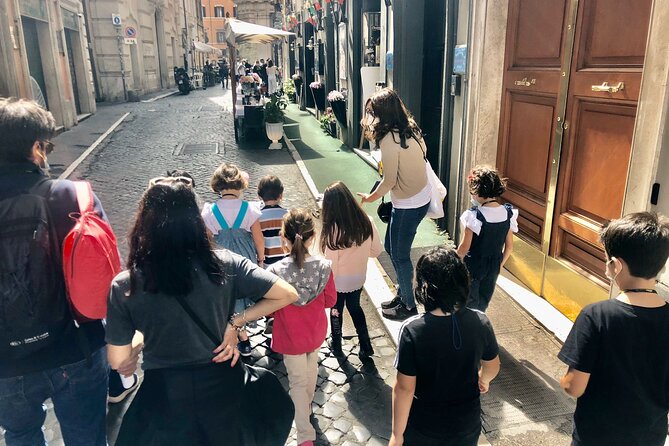
Rome can be a lot for children, even when adults are thrilled. A long day with constant walking, loud crowds, and complicated history usually ends with the same phrase: I’m bored. This tour’s big trick is making sightseeing feel like a scavenger hunt, with your guide turning landmarks into prompts for games, quizzes, and “find it” challenges.
I also like the practical design: the route covers famous stops quickly, instead of lingering until everyone gets tired. That matters in Rome, where crowds and heat can change fast. With a maximum group size of 12, the guide can keep the energy up and still manage the logistics of moving from square to square.
You can also read our reviews of more tours and experiences in Rome.


Where the Tour Starts, How It Moves, and Why Timing Matters
This experience starts at 10:00 am in Piazza di Trevi, at Piazza di Trevi 89, 00187 Roma RM. It ends at Piazza Navona (00186 Roma RM). The tour runs about 2 hours, which is long enough to feel like you did something meaningful, but short enough to stay realistic with kids.
Your day plan is supported by two simple factors:
- English-speaking guide delivery (it is listed as English).
- Near public transportation, so you can usually plug into the rest of your Rome itinerary without huge detours.
Also, the tour uses a mobile ticket, which is convenient once you are already walking in a dense historic area and do not want to hunt for paper.
Fontana di Trevi: Turning the First Photo Spot Into a Game
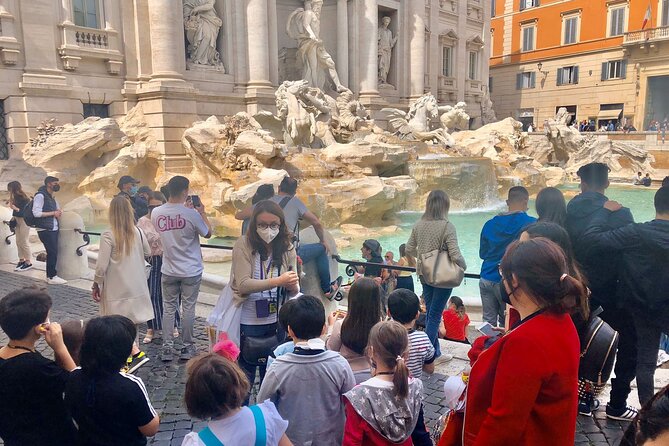
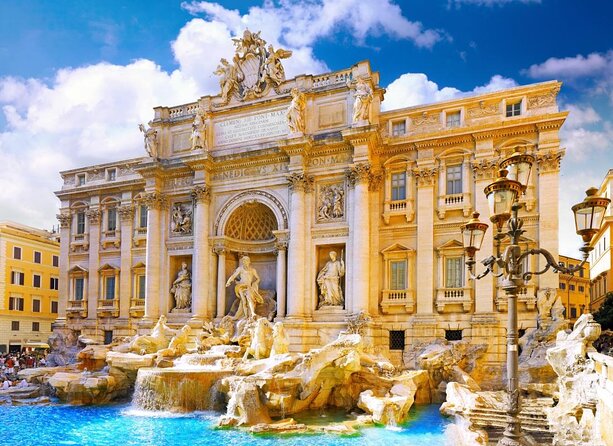
You start at Fontana di Trevi, and the tour focuses on the fountain’s secrets from the moment you meet. You get about 15 minutes here, with an admission ticket included for this stop.
In plain terms, Trevi is one of the hardest places in Rome to do “slow and thoughtful” sightseeing, because people are always gathering, taking photos, and creating bottlenecks around the fountain. The tour helps by giving you a reason to look closely right away. If your kids are restless, that early game-based attention can prevent the day from starting off on the wrong foot.
Practical tip: wear shoes you can move quickly in. You will be weaving through crowds while still trying to listen to the guide’s clues.
Galleria Alberto Sordi: A Surprisingly Fun Break at a Historic Mall
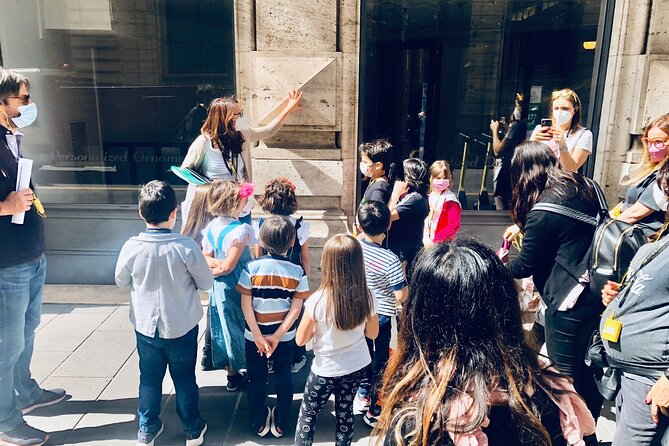
Next comes Galleria Alberto Sordi. You spend 10 minutes here, and there is an admission ticket included for this stop. This is an interesting choice because it gives you a change of scenery without fully stepping away from “Rome landmarks.”
What makes it valuable for families is the contrast. After Trevi’s outdoor crowds, this stop shifts the experience toward a more controlled, game-friendly rhythm. It is also the kind of place where kids can participate without feeling like they are missing the big sights, because the guide is still anchoring everything to stories and challenges.
Why this works: games are easier when everyone can see and hear what is happening. Indoor or semi-indoor spaces can reduce the chaos factor.
Column of Marcus Aurelius: Quiz Time With a Real Roman Monument
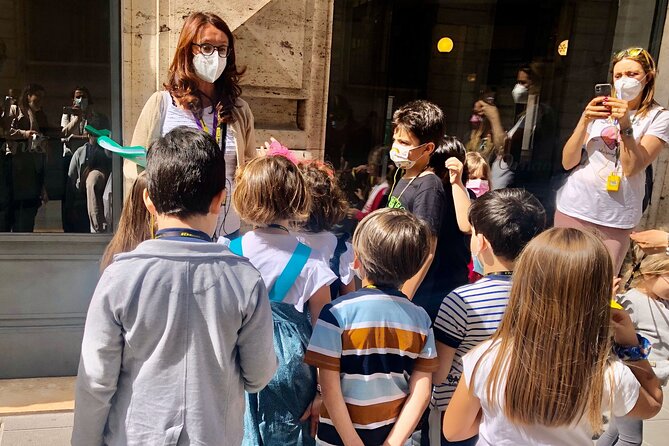
The tour continues to the Column of Marcus Aurelius, another 10-minute stop with an admission ticket included. Here the activity changes again: you solve a quiz connected to the column’s significance.
This stop is a good example of why a treasure hunt can beat a standard lecture. Instead of asking kids to memorize dates or reigns, the game nudges them to pay attention to what the guide points out. Short attention spans do not have to be a problem if the format keeps switching.
For adults: you still get a monument that is visually striking on its own. The quiz structure gives you a reason to look at details you might otherwise ignore.

Piazza di Pietra: Finding Roman Layers at Street Level
Then you move to Piazza di Pietra, again about 10 minutes, with an admission ticket included. This is where the tour leans into a clever idea: Rome is built over itself, and the “street level” can tell you a lot.
The guide’s game pushes you to hunt for the ancient Roman street level in the square. It is the kind of clue that turns a seemingly ordinary plaza moment into a mini discovery mission.
What you gain: this is one of those Rome lessons that stays with you. Once you start noticing how levels overlap across the city, you will recognize it elsewhere, even when you are not on a tour.
Watch for: uneven ground. You will likely be moving slightly as you search for the correct spot.
Pantheon With a Timed Ticket: The Best Big-Name Payoff
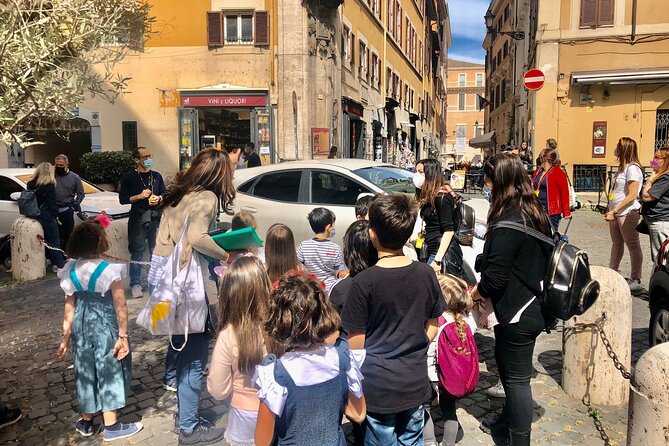
No family Rome route feels complete without the Pantheon, and this tour makes it a priority. You get about 15 minutes at the monument, and a Pantheon entrance ticket is included. The tour also highlights that the ticket is timed, which helps you bypass the long line.
This stop is often where kids either get wowed or wander off. The guided approach aims for a middle outcome: you stand outside, you take in the scale, and you use the site as part of the game, so everyone stays focused long enough for the experience to land.
Inside tip, for your expectations: Pantheon time here is not meant to replace a full, slow Pantheon visit. It is designed to help you connect the dots quickly, then move on. If you want a deeper look, you can always plan a second, unhurried visit later on your own.
Photo tip: plan for crowds at the entrance. Even with timed entry, you will be sharing space with other people who also know this is the must-see.
Sant’ Eustachio: The Listening Challenge in a Second Square
Next is Sant’ Eustachio, about 10 minutes, and the admission ticket is free for this stop. This is a classic Rome moment: another lovely square where the real action is the interaction.
The guide uses a listening game. You are told to listen well and then find the target they name. The wording is playful, and the point is to keep everyone engaged while still letting you experience a real neighborhood square.
Why it matters: by the time you reach this stop, the kids have already done several tasks. This round keeps them working, instead of giving them a chance to reset into boredom.
Practical note: be ready to look up. These games often point you toward details on buildings and within the square, not just what is directly in front of you.
Piazza Navona Finale: Treasure-Hunt Victory and a Built-In Ending
Your last stop is Piazza Navona for 10 minutes, with an admission ticket included. This is where the tour wraps with a last treasure hunt and team celebration, including a fun game and final prize for winners.
I like endings like this because they turn a potentially chaotic final area into a structured moment. Piazza Navona is lively, and it can pull your attention in ten directions at once. When the guide is running a final challenge, you are less likely to lose the plot.
Good for families: kids get closure. Adults get one more classic Rome view before the tour ends.
Price and Value: What You Pay for, and What You Get Back
The tour costs $105.22 per person for a route that runs about 2 hours. That might sound steep if you compare it to generic “walk and talk” tours. But value here comes from three concrete things:
- Timed Pantheon ticket included, which can save time at one of Rome’s most crowded entrances.
- Admission tickets included for multiple stops (as listed on the itinerary).
- A structured game format with prizes, which is not just entertainment. It is a pacing tool that helps a group see more, with fewer complaints.
Also consider the group size limit of 12 travelers. Smaller groups usually mean less time stuck waiting for people to catch up and fewer missed questions during game moments.
Snacks are not included, so if you are booking this with kids, plan a small snack either before you meet or afterward. Rome days move fast, and hunger can quietly steal the fun.
Who This Tour Suits Best (And Who Might Feel Rushed)
This is recommended for kids aged 6 and over, and most people can participate. Because the format is interactive and the pacing is tight, it is a particularly good fit for:
- Families with children who need active engagement to enjoy sightseeing
- Travelers who want a quick hit of major Rome sights without committing to a full-day tour
- First-timers who want an easy way to orient themselves across key areas
It may not be your best choice if:
- You want long museum-style reading and deeper monument exploration
- Your group includes very young kids who are not ready for sustained attention, even with games
- You prefer totally self-guided walking with no timed ticket structure
The Human Factor: Maria Claudia’s Guide Energy
One theme comes through clearly in the guide experience: Maria Claudia’s tours work well for both kids and adults. The combination that matters is not only history facts, but also the delivery that makes art and landmarks feel understandable.
When a guide can handle an excited group, keep kids engaged, and still share real context, the whole tour feels smoother. That is exactly the role this kind of family tour needs, because Rome can be overwhelming if everyone is competing for attention.
Should You Book This Rome Treasure Hunt?
If you are traveling with kids 6+ and want a smart way to see the big icons like Trevi, Pantheon, and Piazza Navona in a short window, I think this tour is an easy yes. The timed Pantheon entry is the main practical win, and the treasure-hunt structure is the main emotional win.
I’d book it if you like active sightseeing and you want less decision-making during the day. I would not book it if you want a slow, detailed, adults-only approach to monuments. This tour is built for movement, games, and an efficient Rome highlight route that leaves you with energy, not exhaustion.
FAQ
How long is the Games & Treasures Hunts Tour in Rome?
The tour lasts about 2 hours.
What time and where does the tour start?
The tour starts at 10:00 am at Piazza di Trevi, 89, 00187 Roma RM, Italy.
Is the tour offered in English?
Yes, the tour is offered in English.
What is included in the ticket price?
The experience includes the fun game and final prize for winners, plus the entrance ticket to the Pantheon.
Are snacks included?
No, snacks are not included.
What are the age recommendations?
This tour is recommended for kids aged 6 and over.
More Tours in Rome

More Tour Reviews in Rome
Not for you? Here's more nearby things to do in Rome we have reviewed










Tours, compared.
 ★ 4.3Vatican Museums & Sistine Chapel Tour with Optional BasilicaFrom $7967,413 reviews
 ★ 4.5Vatican Museums, Sistine Chapel & St Peter’s Basilica Guided TourFrom $2239,149 reviews
 ★ 4.8Colosseum, Palatine Hill and Roman Forum Guided TourFrom $5232,814 reviews
 ★ 4.7Guided Tour of Colosseum, Roman Forum & Palatine HillFrom $5527,897 reviews
 ★ 4.5Colosseum, Roman Forum and Palatine Hill Guided TourFrom $5923,903 reviews
 ★ 4.3Vatican Museums, Sistine Chapel & Basilica TourFrom $13013,872 reviews
 ★ 4.4Colosseum, Forum & Palatine Hill Tour & Optional ArenaFrom $5813,839 reviews
★ 4.7Vatican Museums, Sistine Chapel & Basilica TourFrom $7213,217 reviews
★ 4.4Colosseum, Forum & Palatine Hill Tour & Optional ArenaFrom $5813,839 reviews
★ 4.7Vatican Museums, Sistine Chapel & Basilica TourFrom $7213,217 reviews