
Reviewed · VATICAN TOURS
Tour Squares of Rome and Vatican
Rome’s squares are a shortcut through time. This tour strings together Imperial Rome highlights and the Vatican finish into one easy route. I like the way it keeps moving through eras, then lands you right where the atmosphere matters most, at St. Peter’s Square. I also like that it includes well-known major sights, like the Trevi area fountains, without turning the day into a museum marathon. One thing to keep in mind: there’s a real-world booking snag possibility, since at least one person ran into confusion about whether the paid ticket matched what was being offered.
You’ll start at a fountain that’s already famous for orientation, Fontana del Tritone, and you’ll end at St. Peter’s Square. Expect a group of up to 30, and the pace feels like quick stops plus walking, not long sit-down museum time. The tour uses a mobile ticket, which is handy, but it also means you should double-check what exactly is included in your specific booking.
Key points worth knowing before you go
- Pantheon entry built into a walk through central Rome
- A route of major fountains around Trevi and Piazza Navona
- Castel Sant’Angelo and nearby ruins as your bridge from Roman to papal Rome
- Sunday option includes the Angelus papal blessing timing
- Small-ish group size, max 30 people, for less chaos on narrow streets
- Mobile ticket delivery means you should be set on your phone before meeting
Rome and Vatican in one route, starting at Fontana del Tritone
This is a highlights walk that strings together Roman eras and then delivers you to Vatican Square. The big idea is simple: you do not just see monuments, you move through the city’s changing look, from the ancient imperial layer to the Renaissance-Baroque papal layer.
The day starts at Fontana del Tritone, Piazza Barberini. That matters because it gives you a strong mental anchor from the beginning. You are already in the “center of gravity” zone for walking, and from here you can connect streets and squares fast as you go. You finish at St. Peter’s Square in Vatican City, which is the right end point if you want your last photos to be massive, airy, and unforgettable.
The tour is priced at $17.44 per person, which is noticeably low for a Vatican-focused experience. That low price is not a promise of lots of long timed entries. What it does signal is that you’re paying for a guided route through outdoor highlights and major stops, not for a long, expensive, fully enclosed day.
You can also read our reviews of more tours and experiences in Rome.
Getting set up: mobile ticket, max 30, and the “short stops” rhythm
The tour comes with a mobile ticket. Bring your phone charged, and make sure you can show the ticket on-site without hunting for Wi-Fi. Confirmation is received at booking, so you should already have your info in hand.
Group size is max 30. In practice, that usually means you can still hear instructions and regroup without the whole day turning into a stampede. Still, Rome streets are narrow and busy. If you have to stop for photos or restroom breaks, build in a little patience and keep an eye on where the group is heading.
The duration is listed as 2 to 45 minutes, approximately. That number is a clue: the stops are likely shorter than a full guided museum visit. Think of it as a walk with guided moments at the best-known landmarks. If you prefer deep time in one place, you may want to pair this with a longer dedicated visit after, but as a “big sites in a smart order” day, this fits well.
Accessibility is described as Most travelers can participate, and service animals are allowed. If you have mobility needs, you’ll still be walking through uneven historic streets and curbs, so plan accordingly.
Centro Storico start: a quick orientation before the big names
The first stop is listed as Centro Storico, with an admission ticket free note. Even if you only spend a small amount of time here, that early segment helps you understand the route. Rome can feel like a maze if you show up without a plan. Starting with a guide-driven arc of landmarks reduces that stress.
This is also where you get the “eras” framing. The tour is explicitly built to move through different periods of Roman life, not just to recite dates. Once you hear what you’re looking at, the city starts behaving like a story instead of random pretty buildings.
If you’re a first-timer, I’d treat this as your confidence builder. If you’ve been to Rome before, this opening segment can still help because it sets up how the later fountains and Vatican stops connect visually and thematically.
Imperial Rome stops: Pantheon entry plus Castel Sant’Angelo and stadium ruins
The tour highlights Imperial Rome and focuses on monuments with real cultural weight for humanity. The star move is Pantheon entry. The Pantheon is one of those places where your brain immediately clicks into “wow.” A guided visit helps because you’re not left guessing what you’re seeing. Even if you’ve seen pictures before, you’ll understand the architecture better once someone frames it.
From there, the route includes the ruins of the Domitian Flavian Stadium and Castel Sant’Angelo. This part is useful because it’s your transition zone. You go from imperial grandeur to the way later Rome repurposed, reinterpreted, and built around earlier power.
The stadium ruins are not just “some rocks.” They represent scale and spectacle. Rome did public life at a huge level, and when you’re walking from an iconic interior like the Pantheon toward the river-adjacent vibe near Castel Sant’Angelo, you start feeling the geography of power.
Castel Sant’Angelo, meanwhile, works like a hinge. It visually bridges the ancient and papal eras. Even if you do not linger for a long interior visit, the sight of it helps you understand why Vatican-area Rome became so dominant. You’re not just sightseeing, you’re watching Rome’s power map evolve.
Renaissance and Baroque Rome: Michelangelo and Bernini vibes in the fountain zone
After the Imperial stops, the tour shifts into what it calls papal Golden Time and Renaissance-Baroque Rome. This is where you see works tied to major artists, including Michelangelo Buonarroti and Gian Lorenzo Bernini. The practical value of that is that it changes how you look at the details.
Instead of thinking, “Okay, more fountains,” you start looking for the style clues. Baroque Rome tends to look like movement, drama, and theatrical composition, even when it’s water splashing in a fixed spot. A guide helps you connect what you see with why it was designed that way.
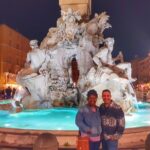
The route then moves through several fountain stops that are famous for slightly different reasons. You’ll see Trevi Fountain, described as the most famous fountain in the world. You’ll also see Fuente del Triton, the Fountain of the Four Rivers, the Fountain of Neptune, and a Moro fountain linked to Piazza Navona.
Here’s how these connect in a way that makes the walk feel logical. You are not just collecting famous names. You’re moving through a sequence of spaces that taught people how to experience art in public. The fountains are not quiet objects. They were designed as meeting points, photo magnets before anyone used the phrase, and visual anchors in plazas.
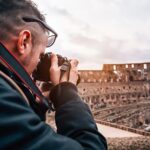
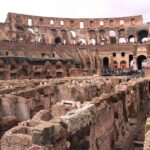
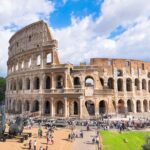



Trevi and the “family of fountains” around it
Trevi Fountain is the headline. It’s the one most people recognize instantly, even if they only know it from films and postcards. When you arrive with guidance, you learn what to notice besides the big central figures. You start catching the symbolism baked into the sculpted narrative, and you also learn how the fountain functions as a stop within the city’s pedestrian flow.
Piazza Navona and the nearby Moro Fountain
Piazza Navona has that open, lively feel. Adding the Moro fountain into the mix helps you see how one famous square is not just one attraction. It’s part of a cluster of artful street drama.
If you love architecture and public art, you’ll probably enjoy this section more than you expect, because the walk forces you to see how Rome “stages” beauty across different squares.
The Vatican finale: St. Peter’s Square, and the Sunday Angelus option
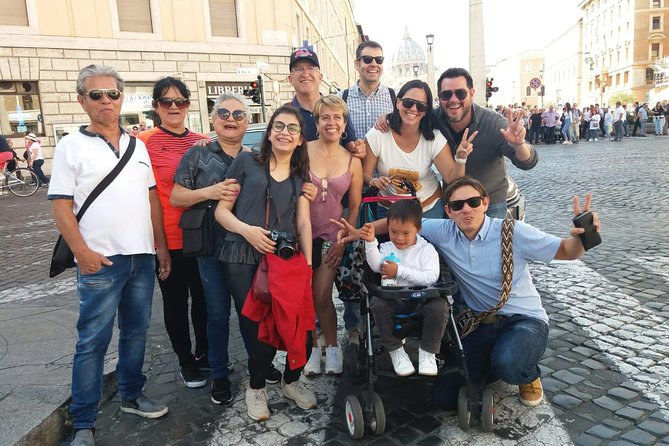
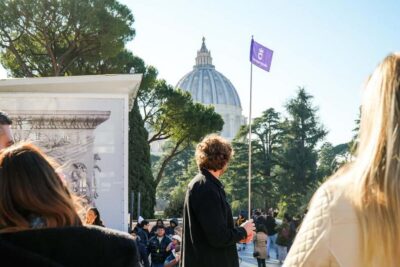
The last big stop is St. Peter’s Square. You’ll finish there, and that ending is a big part of why this tour works.
Why it matters: St. Peter’s Square changes your mood. You go from dense urban streets and fountain crowds to a wide ceremonial space. Even if you are not going into Vatican interiors during this specific tour segment, finishing at the square sets you up for whatever you want next, like an extended look around the basilica area.
On Sundays, the plan includes ending with the papal blessing in the Angelus. That’s a special-situation detail, and it’s worth planning around your day. If you want that Sunday element, show up ready to follow the group’s timing and instructions. With any big religious event, being punctual matters.
Price and value: why $17.44 is tempting, and what to double-check
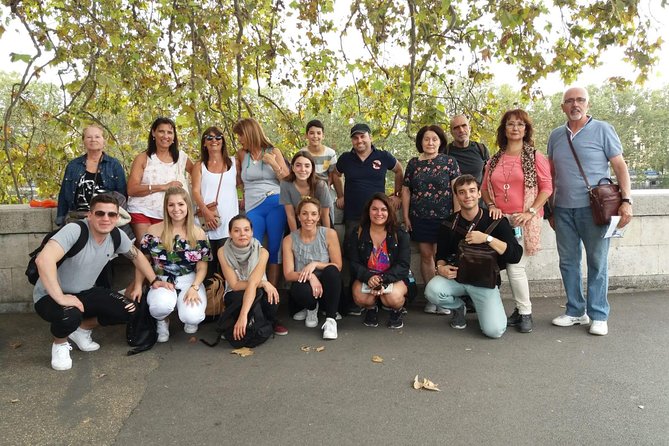
This tour lists a price of $17.44 per person. For central Rome plus a Vatican-area finish, that’s the kind of cost that pulls you in. The value comes from the route itself, the guided order, and the major-sight inclusion like Pantheon entry.
But here’s the caution I want you to take seriously. One booking experience described a mismatch between what someone paid for and what the guide said was effectively a free tour. The person’s guide could not resolve it on the spot. I can’t tell you what will happen on every booking, but I can tell you how to protect yourself: before meeting, re-check your ticket details, what it covers, and whether Pantheon entry and the listed inclusions apply to your specific booking.
Also keep your expectations aligned with the style of the tour. This is not priced like a premium private Vatican strategy. It’s priced like a smart public-group route. So you get guidance and key stops, not an all-access, all-day museum deep dive.
If you like a plan that gets you oriented and fed with big sights, you’ll likely feel like you got your money’s worth. If you want long, quiet, inside-the-walls time in each location, you may need extra add-ons.
Practical logistics that affect your day more than you think
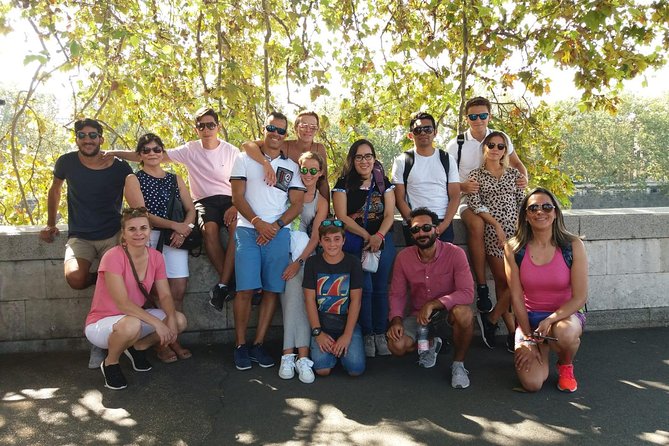
Meeting point is Fontana del Tritone, Piazza Barberini, 00187 Roma. Ending point is Saint Peter’s Square, Piazza San Pietro, 00120. It is a straight “start in central Rome, finish at the Vatican” journey, which is great because you do not have to think about transport to the next area.
Near public transportation is noted, and that’s helpful. Rome’s transit can drop you close to your start point, and it can also help you recover after the walking portion ends near the Vatican.
Average booking is listed as 53 days in advance. That suggests this route is popular enough that it’s not always a last-minute gamble. If your dates are fixed, book ahead so you do not end up hunting for a similar route at the last second.
Cancellation is flexible, with free cancellation up to 24 hours in advance for a full refund. That gives you breathing room if plans change. Just be sure to cancel on time using local time for the experience.
Who this fits best, and who should choose something else
This tour is a strong fit if you want:
- A guided walking route that hits major monuments and fountains without making you plan six separate stops
- A faster-paced “big names” overview that still includes serious sites like the Pantheon
- A Vatican ending that leaves you positioned for whatever you want next
It may not fit as well if you:
- Want extended time inside many buildings during the same day
- Need a quiet pace with lots of individual time to roam
Think of it like an effective sampler. It gives you the core tastes of Rome and Vatican Square. Then you decide what to slow down for.
Should you book Squares of Rome and Vatican?
If you like your Rome experiences structured, with major sights connected in a sensible order, I’d say yes. The price is low enough to make it an easy first or second-day option, and the end at St. Peter’s Square is a practical payoff.
The decision hinges on one thing: ticket clarity. Since there has been at least one real confusion case about whether the paid ticket matched what was offered, I recommend you confirm your inclusions before you go. Once that’s solid, this tour is a fun way to see Pantheon entry plus a concentrated sweep of the famous fountains, then wrap with the Vatican-area atmosphere, and on Sundays, the Angelus component if your dates line up.
FAQ
Where do I meet for the tour?
You start at Fontana del Tritone, P.za Barberini, 00187 Roma RM, Italy.
Where does the tour end?
The tour ends at Saint Peter’s Square, Piazza San Pietro, 00120.
How long is the tour?
The duration is listed as approximately 2 to 45 minutes.
What ticket type do I get?
The tour uses a mobile ticket, and confirmation is received at booking.
Is there a group size limit?
Yes. The tour has a maximum of 30 travelers.
Does the tour include anything special on Sundays?
On Sundays, it includes ending with the papal blessing in the Angelus.
More Tours in Rome
More Tour Reviews in Rome
Not for you? Here's more nearby things to do in Rome we have reviewed






Vatican Tours, compared.
 ★ 4.5Vatican: Museums & Sistine Chapel Entrance TicketFrom $38144,003 reviews
 ★ 4.3Vatican Museums & Sistine Chapel Tour with Optional BasilicaFrom $7967,413 reviews
 ★ 4.5Vatican Museums, Sistine Chapel & St Peter’s Basilica Guided TourFrom $2239,149 reviews
 ★ 4.3Vatican Museums, Sistine Chapel & Basilica TourFrom $13013,872 reviews
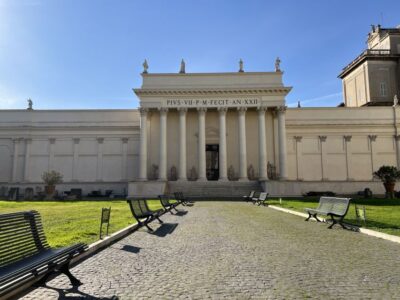 ★ 4.4Vatican Museums & Sistine Chapel Skip-the-Line Entry TicketFrom $4313,838 reviews
★ 4.7Vatican Museums, Sistine Chapel & Basilica TourFrom $7213,217 reviews
★ 4.4Vatican Museums & Sistine Chapel Skip-the-Line Entry TicketFrom $4313,838 reviews
★ 4.7Vatican Museums, Sistine Chapel & Basilica TourFrom $7213,217 reviews
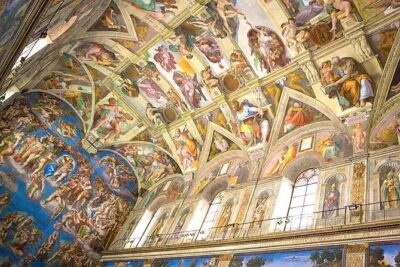 ★ 4.5Skip-the-Line Group Tour of the Vatican, Sistine Chapel & St. Peter’s BasilicaFrom $3012,779 reviews
Vatican Museums & Sistine Chapel Guided TourFrom $11812,117 reviews
★ 4.5Skip-the-Line Group Tour of the Vatican, Sistine Chapel & St. Peter’s BasilicaFrom $3012,779 reviews
Vatican Museums & Sistine Chapel Guided TourFrom $11812,117 reviews