
Reviewed · COLOSSEUM TOURS
Golf Cart Private & Customizable tour of Rome & Colosseum (3/5h)
Rome hits different from a golf cart. You get unobstructed views of the big sights without the gridlock. I like how this tour keeps things practical, with hotel pickup inside the Aurelian Walls and a pace you can adjust. One thing to plan for, though, is that most stops are quick and the Colosseum and Pantheon entrance tickets are not included.
This is built for people who want the highlights fast, but still want real context, not just photo stops. If weather turns or roads feel tight, you may ride differently than you expect, but the goal stays the same: see more Rome with less hassle. And yes, you’ll need to follow a basic dress code for worship sites.
Quick Hits Before You Go
- Private, custom route with no group mixing, so you can set your own rhythm
- Pickup and drop-off in central Rome (Aurelian Walls) plus Termini access
- Best photo and view angles thanks to the open-air golf cart style ride
- Tickets are mostly on you, but you’re told what to buy and when to plan for it
- Exterior-first touring at the Colosseum, with quick, high-impact stops across Rome
How a Private Golf Cart Reframes Rome
A day in Rome can feel like a long game of dodge-the-crowd. This kind of private golf cart tour flips the script. You’re not hiking between far-flung landmarks with heavy bags and sore legs. You’re rolling from sight to sight, stopping just long enough to orient yourself and snap good pictures.
The best part is that it’s truly private. Only your group rides, so you aren’t stuck behind strangers who move at a different speed. That matters on a route like this, where timing is everything. You also get an English speaking driver guide, which is handy for explaining what you’re actually looking at, not just naming it.
Two more small things add up. First, pickup and drop-off are designed for central locations inside the Aurelian Walls. That saves time and avoids the scramble of trying to meet a bus or find a specific curb. Second, you’re offered a customization option, so if you care more about one corner of Rome than another, you can steer the day.
One consideration: the experience is structured as a “see a lot” loop. Each stop is usually around 10 to 20 minutes, so it’s not a slow, sit-down kind of tour. If you want deep time inside one monument, you may feel a little rushed. If you want breadth plus context, it fits.
You can also read our reviews of more private tours in Rome

Pickup Inside the Aurelian Walls, Then Instant Convenience
Your day starts with round-trip transport from your hotel or Airbnb inside the Aurelian Walls, plus Termini train station pickup and drop off. That sounds basic, but it’s a big deal in Rome. The historic center is walkable, yes, but it’s also full of narrow streets, confusing turns, and sudden “why is this closed?” moments. Being collected and returned on your schedule keeps the day calm.
The tour also uses a mobile ticket. That typically means less paper fuss. You’ll still want to plan entrance fees separately, since not everything is included.
And because this is an area with lots of hills and cobblestones, think of the cart as a mobility and comfort helper. Most travelers can participate, but if walking is hard for you, the quick stops by car can make the city feel doable.
Practical tip: when you book, double-check that your lodging is truly within the Aurelian Walls. If you’re just outside that boundary, pickup may not line up with what you expected.
Colosseum First, With a Real Sense of Scale
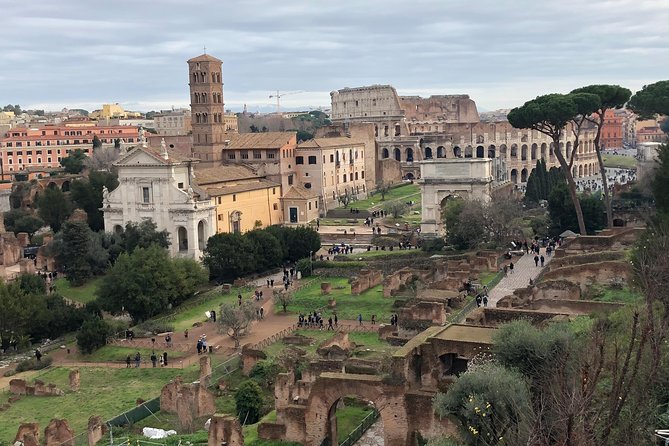
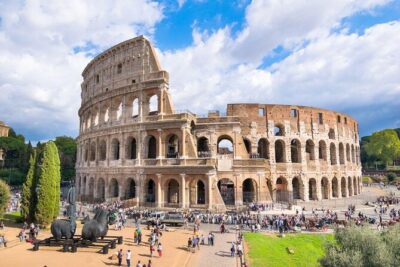
The itinerary begins at the Colosseum. You’ll get guidance from the outside, with a time slot of about 20 minutes. Tickets for entry are not included, so this is mainly for views and orientation, not an in-depth interior visit.
Still, starting here works. The Colosseum is the easiest landmark to “lock onto” quickly, even if you only see the exterior first. You get the monument in your mind early, then everything else you see later starts connecting to the same ancient world.
What I like about an outside-first approach is that you’re not staring at a ticket line while the rest of the day slips away. You can also decide if you want to come back later for a full interior experience.
Potential drawback: if you were hoping for a long Colosseum visit with a lot of time inside, this format may feel too short. The good news is that you can spend your effort and budget where it matters most to you.
Pantheon Stop: Best-Preserved, But Bring Ticket Timing
Next up is the Pantheon, one of the most preserved Roman buildings you’ll ever see. You get about 15 minutes here. Admission tickets are not included, and the info provided is that tickets cost EUR 7.00 per person cash.
A quick stop at the Pantheon can still be very satisfying. Why? Because it’s a place where even short time gives you a huge payoff. Once you step inside, the space feels complete, not like a ruin missing pieces. Even if you just focus on the dome, the oculus, and the way the light lands, you get something memorable quickly.
Drawback to plan for: since you’re not buying everything as part of the tour price, you need to be ready to handle the ticket either through official channels or the organizer’s help (if offered). Also, short duration means you’ll want to pick what you want to notice most.
Dress code matters here too. You’ll need shoulders and knees covered, and no shorts or sleeveless tops. Rome is strict about this in worship spaces, and the Pantheon is a church.
Trevi Fountain and Spanish Steps, Built for Photos
After the Pantheon, you shift into the Rome people actually plan around: Trevi Fountain and the Spanish Steps.
Trevi Fountain is the largest Baroque fountain in Rome and a worldwide icon. Your stop is about 15 minutes, and entry is free. This is the kind of scene where timing and angle make the difference. The key is to use your minutes well: pause for a look, then step back for photos without blocking others.
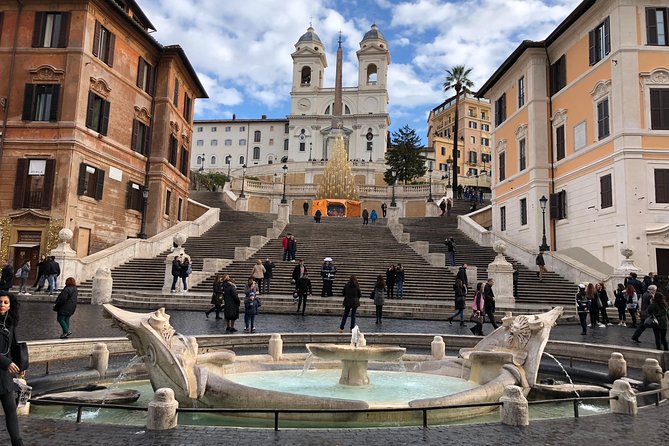
Spanish Steps is similar in feel, but different in texture. The monumental stairway connects the Spanish Embassy side to the Trinità dei Monti church side, and it’s tied to major European politics of the 1700s. You get about 15 minutes, also free to view.
The practical value of using a cart here is comfort. The stops are quick, but the walking from photo spot to photo spot adds up fast if you’re doing it all on foot. With the cart, you can reposition without turning your day into a shuffle.
Possible drawback: these are crowd magnets. Even with better logistics, you’ll likely feel busier near the fountains and steps than you will in quieter squares. If crowds would stress you out, you’ll want to be mentally ready for some human energy in the middle of the day.






St. Peter’s Square: Bernini’s Forecourt Feeling
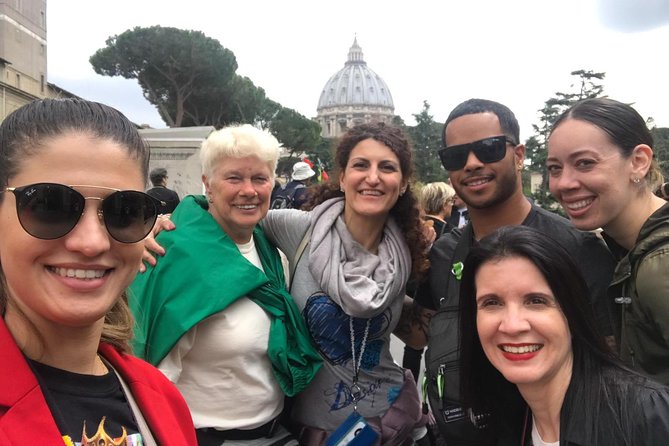
Your route then reaches St. Peter’s Square, with about 15 minutes. No admission fee is listed for this stop.
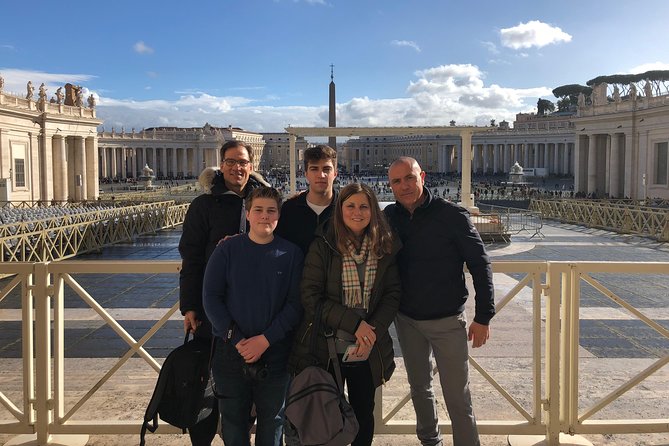
Here’s what makes this stop worth more than just “seeing the big church”: the square was redesigned by Gian Lorenzo Bernini in the 1600s to handle crowds and visibility. The colonnades were designed so people could see the Pope give his blessing from the façade area or from windows in the Vatican Palace. In other words, the space was made to work for mass gatherings.
When you’re there, slow your eyes down. Look at how the colonnades frame the center, and how the geometry makes you feel pulled inward. It’s not just a view. It’s crowd architecture.
Again, dress code is not optional here. Knees and shoulders covered. If your outfit breaks the rule, you could be refused entry.
Piazza Navona, Then Campidoglio for a Different Angle

Next is Piazza Navona, about 15 minutes and free. This square sits on the former Stadium of Domitian from the first century AD. Later, it became one of the city’s standout examples of Baroque design during the pontificate of Innocent X.
Navona can feel like theater. It’s lively, visually rich, and built to be watched. If you like architecture that looks like it’s been designed for drama, this stop works well in a short window.
Then you head to Piazza del Campidoglio. You get about 15 minutes, also free. This is one of the Seven Hills, and it comes with a view payoff. From the top, you can admire the square designed by Michelangelo for Pope Paul III, and you can also see the wider ancient Roman forum area below.
Even if you don’t go into ruins, this perspective helps. It turns Rome from a list of famous spots into a connected map of layers.
Piazza Venezia, Via del Corso, and the Rome Main Artery Feel
The tour includes Piazza Venezia as a central hub where major streets intersect. The name ties to Palazzo Venezia, built by a Venetian Cardinal, Pietro Barbo, who later became Pope Paul II. The Palazzo also served as the embassy of the Republic of Venice in Rome.
From there, you travel via Via del Corso, described as part of the “Trident” road complex. You get an easy visual sense of how the city routes its traffic and how Roman centers became modern main streets.
The value of including these stops is that they give your day a spine. You’re not only bouncing between set-piece monuments. You’re also seeing the Roman street system that still shapes how you move through town today.
Circus Maxentius and Piazza del Popolo, Closing With Big Rome Energy
You end with a mix of ancient and arrival-style atmosphere.
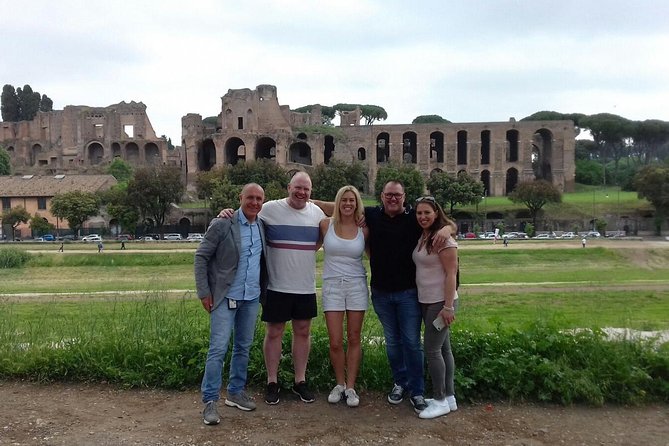
First is the Circus of Maxentius, with about 10 minutes. It’s the Circus Maximus style of ancient entertainment, a chariot-racing venue and a major mass gathering place in its time. Even with short time, this stop gives your “ancient Rome” theme a broader feel beyond the Colosseum.
Then comes Piazza del Popolo, about 10 minutes and free. This People’s Square sits inside the northern gate in the Aurelian Walls, historically called Porta Flaminia. It was a key starting point for the road north, and before railroads it was also one of the first views of Rome for travelers arriving.
That last part matters for your day. It’s a strong ending because you’re finishing on a square that connects arrivals, movement, and city identity.
Customizable Timing, and What the Private Guide Upgrade Changes
This tour is built to be customizable, which means you’re not stuck in a fixed script. In a perfect world, customization matters most when your group has different interests or different stamina. Someone might want more photos. Someone else might care more about architectural details.
There’s also an upgrade option to include a private guide who can hop off with you at stops. That can change the tone of the day. Instead of getting explanations mainly from the vehicle and outside viewing, you may get more time standing near key spots and asking questions in a more natural way.
From the names that show up with this operator, I’d pay attention to who’s scheduled. People have mentioned guides such as Nikola and Valentina, and drivers such as Andrea and Marco. When the guide knows where to stand for photos and how to explain what you’re seeing, the short stop times feel more worth it.
One more practical point: the tour includes an English speaking driver guide, but a licensed tour guide is on request. So if licensed guide interpretation inside sites matters to you, ask ahead. If not, you may still be happy with the on-the-go commentary you get from the driver guide.
Price and Value: What You Pay For in Rome
At $276.06 per person for a 3 to 5 hour private tour, this is not a budget play. But it is priced like a convenience and comfort service in a city that punishes wasted time.
Here’s what you’re really paying for:
- Private transport with pickup and drop-off, so you lose less time trying to get around
- A route that hits multiple top sights in one smooth loop
- Guidance in English, plus the ability to ask questions on the move
- Short stop pacing that helps you see the big landmarks without committing to hours at each one
Entrance fees are extra. That includes the Colosseum and the Pantheon, with the Pantheon listed at EUR 7.00 cash. Trevi and other major squares are free to view from the outside, and that helps keep your on-site spending under control.
If your priorities are flexibility, comfort, and maximizing first-time orientation, this price starts to make sense. If your goal is only to do a couple of monuments and go slowly, you might get better value by choosing fewer stops and paying for deeper entry tickets.
Who This Tour Is Best For
This works best for:
- First-time Rome visitors who want a smart highlights loop
- People who don’t want to negotiate crowds and bus schedules
- Anyone who prefers comfort and quick repositioning
- Groups who want customization instead of a fixed mass itinerary
It may be less ideal if:
- You want long interior visits at the Colosseum or Pantheon
- You prefer to linger for 45 to 90 minutes at each stop
- You’re allergic to crowd zones, since Trevi and Spanish Steps are popular
A Quick Heads-Up on Dress Code and Getting In
Rome’s dress rules are real, especially at places of worship. The guidance here is clear: no shorts or sleeveless tops. Knees and shoulders must be covered for worship sites and selected museums. If you forget this, you risk being turned away at the door, which would be a major waste of time.
Plan your outfit so you don’t have to rush into last-minute fixes.
Should You Book This Private Golf Cart Tour?
I’d book it if you want the fastest path to a Rome “greatest hits” feel, with comfort and private pacing. The format makes sense for a first visit, and the stop selection connects the ancient core with the city’s most famous squares.
I would think twice if you’re the type who wants to spend half a day inside one monument. This is more about getting your bearings and building context than doing marathon museum time.
If you do book it, go in with a simple game plan: decide in advance what you want most from Colosseum and the Pantheon, handle the entrance tickets, and use the cart to move calmly between photo moments.
FAQ
Is the Colosseum admission fee included?
No. The tour price does not include skip-the-line tickets for entry to the attractions visited. You will need to buy tickets separately.
Do I need to pay for tickets at the Pantheon?
Yes. The Pantheon admission is not included. The provided info lists the ticket price as EUR 7.00 per person cash.
Which stops are free to enter?
Trevi Fountain, Spanish Steps, St. Peter’s Square, Piazza Navona, Piazza del Campidoglio, Circus of Maxentius, and Piazza del Popolo are listed as admission ticket free.
Where does pickup happen?
Pickup and drop-off are offered for hotels and Airbnb stays inside the Aurelian Walls. Termini train station pickup and drop-off is also available.
Is this tour private?
Yes. It is a private tour/activity with no group combining, so only your group participates.
What dress code do I need to follow?
A dress code is required for places of worship and selected museums. No shorts or sleeveless tops are allowed. Knees and shoulders must be covered for both men and women.
More Private Tours in Rome
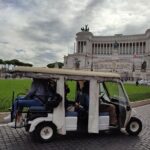
More Tours in Rome



More Tour Reviews in Rome
Not for you? Here's more nearby things to do in Rome we have reviewed












Colosseum Tours, compared.
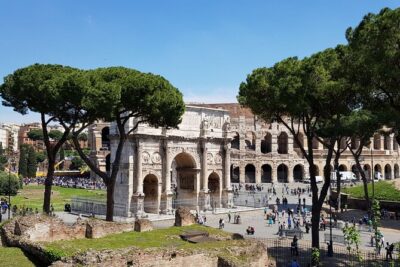 ★ 4.8Colosseum, Palatine Hill and Roman Forum Guided TourFrom $5232,814 reviews
 ★ 4.7Guided Tour of Colosseum, Roman Forum & Palatine HillFrom $5527,897 reviews
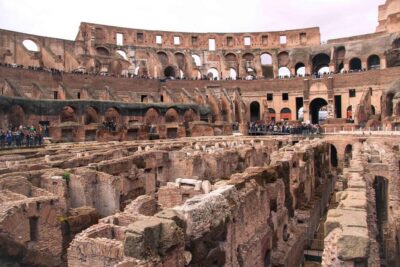 ★ 4.2Colosseum & Forum with Audio Guide App -Optional ArenaFrom $4124,770 reviews
 ★ 4.5Colosseum, Roman Forum and Palatine Hill Guided TourFrom $5923,903 reviews
 ★ 4.4Colosseum, Forum & Palatine Hill Tour & Optional ArenaFrom $5813,839 reviews
 ★ 4.6Colosseum, Palatine Hill & Roman Forum Guided TourFrom $5112,703 reviews
 ★ 4.7Colosseum: Underground and Ancient Rome TourFrom $16012,691 reviews
 ★ 4.6Colosseum Arena, Palatine Hill & Forum Guided TourFrom $7310,584 reviews
Browse the lists this tour appears in