
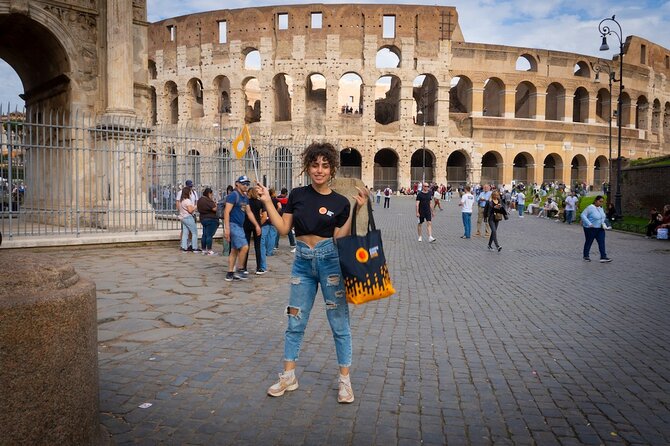
Reviewed · COLOSSEUM TOURS
Colosseum, Palatine Hill and Roman Forum Group Tour
Rome compresses 2,000 years of drama into one walk. This tour strings together the Colosseum, Palatine Hill, and the Roman Forum in a logical loop with a licensed guide telling you what you’re actually looking at. You also get built-in audio help with headphones, so you spend less time craning your neck and more time soaking it in.
I especially like how the plan balances set-piece sights with the “how Rome worked” parts, starting near the Arch of Constantine and ending in the Forum’s core spaces. I also like the option for a smaller group, which matters a lot at these sites where bigger tours can feel like a conveyor belt.
One thing to consider: this experience is still a lot of walking, plus there’s a specific note that arena access is not included and some ticket types may be external-only around the Colosseum. If you want a very low-key day or must minimize steps, it’s worth thinking carefully before you book.
Key Highlights to Watch For
- Headphones on hand so you can follow the guide without shouting over the crowd
- Small-group upgrade option for a more personal feel (and better questions)
- Arch of Constantine start gives context before you even reach the Colosseum
- Palatine Hill views across Circus Maximus and the Roman Forum
- Via Sacra walk along the Sacred Way route of triumphs and power
- Up to 24 travelers keeps the group manageable compared with mega tours
A 3-Hour Route That Actually Makes Sense
This tour is designed for first-time Rome visitors who want the big icons without spending half their day figuring out entry windows, meeting points, and what goes where. In about three hours, you’ll cover the sequence that helps it all click: imperial monuments at the Colosseum, then the older foundation story on Palatine Hill, and finally the daily-power center in the Roman Forum.
The time split also feels practical. The Colosseum gets the bulk of your attention, while the Forum and Palatine Hill give you enough time to see the major landmarks and understand what they meant.
Best of all, you’re not wandering alone. You’re moving as a group with access planned for the sites you care about most, which usually means fewer delays and less standing around.
You can also read our reviews of more tours and experiences in Rome.



Audio Help at the Colosseum: Headphones and Optional Radio
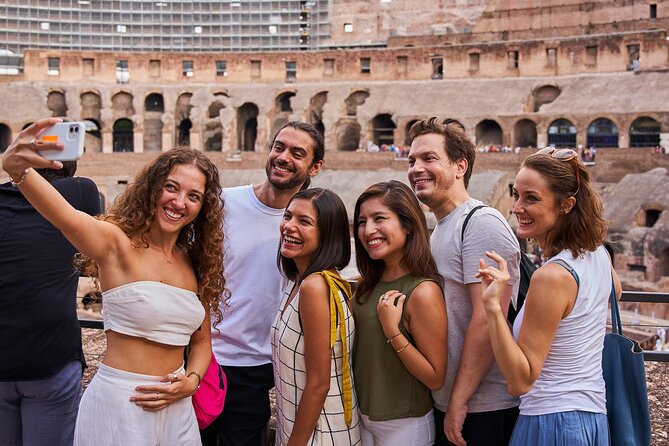
One of my favorite “small” features here is audio. You’ll have headphones included, which makes the commentary easier to catch while you’re walking between viewpoints and working around crowds.
Some versions also mention optional use of a radio, which is basically the same idea: clearer instructions and smoother storytelling. In a place where your attention keeps getting pulled to arches, floors, and photo angles, this kind of audio support can be the difference between a tour that feels informative and one that feels like background noise.
It’s also a comfort boost. If you’re traveling with kids, older relatives, or anyone who gets tired fast, being able to hear well without stretching your neck helps you keep moving at a calmer pace.
Stop 1: Arch of Constantine, an Imperial Warm-Up
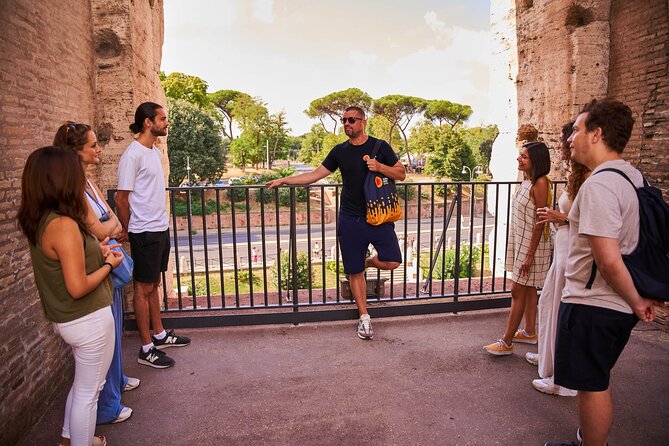
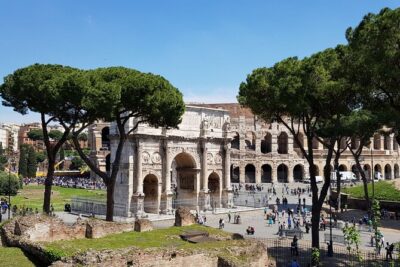
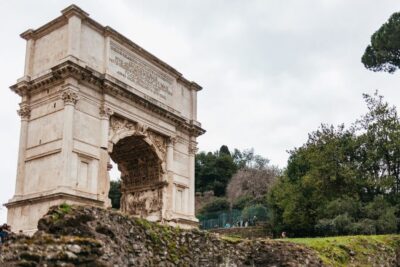
The tour begins at the foot of the Arch of Constantine, a 4th-century triumphal arch built to commemorate Constantine’s victory over Maxentius. It’s a smart start because it frames how Rome celebrated power: not just with battles, but with monuments that turned politics into stone.
You’ll get a quick orientation right where the Colosseum area comes into view. That matters, because once you’re inside the main spectacle, it’s easier to recognize why the Romans cared so much about emperors, victories, and public messaging.
Admission at this stop is listed as free, so you can focus on learning instead of worrying about an extra ticket.
Inside the Colosseum: Levels, Arena Imagination, and Big Engineering
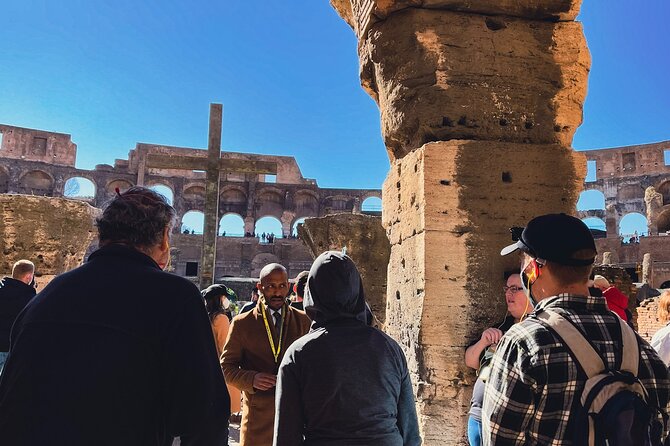
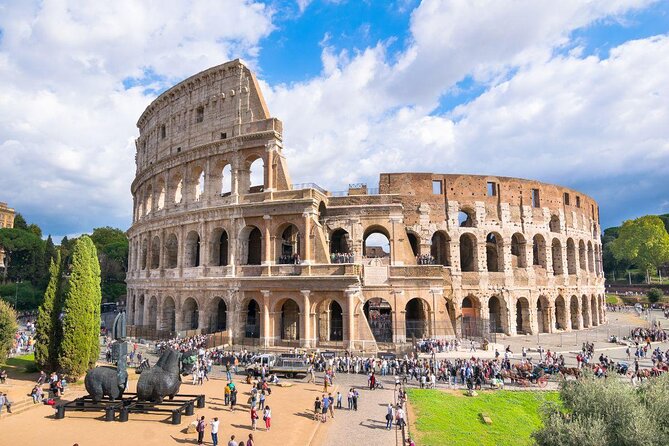
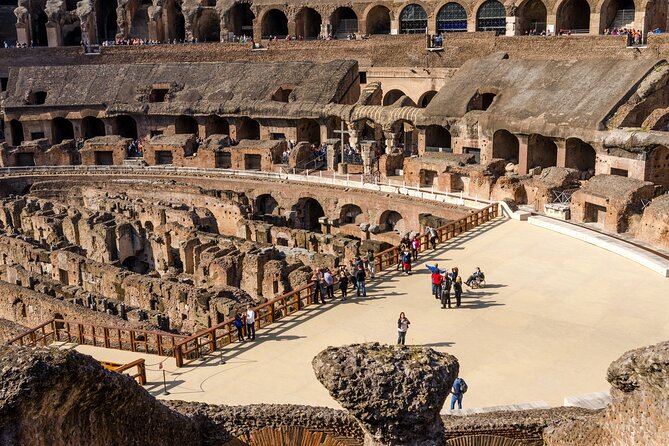
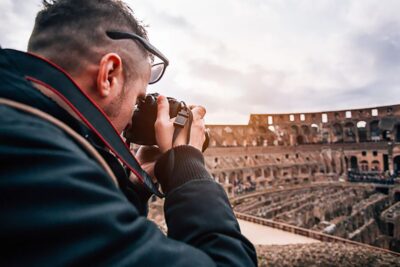
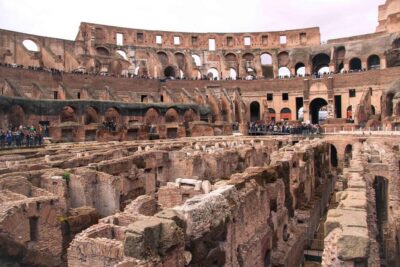
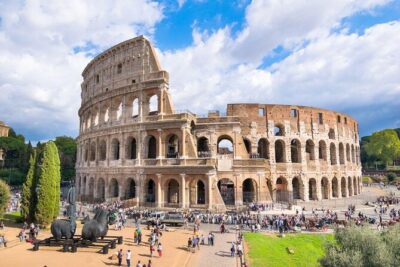
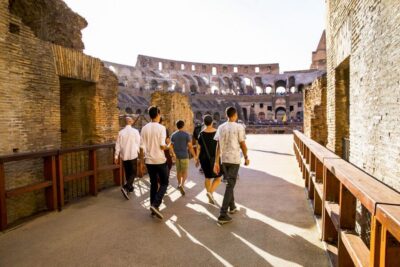
The Colosseum is where the tour earns its name. You’re guided through the first and second levels, with planned stops at photo spots so you can actually capture the shape of the place instead of only getting one shaky front shot.
You’ll hear the stories that make this site feel real: gladiator fights, beast hunts, and public punishments. But the tour also tries to answer the practical questions too, like how the arena experience was made possible by the Colosseum’s design and engineering.
Here’s a key consideration before you go in with big expectations: arena access is not included in any of the options. So while you can look down and picture how it worked, you should treat this as a “view and interpret” visit rather than a behind-the-scenes walk onto the performance floor.
Also watch for ticket-type details. The notes include an External Visit option where Colosseum entry may not be included. Your booking should spell out what you’re getting, so check that language before you show up.
Practical tip: bring water and pace yourself. Even with guided timing, the Colosseum is a physical experience, and you’ll feel it in your legs if you’re not used to Roman stone steps and uneven surfaces.
Via Sacra on Foot: The Sacred Way Meets Real Politics
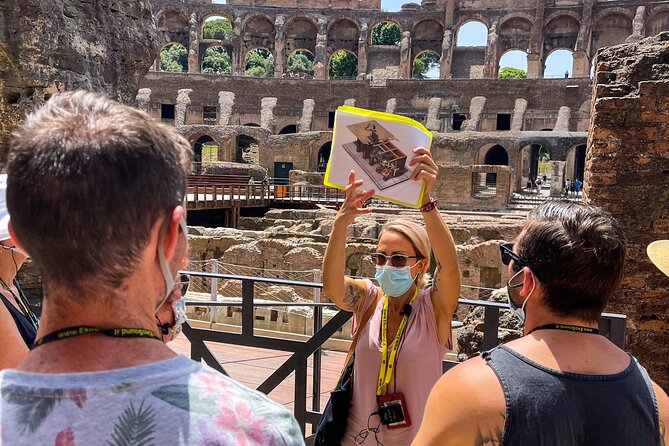
After the Colosseum, the tour shifts from spectacle to the process behind it. You’ll walk along the Via Sacra, the Sacred Way route that triumphal generals and legionaries once took through the Roman Forum to celebrate victories.
This is the part I like most for making Rome feel less like a theme park and more like a system. When you walk the route of triumphs, you start to see the relationship between politics, religion, and public theater. Rome didn’t just fight wars, it staged the results so the city could absorb the message.
Expect ancient cobbled stones underfoot. They’re historic, but they’re also slippery when you’re rushing for a photo. Take it slow, especially if you’re wearing sandals or shoes with worn tread.
Even if the names mean nothing to you right now, your guide should connect the dots, so by the time you reach the Forum core you’ll recognize where you are and why it mattered.






Palatine Hill: Rome’s Origin Story Plus Views That Land
Next comes Palatine Hill, presented as the spot where Rome was founded in legend, with Romulus and Remus tied to the hill’s story. That myth angle is more than trivia. It gives you a way to understand why Palatine Hill wasn’t just pretty scenery, it was identity.
On the ground, you’ll see the remains of imperial palaces, the kind of lavish power base that earned Palatine Hill the reputation of being the ancient world’s “palace” district. In other words, this is where you can feel the contrast between public Rome (Forum) and private Rome (imperial residences).
And you get what people remember most: the views. From Palatine Hill you can look out toward Circus Maximus and the Roman Forum, and suddenly the city layout stops being abstract. You start understanding why these spots were chosen and how movement through the city would have worked.
One more real-world note: Palatine Hill involves walking over uneven ruins and shifting ground. If you’re prone to knee pain or hate stairs, pack for it mentally, even if the pacing stays reasonable.
Roman Forum: Temples, Arches, Basilicas, and Everyday Power
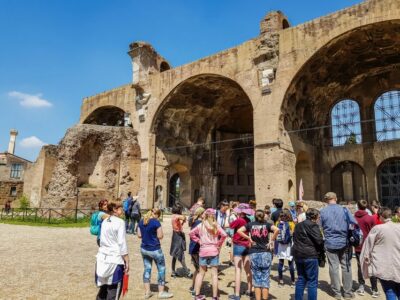
The tour finishes in the Roman Forum, described as the heart of the Ancient City, where social, religious, and political life all intersected. This is the place to connect what you saw at the Colosseum to how Rome actually ran.
You’ll move through areas tied to what everyday Romans experienced, not just emperors and armies. Expect to see the remains of 2,000-year-old temples, triumphal arches, and sprawling basilicas.
The fun part is how the guide frames the people you hear in Roman history class. You’ll walk where figures like Julius Caesar, Cicero, and Augustus once moved through the city. Even if you can’t picture the exact scene, you can feel the scale of the public spaces and the way Rome gathered people to talk, worship, judge, and celebrate.
Time here is about 50 minutes, which is enough to hit the key landmarks without dragging you through every corner of the Forum maze. If you’re the type who wants to return later for a longer self-guided wander, you’ll be able to do that after this tour gives you the starter map.
How Much Physical Effort Should You Expect?
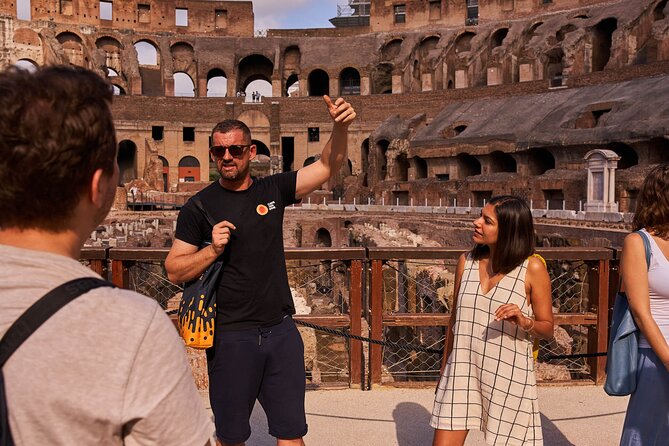
This is a walking tour, and that’s not a vague warning. The tour involves multiple big sites in a short window, and notes about heat and lots of steps come up often.
So plan like this is a half-day hike in historical shoes:
- Wear comfortable shoes with real grip.
- Bring water, especially in warm months.
- Be ready for steps at the Colosseum and uneven surfaces at Palatine Hill.
On the positive side, guides on this route are described as being considerate about breaks. People mention restroom stops, water moments, and flexibility for those who need it, including guidance on where to rest or how to avoid rougher lines when possible.
If your party includes someone pregnant, traveling with kids, or an older adult, the group size cap and the option for smaller groups can make a big difference in how manageable the pace feels.
Small-Group Upgrade: Why It Can Change the Whole Day
The tour mentions an upgrade to a small-group format for a more intimate experience. That’s not just a marketing perk. At the Colosseum and Forum, your enjoyment depends on whether you can actually hear the guide, ask questions, and move with less crowd pressure.
With fewer people, you usually spend less time stopped because the entire group can’t see the same viewpoint at once. You also get a better shot at photo moments because you’re not constantly re-crossing other tour groups’ paths.
The tour also caps at 24 travelers maximum, which already helps. But if you know you don’t love big groups, pay attention to that upgrade option and choose it.
Price and Value: Why $24.06 Can Be a Good Deal
At $24.06 per person, the value is tied to three things: expert guidance, organized access, and time efficiency.
Let’s be practical. If you try to piece this together on your own, you’ll burn time on navigation, ticket questions, and figuring out the story thread that connects the Colosseum to Palatine Hill to the Forum. This tour gives you a set route and a guide to do the “what you’re seeing and why it matters” part.
You also get headphones (and sometimes a radio setup), which is a real quality-of-life feature at busy sites. And the itinerary includes multiple major landmarks in one go, which is often cheaper than booking separate tours for each place.
So the value check is simple:
- If you want the highlights and explanations in one efficient morning or afternoon window, the price looks strong.
- If you already know Roman history well and hate crowds, you might prefer a self-guided day to control the pace. But for most first-timers, this tour is an efficient shortcut to understanding.
Tips for Entry and a Smooth Day
Before you go, double-check your documents. You must provide the full names of all travelers when booking, and the passport or ID must match those names exactly. The notes warn that mismatches can lead to denied entry at the ticket office.
Also, this tour uses a mobile ticket, so keep your voucher handy on your phone. And because the tour ends at the Roman Forum, plan to have your post-tour walking shoes ready for the extra roaming you’ll likely want to do.
One last practical point: arrive on time. Even when the tour is well organized, late arrivals can cause your group to wait, and waiting is the enemy of a good Colosseum day.
Should You Book This Colosseum, Palatine Hill and Roman Forum Tour?
If you want an organized, story-driven route through Rome’s most famous ruins, I think this is a smart pick. The combination of headphones, a guided flow from the Arch of Constantine into the Colosseum, then out to Palatine Hill and the Roman Forum, is exactly what helps first-time visitors make sense of the city.
Book it especially if:
- You prefer not to plan everything yourself.
- You want a more manageable group size (and you’re considering the small-group upgrade).
- You’d like historical context delivered with humor and clear, engaging pacing.
Skip or rethink it if:
- You specifically want arena access, because it’s not included.
- You have trouble with long walks and steps, since the sites are physically demanding.
- You might accidentally book an External Visit version if entry details matter to you, so confirm what your ticket includes.
If you choose it with clear expectations, this tour is a fast way to turn scattered ruins into one connected Rome story.
More Tours in Rome
More Tour Reviews in Rome
Not for you? Here's more nearby things to do in Rome we have reviewed












Colosseum Tours, compared.
 ★ 4.8Colosseum, Palatine Hill and Roman Forum Guided TourFrom $5232,814 reviews
 ★ 4.7Guided Tour of Colosseum, Roman Forum & Palatine HillFrom $5527,897 reviews
 ★ 4.2Colosseum & Forum with Audio Guide App -Optional ArenaFrom $4124,770 reviews
 ★ 4.5Colosseum, Roman Forum and Palatine Hill Guided TourFrom $5923,903 reviews
 ★ 4.4Colosseum, Forum & Palatine Hill Tour & Optional ArenaFrom $5813,839 reviews
 ★ 4.6Colosseum, Palatine Hill & Roman Forum Guided TourFrom $5112,703 reviews
 ★ 4.7Colosseum: Underground and Ancient Rome TourFrom $16012,691 reviews
 ★ 4.6Colosseum Arena, Palatine Hill & Forum Guided TourFrom $7310,584 reviews
Browse the lists this tour appears in