
Reviewed · ANCIENT ROME TOURS
Ancient Rome at Twilight Walking Tour
Nightfall changes Rome fast, and for the better. This twilight walking tour threads through the ancient center with cooler evenings and photo stops built around the Colosseum after dark, so you get the drama without the midday crush. One thing to watch: the start area around Piazza Venezia can feel tricky to find if there is construction and your map app does not match the ground reality.
The best part is the guide experience. I like how the group stays small (up to 15), so you can keep up, get answers, and ask your own questions as you move from hilltop views to alleyway tales. A quick mention of guide names you may hear during this walk, Mario, Jason, Ali, and Lara, all show up with the same theme: stories delivered clearly and at a pace that does not feel like you are being herded.
Key things to look forward to
- A small-group walk (max 15): easier pace, easier questions, less stress.
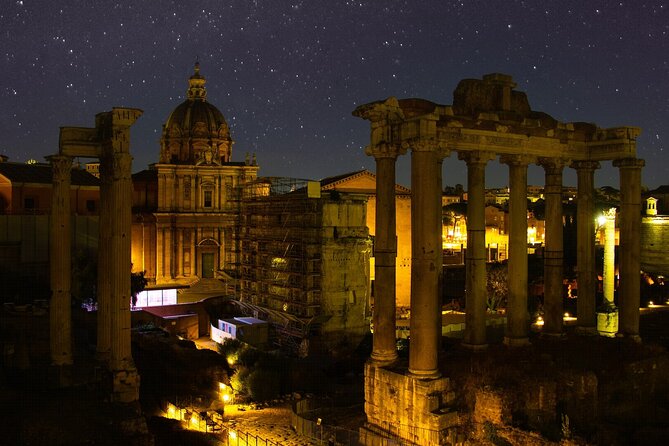
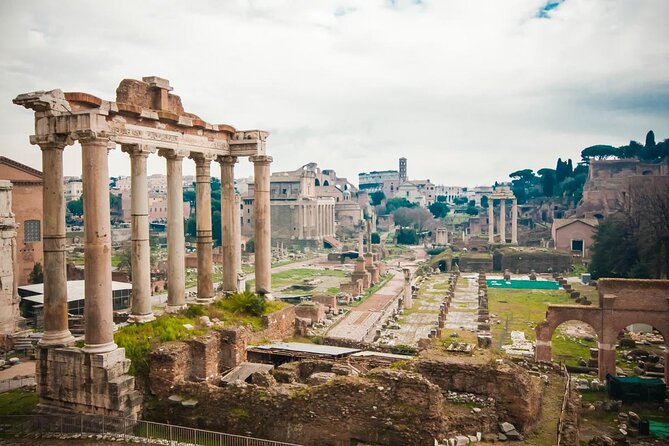
- Capitoline Hill night views: Roman Forum scenery with the lights turned on.
- Monti at night: wander the neighborhood tied to Julius Caesar, with context from your guide.
- Borgia-themed stops: spooky stairs and courtyard stories that lean into the dark legends.
- A secret-style Colosseum photo spot: a local hangout angle you likely will not stumble onto alone.
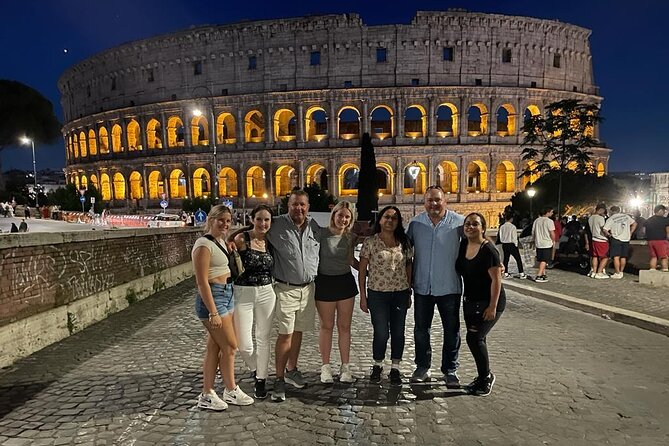
- Finish at Piazza del Colosseo: the Colosseum in full night mode, right where you want it.
Twilight makes the ancient monuments easier to love
Rome at noon can feel like a sprint. At twilight, the streets slow down, the light turns warm, and the walking feels more human. This tour is built for that moment, with a route that moves you from high viewpoints down toward the Colosseum, so you keep getting fresh angles instead of repeating the same view.
You are also paying for something practical, not just scenery. For $37.49, you get a planned route, a guide who tells the story as you go, and multiple chances to stop for photos. That combination matters when you want to see a lot of Rome without wasting your evening in the wrong block.
You can also read our reviews of more walking tours in Rome

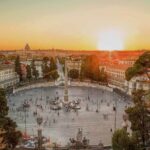
Start at Piazza Venezia and orient fast
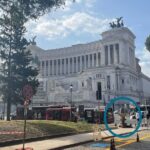
You begin in the Piazza Venezia area at the Monument to Victor Emmanuel II. The tour starts in front of the Altare della Patria, a huge marble monument that dominates the square and acts as a strong visual anchor for the whole walk.
Why this start helps you: you immediately get a sense of where the ancient city sits relative to modern Rome. Even if you have seen photos of the landmarks, standing in the right spot makes everything click. You also have a short first segment (about 10 minutes) that keeps the tour from feeling like a long setup before you hit the main sights.
If you are arriving late, do yourself a favor and give a little extra time. One participant noted that construction around the area made the meeting point harder to locate than expected. So arrive a few minutes early, take a screenshot of the meeting map, and double-check with your guide contact if you have doubts.
Capitoline Hill night views from Piazza del Campidoglio
Next comes Piazza del Campidoglio and a climb up to the Capitoline hill viewpoint. From here, you look toward the Roman Forum at night, when the stone surfaces look darker and the shadows make the ruins feel more three-dimensional.
This stop is short (around 10 minutes), but it is timed well. You are coming in after the opening orientation, so you can actually process what you are seeing. If you like structure, this is the moment where your brain starts building a map: hilltop vantage point, forum valley, and the line of monuments stretching toward the Colosseum.
Photo tip: bring your patience for night lighting. The Colosseum is the star later, but this early view teaches your camera how the light behaves after dark. If you take a couple test shots here, you will be happier at the final stop.
The Forum corridor via Via dei Fori Imperiali
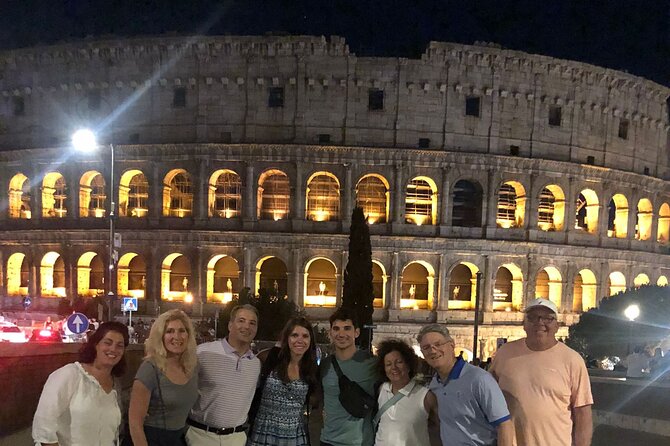
Now you walk along Via dei Fori Imperiali, a boulevard built under Mussolini. Crossing it feels a little like going from one Rome to another, with the wide street suddenly making the ancient remains feel even more “framed” by the modern city.
The tour then shifts you toward Monti, one of Rome’s most atmospheric neighborhoods. This is where you start moving from postcard views into street-level Rome, and your guide’s storytelling helps you feel grounded instead of just passing through.
Timing here is around 20 minutes. That is enough time to connect the big ideas, like imperial planning and the sense of power behind the spaces, without turning it into a lecture marathon.
Monti streets at night, with context for what you are seeing
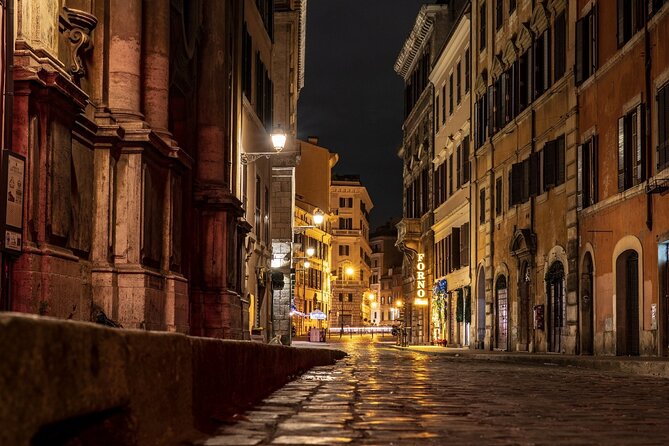
In Monti, you walk through Rione Monti with your guide, into the older fabric of the city. The route passes through streets linked to the birthplace of Julius Caesar, so your guide can tie the geography to the people and events connected to the area.
Monti at night can feel edgy, and the tour description even calls it out as famously dangerous in old reputations. In real terms, what you should expect is that the streets can look darker and quieter than the center you might have been seeing earlier in the day. The value of a guided route here is that you do not just wander, you learn how this neighborhood fits into the larger ancient story.
This segment lasts about 20 minutes, and that matters. If you rush, Rome’s corners and patterns blur together. In a controlled group pace, you get the chance to notice how streets bend, how small plazas appear, and how the night changes the mood of the masonry.


Scalinata dei Borgia: spooky stairs and legend talk
One of the most memorable stops is the Scalinata dei Borgia, a dark staircase leading up to the courtyard of the former residence of Pope Borgia and his mistress. The tour leans into the darker legends, including stories of murders tied to that location.
Is it horror movie stuff? Not really. It is more like a history-flavored campfire tale, delivered while you stand in the space where those stories became part of local folklore. This stop is about 15 minutes, and it works well as a change of pace, from open views and wide streets to a tighter, more atmospheric corner of Rome.
Practical note: stairs at night are easier when you slow down. Keep your footing, and let the group movement feel natural rather than racing to “get the photos.” The photos will still happen.
Torre dei Borgia and the Colosseum photo moment
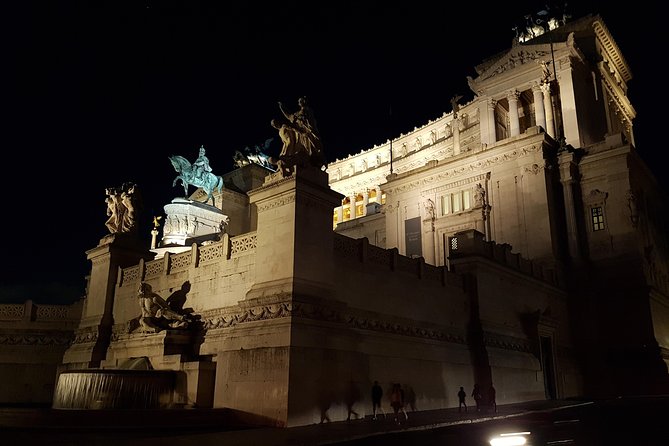
After the Borgia-themed courtyard, you move to the Torre dei Borgia. This stop is built around a special vibe: a place where locals gather to admire the Colosseum by night, and a chance for your guide to bring you to a better angle than you would likely find alone.
It lasts about 15 minutes. That is a sweet spot for night photography because you get time to wait for the best light on the stone and adjust settings without the feeling that you are holding up the group.
This is also where the small-group size pays off again. With fewer people, your guide can steer you toward the best viewpoint for your group rather than just pointing and moving on.
If you want your photos to look sharp, give yourself a minute to stabilize your phone or camera on a nearby flat surface or rail if one is available. Night shots often fail from tiny hand movement, not from lack of effort.
Piazza del Colosseo, final view of the Colosseum lit up
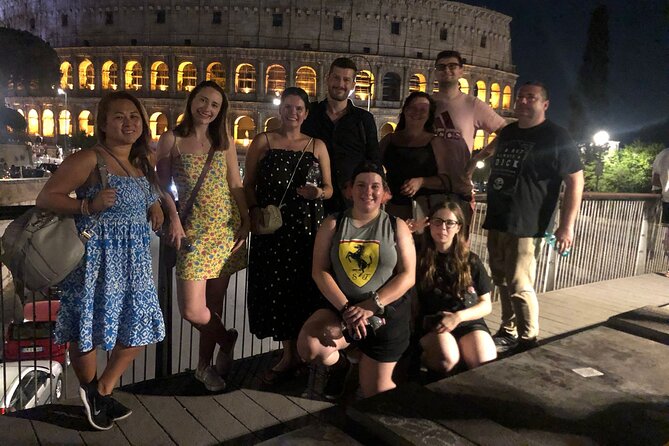
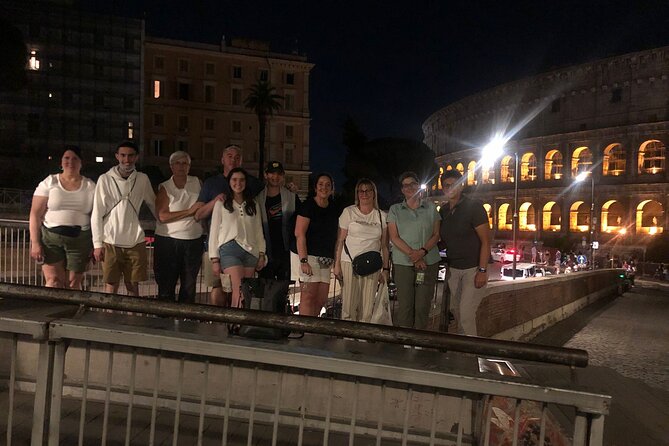
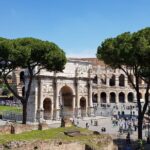
The tour ends at Piazza del Colosseo, finishing in front of the Colosseum. This final stretch is about 20 minutes, which gives you time to soak it in and take photos without the “stand and sprint” feeling.
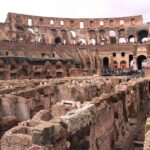
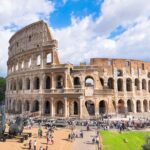
Seeing the Colosseum after dark is a different experience than daytime. The lights make the arches look deeper, and the shadows make the structure read more clearly. If you are picturing a huge, glowing backdrop for your Rome evening photos, this is the moment that delivers.
It is also a smart finish. The route is designed so you end at a landmark that is easy to navigate from afterward. You are not left in a maze of back streets with no easy next move.
Guides, group size, and why pace feels right
A walking tour lives or dies on pace and explanation. Here, the group cap is 15, and that is a big deal. With a smaller crowd, the guide can keep everyone together without rushing, and you can hear what matters instead of straining to catch every sentence.
Across the guide styles you might experience, there is a consistent emphasis on clarity and Q and A. People have praised guides like Mario, Ali, Jason, and Lara for answering questions, staying patient, and keeping the story moving at a tempo that feels relaxed.
One more thing I appreciate: the guides often sound like real storytellers, not just reciters. Humor shows up in some guide delivery styles, and that helps when you are standing around taking in a view that otherwise might feel like pure sightseeing.
Value for money, and what $37.49 actually buys
At $37.49 per person, this tour is priced like a short guided experience, not a full-day excursion. The value is in the setup: you get a guided route across several major zones of ancient central Rome, with multiple timed stops and photo breaks designed for nighttime viewing.
You also get a lot of “mental returns.” Instead of walking past buildings and guessing what you are looking at, your guide connects places like Capitoline hill, the Roman Forum corridor, Monti, and Borgia-linked areas into one night story that you can keep thinking about after you leave.
And because it is only 1 hour 30 minutes to 2 hours, it slots into your schedule easily. That is useful on a first trip, when you still need energy for dinner and a second walk later.
If you are trying to decide between doing the monuments alone or getting a guide for an evening, this tour leans toward the guide side. You pay a modest amount and save time figuring out what matters.
Weather, Jubilee restoration, and how to stay flexible
The tour requires good weather. If the skies do not cooperate, you should expect either a date change or a full refund, depending on how the operator handles it.
There is also a Jubilee-related heads-up: some monuments may be under restoration, and you should pay attention to messages before you go. That does not mean the tour is ruined. In practice, it can mean the route shifts slightly or certain viewpoints become harder to access.
My advice is simple: check your email and messages the day before. Also plan to wear grippy shoes. Twilight streets can be uneven, and you want your feet to feel confident.
Who this twilight walk suits best
This tour is a strong fit if you want an easy evening plan that feels special, not just “see the sights.” You will likely enjoy it if you:
- want big Rome highlights in a short time window
- prefer night walking to avoid midday heat and crowds
- like stories that explain what you are looking at, not just dates
- want a small-group experience where questions feel welcome
It is also a good choice for your first evening in Rome. The route gives you a sense of how the ancient city is laid out, which makes your next day of exploring smoother.
Should you book this Ancient Rome at Twilight walking tour?
I think you should book it if you want the Colosseum lit up, plus a guided night route that turns “ruins” into a connected story. The small-group cap, the focused 1 hour 30 minutes to 2 hours pace, and the repeated photo-ready moments make this a practical win for the time you spend.
Skip it only if you are the type who hates walking at night, or if you are very sensitive to uneven streets and stairways. Otherwise, this is one of the more efficient ways to experience central Rome after dark without feeling lost.
FAQ
How long is the tour?
The tour runs about 1 hour 30 minutes to 2 hours.
Where does the tour start and end?
It starts at the Monument to Victor Emmanuel II in Piazza Venezia and ends in front of the Colosseum at Piazza del Colosseo.
What language is the tour offered in?
The tour is offered in English.
How big is the group?
The tour has a maximum of 15 travelers.
Do I need to pay for admission at the stops?
Admission is listed as free for the stops included on the route.
Is a mobile ticket provided?
Yes, you receive a mobile ticket.
What happens if monuments are under restoration during Jubilee?
Some monuments may be under restoration, so you should pay attention to messages about possible changes.
What if the weather is poor?
The experience requires good weather. If it is canceled due to poor weather, you will be offered a different date or a full refund.
More Walking Tours in Rome

More Tours in Rome
More Tour Reviews in Rome
Not for you? Here's more nearby things to do in Rome we have reviewed





Ancient Rome Tours, compared.
 ★ 4.7Colosseum: Underground and Ancient Rome TourFrom $16012,691 reviews
 ★ 4.4Colosseum, Ancient Rome Tour or Self AudioGuided TourFrom $392,866 reviews
 ★ 4.9Appian Way, Catacombs, & Roman Aqueducts E-bike TourFrom $851,421 reviews
 ★ 4.9Appian Way E-bike Tour with Catacombs, Aqueducts & FoodFrom $961,210 reviews
 ★ 5.0Appian Way Aqueducts Bike Tour (Catacombs & Lunch Option)From $78975 reviews
 ★ 4.7Appian Way, Aqueducts, and Catacombs TourFrom $64942 reviews
 ★ 4.7Caracalla Baths & Circus Maximus — Private or SharedFrom $77835 reviews
 ★ 4.7Colosseum Arena Access and Ancient Rome Guided TourFrom $94774 reviews
Browse the lists this tour appears in