
Reviewed · COLOSSEUM TOURS
Entrance Tickets Colosseum, Roman Forum, Palatine with Audioguide
Roman ruins can feel random, until they click. This ticket bundle strings three sites together with an English audio guide and on-site access so you can make sense of what you see. I especially like the freedom to move at your speed, and I also like the photo-worthy viewpoints from Palatine Hill. One thing to watch, though: a few people reported ticket redemption problems, so you’ll want to confirm you have the real entry tickets before you head out.
You’re looking at about 3 hours total with roughly an hour at each stop, and the group size is capped at 8. That smaller setup tends to help you avoid the big, slow shuffle that eats up your time at these places. The possible drawback is simple, each segment is time-boxed, so if you love lingering, you may feel a bit rushed.
Key takeaways
- Self-paced flow: You get a clear route, then you control the stop-and-shoot timing.
- Palatine views built in: Farnese Gardens and the imperial-area ruins are a great pairing.
- Forum landmarks you can follow: The audio helps you connect major monuments along the Via Sacra corridor.
- Colosseum access with tier views: Plan your route inside so you actually reach the upper areas.
- Audio does the heavy lifting: It’s the main interpretation support, since there’s no in-person guide.
Entering at Piazza del Colosseo, 1 and starting strong
The meeting point is right at Piazza del Colosseo, 1 (00184 Roma RM). The tour ends back at the same spot, so you’re not left hunting for a new pickup point in the middle of a busy area.
This kind of experience lives or dies on timing. Even if the itinerary is about three hours, Rome delays real-world plans fast: lines, security, and crowd flow. Based on negative ticket-administration stories, I recommend you do two things before you even think about selfies:
- Make sure your confirmation includes the actual entry time and that you can access tickets for the booked slot.
- Arrive a bit early so you can handle any ticketing issues on the spot, without losing your whole entry window.
Also note what’s not part of the package. There’s no in-person guide, so the audio guide becomes your main way to understand what you’re looking at. If you’re the type who wants to ask questions on the spot, this may feel like less help than you expect.
Finally, this is offered in English, which matters because the audio is a big piece of the value. If you need another language, check that your booking clearly matches English before you commit.
A few more Rome tours and experiences worth a look



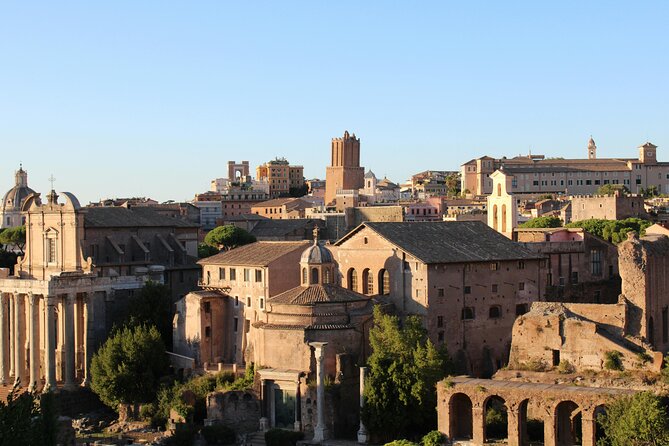
Palatine Hill first: imperial ruins, Farnese Gardens, and big skyline photos
Starting on Palatine Hill is a smart choice because it sets the stage for everything you’ll see later. Palatine is often described as the ancient heart of Rome, and that’s the right feel here: you’re walking in the zones tied to power, palaces, and private spaces.
You’ll have about 1 hour to explore several major pockets, including:
- emperors’ palace ruins and ancient temple remains
- the Farnese Gardens, where you can step into panoramic city views
- the Domus Augustana palace complex
- the private Stadium of Domitian
What makes this stop work in practice is that Palatine gives you both ruins and perspective. You get to look down and around, not just at stone walls. That helps when you later hit the Forum, because suddenly the geography makes sense. The Forum becomes less like random broken columns and more like a connected civic corridor.
I also like Palatine for photos, because you can shoot upward and outward. The Farnese Gardens angle can help you frame Rome’s modern city layers around the ancient remains. When your photos include both, your memory later will feel clearer.
One consideration: one hour sounds generous until you’re actually there. Palatine is spread out, and the surfaces can be uneven. If you like slow walking, you’ll want to focus on the highest-impact areas first so the best views don’t end up at the end of your hour.
Roman Forum next: turn scattered stones into a route you can follow
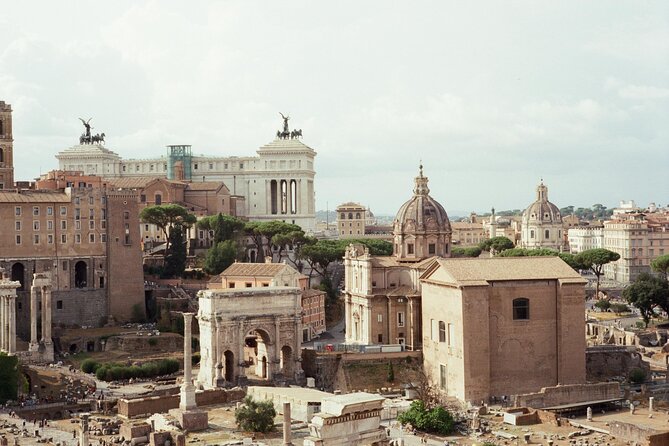
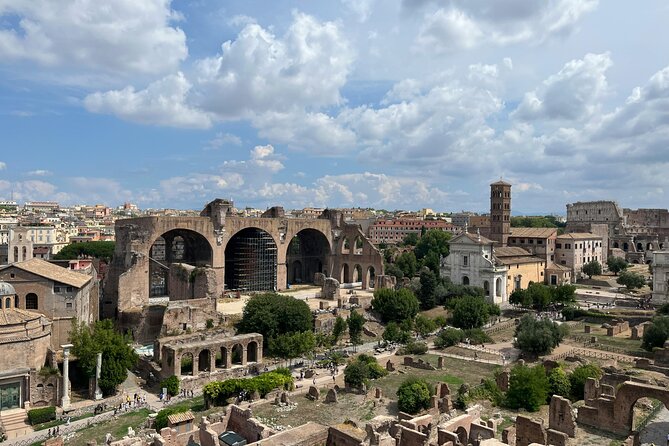
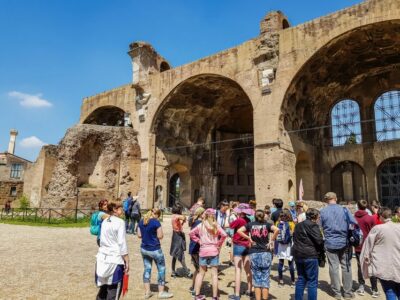
The Roman Forum stop is another 1 hour, and it’s built around the most recognizable anchors of the area. The key thing to understand is that the Forum can feel like a puzzle without an explanation. You’re standing among foundations and fragments, and your brain needs a map.
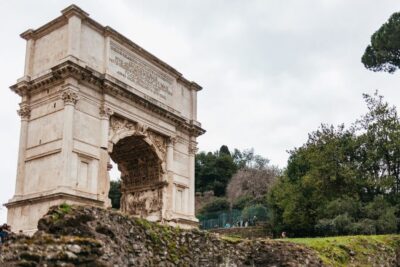
This is where the audio guide earns its keep. As you move through the complex, you’ll see major landmarks such as:
- the Temple of Saturn
- the Arch of Titus
- the Senate House, also called the Curia
- the Basilica of Maxentius and Constantine
- the Via Sacra
- the Rostrum
The Via Sacra is the line you want to keep returning to in your head. If you can trace that main ceremonial road through your walk, everything else starts to feel less scattered. Use the audio to time your stops at the big set pieces, then give yourself a few extra moments for the Rostrum areas where you can imagine speeches and public announcements.
The Forum is also the best place to take a breath. Crowd energy can be high, but it’s also one of the most atmospheric zones, because you get scale fast. Even from a few steps away, you can sense how the Forum functioned as a stage for politics and public life.
Possible drawback: if you rush, you’ll just collect monuments, not understanding. You only have an hour, so you need a plan. I suggest you pick a short personal checklist: one triumphal monument, one political structure, one religious anchor, and then one walk segment along the Via Sacra. That keeps your time from evaporating into aimless wandering.
Colosseum with self-guided access: architecture, tiers, and where you should go first
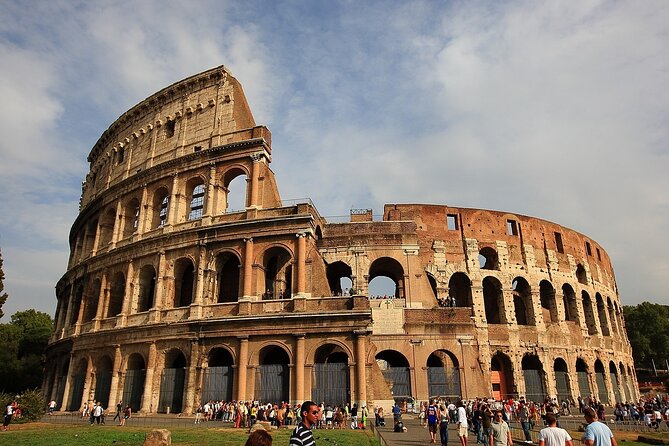
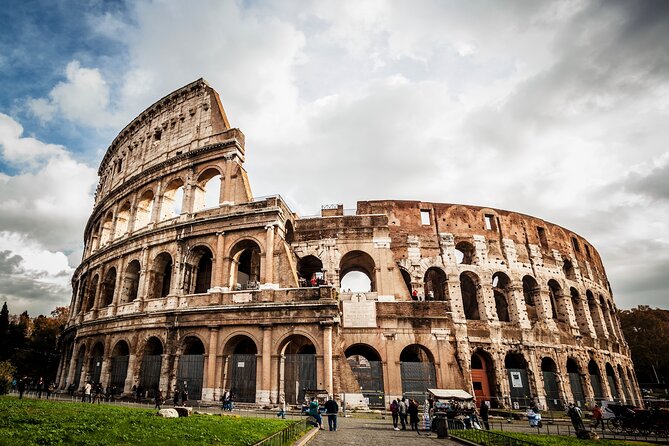
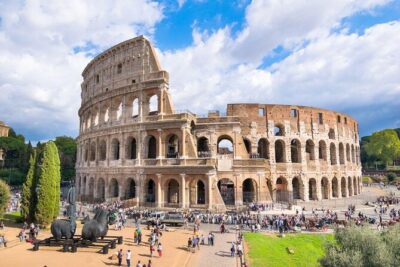
Colosseum entry is the headline, and the package includes a Colosseum reservation fee along with the entry ticket. Practically, that means your day is designed to get you through the high-demand entry moment without waiting for the slowest options.
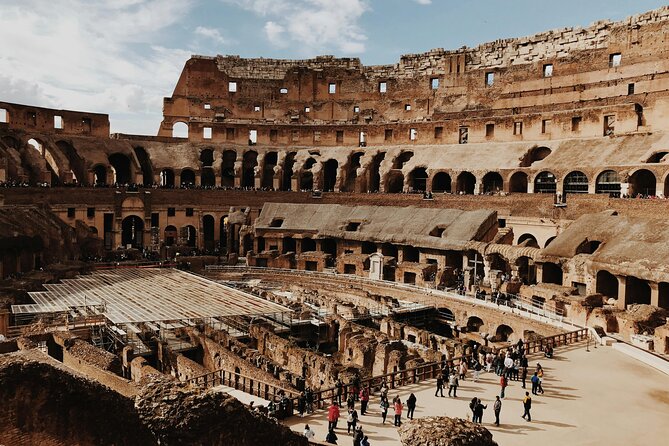
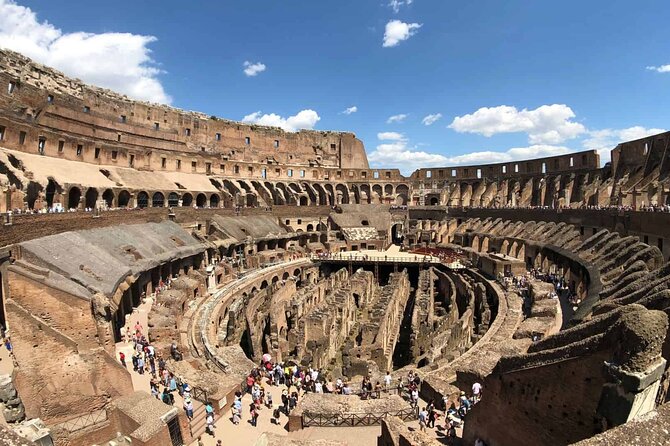
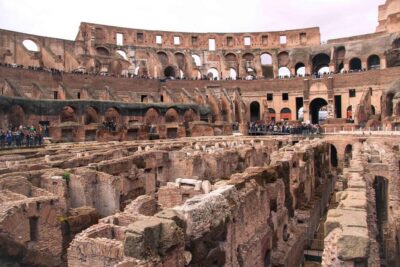
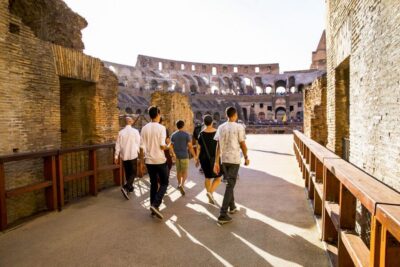
You get about 1 hour inside the Colosseum. And you’re not just looking at the main arena. The big payoff is the upper areas. The itinerary notes ascent to the upper tiers for views, and you should treat that as a priority, not an optional bonus. Higher views help you appreciate the structure, levels, and the way crowds would have moved through the space.
Inside, you can explore at your own pace, and the audio guide supports the story behind the architecture. Even if you already know the basic idea of Roman spectacles, the audio can help you understand how the building functioned and why certain features mattered.
Here’s my practical advice for making the most of your hour:
- Start by locating the route that gets you upward quickly.
- Take one set of photos from the main interior axis before you commit to the climb.
- When you’re in the upper tiers, use the audio to orient yourself to what you’re seeing.
If ticketing goes smoothly, this stop can feel satisfying and complete. If ticketing doesn’t go smoothly, it can become stressful. Some people have had delays because they didn’t receive proper tickets on time or had to sort out a voucher redemption late. So again, check that you have the real entry ticket details before you arrive at the Colosseum.
Also remember: there’s no in-person guide. That’s not automatically bad, but it means you won’t get quick, live explanations if you get lost or miss an audio segment.
The audio guide: how to use it so you actually learn
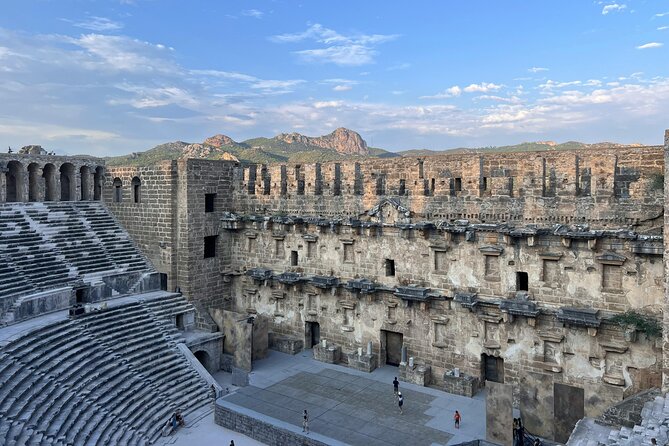
The audio guide is included, and it’s offered in English. That sounds straightforward, but the real question is how you use it while you’re walking through a site with limited time.
I recommend you treat the audio as a set of waypoints:
- Listen for one key feature at each major stop, then watch for that feature with your own eyes.
- Don’t try to listen at full volume the entire time. Pause your listening when you see something that matches the story.
- If you’re taking photos, use the time between shots to resume the audio. That way you’re not rushing just to keep the playlist going.
This is especially useful at the Roman Forum, where it’s easy to focus on individual monuments and miss how they relate. With the audio guidance, the Forum can feel like it has a path, not just ruins.
At Palatine Hill, audio helps turn names and complexes into a clearer mental picture, like how different imperial spaces connect. At the Colosseum, it helps connect the architecture to the spectacle idea you came for in the first place.
One note: this experience is self-paced. If you’re expecting a live storyteller, you might find the audio is less interactive than you hoped. Still, for many visitors, it’s the right balance, because it keeps you from being chained to a group’s pace.





Price and value: what you’re really paying for at $32.41
The price is listed at $32.41 per person. That’s the headline number, but value is about what’s included and what the time-saving is worth.
The package includes:
- Colosseum entrance ticket (valued at €18 per person)
- Colosseum reservation fee (valued at €2 per person)
- entrance to the Roman Forum
- entrance to Palatine Hill
- audio guide
- other services that cover the remaining cost beyond the two named Colosseum components
So you’re not just buying a single ticket. You’re buying access to three major sites bundled into one timed experience, plus interpretation via audio. For a first visit to Rome’s ancient core, that can be a strong deal compared to treating each site as a separate decision.
Where the value gets better: if you’re comfortable exploring on your own, the lack of an in-person guide reduces the cost while keeping the essentials. Where the value gets weaker: if you need constant explanation or prefer a person to manage the route, the package may feel less cost-effective.
At this price, I think it’s best viewed as a practical entry ticket package plus guidance from audio, not as a deep lecture experience. If that matches your style, you’ll likely feel good about it.
Pacing: make the 3-hour plan work without feeling rushed
This experience is about 3 hours total with each main site receiving around 1 hour. That structure gives you a clean route: Palatine Hill, then Roman Forum, then Colosseum.
The pacing is where you either win or lose:
- If you move efficiently, you’ll see the main highlights and still have time for photos and a few slower moments.
- If you linger too long at the first stop, the later sites can feel compressed.
My strategy for a self-paced day like this is simple. At each stop, aim for one or two high-impact areas plus one small pause for views or photos. Then keep going. You’ll get more satisfaction by completing the route than by doing a thorough slow walk through one site and missing the others.
The group size is capped at 8, which can help overall flow. Even so, the Colosseum and Forum zones can be crowded, so your best tool is patience plus a realistic photo plan.
Ticketing hiccups: how to protect your entry time
The main sour note from feedback is not about the monuments. It’s about ticket redemption and timing. Some people reported needing to contact customer service because they did not receive the correct tickets at the time of arrival, even though they expected redemption from a voucher. In at least one case, this led to significant delay and late entry.
So here’s the plain advice I’d give you:
- Don’t treat a voucher as the final answer. You want actual entry ticket details ready before you reach the meeting point.
- Double-check that your booked time is still valid. If your time slot is no longer available, try to sort it out ahead of your day, not after you’re standing in front of security.
- Keep your confirmation info accessible on your phone.
- Build a little buffer into your schedule around the Colosseum day. Rome timing always has surprises.
If everything is smooth, you’ll probably never think about these issues. But it only takes one admin snag to ruin the flow, and the Colosseum is not a place where you want to lose time.
Who should book RomaQuest’s audio ticket bundle?
I think this booking style fits best if you:
- want access to Colosseum, Roman Forum, and Palatine Hill in one go
- prefer self-paced exploration over a rigid group tour
- are happy learning through an audio guide in English
- like the idea of spending time on viewpoint spots and photo-friendly angles, especially at Palatine
It may be less ideal if you:
- want an in-person guide to explain what you’re seeing moment by moment
- get stressed by ticket logistics
- expect a slow, deep exploration that stretches well beyond three hours
Because this is a small group cap, it can feel calmer than the big tour waves, but it’s still a Rome landmark route. You should go in with realistic expectations and a simple plan.
Should you book this Colosseum, Forum and Palatine audio ticket tour?
If your goal is to hit the big three efficiently, learn enough to understand what you’re looking at, and enjoy a few standout views without rushing, I’d say yes. The value is strongest when you treat it as an entry package plus audio coaching, not as a guided history class.
Just don’t gamble on ticket redemption. Before you head out, make sure your entry details are real and ready for the slot you booked, not something you’ll have to chase in a line. Do that, and you’ll have a good day in Rome’s ancient core with far less hassle than many people expect.
FAQ
How long is the experience?
It runs for about 3 hours.
What’s included with the ticket package?
You get entrance to the Roman Forum, entrance to Palatine Hill, an audio guide, and Colosseum entrance tickets with a reservation fee included.
Is the tour available in English?
Yes, it is offered in English.
Where do we meet, and where does it end?
You start at Piazza del Colosseo, 1, 00184 Roma RM, Italy, and the activity ends back at the same meeting point.
What’s the price per person?
The price is $32.41 per person.
What isn’t included?
Food and drinks are not included, and there is no in-person guide included.
What is the cancellation policy?
You can cancel up to 7 days in advance for a full refund. Changes less than 7 days before the start time are not accepted, and cut-off times are based on local time. If the experience is canceled due to poor weather, you’ll be offered a different date or a full refund.
More Tickets in Rome

More Tour Reviews in Rome



Not for you? Here's more nearby things to do in Rome we have reviewed












Colosseum Tours, compared.
 ★ 4.8Colosseum, Palatine Hill and Roman Forum Guided TourFrom $5232,814 reviews
 ★ 4.7Guided Tour of Colosseum, Roman Forum & Palatine HillFrom $5527,897 reviews
 ★ 4.2Colosseum & Forum with Audio Guide App -Optional ArenaFrom $4124,770 reviews
 ★ 4.5Colosseum, Roman Forum and Palatine Hill Guided TourFrom $5923,903 reviews
 ★ 4.4Colosseum, Forum & Palatine Hill Tour & Optional ArenaFrom $5813,839 reviews
 ★ 4.6Colosseum, Palatine Hill & Roman Forum Guided TourFrom $5112,703 reviews
 ★ 4.7Colosseum: Underground and Ancient Rome TourFrom $16012,691 reviews
 ★ 4.6Colosseum Arena, Palatine Hill & Forum Guided TourFrom $7310,584 reviews
Browse the lists this tour appears in