Reviewed · ROME
The Treasures of Rome
Rome moves fast, and this tour helps you keep up. You get a guided walk through the Centro Storico, with big-photo stops like Trevi and the Pantheon, then you roll into Vatican territory for some on-your-own time.
I particularly love how the route strings together Rome’s most famous classics without feeling random, especially the Pantheon with the tombs of Renaissance artist Raphael and King Umberto I. One tradeoff to know up front: you’re doing a fair amount of walking on uneven cobblestones, and if you try to stay on the vehicle the best sights will pass you by.
Key points to know before you go
- Small group size (up to 20) makes it easier to hear your guide and stay together.
- Mobile ticket + air-conditioned vehicle helps when Rome is hot and lines are long.
- Pantheon stop is a highlight and includes major tombs like Raphael and King Umberto I.
- Bernini fountains on the route: Piazza Barberini (Triton Fountain) and Piazza Navona.
- Ends at St. Peter’s Square, with an optional inside visit to St. Peter’s Basilica depending on the day.
- Dress code is strictly enforced for places of worship (knees and shoulders covered).
The 3-hour Rome morning route that actually makes sense
This is a tight, well-scoped morning tour designed to hit the big hitters in central Rome. You start at 9:00 am near Via Giovanni Amendola, 32 (00185 Rome), then you spend your time where Rome feels most like Rome: narrow streets, churches, palaces, squares, and fountains. The overall duration is about 3 hours, and the tour ends at St. Peter’s Square (Piazza San Pietro).
What makes it work for many people is the mix of walking and short rides. You get out of the vehicle often enough to enjoy the streets, but you also use air-conditioned transport between key zones. That matters in Rome, where even a “short” day can feel long once the heat and cobblestones start stacking up.
The best part is the pacing is built around orientation. If it’s your first morning in town, this tour can help you connect the dots between the ancient city, the Renaissance, and the Baroque Rome that still dominates the skyline today.
You can also read our reviews of more tours and experiences in Rome.
Meeting in central Rome, then easing into the Centro Storico
Your guide meets you in central Rome, and the tour immediately starts moving you into the Centro Storico. From there, you’re guided through the historical center, past outdoor cafes, ancient churches, and Renaissance-era palaces. It’s the right kind of introduction for Rome: less “museum corridor,” more “street-level history.”
The tour also uses the reality of Rome transportation. Coach rules mean you may not park right next to every stop, so there’s walking to bridge the distance. You can remain on the coach in some moments, but doing that usually means missing sights. If you care about photos and details, treat it as a walk-first tour, not a sit-and-glance tour.
Also, keep an eye on Rome’s current rhythm. Due to the Jubilee, some monuments may be under restoration, and your tour may adjust if they message you about changes.
Piazza Barberini, Bernini fountains, and the Barberini symbols
One of the smarter early stops is Piazza Barberini. This square sits in the historic center between the Quirinale hill and the Horti Sallustiani, and it’s packed with Baroque storytelling even if you only have a few minutes.
In the center is Bernini’s Triton Fountain, created in 1643 and commissioned by Pope Urban VIII Barberini. The materials matter, too: it’s made of travertine. And if you look closely, you’ll see Barberini coats of arms placed between the dolphins supporting the triton.
On the corner with Via Veneto you may also see the Fountain of the Bees, using the insect symbol of the Barberini family. It’s the kind of detail that turns a “nice square” into a “now I get it” moment. You’ll realize Rome is not just old buildings, it’s old messages.
Trevi Fountain stop: classic photo, but also a study in positioning
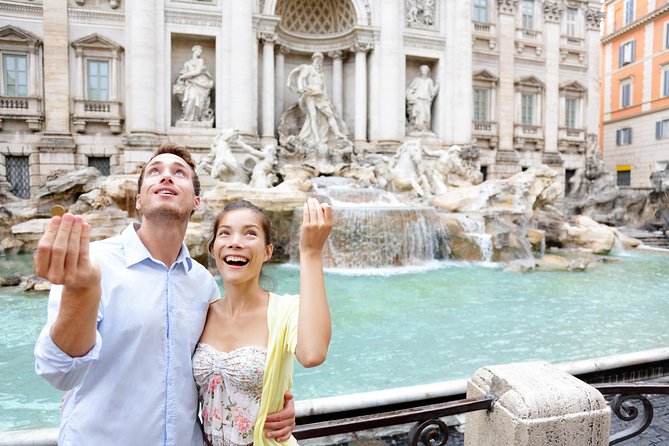
The Trevi Fountain stop is short, about 20 minutes, and admission is free. That sounds quick, but Trevi works best when you know what you’re looking for: a masterpiece of water, stone, and drama placed right in the middle of Rome’s daily flow.
The fountain is almost hidden in its setting, so being guided helps you find the right angles and understand what you’re seeing. If you want the tradition, you’ll hear about the coin toss, a small ritual people do in hopes of returning to Rome.
Practical tip: for a stop this brief, don’t treat it like a long “stand and stare.” Aim for one or two good vantage points, then keep moving. Your guide’s context makes the next stops land harder, because you’re learning the visual language of the city.
Entering the Pantheon: preserved power, plus Raphael and Umberto I
If I had to pick the single most “wow per minute” moment on this tour, it’s the Pantheon. Admission is free, and you’ll have around 30 minutes there.
The Pantheon is one of the best-preserved ancient structures in Rome, originally commissioned by Marcus Agrippa and later completed under Emperor Hadrian. Since the 7th century, it has been used as a church dedicated to St. Mary and the Martyrs (Sancta Maria ad Martyres). In other words, you’re looking at a building that kept its purpose as centuries changed.
The tombs are the real hook for many people. The Pantheon holds the graves of Renaissance artist Raphael and King Umberto I, among others. That combination is why it feels different from other ancient sites. You’re not just looking at old walls, you’re seeing how Rome layered sacred space and art across time.
Drawback to consider: 30 minutes goes quickly once you start reading tomb plaques and looking up at the dome. If you want interior views plus extra time to sit with the architecture, this stop might feel just a touch short. But as an anchor for the whole morning, it’s excellent.



Piazza Navona: Bernini’s fountains and a stadium-shaped square
Next up is Piazza Navona, with about 20 minutes on site. It’s free to enter, and it’s one of the easiest places to feel the Baroque Rome vibe. The square has fountains designed by Bernini, and the architecture frames the water like theatre.
Here’s the cool context that makes Navona more than a pretty stop: Piazza Navona is built on the site of the Stadium of Domitian from the 1st century AD. The modern square follows the old stadium’s shape, so the public space has a built-in sense of history and geometry. Rome often reuses land first, then changes the artwork around it.
If you’re the type who likes to pause, watch the crowd, and take in small details, Navona delivers. If you’re mainly “hit the list,” it’s still worth it, because this square is one of the best places to see Rome’s Baroque style without needing tickets or long entry lines.
Ride to Vatican City and your St. Peter’s Square finish
After the central stops, you hop aboard an air-conditioned vehicle for the ride to Vatican City. The tour then finishes at St. Peter’s Square, with about 30 minutes there.
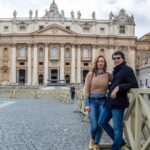
Even if you don’t go inside, St. Peter’s Square is a set piece you’ll never forget. At the center is an ancient Egyptian obelisk erected in 1586. Gian Lorenzo Bernini designed the square and the famous Doric colonnades, with the project completed in the mid-to-late 1600s (1656/1667).
The tour data also states the inside visit of St. Peter’s Basilica is included, but with a big caveat: it is not possible on Sunday, religious festivals, and religious ceremonies. In those cases, the itinerary may change. That’s worth planning around if your calendar is tight and you specifically want indoor time.
One more note: dress code is required for places of worship. Knees and shoulders must be covered for both men and women, and entry is strictly enforced. If you arrive in shorts or a sleeveless top, you risk being turned away, which can ruin the end of your tour.
How the tour handles time, walking, and getting in
This tour is built around efficient movement, but Rome is still Rome. You’ll be on uneven, cobbled surfaces, and coach regulations may force more walking than you expect. A few visitors have described it as hotter and more legwork than they thought, even with the option to stay on the bus. If you want the full value, bring walking shoes and accept that this is not a “minimal step” outing.
The upside is you do feel guided. People can walk through central Rome and miss the key tombs, symbols, and architectural meaning. With a guide, you spend less time guessing and more time understanding. Multiple guides get praised for being fun, and one recurring theme is that the guide can make the stops feel connected, not just separate postcards.
Group size also matters. With a maximum of 20 travelers, the tour tends to feel organized enough to keep momentum. It’s not the kind of experience where you’re perpetually separated from the front of the group.
Price and value: what you get for about $49
At $49.26 per person for about 3 hours, this is positioned as a value morning overview. You’re paying for a local guide, air-conditioned transport between zones, and a structured route through top sights: Trevi Fountain, the Pantheon, Piazza Navona, and the Vatican finish at St. Peter’s Square.
Is it a “cheap” deal? In Rome terms, it can be, especially because several of your key stops have free admission (Trevi, Pantheon, Piazza Navona, and St. Peter’s Square). The money goes toward guiding, timing, and logistics, not entrance fees.
The main reason it might feel pricey to some people is the tradeoff between time and depth. You get quick visits, not long exploration. If you want to linger at St. Peter’s Basilica interior or read every plaque slowly, you may want to pair this with self-guided time later.
Lunch is only included if you select that option, and drinks are not included either. So if you’re hoping this turns into a “full meal, no planning” morning, plan for snacks or bring water.
Best-fit for your travel style (and who should skip it)
This tour is a great fit if you want:
- A fast way to see the biggest central Rome icons without building a route yourself
- A guided route that helps you make sense of classical Rome, Renaissance art, and Baroque fountains
- A morning plan that ends in a prime spot for follow-up time in the Vatican area
It may not be ideal if you:
- Struggle with walking on cobblestones
- Want extended time inside St. Peter’s Basilica every time, no exceptions (the tour notes Sunday and festival limitations)
- Are hoping for a mostly sit-on-the-bus experience
If you’re going on a day with lots of religious activity, assume your indoor Vatican portion could be limited. Your best strategy is to bring respectful coverage (knees and shoulders) and keep your expectations flexible.
Should you book The Treasures of Rome?
I’d book it if this is your first or second morning in Rome and you want a high-impact route with a guide, starting in the Centro Storico and ending at St. Peter’s Square. It’s priced like an efficient overview, and the payoff is seeing the Pantheon with the tombs of Raphael and Umberto I, plus the fountain-and-square backbone of Rome’s Baroque look.
Skip or reconsider if you hate walking, dislike tight time windows, or need guaranteed extended interior access at St. Peter’s Basilica on a Sunday or major religious day. In those cases, you might prefer a different Vatican-focused plan.
If you do book, pack for walking, dress for church entry, and use the tour time for orientation. Then, once the tour ends, linger where you personally want more time. Rome rewards the stops you choose after you’ve seen the main highlights first.
FAQ
What is the duration of the tour?
The tour runs for about 3 hours (approx.).
What time does the tour start and where does it end?
It starts at 9:00 am and ends at St. Peter’s Square (Piazza San Pietro).
Where is the meeting point?
The start meeting point is Via Giovanni Amendola, 32, 00185 Rome, Italy.
Is the tour in English?
Yes. It’s offered in English.
What’s included in the ticket price?
Included features are a local guide and an air-conditioned vehicle. Lunch is included only if you choose the lunch option.
What should I wear for this tour?
A dress code is required for places of worship. Knees and shoulders must be covered for both men and women, and it is strictly enforced.
Is St. Peter’s Basilica interior visit included?
The inside visit of St. Peter’s Basilica is included, but it will not be possible on Sunday, religious festivals, and religious ceremonies, in which case the itinerary may change.
What is the cancellation policy?
Free cancellation is available if you cancel up to 24 hours in advance for a full refund. Changes made less than 24 hours before start time are not accepted.