
Reviewed · TICKETS
Circo Maximo entrance ticket + virtual experience
Rome’s most famous race track gets a tech makeover.
This Circo Massimo experience brings the stadium to life with Zeiss VR and a walking route you can finish fast, about 40 minutes. I like that you get both admission and the multimedia guidance, so you’re not just watching a screen. One thing to plan around: the VR is weather sensitive, and in rain or extreme heat the experience may not run.
What really works is seeing how the space changed over centuries, from early layouts to the Middle Ages and even modern moments. You also get a built in storyline for the route, including the seats (cavea), the Arch of Titus area, and the shopfronts (tabernae). My second favorite part is the “how it felt” segment at the end, which turns ruins into a believable day at the track. Still, be aware that some people report VR image quality and viewing limits, so it’s worth knowing what can disappoint.
If you’re comfortable reading a few real ruins while your headset supplies the missing pieces, you’ll likely enjoy it a lot. If you’re very sensitive to motion sickness, the rules are strict enough that you should take them seriously. Now let’s make it practical.
Key things to know before you go
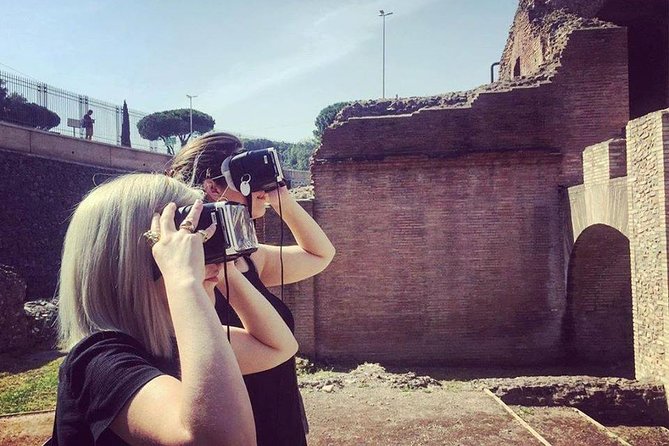
- Zeiss VR headset and site admission included, tied to an 8 stop route
- Augmented and virtual layers show Circus Maximus evolving from antiquity to later periods
- VR under stop 8 must be used seated, which changes how you pace yourself
- Good weather is required, and rain or excessive heat can cancel the experience
- You rent the headset with an ID deposit, so bring your passport or card
- Private tour format, only your group participates
Circo Massimo in VR: what the 40 minute experience feels like
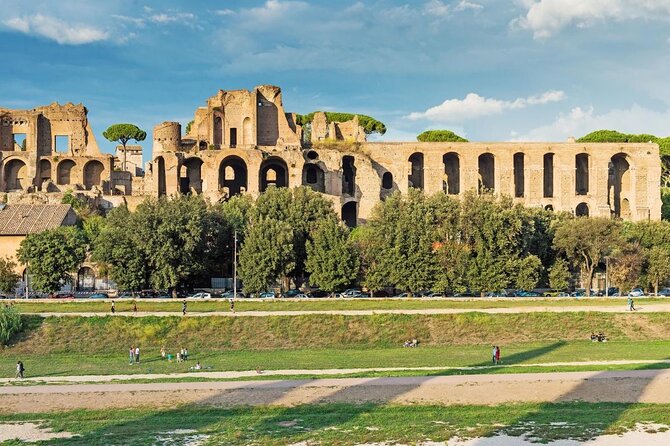
Circus Maximus is one of those places where your first thought is usually, it’s big… but where did everything actually happen? This experience answers that question in a time-friendly way. You walk the site while the VR and multimedia guide reconstruct what’s missing, then you watch the track and surrounding areas change across different eras.
The ticket price is $46.07 per person, and it’s typically booked about 15 days in advance. That matters because Circus Maximus is a popular Rome stop, and the VR timing means you do not want to show up late or hope for a walk up slot.
From what’s included, you should expect more than a typical audio guide. You’ll have admission to the site plus a multimedia guide and a VR headset rental, with a structured route through 8 different “time stops”. The total time is about 40 minutes, so it’s a good match for a day packed with Rome’s headline ruins.
The biggest practical upside is pacing. You do not need to spend half a day here to get value. The VR portion gives you the “wow” without forcing a long commitment, which helps if your Rome itinerary includes the Colosseum, the Forum area, or Aventine viewpoints nearby.
A few more Rome tours and experiences worth a look



The 8 stops you’ll walk through, and what to watch for
The route is built like a timeline. Each stop updates what you’re looking at, so you start seeing Circus Maximus less like a single monument and more like a working public space that kept changing.
Stop 1: the valley floor in the archaic period
This first scene sets the baseline. Instead of jumping straight to chariot racing glory, you start with the valley floor as it looked in the earliest stage. The benefit is that you learn why the site works in a natural valley, and why early construction focused on shaping space before adding big infrastructure.
Practical tip: take a moment to orient yourself in the real site area before your headset starts adding layers. That makes the later “before and after” effects easier to understand.
Stop 2: Circus Maximus from the 1st century BC to the 1st century AD
Next you move into the big scale of the late Republic and early Imperial era. This stop helps you connect the track layout to what you know from Roman public spectacle, especially the racing focus.
What to watch for: how the presentation connects the track to surrounding structures, not just the arena itself. That “whole space” approach is one reason people find the experience more engaging than plain ruins.
Stop 3: the imperial period
Now the emphasis is on peak grandeur. In this stage, your visuals should help explain how Circus Maximus became a major stage for mass events.
Consideration: if the VR image quality is not crisp for you, this is still the stop where paying attention to shape and structure pays off, since the real site gives you anchors.





Stop 4: seating tiers, the cavea
Cavea is the key word here. This stop focuses on the seating tiers, so you can understand how the crowd could pack into levels around the track. Even if you’ve seen amphitheaters in Rome, this is a useful perspective because a circus works differently than a theater.
I like that this stop reinforces the idea of visibility and crowd flow. If you’re imagining where you would sit, this is where it becomes clearer.
Stop 5: the Arch of Titus
This section adds a landmark element that helps you build mental geography. You’re not just looking at an empty valley, you’re mapping it to known Roman icons.
Why it matters: Circus Maximus sits in a broader Roman urban landscape, and this stop encourages you to connect it to the Rome you see on other monuments.
Stop 6: the shops, tabernae
The tabernae part is where the experience becomes more than racing history. You get a glimpse of commerce and daily life along the stadium edges.
This is also one of the stops that helps kids understand the site. It shifts the story from spectacle to people, street-level activity, and a place that functioned year-round.
Stop 7: the Circus in the Middle Ages and modern times
Here the VR acknowledges what happened after the Roman peak. Instead of pretending the site stayed the same, the presentation shows how the space evolved.
This stop is valuable because it teaches you how ruins become landscapes. Even if you know Rome has layers, this is where the “layers” become concrete.
Stop 8: A Day at the Circus
This is the closing storyline. It’s the “day in action” concept that turns static remains into a sense of event rhythm and atmosphere.
Important rule: the VR function under stop 8 must be used while seated. That means you should plan to slow down your walking pace for this final phase and be ready to follow staff instructions so the technology works properly for your view.
The Zeiss VR headset, tech rules, and motion sickness reality checks
The experience uses a VR headset (Zeiss) and combines virtual and augmented visuals. The headset rental is not just plug and play. You must leave a deposit: an ID card or passport, in the original, is required.
So, bring the document you plan to use. Do not assume you can use a photo copy. If you’re visiting with reduced-price admission, you should also carry the ID that entitles you to that reduced ticket type.
There are also safety notes worth taking seriously. If you experience dizziness, motion sickness, visual after-effects, nausea, impaired vision, numbness, twitching of eyes or muscles, loss of consciousness, disorientation, neck pain, or any involuntary movement or cramp, you are advised to consult a doctor. The point is simple: VR can be physical for some people, and this setup comes with instructions because the technology affects the body.
One more practical detail: some people report the VR view can feel limited if you look the wrong way. That’s a real consideration. The best way to avoid frustration is to keep your head movement intentional. When you want to see something, turn your attention first, then let the headset do its job.
And yes, image quality can vary by device and the conditions of the headset fit. If crisp detail is a deal breaker for you, take that into account before booking.
Price and value: what you get for $46.07
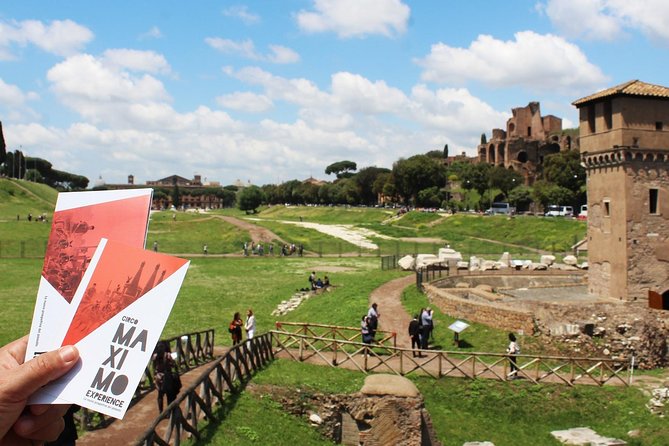
At $46.07 per person, you’re paying for a blended product: entry to the Circus Maximus site plus a Zeiss VR headset rental plus a multimedia guide, delivered over a tight 40 minute route.
If you were only buying admission, you would still see an impressive scale of ruins. But you would also miss the “missing parts” the VR reconstructs, like how structures and crowd areas likely looked in different periods. The value comes from turning those blank spaces into something your brain can visualize.
What can affect perceived value is your expectations for VR technology. When VR looks sharp and the viewpoint tracking feels smooth, it can feel like a cheat code for understanding ancient architecture. If the visuals look blurry or if your view seems constrained, the experience may feel too short to justify the cost.
Family value can also swing. The experience is structured to work for kids, and at least some families find it a strong way to make ruins less abstract. If you travel with children, note the headset rules: children under 14 can wear the headsets and enjoy the experience only if accompanied by an adult who must sign the disclaimer available at the ticket office.
Where to meet and how to avoid first-day confusion
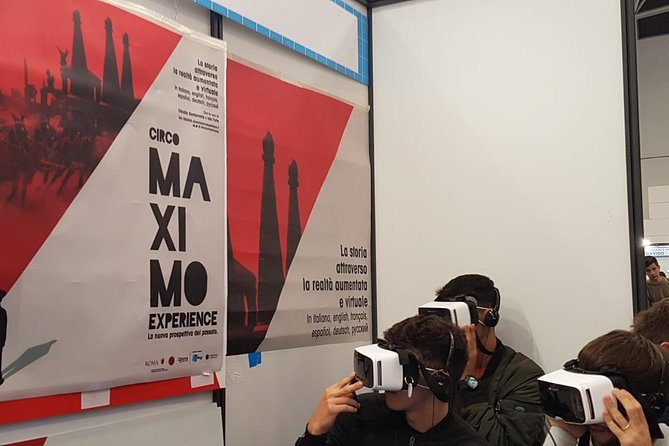
The meeting point is at Aventino-Circo Massimo (Mb), 00186 Rome. The activity ends back at the same meeting point.
This location is near public transportation, which is a big deal in Rome. The practical goal is simple: arrive with enough time to find the exact access area and check in calmly. Some negative feedback points to times when people had trouble locating someone to handle tickets or finding the VR point, so give yourself a buffer, especially on busy days.
Also, expect that the site environment can feel like a work zone. You may see barriers or construction-adjacent visuals around the area. Even when the experience runs smoothly, it’s not always a classic postcard entrance.
Weather and timing: the conditions that can change your plan
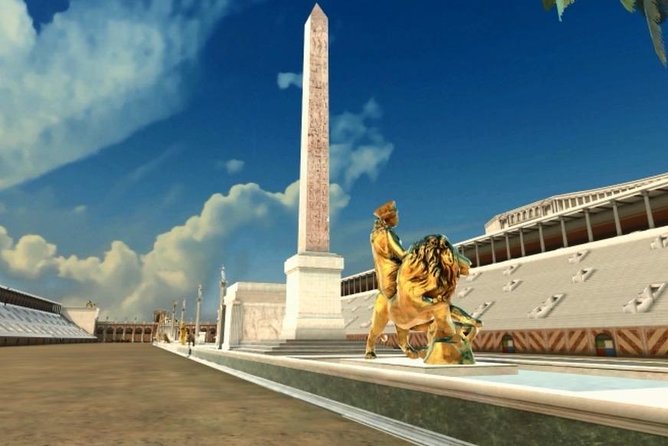
This experience requires good weather. If it’s canceled due to rain and extreme weather conditions, such as excessive heat, you’re offered a different date or a full refund.
That makes planning important. Rome heat can be brutal, and VR plus outdoor walking is not the place to test your tolerance. Pick a cooler time of day if you can, and keep an eye on forecasts for rain.
Timing-wise, because the tour is about 40 minutes, it’s easier to fit into your day even if you’re moving between other sights. Just don’t schedule it too tightly. If weather forces a change, you’ll want flexible space.
Who should book this Circo Maximus VR ticket, and who should skip it
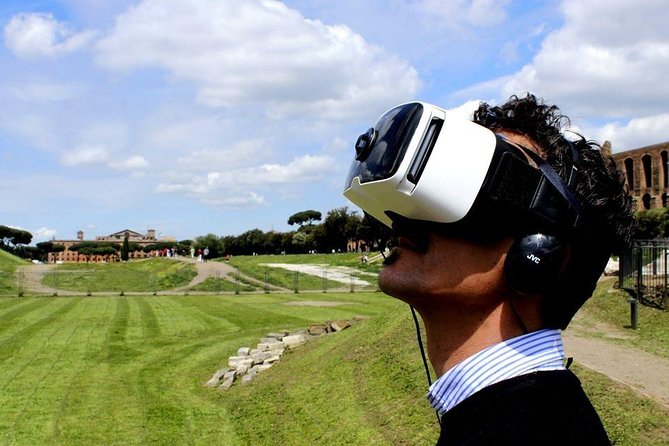
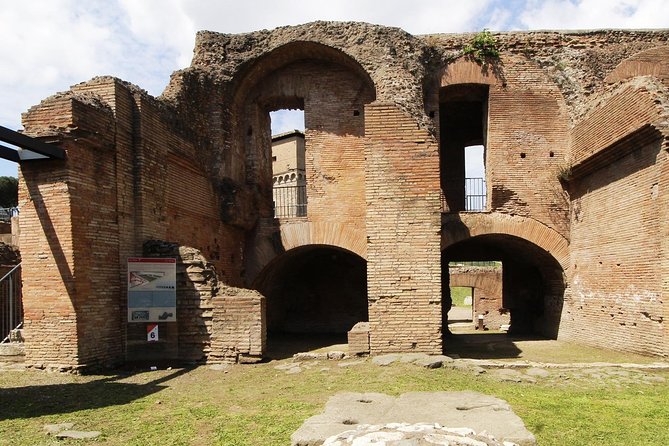
This is a smart pick if you want a fast, structured way to understand Circus Maximus, especially if ruins alone leave you with questions. The route through the cavea, tabernae, and major landmark elements helps you see the place as a full social space, not just a track.
It’s also a good match for families, because the storyline includes enough variety to keep attention and the “A Day at the Circus” framing helps kids connect dots.
You might want to skip or think twice if:
- you’re very picky about VR image sharpness
- you get motion sickness easily, and you haven’t checked the health guidance first
- you hate experiences where your viewpoint needs careful attention, since some visuals can feel limited if you look away
If you’re excited about mixing real ruins with reconstructed scenes, this format fits your style. If you prefer a purely on-foot, text-and-stones approach, you may find the tech adds friction.
Should you book the Circo Massimo entrance plus virtual experience?
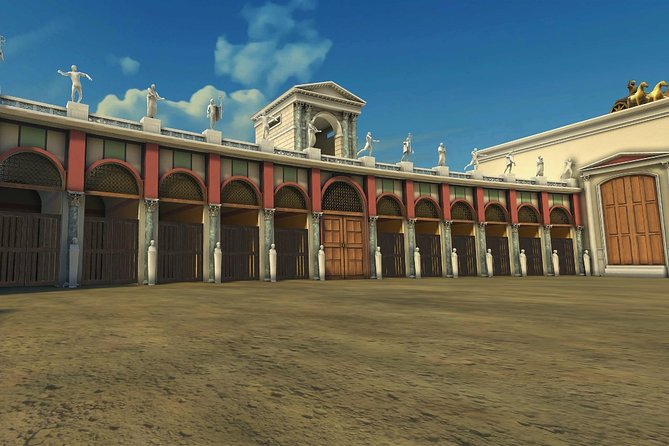
I think it’s worth booking if you want to leave with clearer mental pictures of how Circus Maximus worked across time. For most people, the combination of site admission plus VR storytelling is a practical upgrade, especially because the whole thing fits into a short 40 minute window.
Book with a weather plan, bring your ID for the VR deposit, and be ready to follow the seated rule for stop 8. If VR tech quality matters a lot to you, treat that as your deciding factor, since some people report the visuals can fall short of modern expectations.
Finally, check whether you need reduced-price ID on the day, and make sure you can comply with the child headset disclaimer process if you’re traveling with younger kids. If you can handle those practical points, this experience is a strong way to understand Rome’s most important racing space without spending hours staring at empty ground.
FAQ
What’s included with the Circo Massimo entrance ticket plus virtual experience?
You get the Circus Maximus admission ticket, a VR headset experience with virtual and augmented reality, and a multimedia guide.
How long does the experience take?
The experience runs for about 40 minutes.
Where do I meet for the tour?
The meeting point is Aventino-Circo Massimo (Mb), 00186 Rome. The activity ends back at the same meeting point.
Do I need good weather?
Yes. The experience requires good weather. If it’s canceled due to rain or extreme weather conditions such as excessive heat, you will be offered a different date or a full refund.
Can children wear the VR headset?
Children under 14 can wear the headsets and enjoy the experience only if accompanied by an adult. The adult must sign a disclaimer available at the ticket office.
What ID do I need to rent the VR headset?
To rent the headset, you must leave a deposit ID such as a card or passport in the original.
Is the experience refundable or changeable?
No. This experience is non-refundable and cannot be changed for any reason.
Is this a private activity?
Yes. It is a private tour/activity, and only your group participates.
More Tickets in Rome


More Tour Reviews in Rome



Not for you? Here's more nearby things to do in Rome we have reviewed












Tickets, compared.
 ★ 4.5Vatican: Museums & Sistine Chapel Entrance TicketFrom $38144,003 reviews
 ★ 4.0Hop-On Hop-Off Panoramic Open Bus Ticket 3 Circuits x 1From $2015,405 reviews
 ★ 4.4Vatican Museums & Sistine Chapel Skip-the-Line Entry TicketFrom $4313,838 reviews
 ★ 4.2Vatican Museums & Sistine Chapel Skip-The-Line TicketFrom $4111,708 reviews
 ★ 4.3Vatican Museums & Sistine Chapel Skip-the-Ticket-Line TourFrom $13010,486 reviews
 ★ 4.2St. Peter’s Basilica & Dome Entry Ticket & Audio TourFrom $177,537 reviews
 ★ 4.2Vatican: Vatican Museums Sistine Chapel Skip-the-Line TicketFrom $716,682 reviews
 ★ 4.1Vatican & Sistine Chapel Ticket with Optional Audio GuideFrom $465,405 reviews