
Reviewed · COLOSSEUM TOURS
Ancient Rome Guided Tour: Colosseum, Forum and Palatine & Pick Up
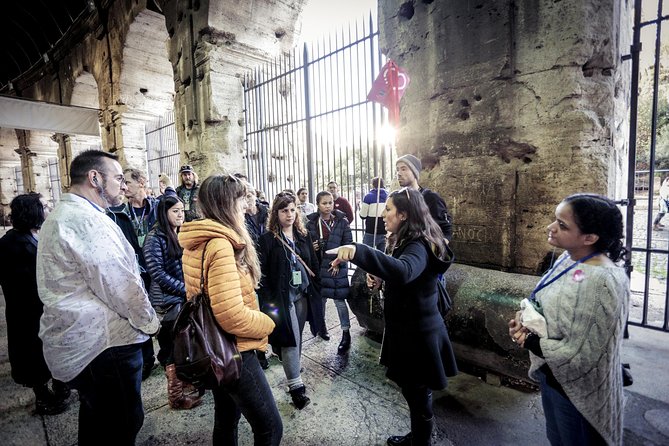
Rome is at its most dramatic in half a day. This guided route strings together Palatine Hill for big views, the Colosseum for the main event, and the Roman Forum for the power center, all with reserved entry and wireless audio so you can hear the stories without craning your neck. I especially like that hotel pickup helps you skip the hassle of figuring out local transport, and that your Colosseum time is handled in advance. The main drawback to plan around is the walking, cobblestones, and hot sun, so you’ll want proper shoes and a water plan.
The group is kept small, capped at 20 people, and the pace is designed to hit the highlights without turning this into a marathon. Still, you should expect some standing around at famous bottlenecks, and the experience is not a good fit if you have mobility limitations.
Key things that make this tour work
- Hotel pickup saves time: you start with less logistics stress and spend more time at the sites.
- Reserved Colosseum entry is the payoff: you get an entry ticket plus a reservation fee handled as part of the package.
- Wireless audio helps in crowds: it keeps the guide’s narration clear even when space gets tight.
- Small group size (max 20): easier to follow instructions than on big bus tours.
- Palatine Hill gives context fast: you look down at the Forum and connect the ruins to how Rome actually functioned.
- You’ll walk the Roman “main roads”: Via Sacra connects the story line from the Forum to the Colosseum.
Hotel pickup and reserved entry, the real value
This is a 3 hours 30 minutes, guided highlights loop, priced at $98.86 per person. For me, the value isn’t just that you see three famous places. It is that you arrive with tickets in hand, and the Colosseum entry is tied to the reservation process.
Here’s how to think about the money. The tour includes admission to the Colosseum, Roman Forum, and Palatine Hill, plus the Colosseum entrance ticket and reservation fee (valued at €18 and €2 per person). That means your guide time, wireless audio, and transportation are doing the heavy lifting for the remaining cost.
You also get practical support. Confirmation comes at booking time, the tour is offered in English, and you use a mobile ticket. If your hotel is covered, pickup is from your hotel lobby, and you should be ready 45 minutes before departure (60 minutes for non-central hotels). If your hotel is not covered, you switch to a set meeting point inside Colle Oppio Park, at Via delle Terme di Tito, corner of Via Nicola Salvi.
Two small-but-important notes: you must bring your passport or ID card for admission, and the tour is described as requiring moderate physical fitness. Also, if you have a pacemaker, you’ll need to show a certificate for screening.
You can also read our reviews of more guided tours in Rome
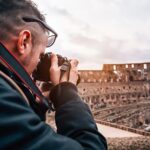
Palatine Hill: the view that makes the Forum make sense
Palatine Hill is your first stop, and it is a smart move. It sits above the Roman Forum, about 40 meters up, so you get a quick “big picture” that most self-guided visits take much longer to piece together.
Palatine Hill is described as one of the most ancient parts of Rome and as the centremost of the Seven Hills. If you only know Rome from photos of the Colosseum, Palatine shifts your perspective. This is where emperors built their power base, especially after Augustus, and the hill’s location is part of the story.
Expect the kind of context that makes the ruins feel less like random piles of stone. You’ll be looking down toward the Forum and across toward the Circus Maximus area. In a good tour moment, your guide connects what you’re seeing with why Palatine was politically important. You’re also standing on a place tied to Roman ceremonial life, including references to triumph traditions, which helps you understand what the Empire wanted people to feel.
One consideration: Palatine is outdoor walking, and the tour transitions from view to streets and ruins. If it’s hot, you’ll want a hat and sunscreen. Even when guides look for shade breaks, sun exposure is still part of the deal.
Entering the Colosseum, the main event without the stress
The Colosseum stop is the headline, and this tour handles it in the practical way you want. Your admission and reservation are included, and the route is set up so you can focus on the experience rather than crowd math.
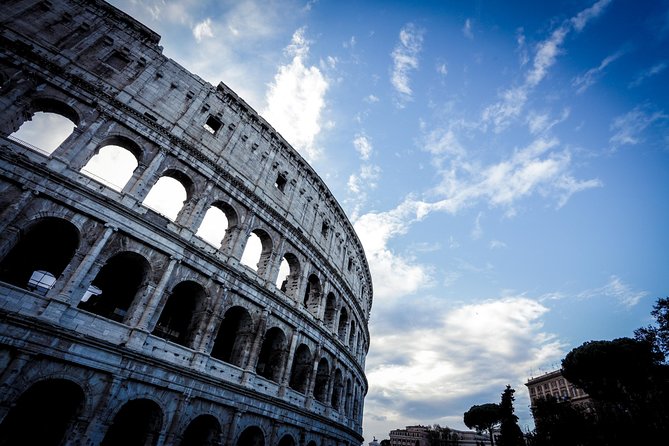
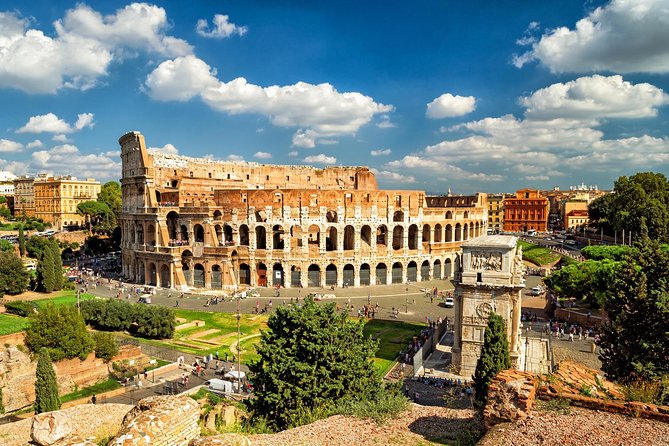
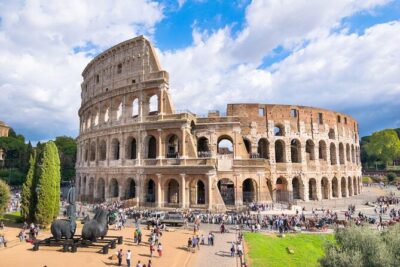
This isn’t just a “look at a building” stop. The Colosseum is an oval amphitheatre built with travertine, tuff, and brick-faced concrete, and it is described as the largest amphitheatre ever built. Your guide typically turns that construction into something you can visualize, so the stories aren’t abstract. In the stronger versions of the tour, guides also explain how the arena setting connects to Roman public life.
One detail that matters: this is a popular entry point, so double-check your paperwork. A name mismatch can cause trouble at check-in. One group report involved a nickname or different first name spelling not matching the passport, and a supervisor resolved it. To avoid the hassle, when the tour asks for full names, make them match your passport or ID exactly.
What to bring to the Colosseum: your ID/passport, and practical footwear. One review note called out cobblestones and marble slabs, which is exactly the kind of surface that turns a “quick stop” into an aching finish. Running shoes help more than you think.
If you’re sensitive to heat, plan for it. Several guides are described as managing sunny conditions by finding shade when possible and offering water breaks. Not every guide is equally effective, so stick close to your group and follow instructions quickly, especially at transitions.
Roman Forum on Via Sacra: from marketplace to power center
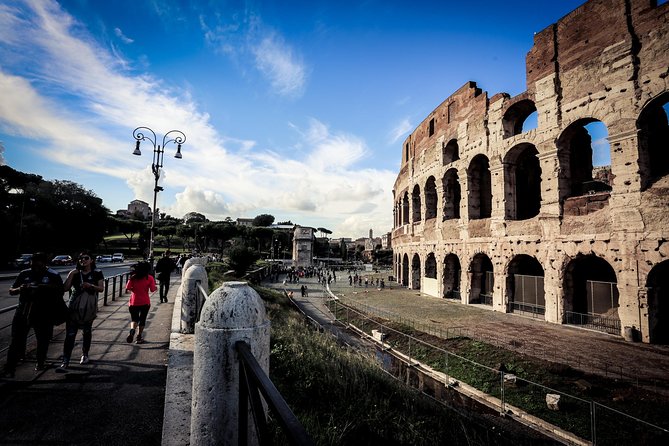
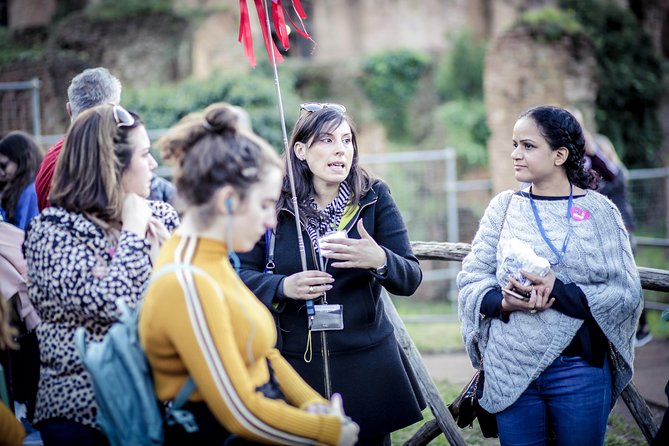
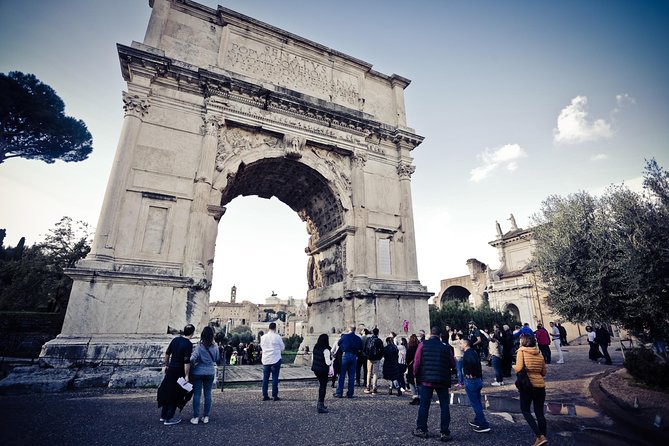
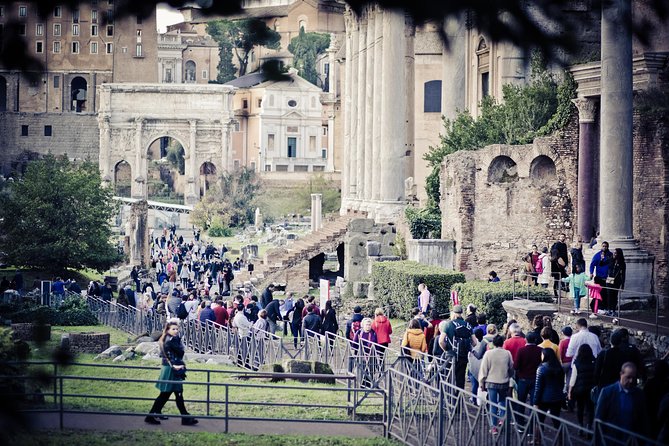
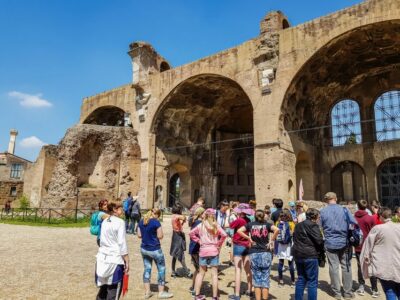
After the Colosseum, you head to the Roman Forum, the heart of ancient government life and civic space. The Forum is described as a rectangular forum surrounded by ruins of important buildings, once used as a marketplace. People referred to it as the Forum Magnum, or simply the Forum.
This stop works best when the guide uses the layout as a teaching tool. The route includes Via Sacra, the Sacred Road, which you’ll hear about as the main street connecting key religious sites, leading from the Capitoline Hill down through the Forum to the Colosseum.
That connection is the point of the itinerary. You aren’t just bouncing between landmarks. You’re moving along the same kind of “main route” Romans used, and the guide can layer meaning onto what you’re seeing. When it clicks, the Forum stops being a list of ruins and starts feeling like how Rome functioned day to day: public, political, ceremonial.
You’ll likely also get street-level context around Via dei Fori Imperiali, a straight road that runs from Piazza Venezia to the Colosseum, passing over parts of the Forum of Trajan, Forum of Augustus, and Forum of Nerva. The description notes that archaeological excavation has been active beneath and around this road since the 1990s. Even if you do not spend time inside excavation areas, the guide can point out why you are seeing some sections exposed and others covered.
The practical downside is time and crowds. The Forum is huge, and your stop is only about an hour. That means your tour is about highlights and understanding, not exhaustive exploration. If you love getting lost in details, you’ll probably want to return later on your own.
Pacing, shade, and staying together in the crowd
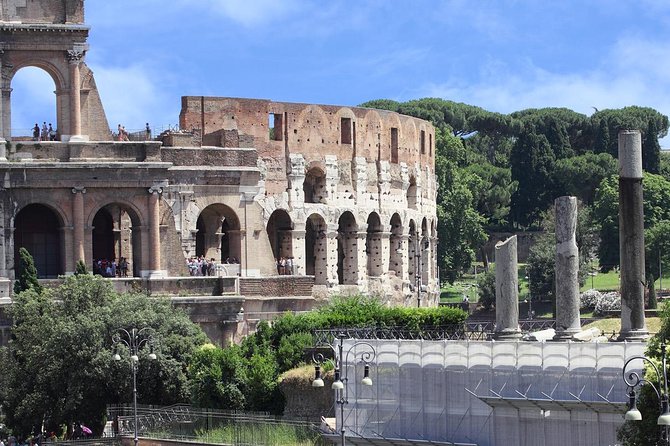
This tour is short, so the pacing matters. I like that guides often keep things structured: where you meet, where you walk, and when you pause for key explanations. Several guide experiences shared specific strengths, like keeping the group moving at a steady pace and staying aware of heat comfort.
You may run into typical big-sight chaos, even with a reservation. In one report, a guide’s strategy for keeping the group together was less smooth, and the group had to work harder to stay aligned. In another, a guide’s flag use was suggested, which is a reminder that visibility in crowds is not trivial.
Here’s how to make this tour go smoothly for yourself:
- Stay attentive when you hear the headsets instructions. If you step away to take a photo, wait until the guide pauses.
- Take shade breaks when offered, but do not treat them as free time. Rejoin quickly so you do not get separated during bottlenecks.
- Bring water and something to cover your head. Even when guides provide water, you should expect the day can feel warm and bright.
Guide personality is a huge factor here. Names that showed up with strong praise include Marcello V, Nicoletta, Alessa, Daniel, Luciana, Rita, Eglie, Roger, and Caro. The common thread in the positive experiences is clear English, efficient movement, and a willingness to keep people comfortable in heat.
Price and logistics: what $98.86 really buys
For a half-day covering three major sites, the price sits in a midrange spot. The key to value is how much is handled for you versus what you still need to plan.
Included services that matter:
- Professional guide with wireless audio headsets
- Entrance to the Colosseum, Roman Forum, and Palatine Hill
- Transportation and pickup (when your hotel is covered)
- Colosseum entrance ticket and reservation fee
Not included:
- Meals and beverages
- Drop-off
That last part matters. You’ll get brought to the start, but you should expect to figure out how you get from the end point back into the rest of your day. If you’re building the rest of your itinerary, plan for lunch or a break afterward, because the tour does not bundle food.
Also, because you’re on a short clock, you should come ready. Wear shoes you can walk in for real, bring a hat, and have your ID ready for both check-in and screening. One report also flagged that photo ID is required for admission, and people who did not have it could not enter. This is not a “show your phone and go” type of day.
Who should book, and who should think twice
This tour is best for people who want the Roman highlights with context, without spending half a day researching meeting points and ticket rules. It also suits first-timers, or anyone returning to Rome who wants a guided framework.
You’ll likely enjoy it if:
- You want Colosseum and Forum in one tight loop
- You like learning the story behind what you see
- You prefer small group control (max 20) over large crowds
You should think twice if:
- You have impaired mobility, since it is not recommended
- You struggle with moderate walking and uneven surfaces
- You prefer slow, no-rush wandering, because this is a structured route with limited time at each stop
If you’re traveling with kids, the tour has worked well for families in reported experiences, including guidance that stayed patient and adapted to children. Still, hot weather and standing time can be tough, so pack for comfort.
Should you book this Ancient Rome highlights tour?
Book it if you want a guided hit of Rome’s big three, and you value reserved entry plus hotel pickup to cut down on logistics stress. The short duration is actually a feature. It gets you the essentials with enough explanation to make the ruins feel legible.
Skip it or reconsider if you have mobility limits, you hate walking on rough surfaces, or you need a lot of quiet time to roam at your own pace. If you are the type who wants only a few sights and then hours of wandering, you might prefer a longer, custom plan.
My practical bottom line: for most first-timers and many repeat visitors, this is a solid way to see the Colosseum, Forum, and Palatine Hill efficiently, with guidance that can turn stone into story.
FAQ
What sites are included in this tour?
You visit Palatine Hill, the Colosseum, and the Roman Forum. Entrance tickets for all three are included.
Does the tour include skip-the-line style entry to the Colosseum?
The experience includes the Colosseum entrance ticket and a Colosseum reservation fee, and it is designed for an easier entry experience at the Colosseum.
Is hotel pickup offered?
Yes, pickup is offered from your hotel when your hotel is covered. You must be ready in the hotel lobby 45 minutes before departure (60 minutes for non-central hotels).
What if my hotel is not covered for pickup?
If pickup does not cover your hotel, the meeting point is Colle Oppio Park, Via delle Terme di Tito, corner of Via Nicola Salvi, inside the park.
How long is the tour?
The duration is approximately 3 hours 30 minutes.
What do I need to bring for admission?
You must bring your passport or ID card on the day of the tour. If you have a pacemaker, you need to show a certificate for screening.
Is this tour suitable for reduced mobility?
It is not recommended for individuals with impaired mobility, and it requires moderate physical fitness.
More Guided Tours in Rome
More Tours in Rome

More Tour Reviews in Rome
Not for you? Here's more nearby things to do in Rome we have reviewed






Colosseum Tours, compared.
 ★ 4.8Colosseum, Palatine Hill and Roman Forum Guided TourFrom $5232,814 reviews
 ★ 4.7Guided Tour of Colosseum, Roman Forum & Palatine HillFrom $5527,897 reviews
 ★ 4.2Colosseum & Forum with Audio Guide App -Optional ArenaFrom $4124,770 reviews
 ★ 4.5Colosseum, Roman Forum and Palatine Hill Guided TourFrom $5923,903 reviews
 ★ 4.4Colosseum, Forum & Palatine Hill Tour & Optional ArenaFrom $5813,839 reviews
 ★ 4.6Colosseum, Palatine Hill & Roman Forum Guided TourFrom $5112,703 reviews
 ★ 4.7Colosseum: Underground and Ancient Rome TourFrom $16012,691 reviews
 ★ 4.6Colosseum Arena, Palatine Hill & Forum Guided TourFrom $7310,584 reviews
Browse the lists this tour appears in