
Reviewed · ANCIENT ROME TOURS
Private Tour – Ancient Ostia
A forgotten city tour hits different. This private walk through Ancient Ostia is the kind of Rome side trip most people skip, yet it gives you a clear, human picture of everyday Roman life. You’ll tour the archaeological site and its small but important museum with a guide who helps the complex ruins make sense, without rushing you.
What I like most is the focus on details you can actually see, like the site’s mosaics and the practical design hints that show how people lived. I also like that the tour is built for a quick win, covering the key areas in about 3 hours, so you get a break from the city rather than another marathon outing.
One thing to consider: you should have a moderate walking level. This is not recommended if you have mobility issues, because you’ll be moving around the archaeological surfaces for the full visit.
Key highlights worth marking on your plan
- Private guide, customized pace so you can linger where your interests land.
- Ancient port city atmosphere in a setting most Rome visitors never prioritize.
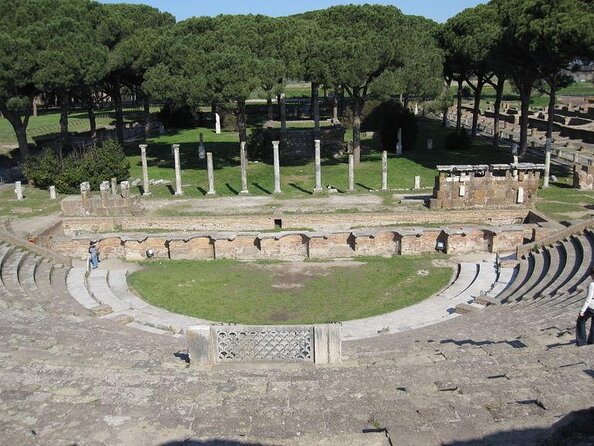
- Thermal baths, theatre, houses, and villas mapped into one easy flow.
- Museum time with sculptures and sarcophagi that add emotional context to the ruins.
- Impressive mosaics and visible infrastructure like plumbing, which makes daily life feel real.
- Easy timing at 3:30 pm for an afternoon break, ending at the on-site café.
Ancient Ostia: Why this feels like a smarter Rome “upgrade”
Most first-time Rome plans chase the same big names. Ancient Ostia is different. It’s a large archaeological site, but the experience is designed to help you read it like a city instead of just looking at old stone.
The best part for me is that the guide turns the site into something you can picture. You’re not left with vague explanations. You get a guided route that connects the public spaces and the everyday spaces, and it helps you understand why people built these places where they did, including the old Roman harbour context.
This matters because Ostia can look overwhelming if you’re on your own. With a private guide, you can ask questions, slow down at the good sections, and actually connect the dots between bath areas, entertainment spaces, homes, and the museum.
There is also real value in the timing. Starting at 3:30 pm, you can do this without wrecking your whole day. You get a half-day feel, even though it runs about three hours. And the tour ends inside the site in front of the café, which is handy when you want a simple end-of-tour reset.
You can also read our reviews of more private tours in Rome


What you’ll see at the Parco Archeologico di Ostia Antica
You’ll spend the whole tour at the Parco Archeologico di Ostia Antica, the archaeological park for Ancient Ostia. The visit is built to cover the highlights that most people miss, and it moves through the big categories of Roman urban life.
The route generally emphasizes three things:
- Public life (places people gathered, watched, and moved through)
- Private life (houses and villas, showing how homes worked)
- Culture and memory (religious areas and a museum with key collections)
It’s a lot of ground for a short afternoon. That’s why the private format helps. Your guide can tailor the emphasis to what you care about, rather than forcing the same stop-by-stop script on everyone.
Stop 1: Thermal baths, theatre, and the “public city” you can read
The tour starts at the heart of the archaeological site: the area with the thermal bath remains. These are more than just leftover walls. A good guide helps you understand the practical layout cues, like how people would have used the space and how the building supported daily routines.
From there, you move toward the theatre. Roman theatres can be easy to glance at when you’re standing alone. With a guide, you can focus on what the structure is telling you about entertainment and public gathering. If you like architecture or you just want a better sense of how people spent their time, this part is a solid payoff.
In the reviews, guides stood out for how they made the city come alive with stories and explanations. That’s exactly what helps at bath and theatre areas. It gives you a mental picture of the scale and the function, so you aren’t just trying to guess what happened there.
The main drawback here is pacing. Because the tour is about three hours, you will not “wander forever.” You’ll see a lot, but you’ll also be moving. If you prefer long, slow museum-style browsing, you’ll need your guide to adjust the stops so you can catch your breath and not just check boxes.
Houses, villas, and the comfort of everyday details
After the public spaces, the tour shifts into houses and villas. This is where Ostia really earns its keep as a city, not just a ruin field.
These areas are valuable because they help you imagine how ordinary routines might have looked in Roman life. Even if you don’t consider yourself a “ruins person,” homes give you human scale. You start seeing design choices in terms of living, not only in terms of grand civic statements.
The reviews also point to multistory buildings and the kind of city planning you can recognize when someone tells you what to look for. And they mention plumbing, which is a big deal because it makes the place feel practical. When you see infrastructure, you stop treating the site like scenery and start treating it like a system that worked for people.
If you love details, this is the part you’ll likely remember. If you don’t, ask your guide where the best layout cues are, so you don’t have to “guess” what matters. The private format is meant for that kind of targeted interest.
Religious places and the museum collection that adds meaning
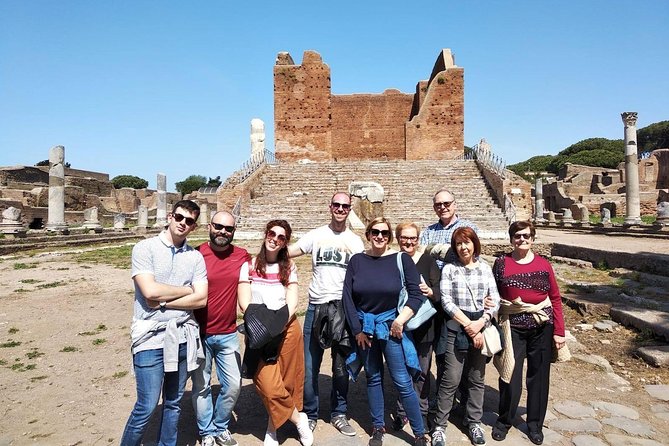
Ostia Antica also includes religious places, and the guide’s job here is to connect the physical remains to what they likely meant in the daily flow of a city. These areas can be harder to interpret on your own, because the point is not only visual. A guide helps you read the purpose behind the space.
Then you move into the museum. The museum is described as having a little but extremely important collection, including ancient sculptures and sarcophagi. Even if you’re not the type who loves museum stops, this is the kind of add-on that changes how the ruins land in your brain.
Sarcophagi especially can give the site an emotional side. Stone streets and building footprints are one thing. When you see items connected to death, memory, or commemoration, the place feels more complete.
If you’re the kind of traveler who likes a blend, this is the right order. You get the city layout first, then the museum helps with context after your eyes have already learned where you are standing.






The guides: warmth, pacing, and making Rome feel understandable
One reason this tour scores so well is the people leading it. The tour examples include guides like Vincenzo and Roberto, and both come across as warm, friendly, and strongly able to explain what you’re seeing.
What I’d watch for in this kind of private experience is the difference between facts and interpretation. The best guides do both. They’re friendly, but they also help you connect the mosaics, the buildings, and the city design into one coherent story.
In particular, Roberto’s style, as described in the feedback, focuses on helping you imagine Roman commercial and political areas, plus the day-to-day texture of traders, bakers, shop keepers, bars, and restauranteurs. That kind of framing is exactly what makes a site like Ostia worthwhile, because it keeps you from seeing only stones.
Likewise, Vincenzo’s approach is praised for sparking imagination and holding attention. That’s what you want at a place that can feel repetitive if you’re on your own. With guidance, you get an orderly flow, not random wandering.
Mosaics, plumbing, and why the small signals are the big story
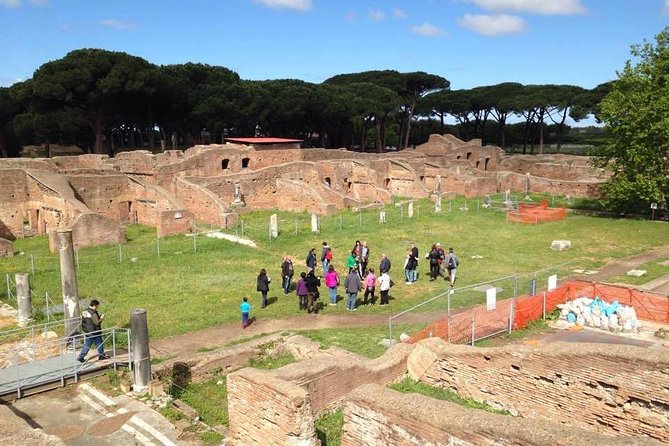
If you love visual details, you’re in luck here. The feedback highlights mosaics as a standout, described as very well preserved, and also notes the scale, saying it can feel like Pompeii without the same crowd pressure.
Even if you don’t compare it to Pompeii, the practical point is clear: mosaics are one of the fastest ways to make a ruin feel “real.” When the flooring is intact and detailed, you can picture a room in use rather than just guessing at it.
Then there’s plumbing and other infrastructure cues. That’s not just trivia. It changes how you read the baths, the homes, and the city planning elements. It also gives you the confidence that you’re seeing not only decoration, but real systems built for daily life.
My advice: let your guide point out a few signature details instead of trying to catch everything yourself. If the guide shows you what to look at in the mosaics and infrastructure, you’ll walk away with more than a list of sites. You’ll have real takeaways.
Timing, meeting point, and how to plan your afternoon
This tour starts at 3:30 pm. The meeting point is at Ostia Antica, Viale dei Romagnoli, 717, 00119 Roma RM, Italy. The visit ends inside the archaeological site, in front of the café, at Café degli Scavi – Ostia Antica, Viale dei Romagnoli, 717, 00119 Roma RM, Italy.
Ending near a café is more than convenience. It helps you avoid the “tour shuffle” where you’re tired, hungry, and trying to find a place while everyone else is leaving. You can grab coffee or tea after, rather than building your evening around transportation and snacks.
In terms of overall energy, plan for moderate walking. The tour is not recommended for travelers with walking disabilities, so if stairs, uneven ground, or longer distances are an issue for you, you should think hard before booking.
Price and value: what you’re really paying for
The price is $156.19 per person for about three hours. For many people, that’s not “cheap,” especially compared with group tours. But this is a private format with included tickets, so you’re paying for less waiting, more explanation, and a guide who can tailor your pace.
The tour includes admission tickets and professional guiding. It’s also described as having a private guide, plus local guidance. In practice, that means you’re not just getting someone who reads. You’re getting someone who translates a complicated place into something you can follow in real time.
Here’s where the value shows up for me:
- You spend less time confused and more time understanding.
- You can ask for more attention where you care most, like mosaics, houses, or the museum pieces.
- You get an easier, shorter visit that still covers the main highlights.
If you’re coming with kids, advanced archaeology interests, or simply want a slower, guided pace, the private setup tends to be worth it. If you’re comfortable navigating ruins on your own and you mainly want a quick photo walk, you might feel like you’re paying extra for narration. But for most people, the guide is the point.
Should you book this private Ancient Ostia tour?
I’d book it if you want a Rome break that actually feels different, and you like the idea of seeing a major ancient city site without spending your whole day in transit. It’s especially worth it if you care about details like mosaics, want a better read on Roman daily life, or you appreciate guides who can make the layout make sense fast.
I’d skip it if you have mobility limits that make walking around an archaeological site difficult. It’s not built for that, and you could end up stressed rather than enjoying the ruins.
If you’re on the fence, use this simple test: do you want to leave with a clearer understanding of how this place functioned as a city? If yes, this private afternoon plan is one of the best ways to get there. If your priority is just ticking off ruins quickly, you may not get as much value from the guiding.
FAQ
How long is the Ancient Ostia private tour?
It lasts about 3 hours.
What time does the tour start?
The start time is 3:30 pm.
Where do I meet the guide?
The meeting point is Ostia Antica, Viale dei Romagnoli, 717, 00119 Roma RM, Italy.
Where does the tour end?
It ends inside the archaeological site, in front of the café (Café degli Scavi – Ostia Antica, Viale dei Romagnoli, 717, 00119 Roma RM, Italy).
Is the tour offered in English?
Yes, it is offered in English.
What’s included in the price?
Tickets are included, along with a professional guide and local/private guidance.
What is not included?
Private transportation and pick up or drop off are not included.
Is there a place to get coffee or tea during the visit?
There is a café inside the archaeological site where you can go at the end of the tour.
Is this tour suitable for people with walking disabilities?
It is not recommended for travelers with walking disabilities. The tour calls for a moderate physical fitness level.
Can I cancel for a full refund?
Yes. You can cancel up to 24 hours in advance for a full refund.
More Private Tours in Rome


More Tours in Rome



More Tour Reviews in Rome
Not for you? Here's more nearby things to do in Rome we have reviewed












Ancient Rome Tours, compared.
 ★ 4.7Colosseum: Underground and Ancient Rome TourFrom $16012,691 reviews
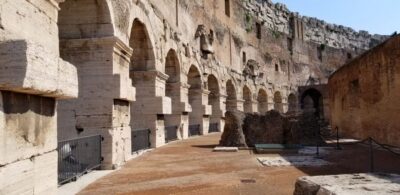 ★ 4.4Colosseum, Ancient Rome Tour or Self AudioGuided TourFrom $392,866 reviews
 ★ 4.9Appian Way, Catacombs, & Roman Aqueducts E-bike TourFrom $851,421 reviews
 ★ 4.9Appian Way E-bike Tour with Catacombs, Aqueducts & FoodFrom $961,210 reviews
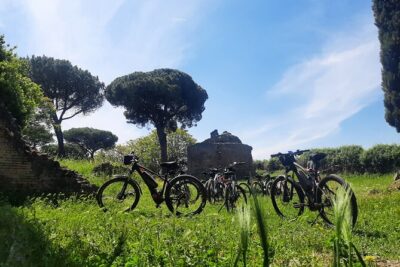 ★ 5.0Appian Way Aqueducts Bike Tour (Catacombs & Lunch Option)From $78975 reviews
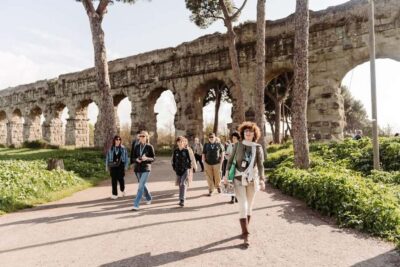 ★ 4.7Appian Way, Aqueducts, and Catacombs TourFrom $64942 reviews
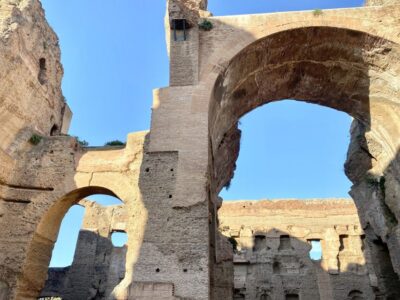 ★ 4.7Caracalla Baths & Circus Maximus — Private or SharedFrom $77835 reviews
 ★ 4.7Colosseum Arena Access and Ancient Rome Guided TourFrom $94774 reviews
Browse the lists this tour appears in