
Reviewed · ANCIENT ROME TOURS
3-Hour Catacumbs and Appian Way Park Guided Tour in Golf Car Pickup
Three hours, and Rome goes underground.
This golf cart tour strings together the Saint Callixtus Catacombs, Appia Antica, and several Roman stop-offs so your day feels like one focused circuit, not a scattered scavenger hunt. You get pickup, a small group, and guided time where it matters most, inside the catacombs.
I particularly like the small group limit of up to 7, because it keeps the pace human and makes it easier to ask questions. I also like that you’re not doing everything by foot, since the car gets you to lesser-accessed places without you spending the whole day “just getting there.”
One consideration: the driver guide isn’t the catacombs guide, so you’ll meet one person for the ride and another on site for the underground portion. It’s still smooth, just different than tours where one guide stays with you the entire time.
Key points that make this tour work
- Up to 7 people means a more personal feel, especially in tight underground passages
- Guided Catacombs of Saint Callixtus includes the admission ticket and an on-site guide
- Golf cart pickup and drop-off help you skip Rome traffic stress and reduce walking
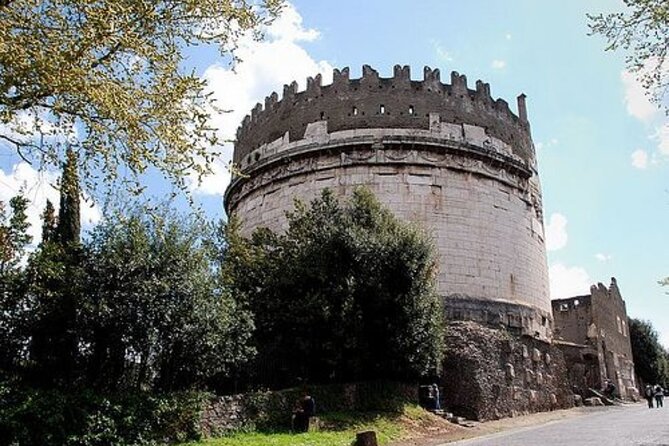
- A smart mix of sites like Villa di Massenzio, the Cecilia Metella tomb, Appia Antica, and Museo delle Mura
- English-speaking guidance keeps the story clear, without you guessing what you’re looking at
The golf cart route out of Rome: faster, easier, and more fun

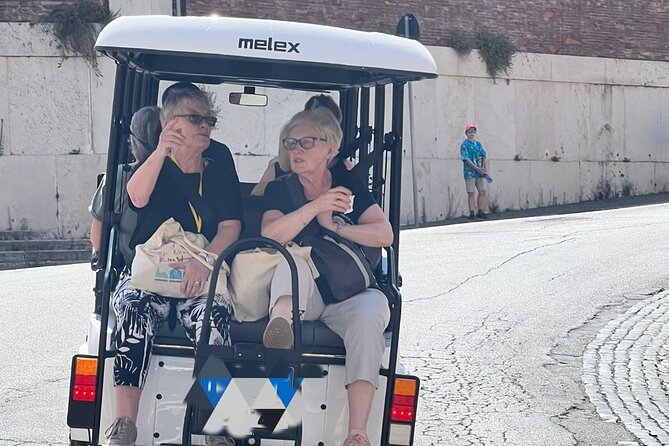
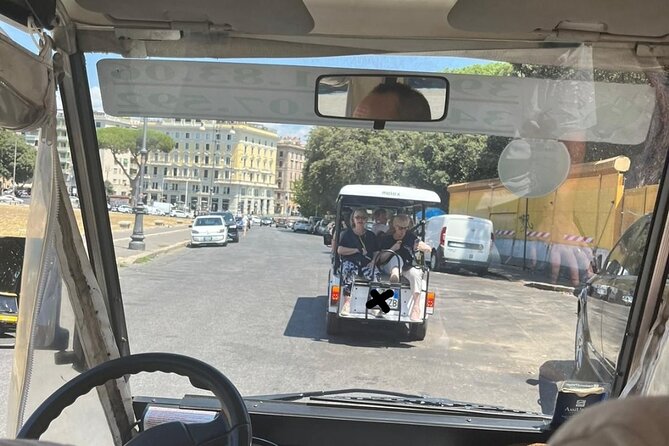
Rome is not built for your feet to do everything in one afternoon. This tour uses a golf cart to solve the “how do we cover ground without wasting time” problem. You start from Via del Circo Massimo, 5a, and if your hotel is in the pickup list, they’ll collect you. If it’s not, you’ll meet at the starting point instead.
The ride itself is part of the experience. One common highlight is the open-air feeling as you leave busier streets behind and head toward the Appian Way area. Along the way, you also get guided context from the person driving the cart, so the history starts before you even reach the first gate.
Because the total time is about 3 hours, it’s a good choice when you want “big hits” without turning your day into an all-day marathon. It’s also a practical plan if you have limited energy, since the itinerary is structured around short guided blocks rather than long self-guided walks.
You can also read our reviews of more guided tours in Rome



Catacombs of Saint Callixtus: the guided underground you actually need
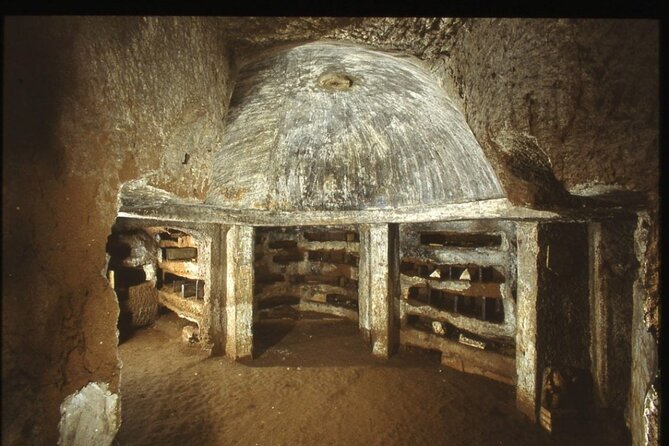
Stop one is the Catacombs of Saint Callixtus, with a 45-minute guided tour and admission included. This is the heart of the trip. Catacombs are not like a normal museum hallway where you can just wander and still feel oriented. They’re a maze, and the guide helps you make sense of what you’re seeing so it doesn’t become a list of shadows and doorways.
The tone here is different. You’re stepping into a solemn space that feels both artistic and deeply human. One standout detail from past visitors is just how extensive the site is, with over 200,000 graves underground, and only about 1% open for walk-through. That fact alone changes how you experience the place, because it puts the “rooms you see” into perspective.
What I like about having an on-site catacombs guide is that they can explain the meaning behind the layout and the symbolism you might otherwise miss. You’re not just looking at walls. You’re understanding why this kind of burial space exists and how communities used these underground networks.
Tip for your planning: wear a calm pace mindset. You won’t be sprinting. Catacombs are meant for slower attention, and the guide’s timing is part of that.
Villa di Massenzio and the road between empires
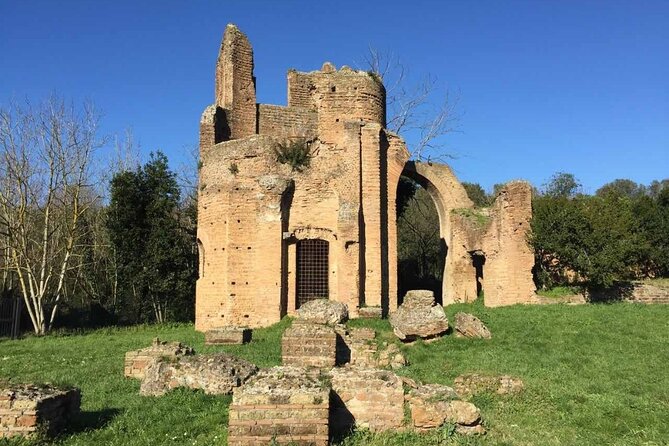
After the underground, the tour shifts back above ground for a quick look at Roman power in stone. Stop two is the Villa di Massenzio with a 30-minute tour. Admission is listed as free for this stop, which helps you feel like the money is focused where it counts, on the catacombs experience.
This stop works well as a break from the enclosed underground environment. You get ruins that help you connect the catacombs and the wider Roman story. Catacombs show one side of life and belief, while a villa ruins stop shows how status and empire played out in daily landscapes.
Then the itinerary keeps building the “Appian Way area” feel with additional classic landmarks:
- a stop at the 2000-year-old tomb of Cecilia Metella
- an overview stop of the Caracalla hot springs
These aren’t long, destination-style visits like the catacombs. Think of them as framing moments. They give you anchor points you can picture later, and they add texture as you move toward Appia Antica proper.
Appia Antica Archaeological Park: the ancient road with time to look
Next up is Appia Antica Archaeological Park, with about 40 minutes on site. Admission is listed as free here too, which means you’re not spending extra to make the route “complete.”
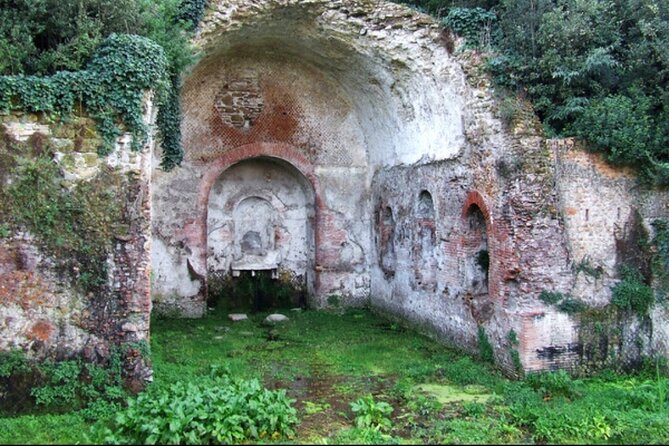
Appia Antica is one of those places where even a short time feels meaningful because you’re walking in the setting that’s been referenced in Roman history for centuries. The guide helps you see more than just stones. You’re generally given enough context to understand why this road mattered, and you get time to take in what’s around you rather than rushing for photos and leaving immediately.
In a short tour format, timing matters. Forty minutes is often the difference between feeling like you “passed through” versus actually seeing the road as a place with atmosphere and scale.
Museo delle Mura and the Aurelian Wall museum stop

The final scheduled stop is Museo delle Mura, the museum tied to the Aurelian Wall. You’ll have around 20 minutes here, with admission listed as free.
This is the kind of stop that can surprise you in a good way. Past visitors highlighted that the museum offers a lot to look at and that the viewpoints can be worth the effort. In practical terms, that means you’ll probably spend part of your visit looking around inside and part of it considering the exterior view from the wall perspective.
Even if museums aren’t usually your thing, this makes sense in the route because it adds one more layer to the Rome story: defenses, boundaries, and how the city protected itself. It’s also a satisfying punctuation mark after the Appian Way segment, because it shifts you from road history to city-scale structure.
A few more Rome tours and experiences worth a look





How the guides and drivers shape the experience
This tour depends heavily on the quality of the storytelling, and you can see the pattern in the standout feedback people share.
You’ll have a cart driver who provides guidance on the way to the catacombs. Then, once you reach the underground site, there’s an on-site catacombs guide. That two-person setup is not a flaw, but it does change the flow. The driver helps you get oriented and sets up context, while the catacombs guide focuses on the underground navigation and interpretation.
Two names come up often in accounts of strong service: Andrea and Kelly. People praise them for how they explain Roman history and make it feel like conversation, not just facts recited into your headset. If you’re choosing this tour because you want the story to come alive, this is a big reason it performs well.
One more small but meaningful point: the driver is responsible for handling Rome traffic while you’re in a cart. In short tours, that matters because it protects the timeline so you don’t feel like you’re constantly waiting.
Price and value: what $212.92 buys you in real terms
At $212.92 per person, this isn’t a budget add-on. You’re paying for:
- pickup service where available
- a golf cart driver guide experience
- a guided catacombs tour with admission included
- multiple stop-offs that otherwise take coordination to combine
- a small-group cap of 7 travelers (which usually makes guides more responsive)
Here’s the value logic I’d use: the catacombs are the expensive and tricky part to do well, because you want direction underground. This tour packages that with transportation and a guided structure around it. The other stops being listed as free admissions (Villa di Massenzio, Appia Antica, Museo delle Mura) helps keep the total experience from turning into a pile of separate ticket purchases.
If you were to try to stitch together a catacombs visit, Appia Antica time, and the wall museum on your own, the biggest cost is not only money. It’s time, navigation, and the mental load of fitting everything together in a tight window.
This tour is also booked a lot in advance, averaging 74 days ahead, which is a sign that people plan this as a must-do. If your dates are fixed, I’d treat it like a timed slot, not a casual whim.
Who this tour is best for (and who should pass)
I’d point this toward travelers who want a high-signal Rome afternoon. If you enjoy Roman history and you like the idea of a guided explanation where it really matters (inside the catacombs), this fits well.
You’ll likely enjoy it if:
- you want to see Catacombs of Saint Callixtus plus Appia Antica in one outing
- you prefer smaller groups and easier logistics
- you don’t want to spend your day coordinating rides for multiple sites
- you want English guidance
You might consider another option if:
- you hate the idea of having different guides for different parts
- you want a long, slow walk with lots of independent exploring time (this is more structured and time-boxed)
The good news is that the tour notes that most travelers can participate, and service animals are allowed.
Practical tips before you go
A few things that will make the experience smoother:
- Budget for tips for both the driver and the catacombs guide, since they are not included in the price.
- Bring your phone for the mobile ticket.
- Wear comfortable shoes, because even with a cart, you’ll still do short guided walking segments.
- If you’re traveling with specific interests, ask the cart driver about what you’re seeing while you ride. That pre-story helps you enjoy the underground portion more.
Also, if your schedule is tight or you’re visiting on a day with different opening conditions, the tour notes that you could visit other catacombs sites in the Appian Way area depending on opening times or days. That means some flexibility is built in, even within a short itinerary.
Should you book this catacombs and Appia Way golf cart tour?
Yes, I’d book it if you want one guided plan that hits the big underground site plus the Appian Way context, without turning your afternoon into a transportation puzzle. The best reason is the combination: a guided catacombs visit with admission included, wrapped in efficient golf cart logistics and supported by storytelling along the route.
If you’re the type who likes to understand what you’re looking at, this tour’s format makes sense. The pace is short, but it’s not shallow. You get enough time to see, and you get guidance so it lands.
If you’re unsure, use this quick decision rule: if your top priority is the catacombs and you’d rather pay for structure than coordinate it yourself, this is a strong choice for Rome.
More Guided Tours in Rome



More Tours in Rome


More Tour Reviews in Rome
Not for you? Here's more nearby things to do in Rome we have reviewed












Ancient Rome Tours, compared.
 ★ 4.7Colosseum: Underground and Ancient Rome TourFrom $16012,691 reviews
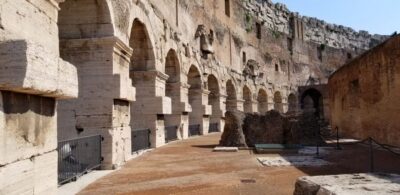 ★ 4.4Colosseum, Ancient Rome Tour or Self AudioGuided TourFrom $392,866 reviews
 ★ 4.9Appian Way, Catacombs, & Roman Aqueducts E-bike TourFrom $851,421 reviews
 ★ 4.9Appian Way E-bike Tour with Catacombs, Aqueducts & FoodFrom $961,210 reviews
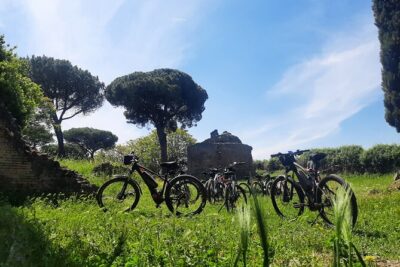 ★ 5.0Appian Way Aqueducts Bike Tour (Catacombs & Lunch Option)From $78975 reviews
 ★ 4.7Appian Way, Aqueducts, and Catacombs TourFrom $64942 reviews
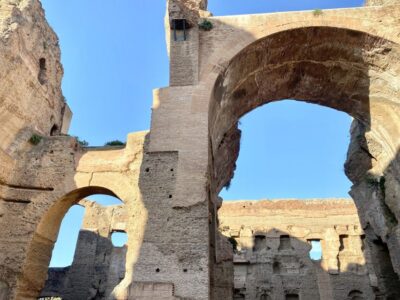 ★ 4.7Caracalla Baths & Circus Maximus — Private or SharedFrom $77835 reviews
 ★ 4.7Colosseum Arena Access and Ancient Rome Guided TourFrom $94774 reviews
Browse the lists this tour appears in