
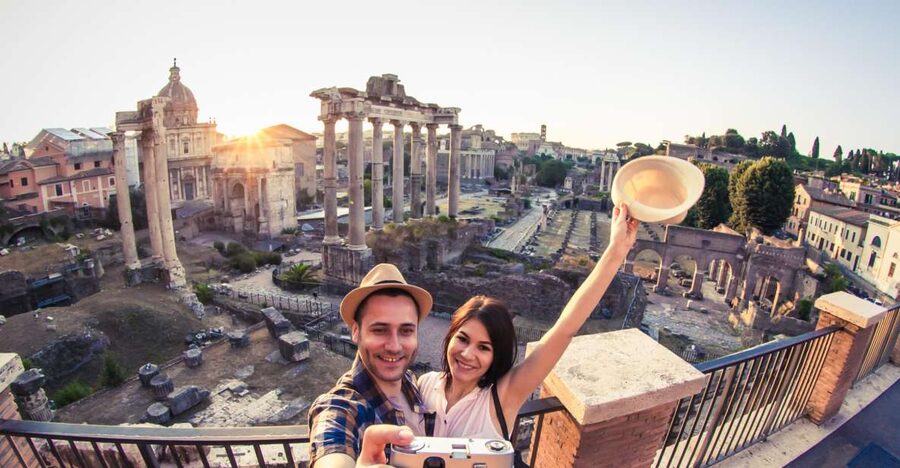
Reviewed · ROMAN FORUM & PALATINE TOURS
Palatine Hill and Roman Forum Tour with Fast-Track Entrance
Rome’s oldest stories still hit hard.
This fast-track Palatine Hill and Roman Forum tour is interesting because you walk the exact “city center” where emperors, senators, and soldiers once acted out power. I love the skip-the-line fast-track entrance because it gets you onto the site sooner, and I also love how the guide uses the ruins to explain myths and everyday life, not just dates. One thing to keep in mind is the tour involves moderate walking and some steps, so it’s not a good pick if you have mobility issues.
In just two hours, you cover a lot of the Forum’s most recognizable monuments, then end back where you started. You’ll have headsets in larger groups (over 8 people), which helps a ton in a windy, noisy archaeological park. If you’re hoping for a relaxed stroll with minimal walking, plan differently.
Key highlights to look for
- Fast-track entrance: a separate entrance meant to reduce waiting at the main entry.
- Headsets (when groups are 8+): easier listening for the guide’s stories and explanations.
- Palatine Hill viewpoints: the overlook across the Circus Maximus and the Forum valley.
- Romulus and Remus storytelling: myth ties directly into what you see in front of you.
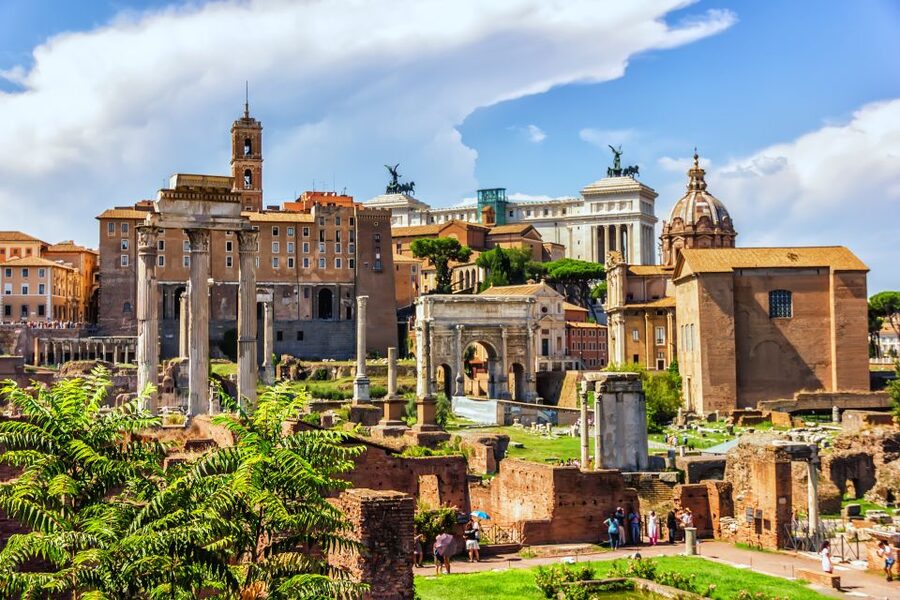
- Roman Forum anchor sites: Temple of Julius Caesar, Arch of Titus, Vestal Virgins, Senate House, and Basilica of Maxentius.
- A clear route for a short time: enough time for big monuments and photos without feeling lost.
Fast-Track Entry at the Roman Forum Gate
Meeting point is in front of Oppio Caffe on Via delle Terme di Tito, right at the corner of Via Nicola Salvi. You’ll spot your guide holding a signboard with your name, and you finish back at the same place. That round-trip setup matters in Rome, because once you’re inside the Forum area, wandering off can eat your limited time.
The big win is the fast-track access. It’s not a magic bubble that removes every delay, because you still pass security metal detectors, and you may still see some waiting on-site. But in practice, fast-track is about reducing the time you’re stuck before you even start learning. For a 2-hour tour, that timing difference is huge.
Here’s what I like about the structure: the guide doesn’t just start talking after you arrive. You’re guided right into the walking flow, which helps you figure out where things are as you go. And because you get headsets in groups over 8 people, you can actually hear the explanation even when the crowd noise is loud or you’re a few steps from the group.
One practical note: you need a valid passport or ID card for each person, and the security check matches what you booked. If you show up with the wrong name spelling or an expired ID, you can get blocked from entry. Bring the ID you’ll actually use for the tour, and not your “I think this is valid” alternative.
You can also read our reviews of more tours and experiences in Rome.
Palatine Hill: 9th-Century BC Roots and the Romulus Myth
Palatine Hill is where the tour begins, and it’s the right choice because Palatine feels like the “upstairs” version of Rome’s ruins. It’s also where the story of Rome starts to take shape beyond monuments. The tour frames Palatine as the site of an older settlement, reaching back to about the 9th century BC, so you’re not only looking at imperial-era drama, you’re seeing how the whole place began.
Then you get the myth side, which is one reason this tour earns its fans. The legend of Romulus and Remus is tied to what you see, so the wolf-raised brothers are not just a bedtime story. You’ll hear the origin myth as a way to understand why people kept returning to this area, even after the early settlement days.
Expect the route to include viewpoints. The guide steers you toward a panorama across the Circus Maximus and down over the valley of the Roman Forum. Even if you think you know what Rome looks like from photos, this viewpoint hits differently because you can connect the dots: how processions moved, where power concentrated, and why this area mattered.
The drawback here is physical reality. Palatine involves moderate walking and some steps. Reviews often mention stairs or a climb feel once you’re up top, so wear comfortable shoes you trust. Also, no baby strollers are allowed, and there’s no mention of cloakroom services once you’re in the Forum area, so bring only what you can carry easily.
For photos, I’d treat Palatine as your “warm-up” for the Forum. Get your wide shots from the overlooks, then switch to the more detailed monuments once you descend.
Entering the Roman Forum: The City Center You Can Actually See
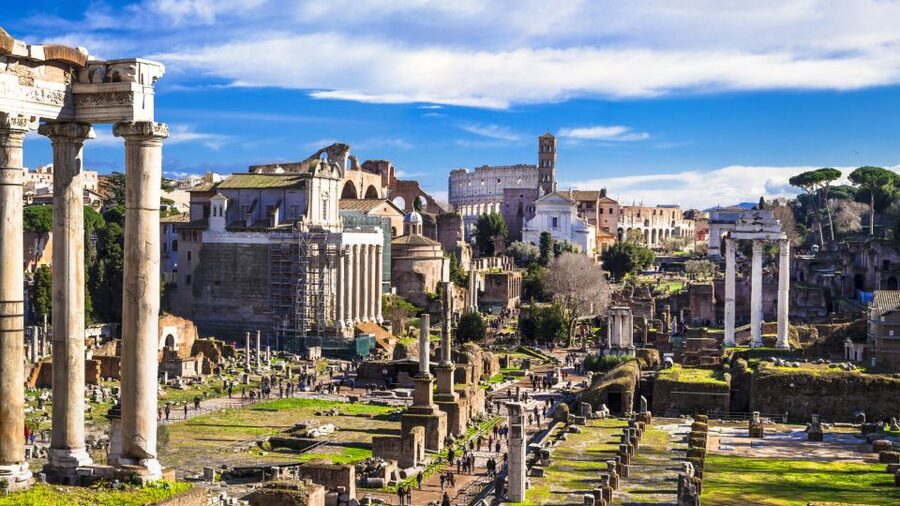
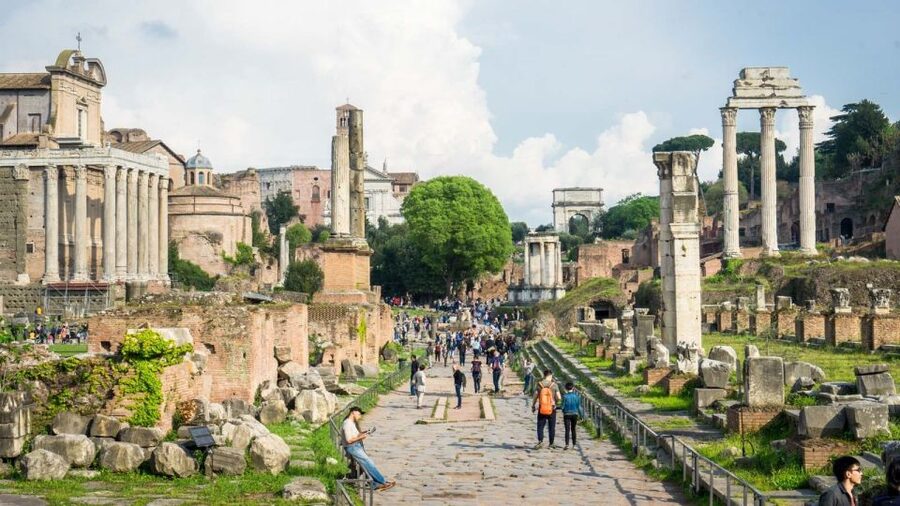
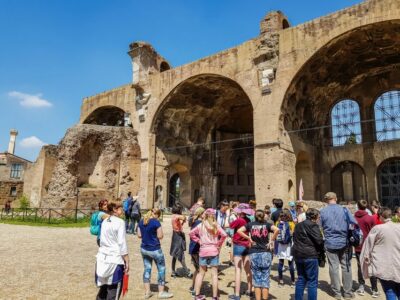
The Roman Forum is one of the most important archaeological zones in the world, and it’s also the kind of place where you can feel overwhelmed fast. The tour format helps because you’re given a route and a narrative, instead of walking from one pile of stones to the next.
This is where you’ll hear about Rome’s power and how it presented itself in stone and ritual. The guide connects what you’re seeing to what the spaces were used for, including political life, public ceremonies, and the kind of status people tried to project.
One concept that really helps visitors: the Forum as a stage. You see it as a set of connected locations, not isolated sights. That makes it easier to understand why the tour includes specific “anchor” monuments instead of trying to cover everything in the entire archaeological area.
You’ll also cover the Sacred Way, described as the triumphal road where centurions of Caesar marched after their battles and conquests. That single detail changes your perspective. Instead of imagining random ruins, you’re imagining movement, spectacle, and crowds walking through space designed for authority.
Temple of Julius Caesar: When Politics Became Architecture
The tour stops at the Temple of Julius Caesar, and this is one of the moments where a guided explanation earns its keep. A temple sounds simple on a map, but in the Forum context it’s political messaging in stone.
On your walk here, the guide’s job is to help you understand why Caesar mattered beyond his campaigns. The point is not only that a building exists, it’s that the Forum carried the message that Rome’s leaders were more than just winners of battles. They were also part of a long-term system that people continued to recognize.
If you’re the kind of visitor who usually zooms through Roman ruins, this stop is worth slowing down for. Even with a short tour window, the Temple of Julius Caesar helps you “read” the rest of the area as a connected statement about rule.
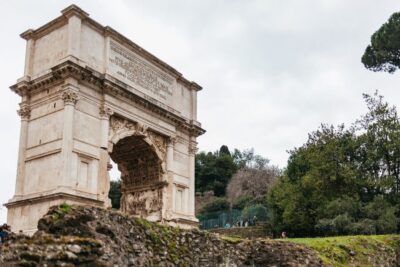
Arch of Titus: A Monument to Victory and Performance
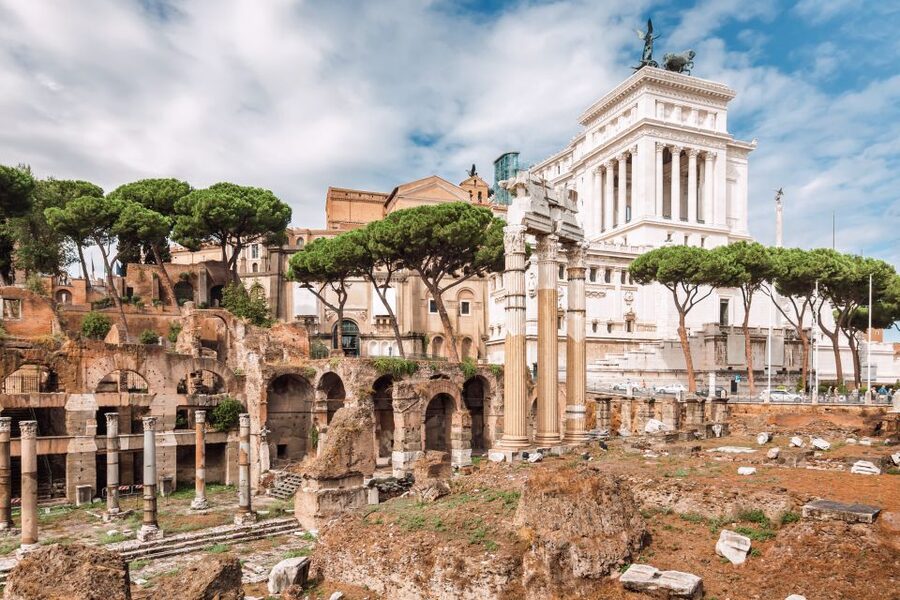
Next comes the Arch of Titus, one of the Forum’s best-known structures. What I like about including it on a short tour is that it’s visually strong and story-driven. The arch is basically a Roman shortcut to meaning: you’re looking at how empire chose to represent victory.
In guided tours like this, the Arch of Titus works as a turning point. It gives you a quick, clear example of how public monuments were used to frame events as proof of legitimacy. You’re not only looking at “ancient stuff,” you’re learning how Rome created an emotional link between power and the public.
Expect enough time to take pictures here, but also don’t rush past the explanation. The arch makes the story easier to hold in your head as you move on to the more fragmented ruins.



House of the Vestal Virgins, Senate House, and Basilica of Maxentius
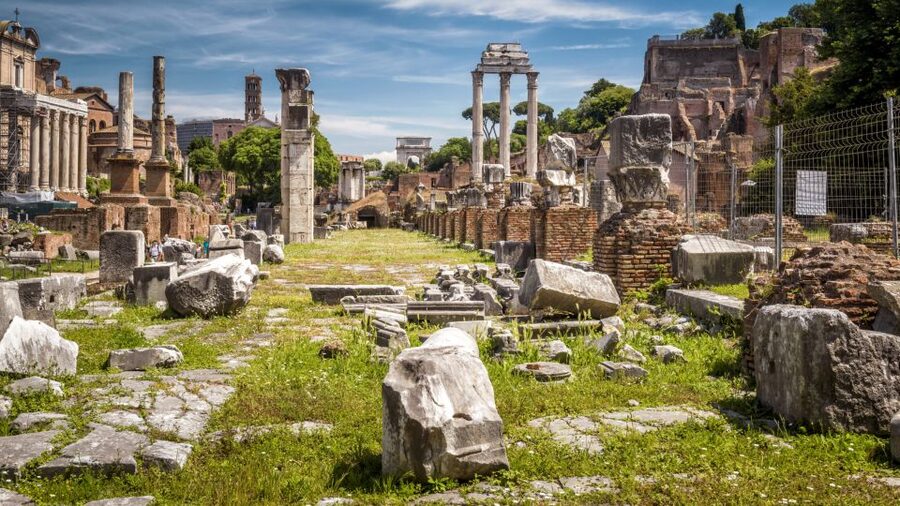
This is the Forum stretch where the tour feels most complete, because it covers different sides of governance and religion.
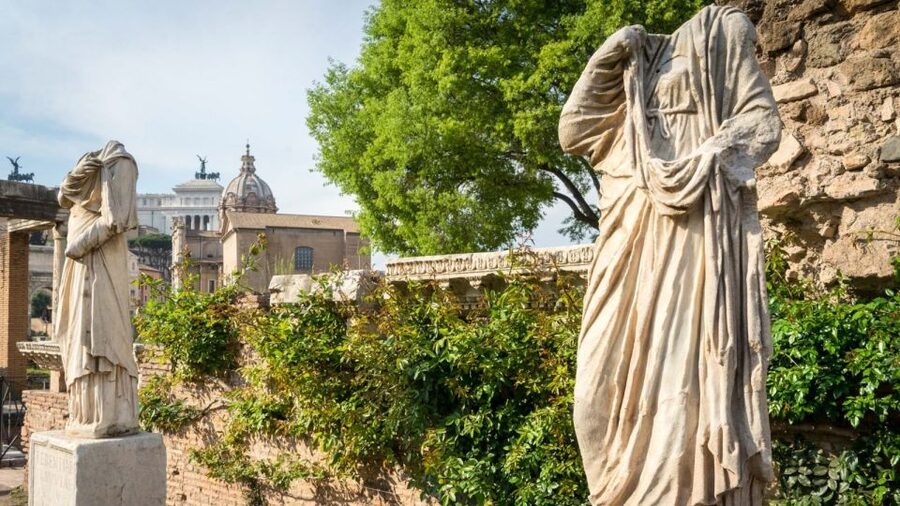
You visit the House of the Vestal Virgins, which helps explain how Rome mixed ritual authority with state power. The Vestal Virgins were not just a footnote. Their presence is a reminder that Rome treated religion and politics as linked systems.
Then you’ll see the Senate House, which adds another layer. Even if the physical structure is partly gone, the Forum context tells you why senators belonged in this space. This is where civic leadership and legitimacy would have felt close to everyday public life.
Finally, the tour includes the Basilica of Maxentius, a major architectural presence. Basilicas were central gathering spaces, so this stop helps you imagine how people moved through civic life. The Basilica of Maxentius is also a good “anchor” when you’re tired, because the scale and layout give your brain something clear to organize.
One practical consideration: these are not “one and done” stops. They’re more like chapters. If you want your best experience, listen first, then take photos. The tour is only two hours, and these sites are the kind that reward attention.
Views, Photos, and Why 2 Hours Still Feels Like Plenty
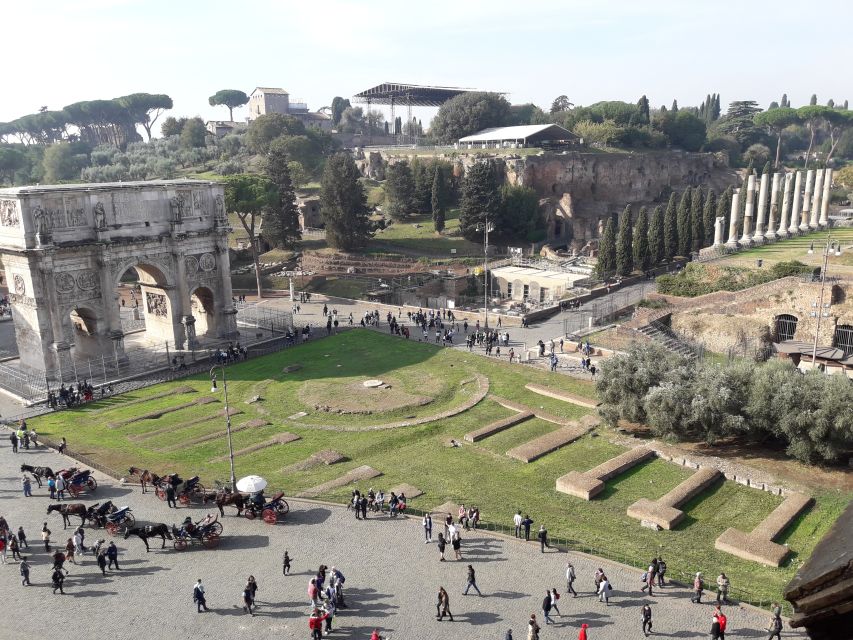
A 2-hour tour sounds short until you’re standing in the middle of the Forum. The area is big, and it can take time to orient yourself. The tour’s structure helps because it bundles the most recognizable and meaningful sites into a tight route.
You’ll also get scenic highlights from Palatine Hill, including the look across the Circus Maximus and toward the Forum valley. Those views are a huge part of why people walk away feeling like they “got it,” not just that they saw ruins.
Photo-wise, you’ll likely be able to capture the classic Forum frames and wider views from Palatine. Bring a phone camera, but also plan to take some slow time for the big monuments. The guide’s storytelling can turn a quick photo stop into a “now I understand what I’m photographing” moment.
Weather matters. The tour includes moderate walking and some steps, and Rome heat can be real. If you’re going in summer, wear breathable layers and plan hydration. The tour doesn’t include food or drinks, so you’ll want your own water strategy before and after.
Languages, Headsets, and How the Guide Makes Ruins Make Sense
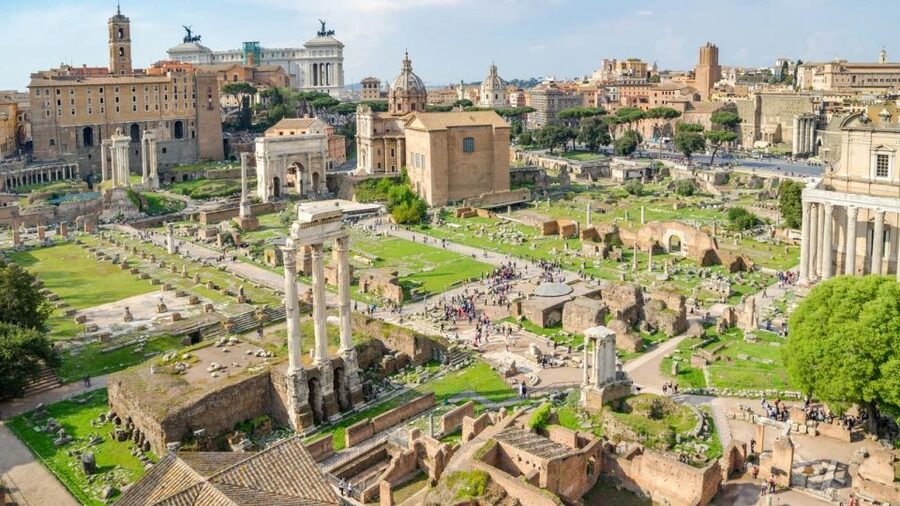
This tour is guided in multiple languages, including Portuguese, English, Italian, Spanish, German, and French. That’s a big deal in Rome, where the best tours depend on your ability to follow the story as you walk.
The headsets (for groups over 8 people) are another practical upgrade. You’re not stuck trying to read lips across a crowd. You can focus on the monument and listen without constantly turning your head or losing the explanation.
You’ll also benefit from guides who bring the site to life with clear storytelling. Names that pop up repeatedly in high ratings include Antonio and Antonia, plus guides like Simona, Zenda, Katia, Andy, and Michele. The consistent theme is that the guide turns myths and architecture into something you can picture, not just something you can memorize.
There’s also a pattern in feedback about organization. The best part of a fast-track tour is not the ticket. It’s how smoothly you move once you’re inside. With this format, you end back at the meeting point, then you’re free to linger nearby on your own if you want.
Who Should Book This Tour, and Who Should Skip It
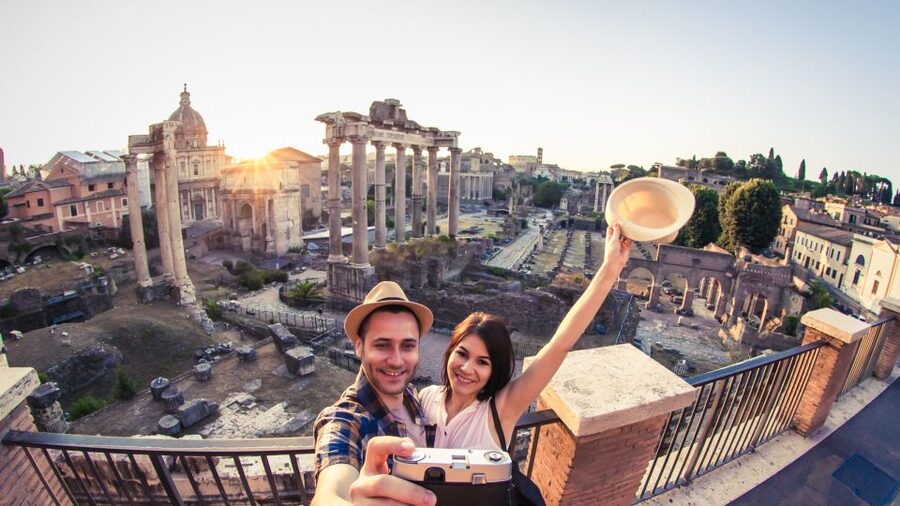
This tour fits best if you:
- Want guided context for the Forum and Palatine, not just photos.
- Have limited time in Rome and want maximum meaning per minute.
- Like stories that connect myths to real locations, including the Romulus and Remus legend.
- Prefer listening with headsets and staying in a guided flow rather than mapping everything yourself.
This tour is not for you if:
- You need wheelchair-friendly access. The tour is listed as not suitable for wheelchair users.
- You have pre-existing medical conditions, mobility impairments, or back problems, based on the activity’s “not suitable for” notes.
- You travel with a stroller. Baby strollers are not allowed.
- You plan to bring bulky items. Large bags, backpacks, and suitcases are not permitted in the Roman Forum, and there’s no cloakroom service mentioned.
Also note the item restrictions: no selfie sticks, no alcohol and drugs, no sprays or aerosols, no glass objects, no walking frames, and no weapons or sharp objects. It’s a straightforward security-and-compliance situation.
If you’re bringing kids, it can work well because the stories can be engaging. Just remember there’s walking and some stairs involved, and strollers are not allowed.
Price and Value: Is $293.41 Worth It?
At $293.41 per person for a 2-hour tour, you’re paying for three specific things: a guided walkthrough, fast-track access, and a small-group experience with headsets (when group size is over 8). That’s the value equation.
Here’s what justifies the price:
- Fast-track entrance saves time when your day is already stacked with Rome landmarks.
- A real guide adds meaning. The Forum can be confusing, so guidance often turns “ruins” into a story you understand.
- Headsets keep you from missing details and reduce the frustration of crowd noise.
Here’s what keeps expectations realistic:
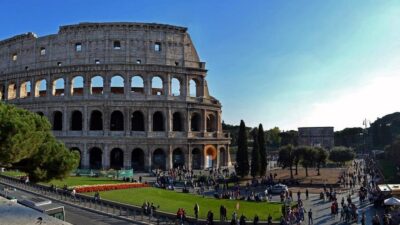
- Colosseum is not included, so you’re paying only for Palatine and the Forum.
- The tour does not include food or drinks.
- There is no hotel pickup or drop-off, so factor in getting to the meeting point on your own.
If your budget is tight and you can handle self-guided audio, you might do the sites independently. But if you want your time used efficiently, and you’d rather hear the story in the actual space, this price is easier to justify.
Should You Book This Palatine and Roman Forum Tour?
I’d book it if you’re aiming for a high-impact Rome day with strong structure. This tour is built for visitors who want the Forum to make sense fast, and who value fast-track entry and a guide that explains what you’re seeing as you walk.
Skip it if you’re sensitive to walking or steps, or if you need wheelchair access. Based on the rules, the restrictions also mean you should pack light and leave behind strollers, selfie sticks, and anything that might trip security.
Quick decision checklist:
- If you want guided context for Palatine Hill and the Roman Forum in two hours, book.
- If you’re comfortable doing stairs and moderate walking, book.
- If mobility is an issue, look for a different format that matches your needs.
If you do book, do yourself a favor and bring the exact ID you’ll use at the entrance. That one detail can make the difference between walking in and getting blocked at security.
FAQ
How long is the Palatine Hill and Roman Forum tour?
The tour duration is 2 hours. Starting times depend on availability.
Do I get fast-track entrance to the Roman Forum and Palatine Hill?
Yes. The tour includes fast-track access through a separate entrance to the Palatine Hill and Roman Forum.
Where do I meet the guide, and where does the tour end?
You meet in front of Oppio Caffe on Via delle Terme di Tito, at the corner of Via Nicola Salvi. The tour ends back at the meeting point.
What is included in the tour price?
Included items are an official tour guide, headsets (over 8 people), and fast-track access to Palatine Hill and the Roman Forum. A private tour guide service is included if you choose the private option.
Is the Colosseum included?
No. The Colosseum is not included in this activity.
What do I need to bring?
Bring a passport or ID card, plus comfortable shoes.
What items are not allowed?
Baby strollers, luggage or large bags, selfie sticks, backpacks, alcohol and drugs, sprays or aerosols, glass objects, walking frames, and weapons or sharp objects are not allowed.
Do I need ID for entry?
Yes. You must provide valid ID for each person entering the Roman Forum and Palatine Hill, and security may prevent entry if your ID does not match the booking information.
What languages are available for the live guide?
The live guide is offered in Portuguese, English, Italian, Spanish, German, and French.
Is this tour suitable for wheelchair users?
No. It is listed as not suitable for wheelchair users and not suitable for people with mobility impairments or pre-existing medical conditions.
More Tours in Rome
More Tour Reviews in Rome
Not for you? Here's more nearby things to do in Rome we have reviewed





Roman Forum & Palatine Tours, compared.
 ★ 4.8Colosseum, Palatine Hill and Roman Forum Guided TourFrom $5232,814 reviews
 ★ 4.7Guided Tour of Colosseum, Roman Forum & Palatine HillFrom $5527,897 reviews
 ★ 4.5Colosseum, Roman Forum and Palatine Hill Guided TourFrom $5923,903 reviews
 ★ 4.4Colosseum, Forum & Palatine Hill Tour & Optional ArenaFrom $5813,839 reviews
 ★ 4.6Colosseum, Palatine Hill & Roman Forum Guided TourFrom $5112,703 reviews
 ★ 4.6Colosseum Arena, Palatine Hill & Forum Guided TourFrom $7310,584 reviews
★ 4.4Colosseum, Roman Forum And Palatine Hill Guided TourFrom $428,420 reviews
★ 4.6Colosseum Arena, Palatine Hill & Forum Guided TourFrom $7310,584 reviews
★ 4.4Colosseum, Roman Forum And Palatine Hill Guided TourFrom $428,420 reviews
 ★ 4.3Colosseum, Forum, & Palatine Hill with Audio GuideFrom $444,591 reviews
Browse the lists this tour appears in