

Reviewed · SELF-GUIDED TOURS
Rome+Jubilee Audioguide – TravelMate app for your smartphone
A phone audio guide beats waiting in lines. You get a smart way to see Rome with self-guided autonomy and offline audio on your own phone, without hunting for paper tickets or wrangling a group. I like that the content is packaged like a real guide beside you, not a random playlist, with professional narration aimed at making monuments make sense fast.
This TravelMate Rome plus Jubilee experience is priced low at $4.52 per person and built to be reused. One possible drawback to know up front: it depends on your phone working smoothly (download, audio playback, and activation), so plan for a backup moment if technology misbehaves.
Key Points at a Glance
- No paper tickets: download and start, no meeting point to chase
- Offline listening: use audio online or offline, your call
- Replays included: tracks don’t expire after you activate
- Wide coverage: Jubilee, the Vatican, ancient Rome, and major neighborhoods
- More than audio: you can also read the text inside the app, plus a quiz
Setting Up the TravelMate App in Real Rome Time

The big advantage here is simplicity. There is no meeting point, and the activity is meant to work like this: you download TravelMate, enter your activation code, and you can start right away wherever you are standing. For Rome, that matters. You can’t always predict crowds, weather, or how long you linger at a church door.
Setup starts with the app download. On Android, you find an app called TRAVELMATE in the Play Store. On iPhone, you look for TRAVELMATE TM in the App Store. Then you need your 10-digit activation code.
Your activation code is inside the email, in a spot labeled Show activity details (or Show your tickets here). Tap Show activity details, then open the barcode area in the orange frame. The small, 10-digit number just under that barcode is your code. If you use the GetYourGuide app, the code is also available via Show ticket in the App, again by tapping the barcode and reading the 10-digit number below it.
One more practical note. The experience is set up so you use your own smartphone. That means you are not sharing someone else’s device, and you get to use headphones you actually like. Earphones are recommended for a better listening experience, and in Rome, that is not optional. With scooters, buses, and street chatter, you want clear audio.
A few more Rome tours and experiences worth a look


How Long It Lasts, and Why Replaying Matters
This is not a one-and-done audio download. It is valid for 1095 days from your first activation, which is about three years. That changes the value. You can listen once on your first trip, then again later, or use parts as you return to neighborhoods you love.
You also have flexibility in how you listen. The app can play audio online or offline, and you can read the text of the audio files in the app. That combination is useful in Rome, where you might want audio while walking, then text while sitting on a bench or waiting for a museum line to move.
In the real world, that makes the “guide” feel more forgiving. You can stop for coffee, go off your plan, and come back without restarting anything. It is like having a guide you control, rather than one that controls your schedule.
What You Actually Get: Jubilee to Villa Farnesina in About 4 to 5 Hours
The materials describe 91 audio content items totaling 271 minutes, and the included section also mentions 88 audio content items totaling 262 minutes. Either way, you’re looking at roughly four and a half to five hours of listening, assuming you play tracks straight through.
Coverage is the real story. The audio list spans the big icons and a lot of Rome’s most rewarding spots:
- Jubilee
- Colosseum
- Foro Romano (Roman Forum)
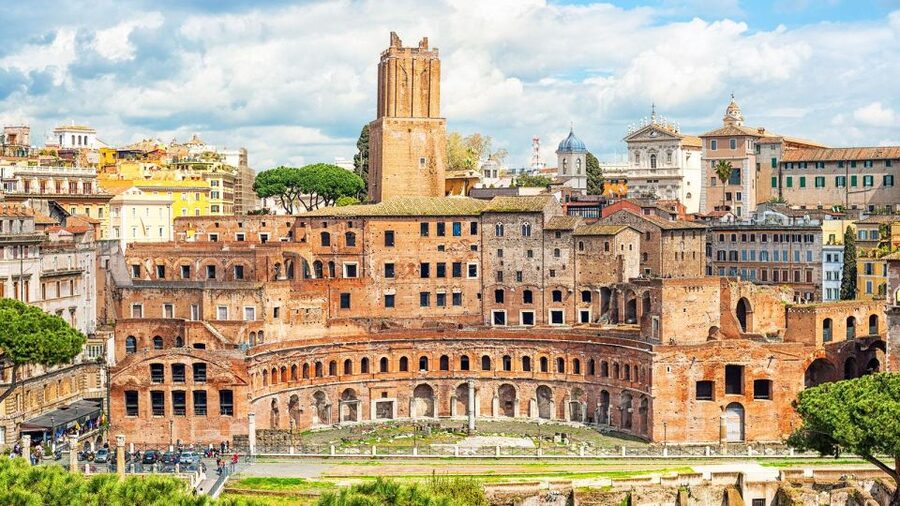
- Foro di Traiano
- Campidoglio e Musei Capitolini (Capitoline Hill and Capitoline Museums)
- Vittoriano e Ara Coeli
- Piazza Venezia
- Terme di Caracalla (Baths of Caracalla)
- Piazza Navona
- Piazza di Spagna
- San Pietro (St Peter’s)
- Musei Vaticani (Vatican Museums)
- Cappella Sistina (Sistine Chapel)
- Palazzi Vaticani (Vatican Palaces)
- Stanza di Raffaello (Raphael Rooms)
- Castel Sant’Angelo
- Fontana di Trevi
- Pantheon
- Galleria Borghese
- Piazza del Popolo
- San Giovanni in Laterano
- San Paolo Fuori le Mura (St Paul Outside the Walls)
- Qui riniale (Quirinal area)
- Via del Corso
- Bocca della Verità
- Chiesa di Santa Maria della Vittoria
- Chiesa di San Luigi dei Francesi
- Chiesa di Santa Maria Maggiore
- Villa Giulia
- Villa Farnesina
The tone is meant to sound like a tourist guide at your side. The content is described as professionally created by high-level authors and interpreted by professionals from TV and radio. That usually helps with clarity, pacing, and keeping you oriented when you’re standing in front of something that looks obvious but has a thousand years of backstory.
Bonus learning tool: there is a quiz section with short questions about the city. It is not a full substitute for a real conversation, but it can help you lock in names and locations as you move.
Ancient Rome, Without the Confusion: Colosseum Through Capitoline
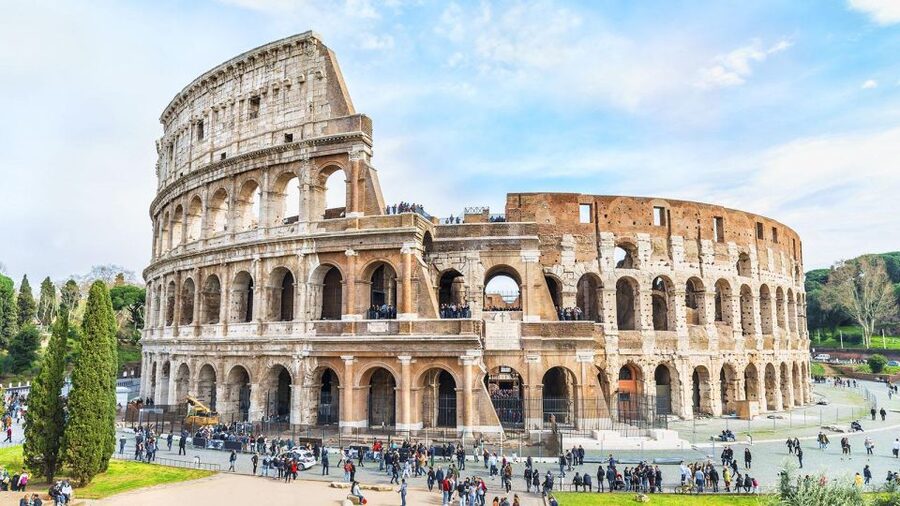
If you’re doing Rome for the first time, start with the ancient core, and use the app to help you “read” the ruins instead of just photographing them.
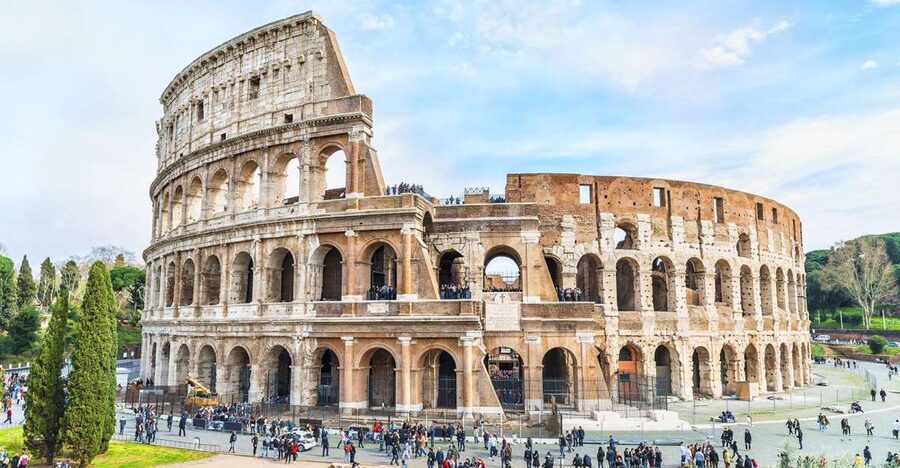
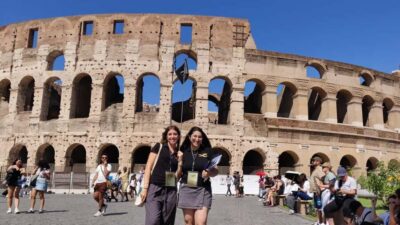
The tracks for Colosseum, Foro Romano, and Foro di Traiano matter because these sites can feel like random stone until someone explains what you are looking at. Colosseum tells you the big picture, then the Forum area helps you understand Rome’s civic life, politics, and how power and religion got tied together in the same spaces. Trajan’s Forum brings in the later imperial layer, so the timeline stops feeling like a blur.
Then you climb into the worldview shift. Campidoglio e Musei Capitolini takes the story from street level into Rome’s idea of authority and memory. The Capitoline is not only about views. It’s also about how Romans collected art, symbols, and heritage into places meant to project legitimacy.
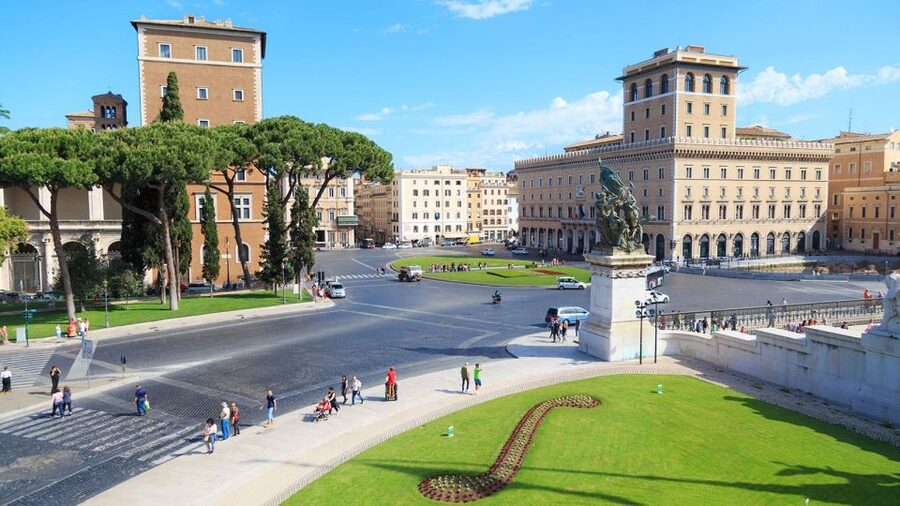
Next, the app includes Vittoriano e Ara Coeli and Piazza Venezia. This is where you go from ancient grandeur to Rome’s more modern monumental language. It’s a useful contrast. You can stand in modern squares and still feel the same “Rome layers on layers” theme, just expressed with different materials and politics.
One practical consideration with ancient Rome. Plan to listen at least partway through each main stop, not every second step. If you play audio nonstop while your eyes are scanning, you can lose details. Use audio as a guide for what to notice, then pause to look yourself.
From Baths to Baroque Squares: Caracalla, Piazza Navona, Trevi, and Pantheon

Ancient Rome continues with Terme di Caracalla. These baths often get less hype than the Colosseum, but they’re easier to imagine once you understand how Roman bathing worked. The audio track can help you picture the scale of the complex, and why these spaces were part of everyday life, not just a fancy tourist stop.
Then you switch vibe. Rome’s squares are where the city teaches you to slow down.
You’ll get tracks for Piazza Navona and Piazza di Spagna, plus Fontana di Trevi and Pantheon. Each has a different function in your Rome story:
- Piazza Navona works as a living, human-scale stage, where art and street life overlap.
- Piazza di Spagna is a geography lesson, because it’s built around movement and viewpoints.
- Trevi is the “I can’t believe I’m here” fountain moment, but the audio helps you look beyond the crowd.
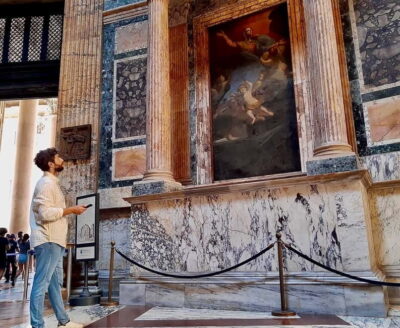
- Pantheon is the architecture lesson. It is one thing to see a dome, and another to understand why it’s a big deal.
The good value of audio here is simple. Instead of reading plaques in the wind, you can listen while you’re standing where the story connects to the building.
If you’re trying to avoid the most exhausting kind of sightseeing, treat these as a cluster. You do not need to follow a fixed route, but you do want to group by walking area. That keeps you from burning the day on transit and lets your ears do their job.





The Vatican, With Clear Headphones and Flexible Time: San Pietro to Raphael Rooms

The app includes multiple Vatican tracks: San Pietro, Musei Vaticani, Cappella Sistina, Palazzi Vaticani, and Stanza di Raffaello. That’s a strong set, because Vatican time can be unpredictable. If you have a day that runs long, you won’t want a system that forces you into one rigid order.
Here’s how I’d use it.
I’d listen to San Pietro first to frame what you’re seeing, then I’d move into the museum sections. When you reach Cappella Sistina, you’ll appreciate having context already in your head. The audio track can help you focus on the big themes rather than trying to decode everything at once.
The Raphael Rooms and Vatican Palaces tracks also make sense for a slower pace. These areas reward close looking, and audio can guide your attention to key details. If your energy dips, you can shorten your listening and come back to text on your phone later. The app allows reading the text, which is helpful when you want to stop moving but keep learning.
Caveat: I’m not told how the app behaves inside every museum area, or whether phone use is always allowed everywhere at all times. You’ll have to follow site rules you see on the ground. But as a planning tool and an explanation layer, it’s a clear fit for Vatican days.
Castel Sant’Angelo, Borghese, and Popolo: Rome’s Middle Layers
Castel Sant’Angelo sits above the river story, and the app includes it as a stop. Listening here can help you connect it to the broader Tiber area. It’s one of those landmarks that makes you feel how Rome keeps reusing and repurposing places across centuries.
Next, there’s Galleria Borghese and Piazza del Popolo. Borghese is a museum target, and Popolo is a city geometry target. If you love art and you also like Rome’s urban planning vibes, pairing them can feel natural. The audio helps you keep the day from turning into only ticket lines and only rooms.
The app also points you toward the Quirinal area and Via del Corso. That’s where you get a more everyday Rome feel. These are the streets and hills that connect the monuments into a city you can actually walk through. Audio here is less about one famous face, more about making sense of how routes form.
Churches, Bocca della Verità, and the Detours You’ll Remember

One reason Rome stays in your head is that the city has smart detours. The app leans into that with several church stops and street-level curiosities:
- Bocca della Verità
- Chiesa di Santa Maria della Vittoria
- Chiesa di San Luigi dei Francesi
- Chiesa di Santa Maria Maggiore
- San Giovanni in Laterano
- San Paolo Fuori le Mura
These are great for days when you want variety and you don’t want every hour to be a major-ticket monument. Audio can help you notice what makes each church different, so you’re not just collecting names.
A tip for using this kind of stop well. Don’t treat every church like a checklist. Pick one or two to listen to fully, then maybe skim the rest while you rest your feet. That keeps your day from getting emotionally flat.
The app also includes Villa Giulia and Villa Farnesina. That’s a nice option if you want gardens or a calmer museum feeling at some point. Even if you only visit one villa, having the audio track can turn it from “pretty place” into “why this place exists.”
Price and Logistics: Is $4.52 Actually Good Value?
At $4.52 per person, the value is the best part. This is priced like a practical add-on, not a full guided experience with transportation, timed entry, or a person steering you.
The tradeoff is also straightforward. You are doing the walking and choosing the route. The app gives you the explanations, but you bring the stamina and the navigation.
Still, the “real value” is that you can reuse it for years. You can listen once while you see everything, and later replay only the tracks you care about most. If you’re the type who returns to cities to see what you missed, that long validity makes the purchase feel smarter.
The other logistics win is the low-friction start. No paper ticket pickup, no meeting point to stress over, and you can start wherever you want once activation is done.
On the downside, since it is app-based, a small number of people could run into activation or playback trouble. If you want to be extra safe, I recommend you download and test the audio the first day you arrive, not the night before.
Who This Audioguide Fits Best

This TravelMate Rome plus Jubilee audioguide works best if you want control.
You’ll like it if:
- You prefer self-guided days and hate rigid schedules
- You want audio explanations for major sites like Colosseum and the Vatican without paying for a full tour guide
- You like learning in small chunks, with text available on the screen when you pause
- You want the ability to listen online or offline, depending on signal and battery
It might not fit you if:
- You dislike using apps while sightseeing
- You plan to rely on a spotty data connection, since offline usage is an option you must still set up properly in your phone workflow
- You need constant human help, because this is designed for independence
Wheelchair accessibility is listed for the activity, which is a helpful baseline. But keep your expectations realistic: audio guidance does not replace accessibility needs inside each monument or museum.
Should You Book This Rome Plus Jubilee Audioguide?
I’d book it if you want a low-cost, flexible way to turn Rome from a photo list into a story you understand. The coverage is broad, and the key tools are smart: offline audio, replay for years, and the option to read the text when you stop.
Skip it only if you know you hate app-based sightseeing or you tend to have phone issues when you travel. In that case, you might prefer a guide that comes with a person or a fixed, in-person system.
If your goal is to walk at your own pace and still get real context, this is the kind of simple purchase that can pay off every time you look back at the photos and think, now I get it.
More Self-Guided Tours in Rome



More Tour Reviews in Rome



Not for you? Here's more nearby things to do in Rome we have reviewed












Self-Guided Tours, compared.
 ★ 4.2Colosseum & Forum with Audio Guide App -Optional ArenaFrom $4124,770 reviews
 ★ 4.2St. Peter’s Basilica & Dome Entry Ticket & Audio TourFrom $177,537 reviews
 ★ 4.1Vatican & Sistine Chapel Ticket with Optional Audio GuideFrom $465,405 reviews
 ★ 4.3Colosseum, Forum, & Palatine Hill with Audio GuideFrom $444,591 reviews
 ★ 4.4Castel Sant’Angelo Skip-the-Line Ticket & Audio GuideFrom $203,500 reviews
 ★ 4.1Pantheon Priority Entry Ticket & Audio Guide AppFrom $63,234 reviews
 ★ 4.2Colosseum Experience with Audio Guide and Arena OptionFrom $302,200 reviews
 ★ 4.0Colosseum Express Entry with Audio Guide AppFrom $411,507 reviews