
Reviewed · TOURS
Dark Heart of Rome: Facts, Legends, and Mystery Tour
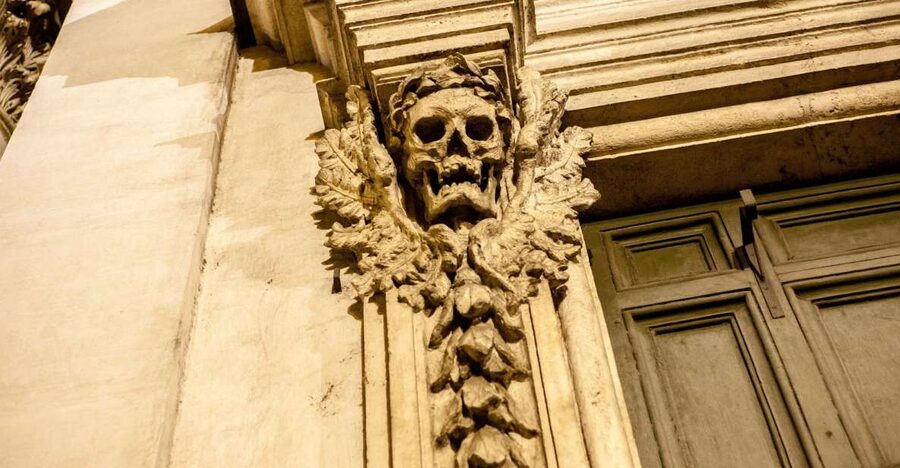
Rome at night feels like a secret. This 90-minute dark-heart walking tour trades the usual big-ticket sights for legends, eerie settings, and real places you would normally zip past in daylight.
I love how it leans into the city’s shadowy side, especially with stops like Campo de’ Fiori, where public executions once took place, and the moving stories that connect those scenes to daily life. One catch: it is not stroller-friendly and it is not built for wheelchairs or mobility impairments, so comfy shoes and solid walking ability matter.
What I also like is the guide style. Based on the many past guides who have led this walk, the best ones bring facts to life with theatrical storytelling, clear English, and a pace that works for a mix of adults and teens. Even if you are not normally a legend person, you should still enjoy the walk because the route threads together a few key Rome neighborhoods in a way that feels personal.
Quick Take, Key Points
- Night-time atmosphere: cooler streets and fewer crowds than daytime sightseeing, with Rome lit up for the evening.
- Campo de’ Fiori on the darker theme: public executions and darker urban myths, told in context.
- Piazza Farnese and its granite-basins fountains: a classic square you likely would not target on a typical “top 10” day.
- Via Giulia, Renaissance city planning: you see what early planners wanted, not just what later emperors built.
- Two photo stops: Via del Governo Vecchio and Castel Sant’Angelo give you built-in moments to pause and frame the views.
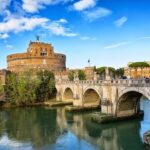
- Hadrian’s Mausoleum at Castel Sant’Angelo: the endpoint hits you with a strong historical anchor after the spooky walk.
A Night Walk Through Rome’s Darker Side
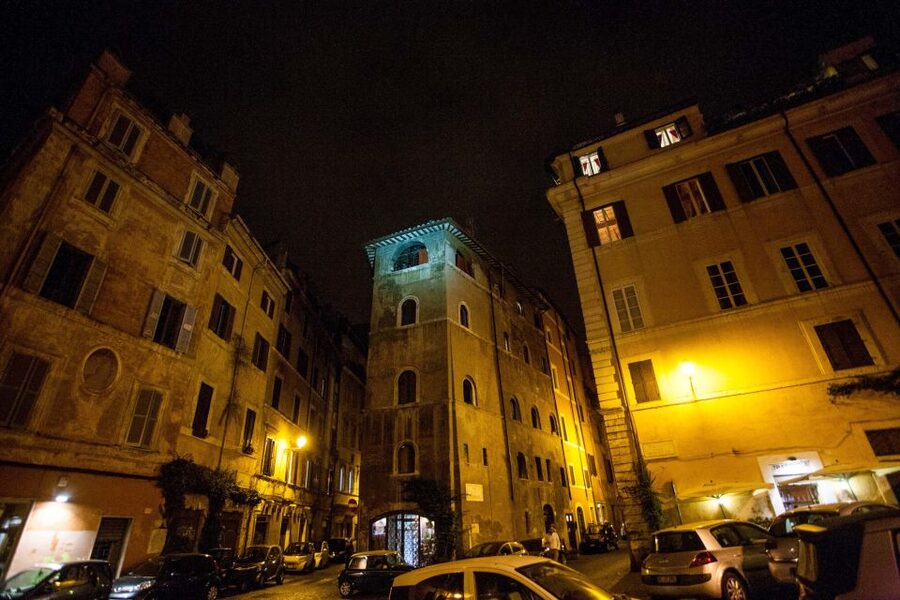
This tour is for the Rome lover who wants more than postcards. You get a story-driven route through the historic center, but it is not random horror movie stuff. The point is to mix historical facts with legends so the places feel sharper and more meaningful.
Night changes everything. Rome’s big monuments are famous in any lighting, but when the sun drops, the narrow streets and piazzas feel like they belong to another era. That is when Campo de’ Fiori and the Tiber-side views start to feel less like a checklist and more like a narrative.
The vibe is also practical. You are not stuck on a bus, and you are not bouncing between far-flung neighborhoods. It is a compact evening walk that fits well after a day of museums or churches.
You can also read our reviews of more tours and experiences in Rome.
Where You Meet and How You Find the Group Fast
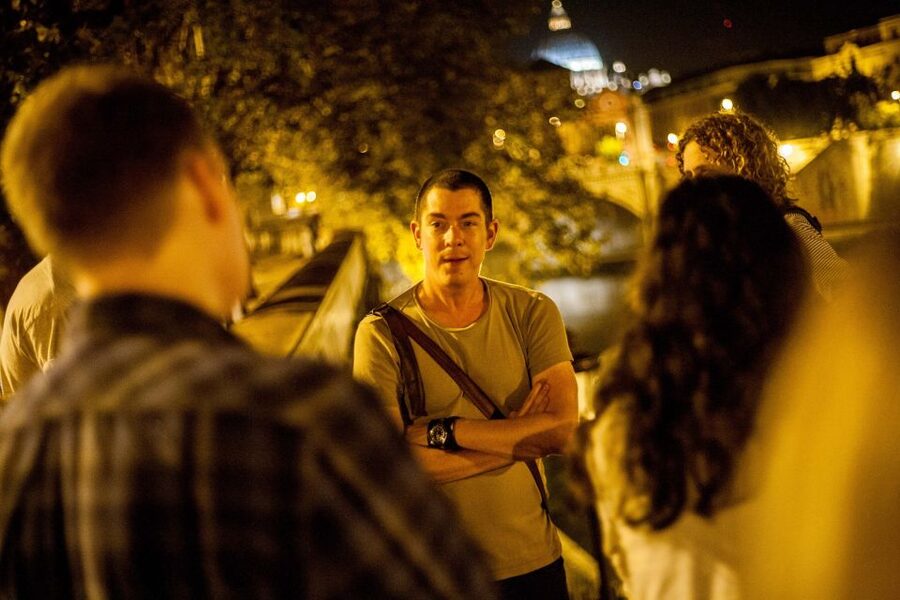
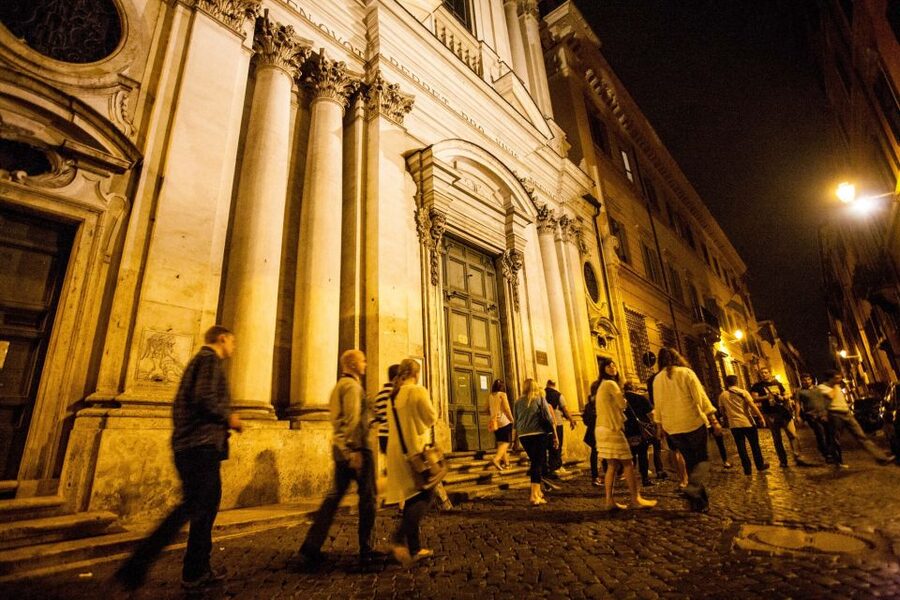
You start at the steps of San Andrea della Valle Church, on Corso Vittorio Emanuele II. The meeting point is about 150 meters from Largo di Torre Argentina, on the left-hand side if you are heading toward the Tiber River. The guides wear blue attire, so once you spot that, you should have an easy time identifying your group.
It helps to arrive a bit early. That “dark Rome” start time matters because the walk begins as soon as everyone is present. If you are crossing from a late dinner, give yourself buffer time to orient, because the streets around this area can feel like a maze when it gets dim.
Also plan for standing and walking on uneven sidewalks. This is a city-center night route, so think comfortable shoes over fashion sneakers. You will want traction and support, especially around cobblestones and curbs.
Campo de’ Fiori at Dusk: Executions, Legends, and Real Atmosphere
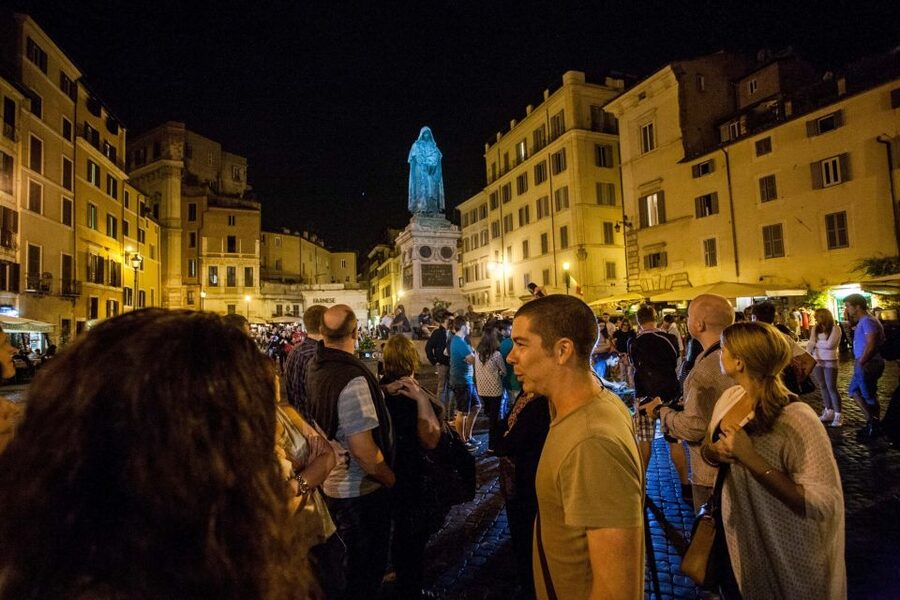
Campo de’ Fiori is the heart of this tour’s mood. In the daytime it is easy to treat it like a lively square, but the tour turns the spotlight to the darker side of what happened here. Public executions used to take place at Campo de’ Fiori, and the guide weaves that history into the legends so it feels grounded, not just spooky.
What makes this stop work is the framing. You are not just being told a story, you are walking through the same urban space where that story would have played out. That simple cause-and-effect, place to event, is why night walking tours like this can feel more vivid than museum explanations.
There is another bonus: at night, Campo de’ Fiori feels calmer. If you are trying to get photos without fighting daytime crowds, this timing is often a win. The square and nearby lanes also create a smooth flow into the next part of the route, rather than feeling like a standalone stop.
Piazza Farnese and Granit-Basin Fountains
Next comes Piazza Farnese, a classic Rome square that can get overlooked if you are only chasing the forum or the Vatican. The tour has you pass through this space, and it is not just a “look up at the buildings” moment. You are guided through the look and layout, including the fountains made from granite stone basins.
This is where the tour shifts slightly from mystery to “how Rome was designed to impress.” Piazza Farnese is a reminder that even when Rome is telling grim tales, it is also building beauty and power into public space.
A practical note: piazzas are open, so if it is windy or cooler than expected, you will feel it. Bring a light layer if you tend to get cold after sunset.
Via Giulia: One of Renaissance Rome’s First Planning Projects
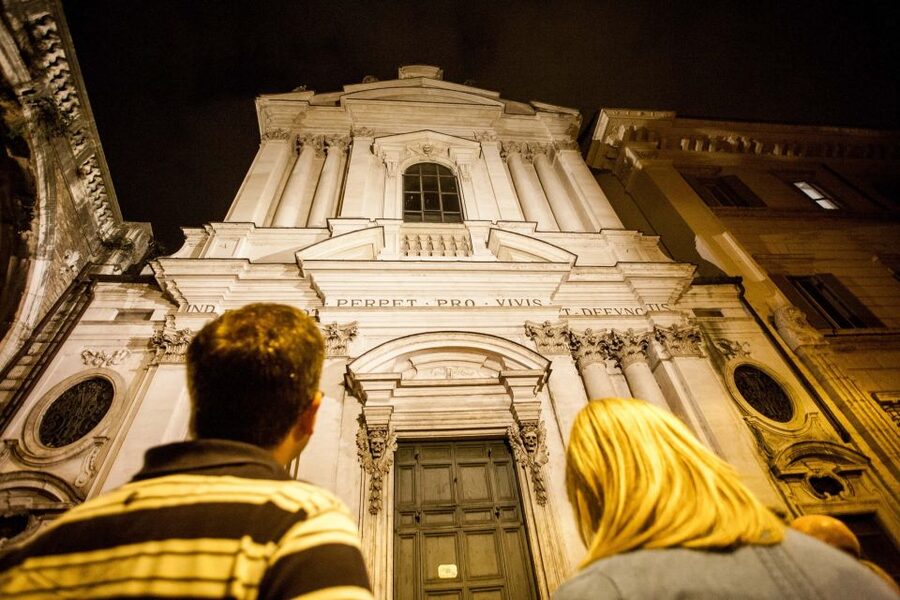
Via Giulia is a highlight because it is about planning, not just monuments. The tour sends you down this street and frames it as one of the first planning projects of Renaissance Rome. That matters because it gives you a different lens for Rome.
Instead of thinking only about ancient ruins, you get the idea that Rome kept reinventing itself with layout and rules. A planned street is a different kind of history, one you can experience under your feet as you walk.
This is also a smart pacing break. After the intensity of Campo de’ Fiori and the heavy themes, Via Giulia gives you a steadier, more architectural rhythm. The narrow lanes and then the more deliberate street lines help your brain separate the story threads.
Corso Vittorio Emanuele II to Via del Governo Vecchio
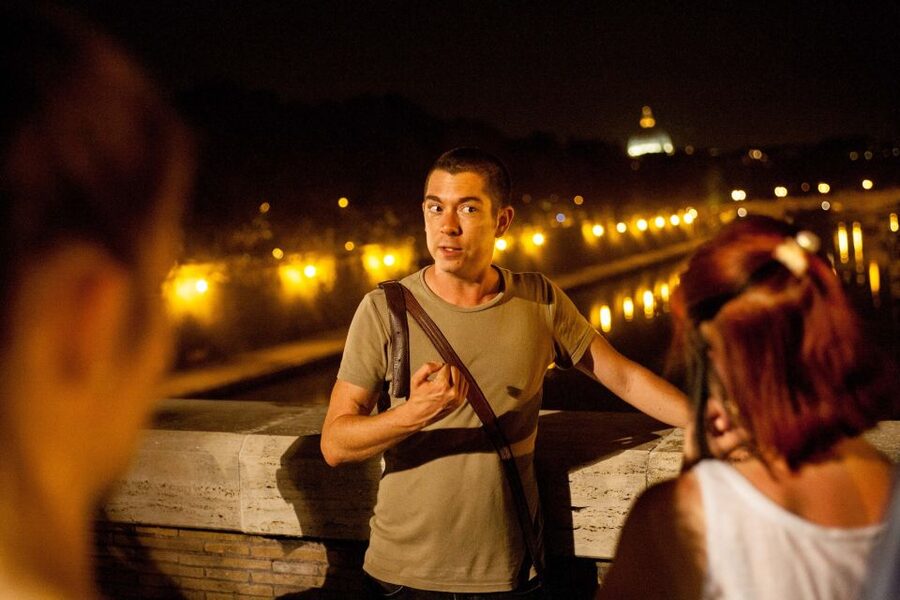
Between the major sights, you travel through the in-between Rome that most standard routes skip. You start by departing from the church area and walk along Corso Vittorio Emanuele II, then through the historic center’s winding lanes and smaller connections.
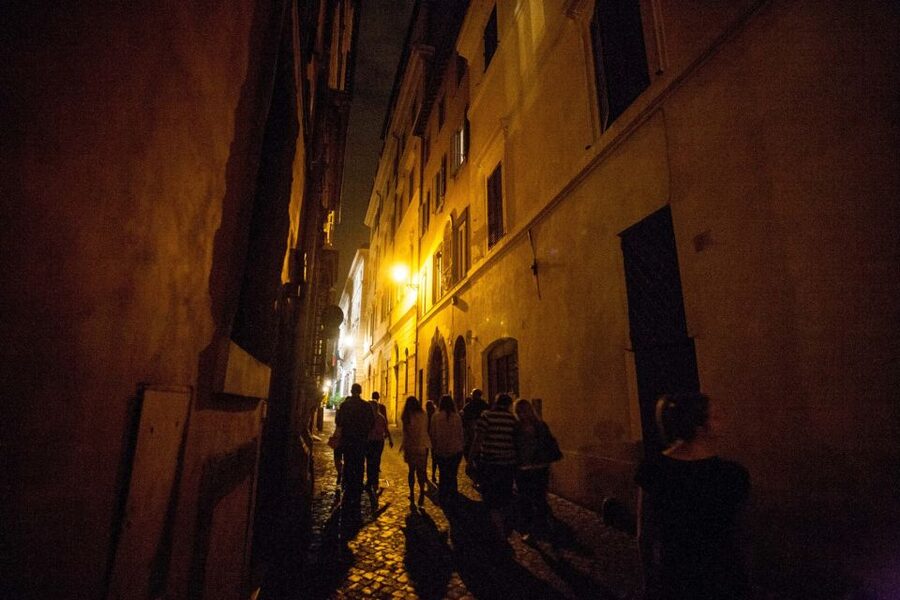
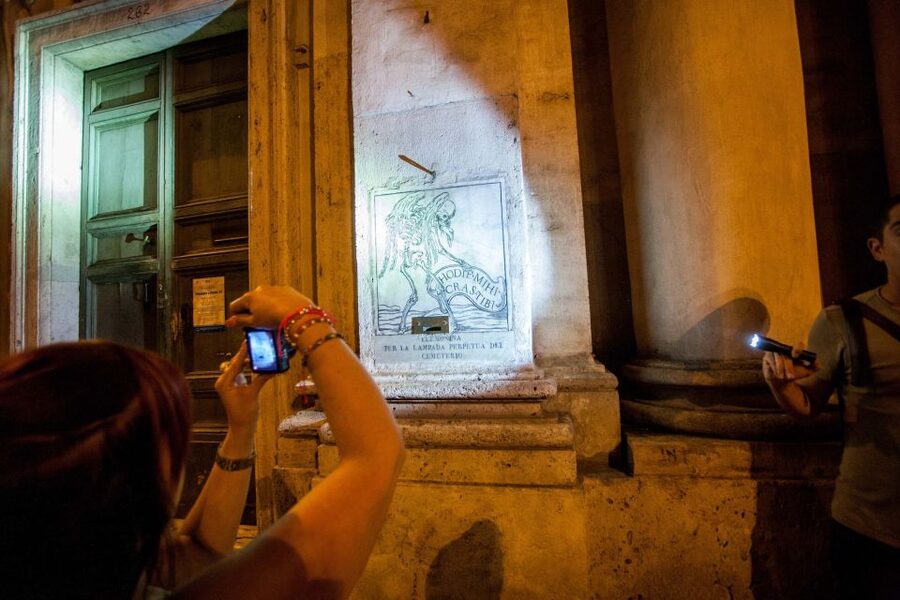
Then you hit Via del Governo Vecchio, which includes a photo stop plus some guided storytelling and time to look around. This stretch is valuable because it slows the experience down. It also gives you a chance to soak in how Rome looks when it is not staged for a bus tour, especially at night.
If you enjoy atmospheric details, this is the part you will remember. It is where the tour feels less like a lecture and more like a night stroll with a local who knows the city’s secrets.
Castel Sant’Angelo: Hadrian’s Mausoleum as a Nighttime Finale
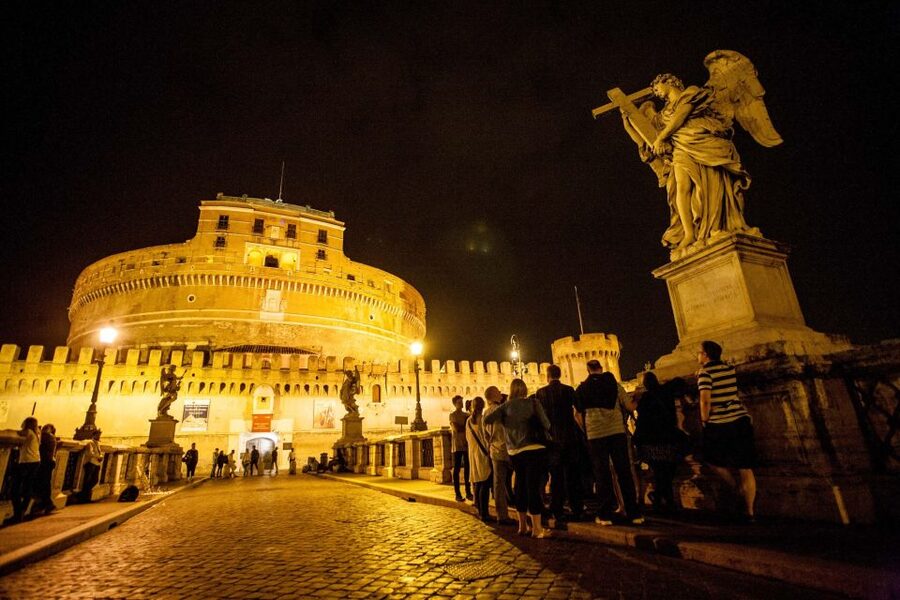
Your tour ends at Lungotevere Castello, 50, after visiting Castel Sant’Angelo. Before that endpoint, the route includes another photo stop and a guided look at Castel Sant’Angelo itself.
The key historical anchor here is that it is the site of Hadrian’s Mausoleum. That means you are ending at a place tied to imperial power, long timelines, and layers of Rome’s evolution. After all the legends, it is a satisfying way to land the plane, because you finish with a structure that has real gravity.
This stop also works for the visual side of the tour. Castel Sant’Angelo often looks dramatic at night, and being near the river gives you those classic Tiber-area angles for photos. Even if you are not trying to take many pictures, it is a great moment to pause, breathe, and let the walk’s themes click into place.
Price and Value: Why $14 for 1.5 Hours Feels Fair
At $14 per person for about 1.5 hours, this is budget-friendly for Rome. The value comes from the mix of things you normally have to pay for separately: an English-speaking guide, a curated walking route, and story content that connects multiple sites.
In other words, you are not paying for a monument ticket. You are paying for interpretation, and that is exactly where this tour aims its energy. If you like hearing how legends connect to specific corners of the city, the price makes sense.
There is also a timing advantage. Night tours can be a smart way to keep your daytime hours for timed museum tickets and long walks. If you already have your day planned, adding a focused evening event can round out your trip without draining your schedule.
Pacing, Group Energy, and the Storytelling Style
The overall experience is meant to be entertaining and informative, with a guide who brings both facts and ghostly tales to life. Many past guides have been praised for clear, loud English and for answering questions during the walk.
That said, there is one consideration. Some people have found the tour a bit fast, which can matter if you like to linger at photo spots or ask lots of follow-up questions. If you are the type who slows down to read inscriptions or study architecture, mentally plan to move with the group and save deep dives for daytime on your own.
The tour also has a clear tone. It is not a “quiet museum voice.” It is theatrical enough that if you like true-crime style storytelling, you may really enjoy the way the guide sets scenes and builds tension.
Who This Tour Is Best For, and Who Should Skip It
This is a strong pick if you want:
- A night walk with a clear theme: legends, executions, and mystery.
- Fewer big-name stops and more “Rome in the middle,” the streets and squares between landmarks.
- An English-speaking guide who tells stories in a lively way.
It is less ideal if:
- You need accessibility accommodations. The tour does not accommodate wheelchair users or guests with mobility impairments.
- You rely on strollers. Pushchairs and strollers are not allowed.
- You cannot manage 1.5 hours of walking, including uneven sidewalks.
Practical Tips So You Enjoy It More
Start with the boring but important stuff. Wear comfortable shoes with good grip. Rome sidewalks can be uneven, and at night you want to focus on where you step, not on whether your feet are killing you.
Bring your phone charger plan. You will likely want to take photos at the designated photo stops, especially around Via del Governo Vecchio and Castel Sant’Angelo.
Finally, show up with curiosity. This is not a standard archaeology lecture. It works best when you let the stories do their job, then use what you see to connect the legend to the real setting.
Should You Book the Dark Heart of Rome Night Mystery Tour?
If you want a different kind of Rome experience, I think this tour is a solid booking. For around $14 and 1.5 hours, you get an English guide, a night route through Campo de’ Fiori, Piazza Farnese, Via Giulia, and Castel Sant’Angelo, plus a storytelling style that tends to be engaging and easy to follow.
Book it if you like your history with a shadow, and you enjoy guided walking routes that turn city corners into scenes. Skip it if you need accessibility support or stroller access, or if you prefer strictly factual sightseeing with zero “legend” atmosphere.
If you are already planning daytime hits like the Colosseum or Vatican, this is a great evening complement. It adds tone, context, and a sense of Rome after dark, when the city stops feeling like a map and starts feeling like a story.
FAQ
How long is the Dark Heart of Rome tour?
The tour duration is 1.5 hours.
How much does the tour cost?
The price is $14 per person.
Where do I meet the guide?
Meet on the steps of San Andrea della Valle Church, on Corso Vittorio Emanuele II, about 150 meters from Largo di Torre Argentina. The guide is on the left-hand side heading toward the Tiber River.
Where does the tour finish?
The tour finishes at Lungotevere Castello, 50, 00186 Roma RM, Italy.
Is hotel pick-up or drop-off included?
No, hotel pick-up and drop-off are not included.
What is included in the tour?
It includes the tour as described and an English-speaking guide.
What language is the tour offered in?
The tour is offered in English.
What should I bring?
Wear comfortable shoes for walking.
Is the tour suitable for wheelchair users or people with mobility impairments?
No. The tour cannot accommodate guests with wheelchairs or mobility impairments.
Are strollers or baby strollers allowed?
No. Pushchairs or strollers are not allowed.
More Tours in Rome

More Tour Reviews in Rome
Not for you? Here's more nearby things to do in Rome we have reviewed







Tours, compared.
 ★ 4.3Vatican Museums & Sistine Chapel Tour with Optional BasilicaFrom $7967,413 reviews
 ★ 4.5Vatican Museums, Sistine Chapel & St Peter’s Basilica Guided TourFrom $2239,149 reviews
 ★ 4.8Colosseum, Palatine Hill and Roman Forum Guided TourFrom $5232,814 reviews
 ★ 4.7Guided Tour of Colosseum, Roman Forum & Palatine HillFrom $5527,897 reviews
 ★ 4.5Colosseum, Roman Forum and Palatine Hill Guided TourFrom $5923,903 reviews
 ★ 4.3Vatican Museums, Sistine Chapel & Basilica TourFrom $13013,872 reviews
 ★ 4.4Colosseum, Forum & Palatine Hill Tour & Optional ArenaFrom $5813,839 reviews
★ 4.7Vatican Museums, Sistine Chapel & Basilica TourFrom $7213,217 reviews
★ 4.4Colosseum, Forum & Palatine Hill Tour & Optional ArenaFrom $5813,839 reviews
★ 4.7Vatican Museums, Sistine Chapel & Basilica TourFrom $7213,217 reviews