

Reviewed · CATACOMBS & UNDERGROUND TOURS
Rome: Trevi Fountain Underground Small Group Tour
Rome keeps secrets under Trevi Fountain. I love how this tour takes you under the famous landmark to connect the look of the square with the engineering that made the water possible, including the story of Aqua Virgo.
I also like the way the tour is set up for clarity. With an official English speaking guide plus headsets, you can hear the explanations in the tighter underground spaces, and you’ll also spot layers like an Imperial-era domus and Hadrian’s water infrastructure, including the castellum aquae.
One thing to consider is that this experience is not suitable for wheelchair users. And because the meeting point is a tiny square near the fountain, I’d plan to arrive on time, not sprint in at the last second.
Key things I think are worth your attention
- Vicus Caprarius sits underground beneath Trevi, tied to one of Rome’s aqueducts.
- The Aqua Virgo story includes the meaning of the name, pure water, plus a virgo legend about how it got its name.
- You’ll see multiple historical layers, including Imperial-era spaces, medieval houses, and Hadrian’s castellum aquae tank.
- Skip-the-line entry is handled via a separate entrance, which helps when the surface area is packed.
- Headsets plus an official English guide keep the experience understandable, even in narrow passages.
Why Trevi Fountain Underground Feels Different Than the Surface
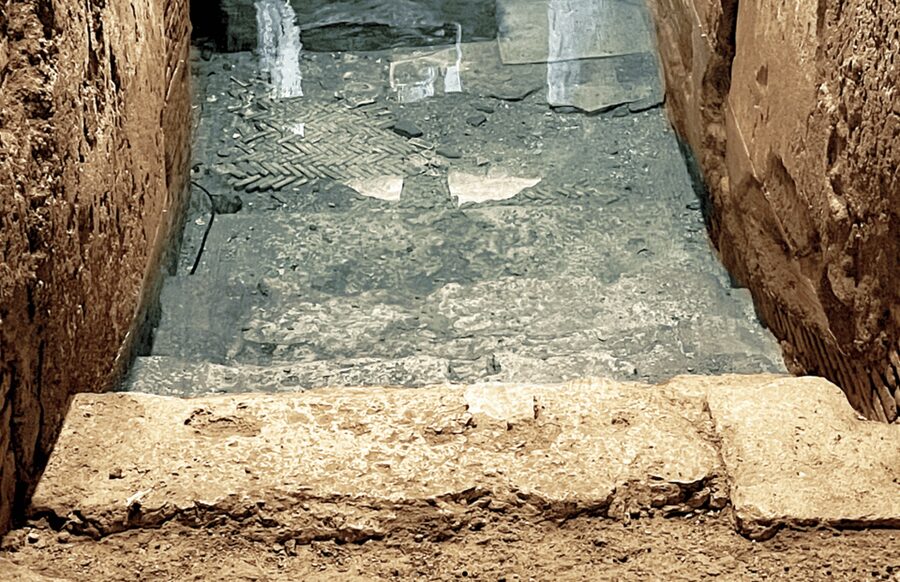
Trevi Fountain is famous for its drama above ground, but the underground area gives you the real reason the fountain became a focal point in the first place: water. Beneath the bustle, Trevi connects to one of the Roman aqueduct systems built to deliver reliable water to the city, and you can physically see the remains tied to that story.
I find this tour works best when you treat it like a historical puzzle. The fountain is the payoff, but the aqueduct is the plot. Seeing the underground remains makes the famous façade feel less like a sculpture and more like the public face of a whole water network.
You can also read our reviews of more tours and experiences in Rome.



Piazza dei Crociferi Meeting Point, and the Start You Should Not Mess Up

The meeting point is Piazza dei Crociferi, a tiny square near Trevi Fountain. Your guide is recognizable by a sign with the Rome with Silvia logo, which matters because this area can be visually chaotic once the crowds form.
One practical tip: you do not want to wait at the entrance of the archaeological site. If you do, you risk losing time before the group funnels in. I’d show up a bit early to settle, find your guide sign, and get your headsets on smoothly.
Vicus Caprarius: The Roman Aqueduct Under Trevi Fountain
The heart of the experience is Vicus Caprarius, the archaeological area under the Trevi Fountain area. This is where you’ll see remains linked to the aqueduct system, including the water story behind the site.
Here’s what makes it meaningful. The underground complex reflects how Rome kept building over itself. You’re not just looking at one moment in time, you’re looking at stratification, layers of the city stacked through centuries.
You also get context for the water infrastructure itself. The aqueduct is tied to the name Aqua Virgo, commonly associated with the idea of pure water. There’s also a romantic legend that the aqueduct’s name comes from a virgo story, connected to a young woman who helped lead thirsty soldiers to a spring.
Timing of the site matters too, and it’s part of the “why now” of this visit. Vicus Caprarius came to light during renovation works of the former Cinema Trevi in 1999, and it opened to the public in 2004. That means what you’re seeing today is the result of modern uncovering, not just old ruins left untouched.
What You’ll See Beyond the Aqueduct: Imperial, Medieval, and Hadrian

This tour doesn’t stop at one underground room with one neat artifact. You’ll also visit other historical areas beneath the surface, including an Imperial-era domus, medieval houses, and the “castellum aquae” linked to the Aqua Virgo aqueduct.
The castellum aquae detail is especially useful if you like the engineering side of history. The tank, built by Emperor Hadrian, was designed to optimize water supplies for the Campo Marzio area. In practical terms, it’s a reminder that Rome’s water system wasn’t only about getting water into the city, it was also about storing and managing it so the flow stayed dependable.
The Imperial-era domus and the medieval houses add another layer to your understanding of Rome’s timeline. You start to see how a water system could influence where people lived, and how later generations repurposed space built around those earlier utilities.
If you’re the type who likes to connect “then and now,” this is where that clicks. The fountain above is all about visibility. Underground, it’s about function, storage, and survival needs that powered daily life.
The Trevi Fountain Photo Stop, and How to Pair Both Views

After the underground portion, you shift back toward the famous fountain area. You’ll get a photo stop plus a guided look at Trevi Fountain itself, which is the moment when your brain stops thinking like a site historian and starts reacting like a visitor.
I like the order here. Seeing the aqueduct first makes the fountain above feel less like a random tourist stop and more like a final destination in a longer water journey. You’ll likely notice details on the surface with different eyes, because you’ve already learned what the water system was built to do.
Also, a short guided visit helps you avoid the typical trap in Rome: spending time photographing every angle without understanding what you’re looking at. The tour gives you a few anchored facts so your photos become more than just shots.






Guide Quality and Listening Comfort: Headsets Help a Lot
This is a live guided experience in English. You get headsets to hear the guide clearly, which is a big deal underground, where you can’t rely on open-air acoustics.
Guide identity can matter, and the experience is associated with Rome with Silvia, so you’ll look for that logo when you meet up. Based on the guide names that have shown up in recent experiences, you might also meet someone like Sylvia, and you may see other English-speaking guides in the mix, such as Virginia. Either way, the important part is how well the guide explains the layers you’re walking through.
A balanced expectation is smart here. The underground component is focused and time-efficient, so if you’re bringing kids or you want lots of back-and-forth questions, plan to keep your group aligned with the pace. The headsets help with listening, but they cannot expand time.
Small Group Feel, Tickets Included, and Why $71 Can Be Fair
The price is $71 per person for a 45-minute tour. On its face, that’s not “cheap,” especially in a city where you can wander ruins for free. But this isn’t just general sightseeing, you’re paying for a guided experience that includes entry tickets, a headset system, and a separate entrance that helps you avoid some surface-line hassle.
This is the kind of value that makes sense if you want guided storytelling in a specific, access-controlled site. Underground archaeology is not the same as strolling an outdoor piazza. Getting in, hearing the explanation in real time, and linking what you see to the broader water system is where the cost gets justified.
If you love history, the included tickets plus the structured pacing can feel like a good use of limited time. And if you hate wasting time standing in queues, the separate entrance is the kind of practical convenience that can save energy for the rest of your day.
Who This Tour Is Best For (And Who Might Skip It)
This tour is a great match if you:
- Want something different from the usual Trevi Fountain crowd photos
- Like Roman engineering, aqueduct stories, and the way infrastructure shaped daily life
- Enjoy archaeology that shows multiple time periods stacked together
- Prefer to learn through an English guide rather than reading alone
It may be less ideal if you:
- Use a wheelchair, since it is not suitable for wheelchair users
- Want long free time at Trevi Fountain itself, since the experience includes an underground focus plus a shorter surface photo stop
- Need very kid-friendly explanations, because the tour’s pacing and language delivery are still guided by the structure of a short, live walkthrough
Practical Tips So You Enjoy the Underground Portion
A few practical things will make your visit smoother:
- Wear comfortable shoes. The ground is underground and the walking is real, even if the tour duration is short.
- Bring your passport or ID card, since it’s listed as required.
- Dress for the weather. The tour runs rain or shine.
- Keep your expectations aligned with the format. This is guided, time-focused, and designed to move as a group.
Also, treat the meeting location like part of the experience, not a quick formality. Piazza dei Crociferi is small, and your best move is to locate your Rome with Silvia sign and fall into the group without delay.
Should You Book the Rome Trevi Fountain Underground Small Group Tour?
If you’re deciding between just seeing Trevi Fountain and actually understanding how the water system worked, I think this tour is an easy yes. The underground focus on Vicus Caprarius and Aqua Virgo, plus the extra layers like an Imperial-era domus, medieval houses, and Hadrian’s castellum aquae, makes it more than a photo stop with a few facts.
I’d book it especially if you want guided context delivered clearly with headsets and a separate entrance that reduces surface-line stress.
The only strong reasons to pause are mobility needs, since it is not suitable for wheelchair users, or if you’re expecting a long, slow, explore-on-your-own experience at the surface fountain. This is a short, structured tour that rewards attention and interest in what’s underneath.
In short, if you want Trevi Fountain with the water story attached, book it. If you mainly want the longest possible time standing in front of the fountain, look at other options first.
FAQ
Where is the meeting point for the Trevi Fountain Underground tour?
You meet at Piazza dei Crociferi, a small square near Trevi Fountain. Your guide will be recognizable by a sign with the Rome with Silvia logo.
How long is the tour?
The tour duration is listed as 45 minutes.
What does the tour include?
It includes official English speaking guided entry tickets and headsets to hear your guide clearly. It also includes skip the line access through a separate entrance.
What will I see underground beneath Trevi Fountain?
You’ll visit Vicus Caprarius, which includes remains connected to the Aqua Virgo aqueduct beneath the Trevi Fountain area. You’ll also visit areas described as an Imperial-era domus, medieval houses, and the castellum aquae tank of Aqua Virgo associated with Emperor Hadrian.
Will there be time to see Trevi Fountain above ground?
Yes. After the underground portion, you’ll have a photo stop and a guided look at Trevi Fountain.
Is the tour rain or shine?
Yes, it takes place rain or shine.
Is the tour wheelchair accessible?
No, the tour is not suitable for wheelchair users.
What should I bring with me?
Bring your passport or ID card, and wear comfortable shoes and weather appropriate clothing.
Can I get a refund if my plans change?
Free cancellation is available up to 24 hours in advance for a full refund.
More Tours in Rome
More Tour Reviews in Rome
Not for you? Here's more nearby things to do in Rome we have reviewed












Catacombs & Underground Tours, compared.
 ★ 4.7Colosseum: Underground and Ancient Rome TourFrom $16012,691 reviews
 ★ 4.6Crypts and Catacombs Underground Tour with TransfersFrom $745,341 reviews
 ★ 4.7Colosseum Underground Small Group Guided TourFrom $1054,844 reviews
 ★ 4.8St. Peter’s Basilica, Dome Climb, and Underground TourFrom $383,404 reviews
 ★ 4.7Colosseum Underground, Arena & Forum TourFrom $1573,272 reviews
 ★ 4.3Trevi Fountain and Underground Guided TourFrom $411,664 reviews
 ★ 4.6Catacombs and Capuchin Crypt Guided Tour with TransferFrom $411,606 reviews
 ★ 4.7St. Peter’s Basilica Priority Access Tour with Dome & CryptFrom $831,476 reviews
Browse the lists this tour appears in