
Reviewed · CATACOMBS & UNDERGROUND TOURS
Rome: Trevi Fountain Underground Aqueduct Walking Tour
You will walk past Rome’s most famous fountains with a new map in your head. This tour ties the aqueduct to the Trevi Fountain in a way most sightseeing never does, and it gives you underground access that feels like you found the city’s plumbing room. My favorite part is the story chain from Piazza di Spagna to the underground reservoir, and I also really like the small-group size, which makes questions easy. The main drawback is simple, you will be on your feet on busy streets, so plan for steady walking and standing.
The pacing is built around a clear theme, water, where it came from, how Rome built around it, and what’s still working today. Guides such as Sabrina and Federica are described as energetic storytellers who answer questions and keep things clear, even if you do not know a thing about Roman infrastructure going in.
Logistically, it runs rain or shine and lasts about 2 hours. At $59.22 per person, you are paying for a guided experience that includes underground entry and a ruin site visit, not just a stroll past the postcard views.
Key Things I’d Prioritize On This Trevi Underground Tour
- Start at Piazza di Spagna and learn why the Spanish Steps get their name, plus where the water story kicks off
- Follow an ancient aqueduct alignment that mostly runs underground, yet still shows up between modern buildings
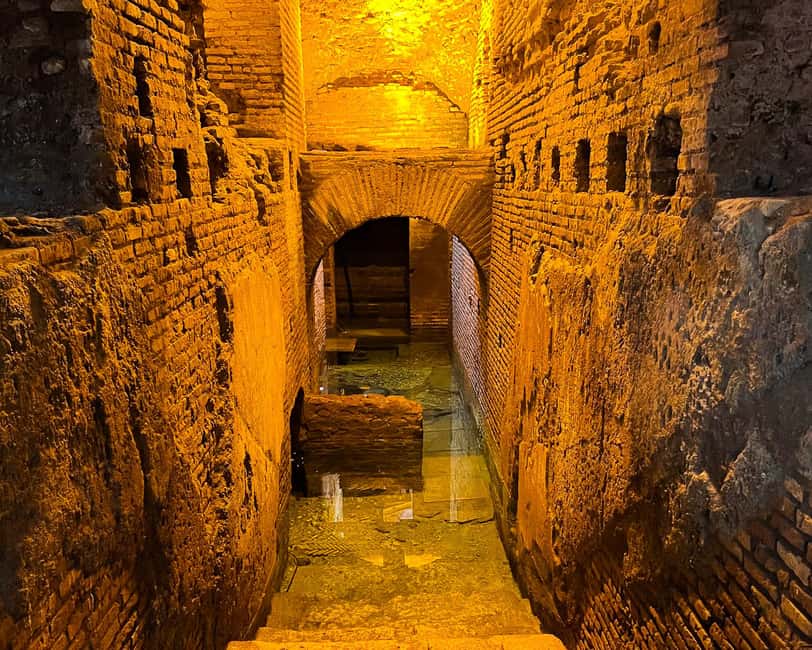
- Go underground a couple of times to see the aqueduct up close while water continues to flow
- Get Trevi Fountain context beyond the photo angle by reaching the water source and not just the basin
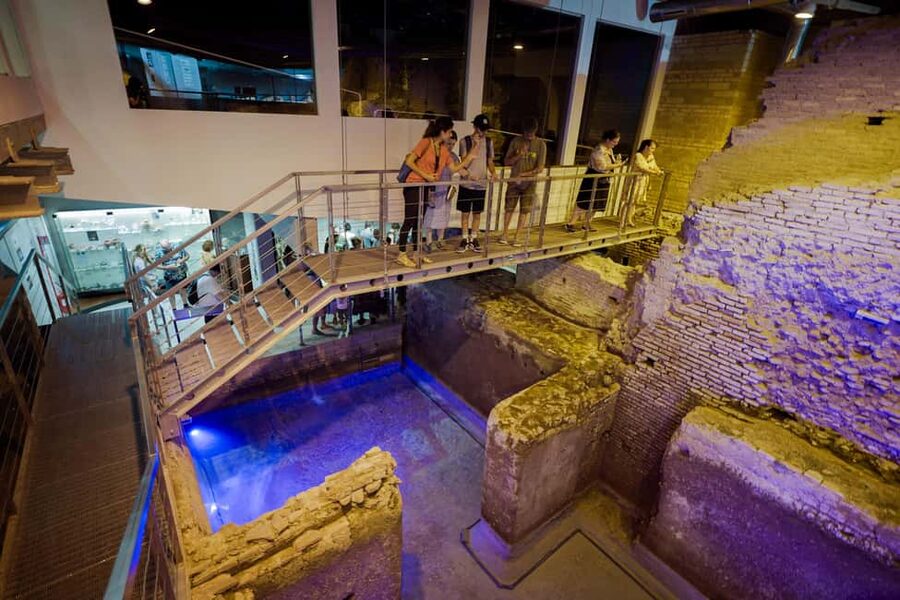
- Visit Vicus Caprarius and see how ruins can sit next to today’s street life
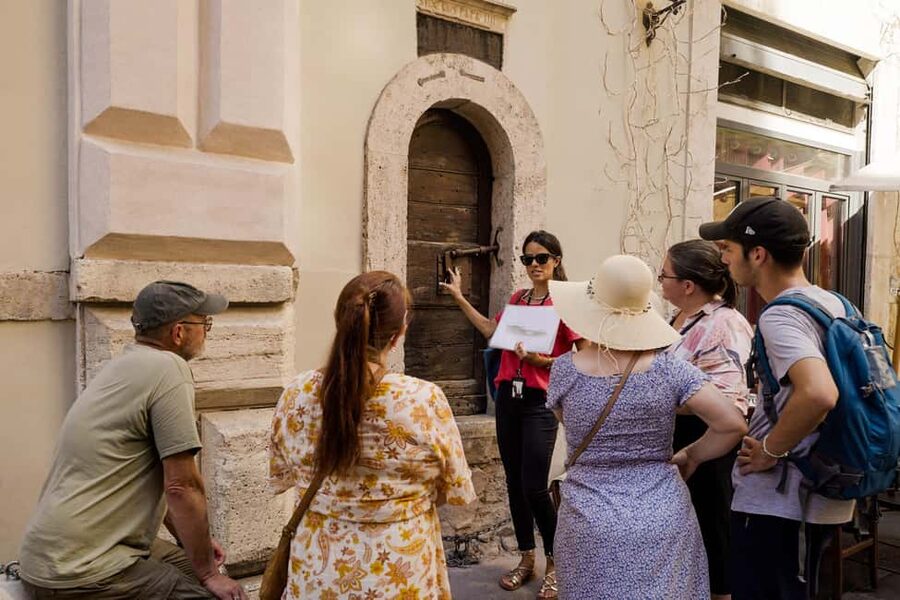
- Small group, max 12 people, so you can actually ask questions instead of yelling over a crowd
Spanish Steps First: Why the Name Matters for the Aqueduct Story
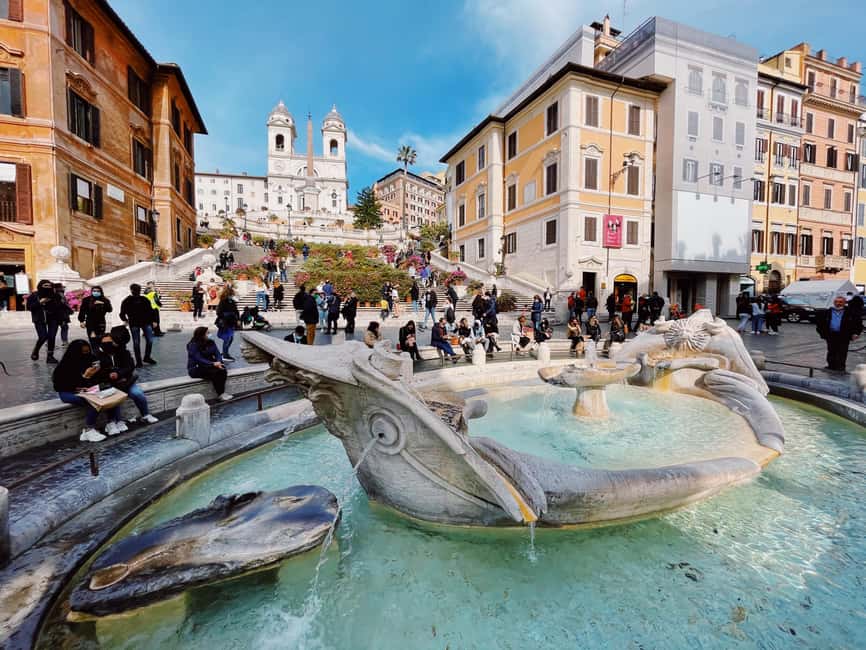
The tour starts at Piazza di Spagna, 15. Before you even reach the Trevi area, you are building a mental framework for how Rome organizes space around power and water.
I like that the Spanish Steps are not treated like a quick photo stop. You learn what they are, why they are called Spanish Steps, and what that naming hints at about Rome’s history and influence. It sets the tone: this is not only about one site, it is about the bigger system that made the city function.
Right by the Spanish Steps, the tour meets a first fountain tied to the water theme. Even better, this fountain is still fed today by an ancient Roman aqueduct built in 19 BC. That one detail changes how you look at the whole neighborhood. You stop thinking of fountains as decoration and start thinking of them as endpoints in a working network.
Practical note: the area is central and busy, so you will want comfortable shoes from the get-go. Expect narrow sidewalks, some crowd spillover, and a steady walking rhythm.
You can also read our reviews of more walking tours in Rome



Following the Aqueduct Through Modern Streets (And Past the Obvious Ruins)
From the Spanish Steps, the route becomes a guided hunt for traces of the aqueduct. The key idea is that much of the aqueduct runs underground, but you can still spot or understand its path as it threads through modern Rome.
I like the way this tour frames the city: you are walking along an alignment that shows how earlier engineers built foundations for later Rome. That means your eyes catch details you normally miss, like spots where the aqueduct’s presence is revealed between modern buildings or where the built environment seems to awkwardly ignore what should be possible.
The tour also aims to get you out of the densest crowd flow. You are shown hidden gems around the Trevi fountain and the Spanish Steps area, not by sending you somewhere far away, but by having you turn the corner and look at the right angles. It is a smart approach because Rome’s best “wow” moments often happen when you step just slightly off the main tourist line.
If you care about architecture or how cities actually work, this part can be especially satisfying. A guide like Fredrica is specifically called out for taking architecture-minded visitors to sites with clear sightlines and explanations. Even if you are not an architecture nerd, you will get a lot out of the logic of the route, because it keeps everything tied to water.
Two Underground Visits: Seeing Roman Water Infrastructure Up Close
Here is what makes this tour worth your time: it does not leave the aqueduct as a story. You actually go underground a couple of occasions to see the aqueduct up close, and you do not have to guess what it looks like behind the city.
Even with only limited time underground, the experience is usually memorable because it contrasts sharply with what you know from the surface. On the street, Rome looks all stone facades and art. Underground, it looks like engineering, channels, and an entire system built to move water reliably.
The tour’s theme stays consistent while you are down there. You learn how the Romans brought water into the city using aqueducts, and you connect that lesson back to what you are walking past above ground. That cause-and-effect is what turns “cool photos” into understanding.
The wording used around the experience emphasizes that water is still flowing through the underground sections you see. You should expect areas that feel tight and atmospheric compared with the bright street level, so keep your camera ready but also be present. This is the type of visit where listening pays off more than photographing every inch.
Trevi Fountain as the Water Endpoint, Not Just the Landmark
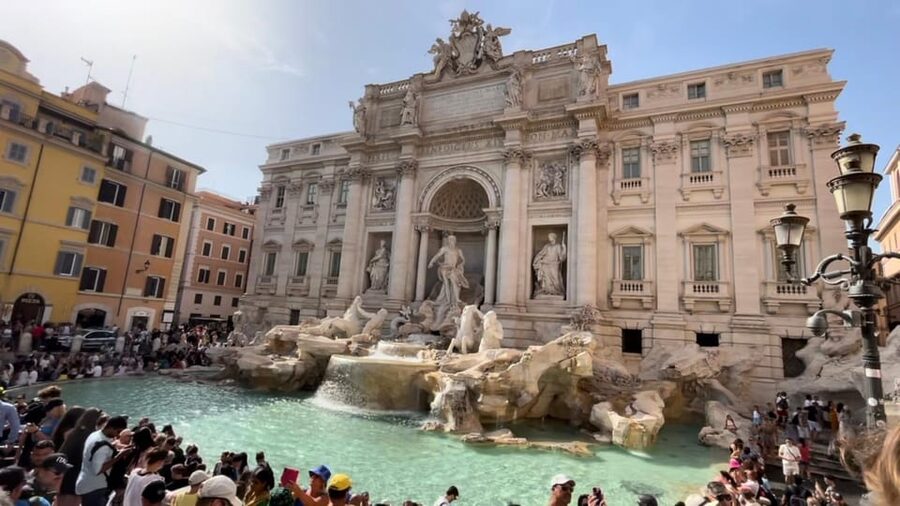
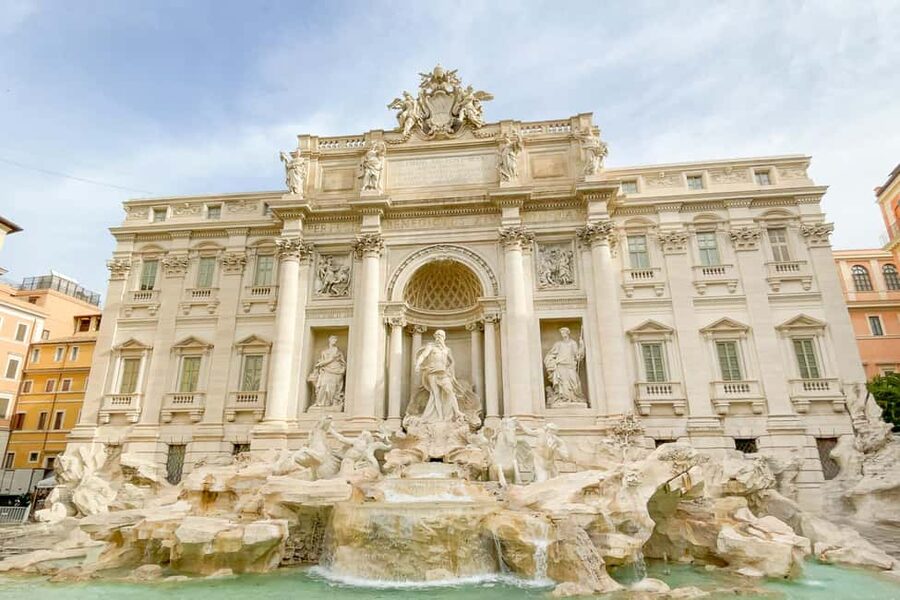
You follow the aqueduct until its monumental end, Trevi Fountain. That sounds like a normal outcome, but the difference is what happens next and how the guide sets up the visit.
Instead of treating Trevi as a standalone masterpiece, the tour positions it as the payoff of the aqueduct journey. You understand why this fountain sits where it does in the city’s water story, and you get a clearer sense of what the Romans were trying to accomplish, supply, distribution, and controlled access to flowing water.
Then comes the part I would watch for on your schedule: you do not stop at Trevi Fountain for the crowd picture and call it done. The tour gets away from the crowds, turns the corner, and takes you to an underground water reservoir built over 2000 years ago.
This is the moment that often feels like a plot twist. You are looking at a famous square, yet you are also learning that the real action is below street level, in the storage and handling of water before it reaches the fountain.
If you have only ever seen Trevi from street level, this will likely change your mental image of the site. Trevi is not just an icon. It is part of a system.
Vicus Caprarius and the Ruins You Find by Looking Where You Walk
After Trevi, the tour continues to Vicus Caprarius, with entry included. This is where the value of the water theme becomes clearer, because you see how Roman neighborhoods and infrastructure were linked to where water traveled.
Vicus Caprarius is one of those names that sounds like a label until someone explains why it matters. The tour connects it to the story of how the city was built around the aqueduct and the water it brought in. That makes the ruins feel less random.
I also like that the experience highlights the idea of ruins being in unexpected places, including spots near shopping areas. That is one of Rome’s big surprises. It is easy to think ruins are always in a big open field or a dedicated archaeological park, but the city grew around older layers, so you can run into Roman remains in everyday urban corners.
The tour finishes at Vicolo del Puttarello (and the activity ends back at the meeting point area). In other words, you end where you can keep exploring on foot afterward, without needing to reorganize transport.





Small Group Size, English Guidance, and How You Get Your Questions Answered
This is a small group tour, no more than 12 people. That matters more than it sounds. Rome’s center is crowded, and most visits can turn into a headlong march where questions die in the middle of the noise.
With a group this size, you are more likely to get direct answers, and the guide can adjust pace when people ask follow-ups. The overall tone attributed to guides like Sabrina and Federica is that they enjoy explaining and do it with ease and a bit of humor. That combination helps you retain details, especially the ones that connect aqueduct mechanics to visible landmarks.
The tour is in English and is run by Live Virtual Guide. You meet next to the Diesel store, and the guide carries a sign with the Live Virtual Guide logo. If you show up a few minutes early, you will reduce stress and start focused.
Price and Value: What You’re Really Paying For at $59.22
At $59.22 per person for about 2 hours, you are not just paying for commentary. You are paying for three value drivers included in the experience:
- A guided walking route focused on the aqueduct story
- Underground aqueduct entry, plus access to the underground reservoir area
- Vicus Caprarius entry
You are also paying for time. In Rome, “time spent getting the context right” can be a bigger value than another ticketed stop. This tour is designed so that when you look at Trevi Fountain afterward, you see it as part of the water system, not only as a beautiful basin.
Transport is not included. So if you are staying outside the center, add that cost and effort into your decision. If you are already in the neighborhood, the lack of transport inclusion is usually no big deal.
Overall, if you like structured stories and you want underground access near the Trevi area, this price looks fair for what is included.
Practical Tips: Rain or Shine, Shoes, and Staying Ready for Underground Turns
The tour runs rain or shine, so pack accordingly. The route includes time on streets and a couple of underground segments, so you want shoes with grip and maybe a light jacket you can move in.
I would also plan for the reality that you are walking through an active city center. That means:
- Bring water if you tend to get thirsty easily
- Keep a basic layer for temperature shifts when you go underground
- Give yourself a minute at each transition, so you do not end up rushing and missing key explanations
For photos, you will get the Trevi viewpoint and shots of the fountain area, but the underground segments are where you should set your expectations realistically. In tighter spaces, listening usually matters more than chasing the perfect frame.
Finally, if you want the most out of it, show up ready to ask questions. The small group format is built for interaction, and that can turn random facts into understanding.
Who Should Book This Trevi Underground Aqueduct Tour
This tour is a strong fit if you:
- Want to understand Rome as a functioning city, not just a museum
- Like engineering, architecture, and how infrastructure shapes neighborhoods
- Enjoy stories that connect landmarks to behind-the-scenes systems
- Prefer a small group where you can talk to the guide
It is less ideal if you want a mostly relaxed sit-and-stare experience. You will walk and you will move between street level and underground areas. Also, if underground spaces make you uncomfortable, consider that as you weigh your comfort level.
If you are visiting with someone who already loves Rome’s big sights, this tour can be a great way to upgrade their experience from recognition to real context.
Should You Book This Trevi Fountain Underground Aqueduct Walk?
Book it if you want Trevi Fountain explained through the water system and you care about seeing Roman infrastructure up close. The underground access and the reservoir stop are the big reasons to choose this over a basic fountain-focused tour.
I would skip it if you prefer long unstructured roaming, or if you hate the idea of being on your feet for a couple of hours in a central, sometimes crowded area. Also, since transport is not included, make sure you can comfortably reach the meeting point in time.
If your goal is to leave Rome with a smarter story, not just more photos, this tour delivers exactly that.
FAQ
Where does the tour start?
It starts at Piazza di Spagna, 15. The meeting point is next to the Diesel store, and your guide will have a sign with the Live Virtual Guide logo.
How long is the Trevi Fountain Underground Aqueduct Walking Tour?
The duration is 2 hours. Starting times depend on availability.
What’s included in the ticket price?
The tour includes a guide, a walking tour, underground aqueduct entry, and Vicus Caprarius entry.
Is transportation included?
No, transportation is not included.
What language is the tour guide?
The tour is in English.
Does the tour run in bad weather?
Yes, it runs rain or shine.
What is the cancellation and payment flexibility?
You can cancel up to 24 hours in advance for a full refund. You can also reserve now and pay later.
More Walking Tours in Rome



More Tours in Rome



More Tour Reviews in Rome
Not for you? Here's more nearby things to do in Rome we have reviewed











Catacombs & Underground Tours, compared.
 ★ 4.7Colosseum: Underground and Ancient Rome TourFrom $16012,691 reviews
 ★ 4.6Crypts and Catacombs Underground Tour with TransfersFrom $745,341 reviews
 ★ 4.7Colosseum Underground Small Group Guided TourFrom $1054,844 reviews
 ★ 4.8St. Peter’s Basilica, Dome Climb, and Underground TourFrom $383,404 reviews
 ★ 4.7Colosseum Underground, Arena & Forum TourFrom $1573,272 reviews
 ★ 4.3Trevi Fountain and Underground Guided TourFrom $411,664 reviews
 ★ 4.6Catacombs and Capuchin Crypt Guided Tour with TransferFrom $411,606 reviews
 ★ 4.7St. Peter’s Basilica Priority Access Tour with Dome & CryptFrom $831,476 reviews
Browse the lists this tour appears in