
Reviewed · ROME NIGHT TOURS
Rome: Rome at Night Evening Historical Walking Tour
Rome looks better after dark. I love the way iconic monuments turn into glowing landmarks at night, and I love getting the stories behind what you are seeing on the walk. The one real trade-off is that this is still a feet-on-stones route, so you need solid shoes and you should expect some crowding around the big sights.
This is a tight, evening-friendly tour that strings together some of Rome’s most famous stops in about 2.5 to 3 hours, with an English-speaking local guide who sets the scene as you move. You will meet your guide holding an orange sign with the local partner logo, and the night pace makes it feel less like sightseeing chores and more like seeing how Rome actually breathes in the evening.
Key highlights to know before you go
- Night lighting turns landmarks into photo-ready scenes: fountains, squares, and monuments look different when the sun is down.
- A real local guide drives the route: you are not just looking at famous spots, you are learning the why.
- Spanish Steps, Trevi Fountain, Pantheon, and Piazza Navona in one walk: it is a smart checklist, tightly connected by time and location.
- Cobblestones and street life are part of the experience: you will pass areas with artists, book sellers, and restaurant energy.
- Time for the big moments at each stop: you will pause for key viewing moments, including Trevi for the classic coin toss.
Why Rome at night feels different (and easier to read)
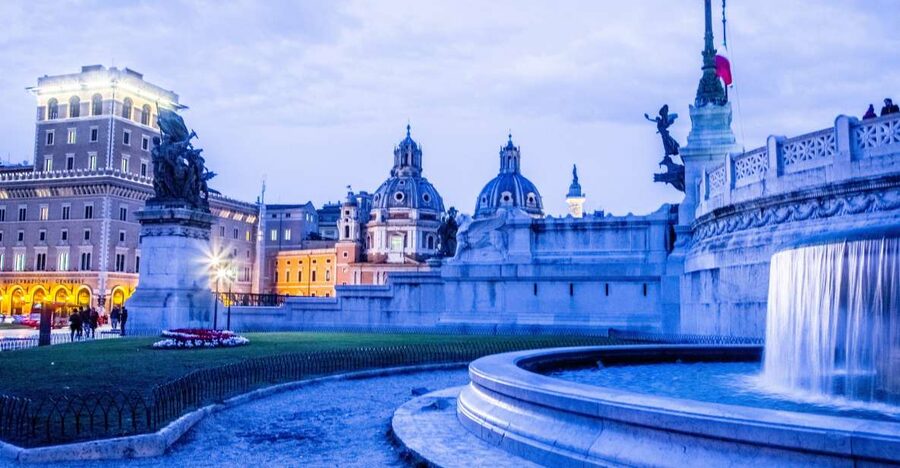
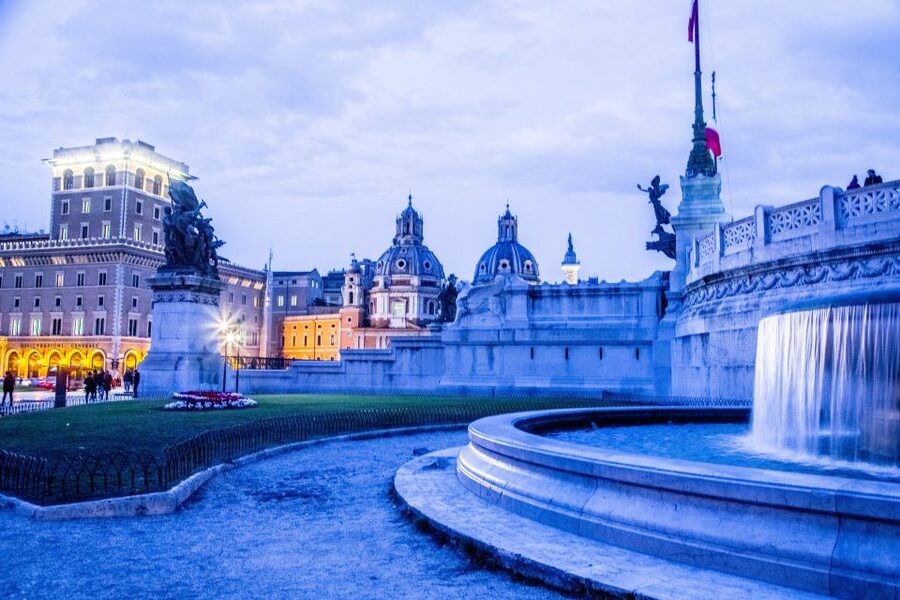
Rome in the daytime can feel like a sprint. At night, it slows down in a good way. The tour’s whole premise is that evening light changes your brain’s “story mode” into “this makes sense” mode. Fountains look more theatrical, marble looks softer, and squares feel like stages instead of parking lots of tourists.
Two things I think you will appreciate right away. First, the night atmosphere. You are walking through central Rome when shops, cafés, and people out for an evening stroll are active, so the city feels lived in. Second, you get context for what you are looking at. A monument like the Pantheon does not become clearer by staring at it harder. It becomes clearer when someone explains the structure and what makes it special.
The drawback to keep in mind is simply physical. You are on cobblestone streets and you are stopping a lot, so plan for real walking time even though it is only a few hours.
You can also read our reviews of more walking tours in Rome


Meet-up near Piazza di Spagna, then straight into the evening vibe
Your evening starts near Piazza di Spagna. You meet your guide just after aperitivo, which matters more than you might think. That timing usually means the streets are warm, not scorching, and your group is already in “let’s wander” mode rather than “let’s beat the heat” mode.
Look for an orange sign with the local partner logo. This is a small but important practical detail. In a city like Rome, meeting point confusion is one of the easiest ways to lose time and stress your evening.
The tour is designed as a walking route, not a car-hopping loop. That affects your comfort: wear comfortable shoes, and bring water. If it is rainy, the tour goes forward in all weather conditions, so an umbrella is a smart move.
Piazza di Spagna and the Spanish Steps story you can actually picture
Starting at Piazza di Spagna puts you in one of Rome’s most recognizable starting blocks. From there, the focus moves to the Spanish Steps, and the guide frames the square as a place shaped by European influence over time.
You do not just see stairs and buildings. You learn how the square reflects the impact of France, Spain, and England. That kind of context changes how you look at the architecture. Instead of thinking of it as pretty scenery, you start noticing why certain buildings and institutions are where they are, and why the area became such a cultural meeting point.
There is also a modern layer to the stop. Your guide points out details like the windows of stores featuring major Italian fashion brands. That is a fun contrast to the ancient city theme. It helps you understand that Rome is not locked in the past. It is a working capital, with style, commerce, and history coexisting in the same frame.
If you have limited time in Rome, this opening stop has value because it gives you a quick “map” of how Rome connects people, politics, and culture through spaces.
Trevi Fountain after dark: the coin toss, the details, the light
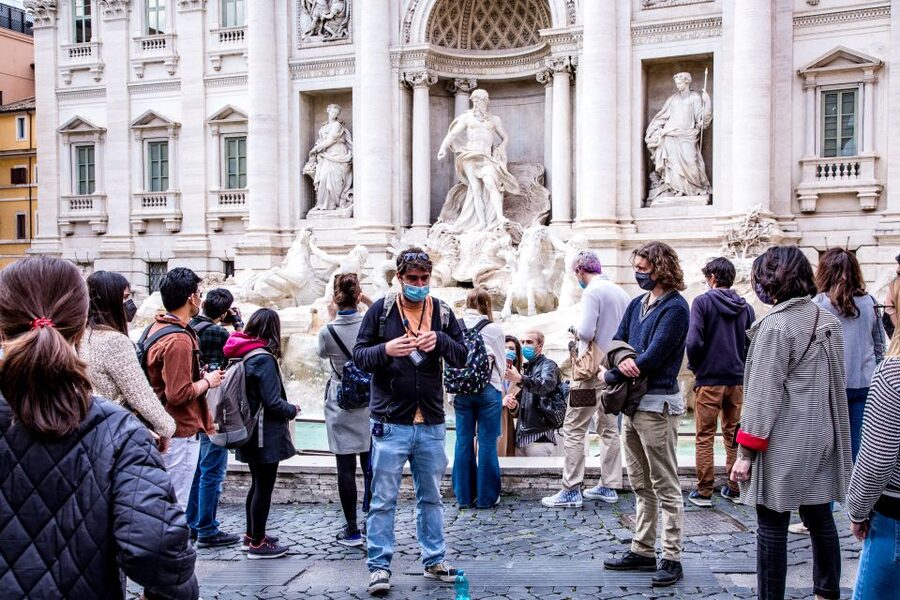
Next comes Trevi Fountain, lit up at night. This is one of those stops where timing matters. The fountain is famous in daylight, but evening light makes it feel more like a scene than a landmark.
The tour includes the classic tradition: you toss a coin into the fountain. It is the kind of ritual tourists do everywhere, but with a guide explaining the history, it becomes more than a souvenir moment. You stand in front of the marble and the moving water while you learn about what the fountain represents and why it became such an enduring symbol of Rome.
A practical note: Trevi is popular, even at night. The tour still gives you time to enjoy the moment, but expect people. If you are hoping for empty marble perfection for your photos, you will need patience and you might adjust your expectations.
Still, the experience works because the guide helps you look beyond the obvious. You will notice small visual details and better vantage points while staying oriented in the square.
The Pantheon at night, built in 125 AD, and why it feels different
From Trevi, the walk continues through cobblestone streets alive with the kind of street mix Rome does well: artists, book sellers, and restaurant energy. This “in between” section is not filler. It is how you move like a local, not like a person being transported.
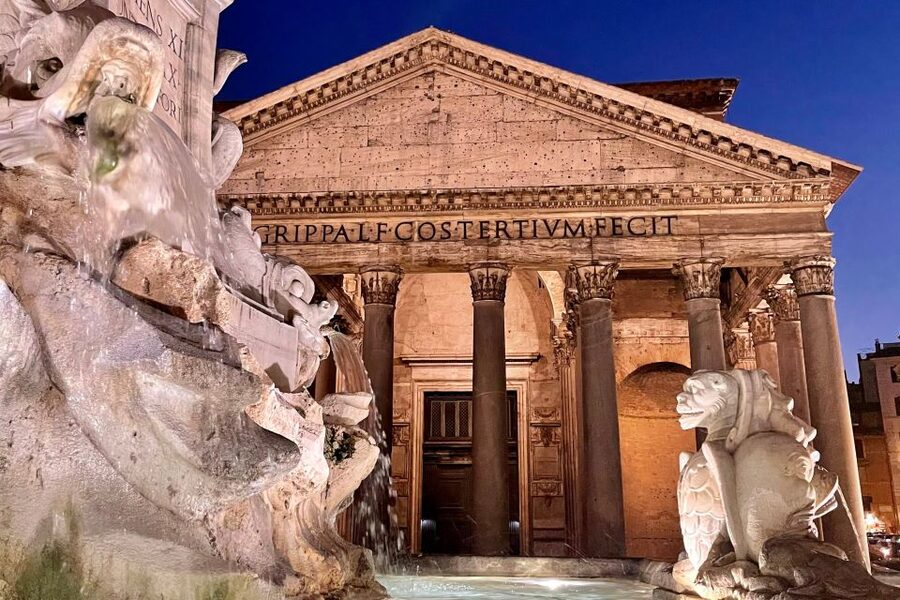
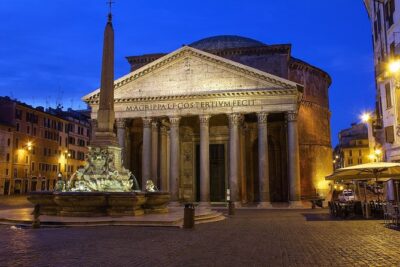
Then you reach the Pantheon. At night, the Pantheon feels calmer and more monumental. Your guide highlights its incredible details and points out vantage points in the square, helping you understand the structure instead of just admiring it.
One of the most compelling facts shared on this tour is the build date: it was built in 125 AD. Hearing that while you look at the space makes the Pantheon feel less like a museum object and more like a living piece of city design. The guide also explains how the structure works, which helps you “read” the building as engineering and architecture, not only as an iconic exterior.
This is a stop where you may notice more if you slow down. When someone gives you orientation cues, you stop walking in circles and start seeing what matters. That is part of the value you are paying for.
You can also read our reviews of more historical tours in Rome


Piazza Navona at evening pace: Bernini fountains and street energy
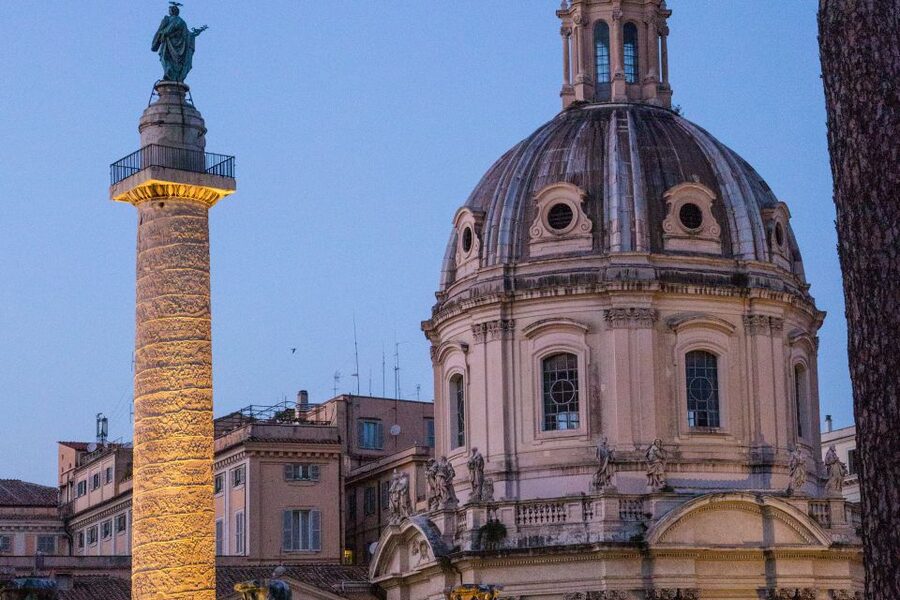
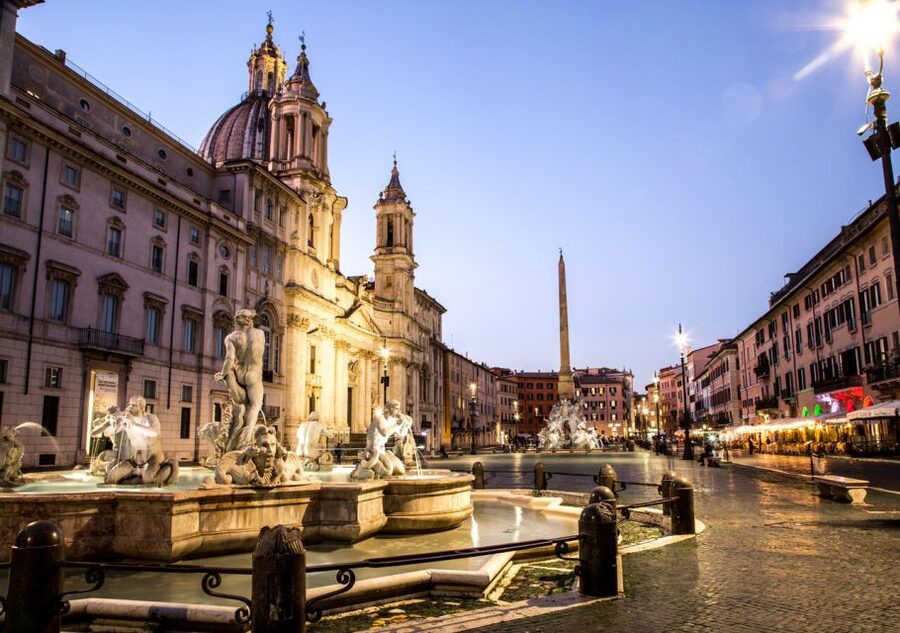
The final featured stop is Piazza Navona, one of Rome’s most famous squares. It is known for history, and it is also known for being fun at night.
Your guide connects the square to Bernini’s fountains and helps you look at the details that make Navona feel so alive as a designed space. This is not a quiet historical viewpoint. It is an evening hangout area, with restaurants, painters, street performers, and locals out for a stroll.
What I like about ending here is the contrast. You start with the Spanish Steps area, which has a grand, open feeling. You move to Trevi, which is a spectacle. Then you shift to the Pantheon, which is about structure and scale. Finally, Piazza Navona brings you back to street life, so your evening ends with a sense of play instead of a final lecture.
If you want authentic-feeling Rome without needing to plan a separate evening, Navona is a strong finish. Even if you have seen the square in daylight, the lighting and the evening energy make it feel like a different place.
What the tour feels like in real time (group size, pace, comfort)
This is a private or small group format, and that matters. Small groups usually mean you can hear the guide better and you are not constantly playing leapfrog behind a large bus crowd.
The pace is still walking pace, though. You are moving between central locations on foot, stopping for key moments at each site, and navigating cobblestone streets. That is why the “bring comfortable shoes” advice is not marketing fluff.
Also bring something for weather. The tour proceeds in all weather conditions, so pack for drizzle or chill. Even in warm months, evenings can feel cooler while you are standing still near fountains.
If you are the type of traveler who likes to photograph but hates feeling rushed, this format tends to work well. You have pauses at the iconic stops, and the guide helps you choose where to look so you do not waste time wandering for the perfect angle.
Price and value: why $59 can make sense for a night route
The price is listed at $59 per person, lasting about 2.5 to 3 hours. On paper, that might sound like a lot for a walking tour. In practice, the value comes from packing a lot of famous sights into a focused evening route while adding historical context you would otherwise have to research on your own.
Here is what you are getting for the money:
- An expert local guide (English)
- A night route that includes Piazza di Spagna, Trevi Fountain, the Pantheon, and Piazza Navona
- Time at the major “pause points,” not just passing-by snapshots
And here is where the price can feel less worth it. If you already know the history well and you mostly want a self-guided stroll, you might not use the guide’s background as much. Also, if you dislike crowds at major attractions, Trevi and Navona may still feel busy because those are heavy hitters.
But if you want Rome’s top sights with context and an evening rhythm, this price is in the “reasonable for what you get” zone, especially with multiple iconic stops handled in one go.
The guides: what stands out from real guide feedback
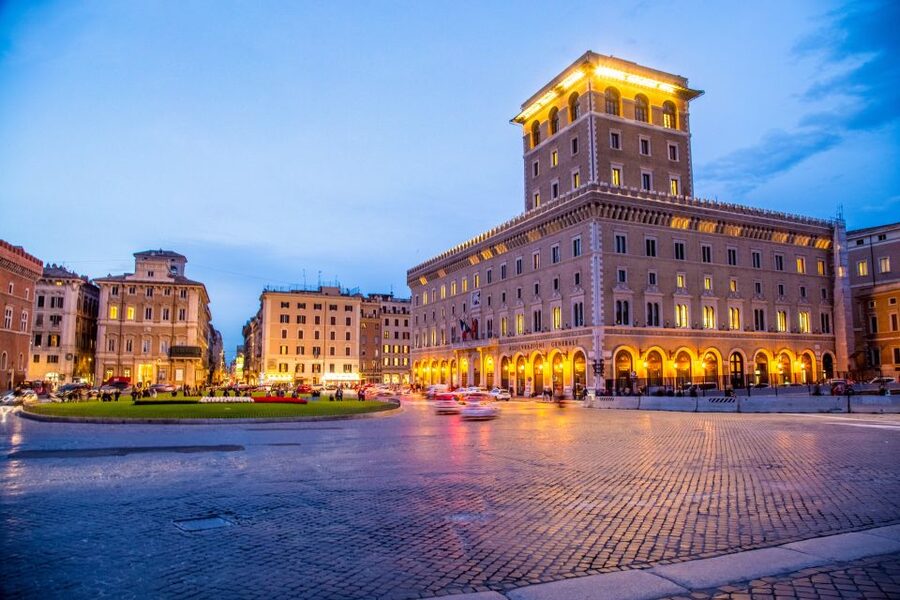
The reviews point to guides making the difference. For example, one traveler credited Angela with excellent knowledge and a lot of helpful recommendations. Another review highlighted James for exceptional expertise across topics. Others described guides as sweet, fun, and able to point out places you might miss on your own.
That pattern is what I would watch for in a good night walking tour: the ability to turn a skyline of landmarks into a story you can follow. When the guide points out details you would otherwise overlook, you feel like the tour expanded what you saw, not just where you walked.
Also, since the tour includes English live guidance, it is easier to ask quick questions if you are curious about a particular detail you are noticing in the moment.
Who should book this Rome at Night walk
This tour is a strong fit if:
- You want to see several major Rome sights in one evening
- You care about history, but you want it explained as you walk, not as a lecture
- You prefer night walking to daytime heat
- You like practical guidance like where to stand for better views
It may be less ideal if:
- You dislike crowded squares and expect them to be empty
- You have mobility limits that make cobblestones difficult
- You want a totally flexible self-paced wandering plan with no fixed route
Should you book this Rome at Night evening historical walking tour?
If your goal is a smooth first taste of central Rome, with iconic stops handled and stories added, I think it is worth booking. The structure is efficient: Spanish Steps energy, Trevi Fountain magic, the Pantheon’s big scale, and Piazza Navona’s evening street life, all in one evening window.
I would book it if you want to make your time count without sacrificing enjoyment. I would also book it if you are the type who forgets to read guidebooks but remembers what someone tells you while you are standing in the place itself.
If you are the type who only wants quiet corners and slow, private wandering, you might feel the pull to choose a self-guided route instead. But for most people, a guided night walk like this hits a sweet spot: memorable sights, useful context, and a pace that keeps the evening fun.
FAQ
How long is the Rome: Rome at Night Evening Historical Walking Tour?
The tour lasts about 2.5 to 3 hours.
Where do I meet the guide?
Meet your guide at the meeting point, where the guide will be holding an orange sign with the local partner logo on it.
Is the tour offered in English and is it private or small group?
Yes, the live tour guide language is English. The tour is offered as private or small groups.
What is included in the price?
The tour includes an expert local guide.
What should I bring?
Bring comfortable shoes, an umbrella, and water. The tour also recommends sunscreen, a hat, and an umbrella.
Do tours run in bad weather, and how early should I check in?
Tours proceed in all weather conditions. You should check in at the meeting point 10 minutes prior to your scheduled tour time.
More Walking Tours in Rome



More Tours in Rome






More Tour Reviews in Rome

Not for you? Here's more nearby things to do in Rome we have reviewed












Rome Night Tours, compared.
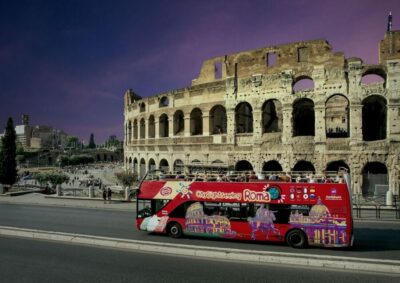 ★ 4.1City Highlights Open-Top Bus Night TourFrom $222,038 reviews
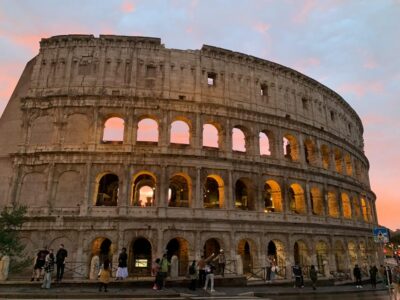 ★ 4.5Colosseum Sunset Tour with EntryFrom $491,230 reviews
 ★ 4.9E-Bike Night Tour with Food and Wine TastingFrom $891,131 reviews
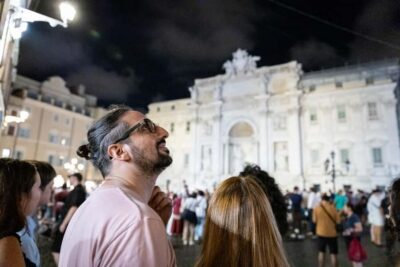 ★ 4.8Under the Moonlight Evening Walking TourFrom $28852 reviews
 ★ 4.5Night Tour of Rome with Local Pizza Dinner and Gelato ExperienceFrom $237780 reviews
 ★ 5.0Rome Bar Crawl: Interactive Night Tour with Games and KaraokeFrom $78769 reviews
 ★ 4.7Colosseum Arena Twilight Tour & Imperial Forum VisitFrom $78689 reviews
 ★ 4.5Rome by Night: Golf Cart TourFrom $108688 reviews
Browse the lists this tour appears in