
Reviewed · SELF-GUIDED TOURS
Rome: Roman House of the Celio Hill Ticket & App Audioguide
That is Rome, literally under your feet.
You get a smart look at daily life turned into late antique art, in an underground archaeological site below the basilica of Saints John and Paul. I especially like how the visit centers on well-preserved original decorations, so you are not just walking through ruins, you are studying surfaces and details. One thing to plan around is that opening or closing times can be tighter than you expect.
You will also appreciate the story the rooms tell across centuries, including the shift from pagan to Christian Rome. The possible snag is the audio support: the info here says audioguide is not included, so if you rely on narration, you should confirm what you are actually getting before you go.
Key things to notice before you go
- Underground Roman Houses of the Celio below the basilica of Saints John and Paul, between the Colosseum and Circus Maximus
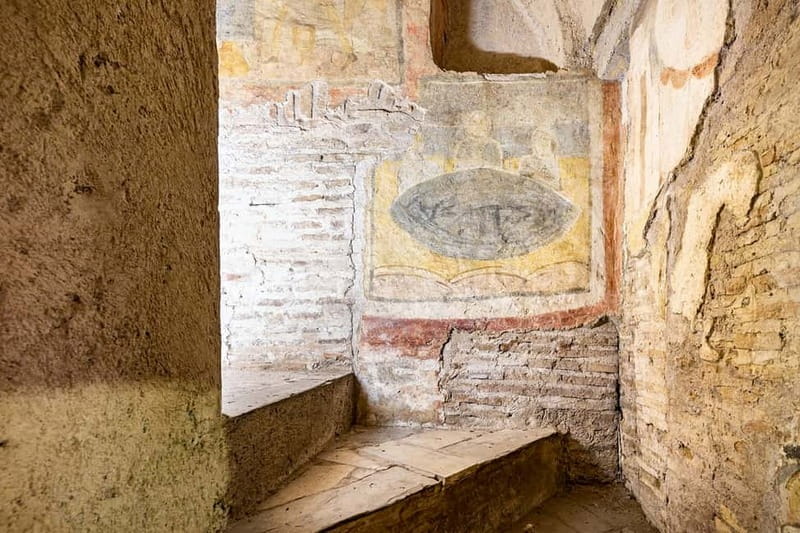
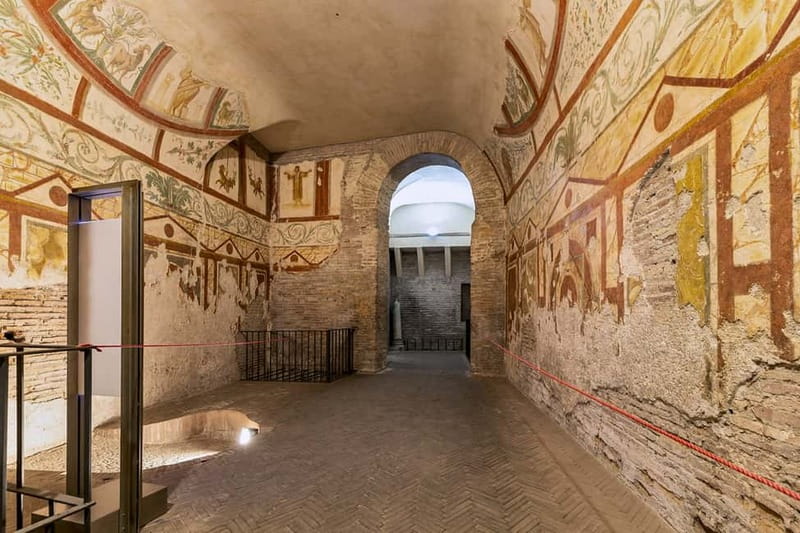
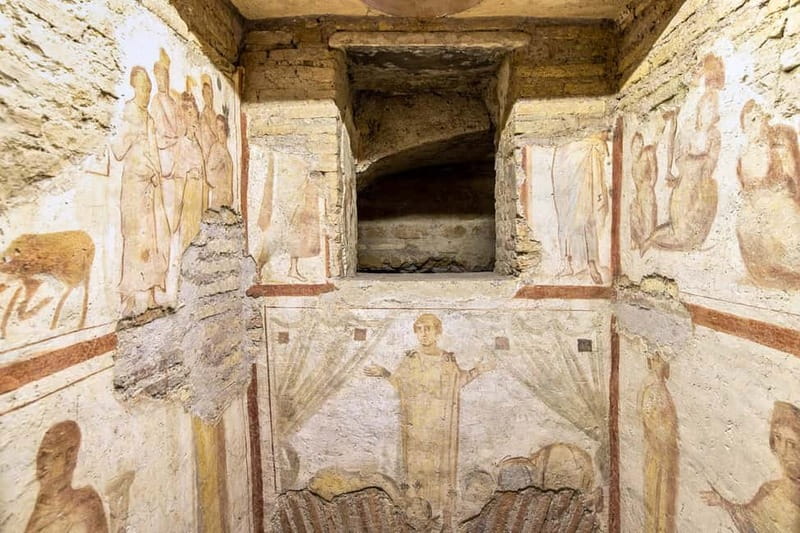
- Original decorations and frescoes in an excellent state of preservation for studying close-up
- A site that covers over four centuries, so you can see Rome change over time
- The rooms reflect pagan and Christian life side by side, not two separate eras
- A built-in keepsake, you can send a unique digital postcard to friends back home
Where the Roman Houses of the Celio fit into Rome’s big map
The Roman Houses of the Celio sit in a convenient, central pocket of Rome. You find them below the basilica of Saints John and Paul, right between the Colosseum area and Circus Maximus. That location matters because it makes this feel like a real add-on to a normal day of sightseeing, not a long detour.
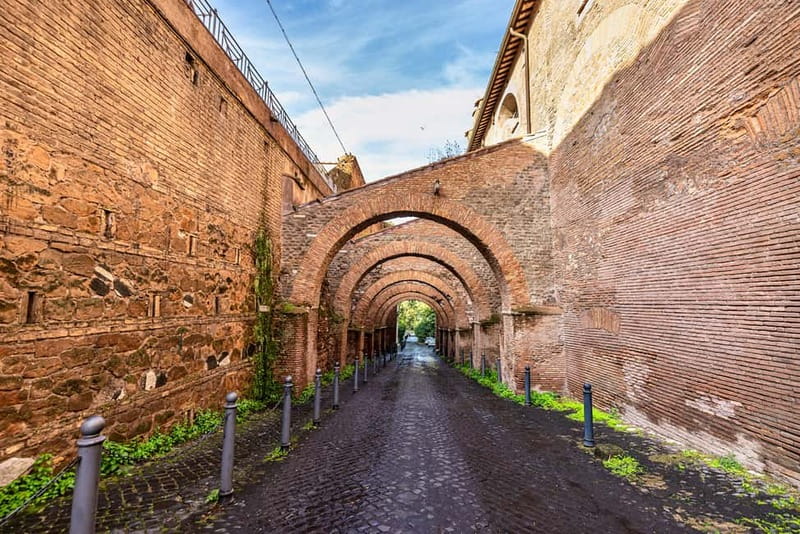
Your meeting point is also specific. Look for the Case Romane del Celio entrance on Clivo di Scauro road. Plan to arrive a few minutes early, because underground entrances tend to be efficient, not leisurely.
If you are trying to build a day around the classics above ground, this ticket gives you a completely different angle. You get a shift from the usual columns and arches to the texture of everyday rooms, walls, and painted scenes.
A few more Rome tours and experiences worth a look



Entering the underground complex below Saints John and Paul
Once you get inside, the big surprise is the scale of what you are stepping into. You are not visiting a single small chamber. You are walking through a preserved underground neighborhood of sorts, part of Rome’s layered underground story.
The Roman Houses of the Celio are also known as the house of the martyrs John and Paul. You will see how that association connects the modern basilica above to the ancient spaces below.
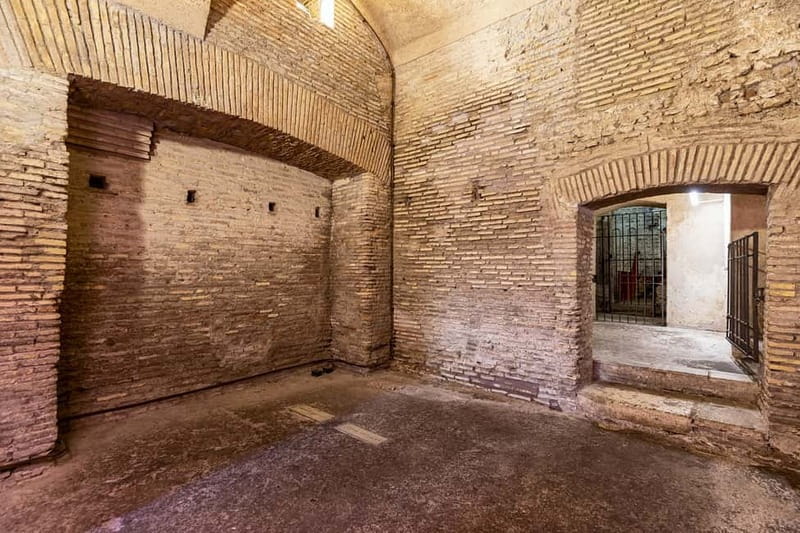
What helps most is understanding what you are looking at. This complex is described as a space that started life as workshops and warehouses inside a multi-storey building, called an insula. Later, it was transformed into an elegant domus during the 3rd century A.D. That shift from utilitarian to refined changes how you read the rooms.
From insula workshops to a late antique domus
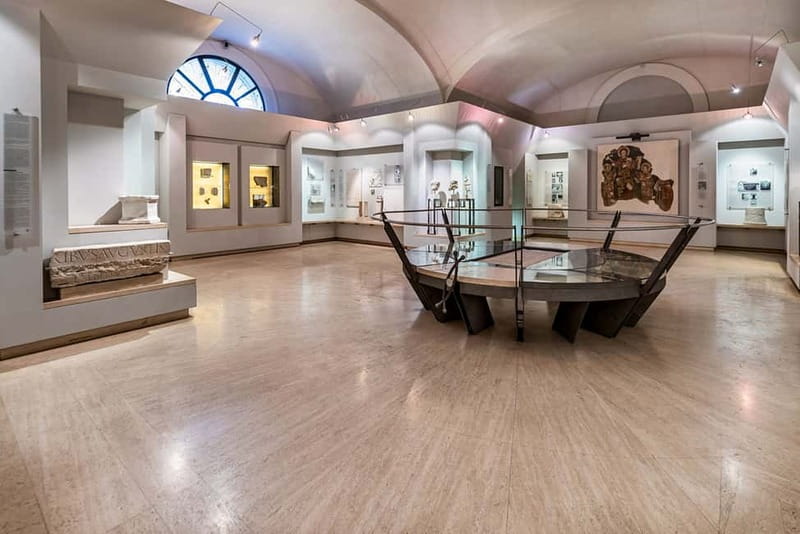
I like that the site gives you a built-in before-and-after story. You are essentially reading architectural evolution. In the early phase, the spaces were used for commerce and storage, and that practical purpose shows up in the way the buildings were used. Then the transformation to a domus means the same general footprint becomes a more formal home.
Even if you are not an architecture nerd, the meaning is simple: Rome reused and reimagined its spaces. This is not a museum of one perfect moment. It is a record of how people adapted buildings to new needs and new tastes.
As you move through, pay attention to the way the rooms feel. The “house” label matters, but you should keep the earlier workshop and warehouse function in your mind too. That context makes the painted surfaces and decorative focus feel earned, not random.
Frescoes and decorations you can study without guessing
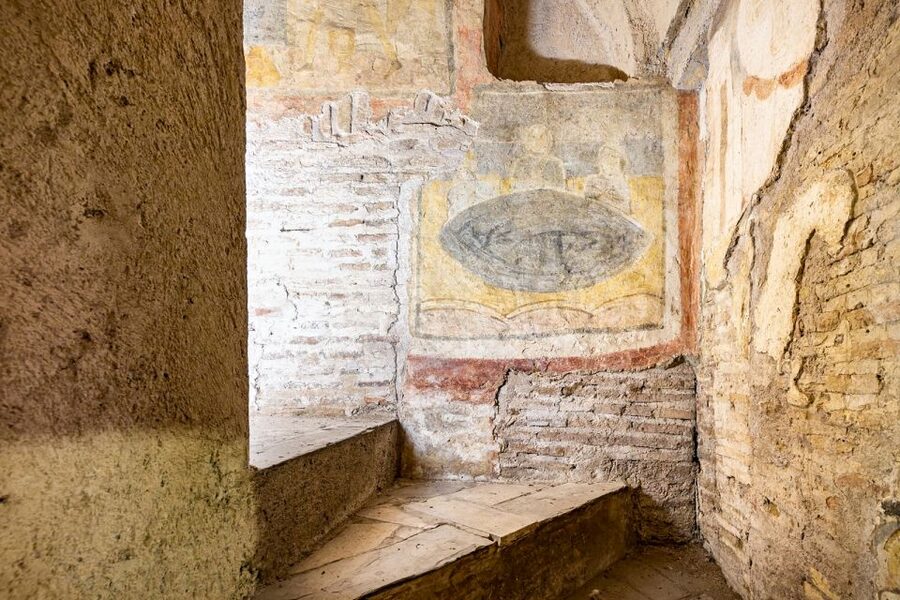
This is where the visit earns its keep. The big draw is the perfectly preserved decorations and frescoes, with a conservation level that lets you actually study them instead of just admiring vague shapes.
Because you are underground, the experience is quieter and more controlled than many open-air ruins. That can make it easier to slow down. If you like art history, or you just like noticing how painted scenes were made, you will probably linger here longer than you planned.
A useful approach is to look at two things as you go. First, find any decorative areas that seem intentionally placed, like painted bands or wall features meant to be seen. Second, compare what you see across rooms, since the description includes over four centuries of history. The site is not one uniform style, it is layers of time.
Paganism and Christianity in the same space
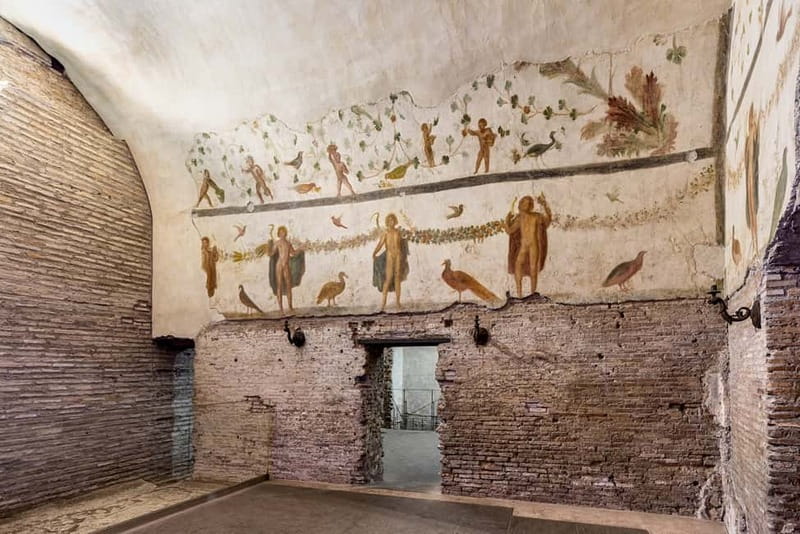
Rome’s religious shift is often taught as a straight line. This underground site makes it messier in a good way. The Roman Houses of the Celio show the passage and coexistence of paganism and Christianity in ancient Rome, right in the same general setting.
That is valuable for you because it avoids the simplified story. You can look at the site as evidence that old beliefs did not vanish overnight, and new ones did not just replace everything instantly. They overlapped, and spaces kept being used.
If you visit with family, this is also an easy concept to explain without needing extra background. You can point out that the rooms were reused and transformed, so religious life could shift while the built environment stayed part of daily reality.
A few more Rome tours and experiences worth a look





The digital postcard keepsake, and how to make it worth your time
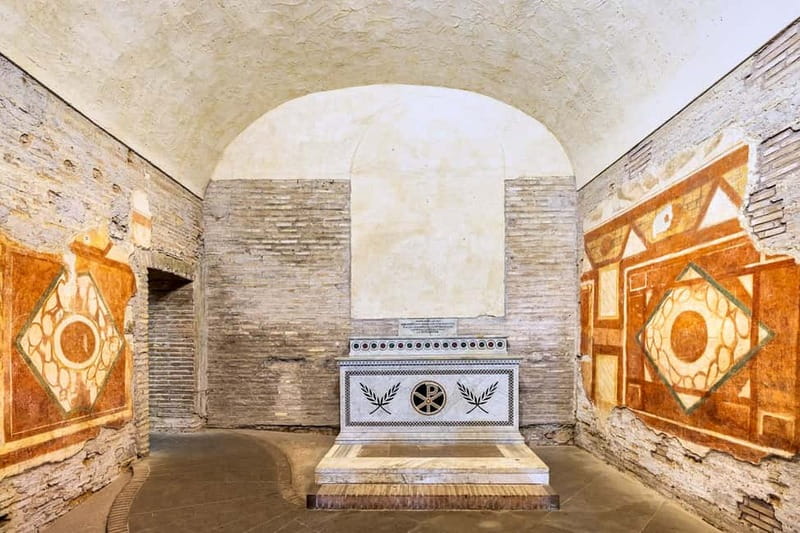
One of the most practical perks is the postcard feature. The experience includes a postcard, and it is described as a way to send a unique digital Pemcard from your visit.
This matters because so many Rome tickets give you a ticket stub and a photo. A postcard gives you a small action you can complete right then. It is also a nice way to share the underground aspect with people who might never bother to see this part of Rome.
My advice: have your phone charged and ready, and plan for a quick moment to write the short message. If you are traveling with kids, this can become a fun “send one memory home” routine instead of just snapping pictures.
Price and value: is $11 really enough?

At $11 per person, this is priced like a value add. You are not paying a premium for a long guided bus ride or a full-day program. You are paying for entry to a specific underground site with preserved decoration, and for the postcard component.
For me, the value comes from two things. First, you are getting access to a lesser-known layer of Rome that is literally under a major basilica. Second, the site is known for preserved frescoes and original decoration, which is exactly the kind of thing you want to see in person.
The only caution is to check what audio you have. The info here lists audioguide as not included. If you hoped for narration while you walk, you might need to use your own phone audio or download whatever the provider offers, depending on what is included with your specific purchase.
In other words, it is a good deal if you are comfortable doing some self-guided looking. If you want heavy narration, confirm it first.
Timing, entry flow, and the 3:00 pm closing concern
The ticket is valid for one day, and you should check availability for starting times. That means your best strategy is simple: pick a time that matches your itinerary, then show up on schedule.
The meeting point is specific, so give yourself a little time to find the entrance on Clivo di Scauro road. Underground entries can also mean a short wait, then quick access once you are checked in.
One downside to note is a reported closing-time issue. Some people experienced the venue closing at 3:00 pm rather than later. I cannot guarantee any exact hours beyond what you see at booking, but it is enough to justify planning like this: if you can, schedule your visit earlier in the day.
Wheelchair access and practical comfort underground
The experience is listed as wheelchair accessible. That is important for you if you are planning with mobility needs. Since it is underground, you may still want to consider comfort items like supportive shoes, but at least accessibility is acknowledged.
Also remember, underground sites can feel cooler and more enclosed than outside. Even if you are warm above ground, it can be worth bringing a light layer, especially if you run cold.
Who this Celio House visit is best for
This ticket is ideal if you want Roman history that is not just top-down monuments. If you like architecture, wall art, or the everyday life angle, you are in the right place. The descriptions of the insula to domus transformation, and the focus on frescoes, point to a very “look closely” experience.
It is also a good match for people who want something smaller and more focused than a big-ticket tour. It is not billed as a multi-stop day, and that can be a plus if you are trying to pace yourself.
If you strongly prefer an audio-led experience, double-check the audioguide situation first. Because the information here says audioguide is not included, you might want to plan on reading signage and using your own phone.
Should you book this Celio House ticket?
Yes, I think you should book it if you like frescoes, architectural evolution, and the idea of seeing Rome across centuries in one underground walk. The preserved decorations and the pagan-to-Christian context are the kind of details that make a small ticket feel like a meaningful stop.
I would hold off or at least verify the audio plan if you expected an audioguide included with your purchase. Also schedule earlier if your day runs late, given the reported closing-time surprise.
If you are building a Rome day around the Colosseum and Circus Maximus area, this is a smart add-on. It is close by, it gives you a different Rome, and it ends with something you can share back home: a digital postcard from a real underground Roman site.
FAQ
Where do I meet for the Roman Houses of the Celio ticket?
You should look for the Case Romane del Celio entrance on Clivo di Scauro road.
How long is the ticket valid?
The ticket is valid for 1 day. You should check availability to see the starting times.
How much does it cost?
The price is listed as $11 per person.
What is included with the ticket?
Included items are the Roman Houses of the Celio entrance ticket and a postcard.
Is an audioguide included?
The information provided says audioguide is not included, so you should confirm what audio options are available with your booking.
Is this experience wheelchair accessible?
Yes, it is listed as wheelchair accessible.
Can I cancel for a refund?
Free cancellation is offered up to 24 hours in advance for a full refund.
More Self-Guided Tours in Rome
More Tickets in Rome

More Tour Reviews in Rome





Not for you? Here's more nearby things to do in Rome we have reviewed












Self-Guided Tours, compared.
 ★ 4.2Colosseum & Forum with Audio Guide App -Optional ArenaFrom $4124,770 reviews
 ★ 4.2St. Peter’s Basilica & Dome Entry Ticket & Audio TourFrom $177,537 reviews
 ★ 4.1Vatican & Sistine Chapel Ticket with Optional Audio GuideFrom $465,405 reviews
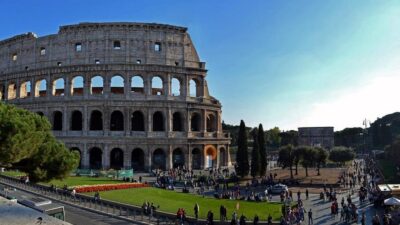 ★ 4.3Colosseum, Forum, & Palatine Hill with Audio GuideFrom $444,591 reviews
 ★ 4.4Castel Sant’Angelo Skip-the-Line Ticket & Audio GuideFrom $203,500 reviews
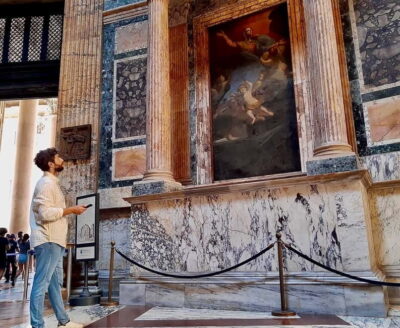 ★ 4.1Pantheon Priority Entry Ticket & Audio Guide AppFrom $63,234 reviews
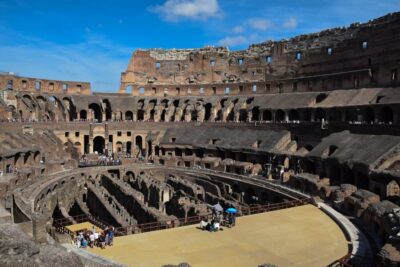 ★ 4.2Colosseum Experience with Audio Guide and Arena OptionFrom $302,200 reviews
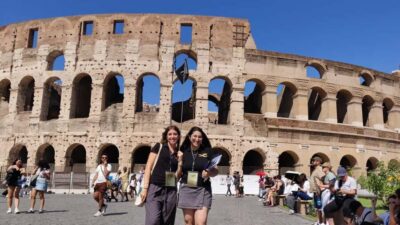 ★ 4.0Colosseum Express Entry with Audio Guide AppFrom $411,507 reviews