
Reviewed · WALKING TOURS
Rome: Relics from the Passion of the Christ Walking Tour
Relics, mosaics, and Passion history in one walk. I love how the route ties St Helena’s 4th-century relics to the churches you can actually visit today, and I love the small group feel that keeps the focus on prayer and questions instead of crowd noise.
The one drawback to plan for is the practical side: it is a walking tour through central Rome for about 3 hours, and you must cover shoulders and knees to enter churches. If you have limited mobility, check whether the golf cart option fits your needs, because missing steps means missing key moments.
Key things to look forward to on this Rome Passion relics walk
- St Helena’s relic journey from Jerusalem to Rome is explained in plain terms as you move from church to church
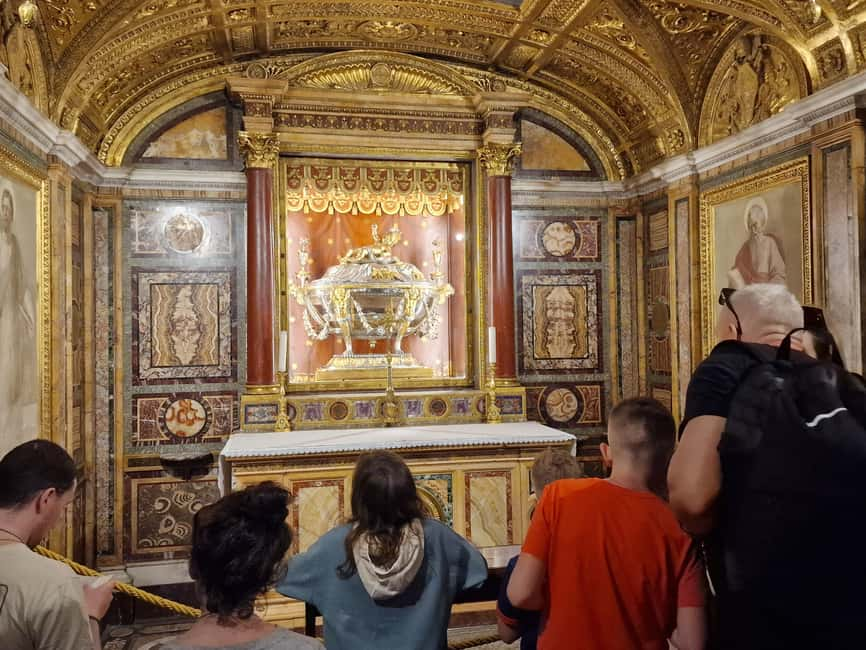
- Santa Maria Maggiore pairs grand Roman church art with a quieter, devotional highlight under the main altar
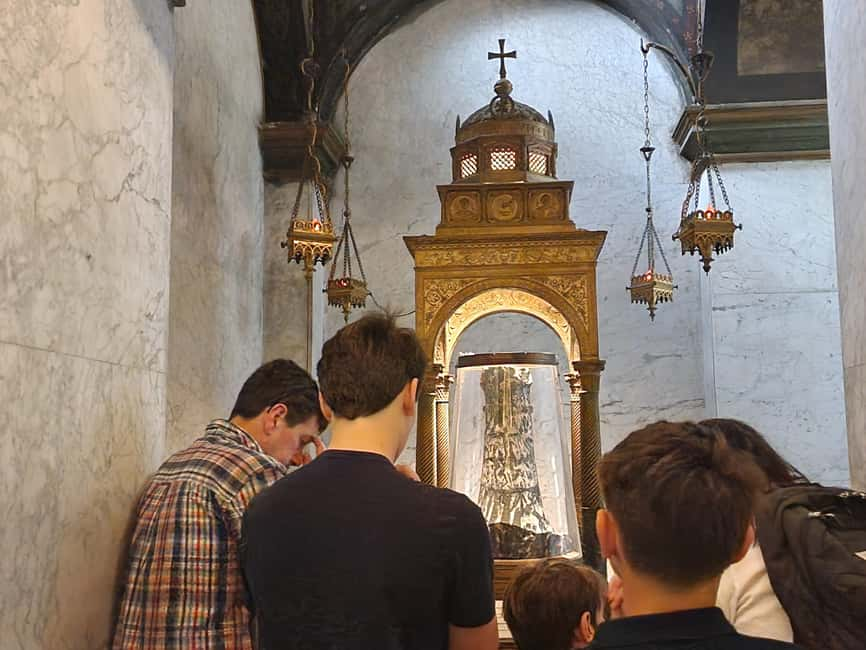
- Santa Prassede delivers a major Passion relic tied to the scourging of Jesus
- Scala Sancta is the Holy Steps experience, with tradition honored even without the knee climb
- San Giovanni in Laterano blends major architecture and symbolism with the resting place above the high altar
- Basilica of the Holy Cross in Jerusalem is the climax, with fragments connected to the Holy Sepulcher and Calvary
Why Rome is a big deal for the Passion relic story
Rome is where Christianity went from persecution to public presence, and you can feel that shift in the way these sites were built, decorated, and guarded. This tour focuses on physical objects tied to the Crucifixion, and it treats them as more than museum pieces, as prayer prompts and historical breadcrumbs.
The central thread is how many of these Passion-related items came to Rome from Jerusalem. The tour frames this through St Helena, mother of Emperor Constantine, who is linked to bringing relics to the capital in the 4th century.
If you care about the Roman Catholic story of how faith moved across the empire, this is the kind of route that makes the timeline click. You see the churches, then you understand why those specific relics mattered enough to be transported and preserved.
You can also read our reviews of more walking tours in Rome


Santa Maria Maggiore: from your meeting point to manger-wood beneath the altar
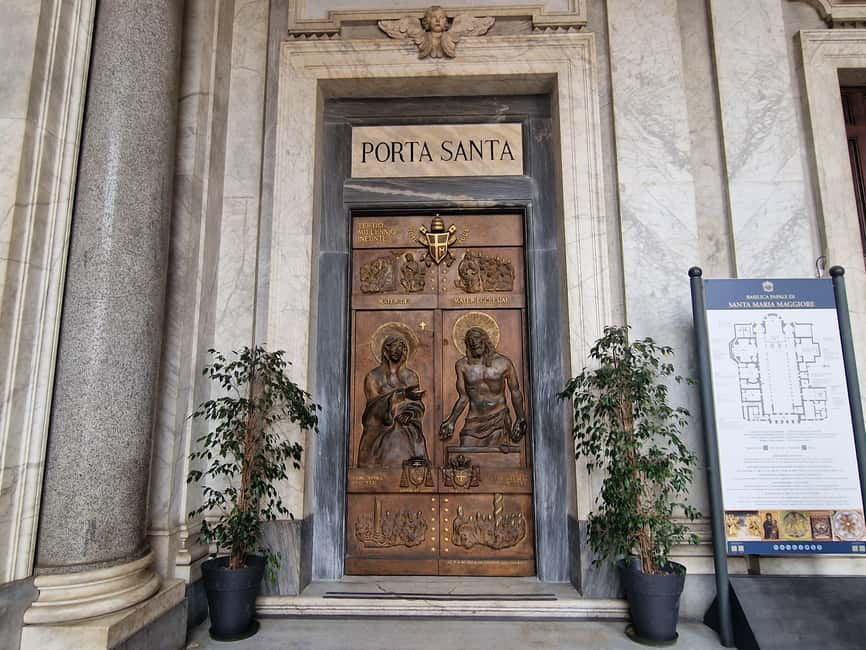
The tour starts at the fountain in Piazza di Santa Maria Maggiore, and the guide holds an orange sign with a lion head. From there, you head into Basilica Papale di Santa Maria Maggiore, one of Rome’s oldest churches dedicated to the Theotokos (Mother of God).
Inside, the big devotional anchor is beneath the main altar, wood from the manger where baby Jesus once lay. That alone gives the visit a different tone than the usual “look but don’t touch” sightseeing rhythm.
You also get a taste of the Italian art layers that make Rome so fun to walk through. The basilica includes Baroque master Gian Lorenzo Bernini connected to the space through the church’s artistic and devotional presence. It is a reminder that later generations kept returning to the same sacred themes, and they kept investing in art to express what words could not.
Practical note: this is the first church stop, so use it to get your clothing settled and your mindset in gear. If shoulders and knees are not covered, you will be turned away.
Santa Prassede: 9th-century mosaics and a pillar tied to the scourging
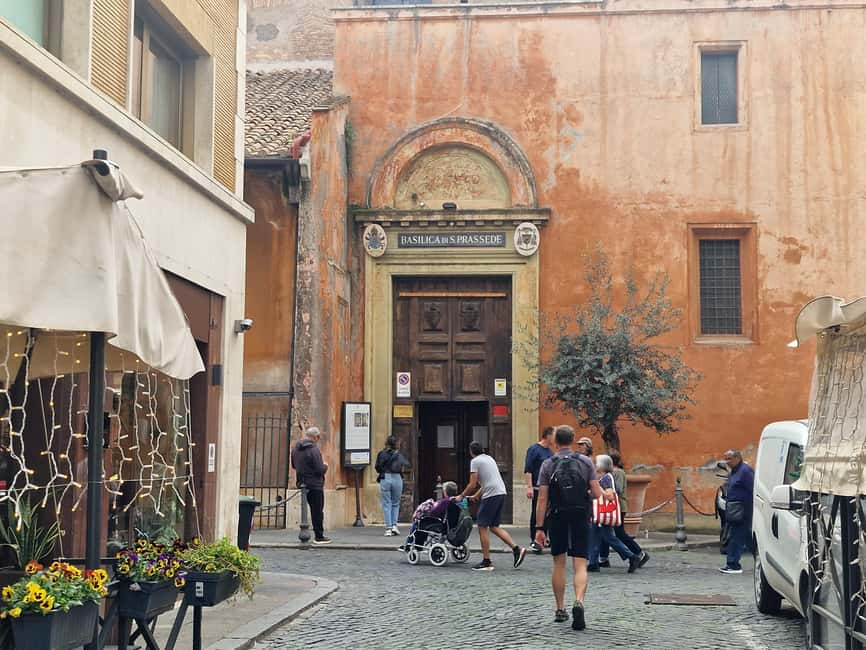
Next up is Santa Prassede, known for standout 9th-century mosaics. Mosaics in Rome can feel like visual theology, and here they support a tour theme that moves from story to relic to prayer.
The main focus is the stone pillar on which Jesus was scourged, said to have been brought from the Praetorium in Jerusalem to Rome in the 13th century. When a tour calls a relic by its specific connection, it changes how you look at the space. You stop thinking of the pillar as a random object and start treating it like the center of a moment.
This is also a good stop for patience. Even if you are eager, allow a few quiet minutes to pray and absorb what the guide is explaining. The tour includes time for reflection as part of the experience, and Santa Prassede is one of the places where it actually feels natural to slow down.
Scala Sancta: the Holy Steps, St Luke’s icon, and the tradition you will still feel
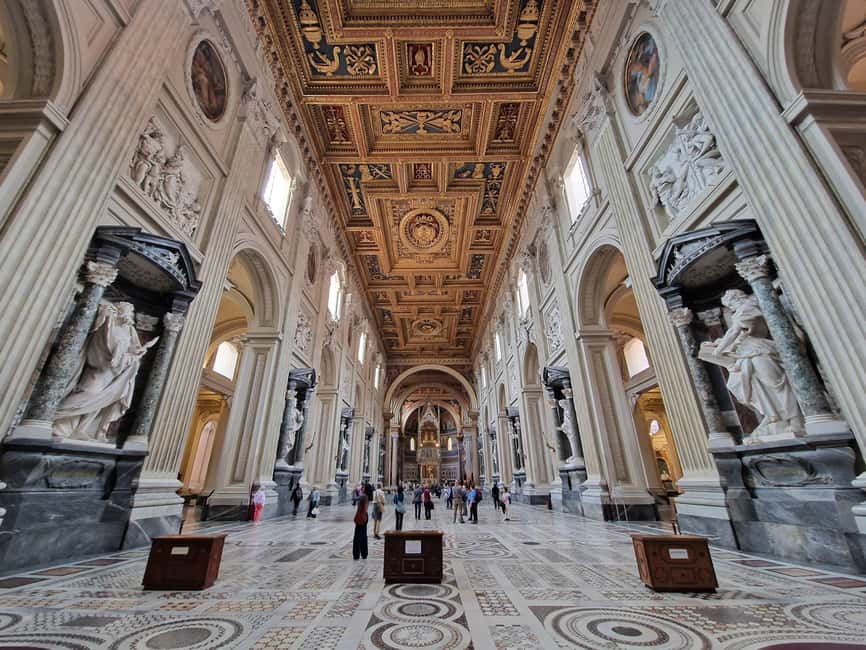
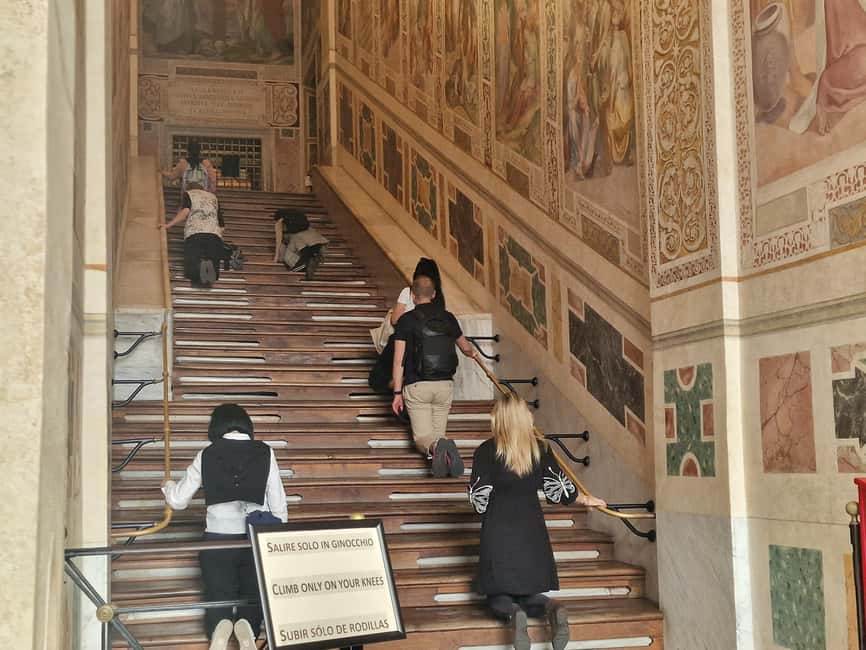
At Scala Sancta, you visit the Holy Steps, the steps associated with Jesus being judged by Pontius Pilate. The tour explains that they were transported to Rome in the 4th century by St Helena, so you are not just seeing a famous staircase, you are continuing the same story thread.
A key detail: you won’t have time to ascend the stairs on your knees according to the traditional practice. That sounds like a compromise, but it can also help the tour work for people who are traveling with real schedules, families, or knee problems.
Even without that kneeling climb, you still get an important view into the “Holy of Holies” at the top, including the icon painted by the Gospel writer St Luke. That gives the stop a spiritual payoff without requiring everyone to attempt the full traditional ritual.
If you want to bring your own prayer into the visit, this is a great place to do it. The structure naturally invites silence, and the guide’s context helps your focus stay on what the tradition is pointing to.
San Giovanni in Laterano: Borromini symbolism and where Peter and Paul rest above the altar
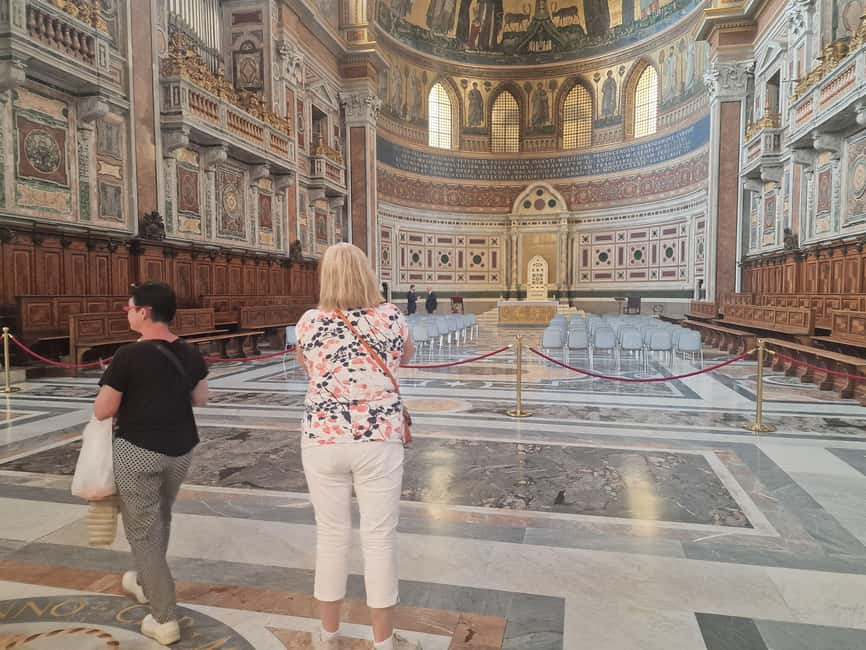
Then you walk to Basilica of Saint John Lateran, also called San Giovanni Laterano. This is a major Roman church experience, not a quick photo stop, and the tour frames it as a place where design carries meaning.
You learn about the architectural design attributed to Borromini and why the basilica’s symbolism matters. In Rome, the buildings often act like visual sermons, so when you get the key symbolism explained, the church becomes easier to “read” instead of just admiring.
The guide also points out the location above the high altar where the skulls of Sts Peter and Paul rest. That moment is often the kind of detail that makes a tour feel more serious and less touristy.
One more practical tip: Lateran can feel busy depending on the day. Keep your group close and listen closely when the guide names specific areas, because the church has lots of visual pull. You do not need to strain for every detail, but you do want to catch the “where to look” instructions.






Basilica of the Holy Cross in Jerusalem: fragments tied to Calvary and the Holy Sepulcher
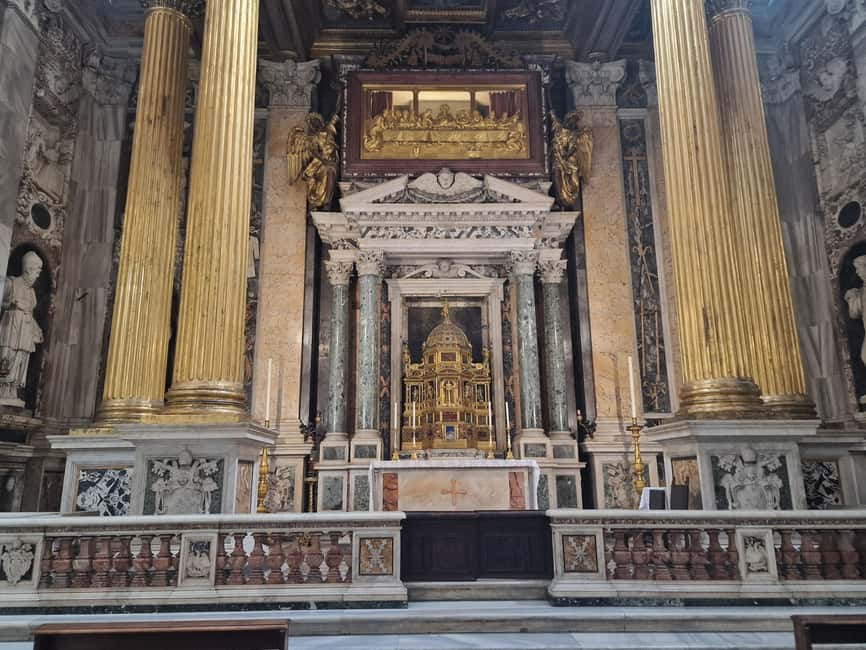
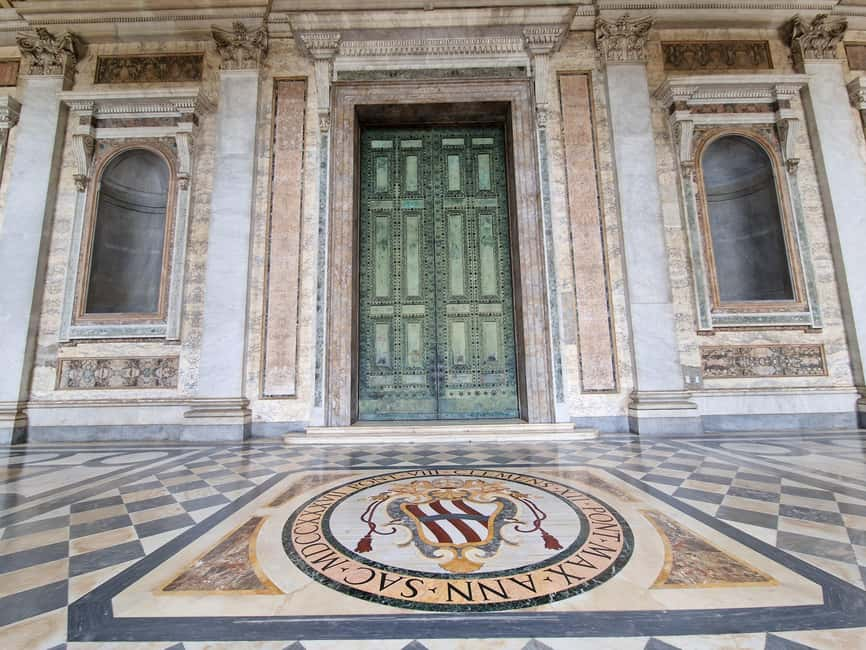
The climax of the tour is the Basilica of the Holy Cross in Jerusalem. The story is strong here: it is described as being built on earth brought from Calvary in the 4th century, linking the space directly to the Crucifixion setting.
This stop is where the tour focuses hard on named Passion artifacts. Inside, you enter to see fragments connected to the Holy Sepulcher and the Cave of Bethlehem, along with relics associated with the Crucifixion and Crown of Thorns traditions.
Among the relics mentioned are a nail of the Crucifixion, two thorns from the Crown of Thorns, a small walnut board reading Jesus the Nazarene king of the Jews, and the wood of the Cross where Jesus was crucified.
For me, this is the point where the tour stops being history-only. Even if you are coming for culture and church architecture, the named relics push you toward reflection. The guide’s explanations help you treat these as connections rather than objects, even if you approach faith in your own way.
If time feels tight when you arrive, remind yourself that this is the destination stop. Prioritize quiet attention over checking your phone, and let the guide’s framing set the pace.
The route pace: 3 hours that feel full, not frantic
This is a 3-hour walking tour with a small group limited to 10 participants. That matters more than you might think. Smaller groups usually mean better pacing, more time for questions, and less of that stop-and-start feeling that kills a sacred visit.
The tour operates in all weather conditions unless a site closes for safety reasons. That means you should dress for rain or heat and still be ready for walking on Roman sidewalks.
Check in 15 minutes before your scheduled start time, because tours depart promptly and late arrivals do not receive refunds for missed tours. If you want the calmest experience, build in time for bathroom breaks and a quick water stop before you meet.
Also be aware that the order of the visit can change due to unexpected church closures or events. In practice, that just means you should stay flexible and trust the guide to keep the “Passion relic” theme intact even if the sequence shifts.
Price and value: what $96.29 buys you for a high-touch religious route
At $96.29 per person for about 3 hours, the price sits in the “this is serious and curated” category rather than a casual sightseeing add-on. The value comes from two specific things you are paying for.
First, entry to each site is included. For churches and relic locations in Rome, that can turn into real savings compared with paying separately while also trying to manage lines and timing on your own.
Second, you get an expert local guide in English. The guide component is crucial here, because the relics and symbols can be easy to miss if you only read a plaque. The guide is what turns the stops into a coherent Passion timeline, especially when the route highlights connections like St Helena’s role and each relic’s origin.
What you should budget separately: transport to and from the tour, plus food and drink. For most people, it is worth planning a meal after, because you may not want to hunt for lunch while your head is still in prayer mode.
Guides who bring both faith and Roman context to life
The strongest praise I saw in the feedback centers on the guides, especially their ability to connect religious meaning with historical context. Names that show up repeatedly include Paul, Daniel, Tim, and Tom, with people calling out how well the guide answered questions and how clearly they structured the experience.
What I like about this style is that it respects both approaches. If you are deeply religious, you get careful explanations that support devotion. If you are more interested in Roman history and how artifacts moved across centuries, you still get a timeline that makes sense.
A small but important detail: the tour is described as feeling like a guided walk with real presence. You are not shuffled through; you are guided through. That is why a lot of people rate this tour extremely high.
Who should book this Passion relics tour, and who might hesitate
This is a strong match if you are a Christian pilgrim to Rome, or if you want a religious itinerary that takes relics seriously rather than treating them as optional extras. It also fits you if you like churches as living spaces, where art, architecture, and devotion all interact.
You should also be ready for practical constraints. The dress rule is firm: shoulders and knees must be covered, and shorts, short skirts, and sleeveless shirts are not allowed. If you show up under-dressed, you risk losing access, and church entry is central to the experience.
And you should be comfortable walking. If mobility is limited, the tour notes a golf cart option exists. If that option is important for your comfort, confirm it when you book, because the standard tour is a walking format.
Should you book Rome: Relics from the Passion of the Christ Walking Tour?
I think you should book if you want a focused route through major Rome churches with named Passion relics, explained by a guide who can answer questions and connect the story to Roman history. At $96.29 for 3 hours with site entry included, the value works best when you want structure and significance, not just sightseeing.
Skip or reconsider if you want a flexible, low-effort day, or if clothing rules and walking time feel like deal-breakers. Also, if you are expecting a full traditional knee-climb on the Holy Steps, this tour does not include that portion due to time limits.
If your goal is a meaningful Passion-centered visit to Rome, this tour gives you a clean, thoughtful route from start to finish, with the most sacred stops at the right moment in the day.
FAQ
Where does the tour start and end?
The tour starts at the fountain in Piazza di Santa Maria Maggiore, and it ends back at the same meeting point.
How long is the walking tour?
The duration is 3 hours, and starting times depend on availability.
What is included in the ticket price?
Entry to each site is included, and you also get an expert local guide.
Is transportation included?
No. Transport to and from the tour is not included.
What language is the guide?
The tour is guided in English.
Is this tour wheelchair accessible?
Yes, the tour is listed as wheelchair accessible. If you have limited mobility, there is also mention of a golf cart option.
What clothing is required for church entrances?
Shoulders and knees must be covered to enter churches. Shorts, short skirts, and sleeveless shirts are not allowed.
What should I bring for the tour?
Wear comfortable shoes and comfortable clothes. It is also recommended to bring bottled water, sunscreen, a hat, and an umbrella. In warmer months, bring a cover for bare shoulders inside churches.
More Walking Tours in Rome



More Tours in Rome



More Tour Reviews in Rome
Not for you? Here's more nearby things to do in Rome we have reviewed












Walking Tours, compared.
 ★ 4.9Trastevere & Campo de Fiori Street Food Walking TourFrom $512,768 reviews
 ★ 4.9Paranormal Night Walking Tour & Secret BackstreetsFrom $341,921 reviews
 ★ 4.4Guided City Center Evening Sightseeing Walking TourFrom $46953 reviews
 ★ 4.5Best of Rome Walking Tour including Trevi FountainFrom $4923 reviews
 ★ 4.8Under the Moonlight Evening Walking TourFrom $28852 reviews
 ★ 4.9Forbidden History Walking Tour & Pub Crawl with DrinksFrom $61688 reviews
 ★ 5.0Guided Small Group Walking Tour of City HighlightsFrom $30682 reviews
 ★ 4.5Rome Walking Tour with Piazza Navona, Trevi Fountain and PantheonFrom $35676 reviews
Browse the lists this tour appears in