
Reviewed · GUIDED
Rome: Caravaggio and Baroque Art Private Guided Tour
Caravaggio looks better under real street light. This private, 3-hour walk puts his most dramatic paintings into the exact churches and squares where they were meant to be seen, then threads in the larger Baroque story across Rome. I especially love the focus on light and shadow, and how the guide connects each artwork to Caravaggio’s messy life in Rome. The main drawback to plan for is the moderate walking plus a strict dress code for churches, with shoulders and knees covered.
I also like that you get a true art historian guide, not a quick photo escort. You start at Piazza del Popolo and finish back in the same general area, with short visits inside multiple churches and a final concentration of Baroque drama around Piazza Navona. If your group is large, you’ll use headsets only when needed, so bring a bit of patience for the short indoor stop-and-go moments.
Key highlights you should care about
- Caravaggio’s paintings in their real settings, including works tied to Saint Peter, Saint Paul, Saint Matthew, and Saint Augustine themes
- Real Baroque architecture stops, like St. Ignazio di Loyola and the high-energy Bernini and Borromini face-off at Piazza Navona
- Skip-the-line admission and a professional art historian guide to help you read what you’re seeing
- A private format that keeps the pace adjustable, since the route order may shift due to logistics
- Short, efficient timing: 3 hours total, with quick passes where it makes sense, and longer viewing where it counts
Caravaggio on the move, not behind glass
The best part of this tour is that it treats Caravaggio as a living force in Rome, not as a distant name on a museum wall. In church settings, you notice different things: the way colored light falls across stone, how candles and side chapels change the mood, and how the paintings hit you faster when you’re standing where worshippers once stood.
I like that the tour is built around dramatic contrast. Caravaggio’s claim to fame is his use of light and shadow, and the guide keeps pulling you back to what that does to human emotion. In practical terms, this is what turns a painting into a story you can follow with your feet: you learn what to look for, then you look again, closer, with better timing.
You’re also walking through Baroque Rome itself, not just collecting artworks. The itinerary mixes churches with short strategic exterior moments, then finishes in the area that feels like a stage set for Baroque ambition: Piazza Navona and its sculptural drama. The feel is why the tour gets strong praise for showing Caravaggio in his natural environment.
You can also read our reviews of more guided tours in Rome



Piazza del Popolo to Santa Maria del Popolo: where the story begins
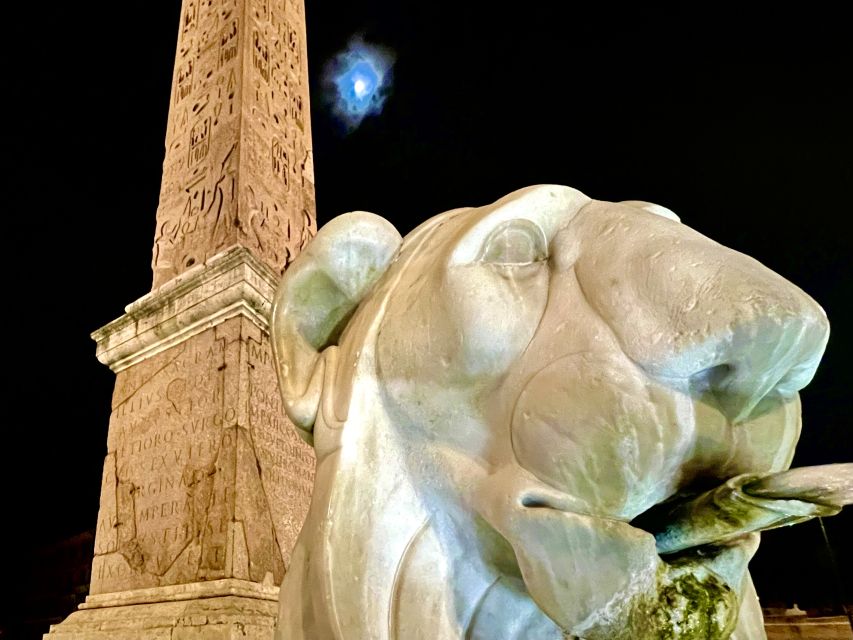
You start at Piazza del Popolo, at Piazza del Popolo 7, near the obelisk in the middle of the square. This matters because it’s a classic Roman orientation point, and a good starting location makes the whole walk easier to follow.
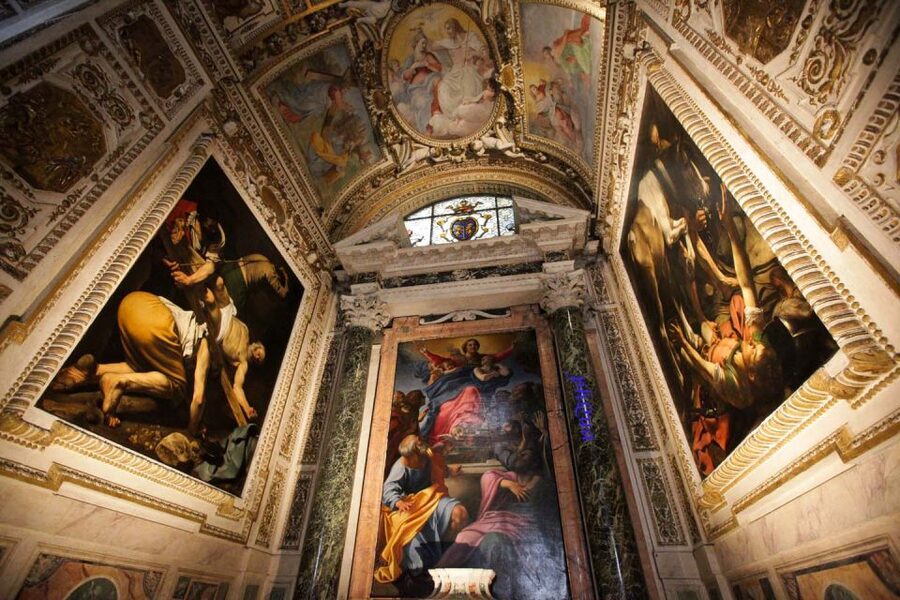
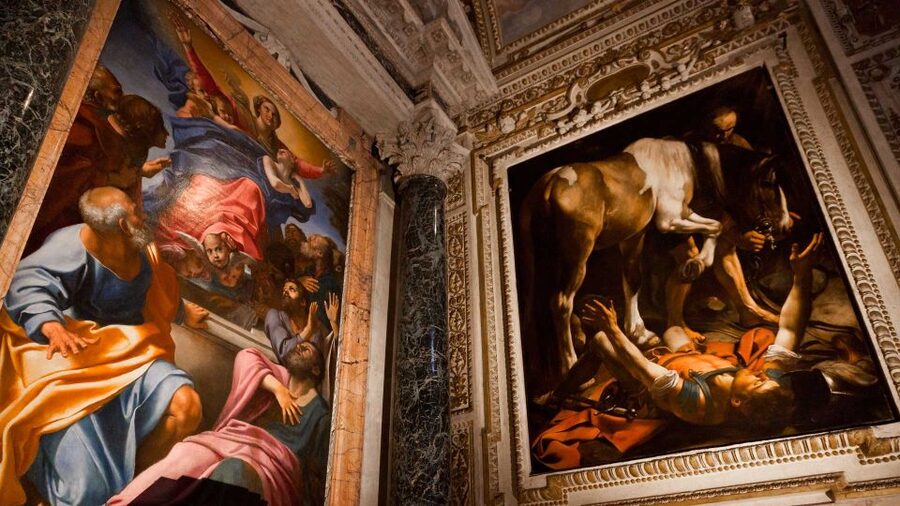
The tour then focuses quickly on two key moments in Santa Maria del Popolo, where you’ll see two powerful canvases:
- The Crucifixion of St. Peter
- The Conversion of St. Paul
These aren’t casual “view for 30 seconds” stops. The guide gives you context so you understand why Caravaggio’s approach hits harder in a church: the subject is already about transformation and belief, and his visual choices amplify that. You spend about 15 minutes here, which is short enough to keep things moving, but long enough with a guide to avoid that museum problem where you stare and wonder what you’re supposed to see.
If you want the most out of this section, wear something comfortable for standing and keep your shoulders relaxed. In churches, you tend to naturally hunch when you’re concentrating. A straight stance helps you take in the composition without neck fatigue.
Passing Palazzo Madama, Giustiniani Palace, and Montecitorio
Some of the most interesting Caravaggio connections happen outside, even when you’re not stepping into a building. You’ll pass Palazzo Madama, the current home of the Italian Senate, and also Giustiniani Palace, where Senate offices are located. You’ll also pass Palazzo di Montecitorio.
Why include these? Because they help the guide do something valuable: connect Caravaggio’s Rome to the physical city where power, politics, and public life were happening. Caravaggio’s time in Rome is described as turbulent, full of unusual and dramatic events, and exterior landmarks give that story a stage.
Even though these are pass-by moments rather than long visits, they work well in a 3-hour format. You get the meaning without losing half the tour to transit between far-flung sites. This is also where a private guide shines, because they can answer the “wait, why is this place important?” question on the spot.
This is also a good moment to mentally switch from art-only mode to city-and-art mode. You start to see Rome as a set of linked rooms, squares, palaces, and churches, all feeding the same Baroque ambition.
Church of St. Louis of the French: The Life of St. Matthew in Contarelli Chapel
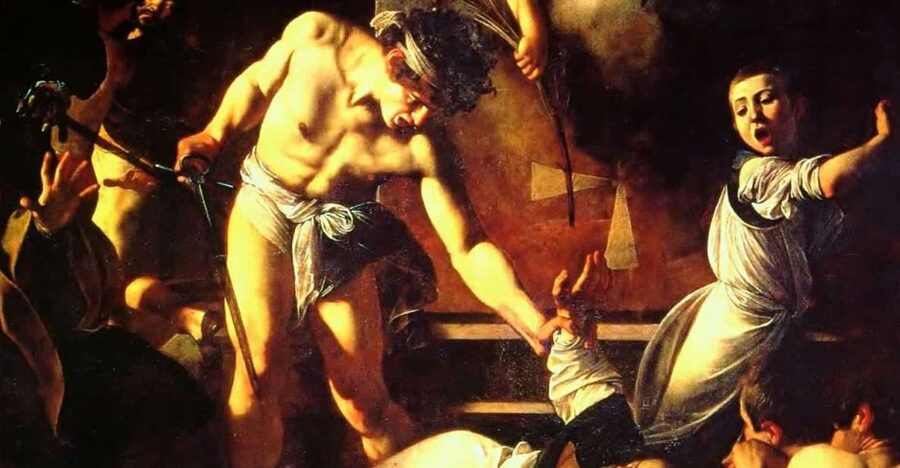
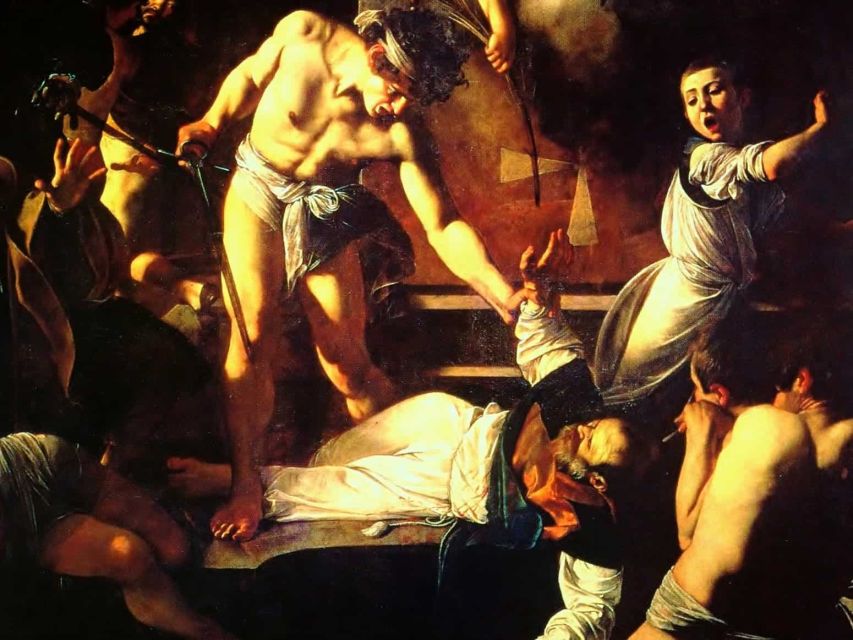
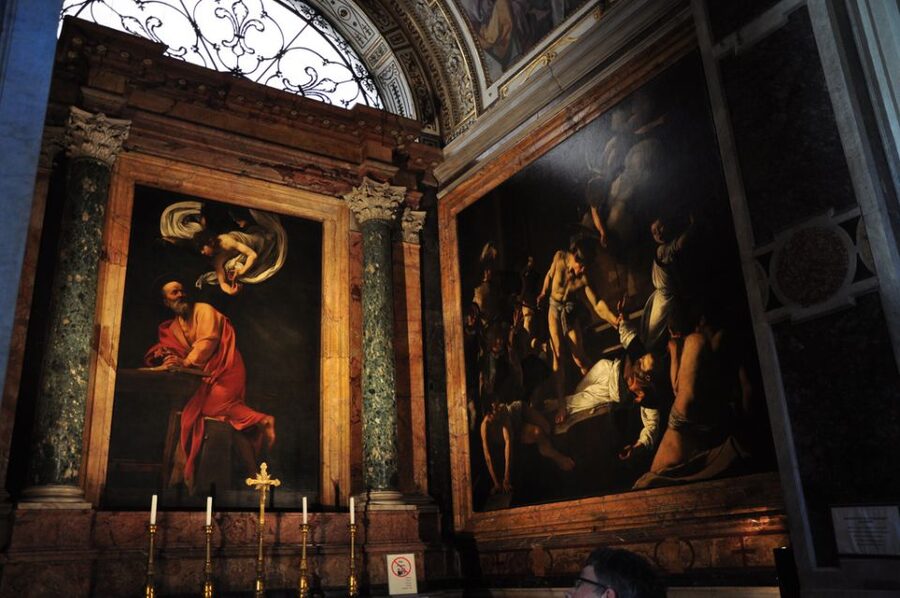
Next comes one of the tour’s anchor stops: the Church of St. Louis of the French, with about 20 minutes inside. Here, you’re set up for Caravaggio’s big Roman achievement connected to the Contarelli Chapel, centered on The Life of St. Matthew.
This is the type of church stop where time feels tight if you wander, but satisfying if you listen first and then look. The guide helps you track scenes and themes instead of treating each panel like a separate “cool picture.” When you understand what’s happening, you notice Caravaggio’s methods more clearly, especially how he uses light to control attention.
A practical note: this church stop is longer than the other church visits, so plan for it to be your most focused viewing time. If you’re the sort who gets easily distracted by side chapels and side altars, ask your guide where to stand first. Getting your bearings early makes the rest of the chapel much more readable.
Even if you’ve seen Caravaggio pictures before, this kind of setting changes the viewing experience. The paintings are not floating in a white box. They’re wrapped in the same lived architecture that shaped how Rome worshipped and interpreted religious drama.
Sant’Agostino and the Madonna of the Pilgrims
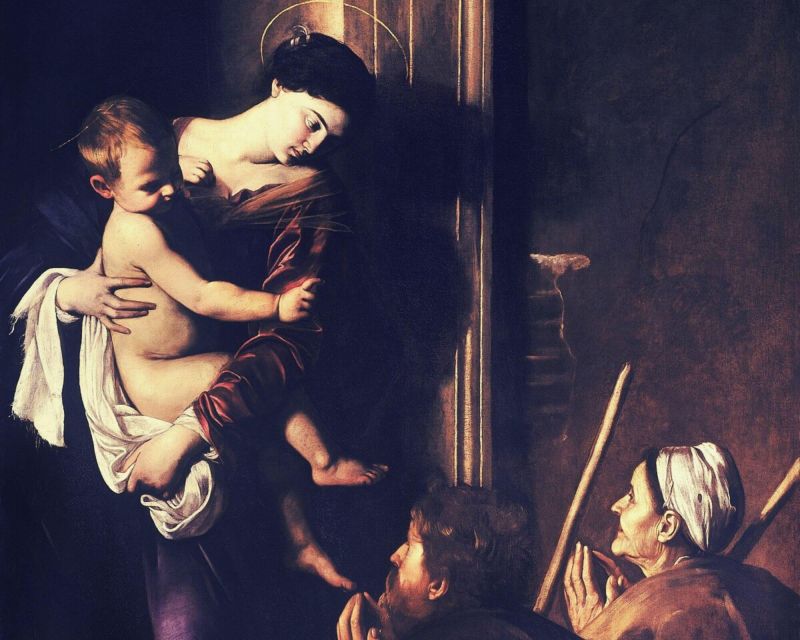
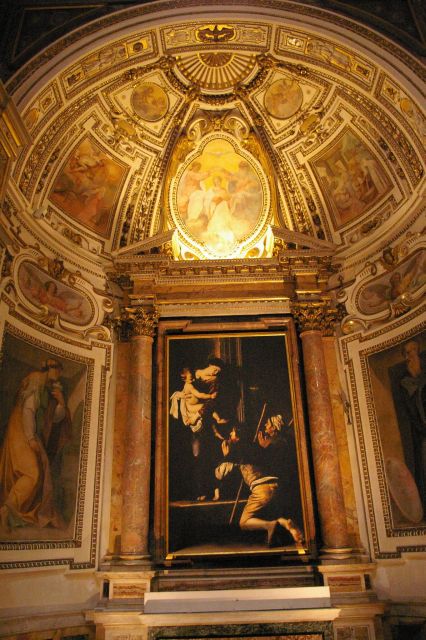
The tour continues to Basilica of St. Augustine for about 15 minutes, where you’ll see Madonna of the Pilgrims. This is one of those works that makes Caravaggio feel personal. The emotional tone is different from the more narrative, public-energy scenes, and that shift is exactly what a good Baroque itinerary should do.
In a short time window, your guide’s job becomes translating details into understanding. You’ll likely be coached to notice facial expressions, gesture, and how Caravaggio directs your eye. That’s the tour’s core skill set: turning looking into comprehension.
This stop also reinforces why the route works. Instead of only showing one “famous masterpiece after another,” you’re moving across different emotional registers and different religious settings. It makes the overall story feel less like a checklist and more like a coherent argument for why Caravaggio mattered in Rome.
If you’re sensitive to visual intensity, pacing helps. During this stop, take a few steps back and then forward. You’ll often see the painting differently once you give your eyes time to adjust to the church lighting.
You can also read our reviews of more private tours in Rome

St. Ignatius of Loyola, the Pantheon pause, and the walk to Piazza Navona
After St. Augustine, you head to Church of Sant’Ignazio di Loyola for about 15 minutes. The tour frames this as an architectural Baroque highlight, and that’s the right way to think about it here. Even when Caravaggio isn’t the featured artist at a given site, the tour keeps connecting Baroque art to the city’s ideas about drama, spectacle, and persuasion.
Then you pass the Pantheon for about 10 minutes. It’s not a full visit in this time window, but the guided historical framing helps. This stop works as a bridge: you’re moving from Baroque theater back toward Roman continuity, and the guide can help you understand how different eras used the same city to make different artistic arguments.
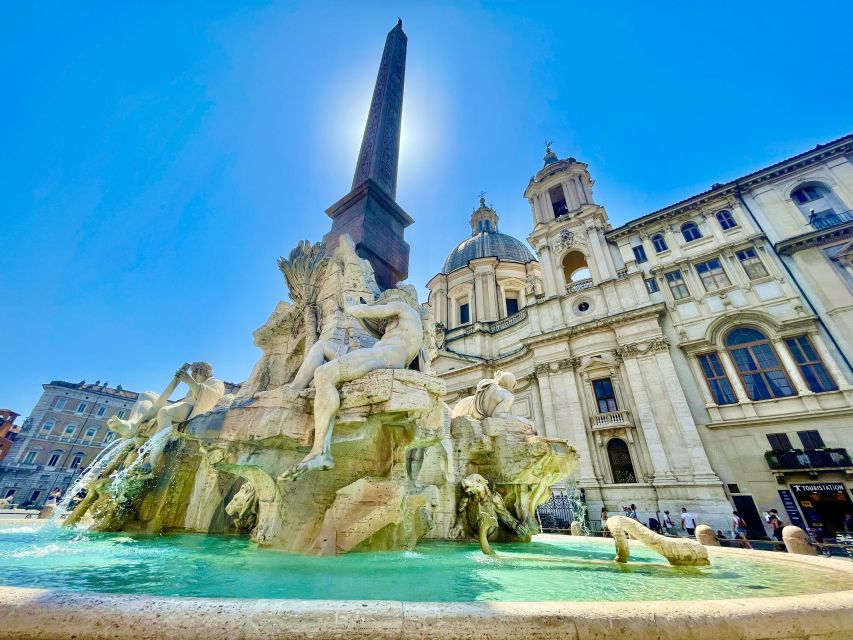
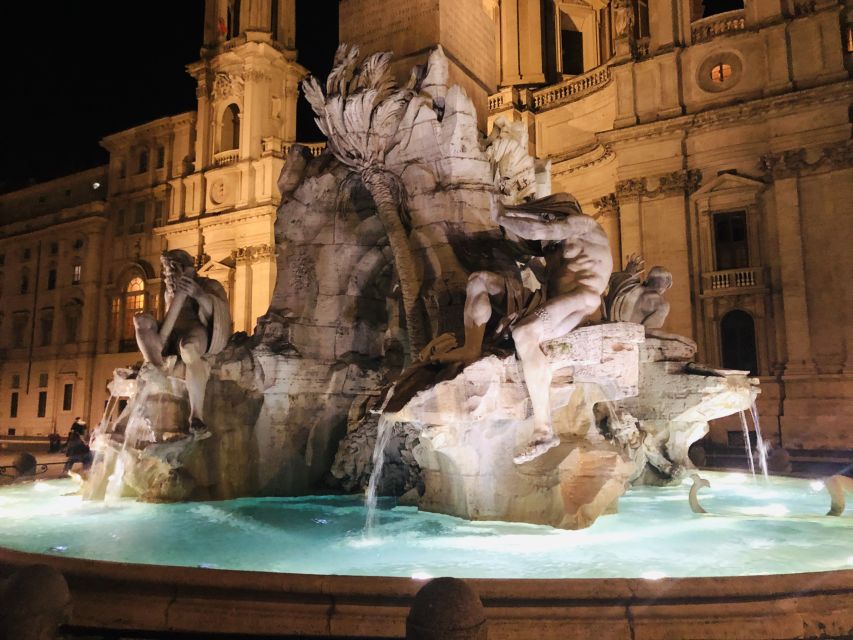
Finally, the tour lands in Piazza Navona, for about 15 minutes. This is where Baroque ambition hits you in the open air. You’ll see Bernini’s Fountain of the Four Rivers, and you’ll also take in the façade of Borromini’s Sant’Agnese in Agone.
The guide will explain the rivalry between Bernini and Borromini, and that rivalry matters because it shaped how Baroque art developed in Rome. It’s not just about beauty. It’s also about competition, ego, funding, and public taste, all expressed through stone, water, angles, and curvature.
Time, pace, and what a 3-hour private tour feels like
A 3-hour private tour is a sweet spot in Rome, especially for art lovers who don’t want to lose a day to transit. Here, the schedule is built for efficient viewing: quick passes for exterior landmarks, and focused church time where you need it.
Expect moderate walking. The stops are not far apart, but you do move from square to square and step in and out of multiple churches. If you’re sensitive to standing for long periods, bring a water bottle for outside time, and save rest breaks for the quick exterior pass moments.
This is also a tour where your comfort level with churches really affects your experience. There’s a dress code for entering places of worship: shoulders and knees covered, no shorts, no short skirts, no sleeveless shirts. Plan your outfit like you’re going to church, not like you’re going to a museum café.
One more practical detail: the itinerary order and specific sites can change due to logistics or unexpected events. That’s common in a city where access rules and crowd patterns shift. Your private guide can adapt on the fly, and that flexibility is part of the value.
Price and value: what you’re paying for
The price is $158.60 per person for a 3-hour private tour. That’s not cheap, but it’s not trying to be a bargain either. You’re paying for three things that group tours often can’t deliver well:
- A professional art historian guide, which changes how fast you understand what you’re seeing.
- Private pacing, so you can spend extra time on Caravaggio’s details if something grabs you.
- Privileged skip-the-line admission, which helps you avoid friction at church entrances and lets the guide keep the flow.
If you compare this to doing Rome by yourself with a phone guide, the math usually favors the guided option when you care about meaning. A Caravaggio painting can look stunning and still feel like a puzzle. With a guide, it becomes a readable narrative, and that makes the time feel well spent.
Also, this tour does not include food or drinks, so you’re not getting a built-in break. If you book it as your “main event” day, schedule a proper lunch afterward. And there’s no hotel pickup or drop off, so you’ll need to reach the meeting point on your own.
One more value note: your guide may use a headset only for groups over 8 people. In a truly private setup, that usually means clear audio and less fuss.
Should you book the Rome Caravaggio and Baroque Art private tour?
I’d book this if you fit any of these needs:
- You want Caravaggio in Rome’s churches and squares, where the lighting and drama actually match the paintings.
- You like Baroque art as a whole movement, not just as isolated masterpieces.
- You’re short on time and want a tight 3-hour route that still hits major stops.
I’d think twice if you dislike walking and church interiors. This tour moves at a brisk pace with multiple religious sites, and the dress code is real. If you arrive underdressed, entry can be refused, and that can throw off your day.
If you do book, arrive 10 to 15 minutes early at Piazza del Popolo near the obelisk, and wear shoes you trust. Then you’ll get the biggest payoff: Caravaggio’s light and shadow, explained in context, while Rome’s Baroque showmanship surrounds you.
FAQ
What is the meeting point for the tour?
The meeting point is at Piazza del Popolo, 7, next to the obelisk in the middle of the square. Your guide will have a signboard with your name.
How long is the Rome Caravaggio and Baroque Art private guided tour?
It lasts 3 hours. Starting times can vary, so check availability for the specific time options.
What is included in the ticket price?
Included features are a professional art historian guide, a private walking tour, privileged skip-the-line admission, and headsets to hear the guide better only if the group is over 8 people.
What should I bring and wear?
Bring a passport or ID card, and wear comfortable shoes and comfortable clothes. For churches, shoulders and knees must be covered, and shorts, short skirts, and sleeveless shirts are not allowed.
Is hotel pickup and drop-off provided?
No. There is no hotel pickup or drop-off, so you’ll need to make your own way to the meeting point.
Is this tour only for groups, or can I book privately?
This is a private group tour, and there is a minimum of 2 people per booking required.
More Guided Tours in Rome


More Tours in Rome


More Tour Reviews in Rome
Not for you? Here's more nearby things to do in Rome we have reviewed












Guided, compared.
 ★ 4.5Vatican Museums, Sistine Chapel & St Peter’s Basilica Guided TourFrom $2239,149 reviews
 ★ 4.8Colosseum, Palatine Hill and Roman Forum Guided TourFrom $5232,814 reviews
 ★ 4.7Guided Tour of Colosseum, Roman Forum & Palatine HillFrom $5527,897 reviews
 ★ 4.2Colosseum & Forum with Audio Guide App -Optional ArenaFrom $4124,770 reviews
 ★ 4.5Colosseum, Roman Forum and Palatine Hill Guided TourFrom $5923,903 reviews
 ★ 4.6Colosseum, Palatine Hill & Roman Forum Guided TourFrom $5112,703 reviews
Vatican Museums & Sistine Chapel Guided TourFrom $11812,117 reviews
 ★ 4.6Colosseum Arena, Palatine Hill & Forum Guided TourFrom $7310,584 reviews