
Reviewed · VATICAN TOURS
Rome: Early Vatican Museums & Sistine Chapel Tour
Arrive early and the Vatican feels human. This early access Vatican Museums tour is a focused, 3-hour guided way to see the big hits, then step into the Sistine Chapel with a calmer start. I especially love how the guide turns the museum maze into a clear story, and how you get a separate entrance setup that saves you from the worst of the line.
One thing to consider: the pace is efficient, not leisurely. If you want long hangs in one gallery, you might feel a few major stops come and go quickly.
Key Things I’d Prioritize Before You Go
- Early entry before the peak crush, so you start with more breathing room in the Vatican Museums
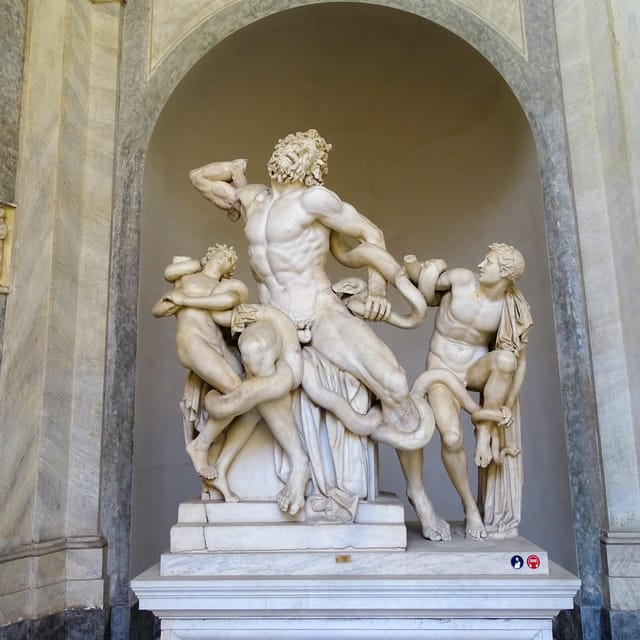
- A real guided storyline, not just a checklist, with standouts like Laocoön and the Belvedere Torso
- Gallery of Maps plus other must-see rooms, so you cover more in less time
- Sistine Chapel in quiet mode, with your guide setting context before you go in
- Earphones included, which helps a lot when groups get close in busy corridors
- No big bags or luggage, so plan what you carry for easier security and movement
Why Early Vatican Museums Feels So Much Better
The Vatican Museums are spectacular, but they can also be a test of stamina. The galleries are vast, the crowds can compress your walking space, and it is easy to feel like you are just trying to get through. Starting early changes the whole vibe. You walk in while the site is still getting “woken up,” and the group is moving while other people are still lining up.
I like this format because it is not trying to cover everything. It is trying to get you to the moments that matter most, with enough guidance that you actually understand what you are looking at. When you hit the Sistine Chapel, that context matters. You are there for Michelangelo’s ceiling, yes, but also for the symbolism, the techniques, and why certain scenes are placed the way they are.
A practical bonus: you can build the rest of your day in Rome without being stuck in Vatican queues later. Even if your schedule is packed, a 3-hour plan that starts early can be the smartest move you make.
You can also read our reviews of more museum experiences in Rome

Meeting at Via Tunisi 4, and How to Not Lose Time
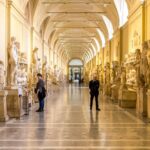
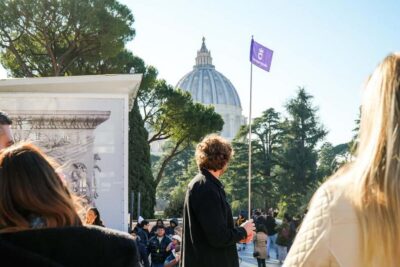
You meet at Via Tunisi 4, on the pedestrian street, upper side of the road closer to the corner with Viale Vaticano, in front of the Vatican Museums entrance. There will be an assistant with a sign that says Tourismotion. Arrive at least 15 minutes early. This is not about politeness, it is about logistics.
Here is what I found useful to plan for, based on how this tour runs: once you arrive, you are funneling into a managed flow for entry and security. If you show up late, you can get stuck doing the worst part of the day, hunting for your group while everyone else is already moving.
Also plan your “carry list.” Luggage or large bags are not allowed, and backpacks are not allowed. Bring a compact day bag if you need one, and keep your passport or ID card ready.
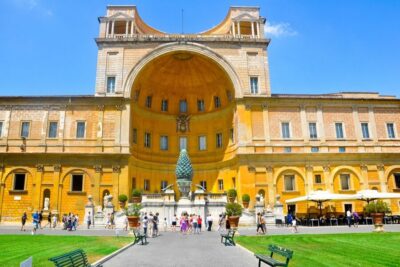
Cortile del Belvedere: The Tour’s Warm-Up Before the Main Attractions
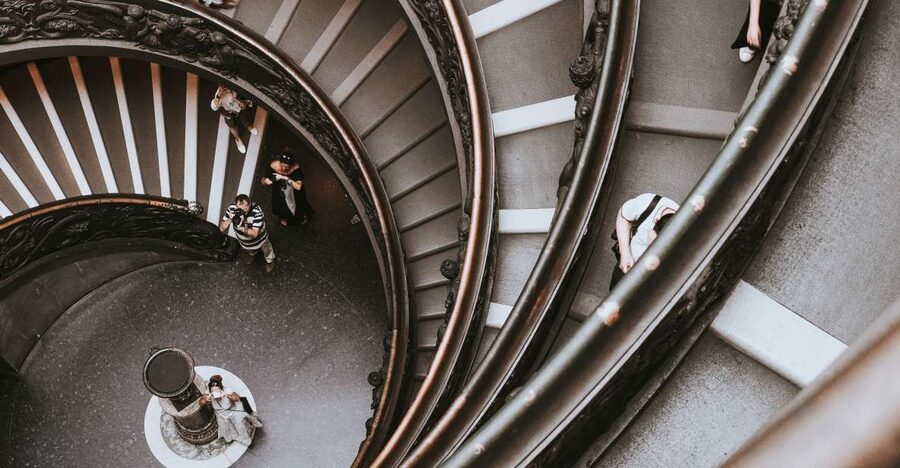
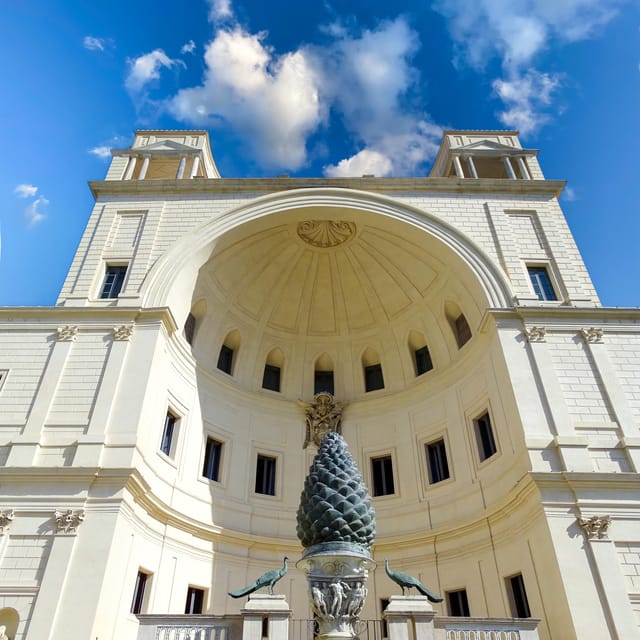
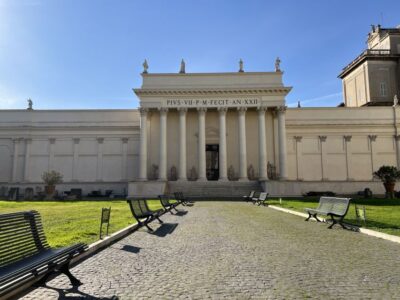
The tour starts with an introduction outside, then you move to the Cortile del Belvedere. This is a good place to begin because it gives you a mental map. The Vatican can feel like you stepped into a museum city, and that first orientation helps you feel oriented instead of overwhelmed.
From there, your guide keeps shaping what you see, so you are not just watching art, you are learning how to read it. A few guides are known for using waiting time to talk about what is coming next, and that is exactly what you want. It turns those unavoidable slow moments into something useful.
If you hate surprises, this is the kind of start that reduces them. You know you are heading into the Vatican Museums, you know the main themes your guide is working with, and you know when to slow down to actually see.
Vatican Museums Highlights: Greco-Roman to Renaissance Inspirations
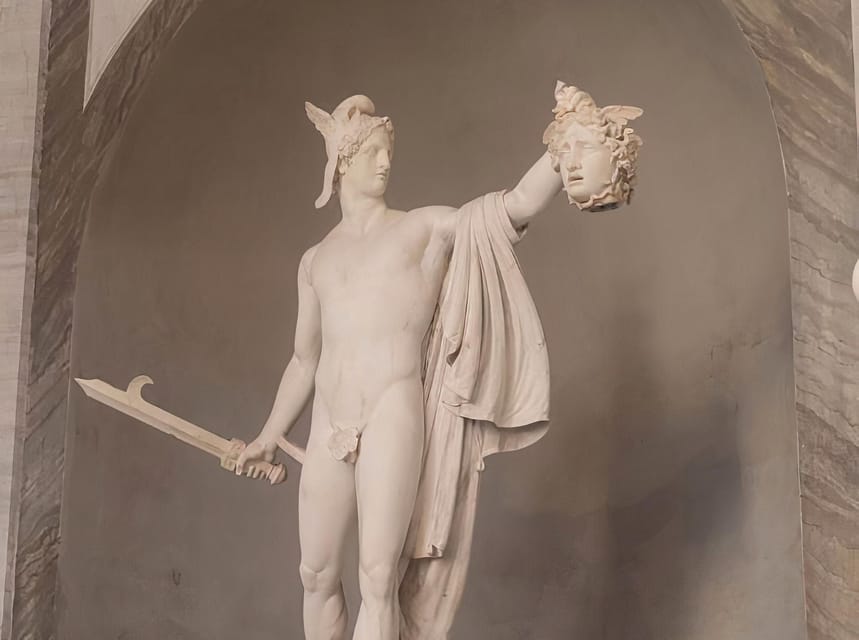
Once inside the Vatican Museums, your guided route focuses on a set of iconic works that form a strong “greatest hits” backbone. This is where the tour delivers real value for most first-time visitors, because you are not wandering blind.
Greco-Roman Room With Real Wow-Factor
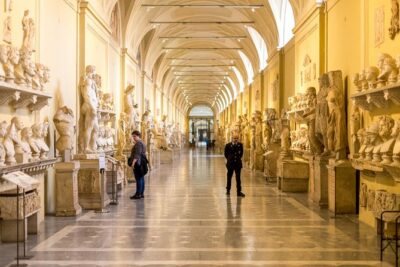
You will see major highlights in the museum’s Greco-Roman section. A standout is the Laocoön Group, a sculpture showing Laocoön and his sons battling serpents. It is one of those works that looks dramatic from almost any angle, but you appreciate it even more when you understand what you are looking at, how it was admired, and why artists later studied it.
You may also encounter the Belvedere Torso, famous as a cornerstone of Renaissance inspiration. The key thing here is what the guide helps you notice: how later artists learned from ancient forms instead of treating them like museum relics. When you get that connection, the museum stops being a storage room and starts feeling like a creative timeline.


Emperors and Gods: Art as Propaganda and Belief
You will also spend time with lifelike depictions of emperors and gods. These are not random statues placed for decoration. They reflect power, belief, and the way images were used to communicate values across centuries.
This is one of the reasons I like guided pacing here. You do not just see bodies and faces. You start to recognize patterns, symbols, and why certain themes kept getting recycled by artists who came after.
Gallery of Maps and the “Italy in One Room” Feeling
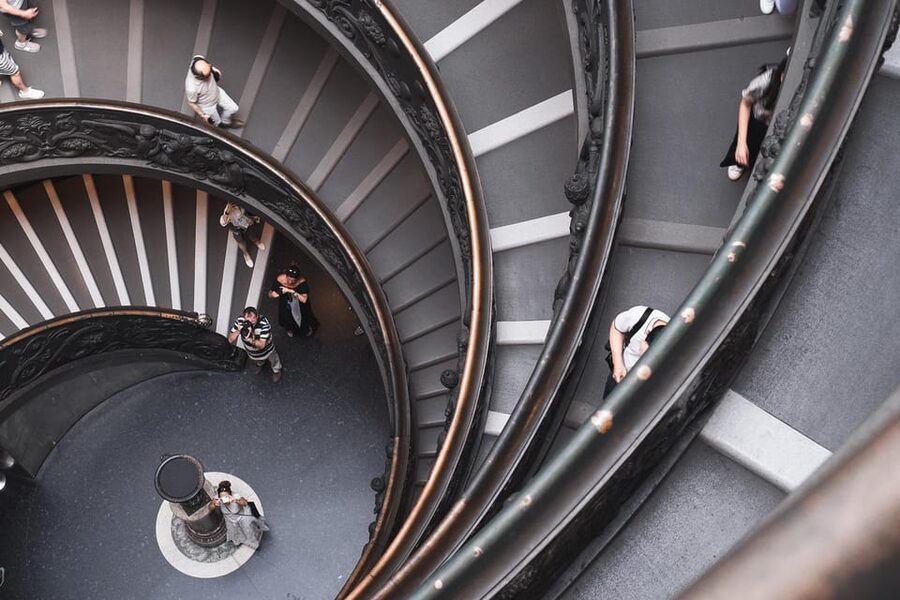
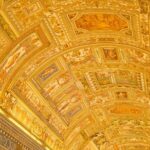
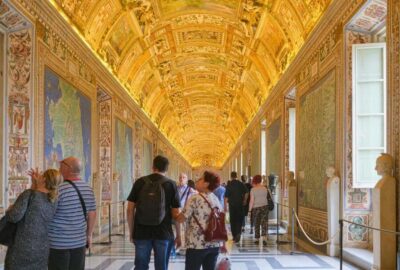
Next up is the Gallery of Maps. This gallery is unique because it turns cartography into visual storytelling. You are looking at 16th-century map-making detail, but the emotional effect is more personal than you might expect. Italy stops being a vague boot shape and becomes regions with identity.
If you like geography, this is a fun breather from pure sculpture and painting. If you just like good design, it still works, because the room makes you slow down and examine.
In practice, the maps also help you “connect Rome to the rest of Italy” during the same day you are visiting the Vatican. You leave the museum with something you can use on your next stop, even if you are only doing day trips.
Gallery of Tapestries: Texture, Scale, and Why It Matters
Your route includes the Gallery of Tapestries. This is one of those spaces where the scale and texture hit you. Tapestries can look static from a distance, but close-up they feel like they have weight and craft.
The tour keeps you moving, so you likely will not have unlimited time to linger on every panel. Still, the guided framing helps you avoid the common mistake: treating it as a backdrop rather than as an art form. You also get a sense of what kind of messages tapestry art was meant to carry.
Sistine Chapel: How Quiet, Context, and Timing Change Everything
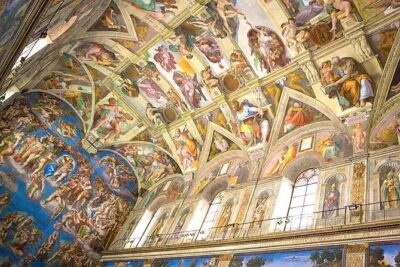
The final major stop is the Sistine Chapel. This part has strict rules, including silence inside. The guide’s job here is huge: they set up what you are about to see, so you can focus once you enter.
What makes the Sistine Chapel special on an early tour is not just fewer people. It is the fact that you can actually look. When crowds are thick, your eyes keep skipping ahead because you are trying to stay in the flow. Starting earlier gives you slightly more room to notice details before you are swept along.
You will see key ceiling scenes, including the Creation of Adam, which is one of the most recognizable artworks in the world. But the value is not just recognition. Your guide helps you understand techniques, symbolism, and the spiritual significance that made Michelangelo’s work so influential far beyond art history.
Practical note: because the Sistine Chapel requires silence, keep your water sip small before you go in. And keep in mind this is a high-demand space, so if you are sensitive to crowds, earlier is your best friend.
Time, Pace, and the One Tradeoff of a 3-Hour Plan
This tour is about 3 hours total. For many visitors, that is ideal: it gives you the big pieces without turning your whole day into a queue and corridor marathon. You typically finish early enough to keep Rome on your schedule.
But there is a tradeoff. In a short tour, not every gallery gets equal attention. If you want to explore beyond the highlights, you might feel like you are hitting the museum at a sprint pace. Even with great guiding, you will not get the kind of slow “pick one masterpiece and live with it for an hour” experience.
The sweet spot is this: if you want orientation plus must-see works, you will feel satisfied. If your ideal museum day is unstructured, you will probably want extra time on your own after the tour.
Price and Value: What You Get for $108.70
At $108.70 per person, this is not a budget add-on. But it can be good value if you hate wasting time in lines and you want expert guidance in a place this big.
Here is what supports the price:
- Early access to the Vatican Museums, typically starting as early as 8 am (check your available time)
- Skip-the-line handling with a separate entrance approach
- A professional English-speaking guide
- Earphones, which matters for clarity when groups bunch up
- Entry through the route that includes the Sistine Chapel
What it does not include is also clear. St. Peter’s Basilica entry is not included, so if you want the basilica too, you will plan that separately.
I think the real value is your time. The Vatican is one of those places where getting in earlier often feels like paying for oxygen, not just access. Add the guide’s navigation, and you save the mental load of deciding what to prioritize.
Who This Tour Suits Best (And Who Might Want Another Option)
This is a smart fit for:
- First-time visitors who want the essential Vatican Museums and the Sistine Chapel
- People who prefer a clear route with expert explanations
- Anyone trying to maximize a short Rome stay, especially if you want the rest of the day free
It is a poor fit if:
- You need wheelchair access or have mobility impairments, since the tour is not suitable for wheelchair users
- You want long independent exploration in the museums, since the tour is designed to cover key stops efficiently
- You plan to bring large bags or a backpack, since luggage and backpacks are not allowed
Also, pack for comfort. One practical issue that can come up is heat and stuffiness during busy museum hours. Bring something light to drink before you start, and plan your hydration in a way that still lets you follow the chapel rules.
Should You Book This Early Vatican Museums & Sistine Chapel Tour?
If your goal is to see the Vatican Museums highlights and the Sistine Chapel with less stress, I would book it. The early start is the biggest win, and the guided pacing keeps you from turning the day into random wandering. You also get tools that make it easier to hear and follow, like earphones, and you start with a route built around the museum’s most recognized works.
But if you are the type who wants hours of slow looking, or you are traveling with mobility needs that require wheelchair-friendly access, you may be happier with a different plan or extra time arranged separately.
If you do book, here is my simple advice: show up early at Via Tunisi 4 with your ID ready, travel light, and lean into the guide’s explanations. That is how this tour turns from a checklist into an actually satisfying morning in Vatican City.
FAQ
What time does the tour start?
You can choose from starting times as listed for availability. The tour duration is 3 hours.
How long is the Vatican Museums and Sistine Chapel tour?
The tour lasts about 3 hours.
Where do I meet the guide?
Meet at Via Tunisi 4, on the pedestrian street, upper side of the road closer to the corner with Viale Vaticano, in front of the Vatican Museums entrance. The assistant holds a sign that says Tourismotion.
Is St. Peter’s Basilica included?
No. Entry to St. Peter’s Basilica is not included.
What’s included in the price?
Included items are early access to the Vatican Museums, access to the Sistine Chapel, helpline and assistance, a professional guide, and earphones.
What should I bring or have ready?
Bring a passport or ID card for you, and a passport or ID card for children.
Is it okay to bring luggage or a backpack?
No. Luggage or large bags are not allowed, and backpacks are not allowed.
More Museum Experiences in Rome

More Tours in Rome
More Tour Reviews in Rome
Not for you? Here's more nearby things to do in Rome we have reviewed






Vatican Tours, compared.
 ★ 4.5Vatican: Museums & Sistine Chapel Entrance TicketFrom $38144,003 reviews
 ★ 4.3Vatican Museums & Sistine Chapel Tour with Optional BasilicaFrom $7967,413 reviews
 ★ 4.5Vatican Museums, Sistine Chapel & St Peter’s Basilica Guided TourFrom $2239,149 reviews
 ★ 4.3Vatican Museums, Sistine Chapel & Basilica TourFrom $13013,872 reviews
 ★ 4.4Vatican Museums & Sistine Chapel Skip-the-Line Entry TicketFrom $4313,838 reviews
★ 4.7Vatican Museums, Sistine Chapel & Basilica TourFrom $7213,217 reviews
★ 4.4Vatican Museums & Sistine Chapel Skip-the-Line Entry TicketFrom $4313,838 reviews
★ 4.7Vatican Museums, Sistine Chapel & Basilica TourFrom $7213,217 reviews
 ★ 4.5Skip-the-Line Group Tour of the Vatican, Sistine Chapel & St. Peter’s BasilicaFrom $3012,779 reviews
Vatican Museums & Sistine Chapel Guided TourFrom $11812,117 reviews
★ 4.5Skip-the-Line Group Tour of the Vatican, Sistine Chapel & St. Peter’s BasilicaFrom $3012,779 reviews
Vatican Museums & Sistine Chapel Guided TourFrom $11812,117 reviews