
Reviewed · WALKING TOURS
Rome: City Highlights Moonlight Walking Tour
Night Rome hits different. This moonlight walking tour turns the city into a storybook, with Trevi Fountain timed for quieter photos and the Pantheon framed with the engineering details that make it famous. I especially like the relaxed pace at night and the way the guide connects monuments to the bigger picture of Rome. The one thing to think about first, though, is that entry to attractions is not included, so you will mostly be seeing key sights from the outside.
This tour is built for people who want easy orientation fast, without spending the whole evening in lines or baking in the day sun. It runs for about 2 to 2.5 hours, with live guides in English and Spanish, and it can work well early in your trip. If you hate walking after dark or you have very limited mobility, you might want to look for a shorter, more static option.
Key highlights that make this tour worth your time
- Trevi Fountain at its calmer hour, plus symbol talk and the classic coin moment
- Piazza Navona to Pantheon flow, with Rome’s layers explained as you move
- Small guided stops like Sant’Ignazio di Loyola and Galleria Sciarra, not just a photo sprint
- Piazza Venezia and Capitoline views, tied to the power centers of Rome
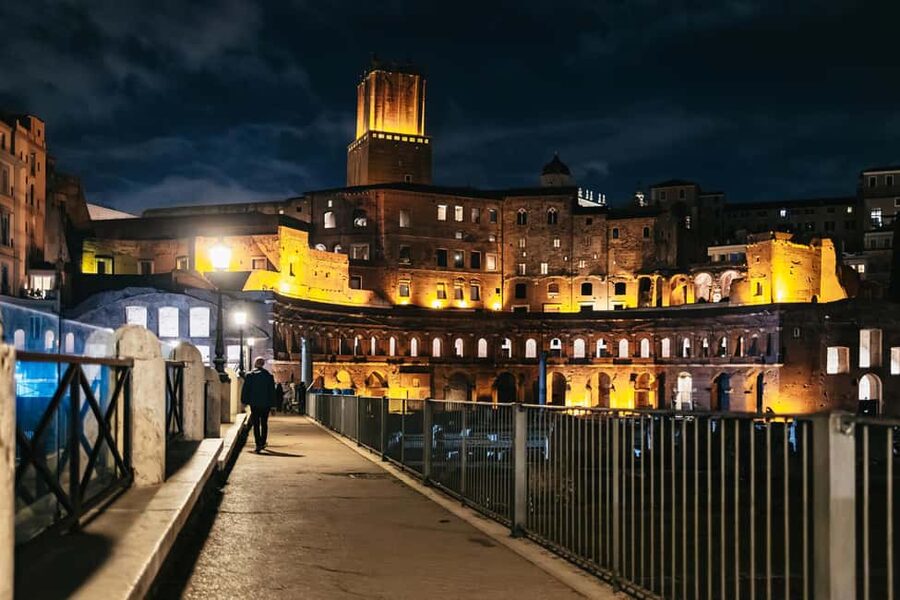
- Via dei Fori Imperiali under night lights, walking the corridor between imperial forums
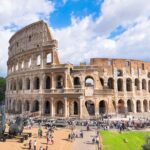
- Colosseum finish outside, so you get the big finale without extra-ticket chaos
Why a moonlight walk is one of the smartest Rome plans
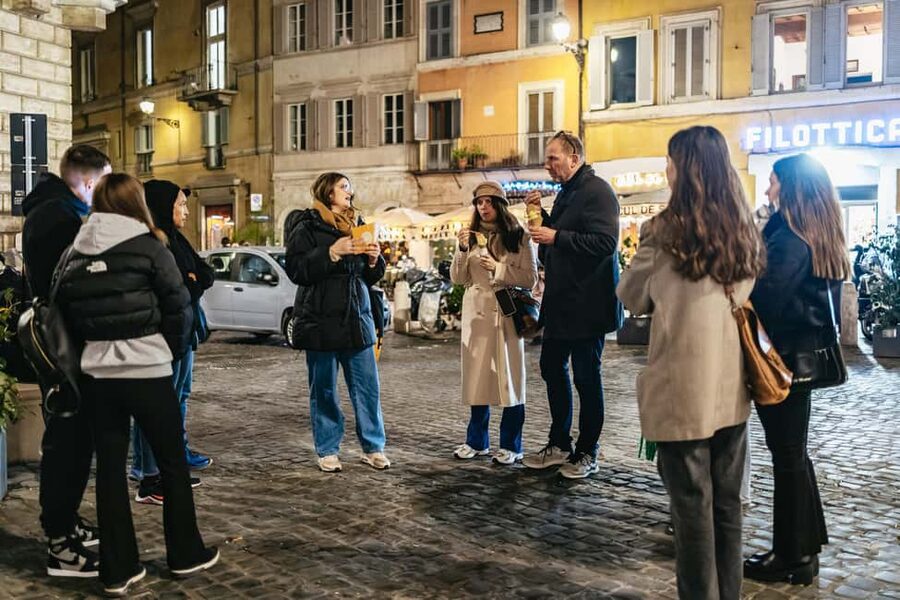
Rome at night feels like a different city. Streets that can be packed at midday loosen up, building facades glow, and landmarks look more dramatic against the dark. This tour leans into that advantage by keeping the experience centered on walking and storytelling, not ticketing.
I also like that it is designed for an easy rhythm. You get a guided narrative, plus frequent chances to pause and look, rather than a rushed checklist. The result is that you leave with a clearer sense of how Rome is laid out, not just a few photos.
Finally, you get big-name sights in a compact chunk of time, while still feeling like you are moving at a human pace. When you only have limited time in Rome, this kind of night overview can be a lifesaver for planning the rest of your days.
You can also read our reviews of more walking tours in Rome


Starting points and how the tour actually moves through central Rome
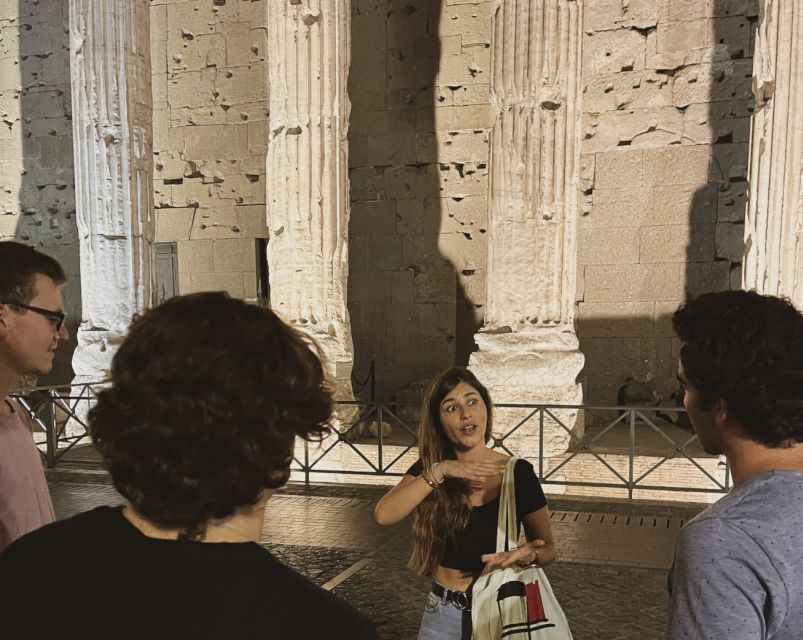
The tour has two starting location options: Piazza d’Aracoeli or Piazza di Pasquino. That matters because you can often choose what is easiest based on where you are staying and how you will get there on foot.
From the start, the route is set up like a classic Rome highlights arc, starting in the Piazza Navona area and gradually working toward the Colosseum. The stops mix longer guided segments with shorter pass-bys, so the group stays moving while still getting real context.
Finish details depend on your option, but the itinerary lists drop-off choices that include areas like Piazza Navona and the Colosseum vicinity. Either way, the tour ends where you are well positioned to keep exploring on your own.
Piazza Navona at night, from ancient stadium to Bernini’s fountain
The tour begins with a guided segment at Piazza Navona, where you will get about 20 minutes. This is not just a pretty square at night. It sits above an ancient stadium where Romans once watched athletic contests, so you are standing in a place that has functioned as public spectacle for a long time.
You will also see Bernini’s Fountain of the Four Rivers as the centerpiece. At night, the fountain and the surrounding architecture look cleaner and calmer, which helps you actually study what you are seeing instead of constantly dodging crowds.
One of the best parts here is the way the guide frames the space. Instead of treating Piazza Navona as a standalone photo stop, you get the sense that it is a “layer cake” over older Rome. That makes the next stops easier to understand.
The Pantheon stop: best-preserved Roman engineering, explained in plain language
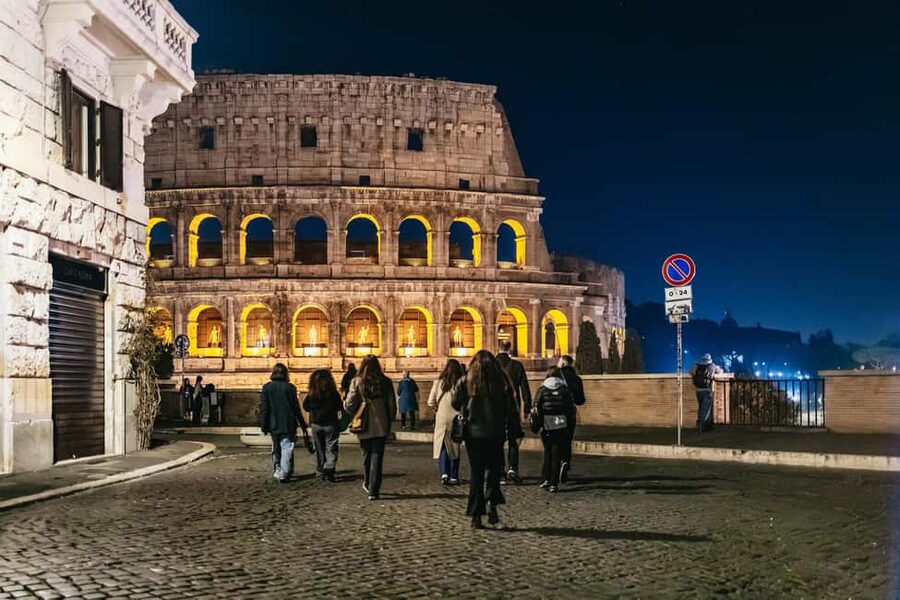
From Piazza Navona, it is a short walk to the Pantheon area, and the tour gives you a pass-by time of about 20 minutes. You do not need to have a technical background to appreciate the point: the Pantheon is famous for its unreinforced concrete dome, and the scale and structure still puzzle architects.
Nighttime helps here. The building’s silhouette and lighting make the dome feel even more solid, and you are less likely to feel rushed by daytime tour lines. Even as a pass-by, it is one of the most meaningful stops in the route because it gives you a “why this mattered” moment.
This is also the kind of stop that becomes useful later. When you walk past other domes and churches in Rome, the Pantheon comparison suddenly clicks, and you can spot how Roman building ideas echoed forward.
Sant’Ignazio di Loyola and Galleria Sciarra: the tour’s thoughtful detours
After the Pantheon area, the itinerary includes a guided tour stop at the Church of Sant’Ignazio di Loyola, about 30 minutes. This is one of those segments that can feel like a break from the headline monuments, but that is exactly why it works. The guide uses the time to connect what you are looking at to Rome’s cultural and artistic world across centuries.
Next comes Galleria Sciarra with about 20 minutes guided. The name may not ring a bell like the Trevi Fountain does, but that is the point. At night, smaller spaces like this can feel calmer and more intimate, and the guide can point out details that you would normally miss while scanning for famous landmarks.
These detours are a big part of why the reviews score so high. Many groups praise the guides for pacing and for turning even smaller stops into story moments, not just walking-time fillers.
You can also read our reviews of more city tours in Rome



Trevi Fountain under the quietest hour, plus the meaning behind the symbols
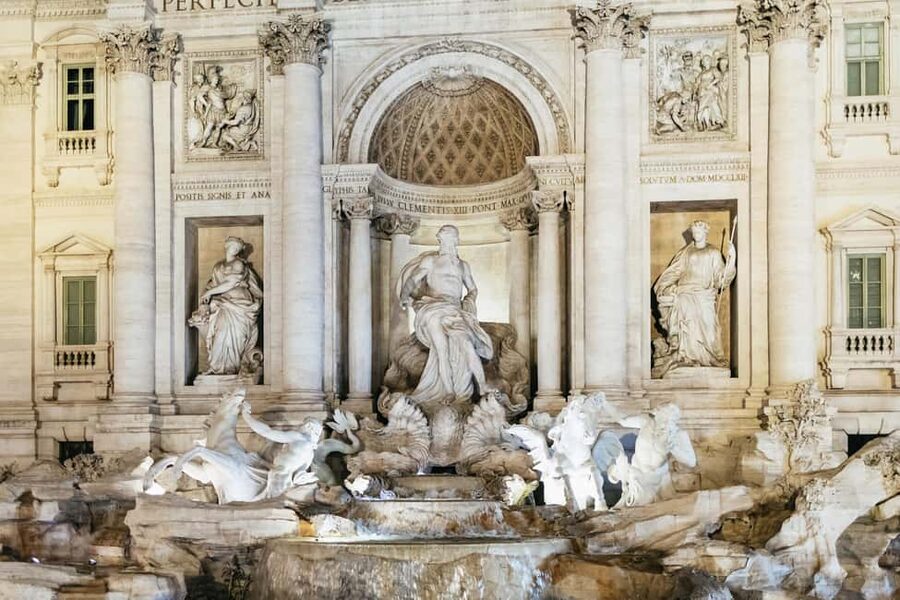
Trevi Fountain is a 30-minute guided stop, and the tour is timed for the quietest time of day. That is a huge practical advantage. If you have ever tried to photograph Trevi in peak daylight, you know how hard it is to get a clean view when the crowd never stops.
At this stop, the guide helps you “read” the fountain. You will hear explanations of the symbols, and you also get the classic chance to toss a coin over your shoulder to help guarantee your return to Rome. It is a tourist tradition, sure, but the fun is better when you understand what you are actually looking at.
The night lighting also makes a difference. The texture of stone feels deeper, and the water reflections add drama. You can slow down without feeling like you are constantly getting pushed aside.
If you care about photos, this is one of the stops I would treat as your priority moment during the 2 to 2.5 hours. Arrive ready to look, not just shoot.
Piazza Venezia and Trajan’s Column, where the empire shows up fast
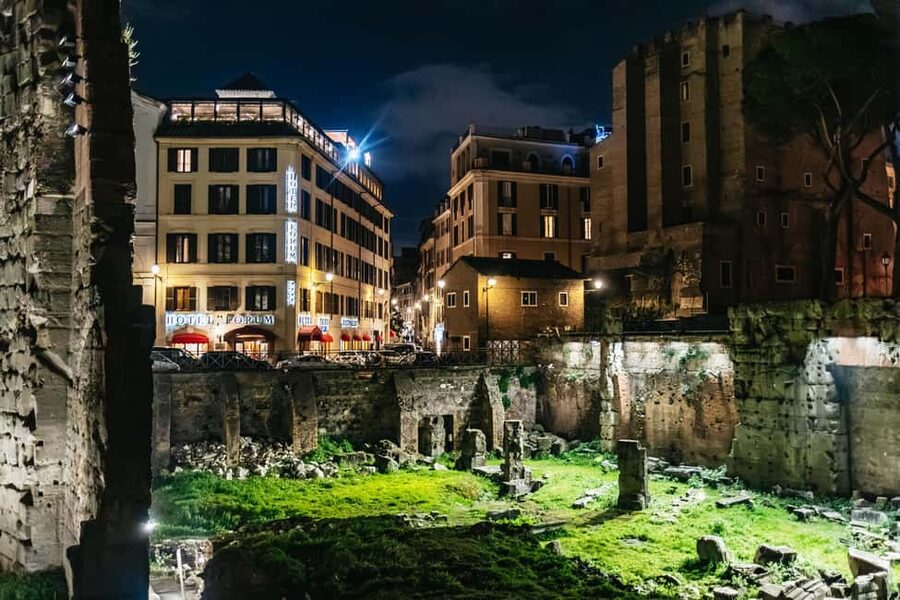
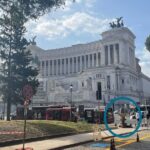
Next is Piazza Venezia with about 20 minutes guided. The tour has you explore from the foot of the Capitoline Hill to the Altar of the Fatherland. This area can feel like a “big monuments” zone, and that is why it is useful to have a guide here. You need the context so the spaces connect instead of feeling like isolated landmarks.
Then you move to Trajan’s Column, with about 20 minutes pass-by time. This is a quick stop, but it is positioned for a reason. It is one of the most instantly recognizable pieces of Roman messaging, and the guide uses the surrounding environment to help you understand what you are seeing.
Night makes it easier to focus. With fewer interruptions and less daytime glare, you can actually follow the story of imperial Rome as you walk.
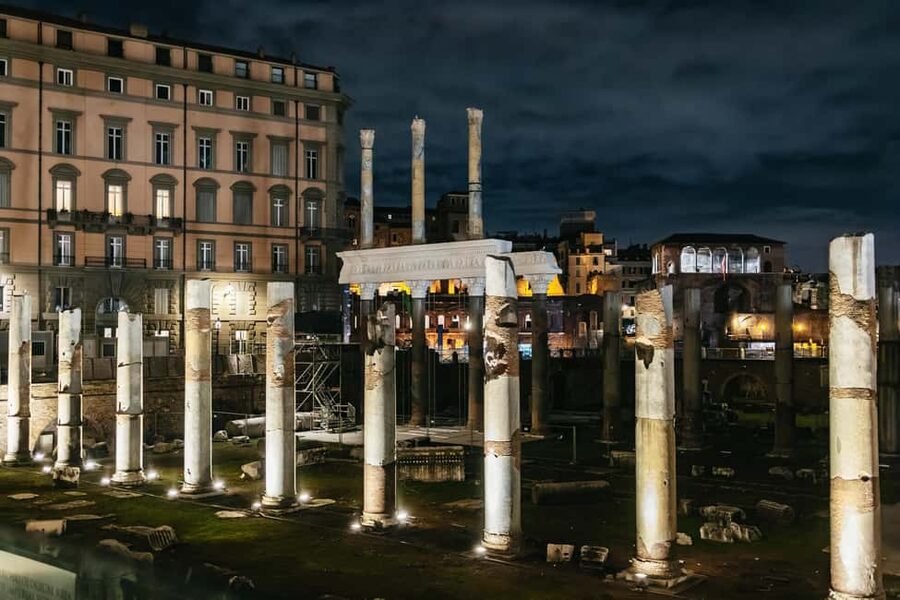
Via dei Fori Imperiali: walking the corridor through Trajan’s, Augustus’, and Nerva’s forums
The itinerary continues with about 20 minutes guided along Via dei Fori Imperiali. This is a boulevard that cuts through ancient Rome, so you are walking right through a corridor of power, not just looking at ruins from a distance.
The guide points out landmarks as you pass, including Trajan’s Column and the forums of Trajan, Augustus, and Nerva. You do not need an archaeology degree to get something from this section. The value is in how the guide ties each name to a piece of the larger imperial machine.
One practical plus: this stretch helps you understand how central Rome developed and why certain monuments cluster where they do. After this walk, you tend to feel more confident navigating the rest of the city because the geography makes sense.
The Colosseum at the end, seen outside with the right mood
The tour concludes outside the Colosseum, with time to see it as the final big moment. You do not have to wait in the kind of lines that can derail a night plan. You also get the dramatic effect that only happens when the lights are on and the sky is dark.
This is a smart ending point because it sets you up for your next step. If you plan to return later for a ticketed visit, you already know where you are, what it feels like in the space, and what direction you want to approach from.
It is also a good way to respect your energy. After 2 to 2.5 hours of walking and stops, most people appreciate finishing with a view that feels like a reward, not another scheduled obligation.
Guide quality is the real differentiator, and you will feel it
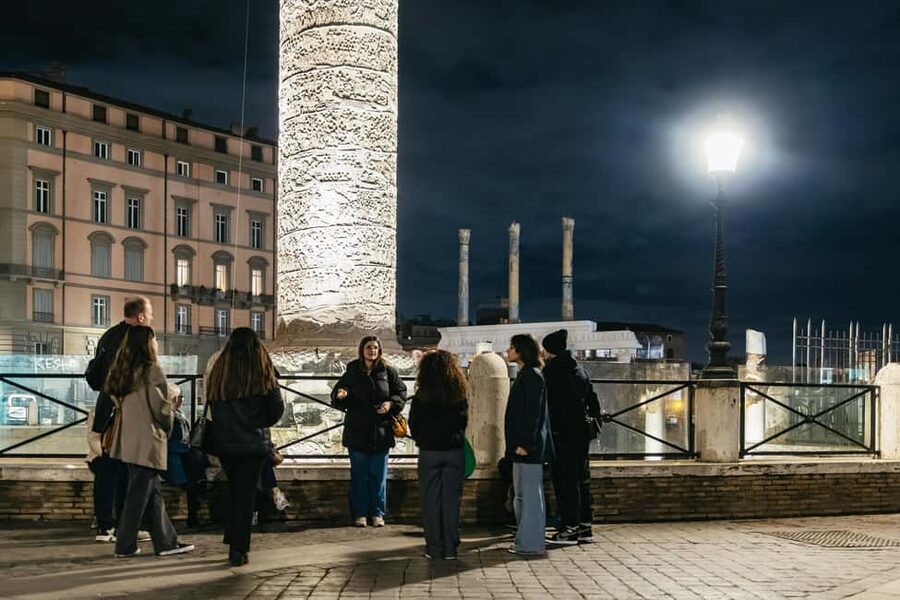
The common thread in high ratings is not just that the route hits famous sights. It is that the guide performance makes the stories land.
Names that show up often in past groups include Domenica, Vladimir, Sila, Sarah, Alina, Csenge, and Pauline or Paulina. The praise tends to focus on three things: energetic delivery, an ability to explain the meaning behind monuments, and a pace that feels friendly instead of frantic.
Some guides are noted for humor and for walking the group through a narrative. Others are praised for handling larger crowds and still keeping people together. I take that seriously as a value signal: you are paying for the guide, not just the map.
Who this tour is for, and who should skip it
This moonlight walking tour is a great fit if you:
- want a first or second-day Rome plan that helps you orient quickly
- like the idea of seeing Trevi and the Pantheon with fewer daytime crowds
- prefer guided context over reading plaques on your own
- are comfortable walking for a couple of hours on city streets at night
You might want to skip or change your approach if you:
- need long sits, because this is a walking tour with multiple guided stops
- want guaranteed entry into major attractions, since entry is not included
- dislike night travel in general, even when the pacing is relaxed
Price and value: is $28 a smart deal for this route?
At $28 per person, this tour can be a strong value if you want guided sightseeing without the extra cost and time of multiple attraction tickets. You are paying for a live guide plus a structured route through major landmarks: Piazza Navona, the Pantheon area, Trevi Fountain, Piazza Venezia, the forum corridor, and the Colosseum outside view.
Because entry to attractions is not included, it also pairs well with a separate ticketed plan later. You are essentially buying context and timing, plus a night atmosphere that can be hard to recreate with self-guided wandering alone.
If you already have your own itinerary with timed tickets and you do not want a guide, then it may feel less necessary. But for most first-timers and for people on a tight schedule, $28 buys a lot of clarity in just a couple of hours.
What to wear and how to pace yourself for an easy night
The tour’s practical advice is straightforward: wear comfortable shoes and comfortable clothes. That matters because even “easy” walking tours in Rome can involve uneven pavement and lots of stop-and-go movement.
Since the entire experience is about 2 to 2.5 hours, treat it like an active evening. Eat beforehand, keep your water bottle handy if you like, and be ready to move a bit between stops even when the segments are short.
Also, if you are planning other nighttime plans after the tour, choose something flexible. You will likely want time to wander the areas you just learned to “see” differently.
Should you book the Rome City Highlights Moonlight Walking Tour?
If you want Rome’s top monuments in one focused, guided night walk, this is an easy yes to consider. The pricing is reasonable for what you get, and the route is chosen to maximize iconic sights without eating your evening alive in lines.
I would book it especially if it will be among the first few days of your trip. The guide’s storytelling, the quiet Trevi timing, and the way the stops connect from Piazza Navona to the Colosseum make it a strong foundation for the rest of your Rome days.
If your priority is strictly inside-the-building sightseeing, you will still enjoy the outside views, but you should plan separate tickets for entries. In that case, this tour works best as the “context and orientation” layer, not the entire sightseeing plan.
FAQ
How long is the Rome moonlight walking tour?
It lasts about 2 to 2.5 hours. Starting times vary, so you will need to check availability for the specific slot you want.
Where does the tour start and where do you end?
You can start at either Piazza d’Aracoeli or Piazza di Pasquino, depending on the option you book. The tour ends based on the option, with listed drop-off areas including Piazza Navona and the Colosseum area.
What is included in the price?
The price includes a live guide and the walking tour itself. Entry to attractions and food or drinks are not included.
Which languages are the guides?
Guides are available in English and Spanish.
Is there a private group option?
Yes, private group options are available.
What is the cancellation policy?
You can cancel up to 24 hours in advance for a full refund.
More Walking Tours in Rome



More Tours in Rome

More Tour Reviews in Rome
Not for you? Here's more nearby things to do in Rome we have reviewed






Walking Tours, compared.
 ★ 4.9Trastevere & Campo de Fiori Street Food Walking TourFrom $512,768 reviews
 ★ 4.9Paranormal Night Walking Tour & Secret BackstreetsFrom $341,921 reviews
 ★ 4.4Guided City Center Evening Sightseeing Walking TourFrom $46953 reviews
 ★ 4.5Best of Rome Walking Tour including Trevi FountainFrom $4923 reviews
 ★ 4.8Under the Moonlight Evening Walking TourFrom $28852 reviews
 ★ 4.9Forbidden History Walking Tour & Pub Crawl with DrinksFrom $61688 reviews
 ★ 5.0Guided Small Group Walking Tour of City HighlightsFrom $30682 reviews
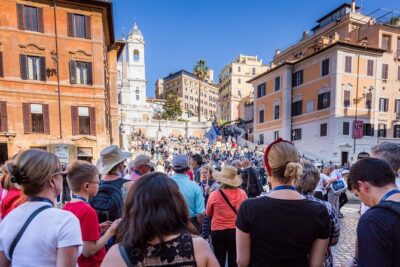 ★ 4.5Rome Walking Tour with Piazza Navona, Trevi Fountain and PantheonFrom $35676 reviews
Browse the lists this tour appears in