
Reviewed · ROME NIGHT TOURS
Walk the magic of Rome at night
Rome turns cinematic after dark. This guided walk strings together Rome’s top landmarks lit up at night while you stay outside, so you can spend your time on atmosphere, photos, and story beats. I love that the group stays small and the pacing feels steady, not rushed.
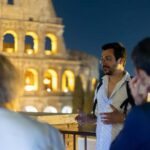
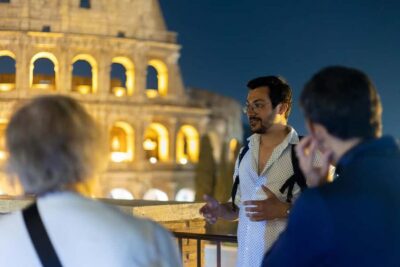
My favorite part is the guide. I’ve seen how Joseph (also listed as Isuf) and Drita keep the energy up with jokes, trivia, and smart photo guidance, including how to handle busy spots like Trevi Fountain. You also get practical help for the moment, like a bathroom break and extra tips for what to do next.
One thing to keep in mind: it’s a lot of walking, and you do not enter the monuments. Tickets for sites are generally not included, so this is best if you want the night views and orientation, not museum time.
Key highlights to look for
- Small group size (max 12) makes it easier to move through crowds and hear your guide clearly
- Big night landmarks without ticket lines, since you stay outside at each stop
- Photo strategy at Trevi Fountain, with help for crowded angles and positioning
- A guided route from major squares to the Spanish Steps, so you finish in a lively area
- Extra local recommendations at the end, from food to coffee, to help you extend the evening
Why Rome at night feels different, and why this tour works
At night, Rome stops being a checklist and starts being a mood. Streetlights bounce off stone, fountains look like they are glowing, and you get that classic Rome feeling without the daytime crush. This tour is built for that moment, with a path that hits the places you would otherwise scatter across two or three separate days.
What makes it click is that you are not trying to cram in inside visits. You focus on what night does best: dramatic facades, calmer streets, and unforgettable views from right where you can see the architecture. Even if you have seen photos before, being in front of the buildings when the light changes the mood is a different experience.
And since the group is capped at 12, you’re not stuck behind a human wall. That matters because the route goes through busy central Rome. A smaller group also helps your guide steer you to good angles and quick photo setups.
You’ll also get the human side of the city. The best guides do more than recite dates. They connect details, then turn them into stories you remember. On this route, you’ll hear explanations about things like why Piazza Venezia carries its name, and why the Pontefical Gregorian University matters to Rome’s education history.
You can also read our reviews of more walking tours in Rome

Start at Via del Monte Oppio, end near Piazza di Spagna
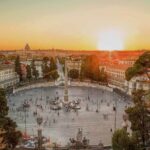
Logistically, this tour is pretty friendly. The meeting point is Via del Monte Oppio, 3 (00184 Roma RM), and the walk ends at Piazza di Spagna, 77 (00187 Roma RM), right by the Spanish Steps area. That “end where people want to go” finish is useful, because it makes it easier to grab dinner or hop into taxis or public transport afterward.
The total time is about 2 hours 30 minutes to 3 hours. The route packs in a lot, so show up with comfortable energy. Wear shoes you trust. The pace is described as moderate physical fitness, which usually means you can handle uneven sidewalks and a steady walking rhythm without needing constant breaks.
One more practical point: you’ll get a mobile ticket, and the tour is offered in English. It also runs with a confirmation you receive at booking time. The meeting spot is near public transportation, so you don’t have to fight your way through Rome just to start.
If you hate last-minute scrambling, plan to arrive a few minutes early. In central Rome, finding the exact street number can take longer than it should.
Vittoriano and Via dei Fori Imperiali: the grand approach to Rome’s power symbols
The evening begins at Monumento a Vittorio Emanuele II. This is the starting point for the route’s “big statements” phase of Rome at night. From here, you walk through Mussolini’s grand Via dei Fori Imperiali, a wide, straight avenue that creates a dramatic sense of direction and scale. Even if you’re not studying politics, you’ll feel the city’s power axis as you move along it.
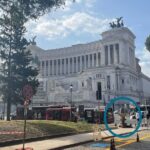
Next comes Piazza Venezia, where your guide explains the story behind its nickname, and you take photos in front of the Altar of the Fatherland, also known as the Vittoriano. This is one of those monuments that looks best when you see it with the lights on, because the marble and stone details become crisp in the dark.
A quick heads-up: your itinerary has you take photos and listen to context, not to enter. That is actually an advantage for night tours. You get the visual impact without losing time to lines or security checkpoints. It also means you can keep moving instead of getting stuck waiting.
If you’re curious about Roman symbolism, this stop gives you a mental map for what you’re seeing later in the evening. It’s a reminder that Rome’s “present” and “past” are always layered together.
The Pontifical Gregorian University and the Pantheon, seen as living landmarks
After the big monument zone, you shift into a more textured part of central Rome. You pass the Pontifical Gregorian University, noted as the first university founded by Jesuits. Hearing that detail while walking helps the area make sense, because you’re not just looking at buildings. You’re seeing an active institution tied to how Rome works today.
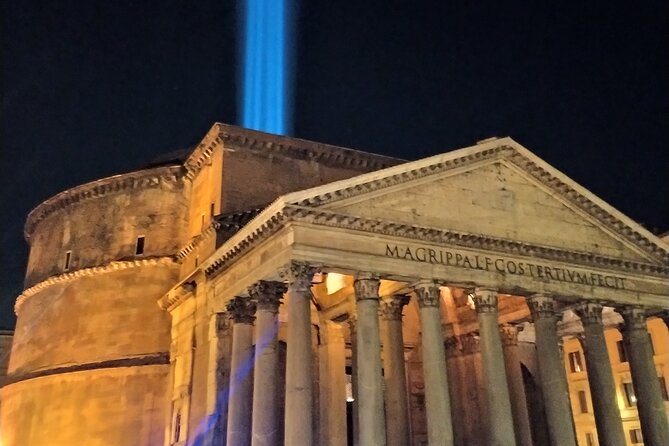
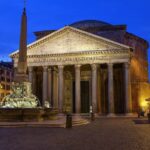
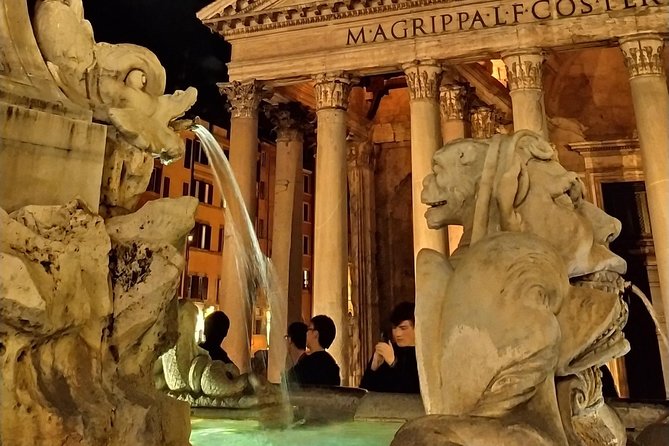
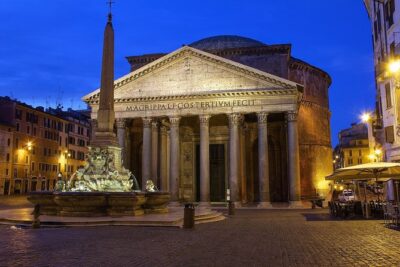
Then the route heads to the Pantheon, described as the most well preserved monument from the Roman period. Since the tour does not include entering, you’ll focus on what night does best for this building: the clean silhouette, the exterior details, and the sense of permanence. Even without stepping inside, the Pantheon is hard to “miss” at night.
Why I like this part of the route: it balances the large-scale monuments with calmer, more human street corners. You’re not sprinting from one massive photo wall to another every minute. You get a rhythm.
The possible drawback here is simple: because you are viewing from outside, you won’t get the full interior experience. If your dream Rome day includes entering the Pantheon or timed entry, you’ll want a separate daytime visit for that. This evening tour is about orientation and atmosphere first.
Still, for the traveler who wants the most famous sites connected into one walk, this stop is a strong use of time.
Trevi Fountain and Piazza Navona at night: timing, photos, and crowd flow
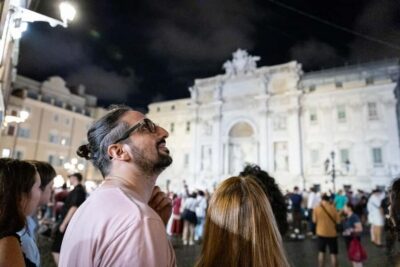
Now for the emotional center of the walk: Trevi Fountain. The plan includes time to admire it after dark, when the water and stone feel like they are part of the same glow. Your guide will also focus on photography strategy here, including crowd positioning so you can get a shot without spending your whole time elbow-to-elbow.
I like that your guide doesn’t treat Trevi as a random photo stop. The best guides time the moment, tell you what angles work, and help you get the shot you came for even when the square is busy. You’ll likely learn small tricks from their approach, like how to plan your timing and where to stand so your photo doesn’t turn into a blur of shoulders.
Before Trevi, the highlights mention Piazza Navona, and that square fits perfectly into a night route. It’s one of those places where the lighting makes the whole scene feel theatrical. Even if you only have a short window, you get that sense of life in the square, and you can decide whether you want to come back later on your own.
One of the subtle wins from this tour: you are not just standing around. You have an explanation, then you move on. That keeps the energy up and prevents the “I saw it, now what” feeling.
Practical note: bring patience. Trevi Fountain is popular. The guide’s job is to manage the group through the crowd in a way that still lets you see the fountain clearly.
You can also read our reviews of more evening experiences in Rome

Colosseum views from outside, then the Spanish Steps finale
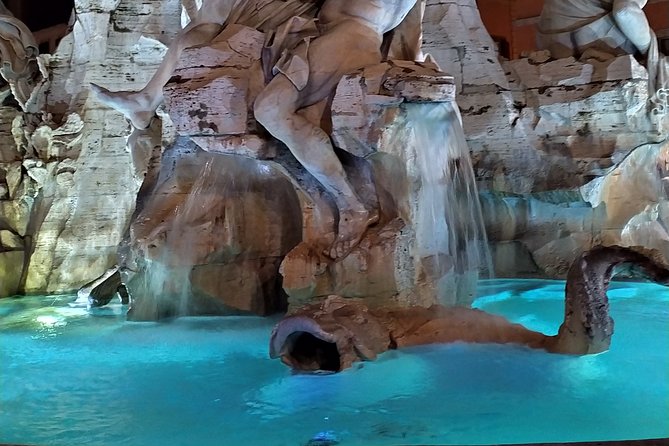
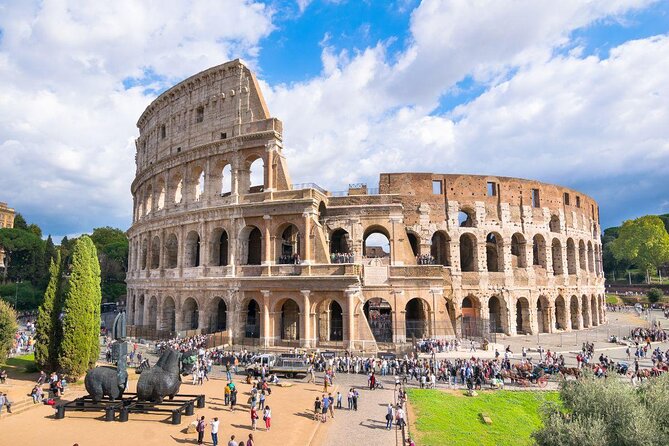
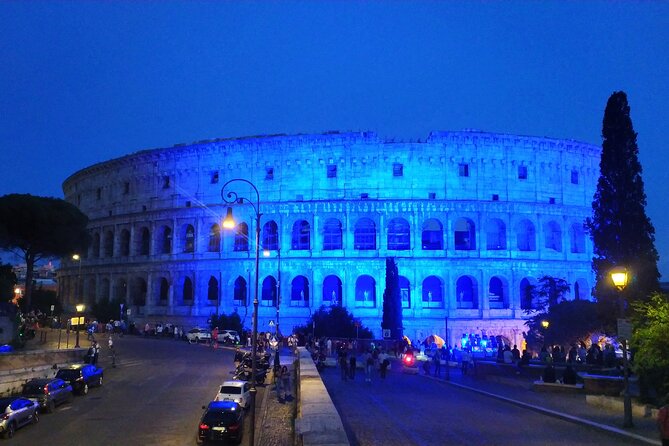
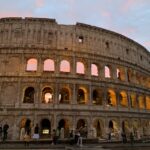
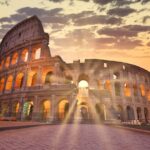
The last stretch is where the evening closes with big impact. You end the night at the Spanish Steps, and along the route you get time at the Colosseum from the outside.
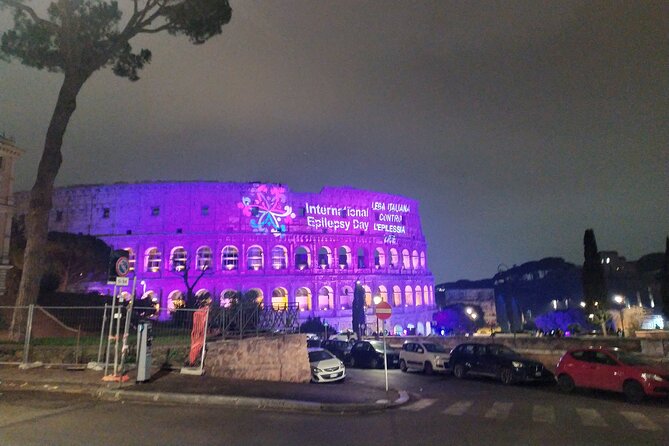
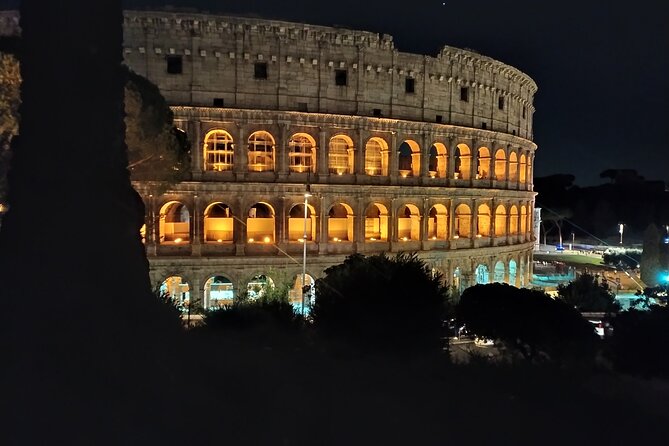
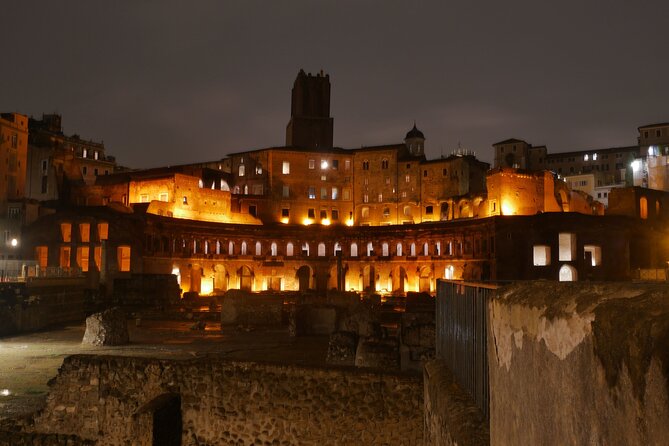
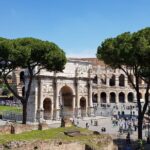
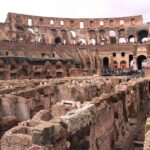
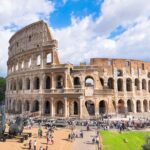
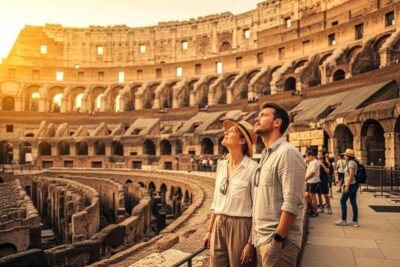
Seeing the Colosseum at night is special for one reason: you remember it as more than a photo. It looks like a fortress in the dark, and the lighting makes it feel even older than you expect. The tour discusses details from outside, so you’ll walk away with context even if you did not go inside.
Then comes the Spanish Steps, with time to enjoy the French/Spanish Steps area as your final destination. These steps are famous for design, elegance, and that romantic Rome atmosphere, and at night they feel almost made for an evening stroll.
The tour’s pacing matters here. It gives you time at key points without turning the walk into a constant sprint. You finish where it’s easy to continue your evening, whether you want to find food, coffee, or just keep walking toward the next street.
If rain happens, the route still keeps going. In that case, a light rain layer and umbrellas you can manage on crowded sidewalks become extra useful.
Price and value: what $42.34 really buys you
At $42.34 per person, you’re paying for more than “someone walking you between landmarks.” You’re paying for an official guide, a tight route, and time saved. A route like this costs less than piecing together multiple daytime tours, and it gives you a practical overview of how Rome sits spatially.
Also, because entrances are not part of the plan, you’re not paying for things you might not even want. The itinerary notes that admission is not included at several stops, while some viewpoints are free. That makes the tour a good fit for people who want the famous sights but do not need inside tickets to be satisfied.
To judge the value, focus on what you get with your guide:
- context that makes the buildings easier to remember
- help with photo stops at high-traffic sites
- extra tips after the tour for food and coffee
- a smooth walking route from start to finish in central Rome
If you’re already planning to enter major monuments during the day, this night tour becomes a smart add-on. It helps you learn what you want to revisit, and it makes the daytime visits feel more meaningful because you have already oriented yourself.
How much walking is it, and who should book
This tour is not a sit-down experience. You should expect a steady amount of walking, with the need for moderate physical fitness. The recommendation is 11 years old and up, and babies under 2 are free. The small group size, max 12, also matters for comfort because it helps your guide keep everyone moving at a manageable pace.
Bring good shoes. Rome sidewalks can be uneven, and night walking can mean more time focusing on lights and photos, which makes footing important.
This tour is a great match if you:
- want a quick orientation to Rome’s central icons
- prefer nighttime atmosphere over indoor museum time
- like lively guiding with stories and humor
- want photo help at tricky stops like Trevi Fountain
It’s less ideal if you:
- only want low-walking, minimal-street time
- expect to enter every monument as part of the tour
- are trying to see everything on a single day without any separate planning
Should you book this Rome at night walk?
Yes, if you want the best of Rome’s lighting and landmarks in one focused evening. This is the kind of tour that helps you get your bearings fast, then decide what to revisit later. The route hits the monuments people travel for, and the guide adds enough personality and pacing to keep the night from feeling like a checklist.
I’d book it early in your trip if you can, so you have time to use the restaurant and coffee recommendations afterward. But even at the end, it works as a satisfying wrap-up, because you leave with photos, context, and a clear sense of where things are.
If you’re on the fence, ask yourself one question: do you want Rome’s iconic sights outside, under night lights, guided by an official English-speaking guide? If yes, this is a strong value for the money.
FAQ
How long is the walk?
It lasts about 2 hours 30 minutes to 3 hours.
Is the tour in English?
Yes, it is offered in English.
Where does the tour start and end?
It starts at Via del Monte Oppio, 3, 00184 Roma RM and ends at Piazza di Spagna, 77, 00187 Roma RM.
Do we enter the monuments during the tour?
No. The plan is to not enter inside the monuments. Admission is not included for several stops.
What landmarks will we see?
You’ll stop near or at major sights including the Colosseum, Trevi Fountain, Pantheon, Piazza Navona, and the Spanish Steps, plus areas around Vittoriano/Monumento a Vittorio Emanuele II and Piazza Venezia.
Is the tour good for kids?
It is 11 years old and up. Babies under 2 are free.
How physically demanding is it?
You need moderate physical fitness level, since it is a night walking route.
How big is the group?
The tour has a maximum of 12 travelers.
What is the cancellation policy?
It is non-refundable and cannot be changed for any reason. If the minimum number of travelers is not met, you are offered another date or a full refund.
More Evening Experiences in Rome
More Walking Tours in Rome


More Tour Reviews in Rome
Not for you? Here's more nearby things to do in Rome we have reviewed





Rome Night Tours, compared.
 ★ 4.1City Highlights Open-Top Bus Night TourFrom $222,038 reviews
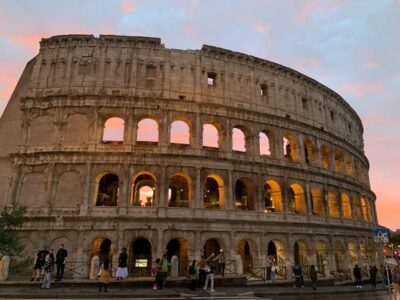 ★ 4.5Colosseum Sunset Tour with EntryFrom $491,230 reviews
 ★ 4.9E-Bike Night Tour with Food and Wine TastingFrom $891,131 reviews
 ★ 4.8Under the Moonlight Evening Walking TourFrom $28852 reviews
 ★ 4.5Night Tour of Rome with Local Pizza Dinner and Gelato ExperienceFrom $237780 reviews
 ★ 5.0Rome Bar Crawl: Interactive Night Tour with Games and KaraokeFrom $78769 reviews
 ★ 4.7Colosseum Arena Twilight Tour & Imperial Forum VisitFrom $78689 reviews
 ★ 4.5Rome by Night: Golf Cart TourFrom $108688 reviews
Browse the lists this tour appears in