
Reviewed · FOOD & DRINK
Rome: Jewish Quarter and Campo de’ Fiori Street Food Tour
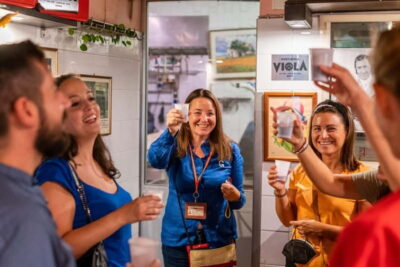
Rome hits you hardest when you eat. This 2.5-hour walk around the Jewish Quarter and Campo de’ Fiori turns “Roman food” into something you can actually picture, taste, and remember. I especially like the hands-on street-food tastings, including classic bites like supplì and pizza al taglio, plus samples like olive oil, balsamic vinegar, and even truffle. One thing to keep in mind: it is not designed for everyone, since it is not suitable for vegans and gluten intolerance, and the market is closed in the afternoons.
I also like how the guide mixes food with real neighborhood details, from Portico d’Ottavia to stops near the Great Synagogue of Rome and the Theatre of Marcellus. The vibe is practical, not museum-y. You walk, you sample, you learn why each dish fits this part of Rome, and you finish near Largo di Torre Argentina.
Key highlights to know before you go
- Meet at Campo de’ Fiori under Giordano Bruno for a clean start and fast momentum.
- 5 guided tastings plus beer and wine included, so your money goes to the food you came for.
- Jewish Ghetto area with key sights (Portico d’Ottavia, Great Synagogue from outside, Teatro Marcello area).
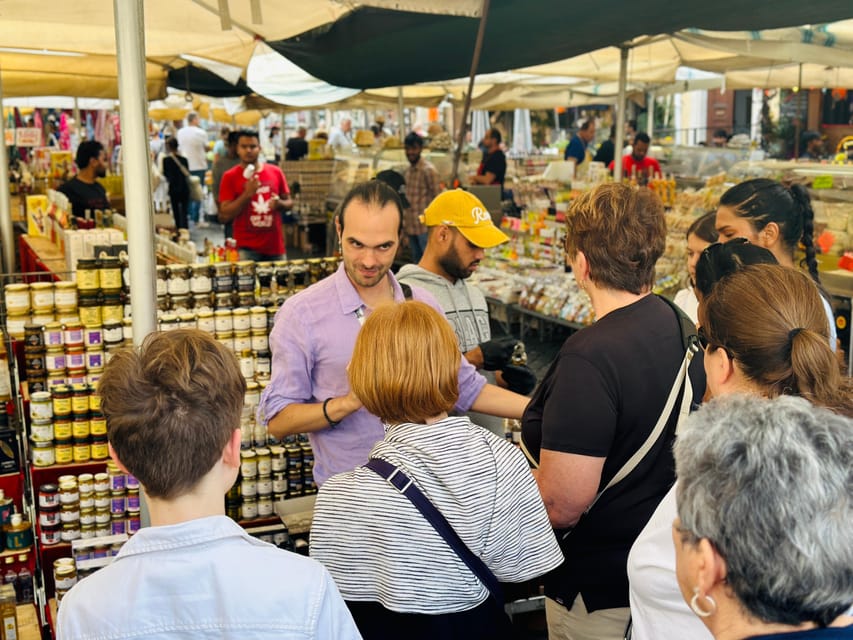
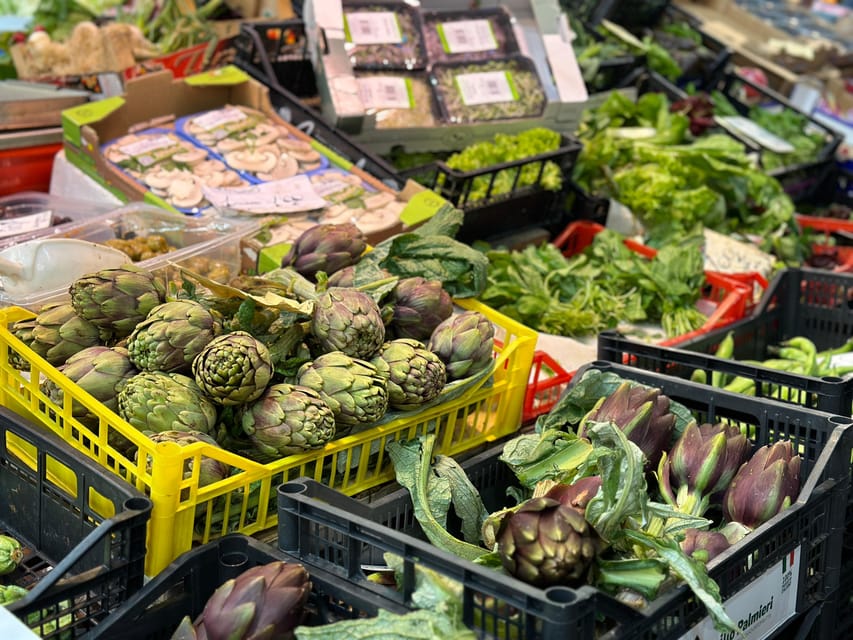
- Campo de’ Fiori market focus with street food and specialty samples like olive oil and balsamic vinegar.
- Real Roman classics like supplì and pizza al taglio by the slice.
- Ends at Largo di Torre Argentina, a smart spot for continuing on foot.
Why this Rome street-food walk is worth your time
A lot of Rome food tours turn into a parade of names. This one is different because the route is built around places that actually define the city’s everyday eating culture. You spend time at Campo de’ Fiori, then you shift into the Jewish Quarter area near the Tiber. That change of neighborhood matters, because the guide connects dishes to the people and traditions who shaped them.
The big value here is that the tour is only 2.5 hours, but you still get a guide-led sequence of tasting stops. Five tastings sounds manageable, and it is, but it also forces variety. You are not just stuck with one type of snack all night. You get both market-style bites and specific Roman specialties.
The other value is clarity. I like that you are not left guessing what to order. You are guided to the right kind of food in the right kind of setting, then you get the story behind it while you eat.
You can also read our reviews of more food & drink experiences in Rome
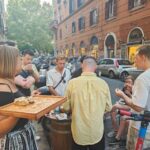
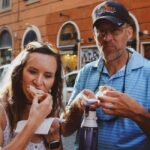
Starting at Campo de’ Fiori: the best launch point for this route
You meet in Campo dei Fiori square, under the statue of Giordano Bruno in the middle of the square. It is easy to find once you’re standing there, and it puts you right where the tour’s food theme begins.
Campo de’ Fiori is also a practical starting point because it anchors the day’s market energy. The tour includes a market visit and street-food tastings right there, plus more food and drink around the same area. That means less wandering, less backtracking, and more time with your mouth busy.
One timing note matters for this experience: the market is closed in the afternoons. If you are choosing a departure time, lean toward a morning slot so you are not relying on a closed market for the heart of the tour.
Campo de’ Fiori tastings: pizza al taglio, supplì, and Roman flavor basics
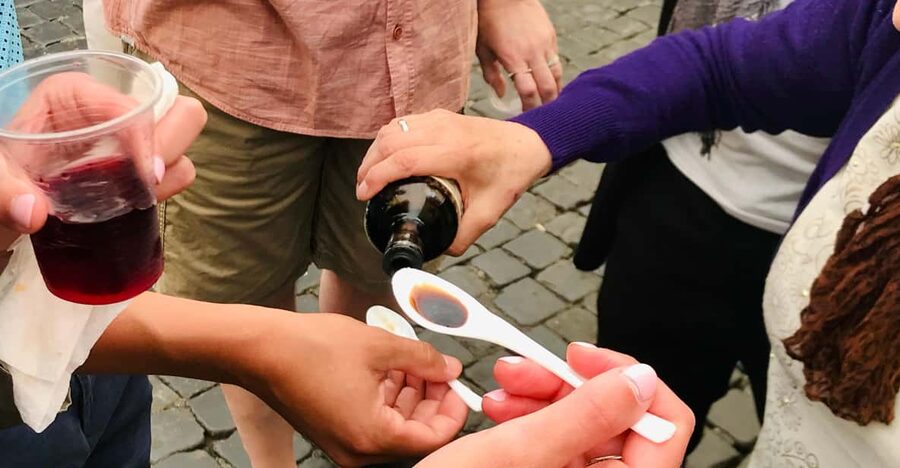
This is where the walk earns its keep. The tour gives you multiple small tastings that add up to a real snapshot of Roman street food.
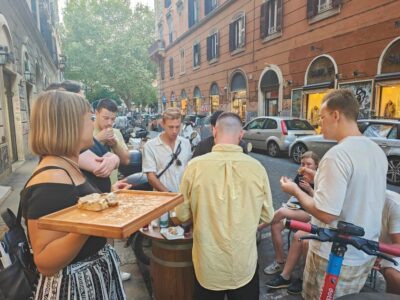
At Campo de’ Fiori, you can expect classic street-food hits like:
- Pizza al taglio, Roman-style pizza sold by the slice
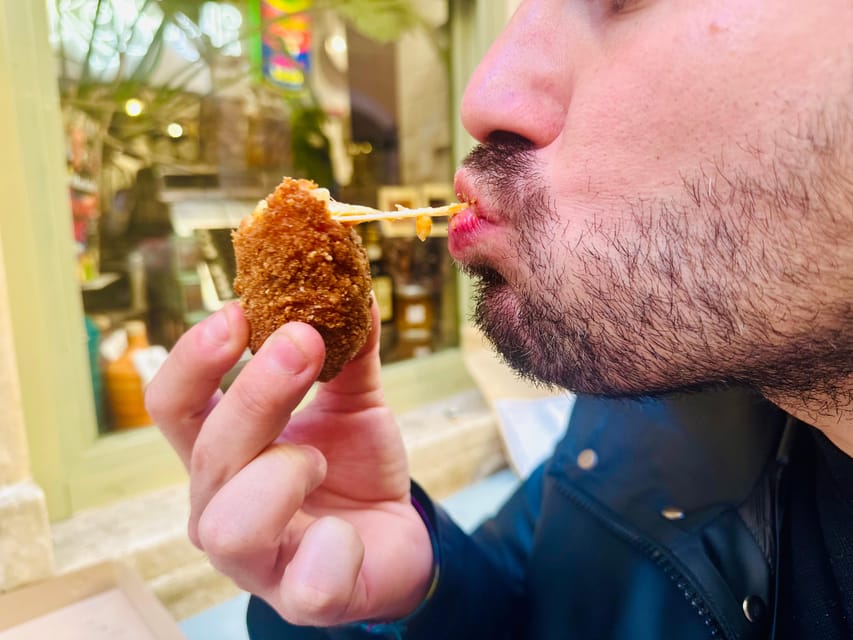
- Supplì, rice balls filled with cheese and ragù
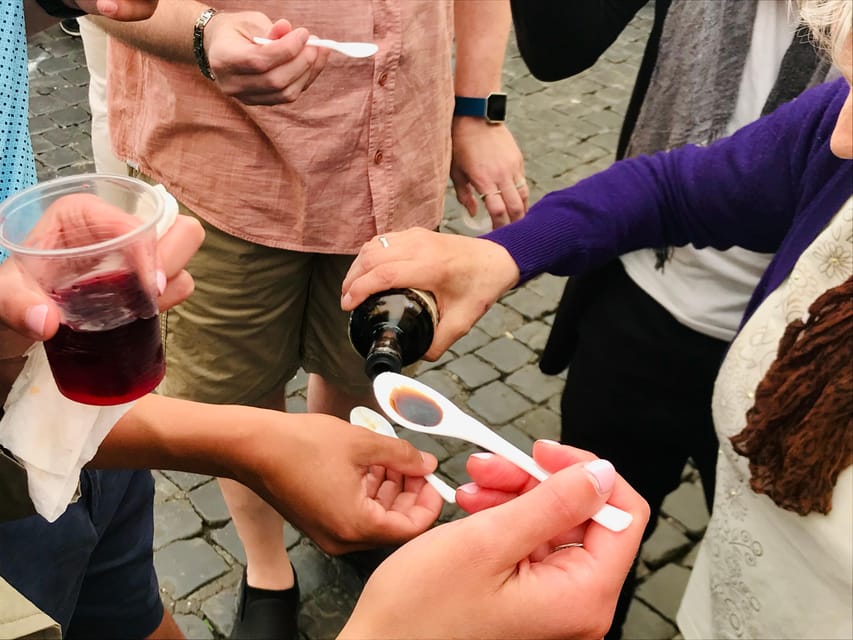
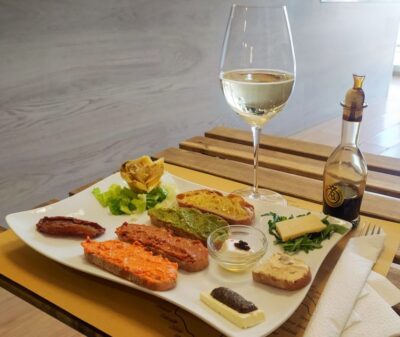
- Samples tied to Roman pantry flavors, including olive oil and balsamic vinegar
- A truffle sample, fresh and locally flavored in the way you can actually taste, not just hear about
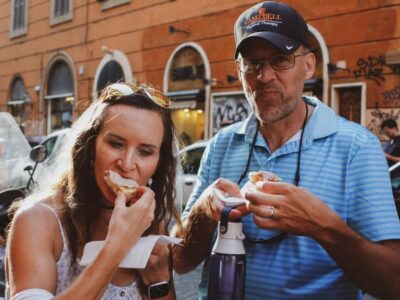
What I like as a diner is the mix of textures. You go from something crispy and sliceable to something rich and cheesy to flavor samples that reset your palate. If you’ve ever eaten Roman food and wondered why it tastes so confident, this is the part that answers it. The guide helps you connect the ingredients to the local habits, not just the dish names.
Also, this stop is built around eating where locals shop. You are not treating the market like a photo backdrop. You are using it as a starting point for the flavors the city expects every day.
The wine stop at Campo de’ Fiori: pairing tips without the lecture
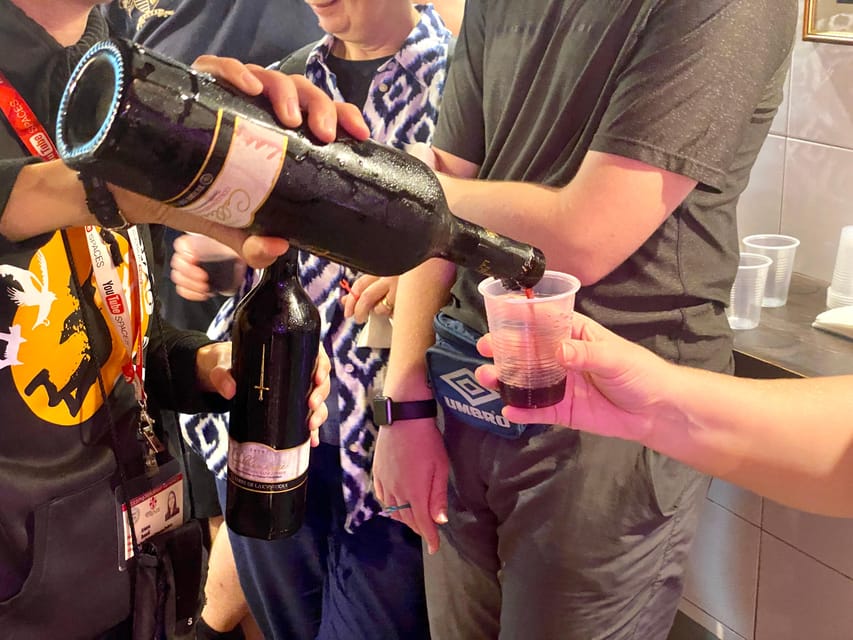
After the first market segment, the tour keeps you in the same area for a wine tasting. You are not doing a long restaurant sit-down. This is wine as part of a street-food workflow, the kind you’d expect on a walk where food is constantly changing.
This part also matters because it teaches you how to approach flavors like a local: take a bite, taste the texture and salt levels, then shift to something aromatic like wine. You start to recognize what each item does for the next one.
The tour includes beer and wine samples, and the route sets beer up later too. Still, the wine tasting here gives you a baseline. If you’re the type who prefers a guided order of operations, you’ll like it.
Pompey’s Theatre area and a hidden stop for atmosphere
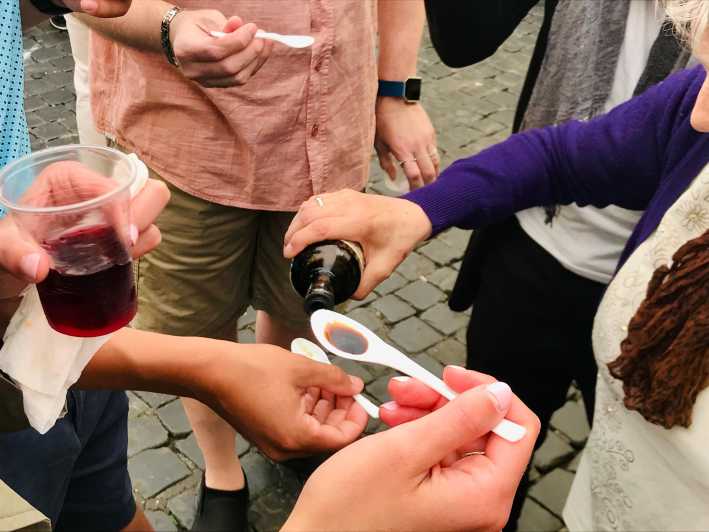
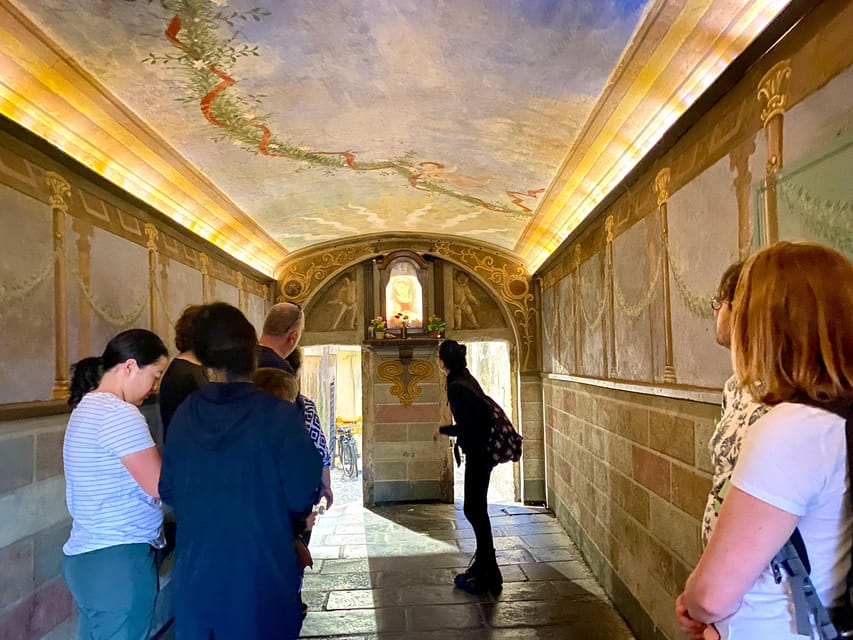
After the Campo de’ Fiori section, you walk a bit and hit a hidden sightseeing stop. Then the tour reaches the Theatre of Pompey area for another tasting moment.
This is one of those parts where the route does more than check boxes. Roman food is tied to public spaces: markets, theatres, busy pedestrian corridors. Even when you’re eating street food, you’re not really leaving the city’s rhythm behind.
You get a short stop at Pompey with street-food and a smaller tasting window. The pacing is good. You’re not stuffed by minute 45. You still have appetite left for what comes next in the Jewish Quarter.
If you do not love walking, you might find yourself counting steps around here. But at least it is short. And you get enough breaks that the tour still feels like a relaxed stroll with snacks, not a forced march.
A few more Rome tours and experiences worth a look



Via dei Chiavari: beer sample plus street-level Rome views
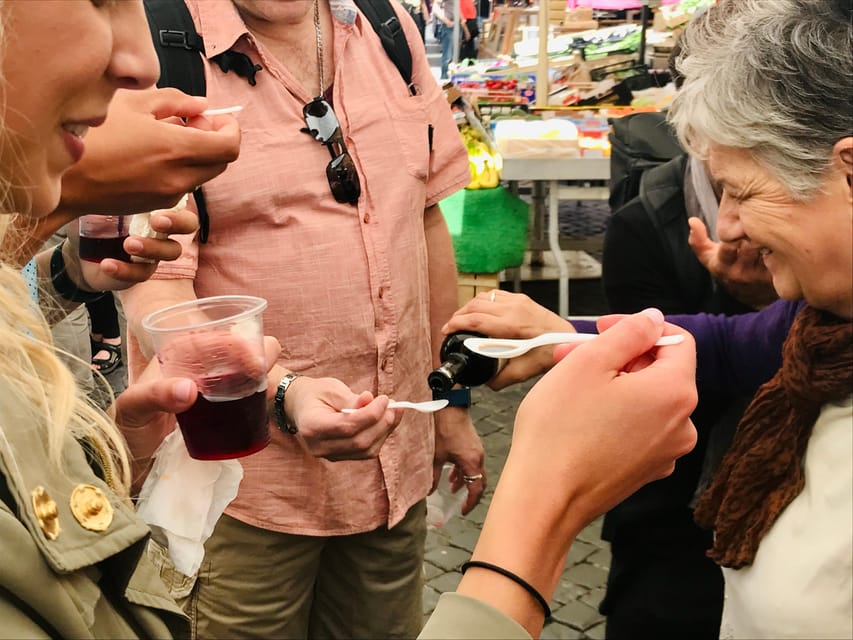
Next up is Via dei Chiavari, a short walk segment where the tour includes a beer stop and a bit of sightseeing.
This is a smart timing choice. After tastings and wine earlier, you get beer to balance things out. Beer also works well with fried or cheesy street food. It’s not just a beverage stamp. It actually changes how the next bite lands.
Via dei Chiavari also gives you that classic Rome streetscape feeling. You’re moving at walking speed, looking outward while your guide keeps the food story moving. If you prefer learning by walking rather than sitting still, this part hits the sweet spot.
Portico d’Ottavia and the Great Synagogue from outside
Now the tour shifts into the Jewish Quarter area near the Tiber River. You get a guided walk to Portico d’Ottavia and a pass by the Great Synagogue of Rome from outside.
This matters for the experience because you’re not only eating. You are seeing the neighborhood context that shaped local life. Portico d’Ottavia is a key reference point in this area, and the guide uses these sights to add meaning to what you eat.
One practical detail: the synagogue visit is described as a pass by, not an inside visit. So don’t plan on expecting a long interior look. The tour focuses on the outdoor overview, plus the food story that goes with this part of Rome.
You also pass by and connect to the wider sightseeing flow around this area, including Teatro Marcello territory. Short walks, clear sightlines, and enough narration to tie it back to tradition.
The Roman Ghetto food moment: why the tastings feel different here
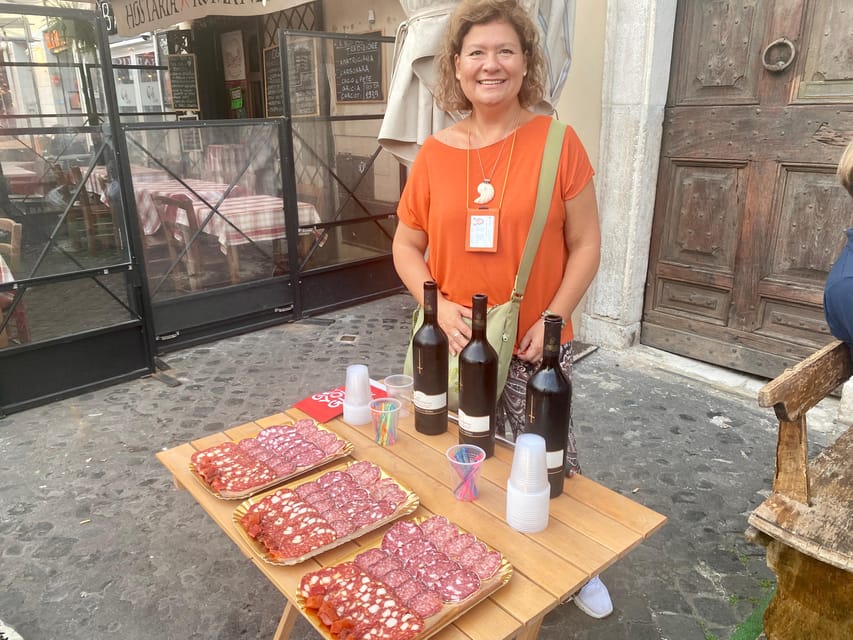
This is the emotional center of the route: the tour enters the Jewish Ghetto area, around Rione Sant’Angelo. You spend time walking and tasting, and the guide focuses on the most famous Roman-Jewish specialty.
Here’s what I like about this structure. The tour does not treat Jewish food as a side quest. It gives you time in the neighborhood and a specific tasting that represents the tradition you’re learning about.
Because the Jewish Ghetto area has layers of history, the guide’s explanations help you understand why food takes on extra meaning in places shaped by community life and survival. The tastings here feel more pointed than random snack stops.
You are not left with vague statements like this dish is traditional. You get a story that connects the food to local customs and the historical significance the guide highlights.
Then the route continues with more nearby sights, keeping you moving but not rushing.
Largo di Torre Argentina: the dessert finish that keeps the momentum
Near the end, the tour includes Largo di Torre Argentina, with a dessert tasting around 15 minutes, after you pass the Theatre of Marcellus area.
Finishing with dessert makes sense. You’ve eaten savory bites, you’ve shifted from wine and beer, and you end on something sweet that feels like a clean wrap-up. The key is that the finish location is still central enough to keep your evening going without needing a taxi.
When you get dropped off at Largo di Torre Argentina, you’re placed where you can continue walking through Rome. Even if you’re heading to dinner, you’ll be positioned well for the next step.
Price and value: is $46 actually a bargain here?
At $46 per person for about 2.5 hours, you’re paying for three things: a licensed guide, guided movement between specific places, and a set of food and drink inclusions.
Included:
- 2.5h walking tour
- Licensed local guide
- 5 different street food tastings
- Beer sample
- Wine sample
Not included:
- Extra food and extra drinks
So the real question is whether you would otherwise spend similar money hunting snacks on your own. In many Roman neighborhoods, you can absolutely eat well for less than a guided tour. But the tradeoff is time and uncertainty. Here, the guide does the hard part, choosing what to eat and where to eat it, while also explaining what makes each bite Roman, Jewish Roman, or market-driven.
A small caution worth planning for: if you keep shopping after tastings, you should check prices carefully. Some stalls can end up costing more than you expect once you’ve already paid for tastings. The tour gives you a set path. Enjoy it, then decide whether you want more, with eyes open.
Who should book, and who should skip
This tour fits people who want Rome in a bite-sized format. If you like street food, enjoy walking, and want your neighborhood sightseeing tied to what locals eat, you will probably love it.
It also has clear limitations:
- Not suitable for vegans
- Not suitable for gluten intolerance
- Vegetarians can be accommodated if you advise in advance, and last-minute requests may not work
So if you eat dairy, eggs, wheat, or meat, you’ll likely be in the clear. If your diet is restricted, read the food notes closely before you book.
It also suits first-time visitors who want a stronger feel for Rome than a quick highlight loop. And it works well for returning visitors who think they know the city, because you get a specific lens on the Jewish Quarter tied directly to food rather than just buildings.
My practical tips so you get the full experience
Because this is a focused tasting walk, a few choices can make it better.
- Pick your departure time with the market being closed in the afternoons in mind.
- If you’re vegetarian, message ahead so the guide can arrange options in advance.
- Wear shoes that handle uneven sidewalks. It is a 2.5-hour walking tour, and the pace is part of the point.
- Go hungry, but don’t plan on a full meal right afterward. You’ll eat enough to feel satisfied, and dessert is included near the end.
Most of all, keep a flexible mindset. This tour is designed around guided food stops, not around rushing to optional sights. If you let the guide set the rhythm, the whole route clicks faster.
Should you book this Rome Jewish Quarter and Campo de’ Fiori street-food tour?
If you want an efficient way to taste Roman street food and learn how the Jewish Quarter shapes food traditions, I think booking makes sense. The value math works because you get five tastings plus beer and wine, and the route connects food to places like Campo de’ Fiori, Portico d’Ottavia, and the Theatre of Pompey area.
I would skip it if you need vegan options or you have gluten intolerance, because it is not designed for those needs. And if you can only do an afternoon slot, double-check because the market is closed in the afternoons, which can affect the experience.
If you fit the dietary notes and you like the idea of learning while you eat, this is an easy yes.
FAQ
Where do I meet my guide?
Meet your guide at Campo dei Fiori square, under the statue of Giordano Bruno located in the middle of the square.
How long is the tour?
The tour lasts 2.5 hours.
What is the price per person?
The price is $46 per person.
What is included in the tour price?
The tour includes a 2.5-hour walking tour with a local licensed guide, 5 different street food tastings, plus samples of beer and wine.
Are there options for vegetarians?
Vegetarians can be accommodated if you advise in advance. Last-minute requests won’t be accommodated.
Is the tour suitable for vegans?
No. The tour is not suitable for vegans.
Is it suitable for gluten intolerance?
No. The tour is not suitable for gluten intolerance.
What part of the route includes a market?
Campo de’ Fiori is included, and the tour includes a market visit there. Note that the market is closed in the afternoons.
Does the tour include any drinks besides tastings?
Yes. You’ll have a beer sample and a wine sample included.
Where does the tour finish?
The tour finishes at Largo di Torre Argentina.
More Food & Drink Experiences in Rome
More Tours in Rome






More Tour Reviews in Rome

Not for you? Here's more nearby things to do in Rome we have reviewed












Food & Drink, compared.
 ★ 4.8Trastevere or Jewish Quarter Street Food TourFrom $513,839 reviews
 ★ 4.9Trastevere & Campo de Fiori Street Food Walking TourFrom $512,768 reviews
 ★ 4.8Guided Food Tour in TrastevereFrom $1122,266 reviews
 ★ 4.8Food Tour with Unlimited Food and Barolo WineFrom $861,883 reviews
 ★ 4.9Appian Way E-bike Tour with Catacombs, Aqueducts & FoodFrom $961,210 reviews
 ★ 4.9E-Bike Night Tour with Food and Wine TastingFrom $891,131 reviews
 ★ 4.9Trastevere Guided Food and Wine Tour with 20+ TastingsFrom $1461,022 reviews
 ★ 4.9Pasta Making with Wine Tasting and Dinner in FrascatiFrom $35979 reviews
Browse the lists this tour appears in