
Reviewed · WALKING TOURS
Private Walking Tour of the Squares and Fountains in Rome
Rome’s best squares in one walk.
This private tour is a smart way to get your bearings fast because you move through the center on a focused route of famous public spaces. I especially like the private guide attention for every stop, and the fact that the route hits big names without turning into a rushed blur.
Piazza del Popolo to Piazza Navona to the Pantheon area, you get clear context for what you’re seeing, from the poplars that gave Popolo its name to why the Spanish Steps look the way they do. One consideration: the price is per person, and the tour does not include Pantheon admission, so plan on that extra cost if you want to go inside.
Key Things to Know Before You Go
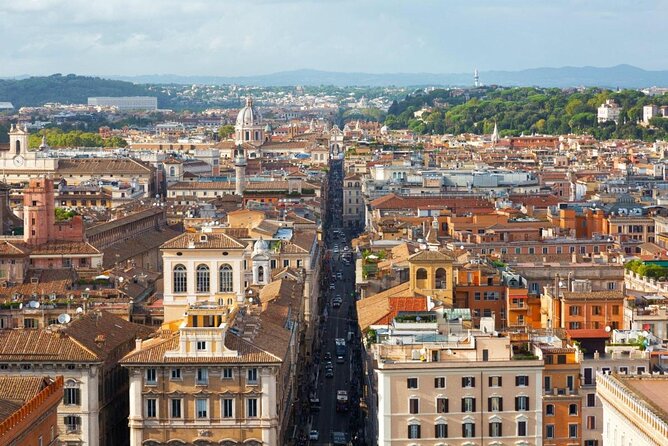
- Private group, max 8 people means the guide can pace it for your questions and photo stops
- Hotel pickup included helps you start smoothly in central Rome
- Mostly free sights on the route, with Pantheon admission not included
- A tight 3 to 4 hour arc that works well for first-time visitors or short stays
- Professional guide with strong engagement (for example, guides like Paulo and Gaia are noted for keeping people interested, including teens)
- Mobile ticket so you can keep everything on your phone
Why This Squares-and-Fountains Walk Works So Well
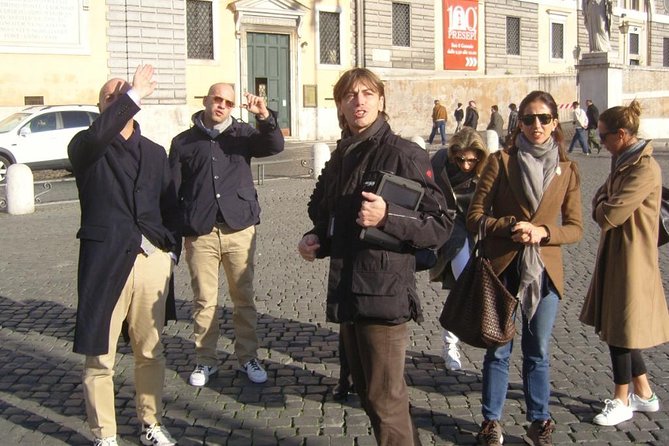
Rome can overwhelm you fast. Streets are beautiful, signs are confusing, and somehow you’re suddenly 20 minutes off track. This tour is built to prevent that, with a route that strings together the places you will keep hearing about once you start planning your trip.
The big win here is that you are not just taking pictures. You’re walking through a chain of squares and fountains that each tell you something about the city: how Rome welcomed visitors, how rulers shaped the look of public space, and how major churches and embassies left their fingerprints on the streets. If you’re here for a first look, this is a practical way to build a mental map.
Also, you get a real guide voice, not just a phone with directions. Paulo and Gaia are examples of guides whose knowledge and energy seem to matter, and the tour format is built to keep that personal back-and-forth possible.
You can also read our reviews of more walking tours in Rome



Price and Value: What $229.78 Buys You in Rome
At $229.78 per person, you’re paying for three things: a private guide, hotel pickup, and a short, efficient route that covers major sights. If you were going to wing it on your own, you’d still spend time figuring out what to see and when, and you might not learn the meaning behind the landmarks in the same way.
It’s also a good value for families or small groups because the group limit is up to 8 people per booking. A private tour often works out better than you expect when you split the cost within your own party, especially if you want real guidance for multiple ages.
One note on value: the tour includes many stops with free admission, but the Pantheon admission is not included. That’s normal for tours that finish at a major indoor site, but it does mean your final spend could be a little higher if you plan to enter.
Meeting Point, Hotel Pickup, and How the Route Flows
You’ll start at Fontane dei Leoni Egizi on Via del Teatro di Marcello. Many people will also use the hotel pickup that’s included, which helps if you are staying within reach of the central area.
The route runs for about 3 to 4 hours, with the pacing built around short stays at each stop. Most stops are around 20 minutes, and the Pantheon area is allotted a bit more time. The tour ends with drop-off at the Pantheon, which is handy if you want to continue on your own afterward.
Transportation between sights is not included. That’s not a dealbreaker, because this is a walking tour through central streets. Just understand that if you later decide you need a taxi for any reason, you’d cover that yourself.
Stop-by-Stop: Piazza del Popolo to the Pantheon Finish
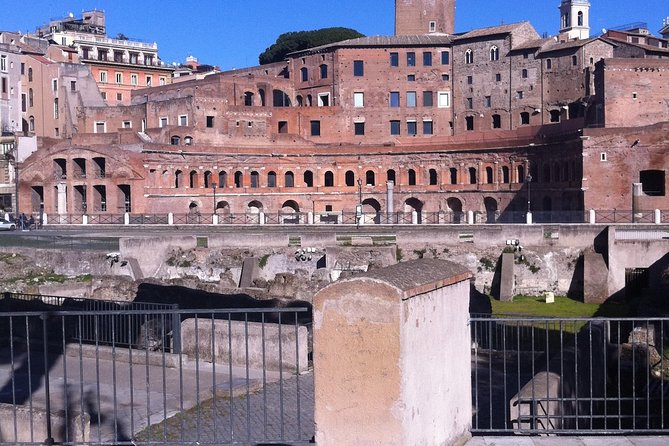
This is the kind of route that works best when you enjoy both the big monuments and the street-level details. You’re not stuck inside a museum. You’re in the city, watching how people actually use these squares.
Piazza del Popolo: Where Rome Welcomes You From the North
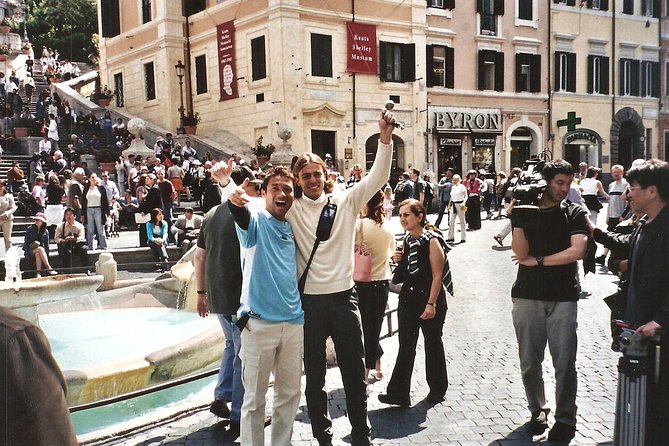
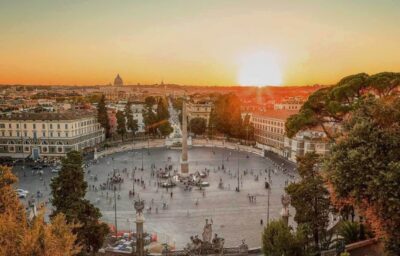
Piazza del Popolo is one of those Roman squares you feel like you already know, even if it’s your first time here. It was designed in the early 1800s to welcome visitors and pilgrims entering Rome from the north, along the Via Flaminia.
A neat detail: the name means People’s Square, but it comes from the poplars that once surrounded the oval shape. Your guide can help you spot the design logic, and the quick stop time works well because you get the core story without dragging your feet in the sun too long.
If you like your sightseeing to have a clear starting point, this is a strong one.
You can also read our reviews of more private tours in Rome




Via del Corso: The Trident’s Main Street
From Piazza del Popolo, the route connects through Via del Corso, Rome’s classic central artery that runs between Piazza Venezia and Piazza del Popolo. It’s about 1.6 kilometers, and the street is part of the Trident street layout that radiates through central Rome.
What I like about this segment is how it turns landmark-hopping into a walking experience. You can sense why this is the main flow of movement in the center, and it helps your brain understand the map better than looking at it from inside a hotel.
This is also a good moment to pause and take in what you’ll see again and again in Rome: old streets guiding you directly to major civic spaces.
Spanish Steps: 135 Steps With International Footnotes
The Spanish Steps are more than a photo stop. You climb from Piazza di Spagna up toward Trinità dei Monti, where the church dominates the top. The stairway links a French diplomatic connection and a Spanish one, which is part of why it’s so famous.
The story here has specific details, like the building period in the 1720s and the use of Étienne Gueffier’s bequeathed funds to pay for the work. Your guide can also connect the architects to what you see, since the design is credited to Francesco de Sanctis and Alessandro Specchi.
Practical tip: the steps are steep enough that you’ll want comfortable shoes and a pace you can manage. If you’re traveling with kids or someone who prefers not to climb, you’ll still get plenty from the lower and mid areas.
Trevi Fountain: The Classic Stop, Explained Simply
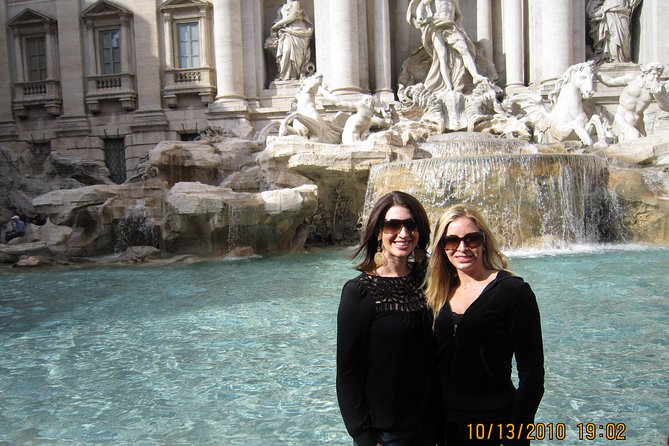
Trevi Fountain (Fontana di Trevi) is one of those sights that looks impossible to walk past. Even if you’ve seen it in movies and photos, it still reads as grand when you’re there.
This tour gives you the basics you need: it’s an 18th-century fountain, designed by architect Nicola Salvi. That context helps because you start noticing the craftsmanship instead of just thinking, wow, it’s big.
If you want to linger, the tour schedule is short at this stop, so use your time with intention. Look for the central composition first, then slow down for the details right after.
The Pantheon Area: Ancient Rome as a Living Landmark
Near the middle of the walk, you move into the Pantheon area. Here you get an explanation of what the building is in the ancient sense, not just that it’s famous.
The Pantheon is described as a temple dedicated to all past, present, and future divinities, founded in 27 BC and associated with Marco Vipsanio Agrippa. That framing matters because it changes how you look at the structure. You can start seeing it as part of a civic and religious system, not only as a grand architectural object.
You also should know the practical side: Pantheon admission is not included. So if you want to enter, you’ll need to arrange that separately.
Piazza Navona: A Square That Feels Like Theatre
Piazza Navona is one of Rome’s most famous monumental squares, and it has a distinct character. It was built in monumental style at the behest of the Pamphili family, commissioned through Pope Innocent X.
What I like on this tour is that you reach Navona with context already in your head. You’ve seen the major approach streets, the big fountain, and the church linked to the steps. So when you stand in Navona, you can compare the planning ideas behind each place.
The time is short, so don’t treat it like a picnic spot. Get your bearings, then focus on the architecture around you.
Fontana dei Quattro Fiumi: Innocent X’s Fountain Moment
At Piazza Navona, you get Fontana dei Quattro Fiumi, commissioned by Pope Innocent X. The story includes a practical engineering element: a pipeline bringing water from the Aqua Virgo, designed under Francesco Borromini.
There’s also a bigger political flourish in the way the fountain ties to Roman artifacts, since the pope wanted to recover an obelisk (later called Agonale) from ruins in the Circus of Maxentius on the Appia Antica. This is the kind of detail that makes the fountain feel like more than decoration. It’s public art with a mission.
If you like understanding why monuments look like they do, this is one of the most satisfying stops.
Piazza della Minerva: The Square’s Name Has a Purpose
Piazza della Minerva may look like a typical central square until you learn what the name refers to. It connects to an earlier temple dedicated to Minerva, linked to Gneo Pompeo Magno, and the Minerva cult statue is now in the Vatican.
In the middle is Santa Maria sopra Minerva, and there’s even an early written reference described from the 8th century, via the Anonymous of Einsiedeln, using the name ecclesia S. Mariae in Minervio. Your guide’s explanation helps you understand why the square feels layered, with ancient and medieval Rome overlapping in the same space.
This is a great spot to slow down, because it’s less chaotic than some of the most famous names.
Final Drop-Off at the Pantheon
The tour ends with drop-off at the Pantheon. You’ll likely have just enough information to choose what to do next: go in if you want to, or move on toward the next part of your Rome plan.
Ending here is smart because it’s one of the easiest central points to continue from. You can also use the timing to decide how long you want to spend inside once you see the crowd level and your own energy.
The Real Standout: The Guide’s Energy and Personal Attention
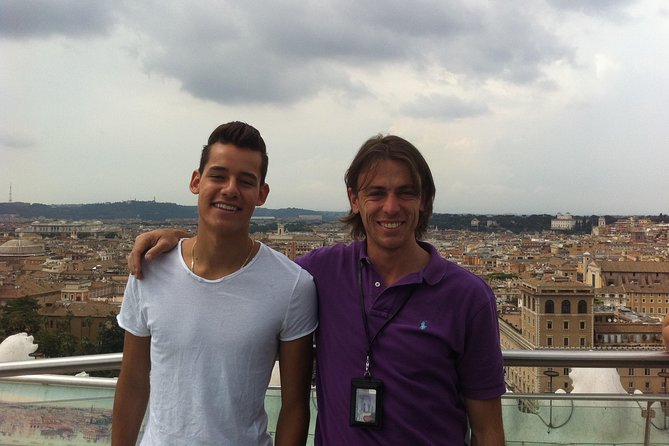
This tour is private, so it doesn’t have the usual group-tour problem of you waiting for the pace to catch up. With up to 8 people, the guide can keep the route moving while still explaining what matters.
The guides named in the experience feedback, like Paulo and Gaia, are highlighted for passion and knowledge, and for keeping even teenagers engaged. That tells me something important about this tour format: it’s not just facts, it’s the way those facts are delivered.
For me, that’s the difference between seeing landmarks and actually understanding them. You’ll still have time to appreciate the sights on your own, but you’ll also have a framework that makes the rest of your trip easier.
What to Expect From the Timing (and How to Pace Yourself)
The schedule is structured in short blocks, generally around 20 minutes at most stops, with about 30 minutes at the Pantheon area. That kind of pacing suits a first visit because it reduces decision fatigue. You don’t have to wonder what to do next every few minutes.
Still, Rome throws its own curveballs, like street noise and crowds at peak moments. If you want extra photos, keep them quick at first, and ask your guide where a better angle might be.
Also, wear shoes you trust. A walking tour of famous squares sounds easy until you’re doing it in real Roman streets and stone steps.
Who This Tour Fits Best
This tour is a strong match if:
- You’re a first-time visitor and want the center covered efficiently
- You’re on a tight schedule and want a focused route through the biggest squares and fountains
- You want a guide who can answer questions and adjust pace for your group
It may be less ideal if:
- You want a long, slow day with lots of indoor time, because the Pantheon admission is not included and many stops are brief
- You prefer to plan everything yourself with no structure at all
Should You Book This Private Squares and Fountains Tour?
If you want a reliable way to understand central Rome without spending your precious time reading maps and guessing what you’re looking at, I’d book it. The value comes from the combination of private guide attention, a tight route through iconic places, and pickup support that makes your day easier.
Just do two reality checks first: make sure you budget for Pantheon admission if you want to enter, and confirm that the private per-person cost fits your travel style.
FAQ
FAQ
How long is the private walking tour?
The tour lasts about 3 to 4 hours.
How much does the tour cost?
The price is $229.78 per person.
Is the tour offered in English?
Yes, it is offered in English.
Is this tour private?
Yes. It is a private tour/activity, and only your group participates. The maximum is 8 people per booking.
Does it include hotel pickup?
Yes. Hotel pickup is included.
Are food and drinks included?
No. Food and drinks are not included.
Are tickets included for the sights?
Most stops are listed as free admission. Pantheon admission is not included.
Where does the tour start and end?
It starts at Fontane dei Leoni Egizi, Via del Teatro di Marcello, and ends with drop-off at the Pantheon.
What is the cancellation policy?
This experience is non-refundable and cannot be changed for any reason. If you cancel or request an amendment, the amount paid is not refunded.
More Walking Tours in Rome



More Tours in Rome




More Tour Reviews in Rome
Not for you? Here's more nearby things to do in Rome we have reviewed








Walking Tours, compared.
 ★ 4.9Trastevere & Campo de Fiori Street Food Walking TourFrom $512,768 reviews
 ★ 4.9Paranormal Night Walking Tour & Secret BackstreetsFrom $341,921 reviews
 ★ 4.4Guided City Center Evening Sightseeing Walking TourFrom $46953 reviews
 ★ 4.5Best of Rome Walking Tour including Trevi FountainFrom $4923 reviews
 ★ 4.8Under the Moonlight Evening Walking TourFrom $28852 reviews
 ★ 4.9Forbidden History Walking Tour & Pub Crawl with DrinksFrom $61688 reviews
 ★ 5.0Guided Small Group Walking Tour of City HighlightsFrom $30682 reviews
 ★ 4.5Rome Walking Tour with Piazza Navona, Trevi Fountain and PantheonFrom $35676 reviews
Browse the lists this tour appears in