

Reviewed · WALKING TOURS
Private Walk Through the Jewish Ghetto in Rome
Rome’s Jewish Quarter tells two stories at once. This private 2-hour walk pairs landmark Rome sights with the lived history of the ghetto, led in English by a certified guide. I like that it starts with major monuments near Foro Traiano and then moves into the ghetto area through Il Portico di Ottavia, so you see how power, architecture, and everyday life connect. I also really value the food moment, a stop for traditional kosher gelato. One thing to plan for: the Tempio Maggiore di Roma ticket is not included, so you may need to pay extra if you want to go in.
You’ll cover a lot on foot without it feeling like a race, since the route is built around short sight-stops with time to listen. Expect a smart mix of outside views and context at places like Trajan’s Column, Piazza Venezia, and the Theater of Marcellus, plus a direct look at the religious and cultural center of the community at Tempio Maggiore. A possible drawback is simply logistics: it’s an end-to-end walk, and transportation is not included, so you’ll want a plan for getting to Foro Traiano and onward after finishing on Tiber Island.
If you want Roman history plus something more personal than a typical checklist, this is a strong choice. The guide’s explanations are the point, and the route gives you clear visual anchors from start to finish. Just bring comfy shoes, because this is a walking tour, and at the synagogue stop, plan for the extra admission cost.
Key highlights worth showing up for
- Big Roman context before the ghetto: Trajan’s Column, Piazza Venezia, and Michelangelo’s Piazza del Campidoglio set the stage.
- Teatro di Marcello, the older “little Colosseum”: Dating back to 12 BC, it’s similar in feel but with a different purpose.
- Kosher gelato stop near Fontana delle Tartarughe: A classic food break in the middle of the story.
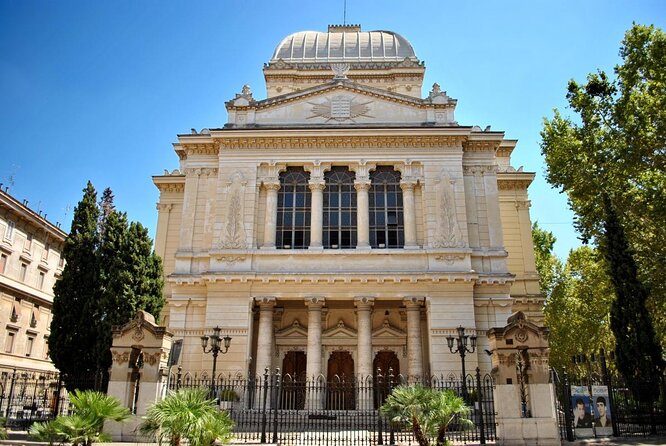
- Tempio Maggiore di Roma, constructed in 1555: The oldest Jewish ghetto synagogue, still used for prayer today.
- The ghetto “threshold” at Il Portico di Ottavia: You enter the area from the Augustus-built arcade tied to the fish market.
- Finish at Tiber Island: A great location to connect to Trastevere or the riverside.
A Private Walk Through Rome’s Jewish Ghetto, With Real Roman Landmarks
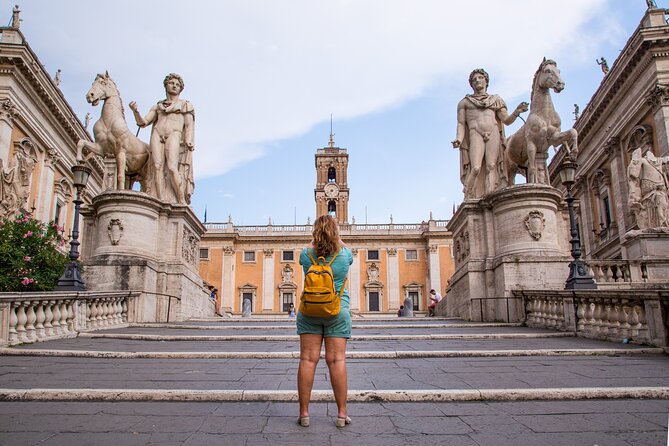
This tour works because it doesn’t treat the ghetto as an isolated page in a guidebook. You start in the broader Rome world near Foro Traiano, where you’ll see Trajan’s Column and Piazza Venezia, then you walk up toward Piazza del Campidoglio, designed by Michelangelo. That climb matters, not just for views, but for how the guide can explain Rome’s layers, from imperial power to later restrictions and community life.
The “private” part is practical, too. It’s your group only, which usually means fewer awkward gaps where someone has to catch up or ask the same question again. In past experiences with similar tours, I’ve found this format is where guides feel freer to answer follow-ups. Here, the experience is built around that, so listening gets easier because the pace matches your group.
And yes, the food stop is part of the design, not a random detour. The tour includes an authentic Italian gelato or coffee, and the route also includes a taste of traditional kosher gelato near Fontana delle Tartarughe. It’s a small pause, but it helps the history feel human.
You can also read our reviews of more walking tours in Rome


What You Get for About $84: Private Time, Gelato, and a Mobile Ticket
The price is $84.11 per person, and the duration is about 2 hours. For that amount, you’re paying for three things: a certified guide, private group time, and built-in “breaks” that keep the walk enjoyable rather than nonstop sightseeing. You’re also getting a mobile ticket, which makes check-in easier than older paper-ticket systems.
The included food is worth attention. You get authentic Italian gelato or coffee as part of the tour. On top of that, the itinerary calls for a taste of traditional kosher gelato near the Turtle Fountain area. In other words, you’re not just hearing about food culture, you’re actually tasting something connected to it.
The trade-off is that not every building you pass will have admission included. Tempio Maggiore di Roma is specifically marked as not included, so if you want to go inside, budget for that extra cost. Also, transportation to and from the meeting point is not included, so you should plan your route in advance.
From Trajan’s Column to Piazza del Campidoglio: Setting the Stage in One Smooth Start
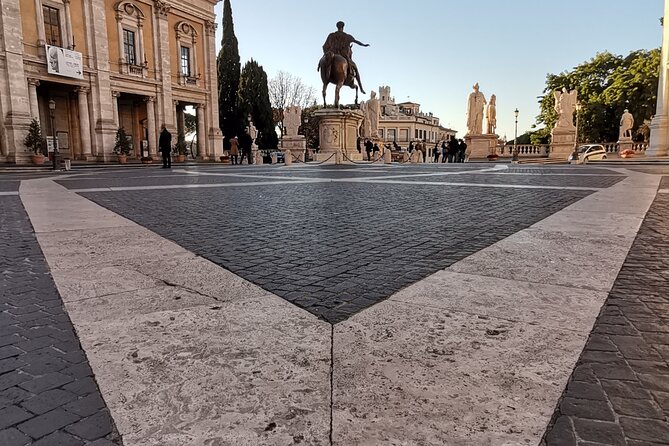
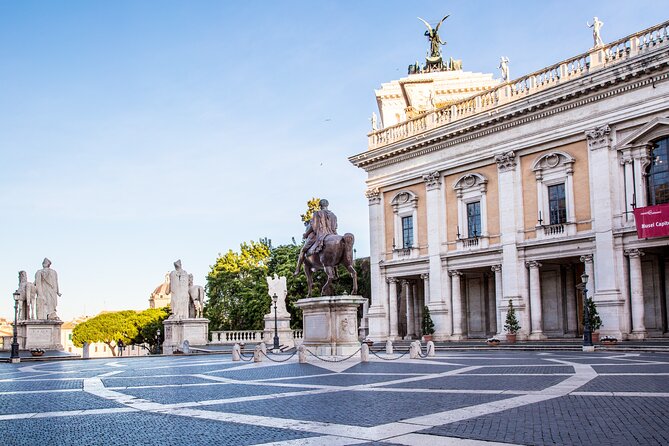
Stop 1 begins at Foro di Traiano. You start with Trajan’s Column, then you’ll see Piazza Venezia along the way. From there, you walk up gently sloping steps to Piazza del Campidoglio to see the square’s remarkable design imagined by Michelangelo, now home to the famous Capitoline Museums.
This opening segment is smart because it gives you visual anchors. Trajan’s Column is one of those Rome landmarks that instantly signals empire-scale history. Piazza Venezia adds another layer, and then Piazza del Campidoglio gives you a design-focused moment where you can appreciate how planning, elevation, and public space work together.
You’re at this stop for around 15 minutes and admission tickets for this segment are free. That combination, short time plus free access, is ideal at the beginning because it helps you orient quickly.
Teatro di Marcello: The Older “Little Colosseum” With a Residential Twist
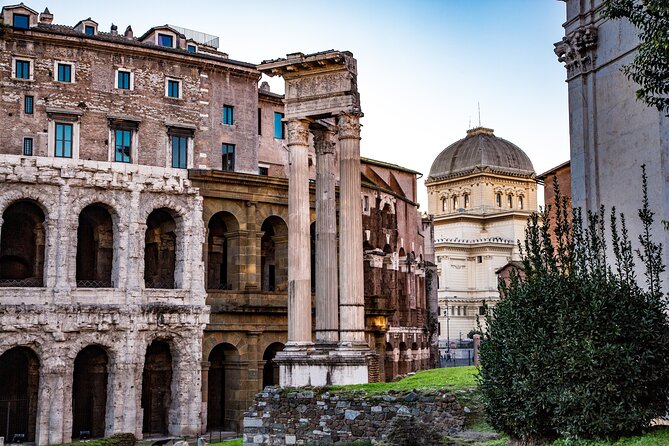
From the Capitoline area, you head to the Theater of Marcellus, often jokingly called the little Colosseum. The key detail here is age and atmosphere. This theater dates back to 12 BC, and unlike the Colosseum, it did not house blood sports. The guide also points out what the structure looks like today: it’s home to a few residents living in apartments above the theater.
That residential detail is more than a quirky fact. It’s a concrete way to understand Rome as a living city, not a theme park. You can watch how the stone stays and the lives around it change.
This stop is about 10 minutes, and admission is free. So you’re not stuck in ticket lines or museum walls. Instead, you get an architectural moment that helps the later ghetto sections feel less like an academic lecture and more like a real street-level story.
Fontana delle Tartarughe and Kosher Gelato: A Quick Taste Mid-Walk
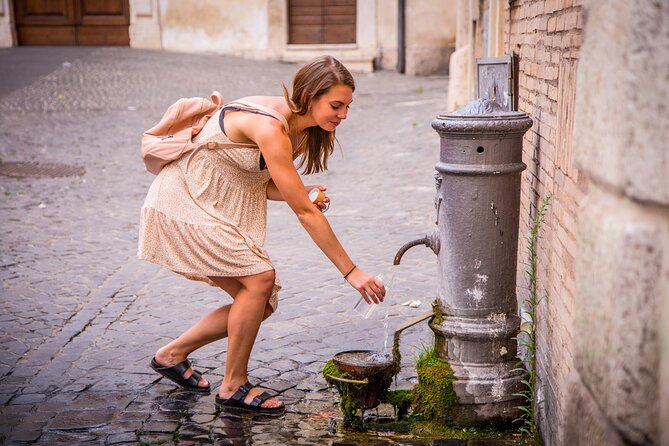
The tour takes you toward Fontana Delle Tartarughe, also known as the Turtle Fountain. This is one of those places where Rome’s artistry feels almost unfair, like it should take more time to create than it did. The itinerary notes it was famously constructed in just one day, and even if you don’t focus on the “how,” the effect is clear: it’s a playful, skill-heavy work in a city that loves both spectacle and details.
This is also where the tour pauses for food. You’ll see neighborhood restaurants and then stop for a taste of traditional kosher gelato. If you care about food culture, this is a highlight because you’re connecting culinary tradition to a specific place in the ghetto area.
It’s around 20 minutes at this segment, and admission is free. The “value” part here is that the gelato isn’t tacked on at the end. It interrupts the walk right when your brain needs a reset. I find that makes the later history stick.
You can also read our reviews of more private tours in Rome



Tempio Maggiore di Roma: The Oldest Ghetto Synagogue and a Living Community
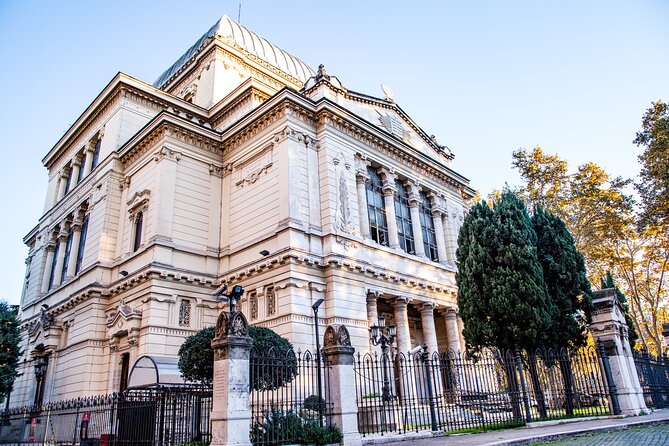
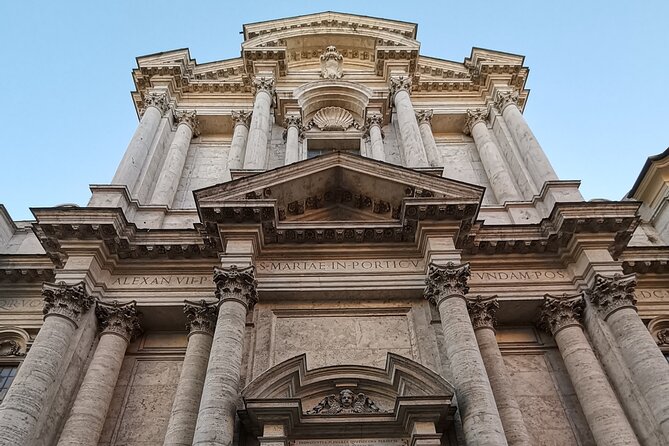
Stop 4 is the centerpiece for many people: Tempio Maggiore di Roma. The tour notes it was constructed in 1555 and is the oldest Jewish ghetto synagogue. You’ll also get important context on the legal squeeze that shaped life there. The information provided explains that the pope revoked rights granted to Roman Jews, barring them from various trades and from the ability to own real estate.
That’s heavy history, but the tour frames it alongside how the community adapted and thrived. Inside the walls, business trade developed, cuisine became a form of identity, and even language played a role, with a dialect of Italian used within the community.
There’s another key detail: the Great Synagogue still functions today as a place of prayer and as a cultural reference point for the entire Jewish community of Rome. It’s also described as the third largest in Europe, which helps you understand why this isn’t a “small local stop.” It’s a major religious and cultural site that continues to matter.
The time at this stop is about 15 minutes. Admission is not included, so expect that you might pay extra if you want to enter, depending on the rules in effect during your visit.
Practical note: if you prefer outside-only tours, you may still learn a lot from the surrounding context. But if you want the full meaning of a synagogue visit, factor in the extra ticket.
Il Portico di Ottavia to Isola Tiberina: The Ghetto Entry Point, Then the River Finale
From Tempio Maggiore, you walk to Il Portico Di Ottavia. The route is described as a short walk to the Porticus Octaviae, a large structure built by the emperor Augustus in honor of his sister Octavia. This arcade has a strong commercial association: from the 15th to early 20th century, it was home to Rome’s fish market.
Then, this is where you enter the ghetto itself, with the portico acting like a physical threshold. It’s a smart choice because it connects architecture to economics to daily life. Instead of treating the ghetto as a “museum topic,” you experience it like a place people actually moved through, shopped, worked, and lived.
Stop 6 takes you to Isola Tiberina, the Tiber Island. The tour ends there, about 15 minutes of wrap-up time. This island is a fascinating mix of ancient and modern. The information provided says ancient Romans used it as a hospital, with the river acting as a natural barrier against disease spread. Today, a major hospital still exists on the site.
You also get a view moment at the river, with Tiber Island positioned between the ghetto and Trastevere and connected by river Lungotevere routes. That makes the end point practical. If you want dinner after your walk, Trastevere is nearby, and the riverside area is often easier to navigate than the tightest lanes deeper inside the ghetto.
Admission is free for these segments. The main “cost” is walking time and your energy level.
Timing, Walking Comfort, and Who This Tour Best Fits
This experience is approximately 2 hours, and it’s designed as a compact, foot-friendly route with several short stops. That’s a good format if you’re in Rome for a short stay or you already have big museum plans later in the day.
Still, you should expect real walking. The itinerary includes a step-up from Piazza Venezia toward Piazza del Campidoglio and then a full day-of-Rome style pace through the neighborhood. If you’re dealing with mobility limitations, you’ll want to consider whether you can handle uneven sidewalks and gentle climbs. The tour is described as suitable for most travelers, and service animals are allowed, which is helpful.
Who I think will enjoy it most:
- People who like history explained with street-level context
- Visitors who want both major Rome monuments and a focused community story
- Anyone who appreciates food as a cultural signal, not just a snack
If you’re only interested in cathedrals or only want pure museum interiors, this might not hit your exact vibe. But if you want Rome in one cohesive walk, with clear links between architecture, rules, and community life, this fits nicely.
Price, Value, and the One Extra Ticket to Budget For
At $84.11 per person for about 2 hours, the value depends on what you want from a guide. If you care about learning the why behind what you see, the certified guide experience is the main value driver. The included gelato or coffee, plus the extra kosher gelato tasting moment, also makes the price feel less like “paying for talking,” and more like paying for guidance and practical comfort.
The one obvious cost wrinkle is Tempio Maggiore di Roma. Since admission is not included, you may add an extra expense if you enter. It’s not a dealbreaker, but it is the only significant “maybe cost” listed in the itinerary.
Transportation is not included either. That doesn’t change the tour’s value, but it means you should budget time for getting yourself to Foro Traiano before the start.
Should You Book This Jewish Ghetto Walk?
I’d book it if you want a guided walk where you can see major Rome landmarks and also understand how the Jewish community lived through centuries of shifting power. The route is built to connect spaces: empire-scale monuments up front, then the ghetto entry point at Il Portico di Ottavia, and finally a thoughtful end at Tiber Island.
I’d also book it for the guide-led style. In the feedback shared with the operator, guides were praised for making the history feel fun, and for giving strong context that connects the ghetto to broader Roman events across time. Names that came up include Jamie, James, and Angela, and the common thread is clear: people left feeling like the guide could answer questions and keep the walk engaging.
Skip it or reconsider if:
- You do not want to pay extra at Tempio Maggiore di Roma
- You’re not up for a walking-focused format
- You need your transportation handled for you, since it isn’t included
If you are flexible and ready for a thoughtful street-level history walk, this is a high-quality way to experience Rome with meaning, not just sites.
More Private Tours in Rome
More Walking Tours in Rome



More Tour Reviews in Rome






Not for you? Here's more nearby things to do in Rome we have reviewed












Walking Tours, compared.
 ★ 4.9Trastevere & Campo de Fiori Street Food Walking TourFrom $512,768 reviews
 ★ 4.9Paranormal Night Walking Tour & Secret BackstreetsFrom $341,921 reviews
 ★ 4.4Guided City Center Evening Sightseeing Walking TourFrom $46953 reviews
 ★ 4.5Best of Rome Walking Tour including Trevi FountainFrom $4923 reviews
 ★ 4.8Under the Moonlight Evening Walking TourFrom $28852 reviews
 ★ 4.9Forbidden History Walking Tour & Pub Crawl with DrinksFrom $61688 reviews
 ★ 5.0Guided Small Group Walking Tour of City HighlightsFrom $30682 reviews
 ★ 4.5Rome Walking Tour with Piazza Navona, Trevi Fountain and PantheonFrom $35676 reviews
Browse the lists this tour appears in