
Reviewed · MUSEUMS
Capitoline Museums Marvels Private Tour
Capitoline Hill turns marble into living Rome. This private Capitoline Museums tour is made for people who want Roman art and archaeology explained clearly by an archaeologist or art historian, not just read from labels. I love how the guide connects famous works to the people and power that made them.
I also like the pacing and “time travel” feel. You’ll move from century to century in a few steps, and you’ll get context for what you’re seeing while standing in the exact kind of spaces Rome built.
One thing to plan for: museum entry tickets are not included, and you pay on site (16 EUR adults, 14 EUR under 18). If you want everything handled in advance, that may be a minor hassle.
Key highlights to know before you go
- Private guide with a specialist: professional archaeologist or art historian plus a local guide for real context
- From Campidoglio Square to the Tiber Island area: start on Piazza del Campidoglio, finish near Tiber Island
- Michelangelo’s Capitoline layout: you’ll stroll the square designed in the 16th century
- Roman power made visible: you’ll look for the stories behind marble and bronze portraits, gods, and emperors
- Big Jupiter temple foundations: you’ll get a peek at where the largest Roman temple once stood
- If you’re into details, you’ll like this: sculpture themes include Amazons, Venus, and the dying Galata, plus a chance to spot a talking-fountain moment
Capitoline Museums on the hill where Rome reorganized itself
The Capitoline Museums sit on one of the best places in Rome to understand how the city thinks. You’re on Capitoline Hill, where religion, politics, and image-making all lived close together. The tour is designed to help you read the museum like a roadmap through Roman ambition, from early roots to emperors who wanted to look eternal.
The private format matters here. A group tour can speed past the big questions. On this one, your guide can slow down for the parts you actually care about, whether that’s sculpture techniques, Roman mythology, or how everyday elites dressed and lived.
If you’re the type who enjoys archaeology as story, not just facts, this is a strong match. You’re not only walking rooms, you’re learning how Rome used art to say, we were here, we matter, and we rule.
You can also read our reviews of more private tours in Rome


Private guide with an archaeologist or art historian, and why that’s worth it
This tour comes with a professional archaeologist or art historian guide, plus local guidance. That setup changes the feel fast. Instead of the museum being a list of objects, you get an explanation of what each piece was doing for Rome. Art historians tend to connect style, symbolism, and workshop choices. Archaeologists tend to connect objects to buildings, daily life, and what we can infer from the ground.
In plain terms, you’ll get a guide who can answer the “what am I looking at?” question without hand-waving. One past guide named Serena was especially praised for being patient, funny, and helpful, even arranging extra support for people with mobility needs. Even if you do not get Serena, the key point holds: the tour is built around a knowledgeable guide who treats your pace and questions as part of the plan.
I also like that it’s private. You can ask, pause, and reframe. If one statue grabs you, you can linger without the whole group waiting on you.
Meeting at Campidoglio Square, then stepping into the museum’s world
You start at Piazza del Campidoglio, also called Campidoglio square. It’s a central meeting spot and a smart way to begin, because it puts you immediately in the zone where the city’s “main ideas” are on display.
Your tour ends near Tiber Island. That matters for planning your afternoon or morning. After 2 hours 30 minutes, you’re not stuck back on the far side of the hill wondering how to reach your next stop.
Plan to arrive a bit early to get your bearings. The area around the Capitoline Museums is busy, and you’ll want your head in “Rome context” mode before the guide starts linking artworks to the city.
Musei Capitolini: moving by centuries, not just rooms
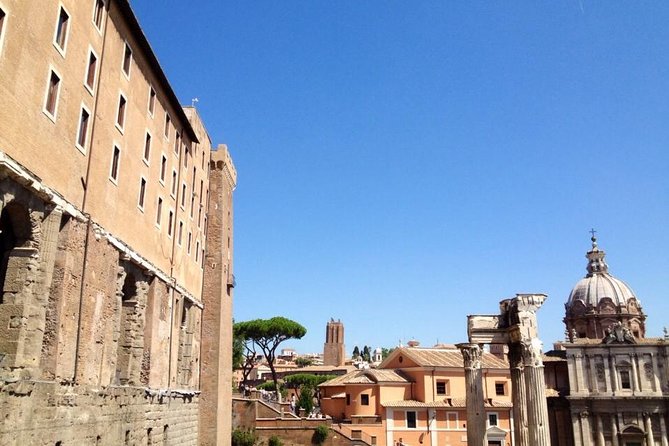
The main stop is Musei Capitolini. This is one of the most important museums for understanding the story of Rome, and it’s located right where the city visually organized itself around power. The big win on this tour is the way it helps you connect what you’re seeing to what Rome wanted people to believe.
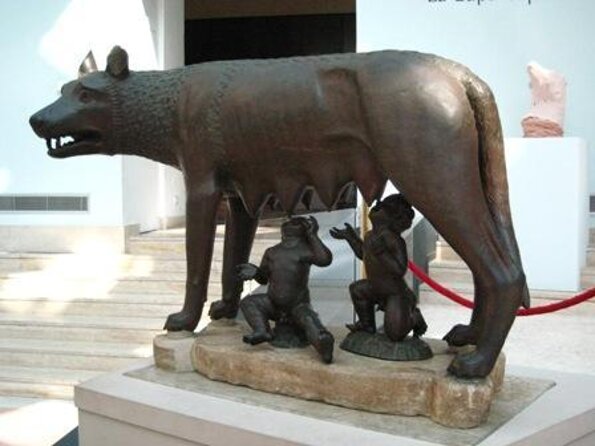
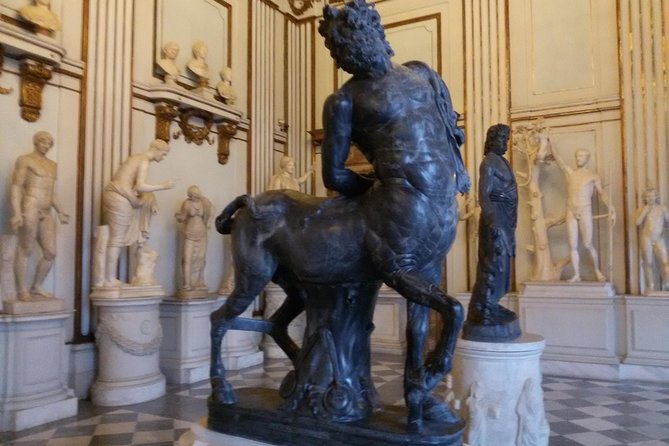
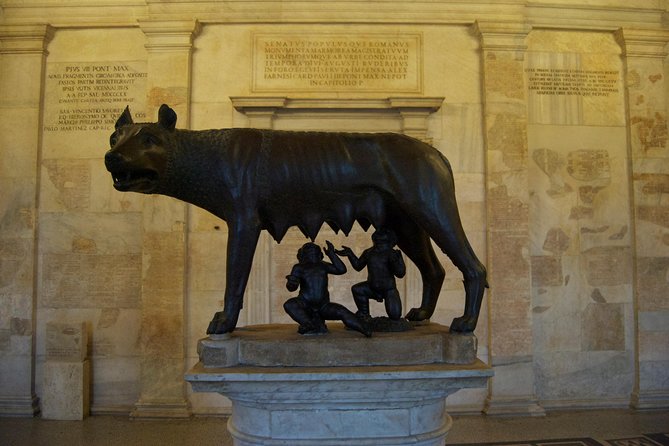
The guide takes you through scenes and figures that feel like characters in a political drama. You’ll see marble and bronze figures representing generals, philosophers, senators, heroes, gods, and emperors. The point is not only to admire their craft. The point is to understand why Rome invested in these images and how they helped people rank themselves within society.
A nice bonus of the approach is how “close reading” makes the museum faster, not slower. When you know what to look for, you spend less time guessing and more time understanding. And yes, you’ll go from one century to another in a few steps, which can feel like cheating if you’ve ever tried to do this museum on your own.
What you might notice if you like detail
As you move through, watch how the guide frames body language and material. Bronze and marble weren’t just decorative. In Roman culture, they were tools for authority and memory. If you’re the kind of traveler who enjoys art as communication, you’ll have a lot to work with here.
You can also read our reviews of more museum experiences in Rome




Michelangelo’s Capitoline Square: views plus meaning
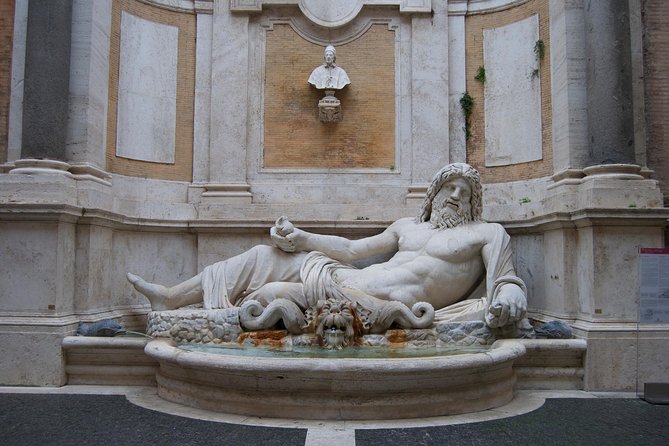
One of the tour highlights is a stroll through the square at the top of Capitoline Hill, designed by Michelangelo in the 16th century. This isn’t just sightseeing. The square is part of how the modern city “stages” the ancient city.
You’ll get a sense of why the location is so important. The hill naturally gathers attention, and Michelangelo’s layout channels that attention into a coherent space. Even if you never studied Renaissance design, you can feel the intention in how the square frames the view and the museum area.
This stop is also a practical reset. After time inside galleries, stepping out into open air helps your brain organize what you’ve just learned.
The wounded Amazon, Venus, and the dying Galata, what they teach you
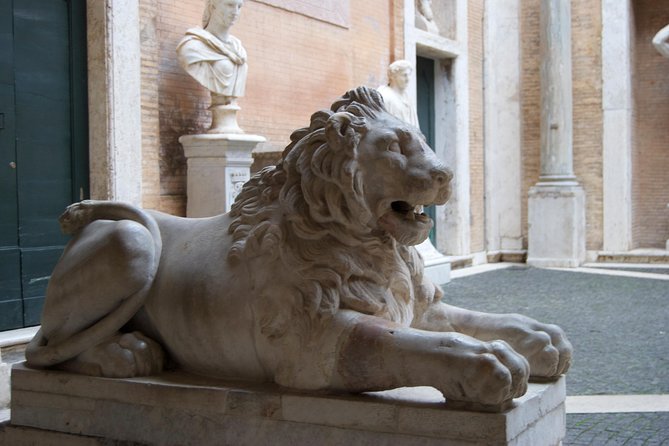
The museum sequence includes famous themed artworks tied to Roman tastes for myth and emotion. The tour specifically points you to standout subjects such as the wounded queen of the Amazons, the seductive Venus, and the dying Galata.
Here’s why I think those names matter. Mythological figures let Rome talk about power, desire, fear, and fate without saying it directly. A statue showing someone wounded or dying is not only “sad art.” It’s also a statement about strength, vulnerability, and what an audience should feel when it looks.
Venus works in a slightly different way. When guides point you to a seductive Venus, they’re usually connecting beauty to politics and public messaging. Rome didn’t keep art and identity separate.
And the dying Galata often draws attention because it makes tragedy physical. The emotion reads immediately, even if you’re not fluent in the myth. A good guide uses that first emotional hook to explain the cultural framing behind it.
A small bonus: the talking-fountain moment
One review noted a talking fountain moment. The tour does not spell it out in the headline list of stops, but since it’s connected to the museum experience, it’s worth keeping your eyes open for moments like that while you’re there. It’s the kind of detail that makes the museum feel less like a checklist and more like a living place.
Jupiter temple foundations: learning power from what remains
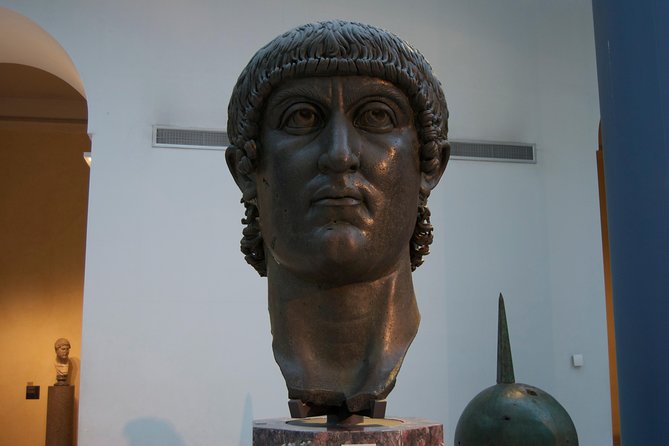
A highlight of this experience is a peek at the foundations of the largest Roman temple in the ancient world, dedicated to Jupiter. Even if you’re not a hardcore architecture person, foundations teach you something.
Walls and statues are easier to understand. Foundations show the skeleton of a city. They help you imagine scale and the kind of ceremonies that must have happened there. When a guide walks you through what remains, you start seeing the museum and the hill as one system, not separate attractions.
This is where the “archaeology guide” angle shows up most. Instead of only describing art, the explanation ties art to the buildings and rituals that shaped who mattered.
Everyday life for upper classes, not just big names
Rome often gets taught as emperors, wars, and “great men.” This tour includes a different angle too: the elegant everyday life of the upper classes. That’s crucial, because it keeps the museum from becoming only a parade of monuments.
When you hear about daily life, you start noticing how art, clothing, furniture, and space work together as a social signal. You also learn that “Roman greatness” was not only something you did in battle or politics. It was also something you performed at home and in public.
If you like archaeology that feels human, this portion is a real plus.
Timing and pace: morning or afternoon options
Tours are offered in morning or afternoon time options. That’s not just convenience. It also changes your light and energy.
If you prefer to see museums while your brain is fresh, choose morning. If you like a slower start and want to fit sightseeing after a meal, afternoon works well too. Either way, you’re looking at about 2 hours 30 minutes, so you can realistically pair it with other sights without burning your whole day.
Who this tour suits best, and who might want a different format
This private tour is a great fit if:
- You care about archaeology and art history as one story.
- You want an expert to explain sculpture themes in a way you can actually follow.
- You like flexibility, asking questions as you go.
- You want a structured route through Musei Capitolini without speed-walking.
You might want a different approach if:
- You hate paying ticket fees on site and want everything prepaid.
- You want a long museum day. This is 2 hours 30 minutes, so it focuses your time on the big, teachable highlights.
- Your group does not care about context and just wants quick photo stops.
One more note on mobility: a past guide arrangement included ramps and elevator access, and even coordinating close-by taxi pickup near the museum exit with police permission. That suggests the guide can be proactive when accessibility challenges come up. Still, it’s smart to tell your operator what you need ahead of time so expectations stay realistic.
Price and value: what you pay, and what you get back
The tour includes the professional guide (archaeologist or art historian), plus local guidance, and it’s private. The only clear add-on you must budget for is museum admission.
Museum entry is paid on site: 16 EUR per adult and 14 EUR for under 18. That might surprise you if you expected the “tour price” to cover everything. Still, I like how this works for many travelers. You can keep your planning simple, then pay the museum fee right when you arrive.
Value comes down to the specialist brain you get for your time. For a museum that can feel overwhelming, a guide helps you make choices fast: what to prioritize, what to notice, and what each piece is trying to say. If you’re the kind of traveler who reads slowly and asks questions, private time is often cheaper than it seems, because it prevents wasted hours in rooms that don’t click for you.
Also, private doesn’t just mean exclusivity. It means the guide can adjust pacing if your group has questions, needs breaks, or simply wants to linger near a statue a little longer.
Should you book this Capitoline Museums Marvels Private Tour?
I think you should book it if you want a Roman art and archaeology tour that feels like a guided lecture you can walk through, not a rushed museum sprint. The combination of a specialist guide, the mix of iconic sculpture subjects, and the added context of Michelangelo’s Capitoline Square and the Jupiter temple foundations gives you a strong “big picture” for one of Rome’s best cultural neighborhoods.
Book it now if:
- You’re spending only a limited number of hours on Capitoline Hill and you want high return on that time.
- You care about understanding Rome’s politics and identity through what artists and archaeologists left behind.
- You want the comfort of a private plan that matches your pace.
Skip it or switch plans if:
- You want a totally self-guided museum day.
- You dislike paying admission fees on site.
- Your group prefers broad sightseeing over explanation.
If you want Rome to make sense, this is a smart use of 2.5 hours. You’ll leave with a clearer idea of how Roman power looked, sounded, and got remembered through art and stone.
FAQ
How long is the Capitoline Museums Marvels Private Tour?
The tour lasts about 2 hours 30 minutes.
Where do I meet the guide, and where does the tour end?
You start at Piazza del Campidoglio (Campidoglio square) in Rome. The tour ends near Tiber Island.
Are the museum tickets included in the tour price?
No. Entry tickets are not included and are paid on site. The cost is 16 EUR for adults and 14 EUR for under 18.
What language is the tour offered in?
The tour is offered in English.
Is this tour private or shared?
It’s private. Only your group participates.
What is the cancellation policy if I need to change plans?
You can cancel for a full refund if you cancel at least 24 hours before the experience starts. If you cancel less than 24 hours before the start time, the amount paid is not refunded.
More Private Tours in Rome


More Tours in Rome



More Tour Reviews in Rome

Not for you? Here's more nearby things to do in Rome we have reviewed












Museums, compared.
 ★ 4.5Vatican: Museums & Sistine Chapel Entrance TicketFrom $38144,003 reviews
 ★ 4.3Vatican Museums & Sistine Chapel Tour with Optional BasilicaFrom $7967,413 reviews
 ★ 4.5Vatican Museums, Sistine Chapel & St Peter’s Basilica Guided TourFrom $2239,149 reviews
 ★ 4.3Vatican Museums, Sistine Chapel & Basilica TourFrom $13013,872 reviews
 ★ 4.4Vatican Museums & Sistine Chapel Skip-the-Line Entry TicketFrom $4313,838 reviews
★ 4.7Vatican Museums, Sistine Chapel & Basilica TourFrom $7213,217 reviews
Vatican Museums & Sistine Chapel Guided TourFrom $11812,117 reviews
 ★ 4.2Vatican Museums & Sistine Chapel Skip-The-Line TicketFrom $4111,708 reviews