
Reviewed · ANCIENT ROME TOURS
Appian Way and Aqueducts Electric Bike Tour
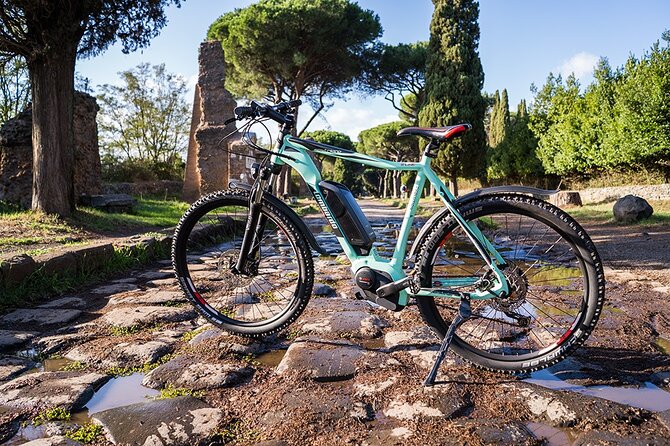
Rome feels bigger once you’re on a bike. This half-day electric bike tour sends you out of central Rome along the Appian Way and through aqueduct parks, with stops that pair major ruins like the Baths of Caracalla and Circo Massimo with calmer green valleys. I love the electric bikes that make these sights actually manageable in one afternoon, and I love how the ride stays organized with an expert guide. The main catch is the terrain, some parts can feel bouncy and rocky even with pedal assist.
You’ll start at Via dei Cerchi 59 and ride with an English-speaking guide in a small group capped at 10 riders. Expect helmet use (included) and a phone holder, which sounds small until you want both hands free for photos and directions. Confirmation comes at booking, and you’ll use a mobile ticket.
This is for people with moderate physical fitness and basic bike skills. It’s not recommended for kids under 12, and if you don’t already know how to ride a bike, you’ll likely struggle with the uneven bits. Food and drink are not included, so plan your own water and snacks, or budget for breaks along the way.
Key highlights to look forward to
- An expert English guide who keeps the group safe and paced, including smooth navigation away from busy streets
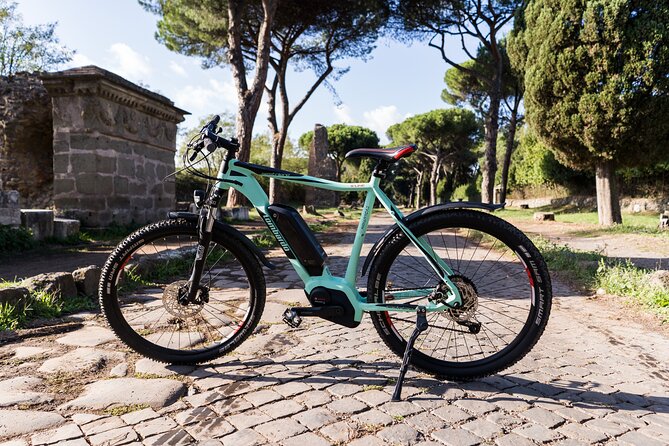
- Quality e-bikes, helmets, and a phone holder so you can focus on the route and the views
- Big name monuments in one shot, from Circo Massimo to Porta San Sebastiano and the Circus of Maxentius
- Appian Way plus aqueduct parks, so it’s not only stone, it’s also real green space
- Egeria at Ninfeo di Egeria, where myth and ritual history get explained in plain terms
- Small group size (max 10), which helps you get time at each stop without feeling rushed
Why the Appian Way by electric bike beats a museum day
The Appian Way has a way of making Rome feel less like a postcard and more like a place you can walk into. On this tour, the payoff is speed plus variety. You get to cover ground along ancient routes and then slow down in parks where aqueducts, tombs, and countryside paths sit side by side.
What makes it work for real life is that you’re not doing this on pure willpower. The e-bikes handle the effort, so you can enjoy the history instead of grinding through climbs. That is a big deal in Rome, where hot afternoons, uneven stone, and crowds can turn a good plan into a long day.
The other big plus is the guide. Guides such as Monica and Adriana show up in different runs, and the common thread is clear, easy English, organized pacing, and attention to rider safety. You’re not left to guess the route while traffic noise and turning points pull your focus.
You can also read our reviews of more cycling tours in Rome


Getting set up at Via dei Cerchi 59 (and what that means for you)
The tour starts at Via dei Cerchi 59, 00186 Rome, and ends back at the meeting point. That round-trip structure matters because you avoid the stress of figuring out how to get back after you’ve spent your energy riding.
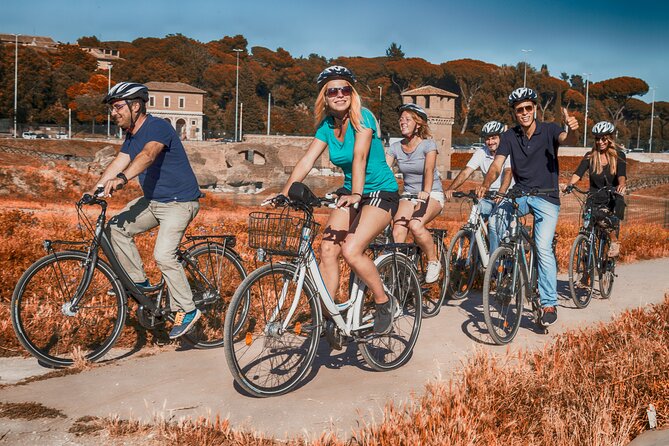
Before you roll, you’re fitted with a quality e-bike in multiple sizes, and you get a helmet plus a phone holder. If you’re a first-time e-bike rider, that setup helps a lot. You can keep your phone secure for navigation or photos, and the bike feels stable enough for the stop-and-start nature of the route.
One more practical detail: the group is capped at 10. That means the guide can actually manage spacing and safety without everyone piling up behind the slowest rider. In practice, it makes the tour feel more like a focused ride with stops, not a line-walking exercise.
Circo Massimo: starting with the scale of Roman spectacle
You kick things off at Circo Massimo, the ancient chariot-racing stadium in the valley between the Aventine and Palatine hills. This is the kind of Roman site that is hard to picture from a photo, but the setting helps you understand the ambition. It was the first and largest stadium in ancient Rome, measuring 621 meters long and 118 meters wide, and it could hold over 150,000 spectators.
What I like about this opening stop is that it sets the theme. Rome’s power shows up here as engineering plus entertainment, and it gives you a mental map before you move deeper into the Appian Way world. It’s also a quick stop, around 10 minutes, so you get the context without burning too much time early.
If there’s a drawback, it’s simply expectations. Circo Massimo is enormous in concept, but you may not find every detail feeling dramatic at a glance. Give yourself a minute to look out across the space, and ask your guide to point out what the scale looked like in use.
Terme di Caracalla: the Roman baths stop that hits like a time machine
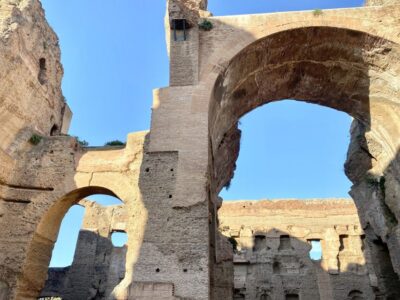
Next up is Terme di Caracalla, the Baths of Caracalla. These were the city’s second largest public baths after the Baths of Diocletian. They were built around AD 212 or 211 through 216 or 217, under Septimius Severus and Caracalla, and they stayed in operation until the 530s before falling into ruin.
This stop works especially well on an e-bike tour because baths are not just “ruins.” They’re whole complexes with spaces that make you think about movement, social life, and daily routines. Even if you only spend about 20 minutes here, your guide can connect what you’re seeing to how Romans used these public spaces.
One practical note: the Baths of Caracalla are listed as not included for admission ticket. So budget for that separate cost if you want to go inside fully or meet any entry requirements tied to the site.
Porta San Sebastiano: a best-preserved gate on the Aurelian Walls
From big imperial spaces, you shift to a defensive landmark: Porta San Sebastiano, one of the largest and best-preserved gates through the Aurelian Walls. That matters because gates are more than entrances. They’re where Rome controlled movement and shaped what travelers and locals could access.
You typically get about 20 minutes at this stop, and it’s a nice breather between heavier ruins. It also pairs well with what comes next, because the Appian Way story continues through the idea of routes leaving the city.
Admission is listed as free here, so you can spend time reading the structure without worrying about a ticket line taking over your schedule.
A few more Rome tours and experiences worth a look

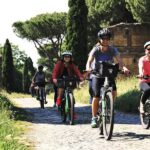



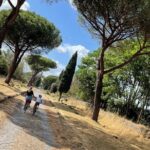
Catacombs of Saint Callixtus: history underground on a pedestrian-feeling stretch
Then you head to the Catacombs of Saint Callixtus, located on the Appian Way. The catacombs are described as being in a very nice, almost pedestrian area, which is a big quality-of-life point. After riding, you want a calm area to transition your brain from motion to quiet.
You’ll usually have about 30 minutes here. This is long enough to take in the atmosphere and hear the guide’s context, without feeling like you’re stuck waiting for a group shuffle.
Admission is listed as free for this stop, which is great for value. Still, it’s smart to keep your expectations grounded. Catacombs are about mood and meaning, not flashy exhibits. If you go in ready to listen, you’ll likely get the most out of it.
Circus of Maxentius: an ancient track you can almost feel
Next, you’ll visit the Circus of Maxentius, part of a complex built by Emperor Maxentius on the Via Appia between AD 306 and 312. You get around 20 minutes here, and this stop is a good rhythm change from the darker catacomb experience.
This is also one of those sites where the guide’s storytelling helps you see what you might miss on your own. The shape and purpose of a circus makes more sense when someone explains how races, crowds, and the city’s worldview connected to these spaces.
Admission is listed as free. That makes it a low-friction stop, so it’s easier to stay in the flow rather than constantly checking what costs extra.
Caecilia Metella and the Quintilii villa: tombs and wealth on the Appian line
After the circuses, you move into monuments that show how the Appian Way functioned as more than a road. It became a stage for status, memory, and architecture.
First is Mausoleo di Cecilia Metella e Castrum Caetani, with the highlight being the Tomb of Caecilia Metella. It’s one of the best-preserved monuments along the Via Appia and was built in the 1st century BC to honor Caecilia Metella, daughter of Quintus Caecilius Metellus Creticus. You’ll typically spend about 20 minutes here.
Admission is listed as not included, so this is another place where you may need extra budget depending on how entry works for your specific date and timing.
Then comes Villa dei Quintili e Santa Maria Nova, including the Villa of the Quintilii beyond the fifth milestone along the Via Appia Antica. This villa was built by the rich and cultured brothers Sextus Quintilius Valerius Maximus and Sextus Quintilius Condianus, consuls in 151 AD. You’ll usually have about 30 minutes at this stop.
Admission is also listed as not included here. The upside is that, between the tomb and the villa, you get a sense of how the Appian Way pulled together public power and private prosperity in the same corridor.
Parco degli Acquedotti and Parco della Caffarella: riding into Rome’s green breathing space
This is where the tour becomes more than ruins on a list. You spend significant time in outdoor parks that keep the experience feeling human scale.
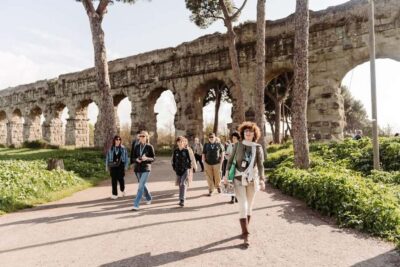
In Parco degli Acquedotti, the park is named after the aqueducts that run through it. You’ll cross areas touched by Aqua Felix and also see part of the Aqua Claudia, along with the remains of Villa delle Vignacce. There’s even a short stretch of the original Roman Via Latina visible. This stop usually takes about 40 minutes, and that time matters. It gives you a chance to pause, look upward at the aqueduct lines, then remember that these structures were designed to move water, not just impress people.
Admission is listed as free, so it’s another value-friendly stop.
Next is Parco Della Caffarella, part of the Parco Regionale Appia Antica. This is a large park in the heart of Rome, and the Caffarella Valley is bordered by Via Latina on the north and the Appian Way on the south. You typically get about 30 minutes here.
Admission is listed as free as well. For you, this means a real break from stone surfaces and crowd density. If you like your Rome days to feel like you stepped out of the city grid for a while, this park segment is a big reason to choose the e-bike format instead of another guided bus plan.
Ninfeo di Egeria: the myth stop that turns into a ritual lesson
You close with Ninfeo di Egeria. Egeria is a nymph tied to a legendary role in Rome’s early history, described as a divine consort and counselor of Numa Pompilius, the second king of Rome. In the stories, she teaches laws and rituals tied to ancient Roman religion. Her name becomes the eponym for a female advisor or counselor.
You’ll have about 20 minutes here, and it’s one of the smartest “wrap up” stops on the route because it ties the day’s themes together. You’ve seen roads, public structures, burial places, and water infrastructure. Now you get the human layer, the idea that Rome explained its world through stories as much as through stone.
Admission is listed as free. That helps you end the tour with a calm, thoughtful note rather than another cost or logistics check.
The rocky-road reality: what to do so the ride stays fun
Let’s talk terrain, because it shows up in real feedback. Even on electric bikes, the route includes rough and sometimes rocky paths. The Appian Way can feel bouncy, and you should be prepared for uneven stone and dirt sections.
How to handle it:
- Wear closed-toe shoes with grip, not slick sandals
- Keep a relaxed grip on the bars, let the bike move under you
- Slow down before you hit uneven patches, don’t rush the transition from smooth road to ancient stone
- If you’re new to cycling, practice starting and stopping smoothly before the tour pace picks up
The upside is that the e-bikes do what they’re supposed to do. They reduce strain on your legs so you stay focused on looking around and listening to the guide. And in small-group conditions, you’re less likely to feel rushed or forced to chase the rider ahead of you.
Guides are also tuned to rider confidence, with attention described as organized and safety-first in multiple runs. If your comfort level dips, you can expect the guide to notice and manage the pace accordingly.
Food, timing, and how to plan the rest of your Rome day
This tour runs about 4 hours. That makes it a strong option for the middle of a trip, especially if you want one afternoon that feels like Rome without being trapped in the densest sightseeing zones.
Food and drink are not included. That affects your planning in a simple way: bring a small snack and water if you can, or plan to use drink breaks built into the ride. One of the nice things is that the day includes pauses for sights, so you’re not cycling non-stop.
Also, book early. This experience is typically reserved around 68 days in advance on average. Rome has limited inventory for good half-day activities, and e-bike tours can fill when the weather looks decent.
Price and value: is $90.02 worth it for 4 hours?
At $90.02 per person, you’re paying for three things at once:
- A quality e-bike rental, plus helmet and phone holder
- An English-speaking guide to connect the sites into a coherent story
- Access to a route that would take much longer to cover on foot or by taxi between spread-out stops
Value improves because many stops are listed with admission ticket free. You’ll typically see Circo Massimo, Porta San Sebastiano, Catacombs of Saint Callixtus, Circus of Maxentius, Parco degli Acquedotti, Parco Della Caffarella, and Ninfeo di Egeria with free admission listed in the tour data.
What is not included, based on the provided info, are admissions for Terme di Caracalla, Mausoleo di Cecilia Metella e Castrum Caetani, and Villa dei Quintili. That means your final out-of-pocket cost might be a bit higher than the base price if you plan to enter those paid sections.
Still, even with those add-ons, the structure is efficient. You’re getting a half-day outdoors with real movement, real Roman monuments, and guided context, not just a quick photo stop bus circuit.
Who should book this Appian Way and Aqueducts e-bike tour
This tour is a great fit if you want:
- A half-day outside central Rome, but still guided and easy to follow
- A mix of major ruins and park time, not only buildings
- A practical way to cover distance without feeling wrecked
It’s not the best choice if you:
- Don’t ride a bike comfortably
- Prefer smooth pavement only
- Are traveling with young kids under 12
If you’ve never been on an e-bike before, it can work, as long as you’re willing to practice control at low speed and accept that the terrain includes bumpy stretches.
Should you book this tour?
Yes, I think you should book it if your ideal Rome day includes moving through real spaces, not only standing and staring. The Appian Way and aqueduct parks are exactly the kind of setting where an e-bike shines, and the combination of major landmarks plus myth and ritual context makes the time feel full.
I’d hesitate only if rocky paths make you nervous, or if you’re looking for a gentle, flat walking tour. If you can ride a bike and you’re okay with uneven ground, this is one of the most practical ways to get off the main map and feel Rome’s older layers close up.
FAQ
How long is the Appian Way and Aqueducts electric bike tour?
It runs about 4 hours.
Where does the tour start, and where does it end?
It starts at Via dei Cerchi, 59, 00186 Roma RM, Italy, and ends back at the meeting point.
What is the price per person?
The price is $90.02 per person.
Is the tour guided, and is it offered in English?
Yes. The tour is offered in English.
What is included in the tour price?
The included items are several sizes of quality e-bikes, a helmet, and a mobile phone holder.
Is food or drink included?
No. Food and drink are not included, and tips are also not included.
Do I need tickets for the stops?
Some sites are listed as free for admission, while others are listed as not included. The Baths of Caracalla, Mausoleo di Cecilia Metella e Castrum Caetani (Parco Archeologico dell’Appia Antica), and Villa dei Quintili e Santa Maria Nova (Parco Archeologico dell’Appia Antica) are listed as not included.
Who is the tour not recommended for?
It is not recommended for kids under 12 and not recommended for people who do not know how to ride a bike. You should have a moderate physical fitness level.
How big is the group?
The tour has a maximum of 10 travelers.
What is the cancellation policy?
You can cancel for free up to 24 hours in advance for a full refund. If you cancel less than 24 hours before the start time, the amount paid is not refunded.
More Cycling Tours in Rome
More Tours in Rome






More Tour Reviews in Rome

Not for you? Here's more nearby things to do in Rome we have reviewed












Ancient Rome Tours, compared.
 ★ 4.7Colosseum: Underground and Ancient Rome TourFrom $16012,691 reviews
 ★ 4.4Colosseum, Ancient Rome Tour or Self AudioGuided TourFrom $392,866 reviews
 ★ 4.9Appian Way, Catacombs, & Roman Aqueducts E-bike TourFrom $851,421 reviews
 ★ 4.9Appian Way E-bike Tour with Catacombs, Aqueducts & FoodFrom $961,210 reviews
 ★ 5.0Appian Way Aqueducts Bike Tour (Catacombs & Lunch Option)From $78975 reviews
 ★ 4.7Appian Way, Aqueducts, and Catacombs TourFrom $64942 reviews
 ★ 4.7Caracalla Baths & Circus Maximus — Private or SharedFrom $77835 reviews
 ★ 4.7Colosseum Arena Access and Ancient Rome Guided TourFrom $94774 reviews
Browse the lists this tour appears in