
Reviewed · ANCIENT ROME TOURS
Rome: Appian Way and Roman Countryside Electric Bike Tour
The Appian Way feels ancient in your legs. This half day ride trades Rome traffic for a guided spin along Regina Viarum and the e-bike makes the hills and old cobbles feel manageable. I love how you get real context for the road’s mix of power, tombs, and faith, and I also like that the route includes both the aqueducts area and the Caffarella park countryside. One drawback to weigh: a small number of days may not include the catacombs entry as you hoped, and any e-bike battery issue can spoil the flow.
Leaving Via di S. Calisto behind, you pedal into countryside that helped shape how 19th century writers imagined Rome. If you want photos, history, and a break from the city’s constant motion, this tour is a strong fit, especially with guides like Emiliano or Libero guiding the story in a human, paced way.
Key reasons this e-bike Appian Way tour works
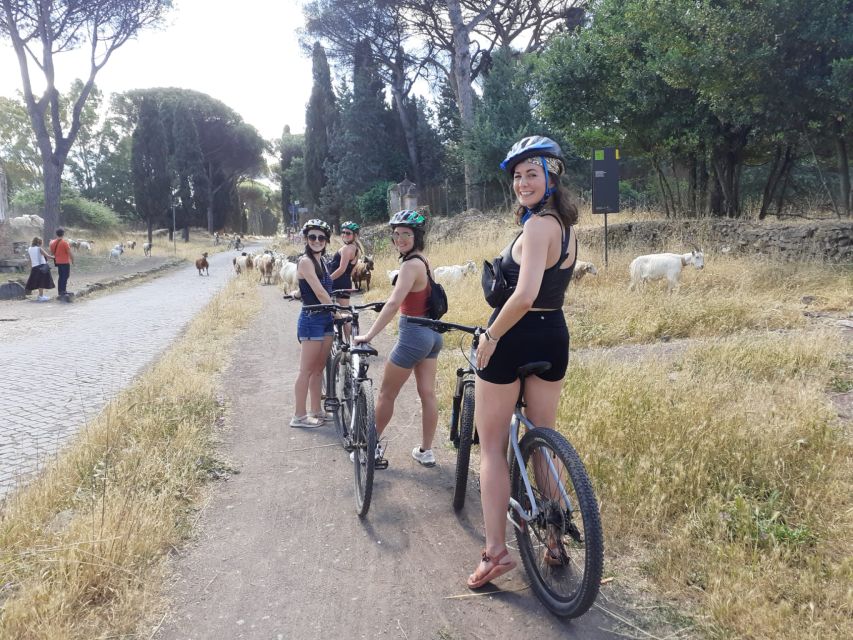
- E-bike power on real ancient paving, so you can cover ground without suffering
- A guide who ties sites together, from military logistics to mausoleums and catacombs
- Two aqueducts still in excellent condition in the Aqueducts Park area
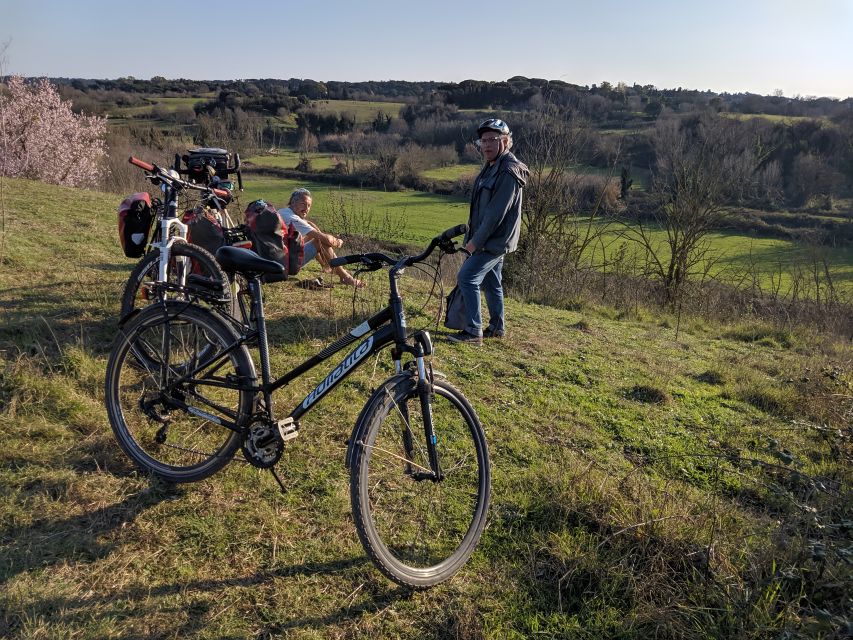
- Caffarella Park return ride, with archaeological sites plus a working farm feel
- English, French, Italian, Spanish guided narration to match your comfort level
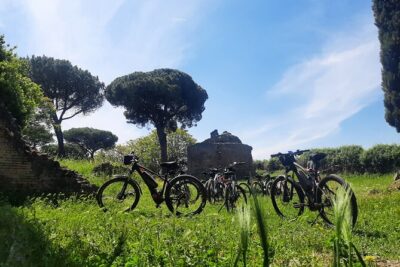
- Helmet and e-bike included, which makes it easier to travel light
Why the Appian Way is more than a famous street
The Appian Way, also called Regina Viarum, is one of those Rome experiences where the subject matters even before you see it. Built in the 4th century BC, it started as a practical transportation route for moving military supplies. Later, it became a prestige address, with important families building tombs and mausoleums right along the road.
On this tour, that history is not just a trivia list. You’re taught to see the road as a corridor where different kinds of power lined up. Political and military authority ran through it. Religious power followed as Christianity grew, showing up in the catacombs. Pagan burial culture also appears through mausoleums and monuments you pass.
That framing changes how you look at the scenery. Instead of just cobblestones and ruins, you start noticing why the road’s placement and scale mattered. And you feel the time shift as you ride from Rome’s edge into a quieter, more open setting.
You can also read our reviews of more cycling tours in Rome


Meeting at Via di S. Calisto and getting your bike sorted
You meet at Via di S. Calisto, 9, and you’ll want to arrive about 15 minutes early. That buffer matters, because the tour includes e-bikes and helmets, and you need a quick moment to get comfortable before you roll out.
The big practical question is your riding comfort. This tour is not suitable if you can’t ride a bike. If you can handle a standard bicycle, the e-bike support reduces the strain on hills and makes the ride easier over uneven surfaces.
I also suggest bringing an ID or passport. A copy is accepted, so you do not need the original document. Just have something workable in your pocket, because that’s what the activity asks for.
What a 4-hour ride really feels like on the Appian Way
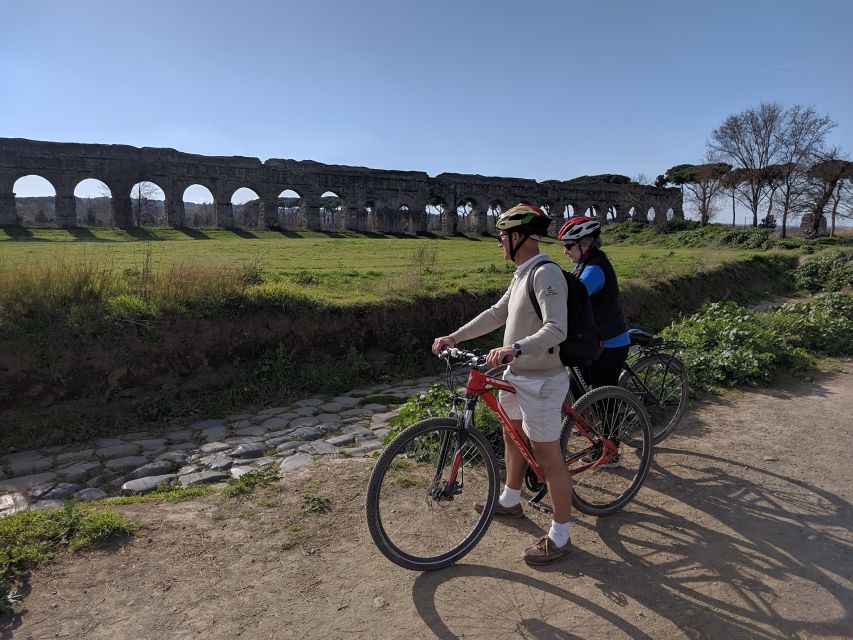
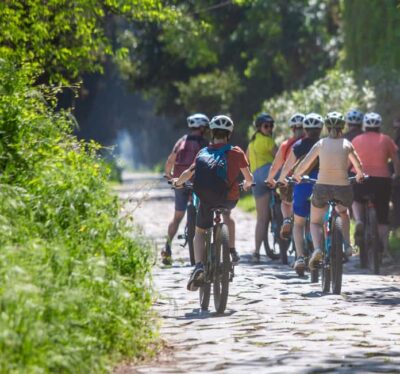
This is a 4-hour experience, and it’s designed for pace. You are not sightseeing at a snail’s pace, but you also aren’t rushed through with zero context. The guide keeps the ride moving while still making time for stops to look closely and take photos.
One useful detail from past experiences: you should be prepared for roughly 20 miles of riding. With an e-bike, that distance usually feels doable, but it is still a real ride. Wear clothing that lets you sit comfortably and move your legs without worrying about constant changes. Short rides are fine, but this one adds up.
You’ll also be dealing with cobblestones and some hills. The e-bike helps a lot, but comfort still comes down to your shoes and clothing. I recommend more athletic footwear rather than flimsy sandals, and comfy riding shorts tend to work better than restrictive layers.
Regina Viarum stops: ruins, statues, and the story behind the monuments
As you pedal along Regina Viarum, you see ruins and monuments that were built to last, because the road itself was meant to last. The tour description includes ancient Roman ruins, statues, and both Christian and pagan burial sites.
One highlight is the mix of official and private grandeur. You’ll encounter an imperial palace in the route plan, which gives you the “big government” side of the road. Then, as you continue, the story shifts toward the “memorial city” aspect, where tombs and mausoleums sit close enough to the road that passing traffic stays connected to the dead.
This is where a good guide really helps. Without commentary, you might treat the sites as random stops. With the narration, you learn how the road functioned as a public space with private meaning. The monuments are not just impressive. They are part of how Romans advertised status, faith, and family power.
Imperial palace energy: why this part matters
The inclusion of an imperial palace area is not just a box check. It anchors the road’s civic role. The Appian Way wasn’t only for people walking to tombs. It also supported the movement of leaders, soldiers, and goods that kept the empire running.
When you understand that, you start to see the road’s scale differently. It’s not a narrow alley of history. It’s a long system, built for flow. That perspective also makes the burial monuments feel more intentional. If the road carried people past those tombs every day, then those monuments were never meant to be forgotten.
A few more Rome tours and experiences worth a look



Catacombs and mausoleums: Saint Callixtus and Saint Sebastian
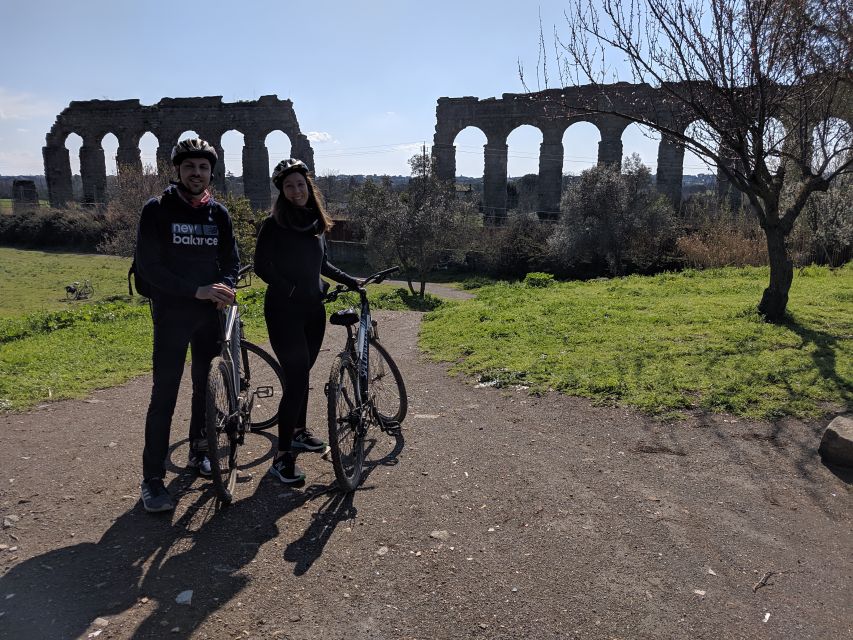
A major reason to book is the chance to connect architecture and belief. The tour plans stops tied to Christian catacombs, including Saint Callixtus and Saint Sebastian. You also pass pagan mausoleums as you go.
This mix is powerful because it shows the timeline of Rome’s spiritual changes without making you read a textbook. You are seeing how burial spaces reflect the beliefs of the time, and you’re learning how the Appian Way became a kind of corridor where religious authority could exist alongside older traditions.
Practical consideration: catacombs entries can depend on timing and day-to-day logistics. On at least some departures, the catacombs may not be visited as expected, even if they appear in the description. If catacombs access is your number one goal, I’d treat that as something to confirm with the operator or your guide on the day.
Aqueducts Park: seeing 2 Roman aqueducts still standing
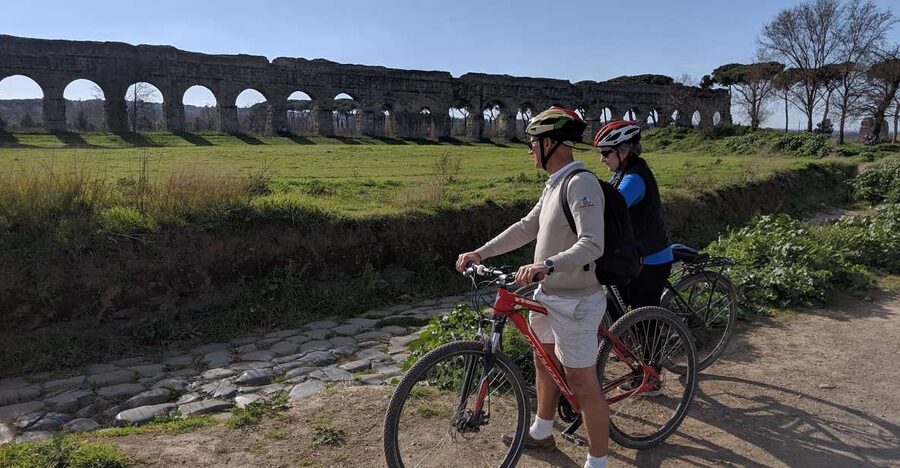
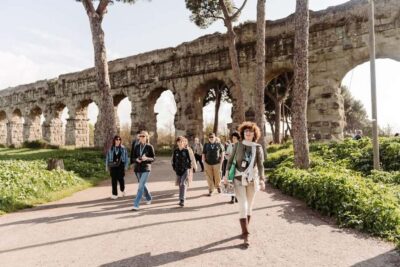
The Aqueducts Park segment is one of the most tangible “wow” moments on this route. The tour includes time in a park area known for preserving two Roman aqueducts that remain in excellent condition.
If you have only seen aqueducts as distant ruins, this is a chance to experience them closer up and in context. Aqueducts tell you how Romans engineered daily life, from water supply to urban scale. And when you connect it back to the Appian Way, you understand Rome as a system, not a pile of monuments.
This is also a great stretch for photos. You’re outside, the air usually feels different than central Rome, and the structures provide strong lines and angles. The guide helps you understand what you’re seeing so it’s not just a camera moment.
Caffarella Park return ride, working farm feel, and archaeological pockets
In the second half, you return through Caffarella Park. This is not just a scenic detour. The park includes archaeological sites and a working farm, and it has ecological value.
That combination is a big part of why this tour is worth more than a simple history walk. You experience the countryside as something lived in, not frozen in time. Pastoral elements and open paths let you decompress after the heavier history parts, while archaeological remnants keep the theme present.
The return ride can also feel like a reward. You’ve already gotten the major story beats. Now you’re coasting through a quieter setting that makes you feel how far Rome’s influence spreads.
Guides make or break the experience: Emiliano and Libero style
The best version of this tour depends heavily on the guide. The information you get is only half the story. The other half is how the guide paces the ride, explains what matters, and makes sure everyone feels comfortable.
From past departures, Emiliano stands out for welcoming energy and for linking ancient sites with modern Rome in a warm, funny way. Libero and variants of that name also appear as very engaging guides, including people who shared lots of explanation and stayed friendly and attentive.
Across these accounts, there are a few themes that matter for you:
- Guides seem to manage the pace so you can stay comfortable, not sprint through history.
- Guides make time for questions and photo stops.
- Safety and bike comfort get real attention, which matters when you’re on uneven ground.
Still, I’ll be honest about one caution. If a bike’s electric support has an issue, it can become a frustrating day. In one case, a battery problem cropped up and the tour’s follow-up was not what people expected. That doesn’t mean it happens often, but it’s worth knowing as you decide.
Who this tour suits best, and who should choose something else
This is best for active travelers who want history but also want a break from walking. You should be comfortable riding a bike, and you should expect about 20 miles total. If you like structure, a guide-led route, and clear explanation, you’ll get a lot out of the four hours.
You might want to skip or switch to a different format if:
- You cannot ride a bike reliably.
- You have mobility limits that make long riding or uneven ground difficult.
- You want museums and indoor ticket time, because this is an outdoor, riding-focused experience.
On clothing: keep it practical. Past riders advise comfortable riding shorts and more athletic shoes. The tour does not require special religious dress for entrances in the way some sites do, but you do still need normal comfortable outdoor attire for an extended ride.
Price and value: is $88 for 4 hours a fair deal?
At about $88 per person for a 4-hour guided e-bike experience, the value depends on what you compare it against.
You’re paying for three things that add up fast if you do them separately:
- A live multilingual guide, who ties together the road’s military, political, and religious story
- The e-bike and helmet, which saves you time and hassle
- A route that strings together multiple major areas, like Regina Viarum, aqueducts country, and Caffarella Park
Food and drinks are not included, so budget a snack or plan to grab something afterward. For many people, the cost feels reasonable because the tour replaces a half-day of figuring out logistics and route sequencing on your own.
If you love history but hate long uphill climbs, this price can feel like money well spent. If you’re already an expert cyclist who wants free exploration, you might prefer a self-guided option. But for most visitors, the guide-led structure plus e-bike support is the point.
Should you book the Appian Way e-bike tour?
I’d book if you want a classic Rome subject in a more human, legs-on version. Regina Viarum is one of the best-known Roman roads for a reason, and doing it by e-bike turns it from a distant idea into a lived route. Add in Saint Callixtus and Saint Sebastian catacombs potential, aqueducts park views, and the Caffarella return ride, and you get a well-paced mix.
I’d be cautious if catacomb entry is non negotiable for you, because some days may not include the stop as fully as you expect. Also take the bike situation seriously. If your priority is smooth, uninterrupted electric assist, consider asking the operator about bike maintenance practices before you go.
If you like being active without over-planning every turn, this tour fits nicely. Arrive a bit early, wear comfortable riding gear, and go with the attitude that Rome history is best read with your eyes, your ears, and yes, your pedaling.
FAQ
How long is the Rome Appian Way and Roman Countryside e-bike tour?
The tour duration is 4 hours.
What is included in the price?
The tour includes the e-bike and a helmet. Food and drinks are not included.
Where is the meeting point?
You meet at Via di S. Calisto, 9.
What should I bring for the tour?
Bring a passport or ID card. A copy is accepted.
What languages are the live guides available in?
The live tour guide is available in English, French, Italian, and Spanish.
Is this tour suitable for everyone?
It is not suitable for people who cannot ride a bike.
Can I cancel and get a full refund?
Yes. Free cancellation is available up to 24 hours in advance for a full refund.
More Cycling Tours in Rome
More Tours in Rome






More Tour Reviews in Rome

Not for you? Here's more nearby things to do in Rome we have reviewed












Ancient Rome Tours, compared.
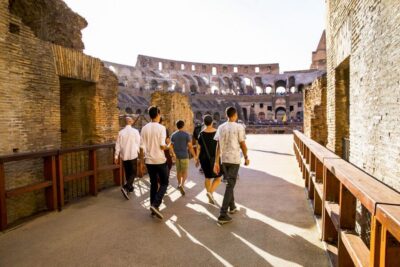 ★ 4.7Colosseum: Underground and Ancient Rome TourFrom $16012,691 reviews
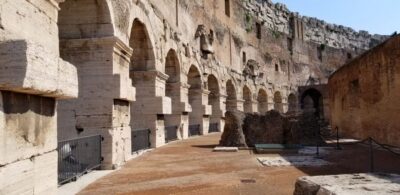 ★ 4.4Colosseum, Ancient Rome Tour or Self AudioGuided TourFrom $392,866 reviews
 ★ 4.9Appian Way, Catacombs, & Roman Aqueducts E-bike TourFrom $851,421 reviews
 ★ 4.9Appian Way E-bike Tour with Catacombs, Aqueducts & FoodFrom $961,210 reviews
 ★ 5.0Appian Way Aqueducts Bike Tour (Catacombs & Lunch Option)From $78975 reviews
 ★ 4.7Appian Way, Aqueducts, and Catacombs TourFrom $64942 reviews
 ★ 4.7Caracalla Baths & Circus Maximus — Private or SharedFrom $77835 reviews
 ★ 4.7Colosseum Arena Access and Ancient Rome Guided TourFrom $94774 reviews
Browse the lists this tour appears in