
Reviewed · VATICAN TOURS
Vatican Museums and St. Peter’s Basilica Private Tour Options
You can see the Vatican without racing. This private tour threads Vatican Museums highlights, the Sistine Chapel, and optional add-ons for St. Peter’s Basilica, Raphael Rooms, or the dome. It is built around skip-the-line entry and a Blue Badge guide, so you spend more time looking and less time stuck.
What I like most is the way the route is paced for a real visit, not a checklist sprint. I also like that you choose a morning or afternoon start, then your guide keeps the big spaces manageable, including a shortcut toward St. Peter’s.
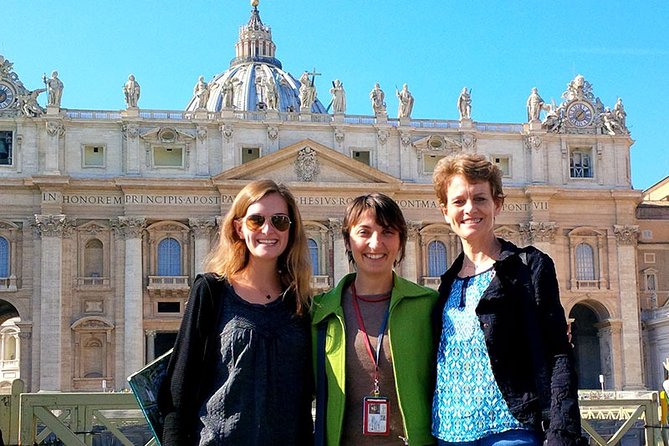
One thing to plan for: churches can close or shift due to ceremonies, and the dome option comes with physical steps and tight spaces. Add in the required dress code, and you’ll want to show up prepared.
Key things that make this tour work
- Skip-the-line into the Vatican Museums, plus a shortcut connecting toward St. Peter’s when included
- Blue Badge private guiding in English with a route designed to reduce crowd friction
- Choice of morning or afternoon start so you can match your energy level
- Optional upgrades: Raphael Rooms and the Cupola di San Pietro climb
- Real museum stops that go beyond the headline art, like the Gallery of Maps and the Courtyard of the Pigna
- A plan for disruptions: if St. Peter’s is closed, the tour ends at the Vatican Museums exit or extends the museum time
Entering the Vatican Museums with skip-the-line energy
The Vatican Museums can feel like a maze. Lines outside can be long, and inside you still have to move with the crowd. This tour is designed to fix the hardest part first: skip-the-line ticket entry into the Museums and a private guide to keep you pointed the right direction.
You start at Caffè Vaticano, Viale Vaticano 100, 00192 Roma RM. From there, you still pass through a security check, so do not treat it as instant. The operator asks you to allow at least 20 minutes for security, even when you are skipping the general ticket line. That’s actually a good thing, because it prevents the stressed scramble that ruins art time.
The duration is about 3 to 4 hours, which is long enough to see key rooms and short enough to still feel human afterward. The tour is offered in English, and it is private, meaning only your group participates.
You can also read our reviews of more private tours in Rome

Courtyard of the Pigna and the Sphere within a Sphere moment
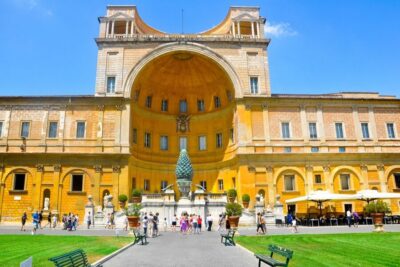
Your visit begins in the Museums proper, walking through major halls with built-in focus points. One of the first standouts is the Courtyard of the Pigna, created from the 16th-century Belvedere area. It’s the kind of space where you understand scale fast. Your guide can point out what you are actually looking at, not just where to stand.
Then comes a sculptural stop that is easy to miss if you are on your own: Sphere within a Sphere by Arnaldo Pomodoro. It sits within the Cortile della Pigna area and is famous for its cracked surface and the idea of a smaller form inside. The practical win here is how much your brain clicks into art mode right away. After that, the rest of the Museums feel more connected instead of random rooms.
If you like modern art placed inside ancient and religious space, this is a satisfying early twist. If you dislike surprises, your guide will likely give you a quick context first so you can enjoy it instead of feeling lost.
The Gallery of Maps: 120 meters of Italy’s past
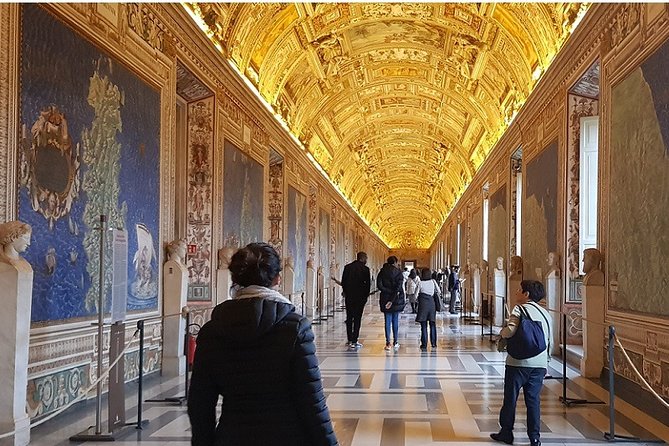
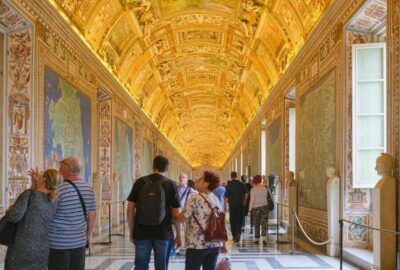
Next you get one of the Museums’ most unusual rooms: the Gallery of Maps (Galleria delle Carte Geografiche). This is not decorative painting that just looks pretty. It’s topographical, and it spans about 120 meters.
The big fact to know is that the maps were created in the 16th century under Pope Gregory XIII. Your guide can help you read it like a historical snapshot of Italy. What makes this stop valuable is how it breaks up the usual Vatican Museum pattern of statues and church-themed scenes. You get geography, politics, and artistry mixed into one long wall.
Time on this stop is listed at about 5 minutes. Five minutes can sound short, but with a guide you can still catch the main idea: how map-making looked then, what regions they emphasized, and why it mattered to the Vatican’s view of the world. If you personally love maps, you might want a second pass later in the day. But for a half-day plan, this is an efficient highlight.
Gallery of Tapestries: Renaissance storytelling you can read with your eyes
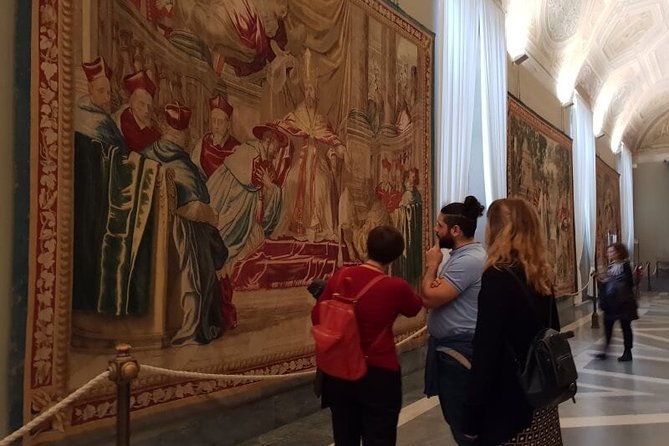
Another quick but impressive stop is the Gallery of Tapestries, featuring 15th and 16th-century tapestries. These are woven with scenes from biblical and historical narratives, and they were inspired by designs from Raphael’s school.
You will spend about 5 minutes here. That means the goal is not to inspect every knot, but to see the scale and the storytelling approach. Tapestries like these were made to communicate big themes for people who did not always have access to books or far-away art.
If you are the kind of traveler who usually walks past textile work, this stop often surprises you. If you are the kind who loves Renaissance craft, you’ll probably want more time than you get.
The Gallery of Candelabra: where ancient sculpture and big architecture meet
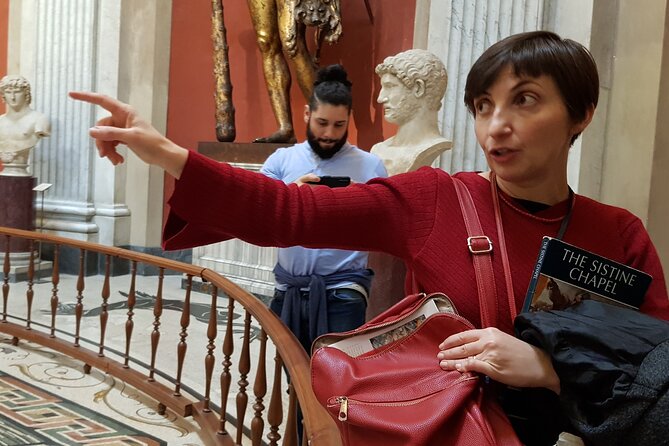
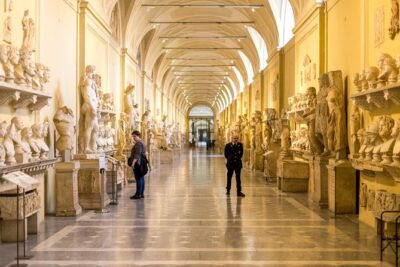
The Gallery of the Candelabra is named for the marble candelabra that divide the gallery into sections. It holds a mix of Greek and Roman statues, sarcophagi, and reliefs, with a layout that feels intentional and theatrical.
This stop is useful because it shifts you into an “ancient world” lens without requiring you to be a specialist. Your guide can help you connect what you see to the room’s structure, so it feels like a curated sequence rather than random antiques under museum lighting.
Time here isn’t listed separately, but you’ll be moving through it as part of the main flow. The practical takeaway for you: wear comfortable shoes and be ready to look up and around. The space is built to be read visually in sections.
You can also read our reviews of more museum experiences in Rome




Sistine Chapel: making 30 minutes feel like more
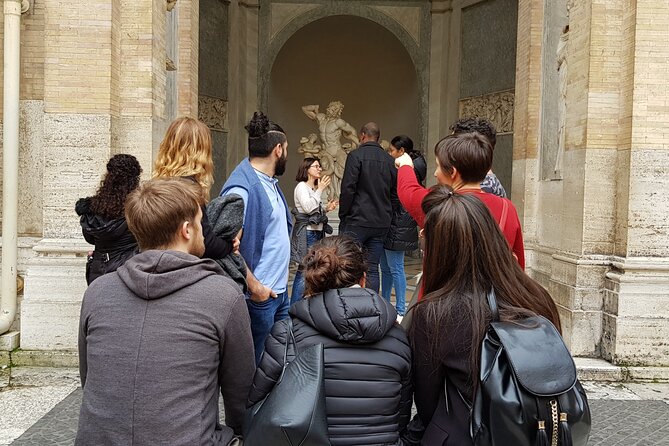
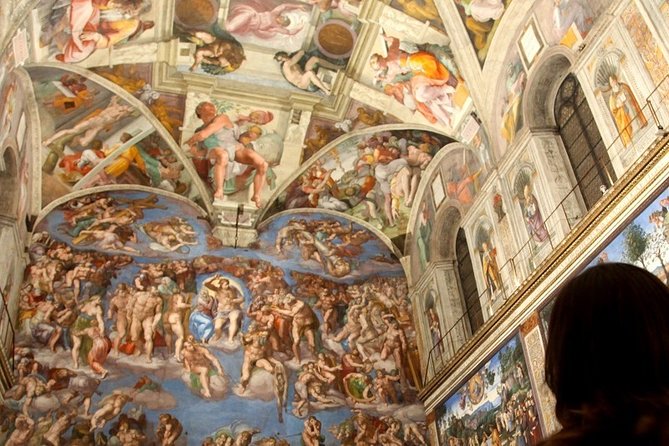
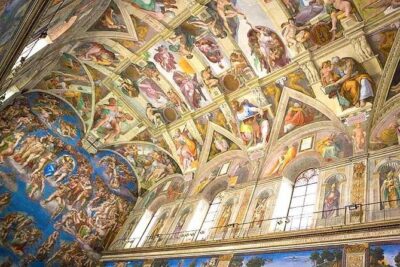
After moving through galleries, you reach the Sistine Chapel. The tour stop is about 30 minutes, and that is the right amount of time for a private guided visit. The key context is that the chapel is named after Pope Sixtus IV della Rovere, who restored the older Cappella Magna between 1477 and 1480.
You also learn why this room matters beyond art. It is known worldwide as a place for conclaves and other official ceremonies, including papal events held there in the past. Then you hit the headliner: Michelangelo’s frescoes.
What I think makes a guided Sistine Chapel visit worthwhile is the difference between seeing it once and understanding what you are seeing. Your guide can point out how the frescoes work as a system of imagery and meaning, and how to focus your eyes so you get more out of your minutes.
If you are claustrophobic or sensitive to crowds, a private route can still help. Even inside, the pace is gentler because you are not all moving as one big group. You’ll still follow the chapel’s rules and movement limits, but the guide’s pacing matters.
Raphael Rooms upgrade: when you want the full Renaissance thread
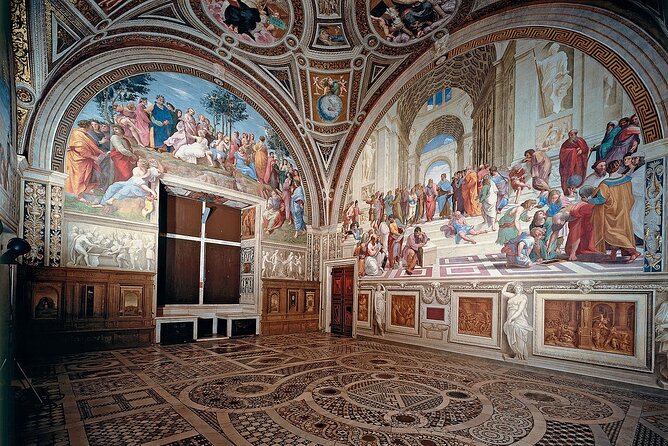
There is an optional upgrade for the Stanze di Raffaello, the Rooms of Raphael. If you select this Renaissance option, the tour includes these rooms in the itinerary.
This is your “ideals of the Renaissance” stop, where the artwork connects to themes like harmony, intellect, faith, and history. Even if you are not a trained art person, you can enjoy this room cycle because your guide can connect the dots between the imagery and the broader Renaissance mindset.
Time for this segment is listed at about 10 minutes. That is short, but it’s a smart addition if you want more than just the Vatican headlines. If you already feel confident about Raphael and Renaissance art, you’ll likely find it worth the upgrade. If you are more into sculpture and early classics, you might prefer spending more time in other areas.
St. Peter’s Basilica option: Pietà, John Paul II, and Bernini’s baldachin
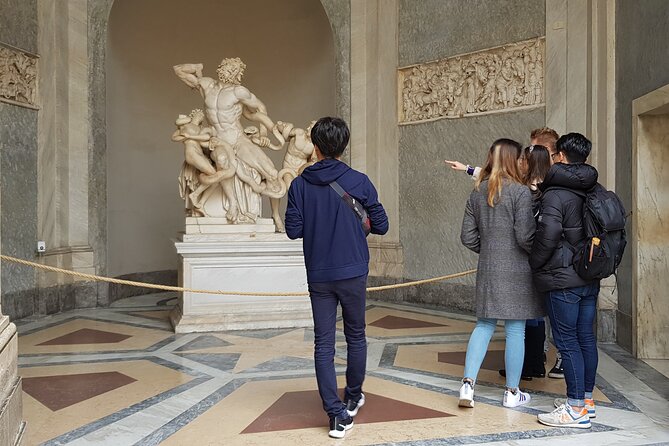
Depending on what option you choose, the tour can continue into St. Peter’s Basilica. When included, you get about 30 minutes in the basilica.
This is the part where the Vatican feels like a living place, not just a museum. Your guide helps you focus on the major works. You get to see Michelangelo’s Pietà and stop by the venerable tomb of Saint John Paul II (Karol Wojtyla).
Then there is a second Michelangelo Pietà stop in the itinerary: La Pietà, listed for about 15 minutes. The operator notes it is the first of a number of works by Michelangelo with the same theme, and that it is the only piece he ever signed. It is located in the first chapel on the right as you enter the basilica.
Finally, there is St. Peter’s Baldachin, a highlight if your selected option includes the basilica details. This is Gian Lorenzo Bernini’s bronze canopy over the high altar, and it reaches over 90 feet tall. It is the kind of structure where you understand the church’s “grand scale” idea in seconds.
What to watch for: the basilica can close last minute for masses or ceremonies. The tour notes that St. Peter’s Basilica may close at the last minute, and when this happens, the tour ends at the exit of the Vatican Museums. That’s rare, but it’s the one variable you cannot fully control.
Cupola di San Pietro dome climb: 320 steps, with a lift first
Another optional upgrade is the Cupola di San Pietro climb. The dome is famous for being designed with the look of Michelangelo, and the big payoff is the view over the Vatican and Rome.
The reality check is the number of steps. The tour information is direct: after a lift takes you some of the way, you still have to tackle 320 steps. Space can be tight in places. If you are claustrophobic or you cannot handle stairs, this option is not recommended.
I like this upgrade when you want the “Rome in perspective” feeling. But I also respect your body and nerves more than any view. If you hesitate, pick the option that keeps your day comfortable.
Time at this stop is listed as about 30 minutes, so you will not be lingering for hours. Still, if you want the dome experience, this is one of those things that feels like a once-in-a-lifetime reward for a short, steep effort.
St. Peter’s Square: Bernini’s geometry and a quick reset
After the basilica and any dome climb options, you move to St. Peter’s Square. This is included only when your selected options include St. Peter’s.
You spend about 15 minutes here. The tour highlights the elliptical layout and the famous colonnade: 284 Doric columns arranged in four rows. The operator also notes the dimensions, 196 meters wide and 148 meters long, and that Bernini laid out the square during the pontificates of Alexander VII and Clement IX.
This is a good “reset” after indoor art. It also gives you context for what you just saw, because the basilica is designed to feel like the center of a larger stage.
Who this tour suits best, and who should consider another plan
This private tour format fits you best if you want pacing control. It is especially good if:
- You are traveling as a family and need patience built into the day. In past experiences tied to this operator, guides have been praised for keeping kids engaged and adjusting pace for slower walkers.
- You care about understanding art, not just taking photos. Many guide stories highlight art-focused explanations, including strong Michelangelo discussion.
- You want to reduce crowd stress. Skip-the-line entry and private guiding help you keep moving without the constant stopping and backtracking.
I would think twice if:
- You are selecting the dome option and do not want stair climbing. The steps and tight spots are real.
- You are likely to be affected by last-minute religious closures. If St. Peter’s Basilica is closed, you will not get it that day, and the tour ends at the Vatican Museums exit.
How this tour stacks up for the price
The price is $317.54 per person. That sounds high until you look at what is included:
- Skip-the-line ticket for the Vatican Museums
- Private tour with a Blue Badge guide
- Sistine Chapel included
- Optional add-ons like Raphael Rooms and dome climb depending on what you select
- Shortcut to St. Peter’s Basilica when that portion is included
- Mobile ticket, which reduces one more friction point
For me, the value comes from the time you gain and the ability to focus. The Vatican is massive. Without a guide, you can end up seeing famous rooms but missing the “why this matters” pieces. With a private route, you can hit big works like the Sistine Chapel and major basilica art while still having a guide explain what you are looking at.
Also, this is a private experience. You are paying not just for museum entry, but for guide attention and fewer interruptions.
Food and drinks are not included, so plan your meal separately. Build in a break after your tour so you do not spend the best part of the afternoon hunting lunch with museum hunger.
Should you book this Vatican Museums and St. Peter’s private tour?
Book it if you want a short, high-impact Vatican day with private pacing, skip-the-line entry, and the chance to add Raphael Rooms or the dome if you are up for it. The guide-driven format is the main reason this works, and the overall track record is strong, with guides praised by name for clarity, patience, and keeping different ages interested.
Skip or reconsider the add-ons if you are sensitive to stairs or enclosed spaces, or if you know you will not be flexible if St. Peter’s closes last minute. If you are okay handling the dress code and the security line reality, this is a smart way to see a lot without turning your day into endurance sport.
If you do book, do one practical thing: wear layers you can adjust and dress to cover shoulders and knees. It is not the kind of rule you want to discover at the door.
FAQ
How long is the Vatican Museums and St. Peter’s Basilica private tour?
The duration is listed as about 3 to 4 hours.
What is included in the price?
The tour includes a Vatican Museums skip-the-line ticket, the Sistine Chapel visit, and a private tour with a Blue Badge guide. Depending on your selected options, Raphael Rooms, St. Peter’s Basilica, and the Cupola di San Pietro dome climb may also be included.
Are tickets for the Vatican Museums and Sistine Chapel included?
Yes. Admission tickets for the Vatican Museums stops and admission ticket for the Sistine Chapel are included, and St. Peter’s Basilica items are included only for options that include St. Peter’s.
What should I wear to enter the Vatican and St. Peter’s?
A dress code is required. No shorts or sleeveless tops are allowed, and knees and shoulders must be covered for both men and women.
Is the dome climb included, and how difficult is it?
Only if you select the Dome option. The itinerary notes that after a lift takes you some of the way, you still have to climb about 320 steps. It is not recommended if you cannot physically climb steps or if you are claustrophobic.
What happens if St. Peter’s Basilica is closed during my tour?
The tour notes that St. Peter’s Basilica can close last minute for ceremonies or masses. If that happens, the tour will end at the exit of the Vatican Museums, or the operator may offer an extended Vatican Museums tour.
More Private Tours in Rome
More Tours in Rome



More Tour Reviews in Rome

Not for you? Here's more nearby things to do in Rome we have reviewed












Vatican Tours, compared.
 ★ 4.5Vatican: Museums & Sistine Chapel Entrance TicketFrom $38144,003 reviews
 ★ 4.3Vatican Museums & Sistine Chapel Tour with Optional BasilicaFrom $7967,413 reviews
 ★ 4.5Vatican Museums, Sistine Chapel & St Peter’s Basilica Guided TourFrom $2239,149 reviews
 ★ 4.3Vatican Museums, Sistine Chapel & Basilica TourFrom $13013,872 reviews
 ★ 4.4Vatican Museums & Sistine Chapel Skip-the-Line Entry TicketFrom $4313,838 reviews
★ 4.7Vatican Museums, Sistine Chapel & Basilica TourFrom $7213,217 reviews
 ★ 4.5Skip-the-Line Group Tour of the Vatican, Sistine Chapel & St. Peter’s BasilicaFrom $3012,779 reviews
Vatican Museums & Sistine Chapel Guided TourFrom $11812,117 reviews