
Reviewed · TREVI FOUNTAIN & PIAZZAS TOURS
Rome Private Wine & Food Tour Trastevere, Ghetto, Campo de Fiori
Private food tours work best when the guide actually pays attention. This one does, with private, high-touch guidance through Rome’s best edible pockets.
What I like most is how the route builds momentum, starting in the daily-life chaos of Campo de’ Fiori and ending in the slow, romantic streets of Trastevere. You’ll also get a real sense of the why behind dishes, not just a list of what you ate, with guides like Clelia, Aurelio, Marielle, and Gloria showing up in the kinds of ways people remember.
One heads-up: it’s still a walking tour (about 3 hours 30 minutes), and it runs in all weather. If you’re sensitive to rain or long strolls, plan your footwear and pacing carefully, since the day moves between neighborhood landmarks and seated tasting stops.
Key things that make this tour worth your time
- Private guide focus across three food neighborhoods, so questions do not get brushed aside
- Campo de’ Fiori market start with seasonal produce and a quick stop tied to Giordano Bruno
- Jewish Ghetto food stops that include fried specialties like fried artichokes in the right season
- Multiple seated tastings with wine, not just quick snacks
- Trastevere classics plus gelato from a 2020 gelato world champion
Piazza Farnese to Your Food Map: how the walk is paced
The tour starts in Piazza Farnese, a polished, elegant square anchored by the Farnese building and the French Embassy, plus two fountains that make the first minutes feel like a little breather. It’s a good way to start, because Rome can hit you all at once, and this gives you a clean launching point before you shift into market mode.
From there, the day becomes a curated walk through three areas with very different vibes. You will move by foot, and you’ll also have a few seated stops where tastings come with wine. That matters, because it turns the experience from sampling into actually learning how each neighborhood feeds its people, and how those traditions traveled into restaurants and shops.
A nice part of this setup is that it is private. People often think “private” means more expensive, but here it also means you can slow down, ask follow-ups, and get help with food choices. In real life, that’s the difference between “we ate a lot” and “we understood what we ate.”
You can also read our reviews of more food & drink experiences in Rome


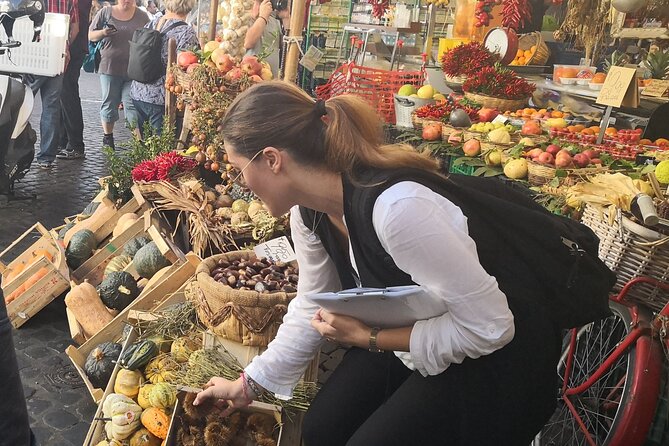
Campo de’ Fiori: markets, everyday shopping, and Roman staples
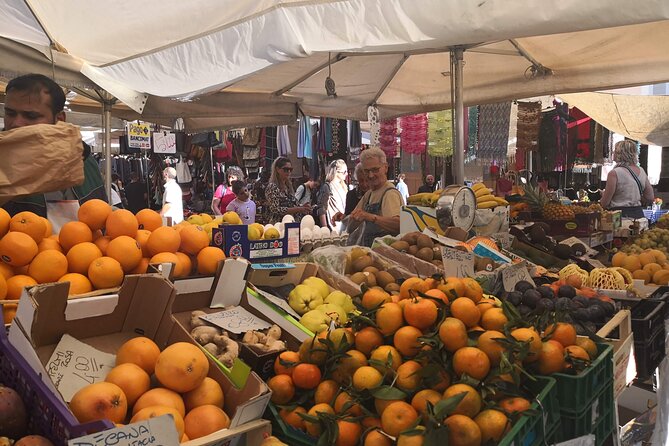
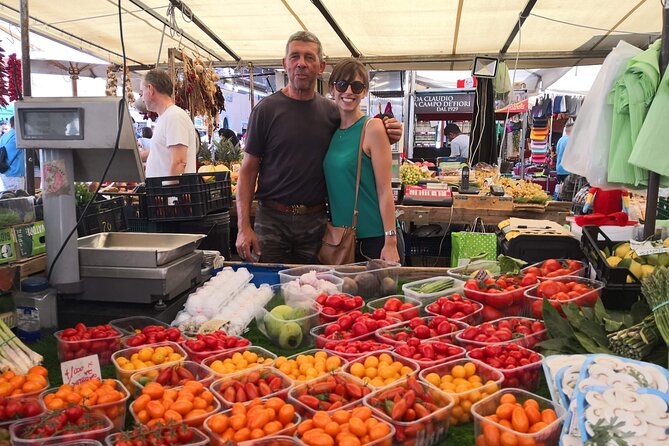
If Campo de’ Fiori is on your Rome bucket list, this tour attacks it from the right angle. You’re not just passing through a famous square. You start with the morning market energy, when seasonal produce is front-and-center and vendors are in full rhythm. It’s the kind of place where you can see what residents buy for weeknight cooking, not only what tourists take photos of.
You’ll also learn how to read the market the way a local might. For instance, you’ll hear about Roman staples and how simple ingredients get turned into signature bites. Expect the tour to steer you into common Roman comfort flavors, like pecorino romano, cured meats, and the basic genius of Roman pizza styles.
There’s also a quick, memorable stop tied to the statue of Giordano Bruno. He was a philosopher burned alive by the Inquisition in 1600, and the guide uses that reminder to connect the area’s public story to something bigger than food. It is the kind of moment that makes the walk feel more human, because you understand that streets here carry layers, not just scenery.
One practical note: if you are doing an afternoon tour (instead of the morning), Campo de’ Fiori can feel quieter depending on whether the market is at full swing. That doesn’t reduce the value, it just changes the texture of the stop, so bring the right mindset. Either way, you’ll be set up to taste like you’re in Rome, not like you’re in a food sampler.
The Jewish Ghetto stops: where food is history you can taste
The Jewish Ghetto is where the tour shifts from “great eating” into cultural meaning, and it does it in a structured way. You’ll walk through the area and get context about its cultural and culinary heritage, including landmark stops such as Piazza delle Cinque Scole. Along the way, the tour also builds in food tastings that match the neighborhood’s traditions.
This is the section where you’ll most likely notice how food differs when communities develop recipes under real constraints. Dishes show up as memory, not trends. You might try items like fried artichokes (winter only, when the ingredient is at its seasonal best), and other classic Ghetto-friendly bites such as codfish and suppli, the rice balls that are filled and fried to order.
If you love food facts, this stop has the best kind: the “why” behind techniques and timing. The tour leans into seasonal choices, which is exactly what separates Roman cooking from generic Italian food storytelling. When you taste a winter specialty, you feel how the city cooks with the calendar, not against it.
There is also an emotional aspect. The guide frames the Jewish Ghetto as both a place of cultural endurance and a place that shaped what you can find on today’s menus. For me, that is the ingredient that makes the tastings stick. You do not just eat, you understand the neighborhood’s logic.
Trastevere: narrow streets, artisan shops, and Roman comfort on a plate
The ending neighborhood is Trastevere, and it’s a strong finish on purpose. The streets stay narrow, the sidewalks stay lively, and the area feels like the city is not trying too hard to impress you. If you want a romantic, walkable end point near the river, this is the right place.
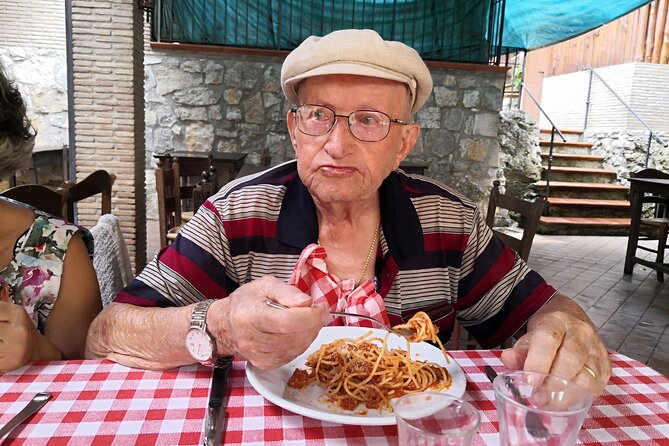
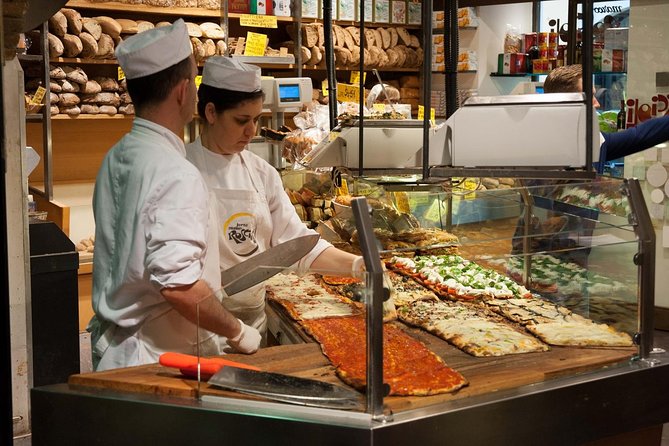
In Trastevere, the tastings move closer to the “Roman greatest hits.” You’ll likely see cacio e pepe and amatriciana flavors show up in pasta tastings, alongside Roman pizza culture. Pizza appears in forms that feel local, not generic slices, with tastings built around Roman styles like pizza bianca and pizza rossa, plus pizza variations such as pizza with mortadella and even pizza con le patate.
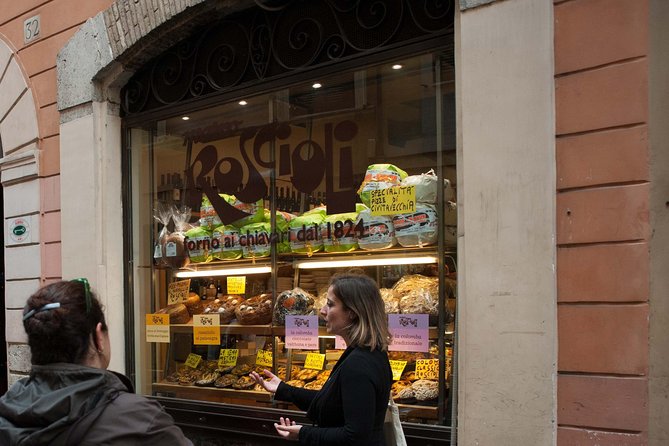
If you are a bread lover, this is a stop you will appreciate. One of the featured places is Antico Forno Roscioli, described as a paradise for bread and closely tied to the kingdom of pizza al taglio. That is a very Roman idea, where the pizza comes by the slice and the crust matters as much as the topping.
Then the walk brings you into gelato territory, which leads into the final flavor payoff. Trastevere closes the loop, because the neighborhood’s dining culture is often about mixing casual street life with serious taste.
The only drawback here is also the best part: Trastevere is popular. You can expect people, noise, and a lively atmosphere as you stroll. If you prefer quiet, you may want to slow down and focus on the tastings and the side streets instead of the main clusters.
Wine tastings and seated stops: how the pairing is handled
Wine can go two ways on tours: either it’s a prop, or it’s part of the learning. This one treats wine as part of the meal structure. You get three wine tastings, and they happen at seated stops, which helps you taste without rushing.
The tour also includes seated tasting moments at multiple places, so you’re not standing around in a crowd with a cup you cannot properly taste. This matters if you drink only one glass or if you are new to Italian wine styles. Taking a few minutes seated lets you focus on the flavors and the guide’s stories about what you’re tasting.
A practical bonus: because the tastings are already planned, you’re not forced to make restaurant choices. The guide handles pacing, so the wine shows up when it makes sense in the food rhythm.
If you’re traveling with someone who doesn’t drink much, it’s still a strong tour because the food is front and center. But if wine is a big part of your Rome experience, this format is the best kind of value, since it bundles wine tastings into the tour price rather than turning them into extra add-ons.
A few more Rome tours and experiences worth a look





Gelato at Fiordiluna: the last stop that actually feels like a finish
Dessert should feel like the grand finale, not an afterthought. The tour ends with gelato tasting at Fiordiluna, hosted by Eugenio Morrone, described as a 2020 gelato world champion.
This is not just hype. It’s a meaningful closure because the walk has been about Rome ingredients and craft. Gelato is where those same principles show up in a different texture. You’ll get a two-flavors cup plus some extras, so you can sample and compare without overcommitting.
One thing I like about the way this stop is framed is the insistence on terminology. The gelato here is positioned as gelato, not ice-cream, which might sound like a small point, but it signals attention to technique and quality. You’ll likely feel that in the taste and how clean the flavors come across.
By the time you reach this point, you should feel comfortably full, not painfully stuffed. That’s hard to do on food tours, and it comes from having the right mix of savory stops, two pasta tastings, pizza tastings, and just enough sweet.
Sunday rhythm: organic market focus and fewer shop closures
If you’re going on Sunday, expect the tour to adapt. A lot of independent shops and food vendors in Rome close on Sundays, so the itinerary shifts its emphasis toward markets and venues that are open.
The Sunday plan begins at a farmer-managed organic market, where producers sell directly to visitors. The tour then moves through lesser-known streets toward the Jewish Ghetto and continues on to Trastevere. The key point is not that you get a worse experience, it’s that the tour stays realistic about what you can actually access on a day when the city’s schedule changes.
You’ll still get tastings along the way, and the food theme remains consistent: seasonal ingredients, Roman traditions, and neighborhood character. But you might notice the balance leaning more toward market atmosphere than shop browsing.
If you only have a Sunday, I’d still book, just go in expecting the tour to follow what’s open, not what is famously open on other days.
Meals, tastings, and what you’re actually eating
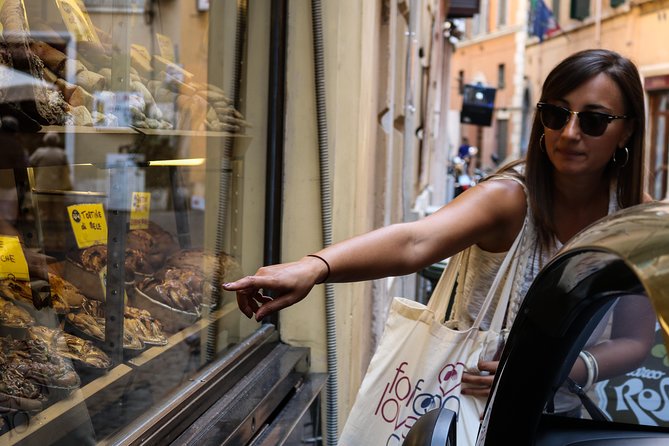
This tour is built around real meal components, not a token nibble parade. Included items are described clearly, and that clarity helps you judge value fast.
Here’s what you can expect to be built into your walk:
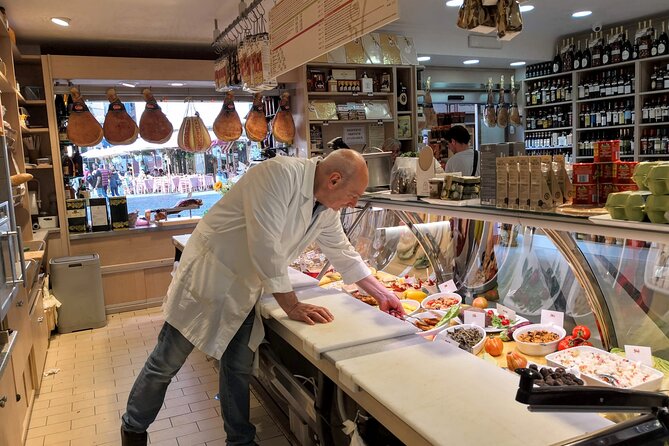
- Cheeses and hams in historic grocery stops
- Pizza tastings, including 2 out of 3 pizza tastings built into the plan
- Fried seasonal specialties, tied to the season, including Jewish-style fried artichoke in winter
- Pasta tastings in Trastevere, including cacio e pepe and amatriciana
- Gelato tasting at the end
- Three wine tastings, served at seated moments
- A few stops also include tastings like suppli, pizza styles, and other local bites tied to the neighborhood stops
I also like that the tour makes room for vegetable variety. Fried zucchini flowers are listed as summer only, which is the kind of detail you won’t get on a tour that never changes.
Dietary options are part of the planning too. Vegetarian option is available if you tell them when booking. Gluten-free or dairy-free options are available, and the tour also notes that allergens like milk, eggs, soya, mustard, nuts, and gluten can be present in tastings. So if you have a serious allergy, it’s worth being very clear with the guide before you eat.
Price and value: what $217.69 buys you in real Rome terms
At $217.69 per person, this is not a bargain-basement group tour. But the value comes from the “private” part plus the way the price bundles food and wine.
You’re not paying only for walking and stories. The tour includes multiple tastings across different neighborhoods, including:
- Cheese and cured meats
- Two-thirds of the planned pizza tastings
- Seasonal fried specialties
- Two pasta tastings
- Three wine tastings
- Gelato
That combination is the key. A normal Rome meal can cost a lot once you factor in drinks. If you already know you want to eat several styles of Roman food and taste wine in a structured way, the cost starts to feel reasonable because you’re covering what you would otherwise spend separately, while also getting a guide to explain what you’re tasting.
It’s especially strong for people who hate figuring it out. If you want a planned food route that leads you through Campo de’ Fiori, the Jewish Ghetto, and Trastevere without guesswork, this tour handles the heavy lifting.
Who this tour fits best (and who might not love it)
This tour is a great fit if you:
- Want a private guide with time to ask questions
- Love Rome’s food culture and want the neighborhoods connected, not isolated
- Prefer tastings at good spots rather than choosing restaurants on your own
- Care about seasonal specialties, like winter fried artichoke or summer zucchini flowers
It might feel less ideal if:
- You struggle with walking for 3 to 3.5 hours in changing weather
- You only want one or two tastings and would rather keep spending low
- You are very sensitive to multiple allergen exposures, since the tour notes common allergen presence in tastings
The best decision tool is simple: if your ideal Rome day includes guided food focus, a bit of history in the middle, and wine paired with tastings, this tour matches your style.
Should you book Rome Private Wine and Food Tour through Trastevere?
I’d book it if you want a food-focused Rome day that feels both structured and personal. The route makes sense, and the tastings cover a strong spread of Roman food categories: market ingredients, Ghetto specialties, pizza culture, pasta classics, and gelato that closes the walk with a real wow factor.
The top reasons to choose it are consistent: generous tastings, guides who know how to keep the pace comfortable, and the mix of food with neighborhood context. People also highlight that the tour can be accommodating for slower walkers and can tailor offerings for needs like allergies, which is exactly what you want in a private experience.
If your budget allows and you’re ready for a lively walk through three major Rome food districts, this is a very solid use of your time. Book it, then show up hungry, bring good shoes, and let the guide do the planning.
FAQ
How long is the tour?
It runs about 3 hours 30 minutes (approx.).
Where does the tour start and end?
It starts at Piazza Farnese, 106, 00186 Roma RM, Italy. It ends at Piazza Giuseppe Gioachino Belli, 00153 Roma RM, Italy.
Is the tour private?
Yes. Only your group participates.
What happens on Sundays compared to Monday to Saturday?
On Sunday, the itinerary is adapted because many independent shops and food vendors close. It starts at a farmer-managed organic market, then moves toward the Jewish Ghetto and continues to Trastevere with a focus on markets and open venues.
What food and drinks are included?
Included tastings include cheeses and hams, 2 of the 3 pizza tastings, fried seasonal specialties, 2 pasta tastings, 3 wine tastings, and gelato.
Are vegetarian or dietary needs accommodated?
Yes. A vegetarian option is available, and gluten-free or dairy-free options are also available if you advise at booking. The tour also notes that allergens like milk, eggs, soya, mustard, nuts, and gluten can be present.
What language is the tour offered in?
The tour is offered in English.
Is transportation included?
No. Transportation to and from attractions is not included.
What is the cancellation policy?
You can cancel for a full refund up to 24 hours before the experience’s start time. Free cancellation is available.
More Food & Drink Experiences in Rome
More Tours in Rome





More Tour Reviews in Rome
Not for you? Here's more nearby things to do in Rome we have reviewed







Trevi Fountain & Piazzas Tours, compared.
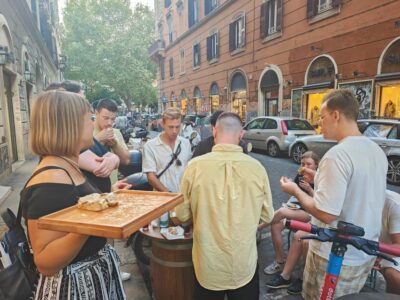 ★ 4.9Trastevere & Campo de Fiori Street Food Walking TourFrom $512,768 reviews
 ★ 4.3Trevi Fountain and Underground Guided TourFrom $411,664 reviews
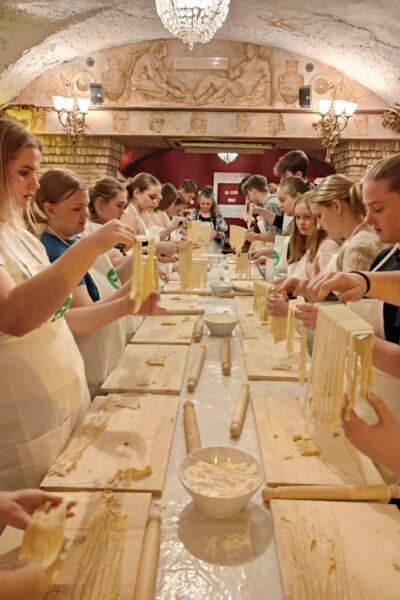 ★ 4.8Pasta & Tiramisu Cooking Class near the Spanish StepsFrom $581,395 reviews
 ★ 4.7Traditional Pizza Cooking Class near Piazza NavonaFrom $461,241 reviews
 ★ 4.7Opera Concert at Palazzo Poli – Fontana di TreviFrom $471,026 reviews
 ★ 4.5Best of Rome Walking Tour including Trevi FountainFrom $4923 reviews
 ★ 4.5Catacombs Tour with Transfer – Optional Capuchin Crypt or TreviFrom $54694 reviews
 ★ 4.5Rome Walking Tour with Piazza Navona, Trevi Fountain and PantheonFrom $35676 reviews
Browse the lists this tour appears in