
Reviewed · PANTHEON TOURS
Rome by Night Walking tour Including Piazza Navona Pantheon and Trevi Fountain
Rome by night turns the big sights into something personal. This guided walk starts in Campo de’ Fiori and moves through Piazza Navona and Trevi Fountain, with stories that make the streets feel like a living map. I like that it is a private format for your group and that you travel on foot through lanes buses cannot reach, giving you a better feel for the city after dark. One thing to consider: you may mostly view monuments from the outside, so if you are chasing interior entry to places like the Pantheon, double-check what your guide will do on your exact route.
The timing also matters. You get the city’s quieter side after day trippers disperse, and in summer the evening cool can make a noticeable difference in how enjoyable the walk feels. Even if you have never been to Rome before, this is a strong first-night option because you cover a compact area and see several of the landmarks people plan their whole trip around.
Key highlights to know before you go
- Meet at Campo de’ Fiori to start your evening in one of Rome’s liveliest squares
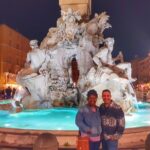
- Piazza Navona at night gives you a calm look at Bernini-style fountains and the square’s long life
- Trevi Fountain in evening light is photo-friendly, atmospheric, and built for the wish-coin moment
- Marcus Aurelius symbolism in Piazza Colonna ties politics, power, and art together in a short stop
- Piazza Farnese and Pope Paul III connect you to the Renaissance muscle behind the city
- Guides named Manuel, Thomas, Matias, Matteo, Virginia, Claudia, Alexandra, and Italo earn repeat praise for energy and storytelling
Rome by Night: What Makes This Walk Feel Different
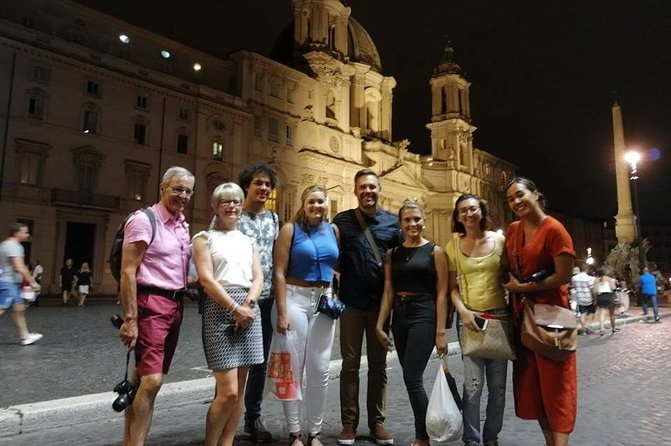
A lot of Rome tours hit the highlights during peak daylight hours. This one shifts the vibe. Starting from Campo de’ Fiori and finishing near the Trevi Fountain area means you are walking through the center when the crowds thin out and the temperature often feels friendlier.
The second big difference is pace and access. Since the tour is on foot and arranged for your group, you spend time where Rome is best, in pedestrian spaces, on side streets, and in squares that feel made for lingering. You also get the benefit of a guide who ties what you are seeing to why it is there, instead of just pointing at buildings.
Still, set your expectations. A walking tour like this usually prioritizes viewpoints, exteriors, and street-level storytelling. If your dream is to do museum-style time inside major sites, this may feel more like a “see and understand” route than a “fully enter everything” plan.
You can also read our reviews of more walking tours in Rome


Starting at Campo de’ Fiori: The Best Place to Begin
Campo de’ Fiori is one of those Rome squares that instantly tells you, yes, you are really in Rome. The tour begins there, which helps you get oriented quickly. You are also starting in a central hub, so it is easier to arrive by public transportation and easier to return to the neighborhood afterward.
In the middle of the square you will notice the bronze statue of Giordano Bruno. The stop is short, about ten minutes, but it sets the tone for the rest of your walk. You get a story that connects a famous figure to Rome’s history of ideas, conflict, and reputation. It is a nice reminder that Rome is not just monuments. It is also people, power, and big arguments.
A practical note: Campo de’ Fiori can be lively. Show up a touch early so you can find your guide without stress, especially if you are mixing in dinner plans afterward.
Piazza Navona After Dark: Bernini-Style Fountains and a Square With a Past
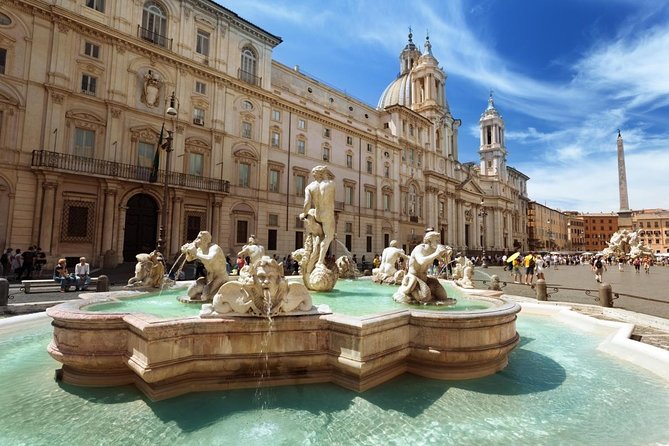
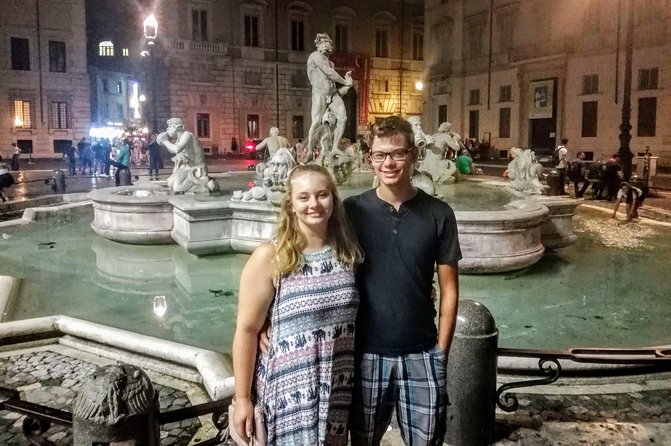
Your next major stop is Piazza Navona, one of Rome’s most famous squares. At night it changes mood. Instead of the usual daytime crush, you tend to get calmer viewing and more time to take photos without constantly getting squeezed.
The square is often described as the living room of Rome, and on this route you see why. The fountains in the center are the visual anchor, and the storytelling focuses on what makes them special. In particular, you will hear about masterpieces associated with Bernini, plus the way Piazza Navona used to function before it became the iconic open-air scene you know today.
The stop is about fifteen minutes. That means you should use it well. If you want the best photos, pick one or two angles instead of trying to shoot everything. Try to line up your camera so you capture both the fountain and the buildings framing the square. Even a short stop can give you strong results if you stay focused.
One consideration: this is a popular area, even at night. If you are sensitive to noise and light, plan on a slightly busier moment around the main fountain area.
Piazza Colonna: The Column of Marcus Aurelius and Modern Government Power
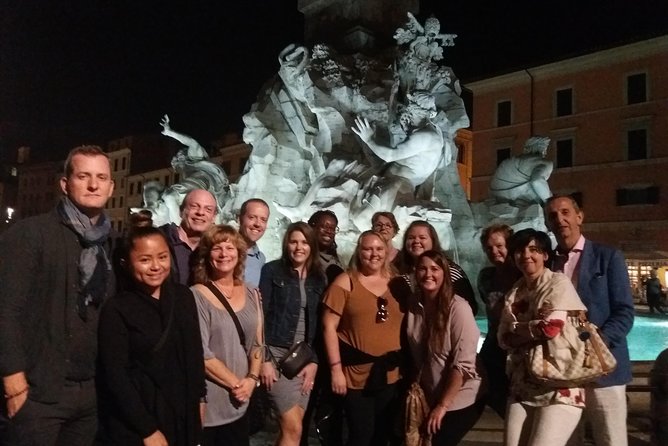
Next you will reach Piazza Colonna. The key draw here is the contrast. On one side you have Italy’s modern government presence. On the other you have a monument from deep imperial time.
The star feature is the Column of Marcus Aurelius, famous for its reliefs that depict wars led by the emperor, including campaigns against the Germans. It is a short stop, around ten minutes, but it is exactly the kind of Rome moment that sticks. You can look up at the carved spiral and realize you are seeing a kind of visual “history book” made of stone.
This stop is also useful because it teaches you how to read Rome quickly. When you understand what a column’s scenes are showing, the rest of your evening feels less like random sightseeing and more like a coherent story about authority, messaging, and art.
Tip for pacing: if your group likes photos, take one near the column first. Then step back and let your guide’s explanation fill in the details while you can still look up comfortably.
Trevi Fountain at Night: The Wish-Coin Moment and Photo-Friendly Energy
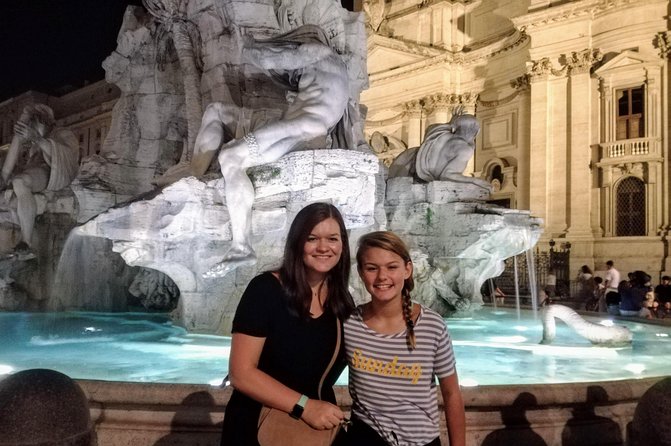
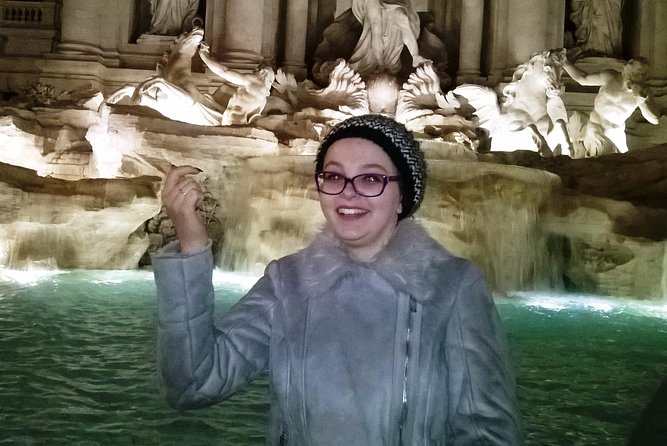
No Rome night walk is complete without Trevi Fountain. The plan gives you about fifteen minutes here, and that is enough time to see it properly, take a few photos, and do the classic wish-coin moment.
Night works for Trevi Fountain because the lighting makes the fountain feel more sculptural, less flat than it can look in midday glare. The sound and movement of the crowd can also soften the edges, even when there are people around. You get that classic “Rome is happening” feeling.
The big practical question is how you want to spend your short time. If your priority is photos, go for the angles that include the water and the façade lines. If your priority is soaking it in, pause closer to the fountain and watch how the light changes on the stone.
Also, this is where the tour ends nearby. So think of Trevi as both a highlight and your transition point to the rest of your evening. From here it is a straightforward move to dinner, gelato, or a later stroll through nearby streets.
You can also read our reviews of more evening experiences in Rome
Piazza Farnese: Renaissance Family Power in a Quiet-Feeling Square
After Trevi, you move to Piazza Farnese, with about fifteen minutes. This stop is a smart palate cleanser because it is not always as frantic as Trevi or Navona.
The square is named for the Farnese family, described as one of the most powerful families in Renaissance Rome. You will also connect the dots to Pope Paul III, who restored the Sistine Chapel. That link matters because it shows how family power, religion, and major art projects were braided together in the city.
Even though the stop is brief, Piazza Farnese can be memorable if you let the guide frame what you are looking at. When you understand who funded the influence, the buildings feel less like backgrounds and more like evidence.
If you are tired from the walking, this is a good moment to slow down. Use it to sit, take a breath, and let your Rome brain reset before you head onward for dinner.
The Pantheon Mention: How to Think About It on This Route
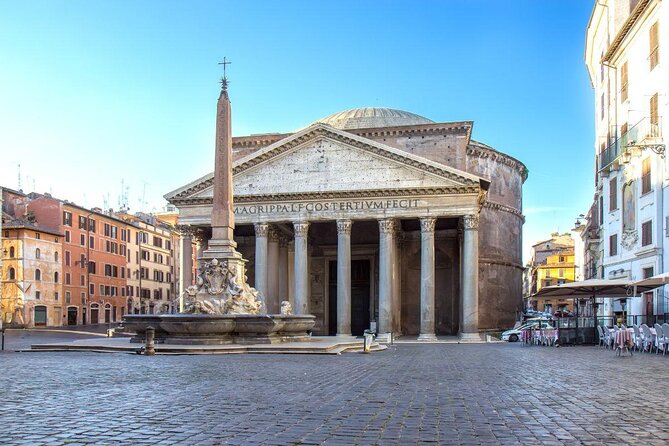
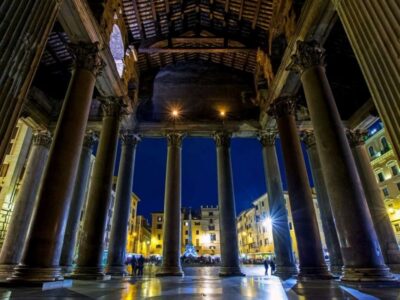
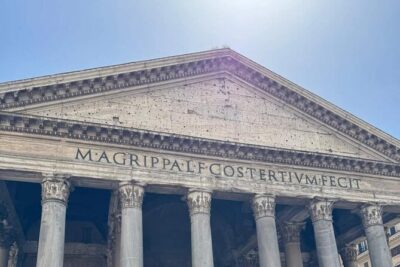
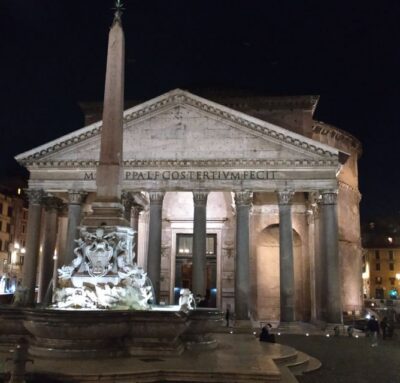
The tour description includes the Pantheon as a key landmark, even though your posted stop list focuses on squares and fountains. That is not unusual for walking routes in Rome, where a site can be treated as a view or a brief segment rather than a long timed stop.
So here is the practical way to plan. If you are hoping for a big interior experience at the Pantheon, do not assume that will be part of your ticketed time. If you want interior access, confirm what your guide will do for your exact evening and how much time you will have.
If your goal is instead to learn quickly and see Rome’s identity in key landmarks, this route is still strong. Even partial time near the Pantheon area can help you understand where it sits in the city’s story.
Guides, Stories, and Why Names Keep Coming Up
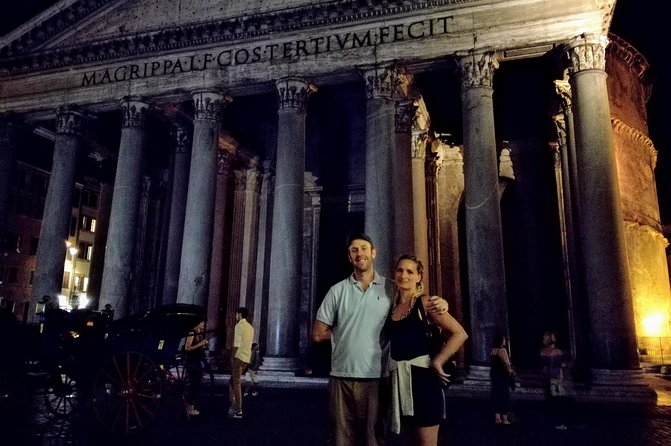
One of the most praised parts of this tour is the guide experience itself. Specific names come up repeatedly: Manuel gets credit for energy and being informative, Thomas is praised for passion about Roman history, Matias and Matteo are noted for making the sights click, and Virginia and Claudia earn strong marks for bringing the places to life.
There is also a pattern in the feedback that matters for you: great guides do not just recite facts. They connect what you see to everyday Rome details and “how it all works” context, like the meaning behind symbols on monuments and the kinds of power struggles that shaped the city.
If you get a guide who is comfortable with questions, your evening improves fast. You will likely be able to ask about what you are noticing, like the symbolism in carved reliefs or why a particular square developed the way it did.
Based on the guide praise, you should treat this tour as a chance to get your Roman story straight early. Then, when you tour the same landmarks again later during the day, you will recognize more.
Group Size, Private Format, and Real Comfort on Foot
This is listed as a private tour/activity, meaning it is just your group. In practice, you often get a small group feel, and that can make a big difference when you are walking in crowded zones like central fountains and famous squares.
Private does not mean no walking. It means your guide can adjust the pace for your group and you are not stuck waiting for the slowest person to catch up with the fastest group. It also tends to mean fewer interruptions when someone asks questions or wants a second photo.
The tour is about two hours. That is a sweet spot for first night Rome. It is long enough to learn and see several landmarks, but short enough that you can still function afterward.
Comfort tip: wear shoes you can walk in for a solid stretch of uneven stones and curving streets. Rome evenings feel romantic, but your feet still need reality.
Timing and Weather: Why Night Works Best Here
The tour description calls out cooler evening temperatures, and that is real-world advice. In summer, a two-hour walk at night can feel far more manageable than repeating the same route at midday heat.
Night also means different lighting, especially for fountains and carved stone. Trevi Fountain becomes a set of highlights and shadows. Piazza Navona feels less chaotic. Even the meaning of imperial monuments can feel sharper when you are not squinting in sun.
One practical consideration is darkness and visibility. Side streets can look similar. Bring your phone battery, and keep an eye on your guide so you do not get separated in the final stretch.
Price and Value: Is $288.43 a Good Deal?
At $288.43 per person for about two hours, this is not a budget tour. It is priced as a premium experience, likely reflecting the guided component, the private format for your group, and the convenience of covering multiple major landmarks in a tight walk.
Here is the value logic that makes sense. You are paying for three things that are hard to replicate on your own:
- a guide to explain what you are seeing, like why Giordano Bruno matters, what the reliefs on the Marcus Aurelius column depict, and how Renaissance power connects to Piazza Farnese
- nighttime timing that shifts you into a calmer, cooler window
- a route that links landmarks efficiently without you doing the map work while also trying to enjoy Rome
If you are traveling as a family or as a couple who wants a more guided first night, the price can feel easier to justify. If you are solo and comfortable doing self-guided wandering, you might find cheaper ways to visit Trevi and Navona. But if you care about learning the story while you walk, paying for the guide is what turns the monuments into something you remember.
Who This Tour Suits Best
This walking tour fits best if you:
- want a strong first night in Rome plan that covers iconic stops without exhausting you
- like history stories that explain symbols and connections, not just dates
- prefer a guide and a route so you do not waste time figuring out where to go next
- are visiting in warmer months and want the cooler evening air
It might be less ideal if you:
- need long interior time inside major attractions
- want a tour that is mostly about lights and special nighttime scenery, since this is primarily a guided walk through major landmarks and squares
Should You Book This Rome by Night Walking Tour?
Yes, I would book it if you want an efficient, well-guided first-night framework for central Rome. The biggest reasons are simple: you hit Campo de’ Fiori, Piazza Navona, Piazza Colonna, Trevi Fountain, and Piazza Farnese in a compact walk, and the guide quality gets strong praise for making the sights feel real.
Before you go, set one expectation correctly. This is a nighttime walking experience focused on seeing and understanding the landmarks around you, not a guarantee of long interior visits. If that matches your style, you will likely come away with better orientation for the rest of your trip and a more meaningful view of Rome after dark.
FAQ
How long is the Rome by Night walking tour?
The tour lasts about 2 hours.
Where do I meet the guide?
You meet at Piazza Campo de’ Fiori (P.za Campo de’ Fiori, 00186 Roma RM, Italy).
Where does the tour end?
The tour ends near Trevi Fountain at Piazza di Trevi (Piazza di Trevi, 00187 Roma RM, Italy).
Is this tour private?
Yes. It is listed as a private tour/activity, so only your group participates.
What language is the tour offered in?
The tour is offered in English.
What sights are included?
The tour description and route focus on Campo de’ Fiori, Piazza Navona, Piazza Colonna, Trevi Fountain, Piazza Farnese, and it also mentions the Pantheon.
Are tickets included?
The tour includes a local guide, and the stop at Raphael Tours & Events indicates an admission ticket is included. (The specific admission details are not broken down stop by stop.)
Do I get a mobile ticket?
Yes, the tour includes a mobile ticket.
What if I need to cancel?
You can cancel for a full refund up to 24 hours before the experience’s start time.
Is public transportation nearby?
Yes, the meeting point is near public transportation.
Can children join?
Children must be accompanied by an adult.
More Walking Tours in Rome



More Tours in Rome


More Tour Reviews in Rome
Not for you? Here's more nearby things to do in Rome we have reviewed








Pantheon Tours, compared.
 ★ 4.9Pantheon Timeless Marvel Guided Tour with Entry TicketFrom $214,002 reviews
 ★ 4.1Pantheon Priority Entry Ticket & Audio Guide AppFrom $63,234 reviews
 ★ 4.9Pantheon Small-Group Guided Tour with Entry TicketFrom $481,094 reviews
 ★ 4.7Pantheon Small Group Tour and Skip-the-Line TicketFrom $531,008 reviews
 ★ 4.2Pantheon Guided Tour with Skip-the-line TicketFrom $28816 reviews
 ★ 4.5Rome Walking Tour with Piazza Navona, Trevi Fountain and PantheonFrom $35676 reviews
 ★ 4.5Pantheon Roma Fast-Track Entry TicketsFrom $7540 reviews
 ★ 4.9Spanish Steps, Trevi, Navona and Pantheon Sunset TourFrom $46522 reviews
Browse the lists this tour appears in