
Reviewed · WALKING TOURS
Rome: Jewish Ghetto and the Great Synagogue Private Walking Tour
A 2,000-year story starts in a small street. This private Rome walk connects the old Jewish ghetto to real landmarks you can still see today, with a guide who makes the layers of history feel readable and human. You’ll cover places like Il Portico di Ottavia, the Jewish Museum, and the Great Synagogue area, all at a relaxed pace focused on meaning, not trivia.
I especially like the way this tour ties buildings to daily life, with stops that explain what happened there and why it mattered. I also like that you get guided help from an archaeologist guide plus timed entry support, so you are not stuck figuring out what to look at or where to go next. The private format makes it easier to ask questions without rushing.
One drawback to plan for: you will still do a fair amount of walking for a 3-hour experience, and parts are indoors, so comfortable shoes and a bit of patience help, especially if you get warm in Rome’s summer crowds.
Key things that make this tour worth it
- Il Portico di Ottavia and Piazza delle Cinque Scole bring the ghetto’s daily religious life into focus
- Great Synagogue and Jewish Museum tickets mean you spend time learning, not chasing entry
- An archaeologist guide connects the dots between eras, including Roman-era ruins you can physically stand near
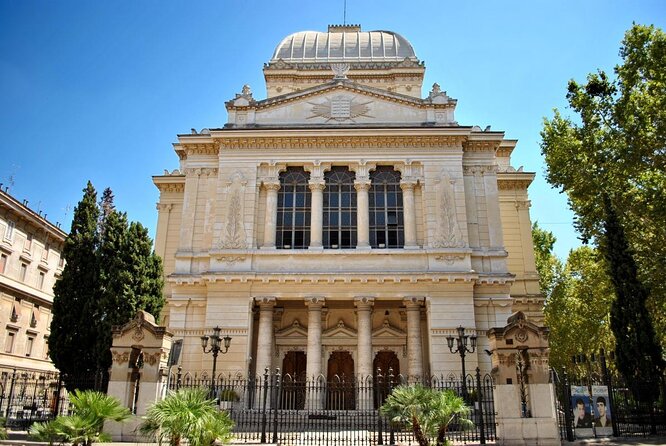
- Tempio Maggiore di Roma with an internal guide adds context from inside the worship space
- Minimal activity level, private pacing works well for families who still want a serious history outing
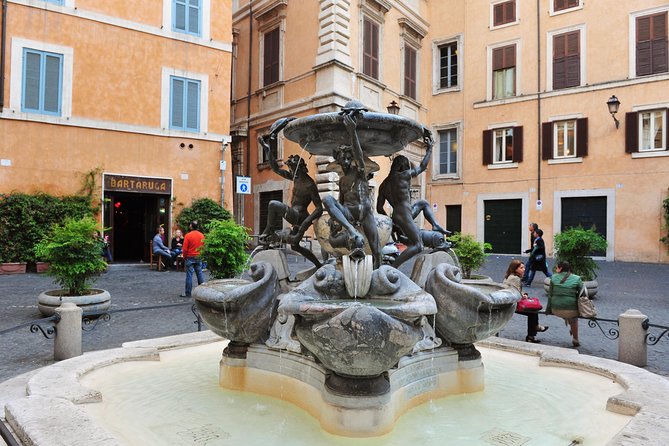
- Trastevere-area storytelling keeps the route anchored in one neighborhood feel
Rome Jewish Ghetto and the Great Synagogue, what you really see
This tour is built for people who want more than a quick stop at a synagogue and a photo. The focus stays on one area and one thread: how Jews lived, practiced, endured, and rebuilt community in Rome. You’ll walk through the kind of place where the past is close enough to touch, but the meaning still needs a translator.
I love that the tour uses the landscape like a classroom. You see key sites in a logical path, then you get guided context so the buildings stop being random stops and start being evidence. It also helps that this is a private walking tour, so the guide can respond to your questions and your pace.
You can also read our reviews of more walking tours in Rome


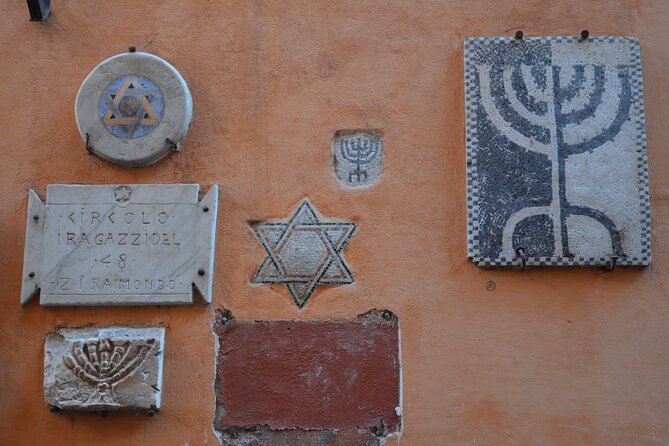
Starting at Il Portico di Ottavia and Piazza delle Cinque Scole
The walk begins at Lungotevere de’ Cenci, a practical meeting point near public transportation. From there, you head into the Il Portico di Ottavia area, including the streets by Piazza delle Cinque Scole, where there were liturgical Jewish schools. This is the kind of spot where you can feel how religion, education, and community were tied together.
You’ll also pass through the portico area along Via del Portico of Ottavia. That matters because porticoes are not just architectural details in this neighborhood. They shape how people moved, met, sheltered, and gathered. In a short first stop, the guide sets up what you will later see at the museum and synagogue by explaining the role this zone played inside the ghetto.
Time-wise, this first section is brief, around 15 minutes. It is enough to get oriented and help your brain lock onto the right “zoom level” for the rest of the tour.
Jewish Museum of Rome and Great Synagogue, tickets and timing that work
Next comes the Jewish Museum of Rome and the Great Synagogue visit time, with admission tickets included. This is the heart of the experience because it is where you move from street-level storytelling to curated, on-site context about Jewish history in Rome.
The tour structure here is smart: you get a guided introduction, then you visit on your own using the provided tickets for about an hour. That mix works well because you can spend longer on the pieces that grab you, instead of feeling forced through a scripted route.
Inside, focus on what the displays help you imagine, not just dates and names. The museum and synagogue context is especially useful when the city around you is so layered. Rome can make history feel like a blur. A museum visit gives your visit a backbone, so the later ruins and nearby sites click into place.
If you are the type who likes to ask questions, you’ll appreciate the guide presence earlier, and then you can switch into your own pace once you are inside. In previous private bookings, guides such as Claudia, Manuela, and Paolo have been praised for being interactive and thoughtful, which is exactly what you want when you are learning a painful, complex history.
Teatro di Marcello and Portico of Ottavia, Roman ruins with Jewish context
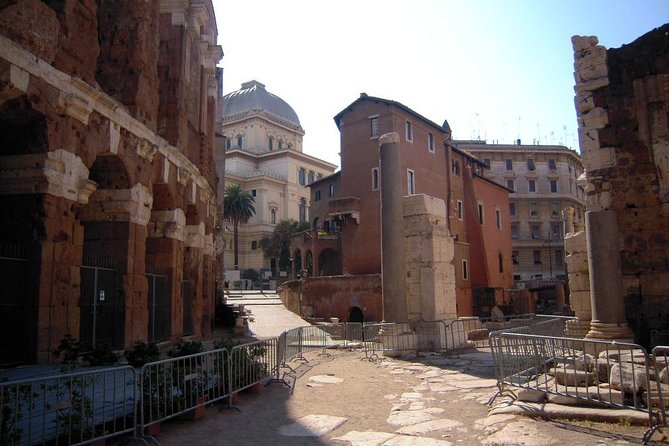
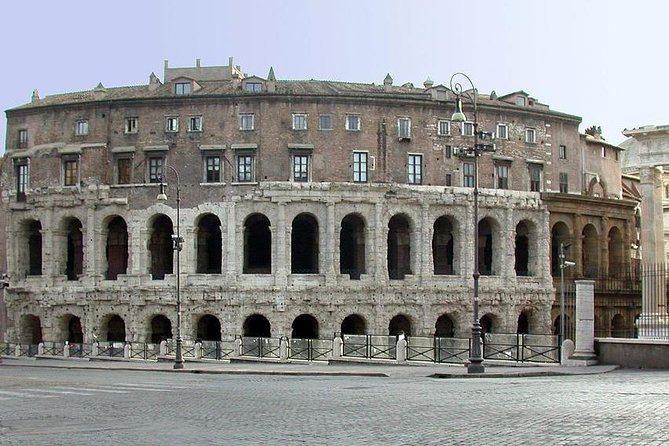
About halfway through, the tour adds a stop near Teatro di Marcello. You get around 15 minutes here, and it may sound like a detour until you understand why it’s included. Roman ruins are not background wallpaper. They shape the city around the ghetto area, and the juxtaposition helps explain what living in Rome meant across centuries.
You’ll also revisit aspects of Portico of Ottavia, linking the modern route to older structures and sightlines. This stop is a good “mental reset.” After the museum and synagogue focus, it helps to look outward at the scale of Rome and then back at the human-scale story of the Jewish community.
A quick practical note: ruins can be open to sun and wind. If you are visiting in hotter months, plan for hydration and a light layer. Because the tour keeps walking minimal overall, you can manage this without feeling like you are doing a full sightseeing day.
Tempio Maggiore di Roma, an internal guide where the space matters
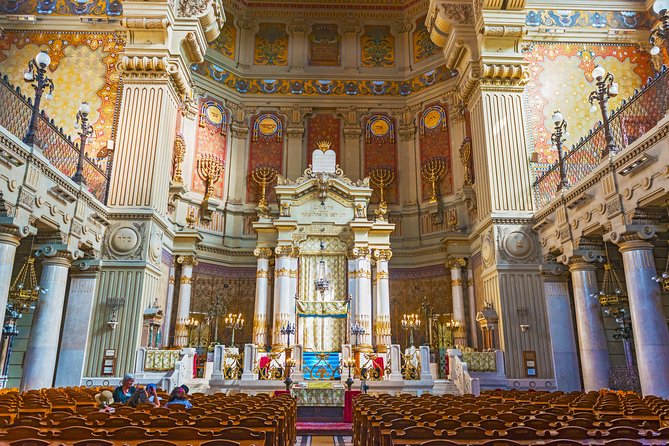
The final major cultural stop is Tempio Maggiore di Roma, the Great Synagogue. You spend about 30 minutes here with an internal guide, and admission is listed as free for this part. That combination is a plus because you get context from someone who can explain the space itself, not just the outside history.
I like this section because it shifts the story from artifacts to lived worship space. Even if you are not religious, you’ll likely find that architecture and ritual space communicate social meaning. A guide who works inside can point out the kinds of details you would miss from a quick glance.
It also makes the route feel complete. Earlier you covered the museum and the ghetto area clues. Here you finish in the room where community life is meant to be understood in a physical, spiritual, and historical way.
You can also read our reviews of more private tours in Rome




Guide quality, pacing, and how private helps you learn
The biggest differentiator is the guide. This tour is described as having an archaeologist guide, and in past private experiences, named guides such as Claudia, Manuela, and Paolo have received high praise for knowledge, attention to detail, and an interactive style.
What that means for you: you get more than facts. You get explanation. You also get follow-up. If something feels confusing, you can ask, and the guide can connect it back to what you have already seen. That matters with ghetto history, because the details are often linked across time, and it is easy to lose the thread without a good storyteller.
The activity level is listed as minimal, and the tour is designed as a 3-hour walk. For most people, that is an achievable time window even if you are not a marathon walker. The stops are spaced to keep energy reasonable, including short blocks at each site and built-in indoor time at the museum and synagogue area.
It’s also worth noting that this is child-friendly with parental supervision. If you are bringing kids, you’ll likely want to keep expectations realistic: this is serious history. The upside is that the neighborhood setting and the tangible landmarks can make it easier for younger people to connect the dots than a lecture-only visit.
Price and value for a private, ticketed Rome walk
At $321.78 per person for about 3 hours, this is not a budget tour. The question is whether it feels like value for your travel style. For me, the value comes from three things you actually feel on the day.
First, you are paying for private guidance, not a crowded shuffle. That means you can learn at a pace that suits you and you can ask questions. Second, tickets are included where it matters, with the Jewish Museum visit and synagogue access supported by included admission. Third, the guide is described as an archaeologist guide, which signals that the explanation is grounded in material context, not just general storytelling.
You are also getting a focused neighborhood experience rather than a broad “see everything” tour. That matters because ghetto history needs concentration. When the time is concentrated into one area, you walk away with a clearer mental map of what connects.
One more value angle: you avoid the common Rome problem of spending your limited time figuring out logistics and entrances. The structure gives you a path and time in each place, and the included tickets reduce friction.
What to do before and after, including the kosher strip meal plan
This tour ends back at the meeting point, Lungotevere de’ Cenci. That makes it easier to plan the rest of your day because you can continue by foot or public transport without a big relocation shuffle.
After a museum and synagogue focused outing, I always recommend you treat yourself to an unhurried meal. One practical tip from this kind of experience: leave time to eat in the kosher area nearby. The neighborhood can be a good place to slow down, digest what you learned, and then enjoy a meal without rushing to catch the next thing.
Comfort wise, pack for a walking tour in Rome. Even with minimal activity level, you will be on streets and in and out of spaces. Comfortable shoes help you focus on the story, not on sore feet.
If you care about photos, know that indoor sites may have restrictions, and lighting can be dim. Keep your phone ready, but treat the visit first. The point here is understanding what you are seeing.
Who this tour suits best, and who might choose differently
This experience fits best if you want a meaningful, neighborhood-based introduction to Jewish history in Rome. If you like history that is anchored to real places, this route makes sense. If you prefer to learn in layers, with museum time plus street context plus a major synagogue space, you will likely appreciate the flow.
It also suits travelers who want a guided explanation with room for personal pacing. The museum portion is largely on your own after the guide helps you start strong. That blend keeps it from feeling like being herded, while still giving you the context to make your self-guided time worthwhile.
You might consider something else if you want a high-energy sightseeing sprint. The emphasis is on history and context, not rapid scene changes. You also need to be okay with learning about difficult chapters of history. This is a respectful, educational approach, but it is not a casual “fun facts” stop.
Should you book this private walking tour?
Book it if you want a focused, ticket-supported private tour that connects the Jewish Ghetto area, Il Portico di Ottavia, and the Great Synagogue into one clear learning path. The archaeologist-style guidance, plus the praised interaction from guides like Claudia, Manuela, and Paolo, is a strong sign you will come away with better understanding, not just landmarks.
Skip or compare if your schedule is tight and you need a shorter experience, or if you dislike walking even at a minimal level. Also consider whether you prefer self-guided museum time only. This tour is strongest when you want the guide’s help to interpret what you are seeing.
If you are planning a first trip and want the Jewish history of Rome in a way that feels grounded in places, this is a solid choice.
FAQ
How long is the Rome Jewish Ghetto and Great Synagogue private walking tour?
It lasts about 3 hours.
What sites will we visit during the tour?
You will stop at Il Portico di Ottavia, the Jewish Museum of Rome and the Great Synagogue area, Teatro di Marcello, and Tempio Maggiore di Roma.
Are tickets included?
Yes. Admission tickets are included for the Jewish Museum of Rome and the related Great Synagogue visit portion. Tempio Maggiore di Roma is listed as free admission for that stop, with an internal guide.
Is transportation included?
No. Meals and drinks are not included either, and you are responsible for getting to the meeting point.
What is the meeting point and where does the tour end?
The start is Lungotevere de’ Cenci, 00186 Roma RM, Italy. The tour ends back at the same meeting point.
What is the cancellation policy?
You can cancel for a full refund up to 24 hours before the experience starts. If you cancel less than 24 hours before the start time, the amount paid is not refunded.
More Walking Tours in Rome



More Tours in Rome






More Tour Reviews in Rome

Not for you? Here's more nearby things to do in Rome we have reviewed












Walking Tours, compared.
 ★ 4.9Trastevere & Campo de Fiori Street Food Walking TourFrom $512,768 reviews
 ★ 4.9Paranormal Night Walking Tour & Secret BackstreetsFrom $341,921 reviews
 ★ 4.4Guided City Center Evening Sightseeing Walking TourFrom $46953 reviews
 ★ 4.5Best of Rome Walking Tour including Trevi FountainFrom $4923 reviews
 ★ 4.8Under the Moonlight Evening Walking TourFrom $28852 reviews
 ★ 4.9Forbidden History Walking Tour & Pub Crawl with DrinksFrom $61688 reviews
 ★ 5.0Guided Small Group Walking Tour of City HighlightsFrom $30682 reviews
 ★ 4.5Rome Walking Tour with Piazza Navona, Trevi Fountain and PantheonFrom $35676 reviews
Browse the lists this tour appears in